Pug care in India: heat risk, breathing and a sitter plan
Updated By PetymFacts checked against official sources on
Quick answer
Pugs love company and usually warm to a sitter fast, but heat is a real danger: in a large UK study they had 3.24 times a Labrador's odds of heat-related illness. A sitter must keep a Pug cool, walk it only in the coolest hours and treat noisy, laboured breathing as a reason to call the vet.
The Pug's flat face is the root of most of its problems. A 2022 Royal Veterinary College study found Pugs had higher odds than other dogs for 23 of 40 common disorders, led by the breathing condition BOAS.
- Meet your sitter first, free
- PAN-checked, first-aid trained
- A photo every day
- Pay through Petym, never cash

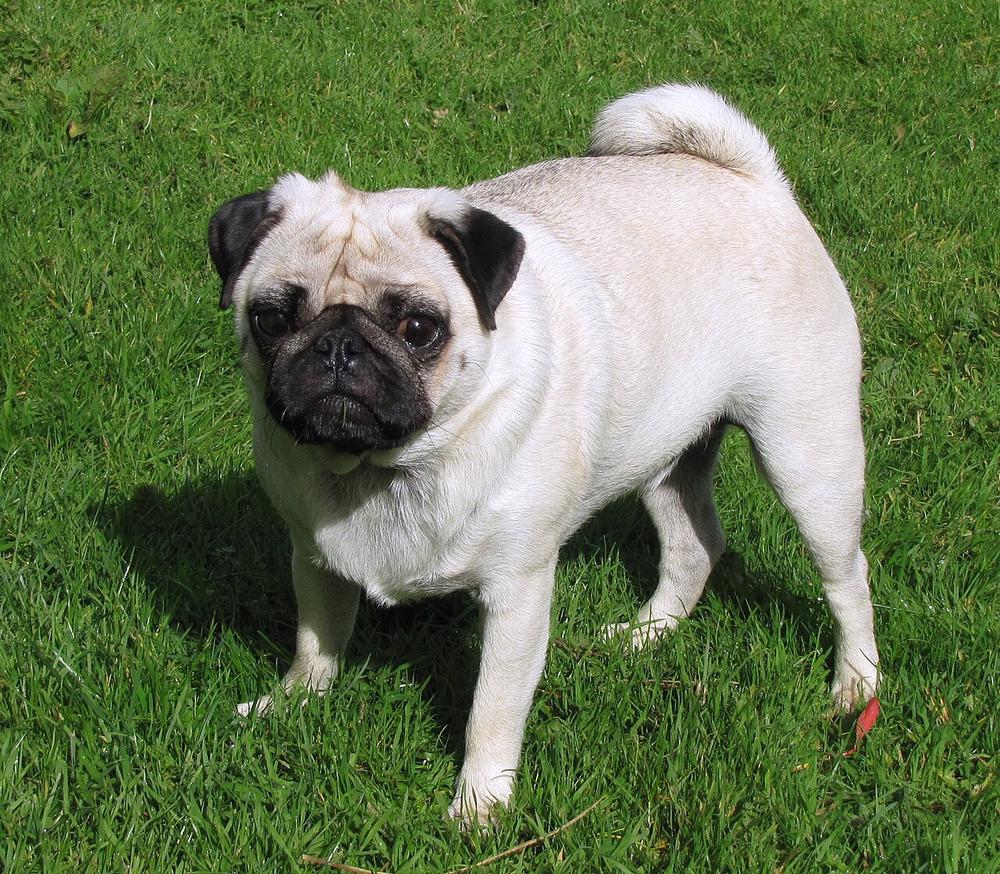
- Origin
- ChinaFédération Cynologique Internationale
- Adult weight
- 6.3 to 8.1 kg (The FCI standard's ideal weight. AKC gives 14 to 18 pounds (about 6.4 to 8.2 kg).)Fédération Cynologique Internationale
- Height
- 25 to 33 cm (AKC gives 10 to 13 inches. The FCI standard gives no height.)American Kennel Club
- Lifespan
- 13 to 15 yearsAmerican Kennel Club
- Coat
- Short, fine and smooth. The Royal Kennel Club lists grooming once a week, plus the face folds.The Royal Kennel Club
- Energy
- ModerateThe Royal Kennel Club
- Indian heat
- Struggles in heatScientific Reports (2020)study
- Flats
- Suits a flatThe Royal Kennel Club
Pug snapshot
| What | The rule | Source |
|---|---|---|
| Size | Small. AKC gives a height of 10 to 13 inches and a weight of 14 to 18 pounds. | American Kennel Club |
| Exercise need | Up to 1 hour a day, says The Royal Kennel Club, which lists it as suited to a flat. | The Royal Kennel Club |
| Alone-time tolerance | Low. The Royal Kennel Club describes Pugs as affectionate, sociable dogs that thrive on human company, bred purely as companions. | The Royal Kennel Club |
| Heat tolerance | Poor. 3.24 times the odds of heat-related illness of the Labrador in a UK study of 905,543 dogs. | Scientific Reports (2020)study |
| Coat and shedding | Short coat that sheds; groom once a week, plus the face folds. | The Royal Kennel Club |
| With other dogs | AKC rates it high on its scale (4 of 5) for getting on with other dogs. | American Kennel Club |
Where does the Pug come from?
The Pug comes from China, where, the FCI standard says, snub-nosed dogs have always been in favour. The Royal Kennel Club links its development to the Chinese fondness for small, short-faced dogs. Traders of the Dutch East India Company brought it to the Netherlands, where it was admired as far back as the 1500s and became a symbol of the royal patriots.
It reached England when William III came to the throne, and his Pugs drew the aristocracy's interest. Until 1877, the FCI records, the breed was seen in England only in fawn; that year a black pair arrived from the East. It was bred purely as a companion, and The Royal Kennel Club calls it the most substantial of the Toy breeds, "multum in parvo", a lot in a small space.
How did the Pug come to India?
No source we found records how or when the Pug first came to India, so its arrival is not documented. It is a familiar city dog now: in the Ahmedabad Municipal Corporation's August 2026 count of 19,756 registered pet dogs, Pugs made up 400.
Indian heat is its biggest risk. In a UK study of 905,543 dogs, Pugs had 3.24 times a Labrador's odds of heat-related illness, and flat-faced breeds as a group had 2.10 times the odds of other dogs, with exercise the commonest trigger. A Pug in an Indian city needs a room that can be kept cool, a plan for power cuts and walks only at dawn or after dark.
What care does a Pug need?
The three things that shape a good day for this breed.
Exercise
Up to 1 hour a day, says The Royal Kennel Club, in short, gentle walks on a harness. In Indian summers, only before sunrise and after dark, turning back at the first heavy panting. The Royal Kennel Club
Grooming
Brush once a week (Royal Kennel Club) and keep the nose fold clean and dry as your vet shows you: Pugs had 16.27 times the odds of skin fold dermatitis in a UK study. Scientific Reports (2022), Royal Veterinary Collegestudy
Training
Keep sessions short, calm and indoors in the hot months; PDSA advises against exercise on hot days for dogs with breathing difficulties, and the Cambridge BOAS group notes breathing noise often shows with excitement. PDSA
How much should a Pug eat?
Daily calories for a healthy, neutered adult Pug, worked out from its weight with the formula vets use (70 x weight in kg to the power 0.75, then AAHA's factor for a neutered adult). Divide by the kcal per kg on your food's pack for grams a day, and adjust by body shape.
| Resting need (kcal a day) | Neutered adult (kcal a day) | |
|---|---|---|
| 6.3 kg AAHA (American Animal Hospital Association) | 280 | 390 to 450 |
| 7.2 kg | 310 | 430 to 490 |
| 8.1 kg | 340 | 470 to 540 |
Keeping a Pug lean matters more than almost anything else you feed it. In a 2022 study of UK vet records, Pugs had 3.89 times the odds of obesity of other dogs, and in the heat study dogs at or above their breed's average weight had higher odds of heat-related illness. Feed a complete and balanced food, measure every meal, use the energy table below as a starting point and let your vet adjust it by body condition. Keep treats small and few, and keep Indian kitchen foods that harm dogs out of reach: onion and garlic in curries and snacks, grapes and raisins, tamarind, chocolate, salty namkeen, xylitol, and milk or chai. Do not leave food out all day, which VCA says leads to obesity. Meals a day: 6 to 12 weeks, 4 a day; 3 to 6 months, 3 a day; 6 to 12 months, 2 a day; adult, 2 a day. Puppies, kittens, working, pregnant and older animals need different amounts: ask your vet, or use Petym's food calculator.
Which illnesses is the Pug prone to, and how are they treated?
The conditions veterinary studies and breed surveys most often report in the Pug. Knowing the early signs means a vet sees it sooner.
See your vet first. This is general information from veterinary sources, not a diagnosis. Only a vet who has examined your pet can say what is wrong and prescribe treatment, and this page never gives a dose. Do not give your pet human medicine. If your pet seems very unwell, go to a 24-hour vet: find one in your city.
Brachycephalic obstructive airway syndrome (BOAS)
See a vet soonThe flat face crowds the nose, throat and airway into a short space. In 4,308 UK Pugs, the odds of a BOAS diagnosis were 53.92 times those of other dogs, and of narrow nostrils 51.25 times. Canine Medicine and Genetics (2022), RVC VetCompassstudy
Signs to watch for
- Snoring, snorting or noisy breathing, worse with excitement or exercise
- Open-mouth breathing at rest
- Regurgitation or difficulty eating
- Pauses in breathing during sleep
- Blue tongue or gums, or collapse
How a vet treats it
The Cambridge BOAS group grades it with a three-minute exercise test and may use imaging and airway examination under sedation. Affected dogs may need weight loss and surgery a vet recommends, such as widening the nostrils or shortening the soft palate.
Prevention
Keep your Pug lean, use a harness, and keep it cool and calm in the heat.
Heatstroke
Emergency: go to a vet nowPDSA says flat-faced breeds such as the Pug are especially vulnerable, even on cool days. In a UK study, Pugs had 3.24 times a Labrador's odds of heat-related illness. PDSA
Signs to watch for
- Heavy panting that does not settle
- Drooling, vomiting or diarrhoea
- Very red or very pale gums
- Wobbliness, confusion or collapse
How a vet treats it
PDSA calls it an emergency: start cooling with cool, not icy, water and moving air, and go straight to the vet, who cools the dog further and may give a fluid drip, oxygen and medicines to protect the organs.
Prevention
Walk only at dawn or after dark, keep a cool room ready for power cuts, and never leave a Pug in a parked car.
Corneal ulcer
See a vet soonA sore on the clear front of the eye. Pugs had 13.01 times the odds of other dogs in a UK study. Canine Medicine and Genetics (2022), RVC VetCompassstudy
Signs to watch for
- Squinting or holding the eye shut
- A watering or cloudy eye
- Pawing or rubbing at the face
- Redness or a white mark on the eye
How a vet treats it
The Merck Veterinary Manual says a vet uses dye drops to find small ulcers. Shallow ulcers are usually treated with antibiotic eye drops and by correcting the cause; deep ulcers may need a tissue graft. Do not use any eye drops the vet has not prescribed.
Prevention
Check the eyes daily and see your vet the same day if one looks sore.
Skin fold dermatitis
See a vet soonInflammation where folds of skin rub together and stay moist, such as the Pug's nose fold. Pugs had 16.27 times the odds of a crossbred dog in a UK study. Scientific Reports (2022), Royal Veterinary Collegestudy
Signs to watch for
- Redness in the fold
- A moist or smelly fold
- Pain when the face is touched
How a vet treats it
The study authors describe treatment with topical antimicrobial and anti-inflammatory care and cleaning of the fold, treating any obesity, and long-term care; surgery may be considered if medical treatment fails.
Prevention
Clean and dry the fold as your vet shows you, more often in the humid monsoon.
Slipping kneecap (patellar luxation)
See a vet soonThe kneecap slips out of its groove. In English vet records, 3.5% of Pugs had it, with 3.7 times the odds of a crossbred dog. Canine Genetics and Epidemiology (2016), RVC VetCompassstudy
Signs to watch for
- Skipping on a back leg for a few steps
- Kicking a back leg out
- Lameness that becomes more frequent
How a vet treats it
ACVS says a vet diagnoses it by feeling the kneecap and with X-rays; mild cases are usually watched, and higher grades may need surgery to realign the kneecap.
Prevention
Keep your Pug lean; ACVS says affected dogs should not be bred.
Why is a Pug at such risk in Indian heat?
Dogs cool themselves mainly by panting, and a Pug's short airway makes panting hard work.
Dogs cannot sweat like people; they cool down by panting, as Merck's Veterinary Manual explains. A Pug's flat face squeezes the nose, throat and airway into a short space. Science for Animal Welfare describes brachycephalic airway obstruction syndrome as the suite of breathing problems that come with that face shape, leading to snoring, noisy breathing, mouth breathing and respiratory distress. In a 2022 study of 4,308 UK Pugs, the odds of a BOAS diagnosis were 53.92 times those of other dogs, and of narrow nostrils (stenotic nares) 51.25 times.
Put that airway in a Mumbai flat in May or a Delhi afternoon in June and the margin is small. In the UK heatstroke study, flat-faced dogs as a group had 2.10 times the odds of heat-related illness, Pugs specifically 3.24 times the Labrador's, and exercise was the most common trigger. The Cambridge BOAS group adds that heat, excitement and stress all make breathing harder. So a sitter's whole plan for a Pug comes down to three things: keep it cool, keep it calm, keep it lean.
What welfare scientists say about BOAS
Word for word
BAOS affects animals from early in their lives, and is a life-long and progressively-worsening condition.
For a sitter, this means a Pug's breathing is never a side issue. Ask the owner to show you how their dog sounds at rest, after a short walk and asleep, so you can tell what is new.
Pug emergency signs every sitter must know
Any of the first three is a reason to go to the nearest 24-hour vet now, not to wait and see.
If Blue or grey tongue or gums, or collapse.
Emergency. Go to the nearest 24-hour vet straight away; call the owner on the way. University of Cambridge, Department of Veterinary Medicine
If Heavy panting that does not settle in a cool room, thick drool, wobbliness, vomiting, or a body that feels very hot.
Treat as heatstroke: move to the coolest place, pour cool water over the body away from the nose and mouth, make a breeze, and go to the vet. PDSA
If Struggling to breathe, loud harsh noise, breathing through an open mouth at rest, or stopping breathing in sleep.
Keep the dog calm and cool and call the vet now. The Cambridge group notes pauses in breathing during sleep can be life-threatening. University of Cambridge, Department of Veterinary Medicine
If A squinting, watering or cloudy eye, or pawing at the face. In an English study 5.42% of Pugs had a corneal ulcer.
Call the vet the same day. Do not use any eye drops the vet has not prescribed. Canine Genetics and Epidemiology (2017), RVC VetCompassstudy
If A red, smelly or moist nose fold. Pugs had 16.27 times the odds of skin fold dermatitis in a UK study.
Clean and dry the fold only as the vet has shown and tell the owner; call the vet if it gets worse. Scientific Reports (2022), Royal Veterinary Collegestudy
If Regurgitating food, gagging or difficulty eating. Cambridge lists eating difficulties and regurgitation as common in dogs with BOAS.
Note when and what, tell the owner and call the vet. University of Cambridge, Department of Veterinary Medicine
Is it safe to walk a Pug right now?
Petym’s working from the official rules, no government publishes a total.
A quick check for a sitter before every walk in the hot months. Petym's practical rule from the sources on this page.
If The India Meteorological Department has a heat wave warning out for your city
No outdoor walk. Toilet break in shade only, and indoor play in a cool room. India Meteorological Department
If You cannot hold your palm on the road for 7 seconds
Too hot for paws. Wait, or use grass in deep shade. PDSA
If The Pug is already panting or breathing noisily indoors
Skip the walk. Cool the room and let it rest; call the vet if it does not settle.
If It is early morning or after dark, the ground is cool and the dog breathes quietly
Walk for 15 to 20 minutes on a harness at the Pug's pace, in shade, and turn back at the first heavy panting.
A cool, calm day for a Pug
Petym’s working from the official rules, no government publishes a total.
Early morning
A short walk on a harness, never a tight neck collar, while the air is coolest.
Breakfast
The measured meal from the owner's plan, in a wide, shallow bowl.
Morning
Wipe and dry the nose fold and face as the owner's vet advised; check the eyes.
Midday to late afternoon
Indoors in the coolest room with the fan or air conditioning the owner allows. Gentle play only, stopped well before heavy panting.
Power cut
Move to the coolest corner, away from windows, with water and a cool floor or damp cloth. Watch the breathing.
After dark
A second short walk if it is cool enough; otherwise a toilet break and a sniffing game indoors. Photo update and a note on breathing.
Feeding and weight: what a Pug's sitter does
Do
- Measure every meal exactly. Dogs at or above their breed's average weight had higher odds of heat-related illness. Scientific Reports (2020)study
- Keep treats under about 10% of daily calories, using low-calorie choices like apple or carrot. WSAVA
- Keep fresh water in a wide, stable bowl in the shade and refill it through the day. Animal Welfare Board of India
- Keep the same food as at home for the whole stay. PDSA
Don’t
- No chocolate, grapes, raisins, onion, garlic, xylitol or salty snacks. ASPCA Animal Poison Control
- No hand-feeding of mithai or leftovers at a family function.
- No exercise straight after a meal in a warm room.
- No car trips in the heat, and never leave a Pug in a parked car.
Monsoon, humidity and ticks for a Pug
The monsoon brings cooler days but heavy, humid air, and the Cambridge BOAS group notes that both higher temperatures and humidity can make breathing signs worse. Do not assume a grey, sticky day in Mumbai or Kolkata is safe for a long walk. Keep walks short, dry the face fold and paws after every wet outing, and watch the fold for redness or smell.
Ticks are a year-round problem in India: ticks were found on 53% of the 525 dogs in a survey across four Indian cities, and about half carried a tick-borne infection. Check a Pug's ears, neck, folds and between the toes after every walk and remove ticks with tweezers close to the skin. Fever or low energy after a tick bite needs a vet.
Pug sitter checklist
- A short video or note of the dog's normal breathing at rest, after a walk and asleep.
- The harness, walk times for the season and the shaded route.
- The coolest room, the air conditioning or fan rules, and the plan for a power cut.
- Fold and face cleaning routine, and any eye drops or medicines exactly as prescribed. The sitter logs each one.
- Meal amounts, times and the treat allowance.
- Known triggers that make the dog excited or stressed: the doorbell, other dogs, crackers.
- The vet's number, the nearest 24-hour vet on Petym's city list, and the quickest route there.
Which Petym service suits a Pug?
A Pug is usually safest at home, in a room it knows can be kept cool.
Best fit
Overnight pet sitting
The sitter stays with your Pug in your home, keeps it cool and calm, and sends a daily photo update.
Special-needs pet care
For a Pug with diagnosed BOAS, eye disease or after airway surgery, with the vet's plan followed and logged.
Drop-in visits
For a few hours only, in the cooler months, to feed, check breathing and give company.
Pet boarding
Only in a sitter's home with reliable cooling. Ask about it at the meet and greet.
Breeds with similar care needs to the Pug
Going away soon? Tell us your dates.
A checked local sitter feeds, walks and keeps your pet company at home, follows your care sheet to the letter and sends a photo every day. Petym is opening city by city: send your dates and we will tell you when a sitter can take them.
- Meet your sitter first, free
- PAN-checked, first-aid trained
- A photo every day
- Pay through Petym, never cash


Questions owners ask
Can a Pug survive Indian summers?
- It can with careful management, but the risk is real. Pugs had 3.24 times a Labrador's odds of heat-related illness in a large UK study. Keep a cool room ready, plan for power cuts, walk only at dawn or after dark, keep your Pug lean, and get to a vet fast if breathing becomes hard.
Is it normal for my Pug to snore and snort?
- It is common in Pugs, but not harmless: the Cambridge BOAS research group says snoring and snorting are signs of airway obstruction. Tell your sitter what is normal for your dog. Louder breathing, mouth breathing at rest, pauses in sleep or a blue tongue need a vet.
How long can a Pug be left alone?
- Not long. The Royal Kennel Club describes Pugs as companions that thrive on human company, and PDSA advises no more than 4 hours alone for any dog. In the hot months the bigger worry is a power cut in an empty flat, so plan cooling and a sitter visit.
How much exercise does a Pug need?
- Up to 1 hour a day, says The Royal Kennel Club, split into short, gentle walks. In Indian heat that means early morning and after dark only, on a harness, in shade, turning back at the first heavy panting. Indoor play counts on hot days.
What are the signs of heatstroke in a Pug?
- Heavy panting that does not settle, thick drool, a very hot body, wobbliness, vomiting or collapse. Move the dog somewhere cool, pour cool water over the body away from the nose and mouth, make a breeze and go to a vet at once, even if it seems to recover.
Should a sitter use a collar or a harness on a Pug?
- A harness. A neck collar presses on the throat of a dog whose airway is already narrow. Ask the owner to leave the harness the dog is used to, and check it fits so it cannot slip.
Can I take my Pug along on a road trip instead of leaving it?
- Think hard in the hot months. Cars heat fast, travel excites and stresses dogs, and heat, excitement and stress all make BOAS worse. Many Pugs are safer at home with a sitter in a cool room. Never leave a Pug in a parked car.
Keep reading
Services that help
Free tools for this
Words on this page, explained
Keep exploring
Other dog breeds
- Akita
- Alaskan Malamute
- American Bully
- American Cocker Spaniel
- American Pit Bull Terrier
- Australian Shepherd
- Bakharwal dog
- Basset Hound
- Beagle
- Belgian Malinois
- Bernese Mountain Dog
- Bichon Frise
- Border Collie
- Boston Terrier
- Boxer
- Bull Terrier
- Bulldog
- Bullmastiff
- Cane Corso
- Caucasian Shepherd Dog
- Cavalier King Charles Spaniel
- Chihuahua
- Chippiparai
- Chow Chow
- Cocker Spaniel
- Dachshund
- Dalmatian
- Dobermann
- Dogo Argentino
- English Mastiff
- English Springer Spaniel
- French Bulldog
- Gaddi Kutta (Gaddi dog)
- German Shepherd
- Golden Retriever
- Great Dane
- Greyhound
- Havanese
- Indian pariah dog (Indie)
- Indian Spitz
- Irish Setter
- Jack Russell Terrier
- Kangal
- Kanni
- Kombai
- Labrador Retriever
- Lhasa Apso
- Maltese
- Miniature Pinscher
- Miniature Schnauzer
- Mudhol Hound
- Neapolitan Mastiff
- Newfoundland
- Papillon
- Pekingese
- Pembroke Welsh Corgi
- Pomeranian
- Poodle
- Rajapalayam
- Rampur Greyhound
- Rhodesian Ridgeback
- Rottweiler
- Saint Bernard
- Samoyed
- Shar Pei
- Shiba Inu
- Shih Tzu
- Siberian Husky
- Tibetan Mastiff
- Weimaraner
- West Highland White Terrier
- Whippet
- Yorkshire Terrier
Sources
Each source was opened and read on the date shown. How Petym checks its sources
- Fédération Cynologique Internationale: FCI standard No. 253: Pug (PDF) (opens in a new tab)
- American Kennel Club: Pug dog breed information (opens in a new tab)
- The Royal Kennel Club: Pug: breed information (opens in a new tab)
- PDSA: Heatstroke in dogs (opens in a new tab)
- University of Cambridge, Department of Veterinary Medicine: BOAS: recognition and diagnosis (opens in a new tab)
- Merck Veterinary Manual: Nutritional requirements of small animals (full review November 2023, updated September 2024) (opens in a new tab)
Show all 29 sourcesShow fewer
- Merck Veterinary Manual: Puppy care (opens in a new tab)
- VCA Animal Hospitals: Feeding times and frequency for your dog (opens in a new tab)
- ASPCA Animal Poison Control: People foods to avoid feeding your pets (opens in a new tab)
- Merck Veterinary Manual: Grape, raisin, and tamarind (Vitis spp, Tamarindus spp) toxicosis in dogs (full review September 2024) (opens in a new tab)
- AAHA (American Animal Hospital Association): 2021 AAHA Nutrition and Weight Management Guidelines for Dogs and Cats: energy requirement calculations (Box 1, PDF) (opens in a new tab)
- Science for Animal Welfare (formerly UFAW): Pug: brachycephalic airway obstruction syndrome (BAOS) (opens in a new tab)
- Merck Veterinary Manual: Disorders of the cornea in dogs (dog owners) (opens in a new tab)
- American College of Veterinary Surgeons: Patellar Luxation (Dislocating Kneecap) in Dogs | ACVS (opens in a new tab)
- Science for Animal Welfare (formerly UFAW): Pug: genetic welfare problems (opens in a new tab)
- Merck Veterinary Manual: Description of dogs (opens in a new tab)
- PDSA: Separation anxiety in dogs (opens in a new tab)
- India Meteorological Department: FAQ on heat wave (opens in a new tab)
- Merck Veterinary Manual: Ticks of dogs (opens in a new tab)
- WSAVA: Frequently asked questions and myths (Global Nutrition Committee) (opens in a new tab)
- Animal Welfare Board of India: Request to ensure care and protection of animals from direct heat during extreme hot weather (4 May 2026) (opens in a new tab)
- PDSA: Diarrhoea after a change of food (opens in a new tab)
- Scientific Reports (2020): Incidence and risk factors for heat-related illness in UK dogs (opens in a new tab)
- Scientific Reports (2022), Royal Veterinary College: The epidemiology of skin fold dermatitis in dog breeds in the UK (opens in a new tab)
- Canine Medicine and Genetics (2022), RVC VetCompass: Health of Pug dogs in the UK: disorder predispositions and protections (opens in a new tab)
- Canine Genetics and Epidemiology (2017), RVC VetCompass: Corneal ulcerative disease in dogs under primary veterinary care in England (abstract read) (opens in a new tab)
- Canine Genetics and Epidemiology (2016), RVC VetCompass: The epidemiology of patellar luxation in dogs attending primary-care veterinary practices in England (opens in a new tab)
- Parasites & Vectors (2011): A survey of canine tick-borne diseases in India (opens in a new tab)
- Telangana Today (IANS): Ahmedabad registers nearly 20,000 pet dogs; Labradors remain the city's most popular breed (5 Aug 2026) (opens in a new tab)