Dalmatian care in India: exercise, water and hearing
Updated By PetymFacts checked against official sources on
Quick answer
A Dalmatian copes with a sitter who can meet its big exercise needs safely in Indian heat. The sitter must fit long walks into dawn and evening, keep water flowing all day because the breed can form bladder stones, know whether the dog hears normally, and call the vet at once for straining to pee.
The Royal Kennel Club gives the Dalmatian more than two hours of exercise a day. UFAW reports that 18 to 30% of Dalmatians are deaf in at least one ear, and that the breed is prone to urate bladder stones.
- Meet your sitter first, free
- PAN-checked, first-aid trained
- A photo every day
- Pay through Petym, never cash

- Origin
- Croatia, in the historic province of Dalmatia (FCI)Fédération Cynologique Internationale
- Adult weight
- 20 to 32 kg (adult, from the AKC's 45 to 70 lb; the FCI standard gives height only)American Kennel Club
- Height
- 54 to 62 cm (males 56 to 62 cm, females 54 to 60 cm)Fédération Cynologique Internationale
- Lifespan
- 11 to 13 yearsAmerican Kennel Club
- Coat
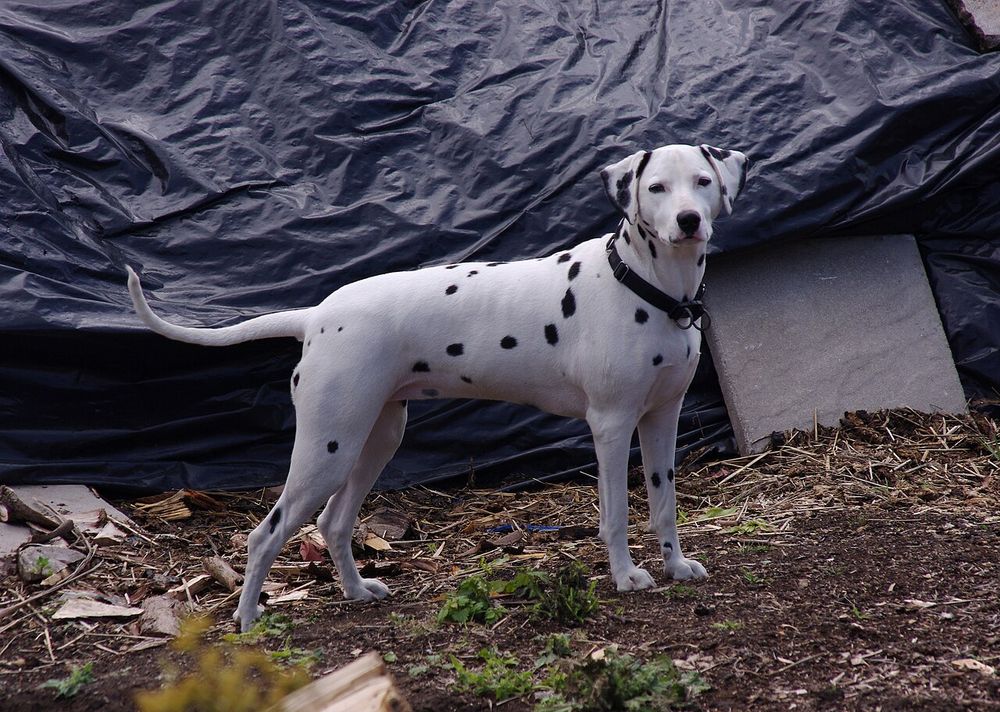
- Short, shiny, hard and dense, pure white with black or liver spots. It sheds; brush once a week.Fédération Cynologique Internationale
- Energy
- Very highThe Royal Kennel Club (UK)
- Indian heat
- Copes with careAnimals (2020)study
- Flats
- Needs spaceThe Royal Kennel Club (UK)
Dalmatian care snapshot
| What | The rule | Source |
|---|---|---|
| Size | Large, suited to a large house (Royal Kennel Club). | The Royal Kennel Club (UK) |
| Exercise need | More than 2 hours a day (Royal Kennel Club). | The Royal Kennel Club (UK) |
| Alone-time tolerance | Not rated by kennel clubs. PDSA advises no more than 4 hours alone for any dog; an under-exercised Dalmatian left alone is likely to be restless. | PDSA |
| Heat tolerance | Described in words only: not flat-faced, but a big, active dog. Exercise caused about three in four heatstroke cases in UK vet records. | Animals (2020)study |
| Shedding and coat | Short coat, sheds, grooming once a week (Royal Kennel Club). | The Royal Kennel Club (UK) |
| Sociability with other dogs | Described in words only; the Royal Kennel Club gives no temperament line. UFAW notes deaf dogs are more vulnerable to attacks by other dogs. | UFAW Science for Animal Welfare (genetic welfare problems of companion animals) |
Where does the Dalmatian come from?
The FCI standard names Croatia as the breed's country of origin. It points to spotted dogs in Croatian altar paintings and church chronicles from the 16th to the 18th century, including chronicles of the diocese of Djakovo from 1719 and 1737 that call the dog "Canis Dalmaticus". Thomas Pennant named it the Dalmatian in 1771, and Thomas Bewick called it the "Dalmatian or Coach Dog" in 1790. The first unofficial standard was written by Vero Shaw in 1882.
The Royal Kennel Club is more cautious: it says the breed's beginnings are uncertain and that little evidence links it to the Balkan coast. In late 18th century Britain, white spotted dogs ran with carriages and guarded them and their cargo, and in the Regency period the breed became a status symbol known as the Spotted Coach Dog.
The AKC describes these coach dogs running with the horse-drawn rigs of nobles, travellers and firefighters, and recognised the breed in 1888. The FCI now classes it as a scenthound and describes it as a companion and family dog that is easy to train.
How did the Dalmatian come to India?
No source we could find records when or how the Dalmatian first came to India. It is a European pedigree breed, and in India pedigree dogs are registered with The Kennel Club of India on its single-dog and litter registration forms.
What is documented is how the breed fares in Indian conditions. The Royal Kennel Club gives it more than two hours of exercise a day and a large house, and exercise caused most heat-related illness in UK vet records, so in Indian cities the Dalmatian's long walks belong at dawn and after dark.
What care does a Dalmatian need?
The three things that shape a good day for this breed.
Exercise
More than two hours a day, says The Royal Kennel Club. The AKC suggests ball games, running beside a jogger or a long hike, but warns not to over-exercise a puppy before its joints mature at about two years. In India, fit it into the cool hours and carry water. The Royal Kennel Club (UK)
Grooming
Weekly brushing with a horsehair mitt or rubber curry comb, occasional baths, nails trimmed at least monthly and the drop ears checked regularly (AKC). The coat sheds all year. American Kennel Club
Training
The AKC says Dalmatians can be very sensitive, so positive, reward-based training is a must, with early socialisation and puppy classes. A deaf dog learns hand signals instead of spoken cues. UFAW Science for Animal Welfare (genetic welfare problems of companion animals)
How much should a Dalmatian eat?
Daily calories for a healthy, neutered adult Dalmatian, worked out from its weight with the formula vets use (70 x weight in kg to the power 0.75, then AAHA's factor for a neutered adult). Divide by the kcal per kg on your food's pack for grams a day, and adjust by body shape.
| Resting need (kcal a day) | Neutered adult (kcal a day) | |
|---|---|---|
| 20 kg AAHA (American Animal Hospital Association) | 660 | 930 to 1060 |
| 26 kg | 810 | 1130 to 1290 |
| 32 kg | 940 | 1320 to 1510 |
Feed a complete and balanced dog food suited to the dog's life stage; the AKC says Dalmatians are not picky eaters and do not need a lot of supplements, and warns that too many treats cause obesity. Water matters more than usual: every Dalmatian carries the gene for high uric acid in the urine, and Science for Animal Welfare says low water intake, high-protein diets and dry rather than moist food all raise the risk of urate stones. Keep fresh water in several bowls and give frequent chances to pee. Do not switch to a low-purine or home-made diet on your own: Science for Animal Welfare warns that a low-purine diet may predispose Dalmatians to heart disease, and the AKC says your breeder or vet can tell you what to feed. From the Indian kitchen, keep onion, garlic, grapes, chocolate, chai and coffee away from the dog, and skip cooked bones and fatty scraps. Meals a day: puppy to 12 weeks, 4 a day; 3 to 6 months, 3 a day; 6 to 12 months, 2 a day; adult, 2 a day. Puppies, kittens, working, pregnant and older animals need different amounts: ask your vet, or use Petym's food calculator.
Which illnesses is the Dalmatian prone to, and how are they treated?
The conditions veterinary studies and breed surveys most often report in the Dalmatian. Knowing the early signs means a vet sees it sooner.
See your vet first. This is general information from veterinary sources, not a diagnosis. Only a vet who has examined your pet can say what is wrong and prescribe treatment, and this page never gives a dose. Do not give your pet human medicine. If your pet seems very unwell, go to a 24-hour vet: find one in your city.
Urate bladder stones (hyperuricosuria)
Emergency: go to a vet nowScience for Animal Welfare says all Dalmatians have hyperuricosuria, an inherited defect that leaves high levels of uric acid in the urine, so all are prone to urate stones. Stones are found more often in males. UFAW Science for Animal Welfare (genetic welfare problems of companion animals)
Signs to watch for
- Passing small amounts of bloody urine often
- Straining to pee
- Trying to pee and passing little or nothing, with distress, vomiting or loss of appetite
How a vet treats it
A vet confirms stones by ultrasound or x-rays, and only analysis of a removed stone proves it is urate. Urate stones often need to be removed surgically. The Merck Veterinary Manual describes medical dissolution in suitable cases: raising urine pH, more water in the diet, a low-purine diet and, if the vet decides, medicine that reduces uric acid production. A blocked urethra is a medical emergency.
Prevention
Plenty of water, moist rather than only dry food where the vet agrees, and frequent toilet breaks. Diet changes are for the vet, since a strict low-purine diet has its own risks.
Congenital deafness
Ask at a routine checkLinked to the extreme piebald gene behind the white coat. Science for Animal Welfare cites 18 to 30% of Dalmatians deaf in at least one ear and 3 to 8% in both; blue-eyed dogs are more likely to be deaf. UFAW Science for Animal Welfare (genetic welfare problems of companion animals)
Signs to watch for
- Sleeping very deeply and not waking to noise
- Ignoring loud sounds and no ear-pricking
- Rough play as a puppy
- One-sided deafness often shows no clear sign at all
How a vet treats it
A vet or specialist confirms it with a BAER hearing test, often done on puppies at about five weeks. The deafness is lifelong and there is no treatment; care is about safe handling, a lead near roads and hand signals.
Prevention
Breeding only from dogs BAER-tested as hearing in both ears. Ask the breeder for the puppy's BAER result.
Copper-associated chronic hepatitis
See a vet soonA progressive inflammatory liver disease caused or worsened by copper building up in the liver. Science for Animal Welfare gives an average age at diagnosis in Dalmatians of 4 years 7 months. UFAW Science for Animal Welfare (genetic welfare problems of companion animals)
Signs to watch for
- Weight loss, weakness and tiredness
- Vomiting, diarrhoea and belly pain
- Later, a swollen belly and yellowing of the skin or eyes
- Confusion in advanced disease
How a vet treats it
Raised liver enzymes on a blood test are the first clue, and a liver sample, usually taken by laparoscope, confirms it. A vet may use chelation therapy, a drug that binds copper so it leaves in the urine, along with zinc and a low-copper diet.
Prevention
There is no genetic test; breeders avoid breeding from affected dogs and their close relatives.
Hip dysplasia
See a vet soonAn abnormal development of the hip joint in large dogs that leads to arthritis. The Royal Kennel Club lists hip screening for the breed. Merck Veterinary Manual
Signs to watch for
- Lameness that is worse after exercise
- A bunny-hopping gait
- Stiffness and reluctance to run or climb stairs
How a vet treats it
A vet diagnoses it on x-rays. The Merck Veterinary Manual lists weight control, less exercise on hard surfaces, physical therapy and anti-inflammatory drugs prescribed by the vet, and surgery up to total hip replacement for some dogs.
Prevention
Choose a puppy from hip-screened parents, keep the dog lean and do not over-exercise a growing puppy.
Heatstroke
Emergency: go to a vet nowNot a breed disease, but a real risk for a big, very active dog in Indian summers: exercise triggered most heat-related illness in UK vet records. PDSA
Signs to watch for
- Heavy panting and fast breathing
- Drooling, bright red or very pale gums
- Weakness, confusion, seizures or collapse
How a vet treats it
Move the dog into shade, pour cool water over the body and go to a vet at once. PDSA says vets cool the dog, may give a fluid drip, oxygen and medicines to protect the organs, and run blood tests; severe cases stay in hospital.
Prevention
Exercise only in the cool hours, carry water and stop at the first heavy panting.
How does a Dalmatian cope when you are away?
With enough exercise and a steady routine, well. Without them, a sitter has a large, restless dog on their hands.
The Royal Kennel Club puts the Dalmatian in its top exercise band, more than two hours a day, alongside working and herding breeds. In an Indian city that is the main thing a sitter has to plan: where those two hours happen, at what time of day, and what replaces them on a heat-wave day or in a monsoon downpour.
PDSA's guidance is that dogs should not be left alone for more than 4 hours at a time, and that a sitter or walker should cover longer absences. A Dalmatian that has had a proper morning walk is far easier to leave for a couple of hours than one that has not. Signs of distress when alone include barking, howling, destructive chewing and toileting indoors.
Two breed-specific facts change the care sheet. Many Dalmatians do not hear normally, which changes how a sitter walks and wakes them. And the breed's urine chemistry makes bladder stones more likely, which makes water and toilet breaks part of health care, not just routine.
What do the welfare studies say about Dalmatians?
Figures from the UFAW review of genetic welfare problems and the Royal Kennel Club.
18 to 30%
Dalmatians that are deaf in one or both ears UFAW Science for Animal Welfare (genetic welfare problems of companion animals)
3 to 8%
Dalmatians that are deaf in both ears UFAW Science for Animal Welfare (genetic welfare problems of companion animals)
More than 2 hours
Daily exercise the Royal Kennel Club gives for the breed The Royal Kennel Club (UK)
How should a sitter care for a deaf or part-deaf Dalmatian?
Ask the owner first: has the dog had a BAER hearing test, and what did it show?
UFAW says most deaf Dalmatians lose hearing in one ear only and are likely to live normal lives, while dogs deaf in both ears are significantly handicapped. The standard test is the Brainstem Auditory Evoked Response (BAER), often done on puppies at about five weeks, and the Royal Kennel Club lists BAER hearing testing, including litter screening, for the breed. UFAW also warns that hearing cannot be reliably tested just by looking at a puppy, so an owner may not know.
UFAW notes that deaf dogs are at higher risk of trauma, particularly from vehicles, and more vulnerable to attacks from other dogs. For a sitter that means a lead on every walk near roads, no off-lead running unless the owner has trained a reliable visual recall, approaching the dog from the front and waking it with a gentle touch or a stamp on the floor rather than a hand from behind. Hand signals the dog knows should be written on the care sheet, and a sitter should practise them at the meet and greet.
Which Dalmatian health signs need a vet?
Urinary signs are the ones to know by heart. The sitter calls the owner and the vet for each of these.
If Straining to pee, trying often and passing little or nothing, or showing distress
UFAW says a stone blocking the urethra is a medical emergency. Go to the nearest 24-hour vet now. UFAW Science for Animal Welfare (genetic welfare problems of companion animals)
If Passing small amounts of bloody urine often
A sign of urate stones or bladder inflammation. Call the vet the same day. UFAW Science for Animal Welfare (genetic welfare problems of companion animals)
If Not reacting to sounds it used to react to, or startling badly when touched
Tell the owner and the vet. Keep the dog on a lead near roads until hearing is checked. UFAW Science for Animal Welfare (genetic welfare problems of companion animals)
If Weight loss, weakness, vomiting, diarrhoea, or later yellowing of the skin or a swollen belly
UFAW lists copper-associated chronic hepatitis in the breed, diagnosed in Dalmatians at an average of about four and a half years. Call the vet the same day. UFAW Science for Animal Welfare (genetic welfare problems of companion animals)
If Heavy panting, drooling or wobbling after exercise
Possible heatstroke. Shade, plenty of cool water over the body, moving air, then the vet. PDSA
If Limping or stiffness after walks
The Royal Kennel Club lists hip and elbow screening for the breed. Rest the dog and call the vet. The Royal Kennel Club (UK)
How can a sitter fit a Dalmatian's exercise into an Indian summer day?
Most of it happens before 7:30 am and after sunset, with brain work in between.
5:30 to 7:00
The long walk or a jog on shaded paths, after the palm test on the ground. Carry water and offer it often. PDSA
After the walk
Water first, then breakfast once the dog has cooled down, then a toilet break.
Late morning
A sniffing game or a short training session indoors; a toilet break.
Noon to 5:00
Rest in a cool room with water in reach. Toilet breaks every few hours, as the owner sets them. In heat-wave months (March to June in most of the plains) no running. India Meteorological Department
After sunset
The second long walk once the ground has cooled, then dinner.
Before bed
A last toilet break, water topped up, and the day's log noting how often the dog peed.
What should a sitter know about feeding and water for a Dalmatian?
Keep the owner's diet exactly, and keep water going in all day. Diet changes for stones are for the vet.
Do
- Keep several bowls of fresh water around the home and refill them often; UFAW says low water intake raises the risk of stones. UFAW Science for Animal Welfare (genetic welfare problems of companion animals)
- Feed exactly the food the owner leaves, wet or dry; UFAW notes dry food and high-protein diets are linked with more stones. UFAW Science for Animal Welfare (genetic welfare problems of companion animals)
- Give regular toilet breaks and log them; a change in how often the dog pees is worth reporting.
- Carry water on every walk. PDSA
Don’t
- Do not change the diet or add protein-rich extras such as meat, paneer or eggs from the table.
- Do not put the dog on a low-purine or home-made diet without the vet: UFAW warns a low-purine diet may predispose Dalmatians to a heart muscle disease. UFAW Science for Animal Welfare (genetic welfare problems of companion animals)
- Do not give medicines or supplements that are not on the care sheet.
What should a Dalmatian's owner leave for the sitter?
Hearing, water and exercise are the three things to spell out.
- The BAER hearing result, if you have it, and the hand signals your dog knows.
- Whether the dog may ever be off the lead, and where.
- The food, the amounts and any vet-prescribed diet, with the reason for it.
- Any history of urinary stones or blockage, and what the vet said to watch for.
- The usual walk routes and where shade and water are on them.
- The vaccination card and tick prevention dates.
- The regular vet and the nearest 24-hour vet on the city's list.
Which Petym service suits a Dalmatian?
The answer depends mostly on how long you are away and how the exercise will get done.
If You are away overnight or longer
Overnight sitting, with a sitter who can walk a large, strong dog for two long sessions a day in the cool hours. Overnight sitting
If You work long days
A dog walker for the dawn or evening walk, plus a drop-in visit for water and a toilet break. Dog walking
If Your Dalmatian is social and hears well
Doggy day care can help use up energy, with shaded or indoor play in summer. Doggy day care
If Your dog is on a prescribed urinary diet or medicines
Special-needs care, following the vet's plan. Special-needs care
Breeds with similar care needs to the Dalmatian
Going away soon? Tell us your dates.
A checked local sitter feeds, walks and keeps your pet company at home, follows your care sheet to the letter and sends a photo every day. Petym is opening city by city: send your dates and we will tell you when a sitter can take them.
- Meet your sitter first, free
- PAN-checked, first-aid trained
- A photo every day
- Pay through Petym, never cash


Questions owners ask
How much exercise does a Dalmatian need?
- The Royal Kennel Club gives more than two hours a day. In an Indian summer a sitter should fit most of it into the early morning and after sunset, carry water, and use training and sniffing games indoors in the hot hours.
Are Dalmatians often deaf?
- Yes. UFAW reports that 18 to 30% of Dalmatians are deaf in at least one ear and 3 to 8% in both. Most deaf in one ear live normal lives. The BAER test is the reliable check, and the Royal Kennel Club lists it for the breed.
Why do Dalmatians need so much water?
- Because the breed is prone to hyperuricosuria, high uric acid in the urine, which can form urate bladder stones. UFAW says low water intake and dry food raise the risk. Plenty of fresh water and regular toilet breaks are part of every Dalmatian's care sheet.
What are the signs of a bladder blockage in a Dalmatian?
- Straining to pee, trying often and passing little or nothing, and distress. UFAW says a stone blocking the urethra is a medical emergency, and stones are diagnosed more often in males. A sitter who sees these signs goes to the nearest 24-hour vet at once.
How long can a Dalmatian be left alone?
- PDSA advises no more than 4 hours at a time for any dog. A Dalmatian also needs regular toilet breaks and a lot of exercise, so for a working day or a trip, plan a walker, drop-in visits or an overnight sitter.
Can a Dalmatian live in Indian heat?
- Yes, with planning. It is not flat-faced, but it is a big, active dog, and exercise triggered about three in four heatstroke cases in UK vet records. Walk at dawn and after dark, carry water and stop at the first heavy panting.
What changes for a Dalmatian in the monsoon?
- Walks get shorter and come between showers, so a sitter should make up the lost exercise with indoor training and sniffing games. Steer around floodwater, dry the paws after each walk, check for ticks daily, and keep water bowls full even when the weather is cooler.
How should a sitter walk a deaf Dalmatian?
- Always on a lead near roads, since UFAW says deaf dogs are at higher risk from vehicles. Use the hand signals the owner has taught, approach from the front, and wake the dog gently. Off-lead running only where the owner has trained a reliable visual recall.
Keep reading
Services that help
Free tools for this
Words on this page, explained
Keep exploring
Other dog breeds
- Akita
- Alaskan Malamute
- American Bully
- American Cocker Spaniel
- American Pit Bull Terrier
- Australian Shepherd
- Bakharwal dog
- Basset Hound
- Beagle
- Belgian Malinois
- Bernese Mountain Dog
- Bichon Frise
- Border Collie
- Boston Terrier
- Boxer
- Bull Terrier
- Bulldog
- Bullmastiff
- Cane Corso
- Caucasian Shepherd Dog
- Cavalier King Charles Spaniel
- Chihuahua
- Chippiparai
- Chow Chow
- Cocker Spaniel
- Dachshund
- Dobermann
- Dogo Argentino
- English Mastiff
- English Springer Spaniel
- French Bulldog
- Gaddi Kutta (Gaddi dog)
- German Shepherd
- Golden Retriever
- Great Dane
- Greyhound
- Havanese
- Indian pariah dog (Indie)
- Indian Spitz
- Irish Setter
- Jack Russell Terrier
- Kangal
- Kanni
- Kombai
- Labrador Retriever
- Lhasa Apso
- Maltese
- Miniature Pinscher
- Miniature Schnauzer
- Mudhol Hound
- Neapolitan Mastiff
- Newfoundland
- Papillon
- Pekingese
- Pembroke Welsh Corgi
- Pomeranian
- Poodle
- Pug
- Rajapalayam
- Rampur Greyhound
- Rhodesian Ridgeback
- Rottweiler
- Saint Bernard
- Samoyed
- Shar Pei
- Shiba Inu
- Shih Tzu
- Siberian Husky
- Tibetan Mastiff
- Weimaraner
- West Highland White Terrier
- Whippet
- Yorkshire Terrier
Sources
Each source was opened and read on the date shown. How Petym checks its sources
- Fédération Cynologique Internationale: FCI standard No. 153: Dalmatian (brief historical summary, size) (opens in a new tab)
- American Kennel Club: Dalmatian: dog breed information (height, weight, life expectancy, care) (opens in a new tab)
- The Royal Kennel Club (UK): Dalmatian | Breeds A to Z | The Kennel Club (opens in a new tab)
- The Kennel Club of India: KCI Form C/1: application for registration of a single dog (opens in a new tab)
- The Kennel Club of India: KCI Form C: application for registration of more than one dog from the same litter (opens in a new tab)
- UFAW Science for Animal Welfare (genetic welfare problems of companion animals): Dalmatian: Deafness (opens in a new tab)
Show all 20 sourcesShow fewer
- UFAW Science for Animal Welfare (genetic welfare problems of companion animals): Dalmatian: Hyperuricosuria (Huu) (opens in a new tab)
- WSAVA: Frequently asked questions and myths (Global Nutrition Committee) (opens in a new tab)
- ASPCA Animal Poison Control: People foods to avoid feeding your pets (opens in a new tab)
- Merck Veterinary Manual: Puppy care (opens in a new tab)
- VCA Animal Hospitals: Feeding times and frequency for your dog (opens in a new tab)
- AAHA (American Animal Hospital Association): 2021 AAHA Nutrition and Weight Management Guidelines for Dogs and Cats: energy requirement calculations (Box 1, PDF) (opens in a new tab)
- Merck Veterinary Manual: Nutritional requirements of small animals (full review November 2023, updated September 2024) (opens in a new tab)
- Merck Veterinary Manual: Urolithiasis in dogs (cystine and urate stones) (opens in a new tab)
- UFAW Science for Animal Welfare (genetic welfare problems of companion animals): Dalmatian: Copper-associated Chronic Hepatitis (opens in a new tab)
- Merck Veterinary Manual: Hip dysplasia (dog owners) (opens in a new tab)
- PDSA: Heatstroke in dogs (opens in a new tab)
- PDSA: Separation anxiety in dogs (opens in a new tab)
- India Meteorological Department: FAQ on heat wave (opens in a new tab)
- Animals (2020): Dogs don't die just in hot cars: exertional heat-related illness (opens in a new tab)