Shih Tzu care in India: heat, grooming and breathing
Updated By PetymFacts checked against official sources on
Quick answer
A Shih Tzu usually settles well with a calm sitter: it is small, friendly and needs up to an hour of exercise a day. What a sitter must know is that it is a flat-faced breed. Walks happen only in the cool hours, the coat needs brushing every day, and the eyes and breathing need a daily look.
Shih Tzus were the third most registered breed in Ahmedabad's figures reported in August 2026, with 1,497 dogs, so a lot of Indian sitters will meet one. The breed suits flat life, which is exactly where heat and power cuts can catch it out.
- Meet your sitter first, free
- PAN-checked, first-aid trained
- A photo every day
- Pay through Petym, never cash

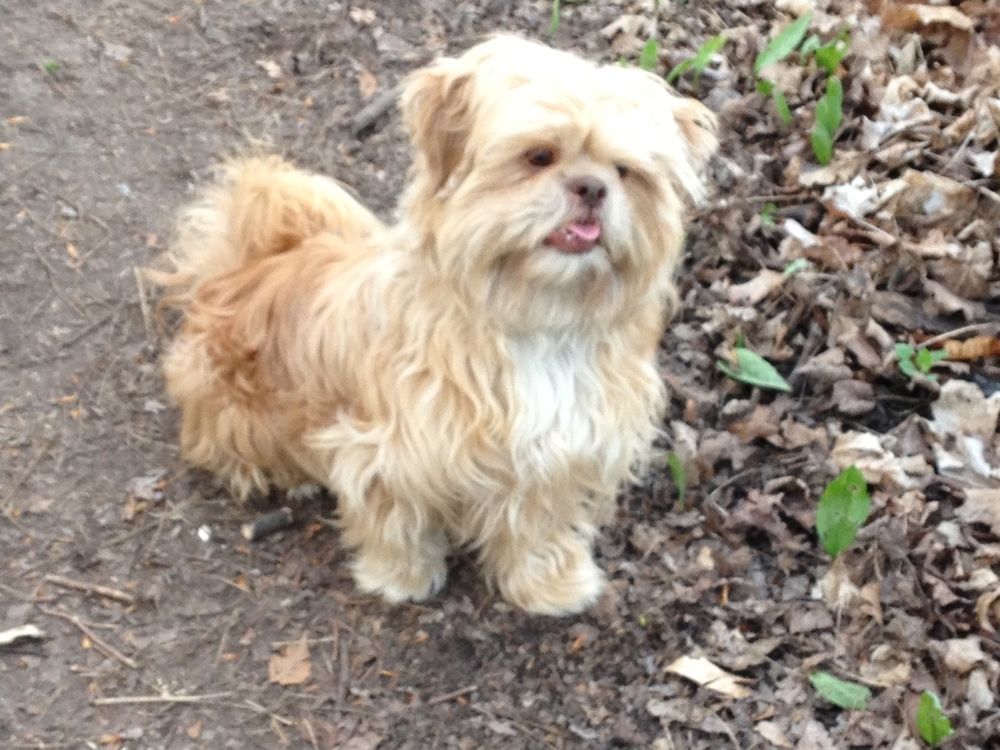
- Origin
- Tibet, developed in the imperial palaces of ChinaFédération Cynologique Internationale
- Adult weight
- 4.5 to 8 kg (FCI standard: 4.5 to 8 kg, ideally 4.5 to 7.5 kg)Fédération Cynologique Internationale
- Height
- 23 to 27 cm (AKC: 9 to 10.5 inches, converted to cm; the FCI standard gives not more than 27 cm)American Kennel Club
- Lifespan
- 10 to 18 yearsAmerican Kennel Club
- Coat
- A long, dense coat that needs daily brushing; The Royal Kennel Club lists the breed as not shedding.The Royal Kennel Club
- Energy
- LowAmerican Kennel Club
- Indian heat
- Struggles in heatPDSA
- Flats
- Suits a flatThe Royal Kennel Club
Shih Tzu snapshot
| What | The rule | Source |
|---|---|---|
| Size | Small. AKC gives a height of 9 to 10.5 inches and a weight of 9 to 16 pounds. | American Kennel Club |
| Exercise need | Up to 1 hour a day, says The Royal Kennel Club, which lists it as suited to a flat. | The Royal Kennel Club |
| Alone-time tolerance | Not scored by kennel clubs. The FCI standard calls it friendly and independent. PDSA's general limit is 4 hours alone. | Fédération Cynologique Internationale |
| Heat tolerance | A brachycephalic (flat-faced) breed, as the Cambridge BOAS research group lists it. Flat-faced dogs as a group had about twice the odds of heat-related illness in a UK study. | University of Cambridge, Department of Veterinary Medicine |
| Coat and shedding | Long coat that needs grooming every day; The Royal Kennel Club lists it as not shedding. | The Royal Kennel Club |
| With other dogs | AKC rates it at the top of its scale (5 of 5) for getting on with other dogs. Watch play with much bigger dogs. | American Kennel Club |
Where does the Shih Tzu come from?
The Shih Tzu's roots are in Tibet, but it was developed in China, where dogs like it lived in the imperial palaces, says the FCI standard. AKC says imperial breeders created it centuries ago from Tibetan stock, most likely by crossing the Lhasa Apso and the Pekingese, and that emperors are said to have rewarded breeders of the most beautiful and affectionate dogs. The name means lion dog, and in its early days it was known as the Lhasa Lion dog, notes the Royal Kennel Club.
For hundreds of years the breed stayed hidden behind palace walls. China became a republic in 1912, after which dogs found their way to the West, though the first recorded import to Britain was not until 1931, says the FCI standard. The first Shih Tzus were shown in England in 1933 alongside Lhasa Apsos, and comparing their heads soon showed they were separate breeds.
The Shih Tzu Club of England was founded in 1934 and The Kennel Club gave the breed its own register in 1940. AKC admitted it to its stud book in 1969, and it has since become one of the most popular toy dogs in the United States and the United Kingdom.
How did the Shih Tzu come to India?
No source we found documents when the first Shih Tzus came to India, so its arrival is not documented here. It is clearly one of the country's favourite city dogs now: in Ahmedabad's municipal registration figures reported in August 2026, Shih Tzus were the third most registered breed with 1,497 dogs, behind only Labradors and German Shepherds. Any dog imported today comes under the 2016 foreign trade rule that allows dogs into India only as pets with a pet book, for research, or for defence and police use, not for commercial breeding.
The Shih Tzu was not named in the central government's March 2024 list of breeds, as Gurugram's 2026 order reproduces it, and it suits flat life. The Indian climate is its main challenge: AKC says that because of their heavy coats and short faces, Shih Tzus do not tolerate heat well, and PDSA names the breed among those most affected by heatstroke.
What care does a Shih Tzu need?
The three things that shape a good day for this breed.
Exercise
Minimal: AKC says short daily walks and indoor play are enough, and The Royal Kennel Club gives up to 1 hour a day. In Indian summers, walk only in the cool morning and evening. American Kennel Club
Grooming
A long coat needs daily brushing down to the skin and a bath every three or four weeks, says AKC. Comb the moustache and topknot daily, wipe the eye corners, and tie up or trim the hair above the eyes; a short puppy trim is an easier option. The Royal Kennel Club
Training
AKC says Shih Tzus can charm owners into letting them have their own way, so be consistent. Reward-based training works, harsh corrections should not be used, and puppy classes should use positive reinforcement. American Kennel Club
How much should a Shih Tzu eat?
Daily calories for a healthy, neutered adult Shih Tzu, worked out from its weight with the formula vets use (70 x weight in kg to the power 0.75, then AAHA's factor for a neutered adult). Divide by the kcal per kg on your food's pack for grams a day, and adjust by body shape.
| Resting need (kcal a day) | Neutered adult (kcal a day) | |
|---|---|---|
| 4.5 kg AAHA (American Animal Hospital Association) | 220 | 300 to 350 |
| 6.3 kg | 280 | 390 to 450 |
| 8 kg | 330 | 470 to 530 |
AKC advises a complete dog food suited to the dog's age, or a home-prepared diet only under your vet's supervision; Merck notes unbalanced homemade diets are the commonest cause of nutritional problems. AKC warns that a Shih Tzu that charms its way to extra food becomes a chubby dog, and that treats can cause obesity, so count every biscuit and bite of roti. Dental disease was the most common problem in a UK study of Shih Tzus, so ask your vet about daily tooth brushing and dental foods or chews. Keep onion, garlic, grapes, tamarind, chocolate and salty snacks out of reach, and remember ASPCA's note that milk and dairy can cause diarrhoea. Meals a day: 6 to 12 weeks, 4 a day; 3 to 6 months, 3 a day; 6 to 12 months, 2 a day; adult, 2 a day. Puppies, kittens, working, pregnant and older animals need different amounts: ask your vet, or use Petym's food calculator.
Which illnesses is the Shih Tzu prone to, and how are they treated?
The conditions veterinary studies and breed surveys most often report in the Shih Tzu. Knowing the early signs means a vet sees it sooner.
See your vet first. This is general information from veterinary sources, not a diagnosis. Only a vet who has examined your pet can say what is wrong and prescribe treatment, and this page never gives a dose. Do not give your pet human medicine. If your pet seems very unwell, go to a 24-hour vet: find one in your city.
Brachycephalic airway obstruction syndrome (BOAS)
See a vet soonBreathing problems caused by a short skull squeezing the nose and throat tissues into less space: narrow nostrils, an overlong soft palate and a narrow windpipe. Science for Animal Welfare says many Shih Tzus are likely to have it to some degree. Science for Animal Welfare (formerly UFAW)
Signs to watch for
- Snoring and noisy breathing
- Tiring quickly on walks
- Breathing through the mouth, or fast breathing
- Disturbed sleep and episodes of breathing distress
How a vet treats it
Narrow nostrils can be seen on examination; other parts need examination under anaesthetic with X-rays and sometimes endoscopy. Vets often combine diagnosis with corrective airway surgery under the same anaesthetic, because these dogs carry a higher anaesthetic risk.
Prevention
Choose a puppy whose parents breathe quietly and have not had airway surgery, and keep your dog lean.
Eye problems of flat-faced dogs (brachycephalic ocular syndrome)
See a vet soonLarge, prominent eyes and a short muzzle expose the eye to injury and rubbing hairs. Science for Animal Welfare says probably all Shih Tzus have this to some degree; one screening found ingrowing lashes (distichiasis) in about 20% and inward-rolling eyelids in about 5%. Science for Animal Welfare (formerly UFAW)
Signs to watch for
- Squinting, watering or rubbing at the face
- Discharge or redness
- A cloudy, pigmented or scarred cornea
How a vet treats it
A detailed eye examination, sometimes by a veterinary ophthalmologist, finds the cause. Treatment includes regular eye drops or ointments prescribed by the vet to protect the cornea and surgery to correct lashes, nasal-fold hairs or eyelids. Deep corneal ulcers can rupture the eye and are an emergency.
Prevention
Keep hair off the eyes, and have any squint or watering checked the same day.
Dry eye (keratoconjunctivitis sicca)
See a vet soonThe tear glands are destroyed by the immune system, so the eye dries and becomes inflamed. Shih Tzus are predisposed, often before 4 years of age, and many affected dogs also get corneal ulcers. Science for Animal Welfare (formerly UFAW)
Signs to watch for
- Red eyes
- Sticky, thick yellow or green discharge
- A dull, cloudy cornea
- Squinting and blinking
How a vet treats it
A vet confirms it with the Schirmer tear test. There is no cure, so treatment is usually lifelong: immunosuppressive eye drops prescribed by the vet, artificial tears, antibiotics for infection, and sometimes surgery to redirect a salivary duct to the eye.
Prevention
There is no genetic test. Ask whether the parents and grandparents were free of eye disease.
Dental (periodontal) disease
Ask at a routine checkGum infection that destroys the tissues holding the teeth. It was the most common single disorder in a UK study of 2,423 Shih Tzus (9.5%), and Merck says small breeds usually have more trouble with it than large ones. Canine Medicine and Genetics (2024), RVC VetCompassstudy
Signs to watch for
- Bad breath
- Red or purple gums that bleed easily
- Teeth lost as the supporting tissues break down
How a vet treats it
A vet checks the mouth and may take dental X-rays to see bone loss. Merck says it is treated with thorough professional cleaning above and below the gum line under anaesthesia, and extractions are often needed.
Prevention
Daily tooth brushing is the most effective step; your vet may also suggest dental foods, toys or treats.
Heatstroke
Emergency: go to a vet nowA dangerous rise in body temperature. PDSA names the Shih Tzu among the flat-faced breeds most affected, and AKC says the heavy coat and short face mean the breed does not tolerate heat well. PDSA
Signs to watch for
- Heavy panting and difficult breathing
- Drooling, vomiting or diarrhoea
- Pale or bright red gums, weakness or collapse
How a vet treats it
Start cooling with cool water and a breeze and go to a vet at once. PDSA says vets cool the dog and may give an intravenous fluid drip, oxygen and medication, and test blood and urine for organ damage.
Prevention
Walk at dawn and after dark, keep a cool room and water ready, use a harness, keep the coat brushed or trimmed, and never leave the dog in a car.
Does a Shih Tzu overheat easily?
It can. Treat it as a flat-faced breed in the heat, even though small size helps a little.
The Cambridge veterinary school's BOAS research group lists the Shih Tzu among brachycephalic breeds, the short-muzzled dogs prone to upper airway obstruction. Science for Animal Welfare lists brachycephalic airway obstruction syndrome among the breed's genetic welfare problems. In the large UK heatstroke study, flat-faced dogs as a group had 2.10 times the odds of heat-related illness of medium-muzzled dogs.
That same study found that the Shih Tzu, Lhasa Apso and Chihuahua had the lowest odds of all the breeds analysed, despite being flat-faced, and the authors linked this to their small size: dogs under 10 kg lose heat faster. The honest reading for India is that a Shih Tzu is not a Pug, but it is not a Labrador either. A hot flat during a power cut, a walk on a sunny road or excitement at a party can all push it over. The Cambridge group lists excessive panting, excessive drooling, dehydration, a rapid heart rate and a body temperature above 39 °C as heat warning signs.
Breathing and eye signs: when a sitter calls the vet
A Shih Tzu's face shape puts breathing and eyes at the top of the watch list.
If Noisy breathing that is louder than usual, struggling to breathe on a short walk, or mouth breathing at rest.
Stop, move to a cool room, keep the dog calm and call the vet. Snoring and snorting are signs of airway obstruction. University of Cambridge, Department of Veterinary Medicine
If Blue or grey tongue or gums, or collapse.
An emergency: go to the nearest 24-hour vet straight away and call the owner on the way. University of Cambridge, Department of Veterinary Medicine
If Heavy panting and drooling in a warm room or after play.
Possible heatstroke: cool water poured over the body away from the face, a breeze, then the vet. PDSA
If A squinting or closed eye, a cloudy patch, a red eye or pawing at the face. In an English study, 3.45% of Shih Tzus had a corneal ulcer.
Call the vet the same day. Eye ulcers can worsen fast; do not put any drops in unless the vet prescribed them. Canine Genetics and Epidemiology (2017), RVC VetCompassstudy
If Sticky, dry-looking eyes with discharge. Keratoconjunctivitis sicca (dry eye) is on the breed's list of genetic welfare problems.
Give any eye drops exactly as prescribed and logged; call the vet if the eyes look worse. Science for Animal Welfare (formerly UFAW)
If Scooting or licking under the tail. Anal sac impaction affected 7.4% of UK Shih Tzus.
Tell the owner; the vet can check it. Canine Medicine and Genetics (2024), RVC VetCompassstudy
A Shih Tzu's day with a sitter
Petym’s working from the official rules, no government publishes a total.
A sample routine for the hot months. It keeps exercise short and cool and fits the daily groom in.
Early morning
A 20 to 30 minute walk at the dog's pace, on a harness rather than a neck collar, on shaded paths. Turn back at the first sign of hard breathing.
After the walk
Breakfast from the owner's plan, then wipe the face and the folds around the eyes with what the owner's vet recommends.
Mid-morning
The daily brush and comb: ten minutes, working down to the skin on the legs, armpits and behind the ears, where mats start.
Midday and afternoon
Indoors in the coolest room with water. In a power cut, the coolest corner away from windows, and a damp cloth to lie on.
Evening
A second short walk after sunset, or indoor play if the evening is still hot.
Night
Dinner, a final toilet trip and the photo update, with a note on breathing, eyes and appetite.
Grooming a Shih Tzu through the Indian year
| Hot months (March to May) | Monsoon (June to September) | Cooler months (October to February) | |
|---|---|---|---|
| Coat | A shorter trim by a groomer helps; daily brushing either way | Mats form fast in damp air; brush daily to the skin | Daily brush; a longer coat is fine |
| Face and eyes | Wipe after walks; keep hair out of the eyes | Dry the face and folds after every wet walk | Wipe daily |
| Ears and paws | Check paws for hot-road redness | Dry paws, ears and between the toes after rain | Weekly check |
| Ticks | Check daily; long hair hides them | Check after every walk | Check after every walk |
Petym's practical plan from the sources on this page. Texas A&M's vet college notes a full shave is not usually needed unless the coat is matted.
Feeding a small, flat-faced dog
Keep the food and the times exactly as at home and leave enough for the whole stay plus a few days; a sudden switch can upset the stomach. Small dogs need small portions, so a spoonful extra matters. WSAVA's nutrition committee suggests treats stay under about 10% of daily calories. Extra weight makes breathing harder for flat-faced dogs, and the UK heatstroke study found dogs at or above their breed's average weight had higher odds of heat-related illness.
Gum disease was the most common problem in a study of 11,082 UK Shih Tzus, recorded in 9.5% of them, and the authors named oral hygiene a priority for the breed. If you brush your dog's teeth, show the sitter how and leave the toothpaste made for dogs. Keep chocolate, grapes, raisins, onion, garlic and xylitol well out of reach.
Shih Tzu dos and don'ts for a sitter
Do
- Use a harness for walks so there is no pressure on the throat.
- Keep water in a wide, shallow bowl the flat face can reach easily, and refill it often. Animal Welfare Board of India
- Keep the dog in the coolest room on hot afternoons and during power cuts.
- Give any prescribed eye drops on time and log each one.
Don’t
- Do not walk at midday in the hot months, or on ground too hot for your palm for 7 seconds. PDSA
- Do not leave the dog in a parked car, even for a few minutes.
- Do not let excitable play go on in a warm room; stop before the panting gets heavy.
- Do not give human eye drops, painkillers or any medicine without the vet.
Shih Tzu sitter checklist
- Brush, comb, face wipes and the grooming routine, with the dog's tender spots.
- The dog's normal breathing noise at rest, so the sitter can tell what is new.
- Any eye drops or medicines, written exactly as the label says.
- Meal amounts, times and treat allowance, plus any tooth-brushing routine.
- The harness, the walk times, and the coolest room for power cuts.
- The groomer's number, if a trim is due during the stay.
- Tick prevention due date.
- The vet's number and the nearest 24-hour vet on Petym's city list.
Which Petym service suits a Shih Tzu?
Best fit
Overnight pet sitting
The sitter stays in your home, so the dog keeps its cool room, its routine and its own bed.
Pet boarding
A sitter's home that has passed Petym's video walk-through. Ask about cooling and other dogs at the meet and greet.
Drop-in visits
For a short absence only, to feed, groom, check breathing and eyes and give company.
Special-needs pet care
If your Shih Tzu has an eye or breathing condition with a daily medicine plan.
Breeds with similar care needs to the Shih Tzu
Going away soon? Tell us your dates.
A checked local sitter feeds, walks and keeps your pet company at home, follows your care sheet to the letter and sends a photo every day. Petym is opening city by city: send your dates and we will tell you when a sitter can take them.
- Meet your sitter first, free
- PAN-checked, first-aid trained
- A photo every day
- Pay through Petym, never cash


Questions owners ask
Can a Shih Tzu live in Indian summers?
- Yes, with care. It is a flat-faced breed, and flat-faced dogs had about twice the odds of heat-related illness in a UK study, though small Shih Tzus had low odds there. Walk only early and late, keep a cool room ready for power cuts, keep the dog lean and watch the breathing.
Should I shave my Shih Tzu in summer?
- A shorter trim by a groomer is common and can make daily brushing easier, but a full shave is not usually needed unless the coat is matted, according to Texas A&M's veterinary college. Whatever the length, brush down to the skin every day so mats do not form.
How long can a Shih Tzu be left alone?
- PDSA's general advice is no more than 4 hours at a time. The FCI standard calls the Shih Tzu friendly and independent, but it is a companion dog. For longer, arrange a sitter or drop-in visits, and make sure the home stays cool if the power goes.
Is snoring normal in a Shih Tzu?
- It is common, but the Cambridge BOAS research group says snoring and snorting are signs of airway obstruction. A sitter should know your dog's usual noise at rest. Louder breathing, struggling on a short walk, a blue tongue or collapse need a vet, the last two urgently.
What eye problems do Shih Tzus get?
- Science for Animal Welfare lists brachycephalic ocular syndrome and dry eye (keratoconjunctivitis sicca) for the breed, and 3.45% of Shih Tzus had a corneal ulcer in an English study. Squinting, a cloudy patch or a red, weepy eye needs a vet the same day.
How much exercise does a Shih Tzu need?
- Up to 1 hour a day, according to The Royal Kennel Club; AKC says short daily walks and indoor play are enough. In India that means two short walks in the cool morning and evening, on a harness, with indoor play on hot days.
What should a sitter do with a Shih Tzu in a power cut?
- Move the dog to the coolest room, away from sunny windows, with fresh water in a wide bowl and a damp cloth or cool floor to lie on. Keep it calm and quiet. If it pants heavily, drools or breathes noisily and the room stays hot, call the vet.
Is a Shih Tzu good with other dogs at a sitter's home?
- Usually. AKC rates the breed at the top of its scale for getting on with other dogs. Because it is small and flat-faced, rough play with big dogs or long play in a warm room should be stopped early.
Keep reading
Services that help
Free tools for this
Words on this page, explained
Keep exploring
Other dog breeds
- Akita
- Alaskan Malamute
- American Bully
- American Cocker Spaniel
- American Pit Bull Terrier
- Australian Shepherd
- Bakharwal dog
- Basset Hound
- Beagle
- Belgian Malinois
- Bernese Mountain Dog
- Bichon Frise
- Border Collie
- Boston Terrier
- Boxer
- Bull Terrier
- Bulldog
- Bullmastiff
- Cane Corso
- Caucasian Shepherd Dog
- Cavalier King Charles Spaniel
- Chihuahua
- Chippiparai
- Chow Chow
- Cocker Spaniel
- Dachshund
- Dalmatian
- Dobermann
- Dogo Argentino
- English Mastiff
- English Springer Spaniel
- French Bulldog
- Gaddi Kutta (Gaddi dog)
- German Shepherd
- Golden Retriever
- Great Dane
- Greyhound
- Havanese
- Indian pariah dog (Indie)
- Indian Spitz
- Irish Setter
- Jack Russell Terrier
- Kangal
- Kanni
- Kombai
- Labrador Retriever
- Lhasa Apso
- Maltese
- Miniature Pinscher
- Miniature Schnauzer
- Mudhol Hound
- Neapolitan Mastiff
- Newfoundland
- Papillon
- Pekingese
- Pembroke Welsh Corgi
- Pomeranian
- Poodle
- Pug
- Rajapalayam
- Rampur Greyhound
- Rhodesian Ridgeback
- Rottweiler
- Saint Bernard
- Samoyed
- Shar Pei
- Shiba Inu
- Siberian Husky
- Tibetan Mastiff
- Weimaraner
- West Highland White Terrier
- Whippet
- Yorkshire Terrier
Sources
Each source was opened and read on the date shown. How Petym checks its sources
- Fédération Cynologique Internationale: FCI-Standard No 208: Shih Tzu (opens in a new tab)
- American Kennel Club: Shih Tzu dog breed information (opens in a new tab)
- The Royal Kennel Club: Shih Tzu: breed information (opens in a new tab)
- PDSA: Heatstroke in dogs (opens in a new tab)
- Directorate General of Foreign Trade, Ministry of Commerce and Industry: Notification No. 3/2015-2020 (25 April 2016): policy conditions on import of dogs; import of commercial dogs for breeding not permitted (opens in a new tab)
- Municipal Corporation Gurugram: Office order on registration and control of pet dogs (23 June 2026) (opens in a new tab)
Show all 28 sourcesShow fewer
- Merck Veterinary Manual: Puppy care (opens in a new tab)
- Merck Veterinary Manual: Nutritional requirements of small animals (full review November 2023, updated September 2024) (opens in a new tab)
- Merck Veterinary Manual: Dental disorders of dogs (dog owners; full review May 2018, updated October 2025) (opens in a new tab)
- ASPCA Animal Poison Control: People foods to avoid feeding your pets (opens in a new tab)
- Merck Veterinary Manual: Garlic and onion (Allium spp) toxicosis in animals (opens in a new tab)
- Merck Veterinary Manual: Grape, raisin, and tamarind (Vitis spp, Tamarindus spp) toxicosis in dogs (full review September 2024) (opens in a new tab)
- VCA Animal Hospitals: Feeding times and frequency for your dog (opens in a new tab)
- AAHA (American Animal Hospital Association): 2021 AAHA Nutrition and Weight Management Guidelines for Dogs and Cats: energy requirement calculations (Box 1, PDF) (opens in a new tab)
- Science for Animal Welfare (formerly UFAW): Shih Tzu: brachycephalic airway obstruction syndrome (BAOS) (opens in a new tab)
- Science for Animal Welfare (formerly UFAW): Shih Tzu: brachycephalic ocular syndrome (opens in a new tab)
- Science for Animal Welfare (formerly UFAW): Shih Tzu: keratoconjunctivitis sicca (dry eye) (opens in a new tab)
- Science for Animal Welfare (formerly UFAW): Shih Tzu: genetic welfare problems (opens in a new tab)
- University of Cambridge, Department of Veterinary Medicine: BOAS: recognition and diagnosis (opens in a new tab)
- PDSA: Separation anxiety in dogs (opens in a new tab)
- Texas A&M College of Veterinary Medicine (Pet Talk, 16 June 2022): Time for a summer cut? Tips for warm weather dog grooming (opens in a new tab)
- WSAVA: Frequently asked questions and myths (Global Nutrition Committee) (opens in a new tab)
- PDSA: Diarrhoea after a change of food (opens in a new tab)
- Animal Welfare Board of India: Request to ensure care and protection of animals from direct heat during extreme hot weather (4 May 2026) (opens in a new tab)
- Canine Medicine and Genetics (2024), RVC VetCompass: Demography, common disorders and mortality of Shih Tzu dogs under primary veterinary care in the UK (opens in a new tab)
- Canine Genetics and Epidemiology (2017), RVC VetCompass: Corneal ulcerative disease in dogs under primary veterinary care in England (abstract read) (opens in a new tab)
- Scientific Reports (2020): Incidence and risk factors for heat-related illness in UK dogs (opens in a new tab)
- Telangana Today (IANS): Ahmedabad registers nearly 20,000 pet dogs; Labradors remain the city's most popular breed (5 Aug 2026) (opens in a new tab)