Indie dog care: leaving your Indian pariah dog with a sitter
Updated By PetymFacts checked against official sources on
Quick answer
An Indie usually copes well with heat and a simple routine, but trust is the hard part. The INDog Project describes the Indian native dog as extremely alert and very social, yet uncomfortable around strangers. So a sitter should meet the dog first, keep the routine familiar, never let it off the leash outside, and watch the door.
Indies are hardy, but they still need vaccines, deworming and tick control like any dog. In a survey of dogs in four Indian cities, about half carried a tick-borne infection.
- Meet your sitter first, free
- PAN-checked, first-aid trained
- A photo every day
- Pay through Petym, never cash

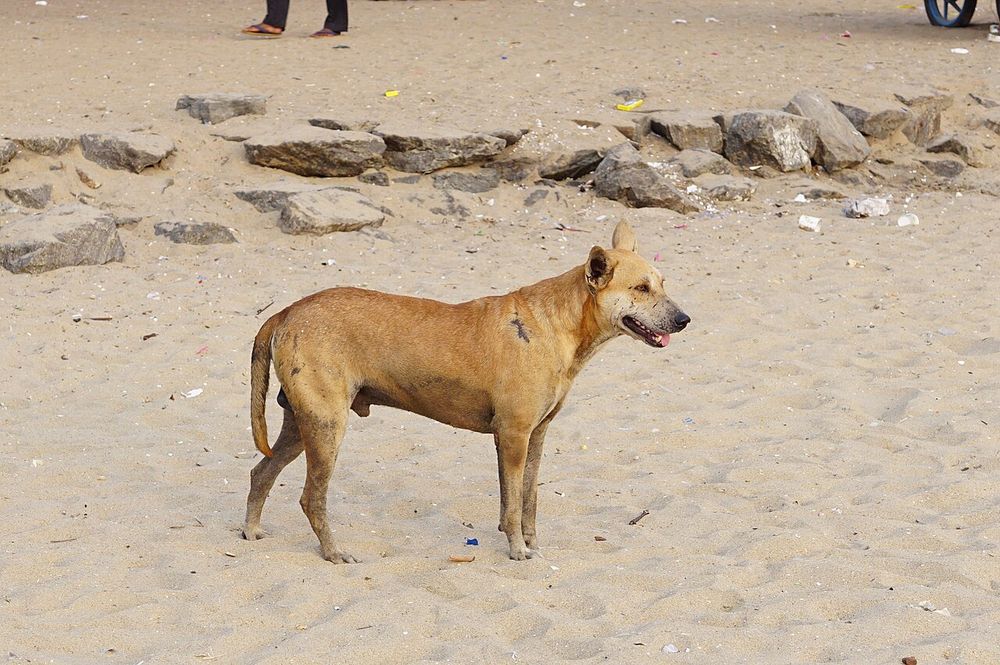
- Indian breed
- Developed in India
- Origin
- The Indian subcontinent, the plains and lower hill ranges (INDog Project)INDog Project (independent; not a kennel club)
- Adult weight
- 15 to 30 kg (males 20 to 30 kg, females 15 to 25 kg, from the INDog Project's standard (an independent project, not a kennel club); adopted Indies vary widely)INDog Project (independent; not a kennel club)
- Height
- 46 to 64 cm (males 20 to 25 inches, females 18 to 23 inches at the withers, converted to cm)INDog Project (independent; not a kennel club)
- Coat
- A double coat: a coarse upper coat over a soft undercoat. Solid fawn shades and pied are the commonest colours. A weekly brush is enough.INDog Project (independent; not a kennel club)
- Indian heat
- Copes wellINDog Project (independent; not a kennel club)
- Flats
- A flat, with daily exerciseINDog Project (independent; not a kennel club)
Indie dog snapshot
| What | The rule | Source |
|---|---|---|
| Size | Medium. The INDog Project's standard gives 20 to 25 inches and 20 to 30 kg for adult males, 18 to 23 inches and 15 to 25 kg for females. Adopted Indies vary widely. | INDog Project (independent; not a kennel club) |
| Exercise need | No kennel club figure exists. In words: an athletic, alert dog that needs two proper walks a day and time to sniff and explore. | Not stated |
| Alone-time tolerance | Not scored for this dog. PDSA's general advice for all dogs is no more than 4 hours alone at a time. | PDSA |
| Heat tolerance | Good, by the INDog Project's account: it thrives with minimal maintenance, especially in tropical weather, but does not stand cold very well. | INDog Project (independent; not a kennel club) |
| Coat and shedding | A double coat: a coarse upper coat and a soft undercoat (INDog Project). Low grooming; a weekly brush. | INDog Project (independent; not a kennel club) |
| With other dogs and people | Described by the INDog Project as extremely alert and very social, but not comfortable around strangers and able to get defensive. | INDog Project (independent; not a kennel club) |
Where does the Indian pariah dog (Indie) come from?
The Indian pariah dog, which the INDog Project calls the INDog, was not created by breeders. The project, an independent research and education initiative, says it evolved entirely through natural selection, without deliberate human intervention, and describes it as a landrace: a type, not a man-made breed. It places the INDog among the primitive and aboriginal dogs, a group distinct from modern breeds.
The project calls it the original and predominant domestic dog type of the plains and lower hill ranges of the subcontinent, and says village dogs in the more remote parts of India show little or no mixing with foreign breeds. It suggests today's INDogs descend directly from ancient primitive-type dogs, but is careful to say that their antiquity remains a hypothesis. Its breed standard describes one of the oldest types of domestic dog, an extremely alert and very social animal that is wary of strangers, and gives an average life expectancy of over 15 years under good care; that figure is the project's, not a veterinary study's.
How did the Indian pariah dog (Indie) come to India?
This is India's own dog, and it never had to arrive. The INDog Project records that Gond people traditionally used INDogs for hunting, and that in Gond villages they are still kept as livestock guards, property guards and companions. In cities most Indies are community dogs or adopted street dogs, and many now live in flats.
Formal recognition is still missing. The Indie is not among the dog breeds registered by ICAR-NBAGR, whose list holds the Rajapalayam, Chippiparai, Mudhol Hound, Gaddi, Changkhi and Kombai. The INDog Project says The Kennel Club of India has expressed interest in INDogs and supports its work to standardise and register them, but it does not say the club recognises the dog today. Indian dogs share Indian diseases: in a survey of 525 dogs in four Indian cities, 49.7% carried at least one tick-borne infection.
What care does a Indian pariah dog (Indie) need?
The three things that shape a good day for this breed.
Exercise
The INDog standard calls the dog very active and says it does well with very long walks several times a day. The project adds that nothing about it is unsuited to city family life, provided it gets enough outdoor exercise. Keep it on a harness and lead outside; many adopted Indies know the street better than the home. INDog Project (independent; not a kennel club)
Grooming
Low upkeep: a weekly brush for the double coat. Check the ears, neck, armpits and toes for ticks after every walk and keep up the tick prevention your vet chooses, since the brown dog tick spreads tick fever. INDog Project (independent; not a kennel club)
Training
The standard describes an alert, social dog that is not comfortable around strangers and barks at the slightest doubt. Reward-based training, slow introductions to new people and a steady routine suit it. A wary rescue Indie may need time before it trusts visitors. Merck Veterinary Manual
How much should a Indian pariah dog (Indie) eat?
Daily calories for a healthy, neutered adult Indian pariah dog (Indie), worked out from its weight with the formula vets use (70 x weight in kg to the power 0.75, then AAHA's factor for a neutered adult). Divide by the kcal per kg on your food's pack for grams a day, and adjust by body shape.
| Resting need (kcal a day) | Neutered adult (kcal a day) | |
|---|---|---|
| 15 kg AAHA (American Animal Hospital Association) | 530 | 750 to 850 |
| 22.5 kg | 720 | 1010 to 1160 |
| 30 kg | 900 | 1260 to 1440 |
The INDog standard says Indies are very modest eaters that rarely overeat, but that is no reason to skip nutrition. WSAVA advises a complete and balanced diet; many Indies eat home-cooked rice, roti, curd, eggs or chicken, and WSAVA says a home-cooked diet can be adequate only if it is complete and balanced, ideally formulated by a veterinarian specialised in nutrition. Keep treats under about 10% of the day's calories. Leave out the Indian kitchen's risky foods: onion and garlic in dal or sabzi, chocolate, grapes and raisins, chai and coffee, and anything sweetened with xylitol. WSAVA warns that hard bones can fracture teeth and block or pierce the gut, and the ASPCA advises against salty snacks. Change food gradually over several days, since a sudden switch is a common cause of diarrhoea. Meals a day: puppy, 6 to 12 weeks, 4 a day; 3 to 6 months, 3 a day; 6 to 12 months, 2 a day; adult, 1 or 2 a day. Puppies, kittens, working, pregnant and older animals need different amounts: ask your vet, or use Petym's food calculator.
Which illnesses is the Indian pariah dog (Indie) prone to, and how are they treated?
The conditions veterinary studies and breed surveys most often report in the Indian pariah dog (Indie). Knowing the early signs means a vet sees it sooner.
See your vet first. This is general information from veterinary sources, not a diagnosis. Only a vet who has examined your pet can say what is wrong and prescribe treatment, and this page never gives a dose. Do not give your pet human medicine. If your pet seems very unwell, go to a 24-hour vet: find one in your city.
Tick fever (canine monocytic ehrlichiosis)
See a vet soonNot a breed disease but the commonest serious threat to Indian dogs. The Merck Veterinary Manual says Ehrlichia canis is spread mainly by the brown dog tick, and in a survey of 525 dogs in four Indian cities about half carried a tick-borne infection, with E. canis in 20.6%. Merck Veterinary Manual
Signs to watch for
- Fever, dullness and loss of appetite
- Nosebleeds, bruising or other bleeding
- Swollen lymph nodes
- In long-standing cases, eye inflammation and kidney problems
How a vet treats it
A vet confirms it with blood smear examination, antibody tests or PCR. Merck names an antibiotic, doxycycline, as the drug of choice, given as a course over several weeks, with supportive care and blood transfusions for dogs with severe bleeding or anaemia.
Prevention
Controlling tick exposure: check the dog after every walk and use the tick preventive your vet recommends.
Canine parvovirus
See a vet soonA highly contagious virus that Merck says mostly strikes young, unvaccinated or incompletely vaccinated dogs between 6 weeks and 6 months. Street-born and newly adopted Indie puppies are often in that group. Merck Veterinary Manual
Signs to watch for
- Refusing food and lethargy
- Vomiting
- Diarrhoea, often with blood
How a vet treats it
A vet diagnoses it from the history, an examination and a faecal antigen test, and isolates the dog. Treatment is supportive: intravenous fluids, medicines to stop vomiting when it is prolonged, and antibiotics because the damaged gut lets bacteria through. Survival is generally better with intensive hospital care.
Prevention
Vaccination from 6 to 8 weeks with boosters as your vet schedules them; the DHPPi on an Indian vaccination card covers parvovirus.
Mange (sarcoptic and demodectic)
See a vet soonSkin disease caused by mites, common in street and rescued dogs. Merck says sarcoptic mange spreads easily between animals by contact and can pass to people; demodectic mange comes from mites every dog carries, multiplying when the immune system is weak or by inherited tendency. Merck Veterinary Manual
Signs to watch for
- Sudden, intense itching (sarcoptic mange)
- Sores on the belly, chest, ears, elbows and legs
- Patches of hair loss, scaling and scabs
- Raised lumps and skin infection in severe demodectic mange
How a vet treats it
A vet takes skin scrapings to find the mites. Merck describes medicated shampoos, anti-mite dips and prescription medicines given by mouth or on the skin to kill the mites, with antibiotics for any secondary skin infection; demodectic cases are rechecked with monthly scrapings until two in a row are clear.
Prevention
Prompt treatment of every animal in contact with a dog that has sarcoptic mange.
Indie, desi dog, INDog, pariah: what the names mean
- Indie
- The everyday name in Indian cities for the native dog of the plains, whether adopted from the street or born in a home.
- Desi dog
- The same dog, in Hindi and many other Indian languages: the local dog, as opposed to a foreign breed.
- INDog
- The name used by the INDog Project, an independent research and education initiative on the Indian native dog. INDog Project (independent; not a kennel club)
- Pariah dog
- The older English name. Many owners prefer Indie or INDog today.
- Landrace
- A type shaped by its place rather than by a breeding programme. The INDog Project says the INDog has evolved entirely through natural selection, without deliberate human intervention. INDog Project (independent; not a kennel club)
How an Indie copes when you are away
Well, once it trusts the person. Plan the first meeting carefully.
The INDog Project's breed standard describes an extremely alert, very social dog that is not comfortable around strangers and can get defensive, and that barks at the slightest doubt or provocation. That is a fine watchdog and a demanding guest for a new sitter. Many adopted Indies have also lived through hard times on the street, and some stay wary of certain people, sounds or objects for years.
So start with a meet and greet at home, which Petym offers free before every first booking. Let the dog approach the sitter rather than the other way round, have the sitter feed a few treats from an open hand, and do one short walk together with you holding the leash. If your Indie has a history of snapping at visitors or guarding food, tell the sitter clearly. Keep alone time within PDSA's general limit of 4 hours, and give the dog a quiet place to retreat when visitors come.
Some Indies are skilled escapers: the open society gate, the gap under the main door, the slipped collar on the first walk with someone new. A well-fitted harness and leash on every walk, and a firm rule about doors, protect a dog that may still know the street better than the home.
Building trust: from meet and greet to the first night
Petym’s working from the official rules, no government publishes a total.
A sample plan for a wary Indie. Some dogs need every step; a relaxed dog may skip ahead.
Meet and greet
The sitter visits while you are home, sits down, avoids eye contact and lets the dog come to them. Treats from an open hand, no reaching over the head.
Same visit
A short walk together: you hold the leash first, then hand it to the sitter for the last few minutes.
A day or two before you leave
If you can, a second short visit, so the sitter's smell and voice are familiar. The sitter feeds one meal.
Day one alone with the sitter
Same walk times, same route, same food, same bed. The sitter keeps visitors away and lets the dog settle.
Every evening
The daily photo update and a short note to you on appetite, walks, toilet and mood, so you can spot a change early.
An Indie through the Indian year
| Hot months (March to May) | Monsoon (June to September) | Winter (December to February) | |
|---|---|---|---|
| Walks | Early morning and after sunset; carry water | Between showers; keep away from floodwater and garbage heaps | Midday sun is fine; long walks are easy |
| Comfort | Shade and water all day, even for a heat-hardy dog | A dry bed off the floor; towel dry after walks | A blanket or warm bed in North India: the INDog Project says Indies do not stand cold very well |
| Watch for | Heavy panting after play | Ticks and paw wounds | Shivering, stiffness in older dogs |
| Festivals | Holi colours: keep the dog indoors | Ganesh Chaturthi crowds and drums | Diwali crackers: a closed, quiet room |
Petym's practical plan, based on the sources on this page. Winters differ: Chennai is not Delhi.
Health issues an Indie's sitter should watch for
Hardy is not the same as invincible. A sitter notices, tells the owner and calls the vet.
If Fever, low energy or loss of appetite, especially in a dog that has had ticks. Tick-borne infections are common in Indian dogs.
Call the vet the same day. In a survey of 525 dogs in four Indian cities, about half carried at least one tick-borne infection. Parasites & Vectors (2011)study
If Ticks found on the ears, neck, armpits or between the toes.
Remove with tweezers close to the skin, never bare fingers, and tell the owner. Keep up the tick prevention the vet chose. Merck Veterinary Manual
If Vomiting, diarrhoea or not eating, especially in a young or newly adopted dog whose vaccines may not be complete.
Call the vet. Bring the vaccination card, with the DHPPi and rabies dates.
If A wound or limp after a scuffle with a community dog on a walk.
Keep it clean and call the vet; bite wounds can look small and still need treatment.
If Heavy panting, drooling or weakness after a walk on a hot day.
Even a heat-hardy dog can overheat. Shade, cool water poured over the body, a breeze, then the vet. PDSA
If Scratching, hair loss or crusty skin.
Tell the owner and ask the vet; skin problems, including mange, need a diagnosis.
Feeding an Indie: dos and don'ts for the sitter
Many Indies eat home food. Write it down so the sitter cooks it the same way.
Do
Don’t
- No onion or garlic in the dal or sabzi, and no chocolate, grapes, raisins or xylitol. ASPCA Animal Poison Control
- No bones: the ASPCA warns that bones can injure or block the gut. ASPCA Animal Poison Control
- No heavily salted or spiced leftovers. ASPCA Animal Poison Control
- Do not take the bowl away while the dog is eating to test it.
Indie sitter checklist
- The dog's story: when and where it was adopted, and anything it fears, such as sticks, helmets or men in uniform.
- How it greets strangers, and the signs it wants space: turning away, lip licking, a stiff body.
- Harness and leash, the door and gate rules, and the dog's escape tricks.
- The vaccination card with DHPPi and rabies dates, and the deworming record.
- Tick prevention product and next due date.
- Food recipe and portions, written out, and the treat allowance.
- Community dogs on the walking route, and which lanes to avoid.
- The vet's number and the nearest 24-hour vet on Petym's city list.
Which Petym service suits your Indie?
If Your Indie is wary of strangers or guards the home
Overnight pet sitting in your own home, after a meet and greet. The dog keeps its territory and sees one familiar person. Overnight sitting
If You are out all day but home at night
Dog walking at midday, with the same route the dog knows. Dog walking
If Your Indie is relaxed and social with new dogs and people
Pet boarding in a sitter's home that has passed Petym's video walk-through, inside its pet limit. Home boarding
If Your dog is newly adopted, recovering or on medicines
Special-needs pet care, with the vet's plan followed and logged. Special-needs care
Breeds with similar care needs to the Indian pariah dog (Indie)
Going away soon? Tell us your dates.
A checked local sitter feeds, walks and keeps your pet company at home, follows your care sheet to the letter and sends a photo every day. Petym is opening city by city: send your dates and we will tell you when a sitter can take them.
- Meet your sitter first, free
- PAN-checked, first-aid trained
- A photo every day
- Pay through Petym, never cash


Questions owners ask
Is the Indian pariah dog a breed or a landrace?
- The INDog Project, an independent research initiative, describes it as a landrace: a dog shaped by natural selection, without deliberate human breeding, unlike man-made Indian breeds. It also says the Kennel Club of India has expressed interest in INDogs. Petym did not find a published Kennel Club of India standard for it.
Are Indie dogs good with a pet sitter?
- Usually, once they trust the person. The INDog Project describes Indies as extremely alert and very social but uncomfortable around strangers. A meet and greet before the first booking, a calm first walk together and a familiar routine help an Indie accept a sitter.
Do Indie dogs handle Indian heat well?
- Better than most foreign breeds: the INDog Project says the Indian native dog thrives with minimal maintenance, especially in tropical weather. They still need shade, water and walks in the cooler hours in the hot months, and any dog can get heatstroke after exercise on a very hot day.
Do Indies feel the cold in winter?
- Many do. The INDog Project says Indies do not stand cold very well. In North Indian winters, give a warm bed off the floor, a blanket and a draught-free corner, and watch older dogs for stiffness and shivering.
How long can an Indie be left alone?
- PDSA's general advice for any dog is no more than 4 hours at a time. Indies are alert and bark at the slightest provocation, so a long day alone in a flat can mean barking at every sound in the corridor. Arrange a midday walk or a sitter on long days.
Do Indie dogs need vaccines and tick prevention?
- Yes. Being hardy does not protect a dog from rabies, parvovirus, distemper or tick fever. In a survey of 525 dogs in four Indian cities, about half carried a tick-borne infection. Keep the vaccination card up to date and the tick prevention your vet recommends.
Can I leave my Indie with a sitter if it was a street dog?
- Yes. Many adopted street Indies do well with a sitter once they trust them. Tell the sitter what the dog fears, keep the routine and route unchanged, use a well-fitted harness on every walk and set firm rules about doors and gates, because a dog that knew the street may still try to slip out.
How long do Indie dogs live?
- The INDog Project says they are generally very healthy, with an average life expectancy of over 15 years under good care. That figure comes from the project, not from a published veterinary study, so treat it as a guide and keep up regular vet check-ups.
Keep reading
Services that help
Free tools for this
Words on this page, explained
Keep exploring
Other dog breeds
- Akita
- Alaskan Malamute
- American Bully
- American Cocker Spaniel
- American Pit Bull Terrier
- Australian Shepherd
- Bakharwal dog
- Basset Hound
- Beagle
- Belgian Malinois
- Bernese Mountain Dog
- Bichon Frise
- Border Collie
- Boston Terrier
- Boxer
- Bull Terrier
- Bulldog
- Bullmastiff
- Cane Corso
- Caucasian Shepherd Dog
- Cavalier King Charles Spaniel
- Chihuahua
- Chippiparai
- Chow Chow
- Cocker Spaniel
- Dachshund
- Dalmatian
- Dobermann
- Dogo Argentino
- English Mastiff
- English Springer Spaniel
- French Bulldog
- Gaddi Kutta (Gaddi dog)
- German Shepherd
- Golden Retriever
- Great Dane
- Greyhound
- Havanese
- Indian Spitz
- Irish Setter
- Jack Russell Terrier
- Kangal
- Kanni
- Kombai
- Labrador Retriever
- Lhasa Apso
- Maltese
- Miniature Pinscher
- Miniature Schnauzer
- Mudhol Hound
- Neapolitan Mastiff
- Newfoundland
- Papillon
- Pekingese
- Pembroke Welsh Corgi
- Pomeranian
- Poodle
- Pug
- Rajapalayam
- Rampur Greyhound
- Rhodesian Ridgeback
- Rottweiler
- Saint Bernard
- Samoyed
- Shar Pei
- Shiba Inu
- Shih Tzu
- Siberian Husky
- Tibetan Mastiff
- Weimaraner
- West Highland White Terrier
- Whippet
- Yorkshire Terrier
Sources
Each source was opened and read on the date shown. How Petym checks its sources
- INDog Project (independent; not a kennel club): The INDog Project: about the Indian native dog (opens in a new tab)
- INDog Project (independent; not a kennel club): Breed standard of the Indian native dog (opens in a new tab)
- ICAR-National Bureau of Animal Genetic Resources: Dog breeds of India (registered breeds and accession numbers) (opens in a new tab)
- Merck Veterinary Manual: Ehrlichiosis in dogs (opens in a new tab)
- WSAVA: Frequently asked questions and myths (Global Nutrition Committee) (opens in a new tab)
- ASPCA Animal Poison Control: People foods to avoid feeding your pets (opens in a new tab)
Show all 16 sourcesShow fewer
- PDSA: Diarrhoea after a change of food (opens in a new tab)
- Merck Veterinary Manual: Puppy care (opens in a new tab)
- AAHA (American Animal Hospital Association): 2021 AAHA Nutrition and Weight Management Guidelines for Dogs and Cats: energy requirement calculations (Box 1, PDF) (opens in a new tab)
- Merck Veterinary Manual: Nutritional requirements of small animals (full review November 2023, updated September 2024) (opens in a new tab)
- Merck Veterinary Manual: Canine parvovirus infection (opens in a new tab)
- Merck Veterinary Manual: Mite infestation (mange, acariasis, scabies) in dogs (opens in a new tab)
- PDSA: Separation anxiety in dogs (opens in a new tab)
- Merck Veterinary Manual: Ticks of dogs (opens in a new tab)
- PDSA: Heatstroke in dogs (opens in a new tab)
- Parasites & Vectors (2011): A survey of canine tick-borne diseases in India (opens in a new tab)