Akita care in India: heat, coat, other dogs and notes for your sitter
Updated By PetymFacts checked against official sources on
Quick answer
An Akita can stay with a sitter it has met and accepted, but not in a busy boarding home. AKC calls it loyal and protective, rates it 1 of 5 with other dogs, and says it should never be off lead in an unsecured area. Choose one calm sitter, walk at dawn and after dark, and keep other dogs away.
Akitas had 84.4 times the odds of bloat (GDV) of crossbreds in a UK emergency-care study, so a sitter must know the signs and feed exactly as the owner does.
- Meet your sitter first, free
- PAN-checked, first-aid trained
- A photo every day
- Pay through Petym, never cash

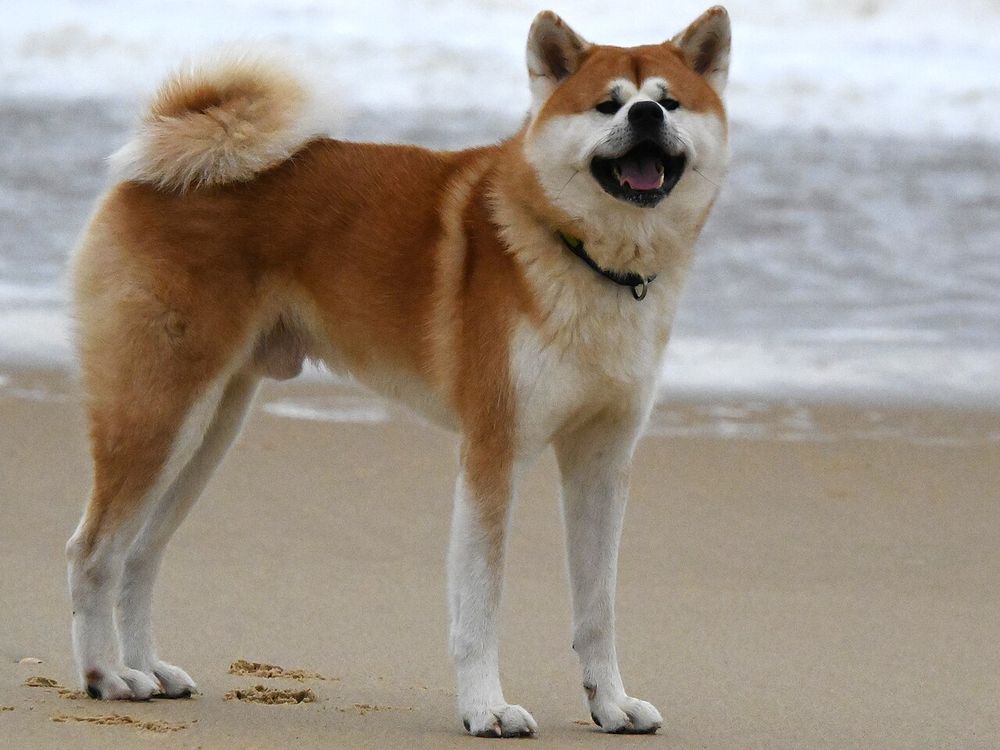
- Origin
- The Akita region of northern JapanFédération Cynologique Internationale
- Adult weight
- 32 to 59 kg (AKC: females 70 to 100 lb, males 100 to 130 lb. The FCI standard for the Japanese Akita gives height only, no weight.)American Kennel Club
- Height
- 58 to 70 cm (FCI: dogs 67 cm, bitches 61 cm, with 3 cm either way.)Fédération Cynologique Internationale
- Lifespan
- 10 to 14 yearsAmerican Kennel Club
- Coat
- A double coat: a harsh, straight outer coat over a soft, dense undercoat, a little longer on the withers, rump and tail. Colours are red fawn, sesame, brindle and white.Fédération Cynologique Internationale
- Energy
- ModerateAmerican Kennel Club
- Indian heat
- Struggles in heatPDSA
- Flats
- A flat, with daily exerciseAmerican Kennel Club
Akita snapshot for a sitter
| What | The rule | Source |
|---|---|---|
| Size | Large. AKC gives 26 to 28 inches and 100 to 130 pounds (about 45 to 59 kg) for males, 24 to 26 inches and 70 to 100 pounds for females. | American Kennel Club |
| Exercise need | More than 2 hours a day, says The Royal Kennel Club. AKC calls the breed not highly active, but needing at least one brisk walk a day. | The Royal Kennel Club |
| With other dogs | AKC rates it 1 of 5 and says Akitas tend to be aggressive toward other dogs, particularly of the same sex. | American Kennel Club |
| With strangers | AKC rates openness to strangers 2 of 5 and protective nature 5 of 5: an instinctive guardian. | American Kennel Club |
| Coat | Thick double coat. Brush at least weekly; the undercoat blows twice a year and comes out in clumps. | American Kennel Club |
| Lifespan | AKC gives 10 to 14 years; The Royal Kennel Club says over 10 years. | American Kennel Club |
| India legal status | Named on the centre's 12 March 2024 list of breeds called ferocious. The Delhi High Court set that letter aside on 16 April 2024. | Municipal Corporation Gurugram |
Where does the Akita come from?
The Akita comes from the Akita region of northern Japan. The FCI standard says Japanese dogs were originally small to medium in size, and that from 1603 medium-sized bear-hunting dogs called Akita Matagis were used in the region as fighting dogs. From 1868 they were crossed with Tosas and Mastiffs, which made the breed bigger but cost it some of its spitz character. The Royal Kennel Club says the breed was developed for hunting bear, deer and wild boar.
Dog fighting was banned in 1908, but the breed was kept and improved as a large Japanese breed, and in 1931 nine fine examples were named Natural Monuments. AKC says a national breed club was founded in Japan in 1927 to save the breed, and that a loyal Akita of the 1920s named Hachiko became one of Japan's best-loved symbols. During the Second World War dogs were taken for their fur and numbers fell sharply. After the war, the FCI standard says, breeders crossed back to Matagi Akitas to remove the foreign blood and rebuild the large Japanese type known today.
Helen Keller is credited with bringing the first Akita to the United States, a gift from a visit to Japan, and the breed caught on there after the war when returning soldiers brought dogs home. It entered the AKC Stud Book in 1972. The Royal Kennel Club notes that the Akita as most people see it today was developed in America, which is why the FCI keeps a separate standard for the Japanese Akita.
How did the Akita come to India?
No source we could find records when or how the first Akitas reached India; the breed is an import, and its arrival is not documented. What is on record is its legal history here. On 12 March 2024 the Department of Animal Husbandry and Dairying sent states a list of breeds an expert committee called ferocious, and the Akita was on it, as Gurugram's municipal order reproduces the list.
The Karnataka High Court quashed that circular on 10 April 2024, and the Delhi High Court set it aside on 16 April 2024 after the Union's counsel accepted that stakeholders had not been heard, directing a public notice inviting objections before any fresh notification. Some cities still set their own rules: Gurugram's 2026 order requires the breeds on the list to be registered and kept on a leash, chain lead and muzzle. Check your city's current rules before you bring an Akita home.
What care does a Akita need?
The three things that shape a good day for this breed.
Exercise
AKC calls the Akita not highly active but needing at least one jog or brisk walk a day, while The Royal Kennel Club lists more than 2 hours a day. In India, do it at dawn and after dark, and never let it off the lead in an unfenced place: AKC warns of a strong prey drive. American Kennel Club
Grooming
Brush the double coat at least once a week, and more often when the undercoat blows twice a year and comes out in clumps. Trim the nails regularly and brush the teeth often, as AKC advises. Never shave the coat. The Royal Kennel Club
Training
Akitas are intelligent and loyal but independent and headstrong, so AKC says training must be consistent from puppyhood, with early and wide socialisation so the dog accepts strangers. AKC also warns they tend to be aggressive toward other dogs, especially of the same sex. Canadian Kennel Club (The Dish, June 2018)
How much should a Akita eat?
Daily calories for a healthy, neutered adult Akita, worked out from its weight with the formula vets use (70 x weight in kg to the power 0.75, then AAHA's factor for a neutered adult). Divide by the kcal per kg on your food's pack for grams a day, and adjust by body shape.
| Resting need (kcal a day) | Neutered adult (kcal a day) | |
|---|---|---|
| 32 kg AAHA (American Animal Hospital Association) | 940 | 1320 to 1510 |
| 45.5 kg | 1230 | 1720 to 1960 |
| 59 kg | 1490 | 2090 to 2380 |
AKC says an Akita does well on a high-quality dog food suited to its age, bought or home-prepared with your vet's supervision and approval, with fresh water always out. Some Akitas gain weight easily, so count treats in the day's total. AKC also notes some breed experts suggest a lighter, less calorie-dense diet from about 7 years, and that some Akitas guard food, so feed it well away from other pets and children. Large, deep-chested dogs are at risk of bloat (GDV), and ACVS lists eating one large meal a day as a risk factor, so split the day's food into two or more meals. Keep Indian kitchen foods that harm dogs off the plate: onion, garlic, grapes and raisins, chocolate, sweets with xylitol, very salty snacks, and milk or other dairy, which ASPCA says can upset the gut. Meals a day: puppy, 6 to 12 weeks, 4 a day; puppy, 3 to 6 months, 3 a day; 6 to 12 months, 2 a day; adult, 2 a day, never one large meal. Puppies, kittens, working, pregnant and older animals need different amounts: ask your vet, or use Petym's food calculator.
Which illnesses is the Akita prone to, and how are they treated?
The conditions veterinary studies and breed surveys most often report in the Akita. Knowing the early signs means a vet sees it sooner.
See your vet first. This is general information from veterinary sources, not a diagnosis. Only a vet who has examined your pet can say what is wrong and prescribe treatment, and this page never gives a dose. Do not give your pet human medicine. If your pet seems very unwell, go to a 24-hour vet: find one in your city.
Bloat (gastric dilatation-volvulus)
Emergency: go to a vet nowThe stomach fills with food and gas and can twist on itself, cutting off its blood supply. AKC says Akitas are particularly susceptible, and ACVS links the condition to deep-chested, large dogs. American Kennel Club
Signs to watch for
- Unproductive retching
- Drooling
- Restlessness, stretching or looking at the belly
- A swollen belly, panting, weakness or collapse
How a vet treats it
A vet confirms it with abdominal X-rays and blood tests, stabilises the dog with intravenous fluids and oxygen, releases the gas with a stomach tube, then operates to turn the stomach back and stitch it to the body wall (gastropexy).
Prevention
ACVS says many surgeons recommend a preventive gastropexy for at-risk breeds, which can often be done at spay or neuter, and feeding two or three smaller meals a day instead of one large meal.
Hip dysplasia
See a vet soonA malformation of the hip joint that leads to arthritis. AKC lists it in Akitas and recommends hip evaluation of breeding dogs. American Kennel Club
Signs to watch for
- Lameness that is worse after exercise
- A bunny-hopping gait
- Stiffness or reluctance to climb stairs
How a vet treats it
A vet diagnoses it with X-rays. Treatment may include weight reduction, limiting exercise on hard surfaces, physical therapy and anti-inflammatory drugs prescribed by the vet, and in some dogs surgery, up to a total hip replacement.
Prevention
Buy from a breeder whose breeding dogs have been hip screened, and keep your dog lean.
Progressive retinal atrophy (PRA)
Ask at a routine checkAn inherited degeneration of the retina that slowly leads to blindness. Merck lists the Akita among the breeds affected, with signs at 3 to 5 years. Merck Veterinary Manual
Signs to watch for
- Bumping into things in dim light or at night
- Reluctance to go out after dark
- Later, loss of sight in daylight too
How a vet treats it
A vet or veterinary eye specialist examines the back of the eye and may confirm it with electroretinography. Merck says no effective treatment is available, so care focuses on helping the dog live safely with poor sight.
Prevention
DNA tests exist for many breeds to find carriers before breeding; AKC recommends an eye examination of breeding Akitas.
Hypothyroidism
See a vet soonAn underactive thyroid gland. AKC advises breeders to screen Akitas for thyroid disorders. Merck Veterinary Manual
Signs to watch for
- Lethargy and dullness
- Weight gain without eating more
- Dry coat, heavy shedding, thinning hair or slow regrowth
How a vet treats it
A vet diagnoses it from blood tests that show low thyroid hormone (especially T4). Treatment is thyroid hormone replacement tablets, usually for life, with blood levels rechecked once or twice a year once stable.
Sebaceous adenitis
See a vet soonAn immune-mediated skin disease that destroys the oil glands of the skin, with a hereditary component in some breeds. Merck names the Akita among the predisposed breeds. Merck Veterinary Manual
Signs to watch for
- Scaling and hair loss starting on the ear flaps, forehead, face, tail and back
- Itching, mainly when a skin infection follows
How a vet treats it
A vet confirms it with a skin biopsy after ruling out infection and mange. Merck lists modified cyclosporine, medicated topical therapy, vitamin A, fatty acid supplements and oclacitinib as the options, prescribed by the vet. It cannot be cured and needs lifelong management.
Can an Akita stay with a sitter?
Yes, with one sitter it knows, ideally in your own home. Not in a house full of strange dogs.
The FCI standard describes the Akita as composed, faithful, docile and receptive, and AKC adds that it is deeply loyal and protective of its people. The same loyalty makes it reserved with everyone else. AKC says Akitas are instinctive guardians that must learn early to accept a wide variety of strangers and not see them as a threat. In practice that means an Akita often ignores a new person at best, and a sitter who arrives cold with a key can be met at the door by a large dog guarding its home.
So the free meet and greet Petym starts every first booking with is not a formality for this breed. Use it to walk together, then hand the lead to the sitter partway, and let the sitter put down a meal while you are in the room. If your Akita has ever growled at visitors, guarded food or reacted to dogs on the road, say so plainly. AKC notes some Akitas are food-possessive and should be fed well away from other animals and children.
On time alone, PDSA's general advice for any dog is no more than 4 hours at a stretch. Akitas are usually quiet, AKC scoring barking 2 of 5, so distress may show as chewing, digging at doors or pacing rather than noise. Ask your sitter to note it in the daily update.
Akita health signs a sitter should report
Notice, write it down, tell the owner, and call the vet. A sitter never diagnoses or medicates on their own.
If Restless, trying to vomit with nothing coming up, a swollen or tight belly, drooling. In a UK emergency-care study the Akita had 84.4 times the odds of gastric dilatation-volvulus (bloat) of crossbred dogs.
An emergency. Go to the nearest 24-hour vet straight away and call the owner on the way. Journal of Small Animal Practice (2017), RVC VetCompassstudy
If Bumping into things at night, reluctance on dark stairs, cloudy eyes. AKC lists progressive retinal atrophy, which slowly leads to blindness, and cataracts.
Not usually urgent. Keep furniture where it is and tell the owner so they can book the vet. American Kennel Club
If Stiffness after rest, a bunny-hop gait, trouble on stairs. AKC lists hip dysplasia, which leads to arthritis.
Shorter walks on soft ground, no jumping from the car, and a note for the vet. American Kennel Club
If Patchy hair loss, scale stuck to the hair, a dull, dry coat that is not just seasonal shedding. Sebaceous adenitis is a well-documented skin disease in Akitas.
Photograph it and tell the owner; skin disease needs the vet, not home remedies. Veterinary Dermatology (2026)study
If Heavy panting that does not settle, drooling, wobbling or collapse after a walk or a power cut.
Heatstroke: move the dog somewhere cool, pour cool water over its body, use a fan and go to the vet at once. PDSA
A summer day for an Akita in an Indian city
Petym’s working from the official rules, no government publishes a total.
A sample plan for May and June. The coat was built for snowy northern Japan, so the day is arranged around the heat.
Before sunrise
The main walk, 40 to 50 minutes at a steady pace on a short, strong lead. Choose quiet lanes where other dogs are less likely. Test the road with the back of your hand for seven seconds first. The Royal Kennel Club
After the walk
Water and rest in the coolest room. Breakfast only once breathing has settled: never feed straight before or after hard exercise.
Mid-morning
A brushing session with a slicker and undercoat rake, then short training games with pieces of the day's food.
Midday to late afternoon
Indoors, out of the sun, with water in two bowls. No outdoor exercise in the hottest hours. Animal Welfare Board of India
Late afternoon
A chew or a food puzzle toy, fed away from any other pet.
After dark
The second walk once the ground has cooled, then dinner, a quick tick check and the daily photo update to the owner.
Is the Akita banned in India?
It was on the 2024 central list, but that letter was struck down in Delhi and Karnataka. Local rules can still apply.
On 12 March 2024 the Department of Animal Husbandry and Dairying wrote to all States and Union Territories, by D.O. letter No. V-11/1/2024-Anlm_Dadf, that an expert committee had identified certain breeds as ferocious and dangerous for human life. The list, as Gurugram's municipal order reproduces it, names the Akita alongside the Japanese Tosa, Tosa Inu, Rottweiler, Cane Corso, Pitbull Terrier and others, and all mixed or cross-breeds of them.
The Delhi High Court set the circular aside on 16 April 2024, after the Union's counsel admitted that no private body had been heard before it was issued, and directed a public notice inviting written objections before any final notification. The same order records that the Karnataka High Court had quashed the circular on 10 April 2024. Petym's rules page tracks what has happened since.
Local rules are separate. Gurugram's office order of 23 June 2026 requires owners of the listed breeds, the Akita included, to register them with the corporation and use a leash, chain lead and muzzle whenever they are outside private premises. A sitter caring for an Akita in Gurugram follows that on every walk. Elsewhere, ask your corporation what applies where you live.
Handling an Akita in a flat and housing society
Do
- Keep it on a short, strong lead in lifts, corridors and the society compound, and wait for an empty lift.
- Put the dog in another room before opening the door to deliveries, cleaners or guests.
- Feed it alone, away from other animals and children, as AKC advises for food-possessive Akitas. American Kennel Club
- Give daily exercise. AWBI notes that failing to exercise a dog kept chained or closely confined is cruelty under the Prevention of Cruelty to Animals Act, 1960. Animal Welfare Board of India
- If the owner has trained the dog to a muzzle, use only one that fits and never leave it on unsupervised, as AWBI's muzzle guidelines say. Animal Welfare Board of India
Don’t
- Do not let it off the lead outside a secure, fenced space. AKC says its independence and strong prey drive make that unsafe. American Kennel Club
- Do not let other dogs rush up to greet. Cross the road or turn away calmly.
- Do not shave the double coat for summer. The Canadian Kennel Club says shaving a double-coated dog does not help cool it. Canadian Kennel Club (The Dish, June 2018)
- Do not feed chocolate, grapes, raisins, onion, garlic or anything with xylitol. ASPCA Animal Poison Control
Heat, monsoon and ticks: India notes for an Akita
AKC describes Akitas as hardy dogs bred to withstand harsh outdoor conditions in northern Japan. Indian summers are the opposite problem. In a UK study of heat-related illness, every weight band over 10 kg had higher odds than small dogs, dogs of 50 kg and above had the highest odds, and being at or above the breed's average weight raised the odds again; exercise was the main trigger. A big male Akita sits in that top band, so keep it lean, walk at dawn and after dark, and give it the coolest floor in the home. During a power cut, a wet towel on the floor and a battery fan help.
The thick coat holds water in the monsoon. Towel and then dry the undercoat fully after rain, because a damp undercoat against the skin stays damp for hours in humid weather. Ticks are common on Indian dogs: a survey of 525 dogs in four Indian cities found ticks on 53%. Part the coat and check the ears, neck, armpits and between the toes after each walk. For Diwali, keep the dog indoors with windows shut and a radio on; an Akita that bolts is very hard to catch.
On food, AKC says some breed experts suggest a lighter diet for Akitas of 7 years and older, and that treats given in excess cause obesity. WSAVA suggests treats stay under about 10% of daily calories. Never change the food during a stay: a sudden change can cause diarrhoea. Feed in the meals the owner uses, since the American College of Veterinary Surgeons lists one large meal a day and eating fast among bloat risk factors.
Akita sitter checklist
- Behaviour notes: visitors, other dogs, food or toy guarding, and what the dog does when worried.
- Lead, collar or harness, the registration token, and whether the dog is used to a muzzle.
- Meal amounts, number of meals, times, and where the dog is fed alone.
- Safe walking times and quiet routes that avoid other dogs and the society's busy gate.
- Brushing tools and how the coat is dried after rain.
- Tick prevention product and next due date.
- Any local breed rule, such as Gurugram's leash, chain lead and muzzle order.
- The vet's number and the nearest 24-hour vet on Petym's list, with the word 'bloat' written next to it.
Which Petym service suits an Akita?
If Your Akita guards the home or dislikes other dogs (most do)
Overnight pet sitting in your home, by one sitter it has met, with no other dogs. Overnight sitting
If You are out all day on workdays
A dog walker it knows, for a midday toilet break in shade and company. Dog walking
If Your Akita is older or on medicines
Special-needs pet care, with the vet's plan followed and logged. Special-needs care
If You are thinking of boarding with other dogs
Usually not a good fit. AKC advises extreme caution in canine interactions for this breed. American Kennel Club
Breeds with similar care needs to the Akita
Going away soon? Tell us your dates.
A checked local sitter feeds, walks and keeps your pet company at home, follows your care sheet to the letter and sends a photo every day. Petym is opening city by city: send your dates and we will tell you when a sitter can take them.
- Meet your sitter first, free
- PAN-checked, first-aid trained
- A photo every day
- Pay through Petym, never cash


Questions owners ask
Can I leave my Akita with a pet sitter?
- Yes, if the sitter has met the dog and the dog has accepted them. Akitas are loyal and protective and wary of strangers, so use Petym's free meet and greet to walk together and hand over the lead. A sitter in your own home, with no other dogs, usually works best.
Is the Akita banned in India?
- The Akita is on the centre's 12 March 2024 list of breeds called ferocious, but the Delhi High Court set that letter aside on 16 April 2024 and the Karnataka High Court quashed it on 10 April 2024. Some cities still regulate the breed: Gurugram requires registration, a leash, chain lead and muzzle.
Can an Akita live in Indian heat?
- With care. Its thick double coat was built for cold northern Japan, and in a UK study heavy dogs and overweight dogs had higher odds of heat-related illness. Walk at dawn and after dark, keep it indoors in the hottest hours, keep it lean and never shave the coat.
Are Akitas good with other dogs?
- Often not. AKC rates the Akita 1 of 5 for getting on with other dogs and says it tends to be aggressive toward other dogs, especially of the same sex. Keep introductions rare and controlled, keep it on a lead, and avoid boarding with other dogs.
What health problems do Akitas have?
- AKC lists bloat (GDV), progressive retinal atrophy and hip dysplasia, and sebaceous adenitis is a well-documented skin disease in the breed. Bloat is the urgent one: a retching dog with a swollen belly needs a 24-hour vet at once. Talk to your vet about the rest.
How much exercise does an Akita need?
- The Royal Kennel Club says more than 2 hours a day, while AKC describes moderate needs with at least one brisk walk daily. In India, split it into a long dawn walk and an evening walk after dark, with brushing and training games indoors in between.
Do Akitas shed a lot?
- Twice a year, heavily. AKC says the dense undercoat blows twice a year and comes out in clumps, and that the coat should be brushed at least once a week, more during a shed. Brushing, not shaving, is how you help an Akita in summer.
Keep reading
- Banned dog breeds in IndiaThe 2024 list and what the courts did.
- Meet and greet checklist
- Heatstroke in dogs
- Should you shave a double-coated dog?
- Siberian Husky careAnother thick-coated spitz in Indian heat.
- Rottweiler care
- Overnight pet sitting
Services that help
Free tools for this
Words on this page, explained
Keep exploring
Other dog breeds
- Alaskan Malamute
- American Bully
- American Cocker Spaniel
- American Pit Bull Terrier
- Australian Shepherd
- Bakharwal dog
- Basset Hound
- Beagle
- Belgian Malinois
- Bernese Mountain Dog
- Bichon Frise
- Border Collie
- Boston Terrier
- Boxer
- Bull Terrier
- Bulldog
- Bullmastiff
- Cane Corso
- Caucasian Shepherd Dog
- Cavalier King Charles Spaniel
- Chihuahua
- Chippiparai
- Chow Chow
- Cocker Spaniel
- Dachshund
- Dalmatian
- Dobermann
- Dogo Argentino
- English Mastiff
- English Springer Spaniel
- French Bulldog
- Gaddi Kutta (Gaddi dog)
- German Shepherd
- Golden Retriever
- Great Dane
- Greyhound
- Havanese
- Indian pariah dog (Indie)
- Indian Spitz
- Irish Setter
- Jack Russell Terrier
- Kangal
- Kanni
- Kombai
- Labrador Retriever
- Lhasa Apso
- Maltese
- Miniature Pinscher
- Miniature Schnauzer
- Mudhol Hound
- Neapolitan Mastiff
- Newfoundland
- Papillon
- Pekingese
- Pembroke Welsh Corgi
- Pomeranian
- Poodle
- Pug
- Rajapalayam
- Rampur Greyhound
- Rhodesian Ridgeback
- Rottweiler
- Saint Bernard
- Samoyed
- Shar Pei
- Shiba Inu
- Shih Tzu
- Siberian Husky
- Tibetan Mastiff
- Weimaraner
- West Highland White Terrier
- Whippet
- Yorkshire Terrier
Sources
Each source was opened and read on the date shown. How Petym checks its sources
- Fédération Cynologique Internationale: FCI standard No. 255: Akita (13 March 2001) (opens in a new tab)
- American Kennel Club: Akita dog breed information (opens in a new tab)
- PDSA: Heatstroke in dogs (opens in a new tab)
- The Royal Kennel Club: Akita: breeds A to Z (opens in a new tab)
- Municipal Corporation Gurugram: Office order on registration and control of pet dogs (23 June 2026) (opens in a new tab)
- High Court of Delhi (order downloaded from the court's server, hosted by LiveLaw): Sikander Singh Thakur v. Union of India, W.P.(C) 4374/2024 and connected matters, order of 16 April 2024 (opens in a new tab)
Show all 28 sourcesShow fewer
- Canadian Kennel Club (The Dish, June 2018): To shave or not to shave, that is the question! (opens in a new tab)
- Merck Veterinary Manual: Puppy care (opens in a new tab)
- American College of Veterinary Surgeons: Gastric dilatation-volvulus (opens in a new tab)
- ASPCA Animal Poison Control: People foods to avoid feeding your pets (opens in a new tab)
- AAHA (American Animal Hospital Association): 2021 AAHA Nutrition and Weight Management Guidelines for Dogs and Cats: energy requirement calculations (Box 1, PDF) (opens in a new tab)
- Merck Veterinary Manual: Nutritional requirements of small animals (full review November 2023, updated September 2024) (opens in a new tab)
- Merck Veterinary Manual: Hip dysplasia (dog owners) (opens in a new tab)
- Merck Veterinary Manual: Disorders of the retina, choroid and optic disk in dogs (dog owners) (opens in a new tab)
- Merck Veterinary Manual: Disorders of the thyroid gland in dogs (dog owners) (opens in a new tab)
- Merck Veterinary Manual: Sebaceous adenitis affecting the pinna in dogs and cats (professional version) (opens in a new tab)
- PDSA: Separation anxiety in dogs (opens in a new tab)
- WSAVA: Frequently asked questions and myths (Global Nutrition Committee) (opens in a new tab)
- PDSA: Diarrhoea after a change of food (opens in a new tab)
- American College of Veterinary Surgeons: Gastric dilatation-volvulus (opens in a new tab)
- Animal Welfare Board of India: Request to ensure care and protection of animals from direct heat during extreme hot weather (4 May 2026) (opens in a new tab)
- The Royal Kennel Club: The danger of hot pavements (opens in a new tab)
- Animal Welfare Board of India: Circular and guidelines for pet owners (1 June 2020) (opens in a new tab)
- Animal Welfare Board of India: Guidelines for the use of muzzles on dogs and care of community dogs (letter dated 16 August 2022) (opens in a new tab)
- Veterinary Dermatology (2026): Comparative histopathological characterisation of sebaceous adenitis in poodle, poodle-related breeds and Japanese Akita dogs (abstract read) (opens in a new tab)
- Journal of Small Animal Practice (2017), RVC VetCompass: Gastric dilation-volvulus in dogs attending UK emergency-care veterinary practices (abstract read) (opens in a new tab)
- Scientific Reports (2020): Incidence and risk factors for heat-related illness in UK dogs (opens in a new tab)
- Parasites & Vectors (2011): A survey of canine tick-borne diseases in India (opens in a new tab)