Great Dane in Indian summers: a sitter's care guide
Updated By PetymFacts checked against official sources on
Quick answer
A Great Dane usually does well with a calm sitter in its own home. The sitter must know three things: giant dogs overheat more easily, so walks happen only in the cool hours; meals are split and followed by rest because of bloat; and a swollen belly with unproductive retching means going to a 24-hour vet at once.
In UK vet records, dogs weighing 50 kg or more had about 3.4 times the odds of heat-related illness of dogs under 10 kg. The AKC says Great Danes are five to eight times more likely to bloat.
- Meet your sitter first, free
- PAN-checked, first-aid trained
- A photo every day
- Pay through Petym, never cash

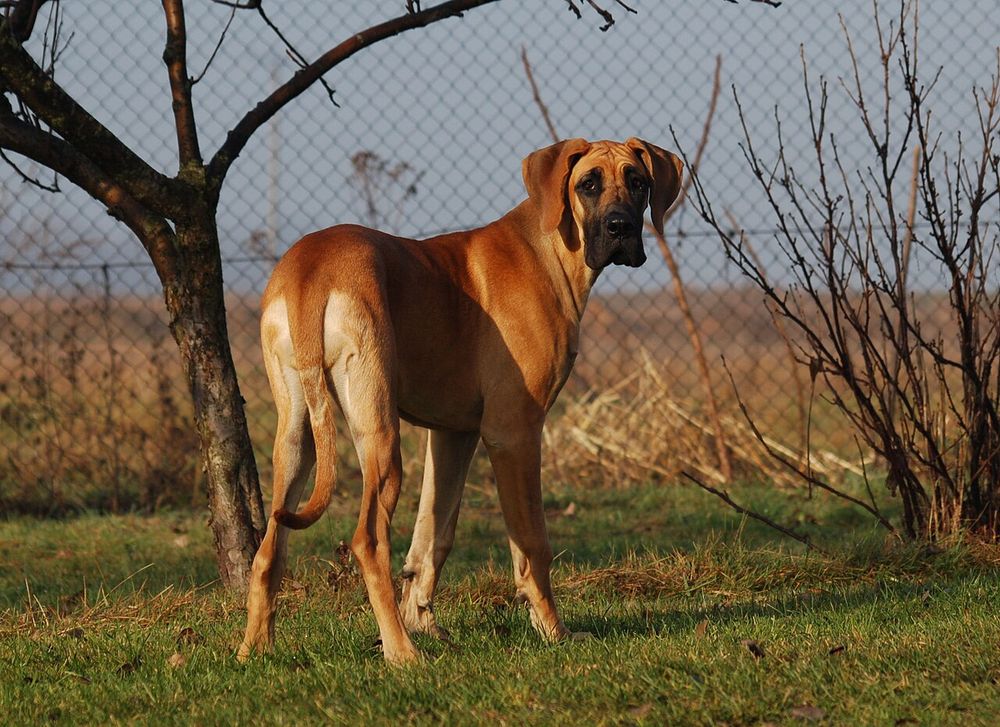
- Origin
- GermanyFédération Cynologique Internationale
- Adult weight
- 50 to 79 kg (AKC: 140 to 175 lb for males, 110 to 140 lb for females, converted to kg; the FCI standard gives height only)American Kennel Club
- Height
- 72 to 90 cm (FCI standard: males at least 80 cm and not over 90 cm, females at least 72 cm and not over 84 cm)Fédération Cynologique Internationale
- Lifespan
- 7 to 10 yearsAmerican Kennel Club
- Coat
- Very short, dense, smooth, close-lying and glossy, never a double coat. Fawn, brindle, harlequin, merle, black or blue.Fédération Cynologique Internationale
- Energy
- HighThe Royal Kennel Club (UK)
- Indian heat
- Struggles in heatScientific Reports (2020)study
- Flats
- Needs spaceThe Royal Kennel Club (UK)
Great Dane care snapshot
| What | The rule | Source |
|---|---|---|
| Size | Extra large, suited to a large house and a large garden (Royal Kennel Club). | The Royal Kennel Club (UK) |
| Exercise need | More than 2 hours a day in the Royal Kennel Club's breed information; in Indian heat, split into cool-hour walks. | The Royal Kennel Club (UK) |
| Alone-time tolerance | Not rated by kennel clubs. The breed is described as kind and loyal to its family; PDSA advises no more than 4 hours alone for any dog. | PDSA |
| Heat tolerance | Lower than smaller dogs: dogs of 50 kg or more had about 3.4 times the odds of heat-related illness compared with dogs under 10 kg. | Scientific Reports (2020)study |
| Shedding and coat | Short coat, sheds, grooming once a week; lifespan under 10 years (Royal Kennel Club). | The Royal Kennel Club (UK) |
| Sociability with other dogs | Described in words only: dash and daring, kind and loyal to the family. Its size alone can worry small dogs; introduce slowly. | The Royal Kennel Club (UK) |
Where does the Great Dane come from?
Despite its English name, the Great Dane is German; in Germany it is the Deutsche Dogge. Its forerunners were the old Bullenbeisser and the hunting and wild boar hounds that sat between a heavy Mastiff type and a fast Greyhound. German nobles used them in packs to hunt wild boar, and the modern dog is taller and more elegant than those heavier ancestors.
For a long time 'Dogge' meant any large, powerful dog, sold under names such as Ulmer Dogge, English Dogge and Great Dane. In 1878 a committee of seven breeders and judges in Berlin decided to group all of them as the Deutsche Dogge, and the first standard was laid down at a Berlin show in 1880. The Deutsche Doggen Club, founded in 1888, has kept the standard since.
Once the boar hunts ended, the Dane became a companion and guard dog. The FCI standard calls it the Apollo among dog breeds, and AKC notes that no one is quite sure how a German breed came to be linked with Denmark.
How did the Great Dane come to India?
No source we found records when or how the Great Dane reached India, so we do not guess. What the sources do say bears directly on Indian homes: the Royal Kennel Club describes it as an extra large dog suited to a large house with a large garden, and in a UK study of more than 900,000 dogs, dogs over 50 kg had 3.42 times the odds of heat-related illness of dogs under 10 kg.
In practice that means a cool, shaded space, walks only at dawn and after dark through the Indian summer, and a plan for power cuts.
What care does a Great Dane need?
The three things that shape a good day for this breed.
Exercise
The Royal Kennel Club gives more than two hours a day; AKC says a brisk walk two or three times a day can be enough. Do not jog or hike with a Dane until it is 2 years old, to protect growing joints, and keep vigorous exercise away from mealtimes because of bloat. The Royal Kennel Club (UK)
Grooming
AKC advises weekly brushing with a medium-bristle brush, rubber mitt or hound glove, daily during the moult once or twice a year. Bath only occasionally, and trim the nails regularly: overlong nails hurt and affect walking. American Kennel Club
Training
Obedience training is a must for a dog this large and strong, AKC says. Danes are sociable and eager to please, respond to firm, consistent training, and need early socialisation with people and other animals. The Royal Kennel Club (UK)
How much should a Great Dane eat?
Daily calories for a healthy, neutered adult Great Dane, worked out from its weight with the formula vets use (70 x weight in kg to the power 0.75, then AAHA's factor for a neutered adult). Divide by the kcal per kg on your food's pack for grams a day, and adjust by body shape.
| Resting need (kcal a day) | Neutered adult (kcal a day) | |
|---|---|---|
| 50 kg AAHA (American Animal Hospital Association) | 1320 | 1840 to 2110 |
| 64.5 kg | 1590 | 2230 to 2550 |
| 79 kg | 1850 | 2600 to 2970 |
Feed a complete and balanced food for the dog's life stage. A Dane puppy should be on a food labelled for the growth of large-size dogs (32 kg or more as adults), and Merck notes that giant breeds can take almost 2 years to become adults, so ask your vet when to switch to adult food. Weigh and body-score the puppy often to avoid over- or underfeeding. AKC calls bloat the number one killer of Great Danes. Feed several smaller meals a day, never one large one, and keep vigorous exercise away from mealtimes. Skip table scraps, cooked bones and fatty food, and keep onion, garlic, grapes, raisins, chocolate and xylitol out of reach. Use the energy table below as a starting point, and let your vet guide the amount. Meals a day: 6 to 12 weeks, 4 a day; 3 to 6 months, 3 a day; 6 to 12 months, 2 a day; from 12 months, through adulthood, 2 to 3 smaller meals a day, never one large meal. Puppies, kittens, working, pregnant and older animals need different amounts: ask your vet, or use Petym's food calculator.
Which illnesses is the Great Dane prone to, and how are they treated?
The conditions veterinary studies and breed surveys most often report in the Great Dane. Knowing the early signs means a vet sees it sooner.
See your vet first. This is general information from veterinary sources, not a diagnosis. Only a vet who has examined your pet can say what is wrong and prescribe treatment, and this page never gives a dose. Do not give your pet human medicine. If your pet seems very unwell, go to a 24-hour vet: find one in your city.
Bloat (gastric dilatation-volvulus, GDV)
Emergency: go to a vet nowThe stomach fills with gas and food and can twist on itself. The American College of Veterinary Surgeons names Great Danes first among the breeds it commonly sees, and AKC calls it the breed's number one killer. American College of Veterinary Surgeons
Signs to watch for
- An anxious look or looking at the belly
- Retching with nothing coming up
- Drooling and a swollen belly
- Panting, weakness or collapse as it worsens
How a vet treats it
A vet confirms it with abdominal X-rays and checks the heart with an ECG. The dog is stabilised with IV fluids and oxygen, the stomach is decompressed, and surgery untwists it and attaches it to the body wall (gastropexy) to prevent a repeat.
Prevention
Two or three smaller meals a day instead of one large one, and no vigorous exercise around meals. Ask your vet about a preventive gastropexy, which can be done at the time of spaying or neutering.
Dilated cardiomyopathy (DCM)
See a vet soonA disease of the heart muscle that leaves the heart thin-walled and enlarged, leading to rhythm problems and heart failure. Great Danes are among the most commonly affected breeds, males more than females, and there is a genetic tendency. UFAW Science for Animal Welfare (genetic welfare problems of companion animals)
Signs to watch for
- Often none for years
- Coughing or breathing difficulty
- Weakness, tiring on short walks
- Fainting or collapse
How a vet treats it
A vet diagnoses it with an ultrasound of the heart (echocardiography), an ECG and chest X-rays; there is no genetic test. Treatment is for heart failure and abnormal rhythm, with medicines the vet prescribes, and DCM shortens life.
Prevention
The American breed society recommends a cardiology exam every two years; buy from parents with clear heart checks.
Osteosarcoma (bone cancer)
See a vet soonThe most common bone tumour in dogs, mainly in middle-aged and older large breeds. Science for Animal Welfare lists Great Danes among the predisposed breeds. Science for Animal Welfare (formerly UFAW)
Signs to watch for
- Lameness that does not go away
- A painful, warm swelling on a leg bone
- Pain that is hard to control
- Later, weight loss, poor appetite or breathing problems
How a vet treats it
A vet confirms it with X-rays and a biopsy and checks the chest for spread. Options include limb amputation, limb-sparing surgery, chemotherapy, radiotherapy and pain relief, ideally with a veterinary cancer specialist. The outlook is poor.
Hip dysplasia
See a vet soonAbnormal development of the hip joint in large dogs, which leads to a loose joint and arthritis. The Royal Kennel Club asks Great Dane breeders to screen hips and elbows, and AKC lists hip dysplasia in the breed. Merck Veterinary Manual
Signs to watch for
- Lameness that is worse after exercise
- A bunny-hopping gait
- Stiffness and reluctance to rise
How a vet treats it
A vet confirms it with X-rays. Management includes weight reduction, limiting exercise on hard surfaces, physiotherapy and anti-inflammatory drugs prescribed by the vet; some dogs need surgery, including total hip replacement.
Prevention
Choose screened parents and keep the growing puppy lean.
Heatstroke
Emergency: go to a vet nowA dangerous rise in body temperature. PDSA lists giant breeds among the dogs most at risk, and dogs over 50 kg had the highest odds of heat-related illness in UK vet records. PDSA
Signs to watch for
- Heavy panting that does not settle
- Drooling, vomiting or diarrhoea
- Weakness, wobbling or collapse
- Confusion or seizures
How a vet treats it
Start cooling at once with shade, cool tap water over the body and moving air, then go to the vet. The vet cools the dog and may give a fluid drip, oxygen and medication; severe cases need blood tests and a hospital stay.
Prevention
Walk only in the cool hours, keep water out all day and never leave the dog in a car.
How does a Great Dane cope when you are away?
Most settle with a calm sitter who keeps the house routine, because a Dane's needs are about space, temperature and timing more than constant activity.
The Royal Kennel Club describes the Great Dane as having dash and daring while being kind and loyal to its family. In practice that means a big dog that wants to be near its people and lies across the doorway when they leave. A sitter in your home fills that gap better than a new place full of unfamiliar dogs and smaller rooms.
PDSA advises that dogs should not be left alone for more than 4 hours at a time. For a giant dog the risk of a long day alone is less about chewing and more about heat and meals: a Dane shut in a hot flat through a power cut, or one that eats a large meal and then charges about, is in danger. The sitter's job is to keep it cool, keep it fed on schedule and keep it calm after food.
Why do giant dogs struggle more in Indian heat?
Big bodies make heat faster than they can lose it, and a UK study of over 900,000 dogs showed it.
A Royal Veterinary College study of UK dogs under vet care found that dogs of 50 kg or more had 3.42 times the odds of heat-related illness compared with dogs under 10 kg, and dogs heavier than the average for their breed and sex had higher odds too. PDSA lists giant breeds among the dogs most at risk of heatstroke, alongside flat-faced, obese, young and elderly dogs.
In most of the Indian plains, IMD's heat-wave season runs from March to June, and a heat wave is declared there once the day's highest temperature reaches at least 40 °C. For a Great Dane that means no walks between mid-morning and sunset, a cool room with air-conditioning or a fan and wet floor, and a plan for power cuts: which room stays coolest, where the inverter runs the fan, and who to call.
What does bloat look like, and what should a sitter do?
Gastric dilatation-volvulus, or bloat, is a life-threatening emergency that vet surgeons say needs immediate attention. A sitter does not wait to see.
If Retching or trying to vomit with nothing coming up
Go to the nearest 24-hour vet now, calling the owner on the way. The American College of Veterinary Surgeons lists unproductive retching as an early sign. American College of Veterinary Surgeons
If A belly that looks swollen or feels tight, often after a meal
Same: this is an emergency. Go now and call the owner on the way. American College of Veterinary Surgeons
If Heavy drooling after a meal
Vet surgeons list drooling among the early signs. With any belly swelling or retching, treat it as an emergency; on its own, phone the vet for advice. American College of Veterinary Surgeons
If Breathlessness, coughing, tiring on short walks or fainting
UFAW names the Great Dane among the breeds most often affected by dilated cardiomyopathy (DCM). Call the vet the same day. UFAW Science for Animal Welfare (genetic welfare problems of companion animals)
If Heavy panting, wobbling or collapse in the heat
Possible heatstroke: shade, plenty of cool water over the body, moving air, then the vet. PDSA
If Limping, stiffness, or reluctance to rise
The Royal Kennel Club lists hip and elbow screening for the breed. Rest the dog and report it to the vet. The Royal Kennel Club (UK)
How should a sitter feed a Great Dane?
Small meals, slow eating and rest around food. Three vet sources agree on the basics.
Do
- Feed two or three smaller meals a day instead of one large one, as the owner has written them. American College of Veterinary Surgeons
- Keep walks and play well away from mealtimes; Washington State University advises limiting heavy exercise right before or after meals. Washington State University Veterinary Teaching Hospital
- Use a slow-feeder if the owner does: the AKC says fast eaters have five times the bloat risk of slow eaters. American Kennel Club
- Keep water available all day in a large, stable bowl in the shade. PDSA
Don’t
- Do not change the food during the stay.
- Do not raise the bowl unless the owner already does; Cornell and Washington State advise against raised bowls, and the AKC says the evidence is mixed. Cornell Riney Canine Health Center
- Do not feed a big meal straight after a walk on a hot evening; cool down first.
- Do not give medicines or supplements the owner has not written down.
How does a Dane's routine change through the year in India?
The timetable moves with the heat; the feeding rules never change.
| Walk times | Indoor set-up | Extra watch | |
|---|---|---|---|
| Summer (March to June) India Meteorological Department | Before 7 am and after sunset, short and steady | Coolest room, fan or AC, wet floor towel to lie on | Panting at rest, refusing food, collapse |
| Monsoon (June to September) | Between showers; avoid flooded roads and slippery ramps | Dry the coat and paws; non-slip mats on tiles | Ticks, slipping injuries, damp skin |
| Post-monsoon (October to November) | Longer walks return in the mornings | Quiet room ready for Diwali crackers | Fear of noise, pacing that could hide bloat |
| Winter in the north | Midday walks are pleasant | A thick bed off cold floors; the coat is short | Stiff joints in older dogs |
Petym's practical summary; the heat-wave months follow IMD.
What words might a Great Dane's vet use?
Three terms that often appear on a Dane's care sheet.
- Gastropexy
- Surgery that fixes the stomach to the body wall so it cannot twist. The American College of Veterinary Surgeons says it is often recommended for at-risk breeds and can be done at spay or neuter; Cornell says it lowers the chance of a repeat twist to as low as 3 to 5%. Cornell Riney Canine Health Center
- DCM
- Dilated cardiomyopathy, a disease of the heart muscle. UFAW says it is usually diagnosed by ultrasound and that there is no genetic test yet. UFAW Science for Animal Welfare (genetic welfare problems of companion animals)
- IMGD
- Inherited myopathy of Great Danes, a muscle disease with a DNA test listed by the Royal Kennel Club for breeders. The Royal Kennel Club (UK)
What should a Great Dane's sitter have before day one?
Walk through these at the meet and greet.
- The feeding plan: food, amounts, how many meals, slow-feeder or not, and rest times after meals.
- Whether the dog has had a gastropexy, written on the care sheet.
- The nearest 24-hour vet that can take a giant dog, and how to get a giant dog there (car, taxi or pet transport).
- The coolest room and the power-cut plan: inverter, fans, which windows to open.
- Lift or stairs rules in the building, and a strong lead and harness the sitter can hold.
- The vaccination card and tick prevention dates.
- Any heart medicines, with the vet's written instructions.
Which Petym service suits a Great Dane?
For most Danes, care in your own home is simpler than moving a giant dog.
Usually the right fit
Overnight pet sitting
The Dane stays in its own cool space with its own bed and feeding set-up, and the sitter is there after every meal to spot bloat early.
Dog walking
For working days: one calm dawn walk, timed well away from breakfast.
Drop-in visits
For a short absence: meals on time, water topped up and a check that the belly and breathing look normal.
Pet boarding
Only in a sitter's home with room for a giant dog, cool floors and a pet limit; Petym checks each hosting home by video before listing.
Breeds with similar care needs to the Great Dane
Going away soon? Tell us your dates.
A checked local sitter feeds, walks and keeps your pet company at home, follows your care sheet to the letter and sends a photo every day. Petym is opening city by city: send your dates and we will tell you when a sitter can take them.
- Meet your sitter first, free
- PAN-checked, first-aid trained
- A photo every day
- Pay through Petym, never cash


Questions owners ask
Can a Great Dane live in an Indian flat?
- It can if the flat is cool and the routine is right, though the Royal Kennel Club suits the breed to a large house. Walk only in the cool hours, give it a cool room and a thick bed, plan for power cuts, and check that the building's lift and stairs are manageable for a giant dog.
How hot is too hot for a Great Dane?
- There is no single number. UK vet records show dogs of 50 kg or more had about 3.4 times the odds of heat-related illness of small dogs. In Indian heat-wave months, keep walks to before 7 am and after sunset, and stop at the first heavy panting.
What are the signs of bloat in a Great Dane?
- Unproductive retching, a swollen or tight belly, drooling and restlessness. The American College of Veterinary Surgeons calls bloat a rapidly progressive, life-threatening emergency. A sitter who sees these signs goes to the nearest 24-hour vet at once and calls the owner on the way.
How can a sitter lower a Great Dane's bloat risk?
- Follow the owner's split meals, keep exercise away from mealtimes and let the dog eat slowly. Vet sources advise two or three smaller meals a day and limiting heavy exercise around meals. Never change the food during a stay without the owner's say.
How long can a Great Dane be left alone?
- PDSA's guidance for any dog is no more than 4 hours at a time. For a Dane, the bigger worries over a long day are heat and meals, so a sitter or drop-in visits should cover feeding times and keep the dog cool.
Do Great Danes have heart problems?
- UFAW names the Great Dane among the breeds most commonly affected by dilated cardiomyopathy, a heart muscle disease usually found by ultrasound. Breathlessness, coughing, tiring quickly or fainting are reasons to call the vet the same day.
Should my Great Dane have a gastropexy?
- That is a decision for your vet. The American College of Veterinary Surgeons says a preventive gastropexy is often recommended for at-risk breeds and can be done at spay or neuter. If your dog has had one, write it on the care sheet.
Keep reading
- Caring for a dog while you are away
- Heatstroke in dogs
- Signs your pet needs a vet now
- Overnight pet sitting
- Saint Bernard careThe other giant that needs cool summers.
- Boxer careBig energy, heat risk and bloat to watch.
Services that help
Free tools for this
Words on this page, explained
Keep exploring
Other dog breeds
- Akita
- Alaskan Malamute
- American Bully
- American Cocker Spaniel
- American Pit Bull Terrier
- Australian Shepherd
- Bakharwal dog
- Basset Hound
- Beagle
- Belgian Malinois
- Bernese Mountain Dog
- Bichon Frise
- Border Collie
- Boston Terrier
- Boxer
- Bull Terrier
- Bulldog
- Bullmastiff
- Cane Corso
- Caucasian Shepherd Dog
- Cavalier King Charles Spaniel
- Chihuahua
- Chippiparai
- Chow Chow
- Cocker Spaniel
- Dachshund
- Dalmatian
- Dobermann
- Dogo Argentino
- English Mastiff
- English Springer Spaniel
- French Bulldog
- Gaddi Kutta (Gaddi dog)
- German Shepherd
- Golden Retriever
- Greyhound
- Havanese
- Indian pariah dog (Indie)
- Indian Spitz
- Irish Setter
- Jack Russell Terrier
- Kangal
- Kanni
- Kombai
- Labrador Retriever
- Lhasa Apso
- Maltese
- Miniature Pinscher
- Miniature Schnauzer
- Mudhol Hound
- Neapolitan Mastiff
- Newfoundland
- Papillon
- Pekingese
- Pembroke Welsh Corgi
- Pomeranian
- Poodle
- Pug
- Rajapalayam
- Rampur Greyhound
- Rhodesian Ridgeback
- Rottweiler
- Saint Bernard
- Samoyed
- Shar Pei
- Shiba Inu
- Shih Tzu
- Siberian Husky
- Tibetan Mastiff
- Weimaraner
- West Highland White Terrier
- Whippet
- Yorkshire Terrier
Sources
Each source was opened and read on the date shown. How Petym checks its sources
- Fédération Cynologique Internationale: FCI-Standard No 235: Great Dane (Deutsche Dogge) (opens in a new tab)
- American Kennel Club: Great Dane dog breed information (opens in a new tab)
- The Royal Kennel Club (UK): Great Dane | Breeds A to Z | The Kennel Club (opens in a new tab)
- Merck Veterinary Manual: Dog and cat foods (full review November 2023, updated June 2025) (opens in a new tab)
- Merck Veterinary Manual: Puppy care (opens in a new tab)
- American College of Veterinary Surgeons: Gastric dilatation-volvulus (opens in a new tab)
Show all 20 sourcesShow fewer
- ASPCA Animal Poison Control: People foods to avoid feeding your pets (opens in a new tab)
- AAHA (American Animal Hospital Association): 2021 AAHA Nutrition and Weight Management Guidelines for Dogs and Cats: energy requirement calculations (Box 1, PDF) (opens in a new tab)
- Merck Veterinary Manual: Nutritional requirements of small animals (full review November 2023, updated September 2024) (opens in a new tab)
- UFAW Science for Animal Welfare (genetic welfare problems of companion animals): Great Dane: Dilated Cardiomyopathy (DCM) (opens in a new tab)
- Science for Animal Welfare (formerly UFAW): Rottweiler: osteosarcoma (opens in a new tab)
- Merck Veterinary Manual: Hip dysplasia (dog owners) (opens in a new tab)
- PDSA: Heatstroke in dogs (opens in a new tab)
- PDSA: Separation anxiety in dogs (opens in a new tab)
- India Meteorological Department: FAQ on heat wave (opens in a new tab)
- American College of Veterinary Surgeons: Gastric Dilatation-Volvulus (opens in a new tab)
- Cornell Riney Canine Health Center: Gastric dilatation volvulus (GDV) or "bloat" (opens in a new tab)
- Washington State University Veterinary Teaching Hospital: Gastric dilation and volvulus (GDV) and bloat in dogs (opens in a new tab)
- American Kennel Club: Bloat (or GDV) in Dogs: What Is it and How Is it Treated? (opens in a new tab)
- Scientific Reports (2020): Incidence and risk factors for heat-related illness in UK dogs (opens in a new tab)