Alaskan Malamute in India: heat, coat and care with a sitter
Updated By PetymFacts checked against official sources on
Quick answer
A Malamute can live in India only with real effort: cool rooms, walks before sunrise and after dark, and daily brushing of its thick, waterproof double coat. It is usually friendly with people, so it accepts a sitter well. What a sitter must manage is heat, strength on the lead, digging and escape, not guarding.
The Royal Kennel Club rates its exercise need at more than 2 hours a day and its home as country, with a large garden. In an Indian flat, that need has to be met in the cool hours and with brain work indoors.
- Meet your sitter first, free
- PAN-checked, first-aid trained
- A photo every day
- Pay through Petym, never cash

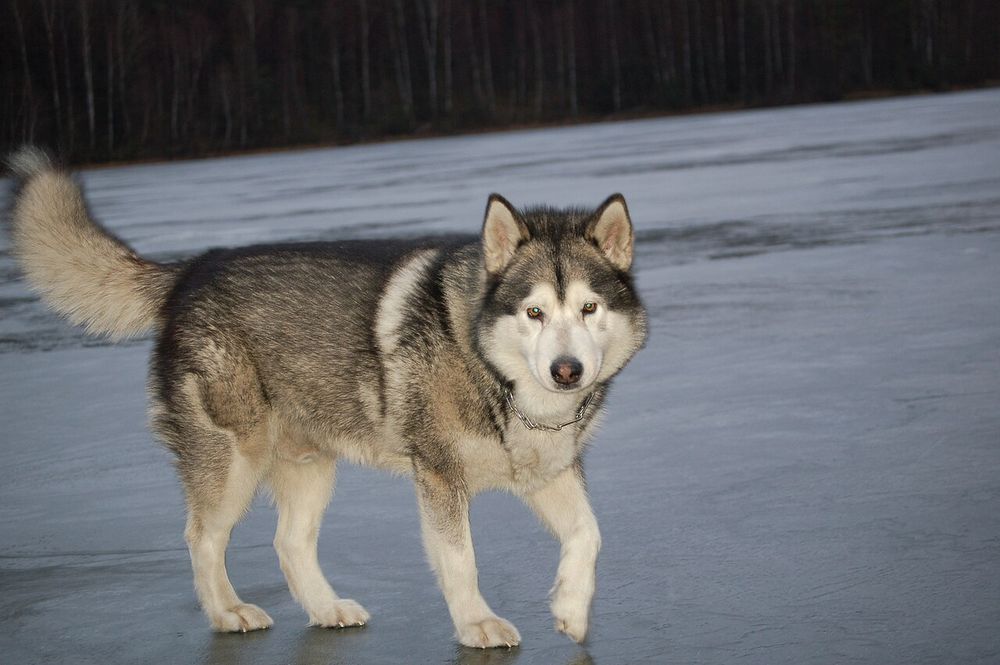
- Origin
- Kotzebue Sound, north-western Alaska, USAAmerican Kennel Club
- Adult weight
- 34 to 38 kg (FCI desirable freighting sizes: females 34 kg (75 lb), males 38 kg (85 lb). The standard says there is a natural range in size.)Fédération Cynologique Internationale
- Height
- 58.5 to 63.5 cm (FCI: females 23 inches (58.5 cm), males 25 inches (63.5 cm) at the shoulder.)Fédération Cynologique Internationale
- Lifespan
- 10 to 14 yearsAmerican Kennel Club
- Coat
- A thick, coarse guard coat over an oily, woolly undercoat one to two inches deep. The FCI standard notes the coat is usually shorter and less dense in summer.Fédération Cynologique Internationale
- Energy
- HighThe Royal Kennel Club
- Indian heat
- Struggles in heatPDSA
- Flats
- Needs spaceThe Royal Kennel Club
Alaskan Malamute snapshot
| What | The rule | Source |
|---|---|---|
| Size | Large. AKC gives 25 inches and 85 pounds (about 39 kg) for males, 23 inches and 75 pounds for females. | American Kennel Club |
| Exercise need | More than 2 hours a day, says The Royal Kennel Club. | The Royal Kennel Club |
| Grooming | Every day, says The Royal Kennel Club. AKC adds an undercoat rake twice a year in the shedding season. | The Royal Kennel Club |
| Temperament | Affectionate, friendly, not a one-man dog, says the FCI standard. | Fédération Cynologique Internationale |
| Guarding | AKC says Malamutes are not especially suited to be guard dogs because they tend to be friendly with everyone they meet. | American Kennel Club |
| Lifespan | AKC gives 10 to 14 years; The Royal Kennel Club says over 10 years. | American Kennel Club |
Where does the Alaskan Malamute come from?
The Alaskan Malamute is one of the oldest Arctic sled dogs. Its name comes from the Mahlemiut, an Inuit people who settled on Kotzebue Sound in north-western Alaska, and AKC says they developed it to work in packs hauling heavy loads at low speed over long distances. AKC sums up the difference from its cousin: huskies are racers, Malamutes are freighters. The dogs also worked as hunting partners and pack carriers.
The FCI standard, which lists the USA as the country of origin, still asks judges to put the breed's function as a heavy freighting sled dog above everything else, and describes a deep-chested, heavy-boned dog built for strength and endurance rather than speed. AKC records that some Malamutes were chosen to help Admiral Richard Byrd's Antarctic expedition in 1933, and that the breed was recognised by AKC in 1935.
How did the Alaskan Malamute come to India?
The Malamute is an imported breed in India, and no source we could find records when or how it first arrived; its arrival here is not documented. The breed's own clubs describe a dog made for Arctic cold, and Indian summers are the opposite: the India Meteorological Department considers a heat wave on the plains once a station's maximum reaches at least 40 °C, and PDSA lists thick-coated and giant dogs among those most at risk of heatstroke.
A Malamute in an Indian city lives indoors in a cool room through the hot months, with walks only before sunrise and after dark. The Royal Kennel Club rates it a country dog for a large house and garden, so a Malamute in a flat needs its work and exercise met in other ways every day.
What care does a Alaskan Malamute need?
The three things that shape a good day for this breed.
Exercise
The Royal Kennel Club lists more than 2 hours a day, and AKC says a Malamute was bred to work and needs daily exercise: hiking, running and pulling sports suit it. In India, keep hard exercise to the cool hours and cut it short on heat wave days. The Royal Kennel Club
Grooming
AKC says brush every day with a pin brush and metal comb, checking for mats and hot spots, and add an undercoat rake in the two yearly sheds. A pet Malamute can go six to eight weeks between baths. Do not shave the double coat. American Kennel Club
Training
AKC calls Malamutes highly intelligent but independent and wilful, so socialisation and obedience training are needed early, with fair, patient training. Digging may never be trained out, so any fence must go into the ground. They are usually friendly with everyone and are not guard dogs. Canadian Kennel Club (The Dish, June 2018)
How much should a Alaskan Malamute eat?
Daily calories for a healthy, neutered adult Alaskan Malamute, worked out from its weight with the formula vets use (70 x weight in kg to the power 0.75, then AAHA's factor for a neutered adult). Divide by the kcal per kg on your food's pack for grams a day, and adjust by body shape.
| Resting need (kcal a day) | Neutered adult (kcal a day) | |
|---|---|---|
| 34 kg AAHA (American Animal Hospital Association) | 990 | 1380 to 1580 |
| 36 kg | 1030 | 1440 to 1650 |
| 38 kg | 1070 | 1500 to 1710 |
AKC says a Malamute does well on a high-quality dog food suited to its age, bought or home-prepared with your vet's supervision and approval, with clean water always available. Some dogs gain weight easily, so watch the calories and count treats. In the PDSA's list of dogs at higher risk of heatstroke, overweight dogs sit alongside thick-coated ones, so keeping a Malamute lean matters more in India. Keep foods that harm dogs out of reach: onion, garlic, grapes and raisins, chocolate, sweets with xylitol, very salty snacks, and milk or other dairy, which ASPCA says can cause diarrhoea. In summer, put out more than one water bowl the dog cannot tip over. Meals a day: puppy, 6 to 12 weeks, 4 a day; puppy, 3 to 6 months, 3 a day; 6 to 12 months, 2 a day; adult, 1 or 2 a day. Puppies, kittens, working, pregnant and older animals need different amounts: ask your vet, or use Petym's food calculator.
Which illnesses is the Alaskan Malamute prone to, and how are they treated?
The conditions veterinary studies and breed surveys most often report in the Alaskan Malamute. Knowing the early signs means a vet sees it sooner.
See your vet first. This is general information from veterinary sources, not a diagnosis. Only a vet who has examined your pet can say what is wrong and prescribe treatment, and this page never gives a dose. Do not give your pet human medicine. If your pet seems very unwell, go to a 24-hour vet: find one in your city.
Heatstroke
Emergency: go to a vet nowThe body overheats faster than it can cool. PDSA lists thick-coated, giant-breed and overweight dogs among those most at risk, which describes a Malamute in an Indian summer. PDSA
Signs to watch for
- Heavy panting and low energy
- Drooling and shaking
- Seizures or collapse in severe cases
How a vet treats it
Move the dog to shade, pour cold tap water over the body away from the face, and call the vet. PDSA says the vet cools the dog with cold water, fans and, if needed, a fluid drip, and severe cases may need oxygen, medicines or anaesthesia and several days in hospital.
Prevention
Walk in the early morning or evening, always give shade and water, never leave the dog in a car, use a harness and keep the dog at a healthy weight.
Hip dysplasia
See a vet soonA malformation of the hip joint, the most common skeletal condition in dogs, as AKC puts it. AKC and The Royal Kennel Club both advise hip screening of breeding Malamutes. American Kennel Club
Signs to watch for
- Lameness that is worse after exercise
- A bunny-hopping gait
- Stiff, loose or painful hips
How a vet treats it
A vet diagnoses it with X-rays. Treatment may include weight reduction, limiting exercise on hard surfaces, physical therapy and anti-inflammatory drugs prescribed by the vet, and surgery up to a total hip replacement.
Prevention
Choose a puppy from hip-screened parents and keep the dog lean.
Alaskan Malamute polyneuropathy
See a vet soonAn inherited nerve disease caused by a recessive mutation in the NDRG1 gene. The Royal Kennel Club lists the DNA test as good practice before breeding. Acta Veterinaria Scandinavica (2017)study
Signs to watch for
- Tiring quickly on exercise
- Noisy breathing in (inspiratory stridor)
- Wobbly, unco-ordinated back legs
How a vet treats it
A vet diagnoses it by neurological examination, and a DNA test confirms the mutation. The published case series does not describe a treatment; your vet will advise on supportive care.
Prevention
Breed only from DNA-tested dogs: the Norwegian breed club's policy of excluding carriers kept the disease away for over 20 years.
Hypothyroidism
See a vet soonAn underactive thyroid gland. AKC lists it among the conditions responsible breeders screen Malamutes for. American Kennel Club
Signs to watch for
- Lethargy and reluctance to exercise
- Weight gain without eating more
- Dry coat, heavy shedding or hair that is slow to grow back
How a vet treats it
A vet diagnoses it from blood tests showing low thyroid hormone (especially T4). Treatment is thyroid hormone replacement tablets, generally for life, with blood levels rechecked once or twice a year once stable.
Can an Alaskan Malamute live in Indian heat?
It can survive with a lot of help. It was built for the Arctic, not for Nagpur in May.
AKC describes the Malamute's thick, waterproof double coat as beautifully adapted to harsh Arctic life, and The Royal Kennel Club calls it the strongest of the sled dogs. No study gives a heatstroke figure for the breed itself, but the large UK study of heat-related illness in dogs is clear on the risk factors that matter here: dogs over 10 kg had higher odds than small dogs, being at or above the breed's average weight raised the odds again, and exercise was the main trigger. A heavy dog with an Arctic coat, walked at the wrong hour, is exactly that risk.
In practice a Malamute in an Indian city needs a cool room through the hottest months, water it cannot tip over, walks only before sunrise and after dark, and a plan for power cuts. On the India Meteorological Department's heat wave days, the evening walk becomes a short toilet break and the rest of the exercise moves indoors.
Do not shave the coat to help. The Canadian Kennel Club says shaving a double-coated dog will not help cool it off and is not recommended unless medically necessary; a regularly brushed coat works as insulation. Brushing out the dead undercoat is what helps.
Malamute myths a sitter will hear
You may have read
A Malamute is a guard dog, so it will protect the house while you are away.
Myth
What the sources say
AKC says Malamutes tend to be friendly with everyone they meet and are not especially suited to be guard dogs. A sitter is still needed for care, not for security. American Kennel Club
You may have read
Shaving it for summer keeps it cool.
Myth
What the sources say
The Canadian Kennel Club says shaving a double-coated dog does not help it cool off. Daily brushing and a cool room do. Canadian Kennel Club (The Dish, June 2018)
You may have read
It is just a bigger Husky.
Myth
What the sources say
AKC calls it a marathoner built for long, heavy hauling, not a sprinter, and The Royal Kennel Club puts it in the working group as the strongest of the sled dogs. It pulls hard on a lead. American Kennel Club
You may have read
A fenced garden is enough to keep it in.
Myth
What the sources say
AKC says digging may be impossible to train out of a Malamute and that fencing must continue into the ground. American Kennel Club
A Malamute walk, step by step, for a sitter
Petym’s working from the official rules, no government publishes a total.
Petym's suggested routine for the hot months. The aim is work for a strong dog without heat.
Before sunrise
Leave while the ground is still cool. Test the road with the back of a hand for seven seconds; if it is too hot to hold, it is too hot for paws. The Royal Kennel Club
Harness on, lead short
A well-fitted harness and a strong lead, held in two hands near traffic. A Malamute was bred to pull loads; let it lean into a harness on a quiet stretch, not on a busy road.
Grass and shade
Twenty to thirty minutes on grass or soil under trees, at a steady walk. Stop in shade every ten minutes and offer water.
Watch the breathing
If the dog lags, lies down or pants hard with a wide, flat tongue, stop, find shade and head home slowly. Never push a heavy dog on.
Home and cool down
Water, the coolest floor, and a fan. Feed only once breathing has settled.
Brush and check
A quick brush to lift dead undercoat, then a tick check behind the ears, in the armpits and between the toes.
Malamute health signs to report
A sitter notices, records and tells the owner, and calls the vet for anything sudden.
If Heavy panting that does not settle in the cool, drooling, wobbling, vomiting or collapse.
Heatstroke is an emergency. Move the dog somewhere cool, pour cool water over its body, use a fan, and go to the vet at once. PDSA
If New weakness, unsteadiness or tiring quickly on walks. Hereditary polyneuropathy, a disease of the nerves, has been found in Malamutes and traced to a single gene mutation.
Not usually an emergency; note when it happens and tell the owner so the vet can examine the dog. Acta Veterinaria Scandinavica (2017)study
If Stiffness after rest, trouble rising or on stairs. The Royal Kennel Club recommends hip and elbow testing before breeding.
Shorter walks on soft ground and a call to the vet. The Royal Kennel Club
If Red, wet, smelly patches under the coat, or mats close to the skin. AKC warns that mats can harbour fungus and hot spots, which can become infected.
Do not cut mats with scissors near the skin. Tell the owner and call the vet for a hot spot. American Kennel Club
If Squinting in daylight or bumping into things in bright light. The Royal Kennel Club lists a DNA test for cone degeneration, an eye disease.
Tell the owner; it is not usually urgent. The Royal Kennel Club
Daily care rules for a Malamute's sitter
Do
- Brush every day with a pin brush and metal comb, as AKC advises, checking for mats and hot spots. American Kennel Club
- Keep the dog in the coolest room from late morning to late afternoon, with water in two heavy bowls. Animal Welfare Board of India
- Measure meals. AKC notes some dogs are prone to getting overweight and that too many treats cause obesity. American Kennel Club
- Dry the coat right down to the skin after rain or a bath, with a towel and a cool dryer if the owner uses one.
Don’t
- Do not leave it alone on a balcony or terrace; it can dig, chew or jump to get out.
- Do not let it off the lead outside a fully fenced space.
- Do not change the food during the stay; a sudden change can cause diarrhoea. PDSA
- Do not exercise it in the afternoon heat, however much it asks.
Flats, boredom and alone time
The Royal Kennel Club lists a large house and a large garden for this breed and says it suits the country. Many Indian Malamutes live in flats anyway, and that can work only if the dog's need for exercise and work is met in other ways. AKC says Malamutes are highly intelligent but independent and wilful, so short daily training sessions with food rewards, sniffing games and food puzzle toys matter as much as the walks.
PDSA's general advice is no more than 4 hours alone at a time for any dog. A bored Malamute tends to make its own work: chewing door frames, digging at floors and howling. In a housing society, that becomes a neighbour problem fast. A sitter who stays in your home keeps the routine and the cool room the dog is used to, which matters more for this breed than company from other dogs.
Ticks are common on Indian dogs: in a survey of 525 dogs in four Indian cities, ticks were found on 53%. On a dense coat they hide well, so part the fur when checking. During Diwali keep the dog inside with windows shut; a frightened Malamute is strong enough to pull a lead out of a hand.
Alaskan Malamute sitter checklist
- Where the coolest room is, how the AC or cooler works, and what to do in a power cut.
- Harness, lead and the walking times the dog is used to.
- Brushes, comb and undercoat rake, and how the dog likes to be brushed.
- Meal amounts, times and the treat allowance.
- Escape points: the main door, balcony, terrace and any gap under a gate.
- Tick prevention product and next due date.
- Signs of heat stress written on the fridge.
- The vet's number and the nearest 24-hour vet on Petym's city list.
Which Petym service suits a Malamute?
Keeping the dog cool and in its own routine usually matters most.
Often the best fit
Overnight pet sitting
The sitter stays in your home, keeps the cool room and the dawn-and-dusk walking routine, and sends a daily photo update.
Dog walking
A dawn or late-evening walk with a walker who can handle a strong dog on a harness.
Pet boarding
Possible in winter for a sociable Malamute, in a sitter's home with a cool room and a secure door. Ask at the meet and greet.
Special-needs pet care
For an older Malamute with joint or nerve problems, or on medicines.
Breeds with similar care needs to the Alaskan Malamute
Going away soon? Tell us your dates.
A checked local sitter feeds, walks and keeps your pet company at home, follows your care sheet to the letter and sends a photo every day. Petym is opening city by city: send your dates and we will tell you when a sitter can take them.
- Meet your sitter first, free
- PAN-checked, first-aid trained
- A photo every day
- Pay through Petym, never cash


Questions owners ask
Can an Alaskan Malamute survive in India?
- It can live in India with a lot of care: a cool room through summer, walks only before sunrise and after dark, daily brushing and a lean body weight. Its thick double coat was built for the Arctic, and heavy, overweight dogs had higher odds of heat-related illness in a large UK study.
Should I shave my Malamute in summer?
- No. The Canadian Kennel Club says shaving a double-coated dog will not help it cool off and is not recommended unless medically necessary. Brush the coat daily to remove dead undercoat, keep the dog in a cool room and walk only in the cool hours.
Is a Malamute a good guard dog?
- Not usually. AKC says Malamutes are not especially suited to be guard dogs because they tend to be friendly with everyone they meet. That makes them easier for a sitter to take over, but they still need a person for care, cooling and exercise.
How long can a Malamute be left alone?
- PDSA's general advice is no more than 4 hours at a time for any dog. A bored Malamute may chew, dig or howl, which neighbours in a flat will hear. On long days, arrange a sitter or a walker in the cool hours and leave a food puzzle toy.
How much grooming does a Malamute need?
- A lot. The Royal Kennel Club says grooming every day, and AKC recommends a pin brush and metal comb daily, with an undercoat rake twice a year in the shedding season. Check for mats and hot spots, which can become infected in humid weather.
What health problems do Alaskan Malamutes have?
- The Royal Kennel Club recommends tests for polyneuropathy, cone degeneration, and hip and elbow dysplasia before breeding, and research has traced Malamute polyneuropathy to a single gene. In India, heatstroke is the most urgent risk. Talk to your vet about your own dog.
Keep reading
Services that help
Free tools for this
Words on this page, explained
Keep exploring
Other dog breeds
- Akita
- American Bully
- American Cocker Spaniel
- American Pit Bull Terrier
- Australian Shepherd
- Bakharwal dog
- Basset Hound
- Beagle
- Belgian Malinois
- Bernese Mountain Dog
- Bichon Frise
- Border Collie
- Boston Terrier
- Boxer
- Bull Terrier
- Bulldog
- Bullmastiff
- Cane Corso
- Caucasian Shepherd Dog
- Cavalier King Charles Spaniel
- Chihuahua
- Chippiparai
- Chow Chow
- Cocker Spaniel
- Dachshund
- Dalmatian
- Dobermann
- Dogo Argentino
- English Mastiff
- English Springer Spaniel
- French Bulldog
- Gaddi Kutta (Gaddi dog)
- German Shepherd
- Golden Retriever
- Great Dane
- Greyhound
- Havanese
- Indian pariah dog (Indie)
- Indian Spitz
- Irish Setter
- Jack Russell Terrier
- Kangal
- Kanni
- Kombai
- Labrador Retriever
- Lhasa Apso
- Maltese
- Miniature Pinscher
- Miniature Schnauzer
- Mudhol Hound
- Neapolitan Mastiff
- Newfoundland
- Papillon
- Pekingese
- Pembroke Welsh Corgi
- Pomeranian
- Poodle
- Pug
- Rajapalayam
- Rampur Greyhound
- Rhodesian Ridgeback
- Rottweiler
- Saint Bernard
- Samoyed
- Shar Pei
- Shiba Inu
- Shih Tzu
- Siberian Husky
- Tibetan Mastiff
- Weimaraner
- West Highland White Terrier
- Whippet
- Yorkshire Terrier
Sources
Each source was opened and read on the date shown. How Petym checks its sources
- American Kennel Club: Alaskan Malamute dog breed information (opens in a new tab)
- Fédération Cynologique Internationale: FCI standard No. 243: Alaskan Malamute (opens in a new tab)
- The Royal Kennel Club: Alaskan Malamute: breeds A to Z (opens in a new tab)
- PDSA: Heatstroke in dogs (opens in a new tab)
- India Meteorological Department: FAQ on heat wave (opens in a new tab)
- Canadian Kennel Club (The Dish, June 2018): To shave or not to shave, that is the question! (opens in a new tab)
Show all 19 sourcesShow fewer
- Merck Veterinary Manual: Puppy care (opens in a new tab)
- ASPCA Animal Poison Control: People foods to avoid feeding your pets (opens in a new tab)
- AAHA (American Animal Hospital Association): 2021 AAHA Nutrition and Weight Management Guidelines for Dogs and Cats: energy requirement calculations (Box 1, PDF) (opens in a new tab)
- Merck Veterinary Manual: Nutritional requirements of small animals (full review November 2023, updated September 2024) (opens in a new tab)
- Merck Veterinary Manual: Hip dysplasia (dog owners) (opens in a new tab)
- Merck Veterinary Manual: Disorders of the thyroid gland in dogs (dog owners) (opens in a new tab)
- PDSA: Separation anxiety in dogs (opens in a new tab)
- Animal Welfare Board of India: Request to ensure care and protection of animals from direct heat during extreme hot weather (4 May 2026) (opens in a new tab)
- PDSA: Diarrhoea after a change of food (opens in a new tab)
- The Royal Kennel Club: The danger of hot pavements (opens in a new tab)
- Acta Veterinaria Scandinavica (2017): Re-emergence of hereditary polyneuropathy in Scandinavian Alaskan malamute dogs: a case series (abstract read) (opens in a new tab)
- Scientific Reports (2020): Incidence and risk factors for heat-related illness in UK dogs (opens in a new tab)
- Parasites & Vectors (2011): A survey of canine tick-borne diseases in India (opens in a new tab)