Australian Shepherd in India: energy, heat and leaving an Aussie with a sitter
Updated By PetymFacts checked against official sources on
Quick answer
An Australian Shepherd needs more work than almost any dog a sitter will meet: The Royal Kennel Club says more than 2 hours of exercise a day, and AKC rates its energy and need for mental stimulation at 5 of 5. In India that work must fit into the cool hours, with brain games filling the hot ones.
Two things the sitter must know: about half of Aussies may carry the MDR1 mutation, which makes some common medicines dangerous, and a bored, lonely Aussie can turn destructive.
- Meet your sitter first, free
- PAN-checked, first-aid trained
- A photo every day
- Pay through Petym, never cash

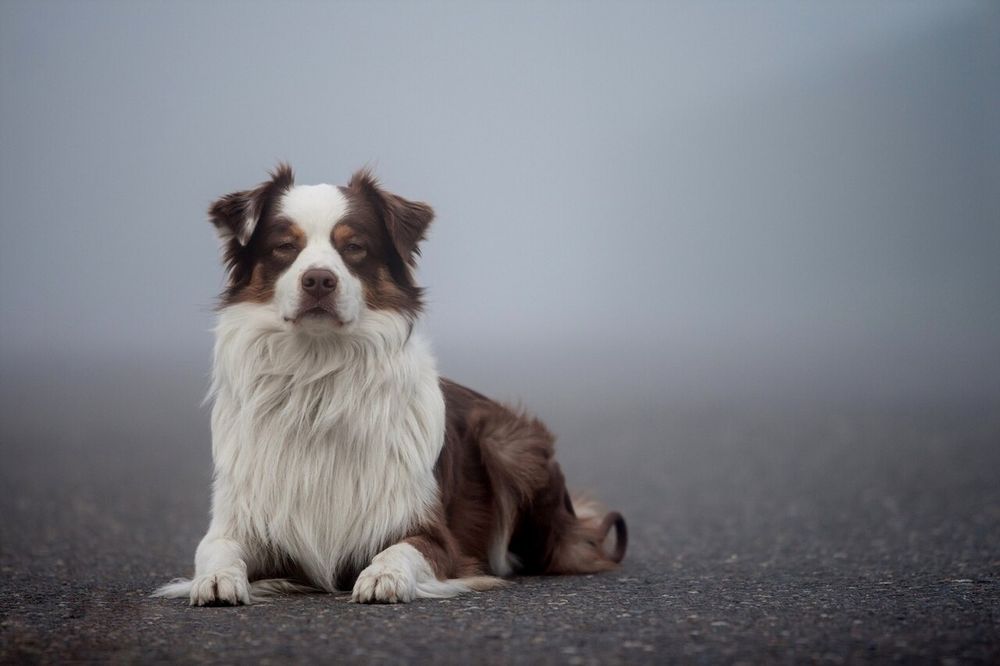
- Origin
- United States (western ranches), despite the nameFédération Cynologique Internationale
- Adult weight
- 18.1 to 29.5 kg (Females to males, AKC: females 40 to 55 lb, males 50 to 65 lb, converted)American Kennel Club
- Height
- 46 to 58 cm (Females to males, FCI: females 46 to 53 cm, males 51 to 58 cm)Fédération Cynologique Internationale
- Lifespan
- 12 to 15 yearsAmerican Kennel Club
- Coat
- Medium length, straight to wavy and weather resistant, with an undercoat that varies with the climate. Short and smooth on the head; a moderate mane and frill. Blue merle, black, red merle or red, with or without white and tan.Fédération Cynologique Internationale
- Energy
- Very highThe Royal Kennel Club
- Indian heat
- Copes with careFédération Cynologique Internationale
- Flats
- Needs spaceAmerican Kennel Club
Australian Shepherd snapshot
| What | The rule | Source |
|---|---|---|
| Size | Medium, says The Royal Kennel Club. AKC gives 20 to 23 inches and 50 to 65 pounds for males, 18 to 21 inches and 40 to 55 pounds for females. | American Kennel Club |
| Exercise need | More than 2 hours a day, says The Royal Kennel Club. AKC rates energy 5 of 5 and mental stimulation needs 5 of 5. | The Royal Kennel Club |
| Alone-time tolerance | Low. AKC says Aussies bond strongly to their families and can become destructive if left without company for long periods too often. | American Kennel Club |
| Coat | Medium length, weather resistant, with an undercoat that varies with the climate (FCI). Weekly brushing, more in the shedding season (AKC). | Fédération Cynologique Internationale |
| Temperament | An intelligent working dog of strong herding and guarding instincts, good natured, and may be somewhat reserved in initial meetings (FCI standard). | Fédération Cynologique Internationale |
| Medicine sensitivity | Washington State University lists the Australian Shepherd at about 50% for the MDR1 mutation. Only a test tells you about your dog. | Washington State University, Washington Animal Disease Diagnostic Laboratory |
| Lifespan | 12 to 15 years (AKC). | American Kennel Club |
Where does the Australian Shepherd come from?
AKC traces the Aussie to the Pyrenees, on the border of France and Spain, where the Basque people had a centuries-old name as shepherds and kept a herding dog AKC calls the Pyrenean Shepherd. In the 1800s many Basques sailed to Australia with their dogs, crossed them there with British imports such as Collies and Border Collies, and later moved on to California. The Royal Kennel Club puts it more simply: the breed descends from Spanish sheepdogs that Basque shepherds brought to America in the 19th century.
California ranchers assumed the Basques' dogs were Australian, AKC says, hence the misleading name. The FCI standard agrees that, whatever its roots, the breed as known today developed only in the United States, as a farm and ranch shepherd dog. AKC adds that it is not registered in Australia as a native breed.
Its popularity grew with Western culture and horse riding after the Second World War, when Aussies were often seen at rodeos, horse shows and in films. AKC recognised the breed in 1991, and it entered AKC's Herding Group in 1993. Today Aussies also work as therapy, service, detection and search-and-rescue dogs.
How did the Australian Shepherd come to India?
No source Petym found records when or how the Australian Shepherd came to India, so its arrival is not documented. In India it lives mostly as a family dog in cities, far from the ranch work it was bred for.
Two facts matter most for an Indian owner. The Royal Kennel Club says it needs more than 2 hours of exercise a day, which in Indian summers has to fit into dawn and late evening. And Washington State University lists the breed at about 50% for the MDR1 gene mutation, which makes some medicines dangerous, so tell every vet you see that your dog is an Aussie.
What care does a Australian Shepherd need?
The three things that shape a good day for this breed.
Exercise
AKC says it needs a great deal of daily exercise, with at least an hour or two a day of running in a large fenced space, and is happiest with a job: herding, obedience, agility or games. It can make a running companion once its skeleton is fully formed, not before. In summer, move the hard exercise to dawn and fill the hot hours with training and puzzle games. American Kennel Club
Grooming
AKC says weekly brushing, with an undercoat rake every two or three days in the shedding season. A bath is needed only occasionally. Check the ears for wax and grass seeds, and brush the teeth regularly. Do not shave the coat for summer. Fédération Cynologique Internationale
Training
AKC says early socialisation and obedience training are musts. Aussies bond strongly, can be territorial and protective of the home, and can become destructive if left alone too long too often, but they are very easy to train. The FCI standard says they may be reserved at first meetings. Texas A&M College of Veterinary Medicine (Pet Talk, 16 June 2022)
How much should a Australian Shepherd eat?
Daily calories for a healthy, neutered adult Australian Shepherd, worked out from its weight with the formula vets use (70 x weight in kg to the power 0.75, then AAHA's factor for a neutered adult). Divide by the kcal per kg on your food's pack for grams a day, and adjust by body shape.
| Resting need (kcal a day) | Neutered adult (kcal a day) | |
|---|---|---|
| 18.1 kg AAHA (American Animal Hospital Association) | 610 | 860 to 980 |
| 23.8 kg | 750 | 1060 to 1210 |
| 29.5 kg | 890 | 1240 to 1420 |
AKC says a high-quality food, bought or home-prepared with your vet's approval, suited to the dog's age, with clean water at all times. Some Aussies gain weight easily, so count training treats: WSAVA suggests treats stay under about 10% of daily calories. Using part of each meal for training and food puzzles helps. From the Indian kitchen, no onion, garlic, grapes, raisins, chocolate, salty snacks or xylitol, as ASPCA warns, and go easy on milk and dairy. Never give a tablet from the family medicine box: WSU says loperamide should be avoided in all dogs with the MDR1 mutation. Meals a day: 6 to 12 weeks, 4 a day; 3 to 6 months, 3 a day; 6 to 12 months, 2 a day; adult, 1 or 2 a day; VCA suggests at least two. Puppies, kittens, working, pregnant and older animals need different amounts: ask your vet, or use Petym's food calculator.
Which illnesses is the Australian Shepherd prone to, and how are they treated?
The conditions veterinary studies and breed surveys most often report in the Australian Shepherd. Knowing the early signs means a vet sees it sooner.
See your vet first. This is general information from veterinary sources, not a diagnosis. Only a vet who has examined your pet can say what is wrong and prescribe treatment, and this page never gives a dose. Do not give your pet human medicine. If your pet seems very unwell, go to a 24-hour vet: find one in your city.
MDR1 drug sensitivity
Emergency: go to a vet nowA gene mutation that lets some medicines build up to toxic levels; WSU says affected dogs can become very ill or die if given certain drugs. WSU lists about 50% of Australian Shepherds as affected. Washington State University, Washington Animal Disease Diagnostic Laboratory
Signs to watch for
- Sudden illness or neurological signs, such as wobbling or confusion, after a new medicine
How a vet treats it
The only way to know is a DNA test. If a dog has the mutation, WSU says the vet can choose alternative medicines or doses. Drugs it names as problems include loperamide, acepromazine, some chemotherapy drugs and some parasite medicines outside their labelled use.
Prevention
Test your dog, keep the result with its vaccination card, and never give any medicine your vet has not prescribed for this dog.
Epilepsy
Emergency: go to a vet nowRepeated seizures with no other cause found. AKC lists epilepsy among the conditions breeders test for in the Aussie. Cornell says idiopathic epilepsy usually starts between 6 months and 6 years of age. American Kennel Club
Signs to watch for
- Falling over with stiff or paddling legs
- Drooling or frothing and loss of awareness
- Focal signs such as fly-biting or twitching of the face
How a vet treats it
A vet rules out other causes; a video of the episode helps. Cornell says antiepileptic medicines are often recommended when seizures happen about once a month or more and are generally needed for life, with rescue medicines for clusters.
Prevention
Keep a seizure diary and give medicines exactly as prescribed, checking each one with your vet for MDR1 safety.
Cataracts
Ask at a routine checkClouding of the lens that blocks light and can lead to blindness. AKC lists cataracts among breeders' tests, and The Royal Kennel Club advises a DNA test for hereditary cataracts. American Kennel Club
Signs to watch for
- A cloudy look in the eye
- Bumping into things, or trouble in bright or dim light
- Moving more cautiously
How a vet treats it
A vet examines the eyes. Merck says the main treatment is surgery to remove the affected lens, ideally before the cataract matures; without surgery the eye needs monitoring for complications such as glaucoma.
Prevention
Choose a puppy from eye-tested parents.
Hip dysplasia
See a vet soonAn abnormal development of the hip joint that leads to arthritis. AKC lists it among the conditions breeders test for. American Kennel Club
Signs to watch for
- Lameness that gets worse after exercise
- A bunny-hopping gait
- Stiffness after rest
How a vet treats it
A vet diagnoses it with x-rays. Merck lists weight reduction, less exercise on hard surfaces, physical therapy, anti-inflammatory drugs prescribed by the vet and surgery, including total hip replacement.
Prevention
Keep the dog lean, avoid hard running before the skeleton is mature, and choose a puppy from hip-screened parents.
Deafness in double merles
Ask at a routine checkDogs with two copies of the merle coat gene are more often deaf. In a 2009 study, 25% of double merles were deaf in one or both ears, against 3.6% of single merles. The Royal Kennel Club will not register puppies from merle-to-merle matings because of the risk to vision and hearing. Journal of Veterinary Internal Medicine (2009), Louisiana State Universitystudy
Signs to watch for
- Not waking or turning to sounds behind it
- Not responding to its name
How a vet treats it
A vet can arrange a hearing test. A deaf dog can learn hand signals and should stay on the lead outdoors.
Prevention
Do not buy a puppy from a merle-to-merle mating.
Aussie words an owner should explain to a sitter
- MDR1
- A gene mutation that lets some medicines reach the brain in toxic amounts. WSU says loperamide (Imodium) should be avoided in all dogs with it, and other drugs need care. Washington State University, Washington Animal Disease Diagnostic Laboratory
- Merle
- The marbled blue or red coat pattern. The Royal Kennel Club notes the breed is now seen in a variety of merle patterns and tricolours. The Royal Kennel Club
- Double merle
- A dog with two copies of the merle gene. In a 2009 study 25% of double merles were deaf in one or both ears, against 3.6% of single merles. Journal of Veterinary Internal Medicine (2009), Louisiana State Universitystudy
- Herding nip
- Circling, staring and nipping at heels, children or bikes: a herding dog doing its old job without sheep. Redirect it to a toy; do not punish.
- A job
- AKC's advice for the breed: give the Aussie a task, whether herding, agility, obedience or games, so its energy has somewhere to go. American Kennel Club
How an Aussie copes when you are away
Well, if its day is full. Badly, if it is shut in a flat with nothing to do.
The FCI standard describes a loyal companion with the stamina to work all day. AKC is blunt about what happens without an outlet: one of the most frequent reasons Aussies end up in rescue is that owners could not channel the breed's energy through training, and an Aussie left alone for long periods too often can become destructive. Aussies also bond strongly and can be territorial and overprotective of their family's home, so the first meeting with a sitter should happen with you there.
PDSA's general limit for any dog is 4 hours alone, and for this breed the quality of the hours around that matters as much as the count. A sitter who walks the dog at dawn, runs a training game mid-morning, hands over a food puzzle at lunch and walks again after dark will usually find a calm dog in the evening. A sitter who opens the door for ten minutes twice a day will usually find chewed cushions.
Aussies are quick learners: AKC rates trainability 5 of 5. Ask your sitter to use the cues you use and reward with food or play. Short sessions of sit, down, wait, find it and touch tire the brain fast, which is exactly what the Indian afternoon calls for.
Filling an Aussie's day through the Indian year
| Hot months (March to June) | Monsoon (June to September) | Cooler months (October to February) | |
|---|---|---|---|
| Physical work | Dawn and late-night walks only; no fetch in the heat | Walks between showers; avoid flooded lanes | Long walks, a fenced run, fetch or a jog with a grown dog |
| Brain work | Indoor training games, scent searches, food puzzles in the afternoon | Hide-and-seek with toys, new tricks, chews | Agility-style games in a safe space, new routes to sniff |
| Watch for | Heavy panting after play; a hot road | Damp coat, ticks, muddy paws | Over-excitement and nipping on busy evening walks |
| Festivals | Holi colours: keep the dog indoors | Ganesh Chaturthi drums | Diwali crackers: a closed, quiet room |
Petym's practical plan, built on the exercise and enrichment advice from The Royal Kennel Club and AKC. Adjust for your city.
Aussie health signs and risks a sitter must know
One of these is about what a sitter must never give. The rest are about what to watch.
If Diarrhoea during the stay, and someone suggests a tablet from the medicine box. Loperamide (Imodium) should be avoided in all dogs with the MDR1 mutation, says WSU.
Never give any human or leftover pet medicine. Call the vet and say the dog is an Australian Shepherd with MDR1 status known or unknown. Washington State University, Washington Animal Disease Diagnostic Laboratory
If A tick or deworming product from a shop, or a dose meant for another dog. CAPC names Australian Shepherds among herding breeds where MDR1 matters for some parasite medicines.
Use only the product and dose the owner's vet chose for this dog. Companion Animal Parasite Council
If Wobbliness, drooling, dilated pupils or confusion after a medicine.
Emergency: call the vet at once and take the packet with you. Washington State University, Washington Animal Disease Diagnostic Laboratory
If A seizure: stiffening, paddling, drooling, loss of awareness. AKC lists epilepsy among the conditions breeders test for.
Keep the dog away from stairs and hard edges, time it, do not put a hand near its mouth, and call the vet. American Kennel Club
If Not responding to its name or to sounds behind it, especially in a mostly white merle dog.
Tell the owner; a deaf dog needs hand signals and must stay on the leash. Journal of Veterinary Internal Medicine (2009), Louisiana State Universitystudy
If Heavy panting, drooling or stumbling after a game on a hot day.
Stop, move to shade, pour cool water over the body and call the vet. PDSA
Feeding and coat care for an Aussie with a sitter
Do
- Keep the owner's food, portions and times for the whole stay; a sudden change can upset the stomach. PDSA
- Use part of each meal for training rewards and food puzzles, so treats do not add up. WSAVA suggests treats stay under about 10% of daily calories. WSAVA
- Brush weekly, and use an undercoat rake every two or three days in the shedding season, as AKC advises. American Kennel Club
- Check ears for grass seeds and wax after walks; AKC says Aussie ears should be checked regularly. American Kennel Club
Don’t
- No chocolate, grapes, raisins, onion, garlic or xylitol, and no spicy leftovers. ASPCA Animal Poison Control
- Do not shave the coat for summer; a Texas A&M vet says a full shave is not usually needed unless the coat is matted. Texas A&M College of Veterinary Medicine (Pet Talk, 16 June 2022)
- Do not bathe often; AKC says an Aussie needs a bath only occasionally. American Kennel Club
- Do not run a young Aussie hard before its skeleton is fully formed, AKC cautions. American Kennel Club
Australian Shepherd sitter checklist
- The dog's MDR1 test result, or a clear note that it is unknown, and the vet's list of medicines to avoid. Washington State University, Washington Animal Disease Diagnostic Laboratory
- Daily plan: walk times, games, training cues and the food puzzles to use.
- How the dog reacts to children, bikes, cars and other dogs, and whether it nips or herds.
- Hearing: whether the dog is deaf in one or both ears, and the hand signals it knows.
- What gets chewed when it is bored, and what to put away.
- Tick prevention product and next due date, from the vet only.
- The vet's number and the nearest 24-hour vet on Petym's list for your city.
Which Petym service suits an Australian Shepherd?
If You work long days and your Aussie gets on with other dogs
Doggy day care, so it spends the day with people and dogs instead of alone. Doggy day care
If You are away overnight and your Aussie guards the home
Overnight pet sitting after a meet and greet, so a known person keeps its routine. Overnight sitting
If You are home at night but out all day
Dog walking in the cool hours, with training games built in. Dog walking
If You travel and your Aussie is relaxed in new places
Pet boarding in a sitter's home that has passed Petym's checks, inside its pet limit. Home boarding
Breeds with similar care needs to the Australian Shepherd
Going away soon? Tell us your dates.
A checked local sitter feeds, walks and keeps your pet company at home, follows your care sheet to the letter and sends a photo every day. Petym is opening city by city: send your dates and we will tell you when a sitter can take them.
- Meet your sitter first, free
- PAN-checked, first-aid trained
- A photo every day
- Pay through Petym, never cash


Questions owners ask
Is an Australian Shepherd suitable for India?
- It can be, for an active family with time. The Royal Kennel Club says more than 2 hours of exercise a day, and in Indian heat that must happen at dawn and after dark, with training and puzzle games in between. The weather-resistant double coat needs regular brushing, not shaving.
How long can an Australian Shepherd be left alone?
- Not long. PDSA's general limit is 4 hours, and AKC says Aussies can become destructive if left without company for long periods too often. On workdays, use doggy day care, a midday walker or a sitter, and leave food puzzles for the hours alone.
What is MDR1 and why does it matter for my Aussie?
- MDR1 is a gene mutation that makes some medicines dangerous. Washington State University lists Australian Shepherds at about 50% for it and says loperamide (Imodium) should be avoided in all affected dogs. Ask your vet about a test and tell your sitter never to give any medicine without the vet.
Are merle Australian Shepherds more likely to be deaf?
- Dogs with two merle genes are. In a 2009 study of 153 merle dogs, 25% of double merles were deaf in one or both ears, against 3.6% of single merles. Tell your sitter if your dog is deaf, and use hand signals and a leash.
Why does my Aussie nip at heels?
- It is herding behaviour: the FCI standard describes strong herding and guarding instincts. Redirect the dog to a toy, give it more structured work, and never punish it. Tell your sitter, especially if children visit, and talk to a qualified trainer if it worries you.
How do I keep an Aussie busy in the Indian summer?
- Move the physical exercise to dawn and late night and fill the hot hours with brain work: short training sessions, scent searches for hidden treats, food puzzles and new tricks. AKC rates the breed's need for mental stimulation at 5 of 5.
Do Australian Shepherds shed a lot?
- Moderately: AKC rates shedding 3 of 5, with more in the shedding season. Brush weekly and use an undercoat rake every two or three days when the coat is dropping. Dry the coat well after monsoon walks.
Keep reading
- Dog care hub
- Separation anxiety in dogs
- How long can you leave a dog alone?
- Heatstroke in dogs
- Border Collie careAnother herding dog with MDR1 questions.
- Doggy day care
- What to leave for your pet sitter
Services that help
Free tools for this
Words on this page, explained
Keep exploring
Other dog breeds
- Akita
- Alaskan Malamute
- American Bully
- American Cocker Spaniel
- American Pit Bull Terrier
- Bakharwal dog
- Basset Hound
- Beagle
- Belgian Malinois
- Bernese Mountain Dog
- Bichon Frise
- Border Collie
- Boston Terrier
- Boxer
- Bull Terrier
- Bulldog
- Bullmastiff
- Cane Corso
- Caucasian Shepherd Dog
- Cavalier King Charles Spaniel
- Chihuahua
- Chippiparai
- Chow Chow
- Cocker Spaniel
- Dachshund
- Dalmatian
- Dobermann
- Dogo Argentino
- English Mastiff
- English Springer Spaniel
- French Bulldog
- Gaddi Kutta (Gaddi dog)
- German Shepherd
- Golden Retriever
- Great Dane
- Greyhound
- Havanese
- Indian pariah dog (Indie)
- Indian Spitz
- Irish Setter
- Jack Russell Terrier
- Kangal
- Kanni
- Kombai
- Labrador Retriever
- Lhasa Apso
- Maltese
- Miniature Pinscher
- Miniature Schnauzer
- Mudhol Hound
- Neapolitan Mastiff
- Newfoundland
- Papillon
- Pekingese
- Pembroke Welsh Corgi
- Pomeranian
- Poodle
- Pug
- Rajapalayam
- Rampur Greyhound
- Rhodesian Ridgeback
- Rottweiler
- Saint Bernard
- Samoyed
- Shar Pei
- Shiba Inu
- Shih Tzu
- Siberian Husky
- Tibetan Mastiff
- Weimaraner
- West Highland White Terrier
- Whippet
- Yorkshire Terrier
Sources
Each source was opened and read on the date shown. How Petym checks its sources
- Fédération Cynologique Internationale: FCI-Standard No 342: Australian Shepherd (opens in a new tab)
- American Kennel Club: Australian Shepherd dog breed information (opens in a new tab)
- The Royal Kennel Club: Australian Shepherd: breed information (opens in a new tab)
- Washington State University, Washington Animal Disease Diagnostic Laboratory: MDR1 in Dogs (opens in a new tab)
- Texas A&M College of Veterinary Medicine (Pet Talk, 16 June 2022): Time for a summer cut? Tips for warm weather dog grooming (opens in a new tab)
- WSAVA: Frequently asked questions and myths (Global Nutrition Committee) (opens in a new tab)
Show all 19 sourcesShow fewer
- ASPCA Animal Poison Control: People foods to avoid feeding your pets (opens in a new tab)
- Merck Veterinary Manual: Puppy care (opens in a new tab)
- VCA Animal Hospitals: Feeding times and frequency for your dog (opens in a new tab)
- AAHA (American Animal Hospital Association): 2021 AAHA Nutrition and Weight Management Guidelines for Dogs and Cats: energy requirement calculations (Box 1, PDF) (opens in a new tab)
- Merck Veterinary Manual: Nutritional requirements of small animals (full review November 2023, updated September 2024) (opens in a new tab)
- Cornell University College of Veterinary Medicine: Managing seizures (Riney Canine Health Center) (opens in a new tab)
- Merck Veterinary Manual: Disorders of the lens in dogs: cataracts (pet owner version) (opens in a new tab)
- Merck Veterinary Manual: Hip dysplasia (dog owners) (opens in a new tab)
- Companion Animal Parasite Council: Demodex spp. (opens in a new tab)
- PDSA: Separation anxiety in dogs (opens in a new tab)
- PDSA: Heatstroke in dogs (opens in a new tab)
- PDSA: Diarrhoea after a change of food (opens in a new tab)
- Journal of Veterinary Internal Medicine (2009), Louisiana State University: Prevalence of deafness in dogs heterozygous or homozygous for the merle allele (abstract read) (opens in a new tab)