Havanese care in India: coat, heat and time alone
Updated By PetymFacts checked against official sources on
Quick answer
A Havanese usually loves a sitter, because it is outgoing and friendly with strangers, but it does not like long hours alone. What a sitter must know: comb the long, silky coat every day so it does not mat in humid weather, keep walks short and cool, clean around the eyes, and keep someone with the dog most of the day.
The Royal Kennel Club puts its exercise need at up to 30 minutes a day and lists a flat as a suitable home. Its coat and its need for company are the real work.
- Meet your sitter first, free
- PAN-checked, first-aid trained
- A photo every day
- Pay through Petym, never cash

- Origin
- Cuba, from Bichon-type dogs of the western MediterraneanFédération Cynologique Internationale
- Adult weight
- 3.2 to 5.9 kg (AKC: 7 to 13 lb, converted to kg; the FCI standard gives height only)American Kennel Club
- Height
- 23 to 27 cm (FCI standard: 23 to 27 cm at the withers, with a tolerance of 21 to 29 cm)Fédération Cynologique Internationale
- Lifespan
- 14 to 16 yearsAmerican Kennel Club
- Coat
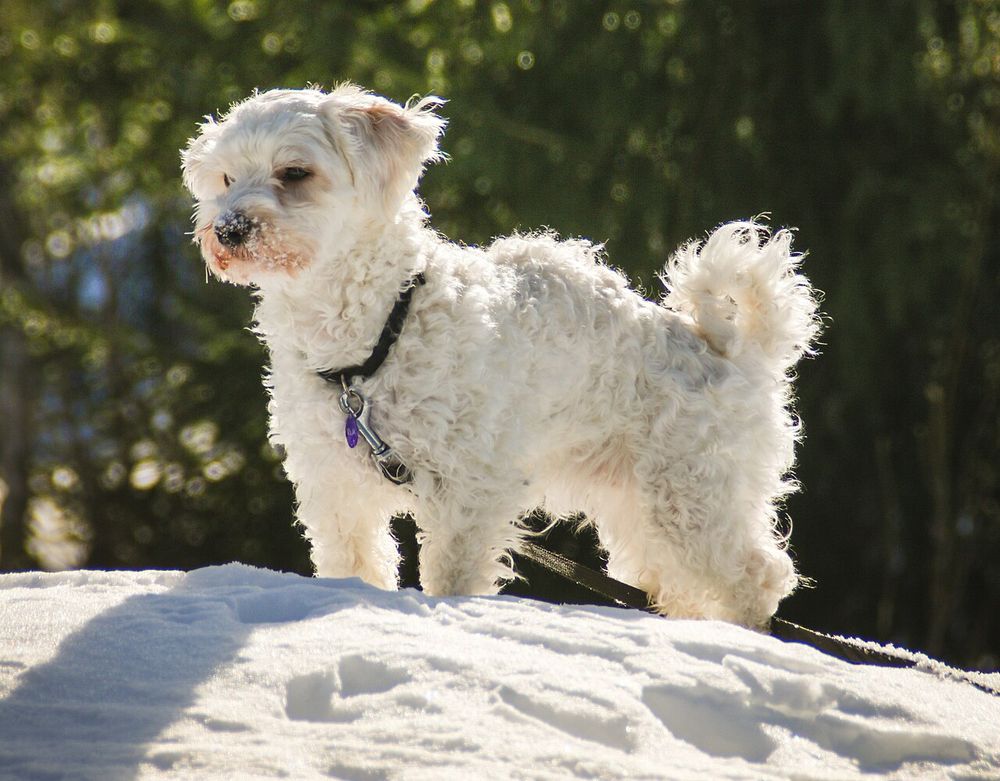
- Very long (12 to 18 cm in an adult), soft, flat or wavy topcoat that may form curly strands; the woolly undercoat is thin and often absent. Does not shed, but needs daily grooming.Fédération Cynologique Internationale
- Energy
- ModerateAmerican Kennel Club
- Indian heat
- Copes with careScientific Reports (2020)study
- Flats
- Suits a flatAmerican Kennel Club
Havanese snapshot for a sitter
| What | The rule | Source |
|---|---|---|
| Size | Small, says The Royal Kennel Club. AKC gives a height of 8.5 to 11.5 inches and a weight of 7 to 13 pounds. | American Kennel Club |
| Exercise need | Up to 30 minutes a day, says The Royal Kennel Club. AKC calls it moderate and warns never to over-exercise a Havanese of any age. | The Royal Kennel Club |
| Alone-time tolerance | Low. AKC says Havanese are not happy left alone for hours at a time. PDSA's general limit for any dog is 4 hours. | American Kennel Club |
| Coat and grooming | Long, silky coat that needs grooming every day; The Royal Kennel Club lists it as a breed that does not shed. The FCI standard says the undercoat is thin or often absent. | The Royal Kennel Club |
| With people and dogs | AKC scores it 5 of 5 for openness to strangers, for getting on with other dogs and with young children. | American Kennel Club |
| Lifespan | AKC gives 14 to 16 years; The Royal Kennel Club says over 12 years. Plan for a senior dog's needs in the later years. | American Kennel Club |
Where does the Havanese come from?
The Havanese belongs to the Bichon family of small companion dogs, with the Bichon Frise and Maltese as probable relatives. The FCI standard says the type came from the western Mediterranean and developed along the Spanish and Italian coasts, and that Italian ship captains probably took these dogs to Cuba early on. AKC adds that Spanish colonists of the 1600s are the other suggested route.
In Cuba it became the lapdog of aristocrats and wealthy planters, named after the capital, Havana, and was once called the Blanquito de la Habana, or Havana Silk Dog. AKC says it was refined there over about 300 years, perhaps with Poodle crosses. The Royal Kennel Club calls it Cuba's national dog.
The turning point came with the 1959 revolution. The old Cuban lines disappeared, and a few dogs taken out by Cubans who left for the United States became the base of today's breed, preserved with the help of American fanciers. Ernest Hemingway kept Havanese in Cuba, and Charles Dickens owned one named Tim.
How did the Havanese come to India?
No source we found documents when or how the Havanese came to India, and we know of no published Indian figures on how many live here. What the sources do say suits Indian city life well: AKC describes it as a dog that does well in houses and flats, needs only moderate exercise and is happy wherever there are people to admire it.
Heat is manageable with care. Small dogs had the lowest odds of heat-related illness in a UK study of more than 900,000 dogs, but the Havanese's long coat mats quickly in monsoon humidity, so daily combing and drying the coat fully after rain matter more here than in a dry climate.
What care does a Havanese need?
The three things that shape a good day for this breed.
Exercise
The Royal Kennel Club gives up to 30 minutes a day. AKC suggests a brisk daily walk or play, says romping indoors can be enough, and warns never to over-exercise a Havanese: if it is panting and struggling to keep up, go home. The Royal Kennel Club
Grooming
The long, silky coat needs daily combing or brushing to stay free of mats; many owners have it clipped short. AKC also advises cleaning the corners of the eyes daily against tear stains and checking the ears often. American Kennel Club
Training
AKC calls the Havanese highly intelligent, eager to please and easy to train with positive methods only. It is a sensitive breed, so never scold harshly, and socialise it calmly from an early age. It is not happy left alone for hours. The Royal Kennel Club
How much should a Havanese eat?
Daily calories for a healthy, neutered adult Havanese, worked out from its weight with the formula vets use (70 x weight in kg to the power 0.75, then AAHA's factor for a neutered adult). Divide by the kcal per kg on your food's pack for grams a day, and adjust by body shape.
| Resting need (kcal a day) | Neutered adult (kcal a day) | |
|---|---|---|
| 3.2 kg AAHA (American Animal Hospital Association) | 170 | 230 to 270 |
| 4.6 kg | 220 | 310 to 350 |
| 5.9 kg | 260 | 370 to 420 |
Feed a complete and balanced food made for the dog's life stage. AKC warns that some Havanese gain weight easily, so watch calories, keep treats moderate and give table scraps sparingly if at all. Use the energy table below as a starting point and ask your vet to check its weight. Keep Indian kitchen foods that harm dogs out of reach: onion and garlic in dal and curry, grapes and raisins in kheer and mithai, chocolate, xylitol, salty namkeen and cooked bones. Milk and dairy can cause diarrhoea. Meals a day: 6 to 12 weeks, 4 a day; 3 to 6 months, 3 a day; 6 to 12 months, 2 a day; adult, 1 or 2 a day. Puppies, kittens, working, pregnant and older animals need different amounts: ask your vet, or use Petym's food calculator.
Which illnesses is the Havanese prone to, and how are they treated?
The conditions veterinary studies and breed surveys most often report in the Havanese. Knowing the early signs means a vet sees it sooner.
See your vet first. This is general information from veterinary sources, not a diagnosis. Only a vet who has examined your pet can say what is wrong and prescribe treatment, and this page never gives a dose. Do not give your pet human medicine. If your pet seems very unwell, go to a 24-hour vet: find one in your city.
Distichiasis (extra eyelashes)
See a vet soonEyelashes growing from the wrong place on the eyelid margin and pointing at the eye. A study of 1,156 Norwegian Havanese found it in 14.5%, with high heritability; most cases were mild, but some dogs develop painful corneal disease. Canine Medicine and Genetics (2021), Norwegian University of Life Sciencesstudy
Signs to watch for
- Squinting or blinking a lot
- Watery eyes
- Red or irritated eyes
- A cloudy or scarred patch on the eye in long-standing cases
How a vet treats it
A vet diagnoses it by examining the eyelid margins under magnification, sometimes with sedation. If the lashes cause trouble, a vet may remove them under anaesthesia by cryotherapy or electroepilation; treatment sometimes has to be repeated.
Cataract
See a vet soonClouding of the lens of the eye. Norwegian researchers call cataract an important health issue in Havanese, with studies pointing to a breed predisposition; consequences include lens-induced uveitis, reduced sight and, in severe cases, blindness. Canine Medicine and Genetics (2023), Norwegian University of Life Sciencesstudy
Signs to watch for
- A cloudy, bluish-grey look in the eye
- Bumping into things, especially in dim light
- A red or painful eye if inflammation sets in
How a vet treats it
A vet examines the eyes and may refer to a veterinary eye specialist. Cataracts can be treated by surgery, which is invasive but effective in most cases. The vet also watches for complications such as uveitis, glaucoma and a slipped lens.
Prevention
Eye-tested parents; the Royal Kennel Club strongly recommends eye testing before breeding.
Patellar luxation (slipping kneecap)
See a vet soonThe kneecap slips out of its groove when the knee bends, usually because of how the leg developed. AKC lists it among the Havanese's conditions, and it is common in small breeds. American Kennel Club
Signs to watch for
- Skipping on a back leg for a few steps, then walking normally
- Holding a back leg up
- Bow-legged stance in puppies
- Lameness that becomes more frequent
How a vet treats it
A vet feels the knee and takes X-rays. Mild cases with no signs are often watched. Surgery, which can deepen the groove, move the bony attachment of the knee tendon and tighten soft tissues, is usually considered from grade 2 upward.
Prevention
Buy from parents with knee certification and keep the dog slim.
Legg-Calvé-Perthes disease
See a vet soonThe blood supply to the head of the thigh bone fails and the bone breaks down. It mainly affects small dogs between about 4 and 11 months old, and AKC lists it for the Havanese. American Kennel Club
Signs to watch for
- Hind-leg lameness in a young dog
- Thigh muscle wasting
- Pain when the hip is moved
How a vet treats it
A vet diagnoses it with X-rays. Conservative management works fully in fewer than a quarter of dogs; the recommended treatment is surgery to remove the femoral head and neck, followed by early physiotherapy, and recovery is usually excellent.
How long can a Havanese be left alone?
Not for long. This is a companion dog through and through.
The FCI standard calls the Havanese a companion and toy dog: affectionate, happy, amiable, playful and "even a bit of a clown". AKC says Havanese do well in houses and flats but "are not happy left alone for hours at a time". That makes the breed easy for a sitter to win over and hard to leave alone in an empty flat for a working day.
PDSA's general advice is no more than 4 hours alone for any adult dog, and it lists barking, whining, howling, toileting indoors, drooling and trembling among the signs of distress when left. A Havanese that follows you from room to room and cries at the door is telling you something. For a trip, a sitter who stays in your home, or a sitter's home where someone is around, usually suits this breed better than a few short visits a day. If your dog already struggles when you leave, tell the sitter and talk to your vet or a qualified behaviourist; PDSA advises against punishment.
The FCI standard also says the Havanese is easy to train as an alarm dog, and AKC scores its barking at 4 of 5. In a housing society, that alert bark at the lift or the doorbell can bother neighbours. Ask your sitter to keep the dog's routine calm and to reward quiet rather than scold barking: AKC says this is a sensitive breed that should never be scolded harshly.
Havanese coat myths in a hot country
A coat that does not shed is not a coat that needs no work. Here is what the sources say.
You may have read
It does not shed, so grooming is easy.
Myth
What the sources say
The Royal Kennel Club lists the Havanese as non-shedding but needing grooming every day. Loose hair stays in the coat instead of falling out, so it tangles into mats unless it is combed out. The Royal Kennel Club
You may have read
The long coat makes it suffer badly in Indian heat.
Myth
What the sources say
The FCI standard describes a long topcoat over an undercoat that is not very developed and often absent. The coat is long, not dense like a husky's. Heat risk comes more from exercise, weight and hot hours than from the coat alone. Fédération Cynologique Internationale
You may have read
A short summer cut is wrong for this breed.
Myth
What the sources say
The FCI standard forbids trimming only for show dogs. AKC says pet owners often choose a short trim to cut grooming time. A puppy cut is a reasonable choice for a pet Havanese in an Indian summer or monsoon. American Kennel Club
You may have read
Bathing every few days keeps a white or light coat clean.
Myth
What the sources say
AKC says to bathe a Havanese occasionally, as needed. Clean the corners of the eyes daily instead, which AKC advises to prevent tear staining on light hair. American Kennel Club
Grooming a Havanese through the monsoon: dos and don'ts
Humid air and wet walks turn small tangles into felted mats within days. A sitter's daily routine.
Do
- Comb the whole coat gently every day, down to the skin, with the dog on your lap if it likes that: AKC's own method. American Kennel Club
- Dry the coat fully after rain or a bath, especially the armpits, belly and behind the ears, where mats start first.
- Wipe the corners of the eyes daily with a damp cloth, as AKC advises, to keep tear stains and crust away. American Kennel Club
- Check the ears often and wipe the inside of the flap with slightly moist gauze, as AKC describes. American Kennel Club
- Check for ticks while combing, behind the ears, under the collar and between the toes.
Don’t
- Do not bath a matted coat before combing it out: water tightens mats. Ask the owner's groomer if the coat is badly tangled.
- Do not use human shampoo; use the owner's dog shampoo only. VCA Animal Hospitals
- Do not leave a damp coat under a fan overnight in the monsoon. Dry it properly first.
- Do not pull hard at a knot. Hold the hair at the root and tease it out from the tips.
What Norwegian studies found in Havanese
Three studies of the Havanese in Norway, read in the abstract. They explain why eye checks and gentle exercise matter.
14.5 %
of 1,156 eye-screened Havanese had distichiasis, extra eyelashes that can rub the eye; most cases were mild Canine Medicine and Genetics (2021), Norwegian University of Life Sciencesstudy
97.5 %
of the gene copies studied in 355 Havanese carried the FGF4 variant linked to short, bowed forelegs (chondrodystrophy) Canine Medicine and Genetics (2020), Norwegian University of Life Sciencesstudy
3.4 years
was the average age at eye screening, an age at which most cataract-prone dogs show no changes yet Canine Medicine and Genetics (2023), Norwegian University of Life Sciencesstudy
Havanese health signs a sitter should report
Most Havanese are healthy and long-lived, AKC says. These are the signs to note and pass on, and when to call the vet.
If Squinting, a watery or red eye, rubbing the face on the floor. Distichiasis was found in 14.5% of Norwegian Havanese, and some cases cause painful corneal disease.
Call the vet the same day for a painful eye. Do not put any drops in unless the vet prescribed them. Canine Medicine and Genetics (2021), Norwegian University of Life Sciencesstudy
If A cloudy look to the eye or bumping into things in dim light. AKC lists eye disorders for the breed, and cataract is a known concern.
Note it for the owner and the vet; it is rarely an emergency but needs an eye check. Canine Medicine and Genetics (2023), Norwegian University of Life Sciencesstudy
If Skipping, holding a back leg up for a few steps, then walking normally. AKC lists patellar luxation for the breed.
Tell the owner. Call the vet if the dog stays lame or cries out. American College of Veterinary Surgeons
If Limping or reluctance to jump that does not ease. AKC also lists Legg-Calve-Perthes disease of the hip and chondrodysplasia.
Stop jumps off sofas and beds and call the vet for an appointment. American Kennel Club
If Heavy panting, drooling or wobbling after a walk on a hot day. AKC says to go home if a Havanese is panting and struggling to keep up.
Shade, cool water over the body, a breeze, then call the vet. PDSA
If Not responding to its name or to sounds behind it. AKC lists deafness among the breed's conditions.
Not urgent; tell the owner and approach the dog where it can see you. American Kennel Club
A Havanese day with a sitter in an Indian summer
Petym’s working from the official rules, no government publishes a total.
Petym's suggested routine for a sitter, based on the sources on this page. Your dog's own plan comes first.
6:00 to 6:30 am
A gentle 15 minute walk before the sun is on the road. Test the pavement with the back of your hand for seven seconds first. The Royal Kennel Club
Breakfast
The owner's food, measured. AKC notes some Havanese gain weight easily, so treats count too.
Morning
The daily comb-through, eye wipe and ear check, then a nap in a cool room with water.
Midday
Indoor play: fetch down a corridor, a sniffing game, a food toy. No walks in the heat.
Evening, after sunset
A second short walk, then the daily photo update to the owner with notes on food, toilet and mood.
Night
The dog sleeps where it sleeps at home, with the sitter close by. A Havanese left alone overnight may cry.
Feeding a Havanese while you are away
AKC says some Havanese can be prone to gaining weight, and that table scraps should be given sparingly if at all, avoiding cooked bones and fatty food. For a tiny dog, a few pieces of paratha or a spoon of ghee from a well-meaning relative add up fast. Ask the sitter to stick to the owner's measured meals and keep treats under about 10% of the day's calories, as WSAVA suggests.
Keep the same food for the whole stay, because PDSA notes a sudden change of food can upset a dog's stomach. And keep chocolate, grapes, raisins, onion, garlic and anything with xylitol out of reach, as the ASPCA advises. Call the vet straight away if the dog eats any of these.
Havanese sitter checklist
- The comb, the brush, the dog shampoo and how the groomer keeps the coat (long or puppy cut).
- Eye routine: how you wipe the eyes, and any drops the vet has prescribed.
- How long the dog is used to being alone, and what helps: a radio, a worn T-shirt, a food toy.
- Meal amounts and times, treat allowance, and foods the dog must never get.
- Walk times for summer and monsoon, and the hot-pavement rule.
- Tick and flea prevention: the product and the next due date.
- Any knee, hip or eye condition the vet has noted, and signs to watch.
- Your vet's number and the nearest 24-hour vet on Petym's city list.
Which Petym service suits a Havanese?
Company most of the day matters more for this breed than space or long walks.
Often the best fit
Overnight pet sitting
A sitter stays in your home, so the dog keeps its bed, routine and company through the day and night.
Pet boarding
Your Havanese stays in a sitter's home with people around, inside the home's pet limit, after a free meet and greet.
Doggy day care
Company on workdays for a sociable dog that hates an empty flat.
Drop-in visits
Only for short gaps. A Havanese is unlikely to settle with a few visits a day on a long trip.
Breeds with similar care needs to the Havanese
Going away soon? Tell us your dates.
A checked local sitter feeds, walks and keeps your pet company at home, follows your care sheet to the letter and sends a photo every day. Petym is opening city by city: send your dates and we will tell you when a sitter can take them.
- Meet your sitter first, free
- PAN-checked, first-aid trained
- A photo every day
- Pay through Petym, never cash


Questions owners ask
Can a Havanese live in an Indian flat?
- Yes. The Royal Kennel Club lists a flat as a suitable home and puts exercise at up to 30 minutes a day. AKC says Havanese do well in houses and apartments. The real needs are daily coat care and company, not space, and its alert barking needs managing in a housing society.
How long can a Havanese be left alone?
- Not long. AKC says Havanese are not happy left alone for hours at a time, and PDSA's general limit for any dog is 4 hours. On long workdays, arrange a sitter, day care or a midday visit, and tell your sitter if your dog barks or cries when left.
Does a Havanese cope with Indian heat?
- It can, with care. Its long coat has little undercoat, according to the FCI standard, and many owners choose a short trim. Walk only in the early morning and after sunset, keep play indoors at midday, keep the dog lean, and watch for heavy panting or wobbling.
Should I shave my Havanese for summer?
- A full shave is not usually needed, but a short trim is fine for a pet. AKC says many owners clip the coat short to cut grooming time. Leave enough coat to protect the skin from sun, and ask your groomer to avoid shaving to the skin.
Do Havanese shed?
- The Royal Kennel Club lists the breed as non-shedding, but that does not mean no grooming. Loose hair stays in the long coat and forms mats unless the dog is combed every day, which matters even more in humid monsoon weather.
What health problems should a Havanese sitter know about?
- Eye problems lead the list: a Norwegian study found extra eyelashes (distichiasis) in 14.5% of screened Havanese, and cataracts are a known concern. AKC also lists kneecap problems, hip disease, deafness and heart murmurs. A sitter should report squinting, limping or tiredness and call the vet if worried.
Is a Havanese the same as a Shih Tzu or Maltese?
- No. The Havanese is a Bichon-type breed and the national dog of Cuba, says The Royal Kennel Club. Like the Maltese it has a long, silky coat, but it comes in many colours and its own standard describes a playful, clownish companion.
Keep reading
- Dog care hub
- Separation anxiety in dogs
- How long can you leave a dog alone?
- Monsoon pet careWet coats, ticks and damp skin.
- Maltese careAnother long-coated companion.
- Shih Tzu care
- Overnight pet sitting
Services that help
Free tools for this
Words on this page, explained
Keep exploring
Other dog breeds
- Akita
- Alaskan Malamute
- American Bully
- American Cocker Spaniel
- American Pit Bull Terrier
- Australian Shepherd
- Bakharwal dog
- Basset Hound
- Beagle
- Belgian Malinois
- Bernese Mountain Dog
- Bichon Frise
- Border Collie
- Boston Terrier
- Boxer
- Bull Terrier
- Bulldog
- Bullmastiff
- Cane Corso
- Caucasian Shepherd Dog
- Cavalier King Charles Spaniel
- Chihuahua
- Chippiparai
- Chow Chow
- Cocker Spaniel
- Dachshund
- Dalmatian
- Dobermann
- Dogo Argentino
- English Mastiff
- English Springer Spaniel
- French Bulldog
- Gaddi Kutta (Gaddi dog)
- German Shepherd
- Golden Retriever
- Great Dane
- Greyhound
- Indian pariah dog (Indie)
- Indian Spitz
- Irish Setter
- Jack Russell Terrier
- Kangal
- Kanni
- Kombai
- Labrador Retriever
- Lhasa Apso
- Maltese
- Miniature Pinscher
- Miniature Schnauzer
- Mudhol Hound
- Neapolitan Mastiff
- Newfoundland
- Papillon
- Pekingese
- Pembroke Welsh Corgi
- Pomeranian
- Poodle
- Pug
- Rajapalayam
- Rampur Greyhound
- Rhodesian Ridgeback
- Rottweiler
- Saint Bernard
- Samoyed
- Shar Pei
- Shiba Inu
- Shih Tzu
- Siberian Husky
- Tibetan Mastiff
- Weimaraner
- West Highland White Terrier
- Whippet
- Yorkshire Terrier
Sources
Each source was opened and read on the date shown. How Petym checks its sources
- Fédération Cynologique Internationale: FCI-Standard No 250: Havanese (opens in a new tab)
- American Kennel Club: Havanese dog breed information (opens in a new tab)
- The Royal Kennel Club: Havanese: breed information (opens in a new tab)
- Merck Veterinary Manual: Dog and cat foods (full review November 2023, updated June 2025) (opens in a new tab)
- Merck Veterinary Manual: Puppy care (opens in a new tab)
- ASPCA Animal Poison Control: People foods to avoid feeding your pets (opens in a new tab)
Show all 23 sourcesShow fewer
- AAHA (American Animal Hospital Association): 2021 AAHA Nutrition and Weight Management Guidelines for Dogs and Cats: energy requirement calculations (Box 1, PDF) (opens in a new tab)
- Merck Veterinary Manual: Nutritional requirements of small animals (full review November 2023, updated September 2024) (opens in a new tab)
- UFAW Science for Animal Welfare (genetic welfare problems of companion animals): Yorkshire Terrier: Distichiasis (opens in a new tab)
- Science for Animal Welfare (formerly UFAW): Miniature Schnauzer: hereditary cataract (opens in a new tab)
- American College of Veterinary Surgeons: Patellar Luxation (Dislocating Kneecap) in Dogs | ACVS (opens in a new tab)
- Merck Veterinary Manual: Aseptic necrosis of the femoral head in dogs (opens in a new tab)
- PDSA: Separation anxiety in dogs (opens in a new tab)
- PDSA: Heatstroke in dogs (opens in a new tab)
- WSAVA: Frequently asked questions and myths (Global Nutrition Committee) (opens in a new tab)
- PDSA: Diarrhoea after a change of food (opens in a new tab)
- The Royal Kennel Club: The danger of hot pavements (opens in a new tab)
- VCA Animal Hospitals: True or false: it's okay to use human shampoo on pets (opens in a new tab)
- Canadian Kennel Club (The Dish, June 2018): To shave or not to shave, that is the question! (opens in a new tab)
- Scientific Reports (2020): Incidence and risk factors for heat-related illness in UK dogs (opens in a new tab)
- Canine Medicine and Genetics (2021), Norwegian University of Life Sciences: Heritability of distichiasis in Havanese dogs in Norway (abstract read) (opens in a new tab)
- Canine Medicine and Genetics (2023), Norwegian University of Life Sciences: Cataracts in Havanese: genome wide association study reveals two loci associated with posterior polar cataract (abstract read) (opens in a new tab)
- Canine Medicine and Genetics (2020), Norwegian University of Life Sciences: Short and sweet: foreleg abnormalities in Havanese and the role of the FGF4 retrogene (abstract read) (opens in a new tab)