Tibetan Mastiff care in India: heat, coat and notes for your sitter
Updated By PetymFacts checked against official sources on
Quick answer
A Tibetan Mastiff can stay with a sitter if the home is cool and the sitter is someone it has already accepted. The AKC calls it calm at home, devoted to family and territorial with strangers, with no reliable recall. Keep it indoors on hot days, walk it at dawn and after dark, and never unclip the lead.
It is a heavy, thick-coated dog bred for the Himalaya. In a large UK study, dogs over 50 kg were at greater risk of heat-related illness.
- Meet your sitter first, free
- PAN-checked, first-aid trained
- A photo every day
- Pay through Petym, never cash

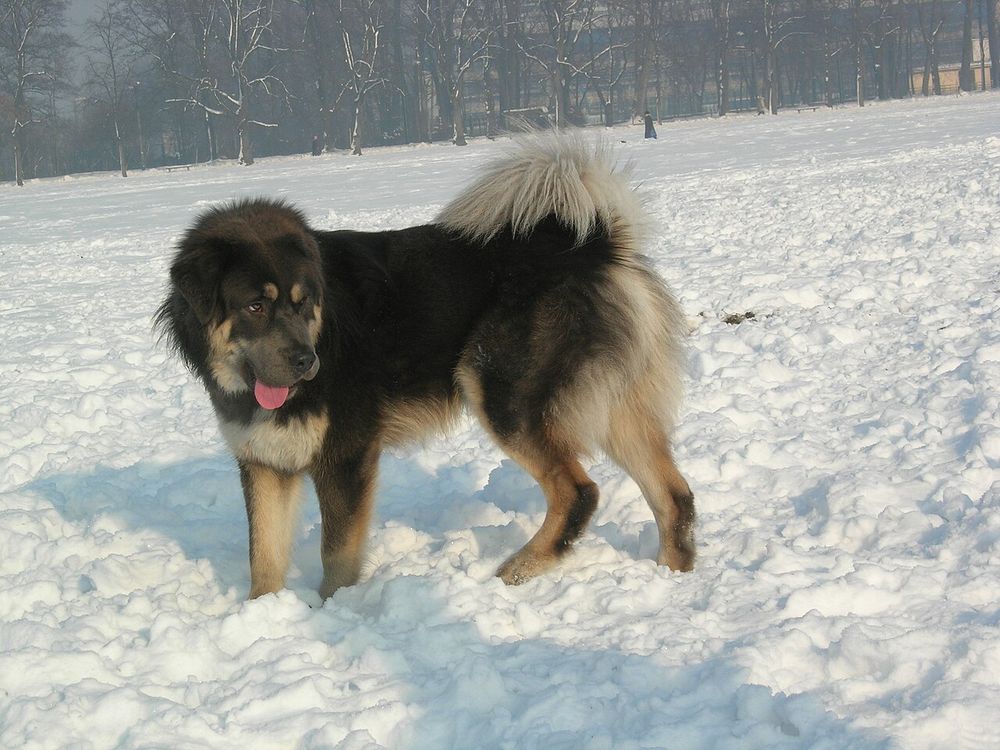
- Origin
- Tibet and the HimalayaFédération Cynologique Internationale
- Adult weight
- 35 to 70 kg (PDSA's average range; the FCI standard sets heights only)PDSA
- Height
- 61 to 66 cm (PDSA's average; the FCI standard sets 61 cm as the minimum for females and 66 cm for males)PDSA
- Coat
- A harsh, thick double coat with a heavy mane on the neck and shoulders. The woolly undercoat is dense in cold weather and rather sparse in warm months.Fédération Cynologique Internationale
- Energy
- ModerateThe Royal Kennel Club
- Indian heat
- Struggles in heatPDSA
- Flats
- Needs spacePDSA
Tibetan Mastiff snapshot
| What | The rule | Source |
|---|---|---|
| Size | Large. The FCI standard sets a minimum of 66 cm at the withers for males and 61 cm for females; the AKC gives 90 to 150 pounds (about 41 to 68 kg) for males. | Fédération Cynologique Internationale |
| Exercise need | Up to 1 hour a day, says The Royal Kennel Club. The AKC adds that it is more active in cooler weather and lacks endurance. | The Royal Kennel Club |
| With strangers | The AKC rates openness to strangers 1 out of 5, its lowest score, and describes the breed as aloof and territorial. | American Kennel Club |
| Coat and grooming | A heavy double coat; groom more than once a week (Royal Kennel Club). It sheds the undercoat heavily once a year (AKC). | The Royal Kennel Club |
| Lifespan | Over 10 years (Royal Kennel Club); the AKC gives 10 to 12 years. | The Royal Kennel Club |
| Alone-time tolerance | Not scored by kennel clubs. PDSA's general advice for any dog is no more than 4 hours alone. | PDSA |
Where does the Tibetan Mastiff come from?
The FCI standard calls the Do-Khyi, or Tibetan Mastiff, an ancient working breed of the nomad herders of the Himalaya and a traditional guardian of Tibetan monasteries. Writers from Aristotle to Marco Polo praised its strength, and some early European dog writers thought it the forefather of all large mountain and mastiff breeds. The Royal Kennel Club says it was often tethered at the entrance to homesteads to deter intruders.
The Royal Kennel Club records a Tibetan Mastiff presented to London Zoo by King George IV in 1828. The FCI standard notes another male sent to Queen Victoria in 1847, two dogs taken to England by the future Edward VII in the 1880s, and an early litter born at Berlin Zoo in 1898. The Royal Kennel Club adds that dogs were killed in large numbers in Tibet after 1950 and that a few survivors in remote areas founded the modern breed.
How did the Tibetan Mastiff come to India?
The breed's road to the West ran through India: the FCI standard says the male sent to Queen Victoria in 1847 came from Lord Hardinge, then Viceroy of India. In Himachal Pradesh, researchers studying the native Gaddi dog note that it is often confused with the Tibetan Mastiff, though the Gaddi has longer legs and less bulk. A PTI report in October 2023 listed the Tibetan Mastiff among the breeds on trial at central armed police force training centres.
On 12 March 2024 the Department of Animal Husbandry and Dairying sent states a list of breeds it called dangerous. As reproduced in Gurugram's 2026 order, it names "Mastiffs (Boerbulls)" but not the Tibetan Mastiff by name. The Delhi High Court set the circular aside on 16 April 2024, but local rules still apply: check with your municipal corporation.
What care does a Tibetan Mastiff need?
The three things that shape a good day for this breed.
Exercise
Up to 1 hour a day, says The Royal Kennel Club; PDSA says at least an hour, split into two or three walks, with play in a secure area. Walk only in the cool hours in summer, because PDSA warns the thick coat makes hot weather hard. The Royal Kennel Club
Grooming
Brush a few times a week, and much more during the yearly moult between spring and summer, when clumps of undercoat come out (PDSA). PDSA
Training
The FCI standard describes an independent, protective dog most loyal to its family and territory, and PDSA says it responds well to positive training but suits experienced owners. Socialise early and never rely on strength to control it. Fédération Cynologique Internationale
How much should a Tibetan Mastiff eat?
Daily calories for a healthy, neutered adult Tibetan Mastiff, worked out from its weight with the formula vets use (70 x weight in kg to the power 0.75, then AAHA's factor for a neutered adult). Divide by the kcal per kg on your food's pack for grams a day, and adjust by body shape.
| Resting need (kcal a day) | Neutered adult (kcal a day) | |
|---|---|---|
| 35 kg AAHA (American Animal Hospital Association) | 1010 | 1410 to 1610 |
| 52.5 kg | 1370 | 1910 to 2180 |
| 70 kg | 1690 | 2370 to 2710 |
PDSA advises a complete, balanced dog food, split into two meals at the same times each day, with a gap between eating and exercise and treats kept under 10% of daily calories. That gap matters: PDSA lists bloat (GDV) for the breed, and ACVS recommends several smaller meals rather than one large one for dogs at risk. The FCI standard says the breed is slow to mature, and Merck notes large and giant breeds can take almost 2 years to become adults, so ask your vet when to move from puppy to adult food. Keep onion and garlic, grapes, raisins, tamarind, chocolate, salty snacks and cooked bones away from it, and go easy on milk and curd, which can upset the gut. Ask your vet how much to feed; the energy table on this page gives a starting range. Meals a day: 6 to 12 weeks, 4 a day, puppy food; 3 to 6 months, 3 a day, puppy food; 6 months to adult (up to about 2 years), 2 a day; adult, 2 a day, never one large meal. Puppies, kittens, working, pregnant and older animals need different amounts: ask your vet, or use Petym's food calculator.
Which illnesses is the Tibetan Mastiff prone to, and how are they treated?
The conditions veterinary studies and breed surveys most often report in the Tibetan Mastiff. Knowing the early signs means a vet sees it sooner.
See your vet first. This is general information from veterinary sources, not a diagnosis. Only a vet who has examined your pet can say what is wrong and prescribe treatment, and this page never gives a dose. Do not give your pet human medicine. If your pet seems very unwell, go to a 24-hour vet: find one in your city.
Bloat (gastric dilatation-volvulus)
Emergency: go to a vet nowThe stomach fills with gas and can twist, cutting off blood supply. PDSA lists it for the Tibetan Mastiff and calls it an emergency; ACVS links the risk to deep-chested dogs and one large meal a day. PDSA
Signs to watch for
- Restlessness and stretching
- Retching without bringing anything up
- Drooling and a swollen belly
- Panting, weakness or collapse
How a vet treats it
ACVS says the dog must be seen by a vet immediately. Vets confirm it with X-rays, stabilise the dog with fluids and oxygen, release the gas with a stomach tube, and operate to put the stomach back and fix it to the body wall (gastropexy).
Prevention
Feed several smaller meals rather than one large one, and rest the dog around meals. Ask your vet whether a preventive gastropexy suits your dog.
Hip dysplasia
See a vet soonA poorly fitting hip joint that leads to arthritis. PDSA lists it for the breed and The Royal Kennel Club strongly recommends hip and elbow testing before breeding. PDSA
Signs to watch for
- Lameness that is worse after exercise
- Stiffness and difficulty rising
- A bunny-hopping gait
- Loss of muscle on the back legs
How a vet treats it
A vet diagnoses it with X-rays. Merck lists weight loss, less exercise on hard ground, physical therapy and anti-inflammatory drugs, and surgery up to total hip replacement for dogs that need it.
Prevention
Buy from hip and elbow scored parents, avoid rapid growth, and keep the dog lean.
Hypothyroidism
See a vet soonAn underactive thyroid gland, so the body's metabolism slows. PDSA lists it among the Tibetan Mastiff's health problems. PDSA
Signs to watch for
- Dullness and low energy
- Unwillingness to exercise
- Weight gain without eating more
- Skin and coat changes
How a vet treats it
Merck says vets diagnose it with blood tests showing low thyroid hormone, and treat it by replacing the missing thyroid hormone. Treatment is generally lifelong, with check-ups to adjust it.
Entropion and ectropion
See a vet soonEntropion is an eyelid that rolls inward so the lashes rub the eye; ectropion is a lid that sags outward. PDSA lists both for the breed. PDSA
Signs to watch for
- Squinting or holding the eye shut
- Watering or discharge
- Rubbing at the eye
- A cloudy or damaged cornea
How a vet treats it
A vet diagnoses it by examining the eye. Science for Animal Welfare says treatment is surgery under anaesthesia to create a normal eyelid shape, sometimes with temporary procedures in puppies and regular eye medication.
Heatstroke
Emergency: go to a vet nowPDSA warns that the breed's thick coat makes hot weather a risk, and giant and long-haired dogs are among those most at risk of heatstroke. PDSA
Signs to watch for
- Heavy panting and difficult breathing
- Drooling or vomiting
- Bright red or pale gums
- Weakness or collapse
How a vet treats it
Cool the dog with cold water away from the nose and mouth and go to the nearest vet. Vets cool the dog, may give a fluid drip and, in severe cases, oxygen and medication with hospital care.
Prevention
Exercise only at dawn or after dark in summer, give a cool room and plenty of water, and never leave the dog in a car.
A Himalayan guardian, and its link with India
Bred to guard homesteads and flocks in the mountains, and long known to India's hill regions.
The Royal Kennel Club describes the Tibetan Mastiff as the largest of the Tibetan breeds, bred in the Himalayan region to protect homestead and livestock, and often tethered at the entrance of a property to deter intruders. The FCI standard sums up its temperament in four phrases: independent, protective, commands respect, most loyal to its family and territory.
The FCI's history notes that one of the first Tibetan Mastiffs to reach the West was a male sent to Queen Victoria in 1847 by Lord Hardinge, then Viceroy of India. Closer to today, a PTI report in October 2023 said the Tibetan Mastiff was among the breeds on trial at CAPF training centres. In Himachal Pradesh, researchers studying the native Gaddi dog note that it is often confused with the Tibetan Mastiff, though the Gaddi has longer legs and less bulk.
What that history adds up to, for an owner in Delhi or Bengaluru, is a dog designed for cold, thin air and a job of watching. It can live happily in an Indian city, but its comfort in summer and its reaction to newcomers both need planning before you hand over the keys.
How a Tibetan Mastiff reacts to a sitter
Expect it to watch, not welcome. Trust is earned over visits, not handed over with the leash.
The AKC describes the breed as watchful, aloof and territorial with strangers, and rates its openness to strangers at the bottom of its scale. It also says the Tibetan Mastiff does not respond well to traditional obedience training, is not food driven, and will follow its own instincts over training if in doubt. Treats that win over a Labrador in minutes may not work at all.
So the introduction is slow. Use Petym's free meet and greet in your home, and if you can, add a second visit. The sitter arrives with you, ignores the dog, and sits; the dog decides when to come close. Walk together with you holding the leash first. Tell the sitter which commands the dog actually obeys, how it reacts at the gate, and whether it has ever growled at a guest.
The AKC is blunt that the breed does not have reliable recall and should never be trusted off leash. A sitter must keep a strong leash on in every common area, and keep the dog away from the society gate when it opens.
A Tibetan Mastiff through the Indian year
The FCI says its dense woolly undercoat grows in cold weather and becomes rather sparse in warmer months. Indian summers test even that.
| Hot months | Monsoon | Winter | |
|---|---|---|---|
| Exercise American Kennel Club | A short walk at dawn and another after dark; nothing at midday | Short walks between showers | Its best season: the AKC says it is more active in cool weather |
| Home | The coolest room, fan or AC, water in heavy bowls | A dry floor and bed; damp coats smell and chafe | Draught-free, but most TMs prefer it cool |
| Coat American Kennel Club | Brush out the shedding undercoat with a rake; do not shave to the skin | Dry the coat right to the skin after rain | Weekly brushing, more around the mane and tail |
| Watch for | Heavy panting, drooling, collapse | Ticks and damp skin under the mane | Stiffness in older dogs |
Petym's working from the sources on this page. Check IMD's heat warnings before planning a summer day.
Health signs a Tibetan Mastiff's sitter should report
The AKC lists the conditions breeders screen for. A sitter notices, tells the owner and calls the vet.
If Heavy panting that will not settle, thick drool, a dark tongue, wobbling or collapse in the heat.
Heatstroke: cool water over the body, a fan, and the nearest 24-hour vet at once. PDSA
If Stiffness, limping or trouble with stairs. The Royal Kennel Club asks breeders to screen for hip and elbow dysplasia.
Rest the dog, use soft ground, and call the vet. The Royal Kennel Club
If Watery, squinting or red eyes. The AKC lists entropion and ectropion, eyelids that roll in or out, among the eye problems breeders screen for.
Do not wipe hard or use human eye drops; call the vet. American Kennel Club
If Weight gain, low energy, a thinning coat or skin trouble that the owner has not mentioned. Hypothyroidism is on the AKC's screening list.
Note it in the daily update and suggest a vet check. American Kennel Club
If A seizure: stiffening, paddling legs, drooling or loss of awareness. The AKC says seizures have been reported, though they are not prevalent.
Move objects away, do not hold the mouth, time it, and call the vet. American Kennel Club
If Fever or dullness after ticks found in the thick coat.
Call the vet the same day; check ears, neck, armpits and toes after every walk. Merck Veterinary Manual
Handling a Tibetan Mastiff at home: dos and don'ts
Do
- Keep a short, strong leash on in the lift, lobby and gate area, and wait for an empty lift.
- Put the dog in a closed room before the door opens for deliveries, cleaners or guests.
- Keep meals measured and the dog lean: higher bodyweight relative to the breed mean raised the risk of heat-related illness in a large UK study. Scientific Reports (2020)study
- Give daily exercise even in summer, in the cool hours. AWBI notes that keeping a dog chained or confined without exercise is cruelty under the PCA Act. Animal Welfare Board of India
Don’t
- Do not let it off the leash in an open park: the AKC says it has no reliable recall. American Kennel Club
- Do not leave it tied on a terrace or balcony in the sun.
- Do not shave the coat to the skin without your vet's advice. Texas A&M College of Veterinary Medicine (Pet Talk, 16 June 2022)
- Do not feed onion, garlic, grapes, raisins, chocolate or xylitol. ASPCA Animal Poison Control
Is the Tibetan Mastiff on India's 2024 list of dangerous breeds?
Not by name. The list's one mastiff entry is worded "Mastiffs (Boerbulls)".
On 12 March 2024 the Department of Animal Husbandry and Dairying wrote to all states listing breeds an expert committee called ferocious and dangerous for human life. As reproduced in Municipal Corporation Gurugram's order of 23 June 2026, the list includes "Mastiffs (Boerbulls)" but does not name the Tibetan Mastiff. Whether a local body would read that entry as covering it is not clear.
The Delhi High Court set the circular aside on 16 April 2024, and its order records that the Karnataka High Court quashed it on 10 April 2024. Local rules still apply: Gurugram's 2026 order requires listed breeds to be registered and kept on a leash, chain lead and muzzle outside the home. Ask your corporation what applies where you live, and see Petym's page on banned dog breeds in India.
Tibetan Mastiff sitter checklist
- How the dog reacts to visitors, other dogs and the gate, and any history of growling or biting.
- The commands it reliably follows, and the ones it ignores.
- Strong leash, collar or harness, and whether it accepts a muzzle for vet visits.
- Coolest room, AC or fan settings, and what to do in a power cut.
- Undercoat rake or slicker brush, and how often to use them.
- Food, portions and times; medicines exactly as the vet's label says.
- Vaccination card, tick prevention dates, your vet's number and the nearest 24-hour vet.
Which Petym service fits a Tibetan Mastiff?
If Your TM guards the home and is wary of strangers
Overnight pet sitting in your home, with one sitter it has met and no visiting dogs. Overnight sitting
If You are out on long workdays
Dog walking at dawn and after dark, with the same walker each time. Dog walking
If Your dog has a joint, eye or thyroid treatment plan
Special-needs pet care, with the vet's plan followed and logged. Special-needs care
Breeds with similar care needs to the Tibetan Mastiff
Going away soon? Tell us your dates.
A checked local sitter feeds, walks and keeps your pet company at home, follows your care sheet to the letter and sends a photo every day. Petym is opening city by city: send your dates and we will tell you when a sitter can take them.
- Meet your sitter first, free
- PAN-checked, first-aid trained
- A photo every day
- Pay through Petym, never cash


Questions owners ask
Can a Tibetan Mastiff live in India's heat?
- With care. It is a thick-coated Himalayan breed, and the AKC says it is more active in cooler weather. A large UK study found dogs over 50 kg at greater risk of heat-related illness. Keep it in a cool room through the day, walk at dawn and after dark, and watch for heavy panting.
Is a Tibetan Mastiff good with a pet sitter?
- Once it has accepted the sitter. The AKC describes it as aloof and territorial with strangers, so introduce the sitter at home with you present, ideally over two visits. Keep visitors away during the stay and choose a sitter who stays in your home.
Should I shave my Tibetan Mastiff in summer?
- Not to the skin without your vet's advice. Texas A&M's veterinary college says a thick coat helps dogs regulate temperature and shaving can make some dogs less tolerant of heat. Brushing out the shedding undercoat and a cool room help more.
How long can a Tibetan Mastiff be left alone?
- PDSA's general advice for any dog is no more than four hours alone at a time. A territorial guardian left for long hours in a flat may bark at every sound outside, so arrange a sitter or a walker for longer days.
Is the Tibetan Mastiff banned in India?
- Petym found no national ban in force on 21 October 2026. The March 2024 central letter listed "Mastiffs (Boerbulls)" but did not name the Tibetan Mastiff, and the Delhi and Karnataka High Courts struck the circular down in April 2024. Check your corporation's rules.
What health problems do Tibetan Mastiffs have?
- The AKC says responsible breeders screen for hip and elbow dysplasia, hypothyroidism and eyelid problems such as entropion and ectropion, and that seizures have been reported but are not prevalent. Report limping, eye discomfort or a seizure to the owner and vet.
Can a Tibetan Mastiff be let off the lead?
- The AKC says the breed does not have reliable recall and should never be trusted off leash. A sitter should keep a strong lead on in every common area and in parks, and make sure doors and the society gate are shut before unclipping at home.
Keep reading
- Gaddi dog careHimachal's native guardian, often confused with the TM.
- Bakharwal dog care
- Banned dog breeds in India
- Samoyed care
- Heatstroke in dogs
- Is AC safe for dogs?
- Overnight pet sitting
Services that help
Free tools for this
Words on this page, explained
Keep exploring
Other dog breeds
- Akita
- Alaskan Malamute
- American Bully
- American Cocker Spaniel
- American Pit Bull Terrier
- Australian Shepherd
- Bakharwal dog
- Basset Hound
- Beagle
- Belgian Malinois
- Bernese Mountain Dog
- Bichon Frise
- Border Collie
- Boston Terrier
- Boxer
- Bull Terrier
- Bulldog
- Bullmastiff
- Cane Corso
- Caucasian Shepherd Dog
- Cavalier King Charles Spaniel
- Chihuahua
- Chippiparai
- Chow Chow
- Cocker Spaniel
- Dachshund
- Dalmatian
- Dobermann
- Dogo Argentino
- English Mastiff
- English Springer Spaniel
- French Bulldog
- Gaddi Kutta (Gaddi dog)
- German Shepherd
- Golden Retriever
- Great Dane
- Greyhound
- Havanese
- Indian pariah dog (Indie)
- Indian Spitz
- Irish Setter
- Jack Russell Terrier
- Kangal
- Kanni
- Kombai
- Labrador Retriever
- Lhasa Apso
- Maltese
- Miniature Pinscher
- Miniature Schnauzer
- Mudhol Hound
- Neapolitan Mastiff
- Newfoundland
- Papillon
- Pekingese
- Pembroke Welsh Corgi
- Pomeranian
- Poodle
- Pug
- Rajapalayam
- Rampur Greyhound
- Rhodesian Ridgeback
- Rottweiler
- Saint Bernard
- Samoyed
- Shar Pei
- Shiba Inu
- Shih Tzu
- Siberian Husky
- Weimaraner
- West Highland White Terrier
- Whippet
- Yorkshire Terrier
Sources
Each source was opened and read on the date shown. How Petym checks its sources
- Fédération Cynologique Internationale: FCI standard No. 230: Tibetan Mastiff (Do-Khyi) (opens in a new tab)
- PDSA: Tibetan Mastiff (opens in a new tab)
- The Royal Kennel Club: Tibetan Mastiff: breeds A to Z (opens in a new tab)
- Municipal Corporation Gurugram: Office order on registration and control of pet dogs (23 June 2026) (opens in a new tab)
- High Court of Delhi (order downloaded from the court's server, hosted by LiveLaw): Sikander Singh Thakur v. Union of India, W.P.(C) 4374/2024 and connected matters, order of 16 April 2024 (opens in a new tab)
- American College of Veterinary Surgeons: Gastric Dilatation-Volvulus (opens in a new tab)
Show all 25 sourcesShow fewer
- Merck Veterinary Manual: Puppy care (opens in a new tab)
- ASPCA Animal Poison Control: People foods to avoid feeding your pets (opens in a new tab)
- Merck Veterinary Manual: Garlic and onion (Allium spp) toxicosis in animals (opens in a new tab)
- Merck Veterinary Manual: Grape, raisin, and tamarind (Vitis spp, Tamarindus spp) toxicosis in dogs (full review September 2024) (opens in a new tab)
- AAHA (American Animal Hospital Association): 2021 AAHA Nutrition and Weight Management Guidelines for Dogs and Cats: energy requirement calculations (Box 1, PDF) (opens in a new tab)
- Merck Veterinary Manual: Nutritional requirements of small animals (full review November 2023, updated September 2024) (opens in a new tab)
- Merck Veterinary Manual: Hip dysplasia (dog owners) (opens in a new tab)
- Merck Veterinary Manual: Disorders of the thyroid gland in dogs (dog owners) (opens in a new tab)
- Science for Animal Welfare (formerly UFAW): Shar Pei: entropion (opens in a new tab)
- PDSA: Heatstroke in dogs (opens in a new tab)
- American Kennel Club: Tibetan Mastiff: dog breed information (opens in a new tab)
- India Meteorological Department: FAQ on heat wave (opens in a new tab)
- PDSA: Separation anxiety in dogs (opens in a new tab)
- Merck Veterinary Manual: Ticks of dogs (opens in a new tab)
- Animal Welfare Board of India: Circular and guidelines for pet owners (1 June 2020) (opens in a new tab)
- Texas A&M College of Veterinary Medicine (Pet Talk, 16 June 2022): Time for a summer cut? Tips for warm weather dog grooming (opens in a new tab)
- Indian Journal of Animal Sciences (2022), CSK Himachal Pradesh Agricultural University: Phenotypic characterization and documentation of Gaddi dog of western Himalayan region of India (opens in a new tab)
- Scientific Reports (2020): Incidence and risk factors for heat-related illness in UK dogs (opens in a new tab)
- The Tribune (PTI): Forget foreign breeds, Indian canines to help CAPFs take a bite out of crime (24 October 2023) (opens in a new tab)