Basset Hound care in India: ears, folds, heat and notes for your sitter
Updated By PetymFacts checked against official sources on
Quick answer
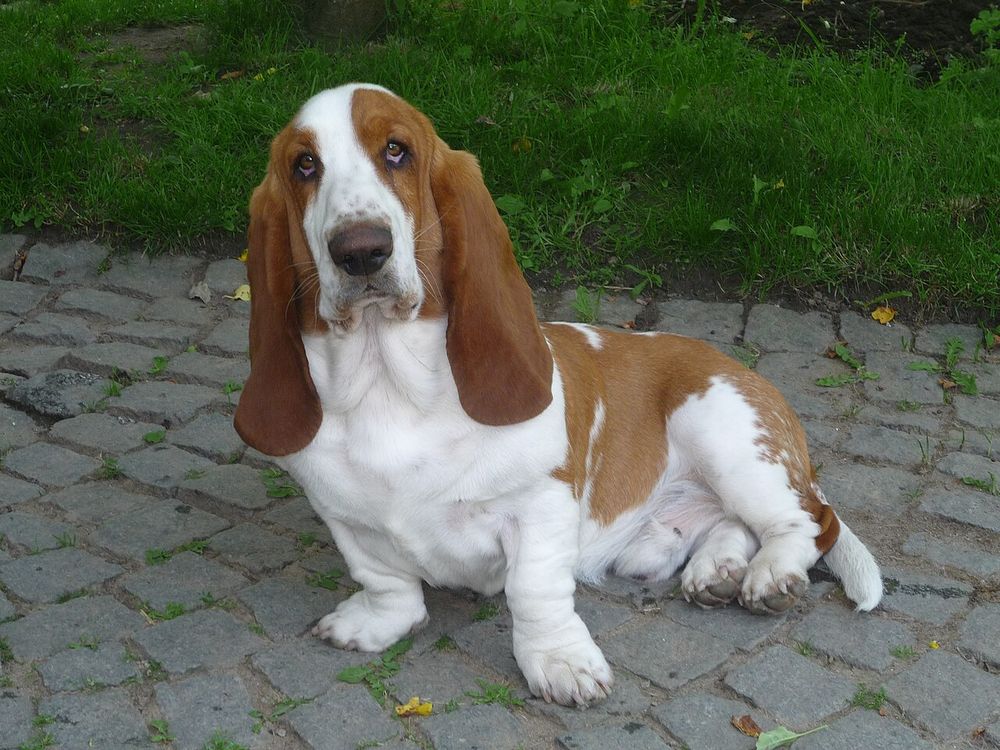
A Basset Hound is easy for a sitter to like: the FCI standard calls it placid, never aggressive or timid, and AKC rates it 5 of 5 with other dogs. The work is ear and skin-fold care in humid weather, eye checks, a measured diet and slow walks in the cool hours. Expect a big voice when alone.
In a UK study of 22,333 dogs, Basset Hounds had the highest odds of outer ear infection of any breed, 5.87 times those of crossbreds.
- Meet your sitter first, free
- PAN-checked, first-aid trained
- A photo every day
- Pay through Petym, never cash

- Origin
- Great Britain, from French basset houndsFédération Cynologique Internationale
- Adult weight
- 18.1 to 29.5 kg (AKC: 40 to 65 lb, converted; AKC does not split it by sex)American Kennel Club
- Height
- 33 to 38 cm (Height at the withers, FCI standard. AKC says up to 15 inches.)Fédération Cynologique Internationale
- Lifespan
- 12 to 13 yearsAmerican Kennel Club
- Coat
- Smooth, short and close, without feathering. Usually black, white and tan, or lemon and white, but any recognised hound colour is accepted. It sheds.Fédération Cynologique Internationale
- Energy
- LowAmerican Kennel Club
- Indian heat
- Copes with careScientific Reports (2020)study
- Flats
- A flat, with daily exerciseAmerican Kennel Club
Basset Hound snapshot for a sitter
| What | The rule | Source |
|---|---|---|
| Size | Medium-large, says The Royal Kennel Club. AKC gives a height of up to 15 inches and a weight of 40 to 65 pounds (about 18 to 29 kg). | American Kennel Club |
| Exercise need | Up to 1 hour a day, says The Royal Kennel Club. AKC: a daily walk at a moderate pace. | The Royal Kennel Club |
| Temperament | A tenacious scent hound with a pack instinct and a deep, melodious voice; placid, never aggressive or timid; affectionate (FCI standard). | Fédération Cynologique Internationale |
| With other dogs and children | AKC rates it 5 of 5 for both. | American Kennel Club |
| Barking and drooling | AKC rates barking 4 of 5 and drooling 4 of 5. | American Kennel Club |
| Coat | Short and smooth but sheds; brush at least weekly, AKC says. | American Kennel Club |
| Lifespan | AKC gives 12 to 13 years; The Royal Kennel Club says over 10 years. | American Kennel Club |
Where does the Basset Hound come from?
The FCI standard says the Basset was reputedly bred by monks in France in the Middle Ages to hunt in heavy cover with its nose close to the ground. AKC says the friars of the Abbey of St. Hubert are thought to have crossed older French breeds to make a low-built scent hound that hunters could follow on foot after rabbit and deer, and that its accuracy on scent made it popular with French aristocrats. "Basset" comes from the French bas, low.
The modern breed was made in Britain. The Royal Kennel Club says French hounds from Artois and Normandy were being imported into England by the 1860s, and that in the 1870s Everett Millais helped refine the breed with Beagle and Bloodhound lines. The Basset Hound Club was founded in 1884, and Queen Alexandra kept Bassets at Sandringham. The FCI now gives Great Britain as the breed's country of origin.
AKC says it was thought that George Washington owned Bassets given to him by Lafayette after the American Revolution. The Basset Hound Club of America was formed in 1935.
How did the Basset Hound come to India?
No source Petym found records when or how the Basset Hound came to India, so its arrival is not documented. In India it lives as a family companion, usually in city homes.
Its build meets Indian weather in two ways. The low energy that AKC describes makes summer easier than with a sporting breed, but its long, hanging ears and loose skin hold damp in the monsoon: in a UK study of 22,333 dogs, Basset Hounds had the highest odds of outer ear infection of any breed, 5.87 times those of crossbreds. Ticks were found on 53% of dogs in a survey of four Indian cities, so check the ears and feet after every walk.
What care does a Basset Hound need?
The three things that shape a good day for this breed.
Exercise
AKC says a daily walk at a moderate pace usually fills the bill, and helps prevent weight gain; The Royal Kennel Club says up to an hour a day. Bassets enjoy canine company on outings, since they were bred to hunt in packs. Walk at dawn and after dark in summer. American Kennel Club
Grooming
AKC says brush at least once a week with a soft brush or shedding tool, trim the nails, bath occasionally, and brush the teeth at least twice a week. Check the long ears often: head shaking or scratching can mean an infection. Dry the ears and skin folds after rain or a bath. The Royal Kennel Club
Training
AKC says Bassets are very independent, because scent hounds were bred to follow a track without distraction, so training takes time, consistency and persistence. Use treats, start socialising in puppyhood and keep up positive training. American Kennel Club
How much should a Basset Hound eat?
Daily calories for a healthy, neutered adult Basset Hound, worked out from its weight with the formula vets use (70 x weight in kg to the power 0.75, then AAHA's factor for a neutered adult). Divide by the kcal per kg on your food's pack for grams a day, and adjust by body shape.
| Resting need (kcal a day) | Neutered adult (kcal a day) | |
|---|---|---|
| 18.1 kg AAHA (American Animal Hospital Association) | 610 | 860 to 980 |
| 23.8 kg | 750 | 1060 to 1210 |
| 29.5 kg | 890 | 1240 to 1420 |
AKC says a high-quality food, bought or home-prepared with your vet's approval, suited to the dog's age, with clean water at all times. Some Bassets gain weight easily, and too many treats cause obesity, so measure meals and keep treats under about 10% of daily calories, as WSAVA suggests. A scent hound will find food left within reach, so keep bins and counters clear. From the Indian kitchen, no onion, garlic, grapes, raisins, chocolate, salty snacks or xylitol, as ASPCA warns, and go easy on milk and dairy, which often upset digestion. Meals a day: 6 to 12 weeks, 4 a day; 3 to 6 months, 3 a day; 6 to 12 months, 2 a day; adult, 1 or 2 a day; VCA suggests at least two. Puppies, kittens, working, pregnant and older animals need different amounts: ask your vet, or use Petym's food calculator.
Which illnesses is the Basset Hound prone to, and how are they treated?
The conditions veterinary studies and breed surveys most often report in the Basset Hound. Knowing the early signs means a vet sees it sooner.
See your vet first. This is general information from veterinary sources, not a diagnosis. Only a vet who has examined your pet can say what is wrong and prescribe treatment, and this page never gives a dose. Do not give your pet human medicine. If your pet seems very unwell, go to a 24-hour vet: find one in your city.
Outer ear infection (otitis externa)
See a vet soonInflammation of the ear canal, often with bacteria or yeast. In a UK study of 22,333 dogs, Basset Hounds had 5.87 times the odds of crossbreds, the highest of any breed, and long, hanging ears raised the odds overall. Canine Medicine and Genetics (2021), Royal Veterinary Collegestudy
Signs to watch for
- Head shaking or scratching an ear
- A bad smell or discharge
- Red, swollen or painful ears
How a vet treats it
A vet looks into the canal with an otoscope and checks a sample under the microscope. Merck says the ear is cleaned and dried, then treated with ear drops that usually combine antibiotics, antifungals and anti-inflammatories, sometimes with tablets or injections, for as long as the vet advises.
Prevention
Check the ears often, keep them dry, and clean them only as your vet shows you. Merck warns against home remedies such as vinegar mixtures.
Skin fold dermatitis
See a vet soonInflammation where folds of skin rub together and stay damp. A VetCompass study found Basset Hounds had 10.7 times the odds of crossbreds. Scientific Reports (2022), Royal Veterinary Collegestudy
Signs to watch for
- Red, damp skin in the lip or neck folds
- A smell
- Pain when the fold is touched
How a vet treats it
A vet examines and cleans the folds. In the study, vets most often used antibacterial or antifungal shampoos, cleansers, wipes and creams, sometimes antibiotic tablets or anti-inflammatory medicine, and rarely surgery when other treatment failed. The authors say lasting cure is rare while friction and moisture continue, so ongoing fold care is usually needed.
Prevention
Wipe and dry the folds daily, especially in the monsoon, and keep the dog lean.
Glaucoma
Emergency: go to a vet nowA rise in pressure inside the eye that damages vision. In a UK screening study, 38.4% of 198 Basset Hounds had moderate or severe pectinate ligament dysplasia, a drainage-angle defect linked to glaucoma. AKC lists a DNA test for the breed's primary open angle glaucoma. Canine Genetics and Epidemiology (2016)study
Signs to watch for
- A red, painful or cloudy eye
- A large pupil that barely moves
- An enlarged eye or vision loss
- A change in behaviour from pain
How a vet treats it
A vet measures the eye pressure with a tonometer. Merck says pressure must be lowered quickly with medicines that draw fluid out of the eye or reduce fluid production, often with surgery and long-term management; a blind, painful eye may need to be removed.
Prevention
The Royal Kennel Club advises eye testing, including gonioscopy, before breeding. Ask your vet about regular eye pressure checks.
Drooping lower eyelid (ectropion)
See a vet soonThe eyelid margin rolls outward, leaving the inner lid exposed. A VetCompass study found Basset Hounds had 147 times the odds of crossbreds. PLOS ONE (2025), Royal Veterinary College VetCompassstudy
Signs to watch for
- A lower eyelid that sags and rolls outward
How a vet treats it
A vet examines the eyelids and the eye surface. In the study, most dogs had medical care planned, and a smaller share surgery, most often a wedge resection of the eyelid.
Elbow dysplasia (ununited anconeal process)
See a vet soonA piece of bone at the elbow fails to fuse to the ulna and causes arthritis. Science for Animal Welfare says Basset Hounds are predisposed, perhaps because of the bone growth pattern behind their short legs. Science for Animal Welfare (formerly UFAW)
Signs to watch for
- Stiffness after rest
- Front-leg lameness that worsens after exercise
- The leg held turned outwards
- Signs from about 5 to 9 months old
How a vet treats it
A vet diagnoses it with x-rays, sometimes CT, MRI or arthroscopy. Science for Animal Welfare lists rest, pain relief prescribed by the vet, restricted activity and surgery, and says treatment is often lifelong.
Prevention
Choose a puppy from elbow-screened parents; The Royal Kennel Club advises elbow screening.
Underactive thyroid (hypothyroidism)
Ask at a routine checkAKC lists hypothyroidism among the breed's health issues. Low thyroid hormone slows the body's metabolism. American Kennel Club
Signs to watch for
- Dullness and tiredness
- Weight gain without eating more
- Dry coat or thinning hair
How a vet treats it
A vet diagnoses it with blood tests for thyroid hormones. Merck says treatment is thyroid hormone replacement, generally lifelong, with blood levels rechecked to adjust it.
How long can a Basset Hound be left alone?
Not for long days. It is a pack hound, and it has the voice to tell the whole building.
The FCI standard describes a hound that hunts by scent, has a pack instinct and a deep, melodious voice. AKC adds that the breed was developed to work in a pack and enjoys canine company, and rates its barking 4 of 5. Put together, a Basset left alone for a long day in a flat is likely to bay, and in a housing society that can quickly become a complaint to the committee.
PDSA's general advice is no more than 4 hours alone at a time for any dog, and it lists barking, howling and toileting indoors among the signs of separation distress. The good news is that most Bassets settle easily with a calm, kind person. AKC calls them gentle and sweet with their people, so a home sitter, a midday walker, or boarding in a sitter's home with people around usually solves the problem. Talk to your vet or a qualified behaviourist if the distress is severe.
Training takes patience. AKC says Bassets are very independent because scent hounds were bred to follow a track without distraction, and recommends treats, consistency and positive training. A sitter should use the owner's words and rewards, not new rules.
What UK vets record in Basset Hounds
Odds compared with crossbred dogs, from Royal Veterinary College VetCompass studies, plus one eye-screening study. These are the problems a sitter can help prevent or spot.
5.87 x
odds of outer ear infection (otitis externa), the highest of any breed in the study Canine Medicine and Genetics (2021), Royal Veterinary Collegestudy
10.7 x
odds of skin fold dermatitis Scientific Reports (2022), Royal Veterinary Collegestudy
147.09 x
odds of ectropion, a drooping, outward-rolling lower eyelid PLOS ONE (2025), Royal Veterinary College VetCompassstudy
38.4 %
of 198 UK Basset Hounds screened had moderate or severe pectinate ligament dysplasia, an eye drainage-angle defect linked to glaucoma Canine Genetics and Epidemiology (2016)study
A Basset Hound body check for each day of a stay
Petym’s working from the official rules, no government publishes a total.
A sitter's quick daily round, as Petym suggests it. Long ears, loose skin and droopy eyelids each need a look, especially in the monsoon.
| What to look for | What to do | Tell the vet if | |
|---|---|---|---|
| Ears Merck Veterinary Manual | Smell, redness, discharge, head shaking | Dry the ear flaps after rain or a bath; clean only as the vet showed the owner | Any smell, pain or discharge |
| Lip and neck folds Scientific Reports (2022), Royal Veterinary Collegestudy | Red, damp or smelly skin | Wipe and dry the folds gently, especially after drinking and eating | Skin is broken, raw or oozing |
| Eyes American Kennel Club | Red, cloudy or squinting eye, tears, rubbing | Keep the face clean; never put drops in that the vet did not prescribe | Same day for a painful, red or cloudy eye |
| Feet and nails | Ticks, grass seeds, long nails | Check between the toes after every walk | Limping or a swollen toe |
| Weight American Kennel Club | Waist disappearing, slower on walks | Measure meals; count treats | Steady weight gain over weeks |
Ticks were found on 53% of dogs in a survey in four Indian cities, so the foot and ear check matters all year.
Basset Hound health signs to report
A sitter notices, records and tells the owner; anything sudden goes to the vet.
If A suddenly red, painful, cloudy or bulging eye, squinting, or the dog pawing at its face. AKC lists glaucoma for the breed, and pectinate ligament dysplasia, linked to glaucoma, was common in UK Bassets.
Treat as urgent: call the vet the same day and describe exactly what you see. Canine Genetics and Epidemiology (2016)study
If Head shaking, scratching an ear, a smell or discharge.
Keep the ear dry and call the vet. Do not pour home remedies into the ear. Merck Veterinary Manual
If A limp, stiffness or pain in a front leg. Science for Animal Welfare lists elbow dysplasia for the breed, and AKC adds hip dysplasia and patellar luxation.
Rest, no stairs or jumping off sofas, and a note for the vet. Science for Animal Welfare (formerly UFAW)
If Bleeding that is slow to stop after a nail trim or a small cut. AKC lists thrombopathia and von Willebrand's disease, both bleeding disorders, for the breed.
Firm pressure with a clean cloth and call the vet if it does not stop. American Kennel Club
If Low energy, weight gain on the same food, a thinning coat. AKC lists hypothyroidism.
Not usually urgent; tell the owner so the vet can check. American Kennel Club
If Heavy panting, drooling more than usual, wobbling or collapse after a walk in the heat.
Heatstroke: cool water over the body, a fan, then the vet at once. PDSA
Indian heat, monsoon and the Basset
A Basset is not a high-energy dog: AKC rates its energy 2 of 5 and says a daily walk at a moderate pace usually fills the bill. That makes summer easier than with a sporting breed, but a heavy, low dog still feels the heat. In the large UK study of heat-related illness, dogs over 10 kg and dogs at or above their breed's average weight had higher odds, and exercise was the main trigger. Walk at dawn and after dark, test the road with the back of your hand for seven seconds first, and keep the dog lean.
The monsoon is harder on this breed than the summer. Long ears that hang low collect water and mud on every walk, and the VetCompass otitis study found dogs with pendulous ears had 1.76 times the odds of ear infection of dogs with erect ears. Loose skin around the lips and neck stays damp in humidity. Towel the ears, folds and feet after every wet walk, and dry them fully before the dog settles.
During Diwali, a Basset may bay at every cracker. Keep it indoors with windows shut, play the radio, and do not tell it off: AKC calls the breed gentle and sweet, and fear is the usual cause.
Feeding a Basset Hound during a stay
AKC warns that some dogs are prone to getting overweight. A Basset with a nose like this will find food you did not know was there.
Do
- Measure every meal with the owner's cup or scale, at the owner's times.
- Count treats as part of the day: WSAVA suggests under about 10% of daily calories, with low-calorie choices such as carrot or apple. WSAVA
- Feed part of the meal in a snuffle mat or scatter it on a clean floor, so the nose does some work.
- Keep bins, shoes, bags and the kitchen counter out of reach; a scent hound will investigate everything.
Don’t
- Do not feed chocolate, grapes, raisins, onion, garlic or anything with xylitol. ASPCA Animal Poison Control
- Do not give mithai, fried snacks or table scraps, however mournful the face.
- Do not switch the food during the stay; a sudden change can cause diarrhoea. PDSA
- Do not let the dog jump from sofas or car boots; carry or use a ramp if the owner does.
Basset Hound sitter checklist
- Ear-cleaning routine and products, exactly as the vet showed you.
- Fold-wiping cloths and the towel for wet walks.
- Any eye drops, with the vet's label and times, logged at each dose.
- Meal amounts, times, treat allowance, and where food is locked away.
- Lead and harness, and a note that the dog follows its nose and stays on lead.
- What the dog does when alone, and what helps: a radio, a chew, a worn T-shirt.
- Tick prevention product and next due date.
- The vet's number and the nearest 24-hour vet on Petym's city list.
Which Petym service suits a Basset Hound?
Company most of the day matters more than space.
Often a good fit
Pet boarding
A sitter's home with people around, inside the home's pet limit. Bassets usually get on with other dogs.
Overnight pet sitting
The sitter stays in your home: calmer for an older Basset or one on eye drops.
Doggy day care
Company on workdays for a sociable Basset that bays when alone.
Dog walking
A slow midday sniff walk in shade to break up a long day.
Breeds with similar care needs to the Basset Hound
Going away soon? Tell us your dates.
A checked local sitter feeds, walks and keeps your pet company at home, follows your care sheet to the letter and sends a photo every day. Petym is opening city by city: send your dates and we will tell you when a sitter can take them.
- Meet your sitter first, free
- PAN-checked, first-aid trained
- A photo every day
- Pay through Petym, never cash


Questions owners ask
Can a Basset Hound be left alone all day?
- It is better not to. PDSA's general advice is no more than 4 hours at a time, and Bassets are pack hounds with a deep voice that AKC rates 4 of 5 for barking. On long days arrange a sitter, a midday walker or day care, so the neighbours do not hear it bay.
Why does my Basset Hound get so many ear infections?
- Long, hanging ears trap moisture. In a UK study of 22,333 dogs, Basset Hounds had 5.87 times the odds of outer ear infection of crossbreds, the highest of any breed, and dogs with pendulous ears had higher odds overall. Dry the ears after rain and baths and see your vet early.
Are Basset Hounds good in Indian weather?
- They cope better with summer than many breeds because they need only moderate exercise, but heavy dogs still overheat. The monsoon is the harder season: ears and skin folds stay damp. Walk at dawn and after dark, dry ears and folds after every wet walk, and keep the dog lean.
What eye problems do Basset Hounds have?
- AKC lists glaucoma, and 38.4% of UK Bassets screened had moderate or severe pectinate ligament dysplasia, linked to glaucoma. A VetCompass study also found very high odds of ectropion, a drooping lower lid. A red, painful or cloudy eye needs the vet the same day.
Do Basset Hounds get along with other dogs?
- Usually very well. AKC rates the breed 5 of 5 with other dogs and with young children, and says it enjoys canine company because it was bred to hunt in a pack. That makes boarding in a sitter's home a good option for many Bassets.
How much exercise does a Basset Hound need?
- Up to an hour a day, says The Royal Kennel Club, and AKC suggests a daily walk at a moderate pace. Let it sniff: for a scent hound, a slow walk with time to investigate is real exercise. In summer, walk only in the cool hours.
How do I keep my Basset Hound from getting fat?
- Measure meals, count treats as part of the day, and keep food out of reach. WSAVA suggests treats stay under about 10% of daily calories. AKC notes some dogs are prone to getting overweight, and exercise helps keep a Basset healthy. Ask your vet for a target weight.
Keep reading
- Dog care hub
- Monsoon pet care
- Separation anxiety in dogs
- Beagle careAnother scent hound with a big voice.
- Cocker Spaniel careAnother breed with ear trouble.
- Pet boarding in a sitter's home
Services that help
Free tools for this
Words on this page, explained
Keep exploring
Other dog breeds
- Akita
- Alaskan Malamute
- American Bully
- American Cocker Spaniel
- American Pit Bull Terrier
- Australian Shepherd
- Bakharwal dog
- Beagle
- Belgian Malinois
- Bernese Mountain Dog
- Bichon Frise
- Border Collie
- Boston Terrier
- Boxer
- Bull Terrier
- Bulldog
- Bullmastiff
- Cane Corso
- Caucasian Shepherd Dog
- Cavalier King Charles Spaniel
- Chihuahua
- Chippiparai
- Chow Chow
- Cocker Spaniel
- Dachshund
- Dalmatian
- Dobermann
- Dogo Argentino
- English Mastiff
- English Springer Spaniel
- French Bulldog
- Gaddi Kutta (Gaddi dog)
- German Shepherd
- Golden Retriever
- Great Dane
- Greyhound
- Havanese
- Indian pariah dog (Indie)
- Indian Spitz
- Irish Setter
- Jack Russell Terrier
- Kangal
- Kanni
- Kombai
- Labrador Retriever
- Lhasa Apso
- Maltese
- Miniature Pinscher
- Miniature Schnauzer
- Mudhol Hound
- Neapolitan Mastiff
- Newfoundland
- Papillon
- Pekingese
- Pembroke Welsh Corgi
- Pomeranian
- Poodle
- Pug
- Rajapalayam
- Rampur Greyhound
- Rhodesian Ridgeback
- Rottweiler
- Saint Bernard
- Samoyed
- Shar Pei
- Shiba Inu
- Shih Tzu
- Siberian Husky
- Tibetan Mastiff
- Weimaraner
- West Highland White Terrier
- Whippet
- Yorkshire Terrier
Sources
Each source was opened and read on the date shown. How Petym checks its sources
- Fédération Cynologique Internationale: FCI standard No. 163: Basset Hound (8 September 2026) (opens in a new tab)
- American Kennel Club: Basset Hound dog breed information (opens in a new tab)
- The Royal Kennel Club: Basset Hound: breeds A to Z (opens in a new tab)
- WSAVA: Frequently asked questions and myths (Global Nutrition Committee) (opens in a new tab)
- ASPCA Animal Poison Control: People foods to avoid feeding your pets (opens in a new tab)
- Merck Veterinary Manual: Puppy care (opens in a new tab)
Show all 24 sourcesShow fewer
- VCA Animal Hospitals: Feeding times and frequency for your dog (opens in a new tab)
- AAHA (American Animal Hospital Association): 2021 AAHA Nutrition and Weight Management Guidelines for Dogs and Cats: energy requirement calculations (Box 1, PDF) (opens in a new tab)
- Merck Veterinary Manual: Nutritional requirements of small animals (full review November 2023, updated September 2024) (opens in a new tab)
- Merck Veterinary Manual: Ear infections and otitis externa in dogs (opens in a new tab)
- Merck Veterinary Manual: Glaucoma in dogs (pet owner version) (opens in a new tab)
- Science for Animal Welfare (formerly UFAW): Basset Hound: elbow dysplasia (ununited anconeal process) (opens in a new tab)
- Merck Veterinary Manual: Disorders of the thyroid gland in dogs (pet owner version) (opens in a new tab)
- Science for Animal Welfare (formerly UFAW): Basset Hound: genetic welfare problems (opens in a new tab)
- PDSA: Separation anxiety in dogs (opens in a new tab)
- The Royal Kennel Club: The danger of hot pavements (opens in a new tab)
- PDSA: Diarrhoea after a change of food (opens in a new tab)
- PDSA: Heatstroke in dogs (opens in a new tab)
- Scientific Reports (2020): Incidence and risk factors for heat-related illness in UK dogs (opens in a new tab)
- Canine Medicine and Genetics (2021), Royal Veterinary College: Frequency and predisposing factors for canine otitis externa in the UK (opens in a new tab)
- Parasites & Vectors (2011): A survey of canine tick-borne diseases in India (opens in a new tab)
- Scientific Reports (2022), Royal Veterinary College: The epidemiology of skin fold dermatitis in dog breeds in the UK (opens in a new tab)
- Canine Genetics and Epidemiology (2016): Prevalence of pectinate ligament dysplasia in the Basset hound, Flatcoated retriever and Dandie Dinmont terrier (abstract read) (opens in a new tab)
- PLOS ONE (2025), Royal Veterinary College VetCompass: Conformational eyelid disorders in dogs under primary veterinary care in the UK: epidemiology and clinical management (opens in a new tab)