Belgian Malinois and sitters: work, heat and a safe handover
Updated By PetymFacts checked against official sources on
Quick answer
A Belgian Malinois can stay with a sitter, but it needs an experienced one and a careful introduction. It is a watchful, high-energy working dog, so the sitter must meet it before the booking, give it more than two hours of exercise and training in the cool hours, follow the owner's rules on visitors, and keep its handling consistent.
The Royal Kennel Club describes the Malinois as watchful, wary and highly intelligent, with an appetite for work. The FCI standard calls it a keen protector of its owner, bursting with energy.
- Meet your sitter first, free
- PAN-checked, first-aid trained
- A photo every day
- Pay through Petym, never cash

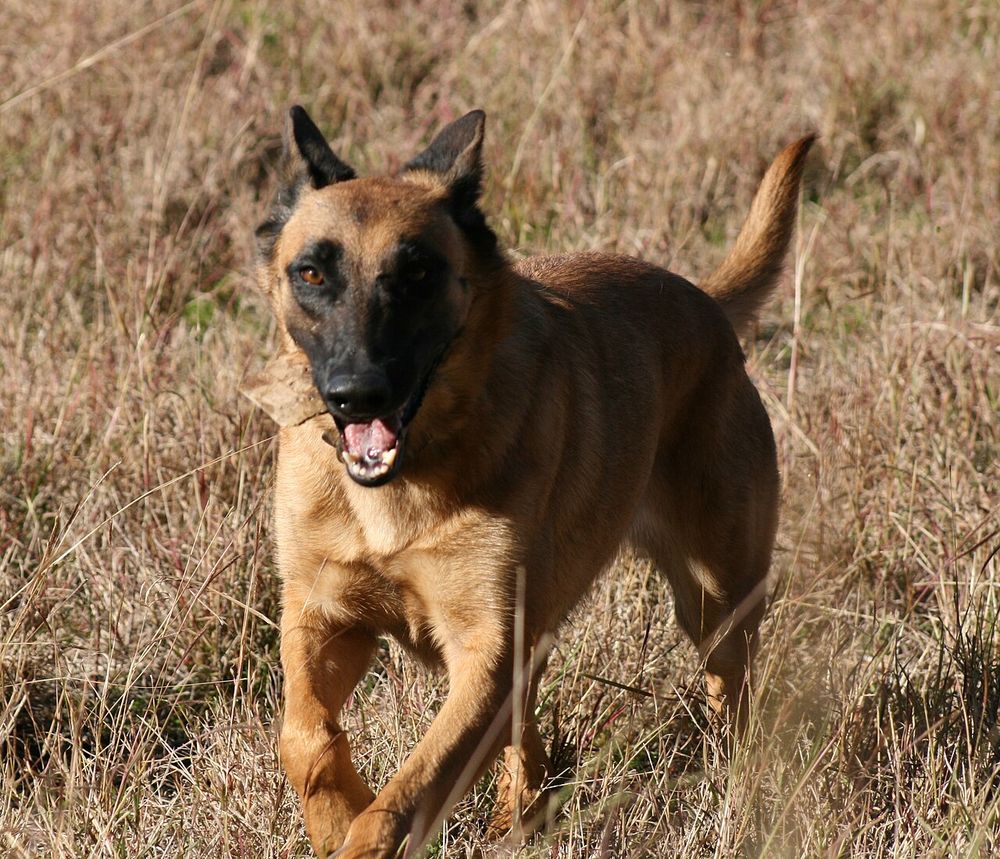
- Origin
- BelgiumFédération Cynologique Internationale
- Adult weight
- 20 to 30 kg (females to males: about 20 to 25 kg for females and 25 to 30 kg for males, FCI standard)Fédération Cynologique Internationale
- Height
- 56 to 66 cm (females to males: ideal 58 cm for females and 62 cm for males, within the standard's limits of 2 cm under and 4 cm over)Fédération Cynologique Internationale
- Lifespan
- 14 to 16 yearsAmerican Kennel Club
- Coat
- Short, waterproof coat over a woolly undercoat. AKC says it sheds twice a year.American Kennel Club
- Energy
- Very highThe Royal Kennel Club (UK)
- Indian heat
- Copes with careAnimals (2020)study
- Flats
- Needs spaceThe Royal Kennel Club (UK)
Belgian Malinois care snapshot
| What | The rule | Source |
|---|---|---|
| Size | Medium to large; the FCI standard gives an ideal height of about 62 cm for males and 58 cm for females, and about 25 to 30 kg for males, 20 to 25 kg for females. | Fédération Cynologique Internationale |
| Exercise need | More than 2 hours a day (Royal Kennel Club). | The Royal Kennel Club (UK) |
| Alone-time tolerance | Not rated by kennel clubs. PDSA advises no more than 4 hours alone for any dog; a working dog without its exercise and work is hard to leave. | PDSA |
| Heat tolerance | Described in words only: not flat-faced, but a very active dog, and exercise caused about three in four heatstroke cases in UK vet records. | Animals (2020)study |
| Shedding and coat | The Malinois is the short-haired Belgian Shepherd (FCI); the Royal Kennel Club lists it as shedding, with grooming more than once a week. | The Royal Kennel Club (UK) |
| Sociability with other dogs | Described in words only: watchful, wary and highly intelligent (Royal Kennel Club). Introductions to other dogs should follow the owner's guidance. | The Royal Kennel Club (UK) |
Where does the Belgian Malinois come from?
The Malinois is the short-haired variety of the Belgian Shepherd Dog, named after the city of Malines in Belgium. In the late 1800s Belgium had many herding dogs of mixed type and coat. In 1891 enthusiasts founded the Belgian Shepherd Dog Club in Brussels, and Professor Adolphe Reul of the Cureghem veterinary school gathered 117 dogs to choose the founding stock. A first standard followed in 1892, with one breed in three coat varieties.
AKC says the Malinois was bred by people who cared about working character rather than looks, which made it the dog of Belgian sheep and cattle herders. The FCI standard says that by 1910 its type and temperament were fixed, and today describes it as a sheepdog turned all-purpose working dog: guarding, defence, tracking and service work, as well as a family dog.
Malinois first reached America in 1911, and their numbers recovered from the early 1960s after the Second World War stopped imports. AKC says they are now highly sought after as police and military dogs; a Malinois named Cairo was part of the 2011 raid on Osama bin Laden.
How did the Belgian Malinois come to India?
In India the Malinois is known above all as a working dog with the security forces. A 2020 report on the Indo-Tibetan Border Police said the breed was introduced in India about a decade earlier and is used extensively by central security forces and police in anti-Naxal and counter-terrorist work. That year 17 Malinois pups were born at the ITBP's National Training Centre for Dogs in Panchkula, to be trained for infantry patrol and anti-terrorist duties; their mothers had detected explosive devices in Chhattisgarh.
How the breed came to Indian homes as a pet is not documented in the sources we checked. Pedigree dogs are registered on the forms of The Kennel Club of India. In Indian cities the challenge is fitting more than two hours of exercise a day into the cool hours: IMD's heat-wave season in the plains runs mainly from March to June, and exercise caused about three in four heatstroke cases in UK vet records.
What care does a Belgian Malinois need?
The three things that shape a good day for this breed.
Exercise
More than 2 hours a day, says The Royal Kennel Club, and AKC adds that daily walks are not enough: it needs work for the mind and body, ideally alongside its owner. In Indian heat, do the hard work before 7 am and after dark, with training and scent games at midday. The Royal Kennel Club (UK)
Grooming
Occasional brushing with a medium-bristle brush or rubber mitt; during the twice-yearly shed, a daily once-over with a slicker brush. Trim the nails regularly. American Kennel Club
Training
Early socialisation and obedience training are musts. AKC says the breed has a high prey drive and a strong interest in moving things, which can turn into chasing children, vehicles or other animals unless training directs it. India Meteorological Department
How much should a Belgian Malinois eat?
Daily calories for a healthy, neutered adult Belgian Malinois, worked out from its weight with the formula vets use (70 x weight in kg to the power 0.75, then AAHA's factor for a neutered adult). Divide by the kcal per kg on your food's pack for grams a day, and adjust by body shape.
| Resting need (kcal a day) | Neutered adult (kcal a day) | |
|---|---|---|
| 20 kg AAHA (American Animal Hospital Association) | 660 | 930 to 1060 |
| 25 kg | 780 | 1100 to 1250 |
| 30 kg | 900 | 1260 to 1440 |
Feed a complete and balanced food for the dog's life stage. Merck says foods labelled for growth must state whether they suit large-size dogs, those of 32 kg or more as adults, which matters for a big male. Rapid growth from too much food can worsen hip dysplasia, says ACVS, so keep a Malinois puppy lean. AKC notes that too many treats cause obesity; a working dog can earn part of its day's food in training instead. Bloat (GDV) is a risk in large, deep-chested breeds. ACVS and Cornell advise two or three smaller meals a day rather than one large one, and limiting activity after meals. Keep onion, garlic, chocolate, grapes, raisins and xylitol out of reach, as ASPCA advises. Meals a day: 6 to 12 weeks, 4 a day; 3 to 6 months, 3 a day; 6 to 12 months, 2 a day; adult, 2 or 3 smaller meals a day. Puppies, kittens, working, pregnant and older animals need different amounts: ask your vet, or use Petym's food calculator.
Which illnesses is the Belgian Malinois prone to, and how are they treated?
The conditions veterinary studies and breed surveys most often report in the Belgian Malinois. Knowing the early signs means a vet sees it sooner.
See your vet first. This is general information from veterinary sources, not a diagnosis. Only a vet who has examined your pet can say what is wrong and prescribe treatment, and this page never gives a dose. Do not give your pet human medicine. If your pet seems very unwell, go to a 24-hour vet: find one in your city.
Hip dysplasia
See a vet soonA loose, unstable hip joint that develops as the dog grows and leads to pain and arthritis. ACVS says it most often affects large breeds and genetics is the biggest single risk; The Royal Kennel Club lists hip screening for the Malinois. American College of Veterinary Surgeons
Signs to watch for
- Limping
- Reluctance to rise or jump
- Shifting weight onto the front legs
- Loss of muscle on the back legs
How a vet treats it
A vet diagnoses it with specially positioned hip X-rays and by feeling the joint, usually under light sedation. Treatment may be keeping the dog lean, controlled lead exercise, physiotherapy and anti-inflammatory pain relief prescribed by the vet. Surgery ranges from a small procedure in young puppies to reshaping the pelvis or a total hip replacement.
Prevention
Buy from screened parents, keep puppies lean and growing steadily, and keep adults at a healthy weight.
Elbow dysplasia
See a vet soonA developmental defect of the elbow joint that leads to arthritis. Cornell says large dogs are most at risk, and most cases are diagnosed between 4 and 12 months of age. The Royal Kennel Club lists elbow screening for the breed. Cornell University College of Veterinary Medicine, Riney Canine Health Center
Signs to watch for
- Lameness after exercise that does not fully go with rest
- Holding the elbow out or turning the paw in
- A shorter stride
- A head bob when only one leg is affected
How a vet treats it
A vet examines the dog and takes X-rays of both elbows, often with a CT scan or arthroscopy. Surgery, often by arthroscopy, is usually the main treatment, alongside weight control, moderate exercise, physiotherapy and anti-inflammatory pain relief prescribed by the vet. It cannot be cured, but it can be well managed.
Prevention
Choose screened parents, keep puppies lean, and avoid repeated jumping down from heights in young dogs.
Bloat (gastric dilatation-volvulus, GDV)
Emergency: go to a vet nowThe stomach fills with gas and food and can twist, cutting off its blood supply. Cornell lists large, deep-chested breeds, eating quickly, one large meal a day and exercise soon after eating among the risks. Cornell Riney Canine Health Center
Signs to watch for
- Retching that brings nothing up
- A swollen, painful belly
- Restlessness and pacing
- Drooling and panting
- Weakness, pale gums or collapse
How a vet treats it
This is an emergency. A vet stabilises the dog with a drip and oxygen, releases the gas with a stomach tube or needle, and operates to untwist the stomach, then fixes it to the body wall (gastropexy) to help stop it twisting again.
Prevention
Two or three smaller meals a day, rest after meals, and ask your vet about a preventive gastropexy, often done at spaying or neutering in at-risk breeds.
Heatstroke from exercise
Emergency: go to a vet nowA dangerous rise in body temperature. In UK vet records exercise caused about three in four heatstroke cases, and a keen working dog will keep going long after it should stop. Animals (2020)study
Signs to watch for
- Heavy panting and fast breathing
- Drooling, vomiting or diarrhoea
- Bright red or pale gums
- Weakness, wobbling or collapse
How a vet treats it
An emergency. Cool the dog with cool water over the body and moving air while you go to the vet. A vet may cool the dog further, give fluids by drip and oxygen, run blood tests and support the organs; severe cases may need days in hospital.
Prevention
Exercise at dawn and after dark in the hot months, carry water, and stop the game before the dog wants to.
How does a Belgian Malinois cope when you are away?
Well with the right person and a full day of work; badly with a stranger and nothing to do.
The FCI standard for the Belgian Shepherd Dog describes a watchful and active dog, bursting with energy and always ready to leap into action, and a stubborn and keen protector of its owner, bringing together the qualities of a shepherd, guard, defence and service dog. It also asks for a lively, alert temperament with no fear or aggressiveness, and a calm, fearless nature. The Royal Kennel Club sums the Malinois up as having an appetite for work and being watchful, wary and highly intelligent.
That makes the sitter's experience the most important part of the booking. A Malinois needs to know the sitter before you leave, and the sitter needs to know the dog's commands, its triggers and the house rules on doors, gates and visitors. Petym's free meet and greet before the first booking exists for exactly this. For a Malinois, more than one meeting, including a walk together while you are there, is sensible.
PDSA advises that no dog should be left alone for more than 4 hours at a time. For a working breed with the Royal Kennel Club's top exercise rating, more than two hours a day, the question is less how long it can be alone and more whether its exercise and training have been done before it is.
Who should look after a Belgian Malinois?
Someone strong, calm and consistent, who has handled large working dogs and will follow the owner's training exactly.
The sitter should use the same commands, the same equipment and the same rewards as the owner, because a clever dog quickly learns which rules a new person does not know. The owner should write down the words and hand signals the dog knows, what it is not allowed to do, which situations it finds hard (other dogs, cyclists, delivery riders, children running), and how it is walked: lead, harness, muzzle if used, and the routes it knows.
In a housing society, think about the handover points: the lift, the gate, the guard's cabin, deliveries at the door. A watchful dog may react to people coming to the door while its family is away. The care sheet should say where the dog stays when the door is opened, and the sitter should never let a visitor in to meet the dog without the owner's agreement. Positive reinforcement and calm routines, not new rules, are what keep the week steady.
What does a Malinois's day with a sitter look like in Indian heat?
Hard work at dawn, training and rest at midday, a second session after dark.
5:30 to 7:00
The main session: a long walk or jog on shaded routes, fetch or a tug game the owner uses, with water. Palm-test the ground first. PDSA
7:30
Breakfast after a cool-down, part of it kept for training.
10:00
Ten minutes of obedience with the owner's commands, then a scent game.
Noon to 4:30
Rest in a cool room, ideally in the dog's crate or bed if it uses one. In heat-wave months (March to June in most of the plains) no hard exercise. India Meteorological Department
After sunset
The second session once the ground has cooled: a long walk with training on the way.
Evening
Dinner, a brush, a settle on the mat, and the day logged with a photo for the owner.
What must the owner hand over to a Malinois's sitter?
More than for most breeds, because consistency is what keeps a working dog settled.
- The commands and hand signals the dog knows, and the release word.
- The dog's walking equipment, and a note on whether a muzzle is used and when.
- Known triggers: other dogs, cyclists, delivery riders, children running, the doorbell.
- The rules for visitors and deliveries, and where the dog goes when the door opens.
- Toys and games used for work, such as a tug or a ball, and how play ends.
- The crate or bed routine, if the dog uses one.
- Food, amounts, times, the vaccination card, and the regular and 24-hour vets.
- A trainer's or behaviourist's number, if the dog has one.
Which Malinois health signs should a sitter act on?
No genetic welfare page exists for the breed on UFAW's list; the Royal Kennel Club lists hip, elbow and eye screening. For any of these, the sitter calls the owner and the vet.
If Heavy panting, drooling, wobbling or collapse after exercise
Possible heatstroke. Shade, plenty of cool water over the body, moving air, then the nearest vet. PDSA
If Limping, reluctance to rise or jump, or shifting weight onto the front legs
Vet surgeons describe these as signs of hip dysplasia, most common in large dogs; the Royal Kennel Club lists hip and elbow screening. Rest the dog and call the vet. American College of Veterinary Surgeons
If Squinting, cloudy eyes or bumping into things
The Royal Kennel Club lists eye screening for the breed. Call the vet. The Royal Kennel Club (UK)
If A swollen belly with retching that brings nothing up
Possible bloat, an emergency in deep-chested dogs. Go to the nearest 24-hour vet now. American College of Veterinary Surgeons
If Torn pads or cut paws after running on rough ground
Clean with water, keep the dog calm and call the vet if it bleeds or limps.
If A bite or scuffle with another dog
Call the owner and the vet; check for punctures under the coat even if the dogs seem fine.
What should a sitter know about feeding a Malinois?
The owner's food and amounts, rest around meals, and food used for training.
Do
- Measure the day's food as written, and use part of it for training instead of extra treats.
- Feed after the dog has cooled down, and keep hard exercise away from mealtimes, as Cornell's canine health centre advises for bloat prevention. Cornell Riney Canine Health Center
- Carry water on every walk, and keep bowls full at home. PDSA
- Feed in the same spot and the same way the owner does, so mealtimes stay predictable.
Don’t
- Do not change the food during the stay.
- Do not take food or a bowl away from the dog unless the owner has shown you how they do it safely.
- Do not share table food; keep chocolate, grapes, raisins, onions and xylitol out of reach. ASPCA Animal Poison Control
- Do not give medicines or supplements that are not on the care sheet.
How does a Malinois's routine change through the Indian year?
The work stays; the timing moves with the weather.
| Exercise | Indoor work | Watch for | |
|---|---|---|---|
| Summer (March to June) India Meteorological Department | Before 7 am and after dark only | Obedience and scent games at midday | Overheating: a keen dog will not stop |
| Monsoon (June to September) | Shorter walks between showers, away from floodwater | More training to make up for lost walks | Ticks, wet paws, restlessness |
| Diwali and wedding season | Early walks before crackers | Calm settle practice indoors | Noise reactions, bolting, more alertness at the door |
| Winter | Longer sessions return | Normal routine | Over-exercise after a quiet spell |
Petym's practical summary; heat-wave months follow IMD.
Which Petym service suits a Belgian Malinois?
Care in your own home, by a sitter the dog already knows, is usually the steadiest choice.
Usually the right fit
Overnight pet sitting
The dog stays on home ground with its own routine, and the sitter has met it more than once before the booking.
Dog walking
For working days: a long dawn session with an experienced walker who uses your commands.
Drop-in visits
To add a midday training session and a toilet break on long days.
Breeds with similar care needs to the Belgian Malinois
Going away soon? Tell us your dates.
A checked local sitter feeds, walks and keeps your pet company at home, follows your care sheet to the letter and sends a photo every day. Petym is opening city by city: send your dates and we will tell you when a sitter can take them.
- Meet your sitter first, free
- PAN-checked, first-aid trained
- A photo every day
- Pay through Petym, never cash


Questions owners ask
Can a Belgian Malinois stay with a pet sitter?
- Yes, with an experienced sitter and a proper introduction. The Royal Kennel Club describes the breed as watchful and wary, and the FCI standard as a keen protector of its owner. Meet the sitter more than once before the booking, walk together, and hand over the dog's commands and rules in writing.
How much exercise does a Malinois need?
- The Royal Kennel Club gives more than two hours a day. In Indian heat, a sitter should fit most of it into early morning and after sunset, and use obedience training and scent games indoors in the hot hours to work the dog's mind.
How long can a Belgian Malinois be left alone?
- PDSA advises no more than 4 hours at a time for any dog. A Malinois left alone without its exercise and training done first is likely to be restless. A walker, drop-in visits or an overnight sitter who knows the dog keeps the routine steady.
Can a Malinois live in the Indian climate?
- It can, with careful timing. The Malinois is short-haired and not flat-faced, but it is very active, and exercise caused about three in four heatstroke cases in UK vet records. Work it before 7 am and after dark, carry water, and stop at heavy panting.
How should visitors and deliveries be handled with a Malinois at home?
- Exactly as the owner writes it down. A watchful dog may react to the door while its family is away. The care sheet should say where the dog goes when the door opens, and the sitter should never invite anyone in to meet the dog without the owner's agreement.
Does a Malinois shed?
- Yes. The Malinois is the short-haired variety of the Belgian Shepherd, and the Royal Kennel Club lists it as shedding, with grooming more than once a week. A quick brush in the evening also gives the sitter a chance to check for ticks and small cuts.
What health checks matter for a Malinois?
- The Royal Kennel Club lists hip, elbow and eye screening for the breed. A sitter should report limping, stiffness or reluctance to jump, which vet surgeons describe as signs of hip dysplasia, and any eye change, to the owner and vet.
Keep reading
- Caring for a dog while you are away
- Meet and greet checklist
- What to leave for your pet sitter
- Overnight pet sitting
- German Shepherd careAnother shepherd breed with big daily needs.
- Border Collie careA herding dog that needs a job.
Services that help
Free tools for this
Words on this page, explained
Keep exploring
Other dog breeds
- Akita
- Alaskan Malamute
- American Bully
- American Cocker Spaniel
- American Pit Bull Terrier
- Australian Shepherd
- Bakharwal dog
- Basset Hound
- Beagle
- Bernese Mountain Dog
- Bichon Frise
- Border Collie
- Boston Terrier
- Boxer
- Bull Terrier
- Bulldog
- Bullmastiff
- Cane Corso
- Caucasian Shepherd Dog
- Cavalier King Charles Spaniel
- Chihuahua
- Chippiparai
- Chow Chow
- Cocker Spaniel
- Dachshund
- Dalmatian
- Dobermann
- Dogo Argentino
- English Mastiff
- English Springer Spaniel
- French Bulldog
- Gaddi Kutta (Gaddi dog)
- German Shepherd
- Golden Retriever
- Great Dane
- Greyhound
- Havanese
- Indian pariah dog (Indie)
- Indian Spitz
- Irish Setter
- Jack Russell Terrier
- Kangal
- Kanni
- Kombai
- Labrador Retriever
- Lhasa Apso
- Maltese
- Miniature Pinscher
- Miniature Schnauzer
- Mudhol Hound
- Neapolitan Mastiff
- Newfoundland
- Papillon
- Pekingese
- Pembroke Welsh Corgi
- Pomeranian
- Poodle
- Pug
- Rajapalayam
- Rampur Greyhound
- Rhodesian Ridgeback
- Rottweiler
- Saint Bernard
- Samoyed
- Shar Pei
- Shiba Inu
- Shih Tzu
- Siberian Husky
- Tibetan Mastiff
- Weimaraner
- West Highland White Terrier
- Whippet
- Yorkshire Terrier
Sources
Each source was opened and read on the date shown. How Petym checks its sources
- Fédération Cynologique Internationale: FCI-Standard N° 15: Chien de Berger Belge (Belgian Shepherd Dog), 19.04.2002 (opens in a new tab)
- American Kennel Club: Belgian Malinois dog breed information (opens in a new tab)
- The Royal Kennel Club (UK): Belgian Shepherd Dog (Malinois) | Breeds A-Z | Kennel Club (opens in a new tab)
- The Kennel Club of India: The Kennel Club of India: contact details and forms (opens in a new tab)
- India Meteorological Department: FAQ on heat wave (opens in a new tab)
- Merck Veterinary Manual: Dog and cat foods (full review November 2023, updated June 2025) (opens in a new tab)
Show all 20 sourcesShow fewer
- American College of Veterinary Surgeons: Canine Hip Dysplasia (opens in a new tab)
- American College of Veterinary Surgeons: Gastric dilatation-volvulus (opens in a new tab)
- Cornell Riney Canine Health Center: Gastric dilatation volvulus (GDV) or "bloat" (opens in a new tab)
- ASPCA Animal Poison Control: People foods to avoid feeding your pets (opens in a new tab)
- Merck Veterinary Manual: Puppy care (opens in a new tab)
- VCA Animal Hospitals: Feeding times and frequency for your dog (opens in a new tab)
- AAHA (American Animal Hospital Association): 2021 AAHA Nutrition and Weight Management Guidelines for Dogs and Cats: energy requirement calculations (Box 1, PDF) (opens in a new tab)
- Merck Veterinary Manual: Nutritional requirements of small animals (full review November 2023, updated September 2024) (opens in a new tab)
- Cornell University College of Veterinary Medicine, Riney Canine Health Center: Elbow dysplasia (opens in a new tab)
- PDSA: Heatstroke in dogs (opens in a new tab)
- PDSA: Separation anxiety in dogs (opens in a new tab)
- American College of Veterinary Surgeons: Gastric Dilatation-Volvulus (opens in a new tab)
- Animals (2020): Dogs don't die just in hot cars: exertional heat-related illness (opens in a new tab)
- Free Press Journal: ITBP gets 17 'Osama hunter' pups in canine squad (November 2020) (opens in a new tab)