Greyhound care in India: heat, cold and what a sitter must know
Updated By PetymFacts checked against official sources on
Quick answer
A Greyhound is usually a calm, affectionate house dog that needs about an hour of exercise a day and a safe place to sprint. What a sitter must know: pet Greyhounds had over four times the odds of heatstroke of Labradors in a UK study, their thin skin tears easily, they feel the cold, and many will chase cats.
Keep it on a leash outside fenced areas, walk at dawn and after dark in the hot months, give it a soft bed and a coat on cold North Indian nights, and brush its teeth: gum disease affected 39% of UK pet Greyhounds.
- Meet your sitter first, free
- PAN-checked, first-aid trained
- A photo every day
- Pay through Petym, never cash

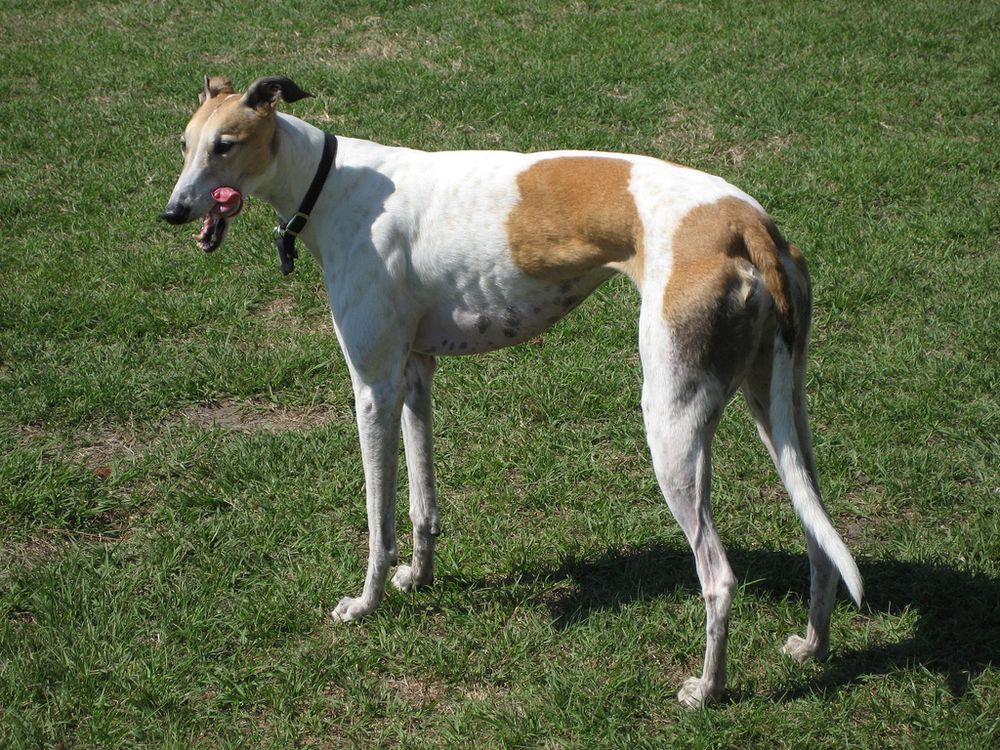
- Origin
- Great Britain, from ancient sighthounds probably of the Middle EastFédération Cynologique Internationale
- Adult weight
- 27 to 32 kg (AKC: 65 to 70 lb for males, 60 to 65 lb for females, converted to kg; the FCI standard gives height only)American Kennel Club
- Height
- 68 to 76 cm (FCI standard, ideal height: males 71 to 76 cm, females 68 to 71 cm)Fédération Cynologique Internationale
- Lifespan
- 10 to 13 yearsAmerican Kennel Club
- Coat
- Fine and close. Black, white, red, blue, fallow, brindle, or any of these broken with white.Fédération Cynologique Internationale
- Energy
- ModerateThe Royal Kennel Club
- Indian heat
- Struggles in heatScientific Reports (2020)study
- Flats
- A flat, with daily exerciseAmerican Kennel Club
Greyhound snapshot for a sitter
| What | The rule | Source |
|---|---|---|
| Size | Large, says The Royal Kennel Club. AKC gives 28 to 30 inches and 65 to 70 pounds for males, 27 to 28 inches and 60 to 65 pounds for females. | American Kennel Club |
| Exercise need | Up to 1 hour a day (The Royal Kennel Club), with regular chances to run full out, but only in a securely fenced area (AKC). | The Royal Kennel Club |
| Heat tolerance | Poor for its build. Pet Greyhounds had 4.26 times the odds of heat-related illness of Labrador Retrievers in UK vet records. | Scientific Reports (2020)study |
| Cold tolerance | Low. Greyhound Racing Victoria's adoption programme says Greyhounds have relatively thin skin and very little body fat. | Greyhound Adoption Program, Greyhound Racing Victoria |
| Coat and grooming | Short, fine coat; groom once a week (The Royal Kennel Club). AKC rates shedding 2 of 5. | The Royal Kennel Club |
| Temperament | Intelligent, gentle, affectionate and even tempered, says the FCI standard. AKC adds that Greyhounds tend to be reserved with strangers. | Fédération Cynologique Internationale |
| Typical lifespan | Median 11.4 years in a study of UK pet Greyhounds; AKC gives 10 to 13 years. | Canine Genetics and Epidemiology (2019), RVC VetCompassstudy |
Where does the Greyhound come from?
Greyhound-type dogs appear on the walls of Ancient Egyptian tombs, and the FCI standard dates some of these drawings to as far back as 4000 BC. Experts, though not all of them, think the type began in the Middle East. AKC describes the hounds of the pharaohs as bred to spot, chase and catch the fast animals of Egypt's deserts.
Dogs of the type spread across Europe, but it was in Britain that the Greyhound was developed to a standard. In the Middle Ages only royalty and nobility were allowed to hunt with them, the Royal Kennel Club notes. The breed hunts by sight rather than by scent and makes its own decisions in the chase, which still shapes how it behaves and trains.
The racing Greyhound came from the coursing hound that hunted live hare. The FCI standard says only the cheetah is faster, and one racing Greyhound was timed at over 45 mph.
How did the Greyhound come to India?
No source we found documents when or how the Greyhound first came to India. In Punjab the dogs are still raced in village events: The Tribune reported in July 2025 that illegal greyhound races had been stopped in the state, and that the dogs are made to run at dangerously high speeds. A pet Greyhound's life is very different: AKC says it is happy to lounge around the house all day.
Two things matter most here. Heat: pet Greyhounds had 4.26 times the odds of heat-related illness of Labradors in UK vet records, so summer walks belong before sunrise and after dark. Cold: Greyhound Racing Victoria's adoption programme notes thin skin and very little body fat, so on North Indian winter nights a Greyhound needs a dry bed raised off the cold floor and a warm coat in the evenings and overnight.
What care does a Greyhound need?
The three things that shape a good day for this breed.
Exercise
The Royal Kennel Club gives up to an hour a day. AKC says Greyhounds are happy to lounge but need regular chances to run full out, only off the lead in a securely fenced area, because they may chase anything that looks like prey. The Royal Kennel Club
Grooming
AKC advises weekly rubdowns with a damp cloth or hound glove, regular baths, nail trims if the nails do not wear down, weekly ear checks and daily tooth brushing with a dog toothpaste if possible. American Kennel Club
Training
A sighthound bred to hunt on its own, the Greyhound gets bored quickly. AKC advises short, gentle lessons, never harsh, and early socialisation with small animals and children. The Royal Kennel Club
How much should a Greyhound eat?
Daily calories for a healthy, neutered adult Greyhound, worked out from its weight with the formula vets use (70 x weight in kg to the power 0.75, then AAHA's factor for a neutered adult). Divide by the kcal per kg on your food's pack for grams a day, and adjust by body shape.
| Resting need (kcal a day) | Neutered adult (kcal a day) | |
|---|---|---|
| 27 kg AAHA (American Animal Hospital Association) | 830 | 1160 to 1330 |
| 29.5 kg | 890 | 1240 to 1420 |
| 32 kg | 940 | 1320 to 1510 |
Feed a complete and balanced food for the dog's life stage. AKC notes the breed typically needs somewhat more calories and protein than some dogs, and Greyhounds are naturally lean, so judge weight with your vet rather than by eye. Use the energy table below as a starting point. Greyhounds are deep-chested, and AKC says they are susceptible to bloat. Two or three smaller meals a day rather than one large meal, as the American College of Veterinary Surgeons advises for at-risk dogs, and rest around mealtimes are sensible. Keep onion, garlic, grapes, raisins, chocolate, xylitol, salty snacks and cooked bones away from the dog. Meals a day: 6 to 12 weeks, 4 a day; 3 to 6 months, 3 a day; 6 to 12 months, 2 a day; adult, 2 to 3 smaller meals a day. Puppies, kittens, working, pregnant and older animals need different amounts: ask your vet, or use Petym's food calculator.
Which illnesses is the Greyhound prone to, and how are they treated?
The conditions veterinary studies and breed surveys most often report in the Greyhound. Knowing the early signs means a vet sees it sooner.
See your vet first. This is general information from veterinary sources, not a diagnosis. Only a vet who has examined your pet can say what is wrong and prescribe treatment, and this page never gives a dose. Do not give your pet human medicine. If your pet seems very unwell, go to a 24-hour vet: find one in your city.
Periodontal (gum) disease
See a vet soonInfection and inflammation of the gums and the tissues that hold the teeth. It was the most common disorder in a VetCompass study of 5,419 UK pet Greyhounds, recorded in 39.0% of them, and the authors call it a significant issue in the breed. Canine Genetics and Epidemiology (2019), RVC VetCompassstudy
Signs to watch for
- Bad breath
- Red or purple, swollen gums that bleed
- Dropping food or chewing on one side
- Loose teeth
How a vet treats it
A vet examines the mouth and usually takes jaw X-rays. Treatment is professional cleaning above and below the gumline under anaesthesia, with extraction of badly affected teeth, which dogs cope with well.
Prevention
Daily tooth brushing with a dog toothpaste, never a human one, and regular dental checks.
Osteosarcoma (bone cancer)
See a vet soonThe most common bone tumour in dogs, mostly in large breeds. Science for Animal Welfare lists Greyhounds among predisposed breeds, and the VetCompass study found cancer the most common grouped cause of death in Greyhounds. Science for Animal Welfare (formerly UFAW)
Signs to watch for
- Lameness that does not go away
- A painful, warm swelling on a leg
- Pain that is hard to control
How a vet treats it
A vet confirms it with X-rays and a biopsy and checks for spread. Options include limb amputation, limb-sparing surgery, chemotherapy, radiotherapy and pain relief, with a veterinary cancer specialist. The outlook is poor.
Bloat (gastric dilatation-volvulus, GDV)
Emergency: go to a vet nowThe stomach fills with gas and can twist. AKC says the deep-chested Greyhound is susceptible and owners should seek help immediately if signs appear. American Kennel Club
Signs to watch for
- Retching with nothing coming up
- A swollen belly
- Restlessness, drooling, looking at the belly
- Weakness or collapse
How a vet treats it
A vet confirms it with abdominal X-rays, stabilises the dog with IV fluids and oxygen, decompresses the stomach and operates to untwist it and fix it to the body wall (gastropexy).
Prevention
Smaller meals two or three times a day and no hard running around meals.
Heatstroke
Emergency: go to a vet nowA dangerous rise in body temperature, usually after exercise in the heat. Greyhounds had 4.26 times the odds of heat-related illness of Labradors in UK vet records. Scientific Reports (2020)study
Signs to watch for
- Heavy panting that does not settle
- Drooling, vomiting or diarrhoea
- Weakness, wobbling or collapse
- Confusion or seizures
How a vet treats it
Start cooling at once with shade, cool tap water over the body and moving air, then go to the vet. The vet cools the dog and may give a fluid drip, oxygen and medication, with a hospital stay in severe cases.
Prevention
No sprinting in the heat, walks at dawn and after dark, and water on every outing.
Greyhound myths a new sitter should drop
Most people picture a racing machine. The dog on your sofa is usually something else.
You may have read
A Greyhound needs hours of running every day.
Myth
What the sources say
The Royal Kennel Club puts it at up to 1 hour a day. AKC calls the breed perfectly happy to lounge around the house, as long as it gets regular, safe chances to sprint. The Royal Kennel Club
You may have read
A short coat means it copes with Indian heat.
Myth
What the sources say
In a UK study of 905,543 dogs, pet Greyhounds had 4.26 times the odds of heat-related illness of Labradors. The authors point to their high lean muscle mass. Scientific Reports (2020)study
You may have read
A well-trained Greyhound can be let off the leash in the park.
Myth
What the sources say
AKC says Greyhounds should only be off leash in a securely fenced area, because they may not resist chasing what they see as prey. American Kennel Club
You may have read
Greyhounds are tough, so scrapes do not matter.
Myth
What the sources say
Wounds were the third most common problem in UK pet Greyhounds, and the VetCompass authors link this to thinner skin that is more prone to damage. Canine Genetics and Epidemiology (2019), RVC VetCompassstudy
How long can a Greyhound be left alone?
A settled adult often naps through a few hours, but keep to PDSA's general limit of 4 hours.
AKC describes Greyhounds as very affectionate with their families and reserved with strangers, and the FCI standard calls the breed gentle and even tempered. In practice that means a quiet dog that sleeps a great deal and likes to know where its people are. PDSA's general advice for any dog is no more than 4 hours alone at a time, and it lists barking, whining, toileting indoors, drooling and trembling among the signs of separation distress.
VetCompass notes that most UK pet Greyhounds are retired racers, rehomed after their racing years. A dog that lived in kennels may still be learning about glass doors, stairs, pressure cookers and being alone in a flat. If your Greyhound is newly adopted, tell the sitter: keep the routine identical, choose a home sitter over a busy boarding house, and talk to your vet or a qualified behaviourist if the dog panics when left.
Greyhounds are reserved with strangers, so a free meet and greet before the first booking matters. Let the dog sniff the sitter on its own terms, and have the sitter walk it once with you before you leave.
What vets recorded in 5,419 UK pet Greyhounds
The most common problems in a 2016 VetCompass study. Several are things a sitter sees first.
39 %
had periodontal (gum) disease, the most common problem Canine Genetics and Epidemiology (2019), RVC VetCompassstudy
11.1 %
had overgrown nails Canine Genetics and Epidemiology (2019), RVC VetCompassstudy
6.2 %
had a wound recorded Canine Genetics and Epidemiology (2019), RVC VetCompassstudy
4.6 %
had osteoarthritis, above the all-breed estimate Canine Genetics and Epidemiology (2019), RVC VetCompassstudy
4.26 x
the odds of heat-related illness compared with Labradors, in a separate UK study Scientific Reports (2020)study
Heat and cold: a Greyhound's two weak spots in India
The same lean body that sheds heat after a sprint struggles in a Delhi May and shivers on a Lucknow January night.
Do
- Walk before sunrise and after dark from March to June. The UK study found pet Greyhounds at raised odds of heat-related illness, and exercise is the usual trigger. Scientific Reports (2020)study
- Test the road with the back of your hand for seven seconds. If it hurts your hand, it is too hot for paws. The Royal Kennel Club
- Give a thick, soft bed off the cold floor. Thin skin and little body fat mean a Greyhound feels a hard marble floor. Greyhound Adoption Program, Greyhound Racing Victoria
- Use a well-fitted dog coat on cold winter evenings and nights in North India, as the Victorian adoption programme advises for cold weather. Greyhound Adoption Program, Greyhound Racing Victoria
Don’t
- Do not let it sprint in the afternoon heat, even in a fenced ground. Heavy panting, drooling or wobbliness means shade, cool water and a call to the vet. PDSA
- Do not leave it in a parked car or on a sunny balcony, not even for a quick errand. PDSA
- Do not let wet bedding stay wet through the monsoon: damp beds leave Greyhounds very cold. Greyhound Adoption Program, Greyhound Racing Victoria
- Do not leave a coat on during a run; take it off for exercise and put it back for rest.
Greyhound health signs a sitter should report
Spot it, note it, tell the owner, and call the vet for anything sudden.
If Restless, retching without bringing anything up, a swelling belly, an anxious look at its own side. AKC says deep-chested Greyhounds are susceptible to bloat.
This is an emergency. Go to the vet or the nearest 24-hour vet at once; ACVS says early treatment gives the best chance. American College of Veterinary Surgeons
If A cut or tear in the skin after a run, a brush with a gate or play with another dog.
Clean gently and call the vet: thin Greyhound skin tears easily, and wounds affected 6.2% of UK pet Greyhounds. Canine Genetics and Epidemiology (2019), RVC VetCompassstudy
If Bad breath, red gums, dropping food.
Follow the owner's tooth-brushing routine and note it for the vet. Gum disease was the most common problem recorded. Canine Genetics and Epidemiology (2019), RVC VetCompassstudy
If Limping, a sore toe or a split pad after a sprint.
Rest and call the vet. The breed club notes sports injuries such as pulled muscles, broken toes and split pads in this athletic breed. American Kennel Club
If A bleeding or split tail tip after wagging against a wall.
Wrap lightly and call the vet. The breed club notes the long, whip-like tail can split or break from impact. American Kennel Club
If Stiffness getting up, slow on stairs, in an older dog.
Tell the owner; osteoarthritis was more common than in dogs overall, and ex-racers may carry old injuries. Canine Genetics and Epidemiology (2019), RVC VetCompassstudy
Community cats, squirrels and the society compound
A Greyhound hunts by sight. In an Indian housing society there is a lot to see.
AKC explains that sighthounds were bred to pursue game by sight and to make their own decisions in the chase. Greyhound Racing Victoria, which runs a large adoption programme, says Greyhounds may show predatory behaviour towards cats, chickens and other small animals, and towards unfamiliar small animals in new places even when they live calmly with the family cat. It encourages adopters of dogs with prey drive to use a muzzle in public and keep them leashed.
For a sitter in an Indian city that means a firm hand on a strong leash past the society's community cats, the squirrels on the compound wall and the small dogs on the evening walk. A Greyhound can reach a sprint before a person has reacted, and many slip out of a loose collar, so use the owner's well-fitted harness or the collar style they trust. If the owner says the dog is muzzled outdoors, keep that rule. Never let it off the leash on a ground, a beach or an open plot that is not fully fenced.
Greyhound sitter checklist
- Leash, harness or collar the owner trusts, and the muzzle if the dog wears one outdoors.
- Which animals the dog has lived with, and how it reacts to cats and small dogs on walks. Greyhound Racing Victoria (Greyhound Care and Standards)
- Walk times for the season, and a cooler indoor plan for hot afternoons.
- Soft bed location, its coat for cold nights, and how the home is kept warm or cool.
- Meal times and portions, and whether meals are split to lower bloat risk, as your vet advised. American College of Veterinary Surgeons
- Tooth-brushing routine and nail trim dates.
- Tick prevention product and next due date.
- The vet's number and the nearest 24-hour vet on Petym's list for your city.
Which Petym service suits a Greyhound?
If Your Greyhound is a calm homebody or newly adopted
Overnight pet sitting in your own home: same sofa, same bed, same quiet routine. Overnight sitting
If You work long days but sleep at home
A dog walker for a cool-hours walk on the leash, or a drop-in visit for a toilet break. Dog walking
If Your dog is relaxed with other dogs and has no cats to chase
Pet boarding in a sitter's home that has passed Petym's video walk-through, inside its pet limit. Home boarding
If Your Greyhound is old, stiff or on medicines
Special-needs pet care, with the vet's plan followed and logged. Special-needs care
Breeds with similar care needs to the Greyhound
Going away soon? Tell us your dates.
A checked local sitter feeds, walks and keeps your pet company at home, follows your care sheet to the letter and sends a photo every day. Petym is opening city by city: send your dates and we will tell you when a sitter can take them.
- Meet your sitter first, free
- PAN-checked, first-aid trained
- A photo every day
- Pay through Petym, never cash


Questions owners ask
Can a Greyhound live in an Indian flat?
- Often, yes. AKC describes Greyhounds as happy to lounge around the house, and The Royal Kennel Club gives up to 1 hour of exercise a day. A flat works if the dog gets cool-hours walks, a soft bed and, ideally, a safe fenced space to sprint now and then.
Do Greyhounds cope with Indian summers?
- Not as well as their short coat suggests. In UK vet records pet Greyhounds had 4.26 times the odds of heat-related illness of Labradors. Walk before sunrise and after dark, skip sprints in the heat, keep water and shade handy, and call the vet at the first signs of heatstroke.
Does a Greyhound need a coat in winter?
- In North Indian winters, often yes. Greyhound Racing Victoria's adoption programme says Greyhounds have thin skin and very little body fat, and suggests a warm coat in the evenings and overnight in cold weather, plus a dry bed off the cold ground.
Can a Greyhound be walked off the leash?
- Only in a securely fenced area, AKC says. Greyhounds hunt by sight and may not resist chasing a cat, squirrel or small dog. In an Indian city a sitter should keep the dog leashed on every walk, with a well-fitted harness or collar.
Are Greyhounds good with cats?
- Some are, after careful introductions. Greyhound Racing Victoria says Greyhounds can learn that the family cat is a fellow pet, but may still chase unfamiliar small animals elsewhere. Tell your sitter how your dog reacts to the society's community cats.
How long can a Greyhound be left alone?
- PDSA's general advice is no more than 4 hours at a time for any dog. A settled adult Greyhound often sleeps through that, but a newly adopted ex-racer may find a quiet flat strange. On long days book a walk, a drop-in visit or a home sitter.
What health problems do Greyhounds get?
- In a VetCompass study of UK pet Greyhounds the most common were gum disease (39%), overgrown nails, wounds, osteoarthritis and claw injuries. AKC also lists bloat, which is an emergency. Brush the teeth, trim the nails and call your vet about anything that worries you.
Keep reading
- Dog care hub
- Heatstroke in dogs
- Winter pet care in North India
- Dog walking rules in public places
- Rajapalayam careAn Indian sighthound.
- Chippiparai careAnother lean Indian hound.
- Overnight pet sitting
Services that help
Free tools for this
Words on this page, explained
Keep exploring
Other dog breeds
- Akita
- Alaskan Malamute
- American Bully
- American Cocker Spaniel
- American Pit Bull Terrier
- Australian Shepherd
- Bakharwal dog
- Basset Hound
- Beagle
- Belgian Malinois
- Bernese Mountain Dog
- Bichon Frise
- Border Collie
- Boston Terrier
- Boxer
- Bull Terrier
- Bulldog
- Bullmastiff
- Cane Corso
- Caucasian Shepherd Dog
- Cavalier King Charles Spaniel
- Chihuahua
- Chippiparai
- Chow Chow
- Cocker Spaniel
- Dachshund
- Dalmatian
- Dobermann
- Dogo Argentino
- English Mastiff
- English Springer Spaniel
- French Bulldog
- Gaddi Kutta (Gaddi dog)
- German Shepherd
- Golden Retriever
- Great Dane
- Havanese
- Indian pariah dog (Indie)
- Indian Spitz
- Irish Setter
- Jack Russell Terrier
- Kangal
- Kanni
- Kombai
- Labrador Retriever
- Lhasa Apso
- Maltese
- Miniature Pinscher
- Miniature Schnauzer
- Mudhol Hound
- Neapolitan Mastiff
- Newfoundland
- Papillon
- Pekingese
- Pembroke Welsh Corgi
- Pomeranian
- Poodle
- Pug
- Rajapalayam
- Rampur Greyhound
- Rhodesian Ridgeback
- Rottweiler
- Saint Bernard
- Samoyed
- Shar Pei
- Shiba Inu
- Shih Tzu
- Siberian Husky
- Tibetan Mastiff
- Weimaraner
- West Highland White Terrier
- Whippet
- Yorkshire Terrier
Sources
Each source was opened and read on the date shown. How Petym checks its sources
- Fédération Cynologique Internationale: FCI-Standard No 158: Greyhound (opens in a new tab)
- American Kennel Club: Greyhound dog breed information (opens in a new tab)
- The Royal Kennel Club: Greyhound: breed information (opens in a new tab)
- Greyhound Adoption Program, Greyhound Racing Victoria: Greyhounds and the cold (opens in a new tab)
- Merck Veterinary Manual: Dog and cat foods (full review November 2023, updated June 2025) (opens in a new tab)
- Merck Veterinary Manual: Puppy care (opens in a new tab)
Show all 20 sourcesShow fewer
- American College of Veterinary Surgeons: Gastric dilatation-volvulus (opens in a new tab)
- ASPCA Animal Poison Control: People foods to avoid feeding your pets (opens in a new tab)
- AAHA (American Animal Hospital Association): 2021 AAHA Nutrition and Weight Management Guidelines for Dogs and Cats: energy requirement calculations (Box 1, PDF) (opens in a new tab)
- Merck Veterinary Manual: Nutritional requirements of small animals (full review November 2023, updated September 2024) (opens in a new tab)
- Merck Veterinary Manual: Dental disorders of dogs (dog owners; full review May 2018, updated October 2025) (opens in a new tab)
- Science for Animal Welfare (formerly UFAW): Rottweiler: osteosarcoma (opens in a new tab)
- PDSA: Heatstroke in dogs (opens in a new tab)
- Greyhound Racing Victoria (Greyhound Care and Standards): Re-homing greyhounds with prey drive (opens in a new tab)
- PDSA: Separation anxiety in dogs (opens in a new tab)
- American College of Veterinary Surgeons: Gastric dilatation-volvulus (opens in a new tab)
- The Royal Kennel Club: The danger of hot pavements (opens in a new tab)
- Scientific Reports (2020): Incidence and risk factors for heat-related illness in UK dogs (opens in a new tab)
- Canine Genetics and Epidemiology (2019), RVC VetCompass: Greyhounds under general veterinary care in the UK during 2016: demography and common disorders (opens in a new tab)
- The Tribune (15 July 2025): Punjab's obsession for SUVs, guns and expensive dogs is no big swag (news report) (opens in a new tab)