Bichon Frise care in India: coat, humidity and notes for your sitter
Updated By PetymFacts checked against official sources on
Quick answer
A Bichon Frise is one of the easiest breeds for a sitter to win over: AKC rates it 5 of 5 for affection, children, other dogs and strangers. The work is the coat, which needs brushing most days to stop mats in Indian humidity, plus teeth, ears and knees. It hates long hours alone, so company matters more than space.
The Royal Kennel Club puts its exercise need at up to 30 minutes a day and lists a flat as a suitable home, which suits Indian city life well.
- Meet your sitter first, free
- PAN-checked, first-aid trained
- A photo every day
- Pay through Petym, never cash

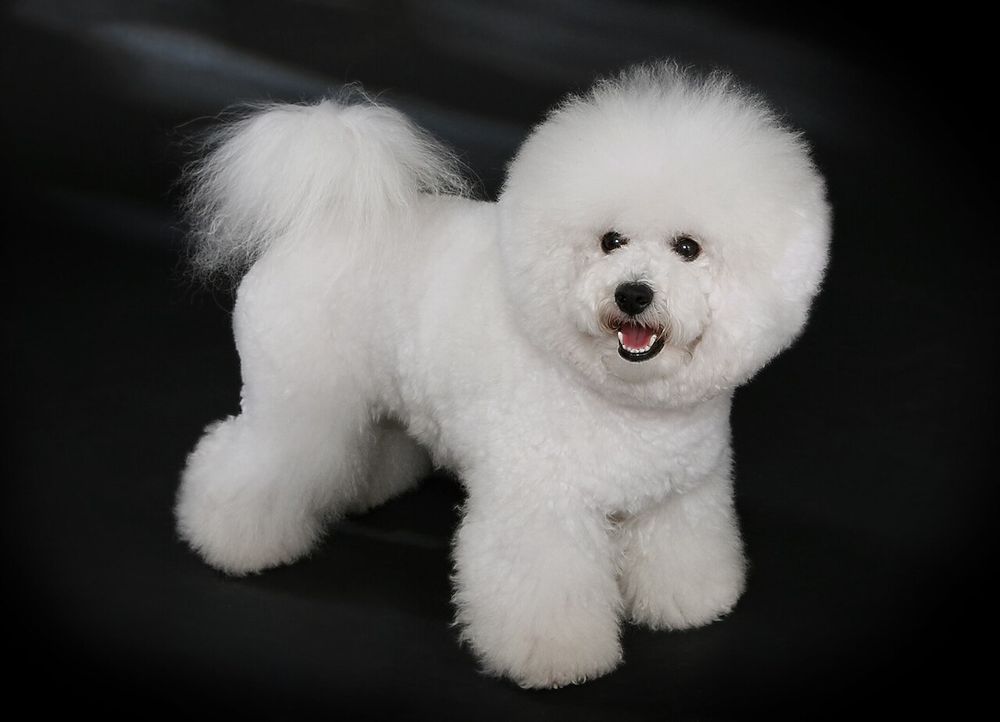
- Origin
- The Mediterranean; recognised as a Franco-Belgian breedFédération Cynologique Internationale
- Adult weight
- 5.4 to 8.2 kg (AKC's 12 to 18 pounds, converted; the FCI standard gives about 5 kg)American Kennel Club
- Height
- 25 to 29 cm (FCI standard, with 1 cm taller tolerated in males and 2 cm lower in females)Fédération Cynologique Internationale
- Lifespan
- 14 to 15 yearsAmerican Kennel Club
- Coat
- A curly white coat over an undercoat. It sheds very little, because shed hair is caught in the undercoat and must be brushed out to stop mats.American Kennel Club
- Energy
- ModerateAmerican Kennel Club
- Indian heat
- Copes with careScientific Reports (2020)study
- Flats
- Suits a flatThe Royal Kennel Club
Bichon Frise snapshot
| What | The rule | Source |
|---|---|---|
| Size | Small. AKC gives 9.5 to 11.5 inches and 12 to 18 pounds (about 5 to 8 kg). | American Kennel Club |
| Exercise need | Up to 30 minutes a day, says The Royal Kennel Club; AKC adds daily play sessions as well as walks. | The Royal Kennel Club |
| Home | A flat or apartment suits it, says The Royal Kennel Club. | The Royal Kennel Club |
| Grooming | Every day, says The Royal Kennel Club. AKC: a bath and clip at least monthly; most pet owners use a groomer every 4 to 6 weeks. | American Kennel Club |
| Shedding | Very little: AKC says shed hair is caught in the undercoat and must be brushed out to stop mats. | American Kennel Club |
| Alone-time tolerance | Low. AKC says a Bichon needs to be with its family, and unwanted behaviour is likely if it is often left alone for long periods. | American Kennel Club |
| Lifespan | AKC gives 14 to 15 years; The Royal Kennel Club says over 12 years. | American Kennel Club |
Where does the Bichon Frise come from?
The Bichon belongs to the family of little white Barbichon dogs, with the Maltese, Bolognese and Havanese. AKC says their modern development is thought to have begun on Tenerife in the Canary Islands, where one type was so popular with sailors that it was called the Bichon Tenerife. The FCI standard says the name comes from barbichon, a very small Barbet, later shortened to bichon.
From about the 13th century these dogs were favourites of European nobles, especially in the royal courts of Spain, Italy and France. The FCI standard says the Bichon was brought to France from Italy during the Renaissance, and 17th and 18th century painters showed it beside kings and nobles. After the French Revolution, AKC says, many were turned out into the street and earned their keep with street entertainers and circuses.
The breed nearly disappeared after the two world wars and was rebuilt by a few French and Belgian breeders. The first dog in the Belgian studbook, Pitou, was born in 1924, and the first in the French studbook, Ida, was registered in 1934. The name Bichon à poil frisé, the Bichon of the curly hair, was given in 1978. AKC gave it full recognition in 1973.
How did the Bichon Frise come to India?
How the Bichon came to India is not documented in the sources we checked. Pedigree dogs are registered on the forms of The Kennel Club of India.
It is a small dog that The Royal Kennel Club says suits a flat. In the large UK heat study the Bichon did not have higher odds of heat-related illness than the Labrador, but exercise was still the main trigger. The monsoon is harder on its coat: AKC says shed hair caught in the coat must be brushed out to stop mats, so dry and brush it fully after rain. In a survey of 525 dogs in four Indian cities ticks were found on 53%, and they hide well in a white, curly coat.
What care does a Bichon Frise need?
The three things that shape a good day for this breed.
Exercise
Up to 30 minutes a day, says The Royal Kennel Club, and AKC adds daily play sessions as well as walks. Bichons are surprisingly fast, so keep the lead on outside. The Royal Kennel Club
Grooming
Brush at least two or three times a week, every day if you can, right down to the skin, or mats form. A bath and clip at least once a month; most pet owners use a groomer every 4 to 6 weeks. Keep the ear canals clean and free of hair. American Kennel Club
Training
Bichons learn tricks quickly and respond to reward-based training, not harsh methods. AKC says they can be hard to house-train, so keep a regular toilet routine. A Bichon needs company; it should not be left alone for long periods. The Royal Kennel Club
How much should a Bichon Frise eat?
Daily calories for a healthy, neutered adult Bichon Frise, worked out from its weight with the formula vets use (70 x weight in kg to the power 0.75, then AAHA's factor for a neutered adult). Divide by the kcal per kg on your food's pack for grams a day, and adjust by body shape.
| Resting need (kcal a day) | Neutered adult (kcal a day) | |
|---|---|---|
| 5.4 kg AAHA (American Animal Hospital Association) | 250 | 350 to 400 |
| 6.8 kg | 290 | 410 to 470 |
| 8.2 kg | 340 | 470 to 540 |
Feed a complete and balanced food for the dog's life stage. AKC notes that some Bichons are prone to weight gain and that too many treats cause obesity. Merck advises keeping treats under 10% of the day's calories. Count biscuits, rusks and bites of roti as part of the day. Keep onion, garlic, chocolate, grapes, raisins, xylitol and salty snacks out of reach, and go easy on milk and curd: ASPCA says milk and dairy can cause diarrhoea. AKC says the Bichon is prone to early tooth loss, so ask your vet about dental care alongside diet. Meals a day: 6 to 12 weeks, 4 a day; 3 to 6 months, 3 a day; 6 to 12 months, 2 a day; adult, 2 a day. Puppies, kittens, working, pregnant and older animals need different amounts: ask your vet, or use Petym's food calculator.
Which illnesses is the Bichon Frise prone to, and how are they treated?
The conditions veterinary studies and breed surveys most often report in the Bichon Frise. Knowing the early signs means a vet sees it sooner.
See your vet first. This is general information from veterinary sources, not a diagnosis. Only a vet who has examined your pet can say what is wrong and prescribe treatment, and this page never gives a dose. Do not give your pet human medicine. If your pet seems very unwell, go to a 24-hour vet: find one in your city.
Slipping kneecap (patellar luxation)
See a vet soonThe kneecap slides out of its groove when the knee bends. It mainly affects small dogs; Bichons had 3.0 times the odds of crossbreds in a study of English dogs, and AKC lists it for the breed. Canine Genetics and Epidemiology (2016), RVC VetCompassstudy
Signs to watch for
- Skipping, holding a back leg up for a few steps
- Limping that comes and goes
- Limping that becomes constant over time
How a vet treats it
A vet diagnoses it mainly by feeling the knee, sometimes with X-rays. Dogs without signs are usually monitored. When it causes problems, surgery may reshape the groove, move the bony attachment of the kneecap ligament and tighten the tissues around the knee.
Prevention
It is at least partly inherited, so affected dogs should not be bred.
Gum disease and early tooth loss
See a vet soonAKC says the Bichon is known for early tooth loss and gum infection when dental care is not a priority. Merck says small breeds usually have more problems with periodontitis than large breeds. American Kennel Club
Signs to watch for
- Bad breath
- Red or purple gums that bleed on contact
- Loose or missing teeth
- Dropping food
How a vet treats it
A vet may take X-rays of the jaws and carry out a thorough professional cleaning above and below the gum line under anaesthesia. Teeth that have lost their support are often extracted.
Prevention
Daily tooth brushing (never with a human toothpaste) and regular dental checks.
Outer ear infection (otitis externa)
See a vet soonInflammation of the ear canal lining, often with bacteria or yeast. Bichons had 1.49 times the odds of crossbreds in a UK study, and AKC says the canal must be kept clean and free of hair. Canine Medicine and Genetics (2021), Royal Veterinary Collegestudy
Signs to watch for
- Head shaking
- Scratching at an ear
- A bad smell or discharge
- Red or swollen skin in the ear
How a vet treats it
A vet may examine the canal with an otoscope, take a sample to check for bacteria, yeast or mites, then clip, clean and dry the ear and prescribe ear drops that usually combine antibiotics, antifungals and anti-inflammatories. Treatment must continue until the infection has fully cleared.
Prevention
Regular ear checks, no water in the ears at bath time, and cleaning only as your vet shows you. No cotton buds and no home remedies.
Bladder infection
See a vet soonBacteria infect the bladder (bacterial cystitis). AKC lists bladder infections for the breed, and Merck says untreated urinary infections are a common cause of struvite bladder stones. American Kennel Club
Signs to watch for
- Peeing often, in small amounts
- Straining or pain when peeing
- Blood in the urine
- Accidents indoors that are new
How a vet treats it
A vet tests a urine sample, usually with a urinalysis and a culture, and treats with antibiotics by mouth, then rechecks the urine to make sure the infection has gone. Infections that keep returning may need X-rays or an ultrasound scan to look for stones.
Prevention
Fresh water at all times and regular chances to pee through the day.
Cataracts
Ask at a routine checkThe lens of the eye turns cloudy and blocks light, from mild loss of vision to blindness. Merck says cataracts are often inherited and lists the Bichon Frise with onset at 2 to 6 years; AKC lists genetic cataracts for the breed. Merck Veterinary Manual
Signs to watch for
- A cloudy look in the eye
- Moving more cautiously
- Trouble seeing in bright light, or in dim light
- Staying closer to you than usual
How a vet treats it
A vet or veterinary eye specialist examines the eyes. Treatment is surgery to remove the affected lens, which works better before the cataract is fully mature. Regular checks matter because complications such as glaucoma can follow.
Allergies, including flea allergy
See a vet soonAKC lists allergies for the breed, including skin reactions and flea allergy. Merck says itching is the most typical sign of allergic skin disease in dogs, and fleas make flare-ups worse. American Kennel Club
Signs to watch for
- Itching: scratching, licking or chewing
- Sores and hair loss from scratching
- Skin infections
- Ear infections that keep coming back
How a vet treats it
A vet rules out other causes and may control fleas and any skin or ear infection with antibiotics, prescribe anti-itch medication, advise regular bathing, and suggest allergy shots (immunotherapy) for airborne allergies. A food allergy is checked with a strict elimination diet for up to 3 months.
Prevention
Year-round flea control as your vet advises.
Can a Bichon Frise be left alone?
Only for short spells. It is a companion dog in every sense.
The FCI standard calls the Bichon a true companion dog that can be taken anywhere without trouble, very sociable with people and dogs even when it does not know them, and very attached to its owners. AKC is blunter: a Bichon needs to be with its family, and undesirable behaviours are likely if it is regularly left alone for long periods. PDSA's general advice for any dog is no more than 4 hours alone at a time.
That sociability is what makes the breed easy for a sitter. AKC rates it 5 of 5 for openness to strangers, and the FCI standard says it is neither nervous nor a frequent barker. Most Bichons will be in a sitter's lap by the end of the meet and greet. The question is not whether it will accept the sitter but whether someone will be around enough of the day. Boarding in a sitter's home, or a sitter who stays in yours, usually suits it better than visits alone.
Expect house-training lapses in a new place. AKC says Bichons have a reputation for being difficult to housebreak, while being very easy to train in every other respect. Tell your sitter the dog's toilet routine, the cue word you use and where the pads go, and ask them to take it out after every meal and nap.
A Bichon's coat in Indian weather: a grooming calendar
Petym’s working from the official rules, no government publishes a total.
How the coat care changes through an Indian year, as Petym suggests it from AKC's and Texas A&M's grooming advice.
Every day, all year
Brush right down to the skin with a slicker brush and finish with a metal comb. AKC says at least two or three times a week, but every day is best, because shed hair stays in the coat and mats. American Kennel Club
Every 4 to 6 weeks
A bath, a clip and a tidy around the eyes, paws and bottom at the groomer. AKC says most pet owners use a groomer on this schedule. American Kennel Club
April to June
Many owners ask for a shorter trim. Texas A&M's veterinary college says trimming can make long hair more manageable and should be done by a professional; a full shave is not usually needed unless the coat is matted. Texas A&M College of Veterinary Medicine (Pet Talk, 16 June 2022)
Monsoon
Towel and then blow-dry on a cool setting after every wet walk. A damp white coat mats fast and can smell, and wet paws pick up mud and grass seeds.
Winter in the north
A longer coat is fine, but brushing must not slip. Mats close to the skin pull and hurt.
Before any trip
Book the groomer a few days before you leave, so the sitter starts with a mat-free coat.
Bichon Frise health signs a sitter should report
Spot, note and tell the owner. Call the vet for anything sudden, painful or worsening.
If Skipping or hopping on a back leg for a few steps, then walking normally. Bichons had 3.0 times the odds of patellar luxation (a slipping kneecap) of crossbreds in a study of English dogs.
Note when it happens and tell the owner; persistent limping needs the vet. Canine Genetics and Epidemiology (2016), RVC VetCompassstudy
If Bad breath, red or bleeding gums, dropping food. AKC says the Bichon is known for early tooth loss and gum infection when dental care is not a priority.
Keep up the owner's brushing routine if there is one, and tell the owner. American Kennel Club
If Straining to pee, peeing often in small amounts, blood in the urine, or accidents that are new. AKC lists bladder infections for the breed.
Call the vet the same day and keep water available. American Kennel Club
If Head shaking, scratching an ear, a smell or discharge. Bichons had 1.49 times the odds of ear infection of crossbreds in a UK study, and AKC says the canal must be kept clean and free of hair.
Keep the ears dry and call the vet. Pluck or clean only as the groomer or vet has shown. Canine Medicine and Genetics (2021), Royal Veterinary Collegestudy
If Scratching, licking the paws, red skin, or flea dirt in the coat. AKC lists allergies, including flea allergy.
Check for fleas and ticks, and tell the owner; the vet decides on treatment. American Kennel Club
If A cloudy eye, or bumping into things. AKC lists hereditary cataracts and other eye disease.
Tell the owner; a red, painful eye needs the vet the same day. American Kennel Club
Heat, monsoon and the small-dog problem
In the large UK study of heat-related illness, the Bichon Frise did not have significantly higher odds than the Labrador, and most weight groups over 10 kg had higher odds than dogs under 10 kg. That is good news, but exercise was still the main trigger, and dogs above their breed's average weight had higher odds. A chubby Bichon racing round a hot terrace is still at risk. Walk it at dawn and after dark in summer, test the road with the back of your hand for seven seconds first, and keep play indoors in the hot hours.
The monsoon matters more for the coat than the heat. Humidity and damp make mats form faster, and mats trap moisture against the skin. Dry the coat fully after rain. Check the feet for ticks and grass seeds after every walk: in a survey of 525 dogs in four Indian cities, ticks were found on 53%, and on a white, curly coat they hide surprisingly well.
Small dogs are easy to step on, carry and lose. AKC warns that Bichons are surprisingly fast and may be hard to catch or call back if they dash off, so a sitter keeps the lead on outside, the main door closed, and the balcony door shut. During Diwali, keep it indoors with the windows closed.
Feeding and treats for a Bichon
Do
- Measure every meal at the owner's times. AKC notes some dogs are prone to getting overweight and that too many treats cause obesity. American Kennel Club
- Use tiny treats for toilet training, and count them: WSAVA suggests treats stay under about 10% of daily calories. WSAVA
- Keep fresh water in a clean bowl and wipe the beard after meals, so the white hair round the mouth does not stain or smell.
Don’t
- Do not give chocolate, grapes, raisins, onion, garlic or xylitol gum and sweets. ASPCA Animal Poison Control
- Do not share biscuits, rusk dipped in chai, mithai or fried snacks: for a dog this size, a little is a lot.
- Do not change the food during the stay; a sudden change can cause diarrhoea. PDSA
Bichon Frise sitter checklist
- Slicker brush, metal comb and a note of the daily brushing routine.
- The groomer's number and the date of the last and next trim.
- Toilet routine: the cue word, the times, and where the pads go.
- Meal amounts, times and the treat allowance.
- Tooth-brushing routine, if your dog has one.
- Ear routine and drying after baths and rain, as your vet or groomer advised.
- Flea and tick prevention product and next due date.
- The vet's number and the nearest 24-hour vet on Petym's city list.
Which Petym service suits a Bichon Frise?
Bichons generally do best with people around most of the day.
Often the best fit
Pet boarding
A sitter's home with people around, inside the home's pet limit. Bichons usually enjoy other friendly dogs.
Overnight pet sitting
The sitter stays in your home: good for an older Bichon or one still learning house training.
Doggy day care
Company on workdays for a Bichon that dislikes being alone.
Drop-in visits
Not enough on their own for a Bichon on a long day, but useful for a midday toilet break and play.
Breeds with similar care needs to the Bichon Frise
Going away soon? Tell us your dates.
A checked local sitter feeds, walks and keeps your pet company at home, follows your care sheet to the letter and sends a photo every day. Petym is opening city by city: send your dates and we will tell you when a sitter can take them.
- Meet your sitter first, free
- PAN-checked, first-aid trained
- A photo every day
- Pay through Petym, never cash


Questions owners ask
Can a Bichon Frise be left alone during the day?
- Only for short spells. PDSA's general advice is no more than 4 hours at a time, and AKC says a Bichon needs to be with its family and may develop unwanted behaviour if it is often left alone for long periods. On long days use a sitter, day care or boarding.
How often should a Bichon Frise be groomed?
- Brush every day if you can: AKC says at least two or three times a week, but daily is best. Add a bath and clip at least monthly; most owners use a groomer every 4 to 6 weeks. In Indian humidity, mats form faster, so do not skip days.
Should I shave my Bichon in summer?
- A shorter professional trim is fine. Texas A&M's veterinary college says trimming can make long hair more manageable and should be done by a professional, and that a full shave is not usually needed unless the coat is matted. Brushing and walking in the cool hours matter most.
Do Bichons shed?
- Very little. AKC says the breed sheds little because shed hair is caught in the undercoat, which is why it is considered relatively hypoallergenic. That trapped hair must be brushed out, or it forms mats close to the skin.
What health problems do Bichon Frises have?
- AKC lists early tooth loss and gum infection, allergies including flea allergy, bladder infections, ear infections, slipping kneecaps and cataracts. In a study of English dogs, Bichons had 3.0 times the odds of patellar luxation of crossbreds. Talk to your vet about checks for your dog.
Is a Bichon Frise good for a flat in India?
- Yes. The Royal Kennel Club lists a flat as a suitable home and puts exercise at up to 30 minutes a day, and the FCI standard says it does not often bark. What it needs is company and daily coat care, not space.
Keep reading
- Dog care hub
- Monsoon pet care
- How often to bathe a dog
- Maltese careAnother white companion dog.
- Shih Tzu care
- Pet boarding in a sitter's home
Services that help
Free tools for this
Words on this page, explained
Keep exploring
Other dog breeds
- Akita
- Alaskan Malamute
- American Bully
- American Cocker Spaniel
- American Pit Bull Terrier
- Australian Shepherd
- Bakharwal dog
- Basset Hound
- Beagle
- Belgian Malinois
- Bernese Mountain Dog
- Border Collie
- Boston Terrier
- Boxer
- Bull Terrier
- Bulldog
- Bullmastiff
- Cane Corso
- Caucasian Shepherd Dog
- Cavalier King Charles Spaniel
- Chihuahua
- Chippiparai
- Chow Chow
- Cocker Spaniel
- Dachshund
- Dalmatian
- Dobermann
- Dogo Argentino
- English Mastiff
- English Springer Spaniel
- French Bulldog
- Gaddi Kutta (Gaddi dog)
- German Shepherd
- Golden Retriever
- Great Dane
- Greyhound
- Havanese
- Indian pariah dog (Indie)
- Indian Spitz
- Irish Setter
- Jack Russell Terrier
- Kangal
- Kanni
- Kombai
- Labrador Retriever
- Lhasa Apso
- Maltese
- Miniature Pinscher
- Miniature Schnauzer
- Mudhol Hound
- Neapolitan Mastiff
- Newfoundland
- Papillon
- Pekingese
- Pembroke Welsh Corgi
- Pomeranian
- Poodle
- Pug
- Rajapalayam
- Rampur Greyhound
- Rhodesian Ridgeback
- Rottweiler
- Saint Bernard
- Samoyed
- Shar Pei
- Shiba Inu
- Shih Tzu
- Siberian Husky
- Tibetan Mastiff
- Weimaraner
- West Highland White Terrier
- Whippet
- Yorkshire Terrier
Sources
Each source was opened and read on the date shown. How Petym checks its sources
- Fédération Cynologique Internationale: FCI standard No. 215: Bichon Frisé (4 April 2016) (opens in a new tab)
- American Kennel Club: Bichon Frise dog breed information (opens in a new tab)
- The Royal Kennel Club: Bichon Frise: breeds A to Z (opens in a new tab)
- The Kennel Club of India: The Kennel Club of India: contact details and forms (opens in a new tab)
- Merck Veterinary Manual: Dog and cat foods (full review November 2023, updated June 2025) (opens in a new tab)
- Merck Veterinary Manual: Nutrition in disease management in small animals (obesity section) (opens in a new tab)
Show all 26 sourcesShow fewer
- ASPCA Animal Poison Control: People foods to avoid feeding your pets (opens in a new tab)
- Merck Veterinary Manual: Puppy care (opens in a new tab)
- VCA Animal Hospitals: Feeding times and frequency for your dog (opens in a new tab)
- AAHA (American Animal Hospital Association): 2021 AAHA Nutrition and Weight Management Guidelines for Dogs and Cats: energy requirement calculations (Box 1, PDF) (opens in a new tab)
- Merck Veterinary Manual: Nutritional requirements of small animals (full review November 2023, updated September 2024) (opens in a new tab)
- American College of Veterinary Surgeons: Patellar Luxation (Dislocating Kneecap) in Dogs | ACVS (opens in a new tab)
- Merck Veterinary Manual: Dental disorders of dogs (dog owners; full review May 2018, updated October 2025) (opens in a new tab)
- Merck Veterinary Manual: Ear infections and otitis externa in dogs (opens in a new tab)
- Merck Veterinary Manual: Infectious diseases of the urinary system in dogs (dog owners) (opens in a new tab)
- Merck Veterinary Manual: Disorders of the lens in dogs (dog owners) (opens in a new tab)
- Merck Veterinary Manual: Allergies in dogs (dog owners) (opens in a new tab)
- PDSA: Separation anxiety in dogs (opens in a new tab)
- Texas A&M College of Veterinary Medicine (Pet Talk, 16 June 2022): Time for a summer cut? Tips for warm weather dog grooming (opens in a new tab)
- The Royal Kennel Club: The danger of hot pavements (opens in a new tab)
- WSAVA: Frequently asked questions and myths (Global Nutrition Committee) (opens in a new tab)
- PDSA: Diarrhoea after a change of food (opens in a new tab)
- Scientific Reports (2020): Incidence and risk factors for heat-related illness in UK dogs (opens in a new tab)
- Parasites & Vectors (2011): A survey of canine tick-borne diseases in India (opens in a new tab)
- Canine Genetics and Epidemiology (2016), RVC VetCompass: The epidemiology of patellar luxation in dogs attending primary-care veterinary practices in England (opens in a new tab)
- Canine Medicine and Genetics (2021), Royal Veterinary College: Frequency and predisposing factors for canine otitis externa in the UK (opens in a new tab)