French Bulldog care in India: heat, breathing and tips for your sitter
Updated By PetymFacts checked against official sources on
Quick answer
A French Bulldog is happy with a sitter at home, but its flat face makes Indian heat dangerous. The sitter must walk it only at dawn and after dark, on a harness, keep it in a cool room, stop play at the first noisy or laboured breathing, and treat collapse or breathing that will not settle as an emergency.
In UK vet records French Bulldogs had about 6.5 times the odds of heat-related illness of Labradors. UFAW notes that one study found vets diagnosed BOAS in 70 to 75% of French Bulldogs.
- Meet your sitter first, free
- PAN-checked, first-aid trained
- A photo every day
- Pay through Petym, never cash

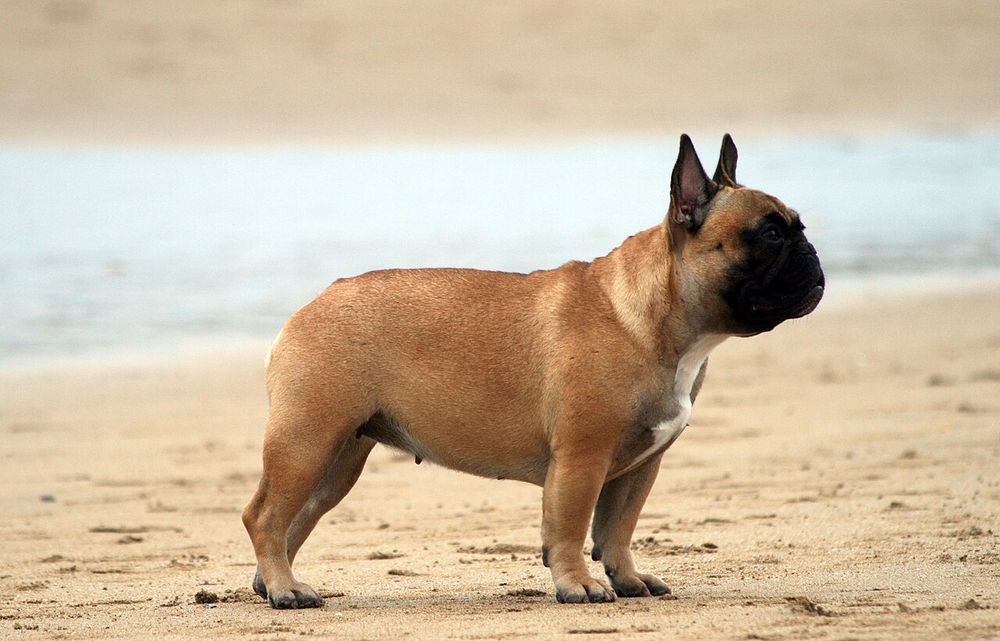
- Origin
- France (Paris), from English toy BulldogsFédération Cynologique Internationale
- Adult weight
- 8 to 14 kg (FCI standard: 8 to 13 kg for females, 9 to 14 kg for males)Fédération Cynologique Internationale
- Height
- 24 to 35 cm (FCI standard: 24 to 32 cm for females, 27 to 35 cm for males)Fédération Cynologique Internationale
- Lifespan
- 10 to 12 yearsAmerican Kennel Club
- Coat
- Smooth, close, glossy and soft, with no undercoat. Fawn, brindle, or either with white patches.Fédération Cynologique Internationale
- Energy
- LowAmerican Kennel Club
- Indian heat
- Struggles in heatUFAW Science for Animal Welfare (genetic welfare problems of companion animals)
- Flats
- Suits a flatThe Royal Kennel Club (UK)
French Bulldog care snapshot
| What | The rule | Source |
|---|---|---|
| Size | Small, and suited to a flat or apartment in the Royal Kennel Club's breed information. | The Royal Kennel Club (UK) |
| Exercise need | Up to 1 hour a day (Royal Kennel Club), in short, gentle sessions in the cool hours. | The Royal Kennel Club (UK) |
| Alone-time tolerance | Not rated by kennel clubs. PDSA advises no more than 4 hours alone for any dog; a Frenchie alone in summer also needs a room that cannot overheat. | PDSA |
| Heat tolerance | Low. UFAW says flat-faced dogs are particularly heat-sensitive, and French Bulldogs had about 6.5 times the odds of heat-related illness of Labradors. | Scientific Reports (2020)study |
| Shedding and coat | Short coat, sheds, grooming once a week (Royal Kennel Club). Skin folds need extra attention. | The Royal Kennel Club (UK) |
| Sociability with other dogs | Described in words only: the Royal Kennel Club calls it "the popular clown of the bull breeds". Rough play raises breathing effort; keep it short. | The Royal Kennel Club (UK) |
Where does the French Bulldog come from?
The French Bulldog began with a toy-sized Bulldog popular in English cities such as Nottingham in the mid-1800s. AKC and the Royal Kennel Club both tell how Nottingham lace makers, pushed out by the Industrial Revolution, moved to northern France and took their little Bulldogs with them. Over some decades these dogs were crossed with other breeds, and the result became the Bouledogue Français, with its upright bat ears.
The FCI standard places the breed's making in the working quarters of Paris in the 1880s, where it belonged to market porters, butchers and coachmen before it won over high society and artists. The first breed club was founded in Paris in 1880, the first registration dates from 1885, and the French Kennel Club recognised the breed in 1898.
England was slow to accept a French version of its national dog. The Royal Kennel Club says the French Bulldog Club of England formed in 1902 and the Kennel Club recognised the breed in 1906. AKC credits American owners of the early 1900s with keeping the bat ear, rather than the rose ear, as the breed's mark.
How did the French Bulldog come to India?
Petym found no Indian source that records when the French Bulldog came to India or how many live here, so its arrival is not documented. Its rise abroad is: the Royal Kennel Club says UK registrations rose tenfold between 2009 and 2015.
What matters in India is heat. Science for Animal Welfare says flat-faced dogs cool themselves poorly and are very prone to heat stroke, and in UK vet records French Bulldogs had 6.49 times the odds of heat-related illness of Labradors. On India Meteorological Department heat wave days, and in humid monsoon weather, a Frenchie needs a cool room, short walks only at dawn and after dark, and no hard play.
What care does a French Bulldog need?
The three things that shape a good day for this breed.
Exercise
The Royal Kennel Club gives up to 1 hour a day, and AKC says a short walk or play session daily is enough. AKC warns never to let a Frenchie exert itself in hot or humid weather. It cannot swim, so never leave it unwatched near water. The Royal Kennel Club (UK)
Grooming
AKC says the short coat sheds little and needs a weekly brush with a rubber mitt or hound glove. Keep the face folds clean and dry, and trim the nails regularly. American Kennel Club
Training
AKC recommends early socialisation and puppy classes. Frenchies can be stubborn but are people pleasers; food rewards and making training a game work well. The Royal Kennel Club (UK)
How much should a French Bulldog eat?
Daily calories for a healthy, neutered adult French Bulldog, worked out from its weight with the formula vets use (70 x weight in kg to the power 0.75, then AAHA's factor for a neutered adult). Divide by the kcal per kg on your food's pack for grams a day, and adjust by body shape.
| Resting need (kcal a day) | Neutered adult (kcal a day) | |
|---|---|---|
| 8 kg AAHA (American Animal Hospital Association) | 330 | 470 to 530 |
| 11 kg | 420 | 590 to 680 |
| 14 kg | 510 | 710 to 810 |
AKC says Frenchies are prone to obesity, which strains their build and raises the risk of the breed's health problems, so calories and weight need watching. Overweight dogs also have a higher risk of breathing signs, Science for Animal Welfare notes. Feed a complete and balanced food, keep treats under about 10% of the day's calories as WSAVA advises, and use the energy table on this page as a starting point, then adjust to your dog's body condition. Skip the table scraps, cooked bones and fatty food AKC warns about. Onion, garlic, grapes and raisins, chocolate and xylitol are all on ASPCA's list of foods to keep from dogs. Ask your vet before changing the diet. Meals a day: 6 to 12 weeks, 4 a day; 3 to 6 months, 3 a day; 6 to 12 months, 2 a day; adult, over 12 months, 1 or 2 a day. Puppies, kittens, working, pregnant and older animals need different amounts: ask your vet, or use Petym's food calculator.
Which illnesses is the French Bulldog prone to, and how are they treated?
The conditions veterinary studies and breed surveys most often report in the French Bulldog. Knowing the early signs means a vet sees it sooner.
See your vet first. This is general information from veterinary sources, not a diagnosis. Only a vet who has examined your pet can say what is wrong and prescribe treatment, and this page never gives a dose. Do not give your pet human medicine. If your pet seems very unwell, go to a 24-hour vet: find one in your city.
Brachycephalic obstructive airway syndrome (BOAS)
See a vet soonThe short skull squeezes the soft tissues of the nose and throat into too small a space: narrow nostrils, an overlong soft palate and a narrow windpipe. French Bulldogs had 30.89 times the odds of a BOAS diagnosis, and 42.14 times the odds of narrow nostrils, of other dogs in UK vet records. UFAW Science for Animal Welfare (genetic welfare problems of companion animals)
Signs to watch for
- Snoring and noisy breathing
- Tiring quickly on walks, breathing through the mouth
- Gagging, regurgitation or vomiting
- Disturbed sleep, or collapse in a breathing crisis
How a vet treats it
A vet can see narrow nostrils on examination; the palate and larynx are checked under anaesthetic, which carries extra risk in these dogs. Surgery can widen the nostrils and shorten the soft palate, and some secondary problems can be treated surgically; a narrow windpipe cannot be treated. Blue gums, collapse or struggling for breath is an emergency.
Prevention
Keep the dog lean, avoid heat, stress and hard exercise. The Royal Kennel Club runs a Respiratory Function Grading scheme for breeding dogs.
Heatstroke
Emergency: go to a vet nowOverheating that the dog cannot cool down from. Flat-faced dogs cannot pant away heat well, and French Bulldogs had 6.49 times the odds of heat-related illness of Labradors in UK vet records. Scientific Reports (2020)study
Signs to watch for
- Heavy panting that does not settle
- Drooling, vomiting or diarrhoea
- Abnormal gum colour
- Weakness, collapse or seizures
How a vet treats it
PDSA says cool the dog at once with cool water over the body and moving air, and keep cooling on the way to the vet. A vet continues cooling and may give fluids through a drip, oxygen and other medicines, and checks blood for organ damage.
Prevention
Walk only in the cool hours, keep a cool room and water at home, never leave the dog in a car, and keep it lean.
Skin fold dermatitis
See a vet soonInflammation where folds of skin rub together and stay moist, mostly on the face and nose in flat-faced breeds. French Bulldogs had 25.92 times the odds of crossbreds in a UK study of vet records. Scientific Reports (2022), Royal Veterinary Collegestudy
Signs to watch for
- Red, moist skin in the face or nose folds
- A bad smell
- Pain when the fold is touched
- Rubbing or scratching the face
How a vet treats it
A vet cleans the fold to remove debris and microbes, which the study calls a crucial treatment principle, and usually prescribes topical antimicrobial and anti-inflammatory treatment. Surgery to remove the fold may be needed if medical care fails, and long-term maintenance cleaning is usually required.
Prevention
Keep the folds clean and dry as your vet shows you, especially in the monsoon, and treat any obesity.
Hemivertebrae and spinal disease
See a vet soonMalformed spinal bones that can make the spine unstable and press on the spinal cord. Science for Animal Welfare says they follow from breeding for the screw tail and are found in most French Bulldogs, though many have no signs. Science for Animal Welfare (formerly UFAW)
Signs to watch for
- Back pain
- Wobbly or weak hind legs
- An abnormal back shape or muscle loss
- Loss of bladder or bowel control
How a vet treats it
A vet diagnoses it by examination and X-ray, with MRI before any surgery. Severely affected dogs may need major spinal surgery by a specialist to stabilise the spine and relieve pressure on the cord; pain can be hard to control with medicines alone.
Ear disease (otitis externa and ear discharge)
See a vet soonInflammation of the ear canal. French Bulldogs had 14.40 times the odds of ear discharge, and raised odds of otitis externa, compared with other dogs in UK vet records. Canine Medicine and Genetics (2021), Royal Veterinary College VetCompassstudy
Signs to watch for
- Head shaking and scratching
- Discharge or a bad smell
- Red, swollen or painful ear
How a vet treats it
A vet examines the canal with an otoscope and tests a swab, cleans the ear and usually prescribes ear drops combining antibiotics, antifungals and anti-inflammatories, with oral medicine for severe infections. Merck says every underlying cause, such as allergy, must be treated or it returns.
Prevention
Check the ears weekly and keep them dry; clean them only as your vet directs.
How does a French Bulldog cope when you are away?
Usually well with people around. The risks are heat, excitement and a sitter who mistakes breathing trouble for normal Frenchie noise.
French Bulldogs are small, people-focused dogs, and the Royal Kennel Club suits them to flats. They do not need long walks. What they need from a sitter is protection from heat and from over-excitement, because both push a short airway hard. The Merck Veterinary Manual notes that short-nosed dogs can overheat from stress or excitement even on cool days, and the arrival of a new person is exciting.
PDSA's guidance is that no dog should be left alone for more than 4 hours at a time. In a VetCompass study French Bulldogs had much lower recorded odds of undesirable behaviour than other dogs, but each dog is different. The sitter needs to know how yours reacts to being left, and above all that the room it is left in will stay cool if the power goes.
How should a sitter keep a Frenchie cool at home?
Plan for the hottest hour of the day and for the power going off during it.
Most Indian flats heat up through the afternoon, and top-floor flats more so. Before the owner leaves, agree which room stays coolest, whether the AC runs while the dog is alone, and what the inverter keeps running in a power cut. Curtains drawn on sun-facing windows, a fan moving air at floor level and a tiled floor or cooling mat give a flat-faced dog places to lie and shed heat.
PDSA's hot-weather advice adds wetting the dog down or letting it paddle in cool water in the shade, never forcing a scared dog into water, and never leaving a dog in a car, even briefly with the windows open. For a Frenchie that also means vet trips in an already cooled car and no waiting in hot clinic queues outside. If a sitter cannot keep the room cool, the dog should not be left there alone.
What do the studies say about French Bulldogs?
Four figures from UK veterinary research that explain why breathing comes first.
6.49 times
Odds of heat-related illness in French Bulldogs compared with Labradors, in UK vet records Scientific Reports (2020)study
30.89 times
Odds of a BOAS diagnosis in French Bulldogs compared with other dogs Canine Medicine and Genetics (2021), Royal Veterinary College VetCompassstudy
42.14 times
Odds of narrowed nostrils (stenotic nares) compared with other dogs Canine Medicine and Genetics (2021), Royal Veterinary College VetCompassstudy
70 to 75%
French Bulldogs diagnosed with BOAS by vets in one study cited by UFAW UFAW Science for Animal Welfare (genetic welfare problems of companion animals)
Which breathing and heat signs mean a Frenchie needs a vet?
UFAW describes BOAS as a lifelong condition in which a crisis can be set off by minor events. A sitter acts early.
If Loud snoring or rasping while awake, mouth breathing at rest, or struggling for breath
These are BOAS signs. Stop all activity, move the dog somewhere cool and quiet, and call the vet. UFAW Science for Animal Welfare (genetic welfare problems of companion animals)
If Collapse, or a struggle to breathe that does not settle with rest and cooling
Emergency. Start cooling, then go to the nearest 24-hour vet in a cool car, calling ahead and calling the owner. UFAW Science for Animal Welfare (genetic welfare problems of companion animals)
If Heavy panting, drooling, vomiting or wobbling after a walk or in a warm room
Possible heatstroke. Move to shade, pour plenty of cool water over the body, use a fan, and go to a vet. PDSA
If Red, smelly or damp skin in the face folds or around the tail
In a VetCompass study French Bulldogs had about 26 times the odds of skin fold dermatitis of crossbreds. Keep the folds dry and tell the vet; use only products the owner has left. Scientific Reports (2022), Royal Veterinary Collegestudy
If Back pain, wobbliness in the back legs or yelping when lifted
UFAW lists hemivertebrae (malformed spine bones) among the breed's genetic welfare problems. Keep the dog still and call the vet the same day. UFAW Science for Animal Welfare (genetic welfare problems of companion animals)
When is it safe to walk a French Bulldog in an Indian summer?
In the coolest hours only, briefly, on a harness. On heat-wave days a toilet trip may be the whole walk.
5:30 to 6:45
A short walk on grass or shade after the palm test: if you cannot hold your palm on the ground for 7 seconds, it is too hot. PDSA
7:30
Breakfast at the owner's time, then rest in the cool room.
9:00 to 6:00
Indoors. Quiet games only: a sniff mat, a chew, short training. No chasing or tug in warm air.
Heat-wave days (March to June in most of the plains)
If the evening is still hot, a short toilet break on a shaded terrace or balcony is enough exercise. India Meteorological Department
After dark
A second short walk once the ground passes the palm test, then dinner.
Night
A cool sleeping spot; note any loud snoring or waking to breathe, and tell the owner in the daily update.
What do people get wrong about Frenchie breathing?
Some of what owners find endearing is a sign of a narrowed airway.
You may have read
Snoring and snorting are just how Frenchies are.
Myth
What the sources say
UFAW lists snoring, respiratory noise and mouth breathing among the signs of BOAS. Common is not the same as harmless. UFAW Science for Animal Welfare (genetic welfare problems of companion animals)
You may have read
A small dog cannot overheat indoors.
Myth
What the sources say
UFAW says flat-faced dogs are particularly heat-sensitive because the nose's cooling role is disrupted. A closed room in a power cut can be enough. UFAW Science for Animal Welfare (genetic welfare problems of companion animals)
You may have read
A collar is fine for a little dog.
Myth
What the sources say
PDSA advises a harness rather than a collar on walks in hot weather to reduce pressure on the throat, keeping the ID collar on as well. PDSA
You may have read
Breathing problems only matter in older dogs.
Myth
What the sources say
UFAW describes BOAS as progressive and lifelong, and says it can start in dogs under 6 months old. UFAW Science for Animal Welfare (genetic welfare problems of companion animals)
What should a sitter know about feeding a French Bulldog?
Same food, same times, a lean dog. Extra weight makes every breath harder.
Do
- Measure each meal as the owner writes it; PDSA lists obese dogs among those most at risk of heatstroke. PDSA
- Feed in a calm spot and let the dog rest afterwards; gulping and excitement add to breathing effort.
- Keep fresh water in a wide, shallow bowl in the coolest room, and offer it after every walk.
- Wipe the face folds dry after meals and drinks.
Don’t
- Do not change the food during the stay.
- Do not give table food such as roti with ghee, mithai or biscuits.
- Do not feed straight after a walk while the dog is still panting.
- Do not give any medicine or supplement the owner has not written down.
What should a Frenchie's owner leave for the sitter?
Most of it is about keeping the dog cool and spotting breathing changes.
- A short video of your dog breathing normally at rest and after a walk, so the sitter knows its baseline.
- The harness, a cooling mat if you use one, and towels for wiping folds.
- The coolest room, AC or fan settings, and the power-cut plan.
- Any vet notes on BOAS grading or airway surgery.
- The nearest 24-hour vet on the city's list and the route in a cool car.
- Food, amounts and times, and the vaccination card (DHPPi and rabies dates).
- Fold-cleaning products the vet has approved, if any.
Which Petym service suits a French Bulldog?
For most Frenchies, staying home in their own cool room is safest.
If You are away overnight or longer, especially between March and June
Overnight sitting keeps the dog in a familiar, cool home with someone there through power cuts and hot nights. Overnight sitting
If You are out for a long working day in cooler months
Drop-in visits for a toilet break, water, a fold check and company. Drop-in visits
If Your Frenchie has had airway surgery or needs daily medicines
Special-needs care, following the vet's written plan. Special-needs care
If You are thinking of day care
Only in a cool, indoor space with short, calm play; group play in heat is not a good fit for a flat-faced dog. Doggy day care
Breeds with similar care needs to the French Bulldog
Going away soon? Tell us your dates.
A checked local sitter feeds, walks and keeps your pet company at home, follows your care sheet to the letter and sends a photo every day. Petym is opening city by city: send your dates and we will tell you when a sitter can take them.
- Meet your sitter first, free
- PAN-checked, first-aid trained
- A photo every day
- Pay through Petym, never cash


Questions owners ask
Can French Bulldogs live in India?
- They can, with strict heat care. UFAW calls flat-faced dogs particularly heat-sensitive, and French Bulldogs had about 6.5 times the odds of heat-related illness of Labradors in UK vet records. A Frenchie in India needs a cool room, walks only at dawn and after dark, and a power-cut plan.
What temperature is too hot for a French Bulldog?
- There is no safe number to rely on. The Merck Veterinary Manual says short-nosed dogs can overheat from stress or excitement even on cool days. Use the palm test on the ground, keep walks short and early, and stop at the first noisy or laboured breathing.
Is my French Bulldog's snoring normal?
- It is common, but UFAW lists snoring, noisy breathing and mouth breathing among the signs of BOAS, a lifelong airway condition. Mention it to your vet, and tell your sitter what your dog's usual breathing sounds like so they notice a change.
How long can a French Bulldog be left alone?
- PDSA advises no more than 4 hours at a time for any dog. For a Frenchie in summer, the bigger danger is the room heating up while nobody is home, so plan drop-in visits or an overnight sitter rather than a long day alone.
Should a French Bulldog wear a harness?
- Yes. PDSA advises a harness rather than a collar for walks in hot weather, to reduce pressure on the throat, while keeping an ID collar on. For a flat-faced dog with a narrow airway, that matters all year.
What should a sitter do if a Frenchie collapses?
- Treat it as an emergency. Move the dog somewhere cool, start cooling with plenty of cool water and moving air, then go to the nearest 24-hour vet in a cool car, calling ahead and calling the owner on the way.
Do French Bulldogs get skin problems in humid weather?
- Yes, skin folds are a weak spot. A VetCompass study found French Bulldogs had about 26 times the odds of skin fold dermatitis of crossbred dogs. In the monsoon a sitter should keep the face and tail folds dry and tell the owner and vet about any redness or smell.
Keep reading
- Caring for a dog while you are away
- Heatstroke in dogs
- Summer pet care in India
- Overnight pet sitting
- Pug careAnother flat-faced breed in Indian heat.
- Bulldog careThe bigger cousin with the same airway risks.
Services that help
Free tools for this
Words on this page, explained
Keep exploring
Other dog breeds
- Akita
- Alaskan Malamute
- American Bully
- American Cocker Spaniel
- American Pit Bull Terrier
- Australian Shepherd
- Bakharwal dog
- Basset Hound
- Beagle
- Belgian Malinois
- Bernese Mountain Dog
- Bichon Frise
- Border Collie
- Boston Terrier
- Boxer
- Bull Terrier
- Bulldog
- Bullmastiff
- Cane Corso
- Caucasian Shepherd Dog
- Cavalier King Charles Spaniel
- Chihuahua
- Chippiparai
- Chow Chow
- Cocker Spaniel
- Dachshund
- Dalmatian
- Dobermann
- Dogo Argentino
- English Mastiff
- English Springer Spaniel
- Gaddi Kutta (Gaddi dog)
- German Shepherd
- Golden Retriever
- Great Dane
- Greyhound
- Havanese
- Indian pariah dog (Indie)
- Indian Spitz
- Irish Setter
- Jack Russell Terrier
- Kangal
- Kanni
- Kombai
- Labrador Retriever
- Lhasa Apso
- Maltese
- Miniature Pinscher
- Miniature Schnauzer
- Mudhol Hound
- Neapolitan Mastiff
- Newfoundland
- Papillon
- Pekingese
- Pembroke Welsh Corgi
- Pomeranian
- Poodle
- Pug
- Rajapalayam
- Rampur Greyhound
- Rhodesian Ridgeback
- Rottweiler
- Saint Bernard
- Samoyed
- Shar Pei
- Shiba Inu
- Shih Tzu
- Siberian Husky
- Tibetan Mastiff
- Weimaraner
- West Highland White Terrier
- Whippet
- Yorkshire Terrier
Sources
Each source was opened and read on the date shown. How Petym checks its sources
- Fédération Cynologique Internationale: FCI-Standard No 101: French Bulldog (official standard of 10 August 2023) (opens in a new tab)
- American Kennel Club: French Bulldog dog breed information (opens in a new tab)
- UFAW Science for Animal Welfare (genetic welfare problems of companion animals): French Bulldog: Brachycephalic Airway Obstruction Syndrome (BAOS) (opens in a new tab)
- The Royal Kennel Club (UK): French Bulldog | Breeds A to Z | The Kennel Club (opens in a new tab)
- India Meteorological Department: FAQ on heat wave (opens in a new tab)
- WSAVA: Frequently asked questions and myths (Global Nutrition Committee) (opens in a new tab)
Show all 19 sourcesShow fewer
- ASPCA Animal Poison Control: People foods to avoid feeding your pets (opens in a new tab)
- Merck Veterinary Manual: Puppy care (opens in a new tab)
- AAHA (American Animal Hospital Association): 2021 AAHA Nutrition and Weight Management Guidelines for Dogs and Cats: energy requirement calculations (Box 1, PDF) (opens in a new tab)
- Merck Veterinary Manual: Nutritional requirements of small animals (full review November 2023, updated September 2024) (opens in a new tab)
- PDSA: Heatstroke in dogs (opens in a new tab)
- Science for Animal Welfare (formerly UFAW): French Bulldog: hemivertebrae (opens in a new tab)
- Merck Veterinary Manual: Ear infections and otitis externa in dogs (opens in a new tab)
- Merck Veterinary Manual: What to do in a dog or cat emergency (opens in a new tab)
- PDSA: Separation anxiety in dogs (opens in a new tab)
- UFAW Science for Animal Welfare (genetic welfare problems of companion animals): French Bulldog (conditions listed: BAOS, hemivertebrae) (opens in a new tab)
- Scientific Reports (2020): Incidence and risk factors for heat-related illness in UK dogs (opens in a new tab)
- Canine Medicine and Genetics (2021), Royal Veterinary College VetCompass: French Bulldogs differ to other dogs in the UK in propensity for many common disorders: a VetCompass study (opens in a new tab)
- Scientific Reports (2022), Royal Veterinary College: The epidemiology of skin fold dermatitis in dog breeds in the UK (opens in a new tab)