Bernese Mountain Dog in India: heat, coat and care while you are away
Updated By PetymFacts checked against official sources on
Quick answer
A Bernese Mountain Dog is a gentle, devoted family dog bred in Switzerland to pull carts, so Indian heat is its biggest challenge. A sitter must keep it in a cool room through the hot hours, walk it only at dawn and after dark, brush the thick coat often without shaving it, and watch for limping and lumps.
Berners are short-lived: AKC gives 7 to 10 years and The Royal Kennel Club under 10. That makes every year count, and makes a sitter's daily notes on appetite, energy and movement worth keeping.
- Meet your sitter first, free
- PAN-checked, first-aid trained
- A photo every day
- Pay through Petym, never cash

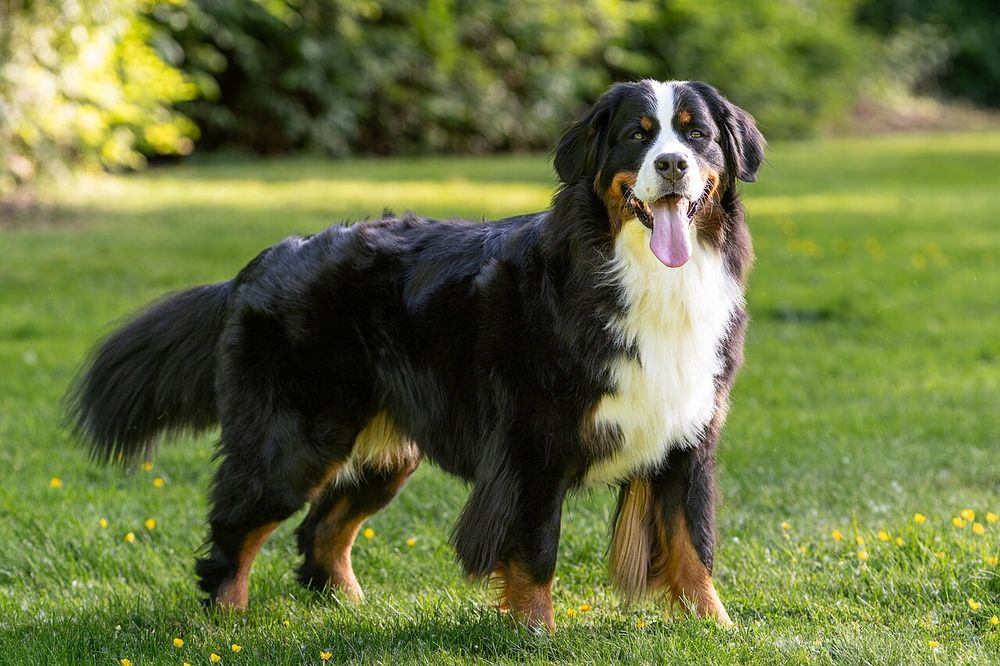
- Origin
- Switzerland (the canton of Bern)Fédération Cynologique Internationale
- Adult weight
- 31.8 to 52.2 kg (females to males, AKC: 70 to 95 pounds for females and 80 to 115 pounds for males, converted)American Kennel Club
- Height
- 58 to 70 cm (females to males: 58 to 66 cm for females and 64 to 70 cm for males, FCI standard)Fédération Cynologique Internationale
- Lifespan
- 7 to 10 yearsAmerican Kennel Club
- Coat
- Long double coat: a longer outer coat over a woolly undercoat. Sheds a fair amount, more in the twice-yearly shed.American Kennel Club
- Energy
- ModerateAmerican Kennel Club
- Indian heat
- Struggles in heatScientific Reports (2020)study
- Flats
- Needs spaceThe Royal Kennel Club
Bernese Mountain Dog snapshot
| What | The rule | Source |
|---|---|---|
| Size | Large, says The Royal Kennel Club. AKC gives 25 to 27.5 inches and 80 to 115 pounds for males, 23 to 26 inches and 70 to 95 pounds for females. | American Kennel Club |
| Exercise need | Up to 1 hour a day (The Royal Kennel Club). AKC says at least half an hour of moderate exercise every day. | The Royal Kennel Club |
| Heat tolerance | Poor. A Swiss draught dog with a long double coat. In UK vet records, dogs of 50 kg or more had 3.42 times the odds of heat-related illness of dogs under 10 kg. | Scientific Reports (2020)study |
| Coat and shedding | Double coat: a longer outer coat over a woolly undercoat. Sheds a fair amount, more in the twice-yearly shedding season (AKC, shedding 5 of 5). | American Kennel Club |
| Temperament | Good-natured and devoted to its own people, self-assured and placid towards strangers, of medium temperament and docile (FCI standard). | Fédération Cynologique Internationale |
| Lifespan | Under 10 years, says The Royal Kennel Club; AKC gives 7 to 10 years. | The Royal Kennel Club |
Where does the Bernese Mountain Dog come from?
The Bernese is a Swiss farm dog from the pre-alpine and midland country around Bern, used to guard the farm, pull carts and drive cattle. The FCI standard says it was first called the Dürrbächler, after the hamlet and inn of Dürrbach near Riggisberg, where these long-haired tricolour dogs were especially common. The Royal Kennel Club adds that it pulled carts for weavers and hauled milk and cheese.
By the late 1800s the breed's numbers were falling. Dogs were shown in 1902, 1904 and 1907, and in 1907 breeders around Burgdorf founded the Schweizerischer Dürrbach-Klub to breed it pure; AKC says the club was led by Professor Albert Heim. At a Burgdorf show in 1910, 107 dogs were entered. Renamed the Bernese Mountain Dog, it became popular across Switzerland and is one of four Swiss mountain dog breeds, the only one with a long coat.
Its American history began in 1926, when a Kansas farmer imported a pair as farm dogs, and AKC registered its first Berner in 1937.
How did the Bernese Mountain Dog come to India?
How the Bernese came to India is not documented in the sources we checked. Pedigree dogs are registered on the forms of The Kennel Club of India.
What is documented is why Indian heat is hard on it. It is a heavy dog with a long, woolly double coat, and in a large UK study dogs of 50 kg or more had 3.42 times the odds of heat-related illness of dogs under 10 kg; PDSA lists giant breeds and thick or long coats among heatstroke risks. In most Indian cities a Berner needs a cool room through the hot months, walks only before sunrise and late at night, and a plan for power cuts.
What care does a Bernese Mountain Dog need?
The three things that shape a good day for this breed.
Exercise
At least half an hour of moderate exercise a day, says AKC, and up to an hour, says The Royal Kennel Club. In India, keep it to the cool of dawn and late evening and stop play while the dog still wants more. American Kennel Club
Grooming
Brush every week, and daily in the shedding season, with a slicker brush or metal comb for tangles. Do not shave the coat for summer unless it is badly matted. Keep the nails trimmed and the ears checked. The Royal Kennel Club
Training
Early socialisation and obedience training matter, especially for a dog this big. AKC says Berners are eager to please and usually easy to train, but their feelings are easily hurt, so harsh corrections do not work. Texas A&M College of Veterinary Medicine (Pet Talk, 16 June 2022)
How much should a Bernese Mountain Dog eat?
Daily calories for a healthy, neutered adult Bernese Mountain Dog, worked out from its weight with the formula vets use (70 x weight in kg to the power 0.75, then AAHA's factor for a neutered adult). Divide by the kcal per kg on your food's pack for grams a day, and adjust by body shape.
| Resting need (kcal a day) | Neutered adult (kcal a day) | |
|---|---|---|
| 31.8 kg AAHA (American Animal Hospital Association) | 940 | 1310 to 1500 |
| 42 kg | 1150 | 1620 to 1850 |
| 52.2 kg | 1360 | 1900 to 2180 |
Feed a complete and balanced food for the dog's life stage. A Berner is a large-size dog (over 32 kg as an adult), so choose a puppy food whose label says it suits the growth of large-size dogs; Merck explains that foods not made for them must say so. Merck adds that large and giant breeds can take almost 2 years to become adults, so ask your vet when to switch to adult food. ACVS says rapid growth from too much food can worsen hip dysplasia, and Cornell advises keeping puppies lean to protect the elbows. AKC lists bloat among Bernese health issues. ACVS and Cornell advise two or three smaller meals a day rather than one large one, and limiting activity after meals. Keep onion, garlic, chocolate, grapes, raisins and xylitol out of reach, as ASPCA advises. Meals a day: 6 to 12 weeks, 4 a day; 3 to 6 months, 3 a day; 6 months to adulthood, 2 a day, on puppy food until the vet advises the switch; adult, 2 or 3 smaller meals a day. Puppies, kittens, working, pregnant and older animals need different amounts: ask your vet, or use Petym's food calculator.
Which illnesses is the Bernese Mountain Dog prone to, and how are they treated?
The conditions veterinary studies and breed surveys most often report in the Bernese Mountain Dog. Knowing the early signs means a vet sees it sooner.
See your vet first. This is general information from veterinary sources, not a diagnosis. Only a vet who has examined your pet can say what is wrong and prescribe treatment, and this page never gives a dose. Do not give your pet human medicine. If your pet seems very unwell, go to a 24-hour vet: find one in your city.
Elbow dysplasia (fragmented medial coronoid process)
See a vet soonA piece of the elbow joint develops abnormally and fragments, leading to lifelong arthritis. Science for Animal Welfare says 36 to 70% of Bernese may be affected and the breed has the highest predisposition; arthritis is often present by 4 to 6 months of age. Science for Animal Welfare (formerly UFAW)
Signs to watch for
- Stiffness after rest
- Front-leg lameness, often worse after exercise
- Holding the leg turned outward
- Reluctance to climb stairs, even in a young dog
How a vet treats it
X-rays often miss it, so a vet may use a CT scan and arthroscopy, which can confirm and treat it at once. Treatment includes rest, restricted activity and pain relief prescribed by the vet, often lifelong, and sometimes surgery.
Prevention
Buy from elbow-screened parents and keep puppies lean.
Histiocytic sarcoma
See a vet soonAn aggressive cancer of immune cells that can affect almost any organ and is usually fatal if untreated. In a study of 365 Bernese, the mean age at diagnosis was 6.6 years, and most had disease spread through the body; lung, spleen and liver involvement was more common than in Flat-Coated Retrievers. Veterinary Sciences (2022), Utrecht University and University of Cambridgestudy
Signs to watch for
- Tiredness
- Loss of appetite
- Weight loss
- Pale gums
- Fever
How a vet treats it
A vet confirms it by examining cells or tissue under the microscope, often with X-rays, ultrasound or other scans and blood tests. Treatment may include chemotherapy, with surgery as well when the cancer is in one place.
Bloat (gastric dilatation-volvulus, GDV)
Emergency: go to a vet nowThe stomach fills with gas and food and can twist, cutting off its blood supply. AKC lists bloat for the breed, and Cornell lists large, deep-chested build, eating quickly and one large meal a day among the risks. American Kennel Club
Signs to watch for
- Retching that brings nothing up
- A swollen, painful belly
- Restlessness and pacing
- Drooling and panting
- Weakness, pale gums or collapse
How a vet treats it
This is an emergency. A vet stabilises the dog with a drip and oxygen, releases the gas with a stomach tube or needle, and operates to untwist the stomach, then fixes it to the body wall (gastropexy) to help stop it twisting again.
Prevention
Two or three smaller meals a day, rest after meals, and ask your vet about a preventive gastropexy, often done at spaying or neutering.
Hip dysplasia
See a vet soonA loose, unstable hip joint that develops during growth and leads to arthritis. ACVS says it most often affects large breeds and genetics is the biggest single risk. AKC lists it for the Bernese, and The Royal Kennel Club recommends hip screening before breeding. American College of Veterinary Surgeons
Signs to watch for
- Limping
- Reluctance to rise or jump
- Shifting weight onto the front legs
- Loss of muscle on the back legs
How a vet treats it
A vet diagnoses it with specially positioned hip X-rays and by feeling the joint. Treatment may be keeping the dog lean, controlled lead exercise, physiotherapy and anti-inflammatory pain relief prescribed by the vet, or surgery, up to a total hip replacement.
Prevention
Choose hip-screened parents and keep puppies growing steadily and lean.
Heatstroke
Emergency: go to a vet nowA dangerous rise in body temperature. Heavy dogs had the highest odds of heat-related illness in a large UK study, and PDSA lists giant breeds and thick coats among the risks, so a Berner in an Indian summer is at real risk. Scientific Reports (2020)study
Signs to watch for
- Heavy panting and fast breathing
- Drooling, vomiting or diarrhoea
- Bright red or pale gums
- Weakness, wobbling or collapse
How a vet treats it
An emergency. Cool the dog with cool water over the body and moving air while you go to the vet. A vet may cool the dog further, give fluids by drip and oxygen, run blood tests and support the organs; severe cases may need days in hospital.
Prevention
A cool room in the hot months, walks only in the cool hours, water always available, and regular brushing so air moves through the coat.
What the breed standard says about a Berner's nature
Word for word
Self-confident, attentive, vigilant, fearless in everyday situations; good-natured and devoted to his own people, self-assured and placid towards strangers; of medium temperament, docile.
For a sitter that is good news: a Berner usually accepts a calm new person without fuss. The catch is the second half of AKC's description. A Berner wants to be with its family, its feelings are easily hurt, and AKC warns that unwanted behaviour can follow if it is regularly left alone for long periods.
Can a Bernese Mountain Dog live in Indian heat?
It can live here, but only with planning. Heat, not exercise, is the daily risk.
The Royal Kennel Club describes the Bernese as a Swiss draught dog, bred in the canton of Berne to pull carts for weavers and haul milk and cheese. Its long, shining coat (FCI) and woolly undercoat (AKC) were not made for a Chennai May or a humid Mumbai monsoon. In the large UK heatstroke study, the heaviest dogs, 50 kg and above, had the highest odds of heat-related illness of any weight group, and the authors noted that thick-coated breeds such as the Golden Retriever and Chow Chow were at raised risk. A big male Berner sits near that top weight band and carries a heavier coat than either.
So in most Indian cities a Berner needs a cool room through the hot months: an air-conditioned or well-cooled room, a tiled floor to lie on, water in two places and blinds drawn on the sunny side. A sitter should know what to do in a power cut: which room stays coolest, whether there is an inverter for a fan, and the plan if the cooling fails for hours. Walks happen before sunrise and after the road has cooled at night, and on the hottest days a calm sniff around the building replaces the walk.
Exertion causes most heatstroke in dogs, so the Berner's love of a game of fetch is a risk in itself. Stop play while the dog still wants more. Heavy panting, thick drool, a dark red tongue, stumbling or collapse need shade, cool water poured over the body and a call to the vet straight away.
A Berner's day with a sitter in the hot months
Petym’s working from the official rules, no government publishes a total.
Petym's suggested plan for April to June in a North or Central Indian city. Coastal cities are milder in temperature but more humid.
5:30 to 6:30 am
Main walk, before sunrise, on the shaded side of the lane. Water carried. Back before the road warms.
7:00 am
Breakfast in a cool room, measured as the owner wrote it. Rest afterwards rather than play, as the owner and vet advise for a deep-chested dog.
10:00 am to 5:00 pm
Indoors in the coolest room. Short garden or balcony toilet trips only. Chew toys and a food puzzle instead of exercise.
Afternoon
A brush through the coat, a check of the ears and between the toes, a look at the water bowls.
8:00 to 9:00 pm
Second walk once the road has cooled: test it with the back of your hand for seven seconds first.
Every evening
The daily photo update and a note to the owner on appetite, energy, panting and any limping.
Bernese health in numbers
Three figures that explain why a sitter watches a Berner's legs, lumps and energy closely.
36 to 70 %
of Bernese have been estimated to have elbow dysplasia (fragmented coronoid process) Science for Animal Welfare (formerly UFAW)
6.6 years
mean age at diagnosis of histiocytic sarcoma in 365 Bernese in a 2022 study Veterinary Sciences (2022), Utrecht University and University of Cambridgestudy
7 to 10 years
AKC's life expectancy for the breed American Kennel Club
Bernese health signs a sitter should report
Note it, tell the owner, and call the vet for anything sudden or severe.
If Limping, stiffness after rest, or reluctance to climb stairs, even in a young dog. Science for Animal Welfare says this elbow disease can cause arthritis from the first year of life.
Tell the owner and note when it happens. Keep walks gentle and on even ground until the vet has seen the dog. Science for Animal Welfare (formerly UFAW)
If A new lump, weight loss, low energy, pale gums or fast breathing in a middle-aged Berner.
Call the vet soon. Histiocytic sarcoma, an aggressive cancer, was diagnosed at a mean age of 6.6 years in a study of 365 Bernese. Veterinary Sciences (2022), Utrecht University and University of Cambridgestudy
If Retching without bringing anything up, a swollen belly, restlessness. AKC says all large breeds are susceptible to bloat.
Emergency: go to the vet or the nearest 24-hour vet at once. ACVS says early surgery gives the best chance. American College of Veterinary Surgeons
If Heavy panting, drooling, weakness or collapse on a hot day.
Shade, cool water over the body, a fan, then the vet without delay. PDSA
If Red, moist, smelly patches under the coat after the monsoon, or head shaking.
Dry the coat fully and call the vet; the breed club lists skin and coat problems among Berner health issues. American Kennel Club
If Ticks in the thick coat on the neck, ears or between the toes.
Remove with tweezers close to the skin and tell the owner. Ticks hide easily in a long coat. Merck Veterinary Manual
Grooming a Bernese in Indian weather
A brushed coat lets air move; a matted or shaved one does not.
Do
- Brush every week, and every day in the shedding season, with a slicker brush or metal comb for tangles, as AKC advises. American Kennel Club
- Dry the coat right down to the skin after rain or a bath; a damp undercoat in the monsoon invites skin trouble.
- Keep nails trimmed: AKC warns that long nails can cause pain and structural problems in this heavy breed. American Kennel Club
- Check the ears regularly and brush the teeth often, as the breed club advises. American Kennel Club
Don’t
- Do not shave the coat for summer unless it is badly matted. A Texas A&M vet says a full shave is not usually needed and can make some dogs less heat tolerant. Texas A&M College of Veterinary Medicine (Pet Talk, 16 June 2022)
- Do not let the regrowth surprise you: after shaving the undercoat can grow back first, and the skin is exposed to sunburn. Canadian Kennel Club (The Dish, June 2018)
- Do not bathe with human shampoo or leave the dog to air dry on a cold floor.
- Do not cut out mats with scissors near the skin; ask a groomer.
Bernese sitter checklist
- The coolest room in the home, the AC or cooler settings, and the plan for a power cut.
- Walk times for the season, and the indoor games for hot days.
- Meal portions and times, and the vet's advice on rest after meals. American College of Veterinary Surgeons
- Brush, comb and towel, and how often the coat is brushed.
- Any known elbow, hip or joint problems, and pain medicines with the vet's written plan.
- Tick prevention product and next due date.
- The vet's number and the nearest 24-hour vet on Petym's list for your city.
Which Petym service suits a Bernese?
A Berner does best with its people nearby and a cool home it knows.
Often the right fit
Overnight pet sitting
The sitter stays in your home, so the dog keeps its cool room, its routine and its family's smell.
Pet boarding
In a sitter's home that has passed Petym's video walk-through. Ask about cooling and floor space for a giant dog at the meet and greet.
Dog walking
Dawn and late-evening walks on long workdays.
Special-needs pet care
For an older Berner with sore joints or one recovering from treatment.
Breeds with similar care needs to the Bernese Mountain Dog
Going away soon? Tell us your dates.
A checked local sitter feeds, walks and keeps your pet company at home, follows your care sheet to the letter and sends a photo every day. Petym is opening city by city: send your dates and we will tell you when a sitter can take them.
- Meet your sitter first, free
- PAN-checked, first-aid trained
- A photo every day
- Pay through Petym, never cash


Questions owners ask
Can a Bernese Mountain Dog survive in India?
- Yes, with care. It is a Swiss draught dog with a long double coat, and heavy dogs had the highest odds of heatstroke in a large UK study. In most Indian cities a Berner needs a cool room through the hot months, dawn and late-night walks, and an owner and sitter who watch for overheating.
Does a Bernese Mountain Dog need AC in India?
- In most Indian cities in the hot months, a cooled room makes a real difference. Berners carry a thick woolly undercoat and are heavy, both linked to heat risk. Plan for power cuts too: know the coolest room and keep water in two places.
Should I shave my Bernese for summer?
- Usually not. A Texas A&M vet says a full shave is not usually needed unless the coat is matted and can make some dogs less heat tolerant. Brush often, daily in the shedding season, so air can move through the coat, and keep the dog in cool rooms.
How long do Bernese Mountain Dogs live?
- AKC gives 7 to 10 years and The Royal Kennel Club says under 10, shorter than many breeds. Cancer, including histiocytic sarcoma, and joint disease are major concerns. Regular vet checks and early attention to lumps, weight loss or limping matter.
How much exercise does a Berner need?
- AKC says at least half an hour of moderate exercise every day, and The Royal Kennel Club up to 1 hour. In India, do it in the cool of dawn and late evening, at an easy pace, and never push a panting dog to keep playing.
Can a Bernese be left alone during the day?
- Only for short spells. AKC says a Berner wants to be with its family and can develop unwanted behaviour if regularly left alone for long periods. PDSA's general limit for any dog is 4 hours. On long days, arrange a sitter or a walker.
Do Bernese Mountain Dogs shed a lot?
- Yes. AKC rates shedding 5 of 5 and says Berners shed a fair amount, more in the shedding season twice a year. Weekly brushing, daily in shedding season, keeps loose hair down and helps the coat stay airy in Indian heat.
Keep reading
- Dog care hub
- Heatstroke in dogs
- Summer pet care in India
- Monsoon care for dogs
- Saint Bernard careAnother Swiss giant in the heat.
- Samoyed careA thick double coat in India.
- Overnight pet sitting
Services that help
Free tools for this
Words on this page, explained
Keep exploring
Other dog breeds
- Akita
- Alaskan Malamute
- American Bully
- American Cocker Spaniel
- American Pit Bull Terrier
- Australian Shepherd
- Bakharwal dog
- Basset Hound
- Beagle
- Belgian Malinois
- Bichon Frise
- Border Collie
- Boston Terrier
- Boxer
- Bull Terrier
- Bulldog
- Bullmastiff
- Cane Corso
- Caucasian Shepherd Dog
- Cavalier King Charles Spaniel
- Chihuahua
- Chippiparai
- Chow Chow
- Cocker Spaniel
- Dachshund
- Dalmatian
- Dobermann
- Dogo Argentino
- English Mastiff
- English Springer Spaniel
- French Bulldog
- Gaddi Kutta (Gaddi dog)
- German Shepherd
- Golden Retriever
- Great Dane
- Greyhound
- Havanese
- Indian pariah dog (Indie)
- Indian Spitz
- Irish Setter
- Jack Russell Terrier
- Kangal
- Kanni
- Kombai
- Labrador Retriever
- Lhasa Apso
- Maltese
- Miniature Pinscher
- Miniature Schnauzer
- Mudhol Hound
- Neapolitan Mastiff
- Newfoundland
- Papillon
- Pekingese
- Pembroke Welsh Corgi
- Pomeranian
- Poodle
- Pug
- Rajapalayam
- Rampur Greyhound
- Rhodesian Ridgeback
- Rottweiler
- Saint Bernard
- Samoyed
- Shar Pei
- Shiba Inu
- Shih Tzu
- Siberian Husky
- Tibetan Mastiff
- Weimaraner
- West Highland White Terrier
- Whippet
- Yorkshire Terrier
Sources
Each source was opened and read on the date shown. How Petym checks its sources
- Fédération Cynologique Internationale: FCI-Standard No 45: Berner Sennenhund (Bernese Mountain Dog) (opens in a new tab)
- American Kennel Club: Bernese Mountain Dog dog breed information (opens in a new tab)
- The Royal Kennel Club: Bernese Mountain Dog: breed information (opens in a new tab)
- The Kennel Club of India: The Kennel Club of India: contact details and forms (opens in a new tab)
- PDSA: Heatstroke in dogs (opens in a new tab)
- Texas A&M College of Veterinary Medicine (Pet Talk, 16 June 2022): Time for a summer cut? Tips for warm weather dog grooming (opens in a new tab)
Show all 23 sourcesShow fewer
- Merck Veterinary Manual: Dog and cat foods (full review November 2023, updated June 2025) (opens in a new tab)
- Merck Veterinary Manual: Puppy care (opens in a new tab)
- American College of Veterinary Surgeons: Canine Hip Dysplasia (opens in a new tab)
- Cornell University College of Veterinary Medicine, Riney Canine Health Center: Elbow dysplasia (opens in a new tab)
- American College of Veterinary Surgeons: Gastric dilatation-volvulus (opens in a new tab)
- Cornell Riney Canine Health Center: Gastric dilatation volvulus (GDV) or "bloat" (opens in a new tab)
- ASPCA Animal Poison Control: People foods to avoid feeding your pets (opens in a new tab)
- VCA Animal Hospitals: Feeding times and frequency for your dog (opens in a new tab)
- AAHA (American Animal Hospital Association): 2021 AAHA Nutrition and Weight Management Guidelines for Dogs and Cats: energy requirement calculations (Box 1, PDF) (opens in a new tab)
- Merck Veterinary Manual: Nutritional requirements of small animals (full review November 2023, updated September 2024) (opens in a new tab)
- Science for Animal Welfare (formerly UFAW): Bernese Mountain Dog: elbow dysplasia (fragmented medial coronoid process) (opens in a new tab)
- PDSA: Separation anxiety in dogs (opens in a new tab)
- Canadian Kennel Club (The Dish, June 2018): To shave or not to shave, that is the question! (opens in a new tab)
- Merck Veterinary Manual: Ticks of dogs (opens in a new tab)
- The Royal Kennel Club: The danger of hot pavements (opens in a new tab)
- Scientific Reports (2020): Incidence and risk factors for heat-related illness in UK dogs (opens in a new tab)
- Veterinary Sciences (2022), Utrecht University and University of Cambridge: Comparison of the clinical characteristics of histiocytic sarcoma in Bernese Mountain Dogs and Flat-Coated Retrievers (opens in a new tab)