Caucasian Shepherd Dog in India: rules, heat and your sitter
Updated By PetymFacts checked against official sources on
Quick answer
A Caucasian Shepherd Dog is a powerful guardian that the AKC says should never be taken lightly and may make it hard to bring people into your home. Only an experienced sitter it already knows should care for it, at home, with strong leashes, closed doors, a cool room in summer and walks in the coolest hours.
It is named on the Centre's March 2024 list of breeds called ferocious. Two High Courts struck that circular down in April 2024, but some cities still regulate listed breeds.
- Meet your sitter first, free
- PAN-checked, first-aid trained
- A photo every day
- Pay through Petym, never cash

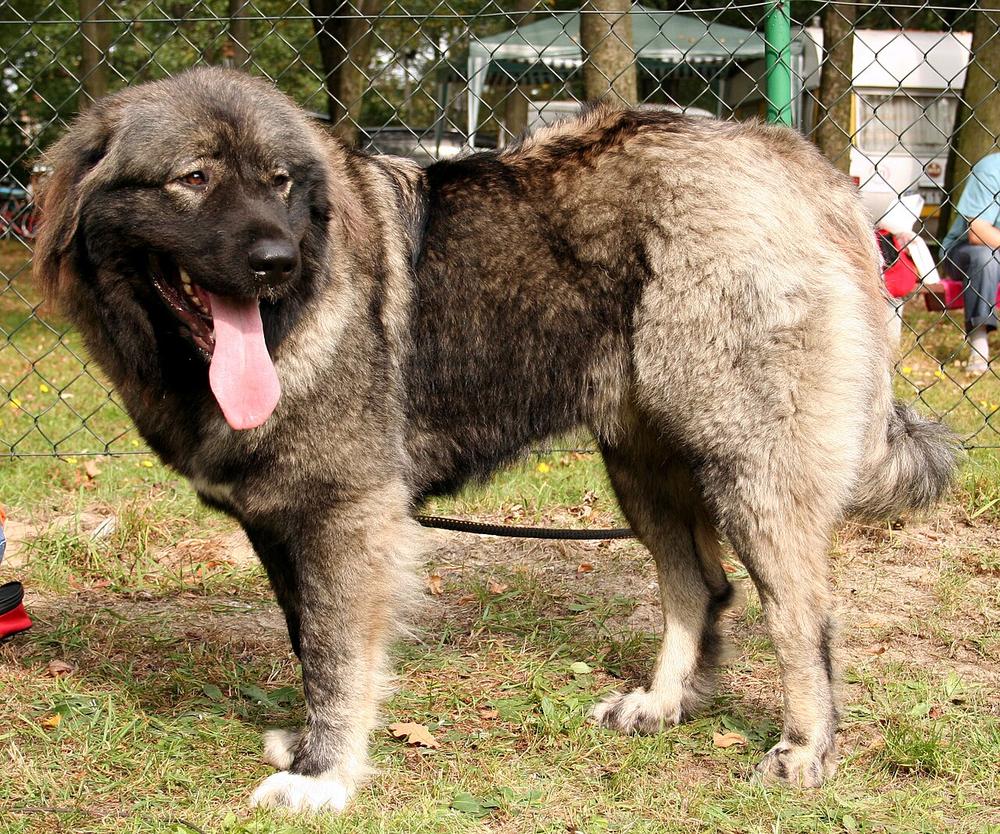
- Origin
- The Caucasus mountains and the steppes of southern Russia (FCI origin: USSR)Fédération Cynologique Internationale
- Adult weight
- 45 to 77 kg (adult, AKC: 99 to 170 pounds, converted to kg; the FCI standard sets minimums of 45 kg for females and 50 kg for males)American Kennel Club
- Height
- 58 to 76 cm (adult, AKC: 23 to 30 inches, converted to cm; the FCI standard asks for at least 64 cm in females and 68 cm in males)American Kennel Club
- Lifespan
- 10 to 12 yearsAmerican Kennel Club
- Coat
- A coarse, stand-off coat at least 5 cm long, with a thick undercoat, a mane and trousers. Coats range from very long to short.Fédération Cynologique Internationale
- Energy
- LowAmerican Kennel Club
- Indian heat
- Struggles in heatScientific Reports (2020)study
- Flats
- Needs spaceAmerican Kennel Club
Caucasian Shepherd Dog snapshot
| What | The rule | Source |
|---|---|---|
| Size | Giant. The FCI standard asks for at least 68 cm and 50 kg in males and 64 cm and 45 kg in females, with larger dogs accepted. | Fédération Cynologique Internationale |
| Temperament | Steady, active, self-confident, fearless and independent, devoted to its master and an excellent guard dog (FCI). | Fédération Cynologique Internationale |
| With visitors | Highly protective of family and property, so it may be difficult to bring people into your home, says the AKC; it rates openness to strangers 2 out of 5. | American Kennel Club |
| Coat | A coarse, stand-off coat with a well-developed undercoat, at least 5 cm long, with a mane and trousers (FCI). Long-coated dogs need daily grooming (AKC). | Fédération Cynologique Internationale |
| India's 2024 list | Named as "Caucasian Shepherd Dog (Ovcharka)" on the 12 March 2024 central letter, as reproduced by Gurugram in 2026. | Municipal Corporation Gurugram |
| Lifespan | 10 to 12 years, according to the AKC. | American Kennel Club |
Where does the Caucasian Shepherd Dog come from?
The Caucasian Shepherd Dog, or Caucasian Ovcharka, comes from ancient dogs of the Caucasus. The FCI standard says the breed spread from the Caucasian range to the steppes of southern Russia, shaped both by natural selection and by the peoples of the region, across lands that AKC lists as Armenia, Georgia, Azerbaijan, Dagestan, Chechnya, Turkey and Iran.
For centuries these dogs guarded herds, flocks and homes from beasts of prey. The first mention of a large molossoid dog, used by the army of the Armenian king Tigran II, dates from the 1st century BC.
Planned selection began in the USSR in the 1920s, for physical power, self-confidence, fearlessness, sharp hearing and sight, and a dense, waterproof coat that lets the dog work in severe climates. Its first Western show-ring appearance was in Germany in the 1930s.
How did the Caucasian Shepherd Dog come to India?
Petym found no official or published source that records when or how the Caucasian Shepherd Dog first came to India, so its arrival is not documented here.
It is named as "Caucasian Shepherd Dog (Ovcharka)" on the centre's 12 March 2024 list of breeds called ferocious. The Delhi High Court set that letter aside on 16 April 2024, recording that the Karnataka High Court had quashed it on 10 April 2024, but some cities still regulate listed breeds: Gurugram's June 2026 order requires registration, a leash, chain lead and muzzle outside private premises. A mountain dog bred for severe cold also faces Indian heat: dogs of 50 kg and over had the highest odds of heat-related illness in a large UK study.
What care does a Caucasian Shepherd Dog need?
The three things that shape a good day for this breed.
Exercise
Daily walks on a lead and play in a securely fenced yard. AKC calls it a low-energy dog with good endurance. In Indian summers walk only at dawn and after dark, and keep it in the coolest room by day. American Kennel Club
Grooming
Long-coated dogs need grooming every day; shorter coats less. Trim the fast-growing nails regularly, check the ears for wax and brush the teeth (AKC). Brush out the undercoat in summer rather than shaving to the skin. Texas A&M College of Veterinary Medicine (Pet Talk, 16 June 2022)
Training
AKC describes the breed as extremely independent and intelligent, hard but not impossible to train for obedience, and highly protective, so visitors may be hard to bring into the home. It suits an experienced owner who socialises it from puppyhood. American Kennel Club
How much should a Caucasian Shepherd Dog eat?
Daily calories for a healthy, neutered adult Caucasian Shepherd Dog, worked out from its weight with the formula vets use (70 x weight in kg to the power 0.75, then AAHA's factor for a neutered adult). Divide by the kcal per kg on your food's pack for grams a day, and adjust by body shape.
| Resting need (kcal a day) | Neutered adult (kcal a day) | |
|---|---|---|
| 45 kg AAHA (American Animal Hospital Association) | 1220 | 1700 to 1950 |
| 61 kg | 1530 | 2140 to 2440 |
| 77 kg | 1820 | 2550 to 2910 |
AKC advises keeping a puppy on the food its breeder used until at least 6 months of age unless there is a good reason to change, then moving to a food made for large and extra-large breeds. Work out how often to feed a puppy, and the adult diet, with your vet. Keep clean water out all day. Large and giant breeds can take almost 2 years to become adults. As a large, deep-chested dog, it is safer fed two or three smaller meals a day than one big one, because of bloat. Keep onion, garlic, grapes and raisins, chocolate and xylitol sweets away; ASPCA lists them as harmful. Meals a day: 6 to 12 weeks, 4 a day; 3 to 6 months, 3 a day; 6 to 12 months, 2 a day; adult, 2 to 3 smaller meals a day. Puppies, kittens, working, pregnant and older animals need different amounts: ask your vet, or use Petym's food calculator.
Which illnesses is the Caucasian Shepherd Dog prone to, and how are they treated?
The conditions veterinary studies and breed surveys most often report in the Caucasian Shepherd Dog. Knowing the early signs means a vet sees it sooner.
See your vet first. This is general information from veterinary sources, not a diagnosis. Only a vet who has examined your pet can say what is wrong and prescribe treatment, and this page never gives a dose. Do not give your pet human medicine. If your pet seems very unwell, go to a 24-hour vet: find one in your city.
Heatstroke
Emergency: go to a vet nowA dangerous rise in body temperature. Giant, thick-coated dogs are at higher risk, and dogs of 50 kg and over had the highest odds in a large UK study. PDSA
Signs to watch for
- Heavy panting that does not settle
- Thick drool, vomiting or diarrhoea
- Red or pale gums
- Wobbling, weakness or collapse
How a vet treats it
Cool the dog with cool water and moving air and go to the vet at once. A vet may cool the dog further, give a fluid drip and oxygen, and test the blood for organ damage.
Prevention
A cool room by day, walks only at dawn and after dark, regular brushing of the coat, and a power-cut plan.
Bloat (gastric dilatation-volvulus)
Emergency: go to a vet nowThe stomach fills with gas and can twist. Large and giant, deep-chested dogs are at higher risk; no study Petym found measures it in this breed. American College of Veterinary Surgeons
Signs to watch for
- Retching with nothing coming up
- Restlessness and drooling
- A swollen, tight belly
- Weakness or collapse
How a vet treats it
This needs a vet straight away. A vet stabilises the dog with fluids and oxygen, lets the gas out of the stomach, and operates to put the stomach back and fix it in place (gastropexy).
Prevention
Two or three smaller meals a day. Ask your vet about a preventive gastropexy, which can be done during spaying or neutering.
Hip dysplasia
Ask at a routine checkA loose hip joint in a growing dog that wears and turns arthritic. It is most common in large breeds; Petym found no breed-specific study for the Caucasian Shepherd. American College of Veterinary Surgeons
Signs to watch for
- Stiffness after rest
- Difficulty rising or jumping
- Limping, or shifting weight onto the front legs
- Muscle loss on the back legs
How a vet treats it
A vet diagnoses it with an examination and X-rays. A vet may advise weight control, controlled exercise, physiotherapy and anti-inflammatory pain relief, and surgery such as a hip replacement for some dogs.
Prevention
Keep a growing puppy lean; rapid weight gain makes it worse.
Ticks and tick-borne disease
See a vet soonTicks hide easily in a thick coat. In a survey of 525 dogs in four Indian cities, ticks were found on 53%, and ticks carry diseases such as ehrlichiosis. Merck Veterinary Manual
Signs to watch for
- Ticks in the ears, neck, armpits or between the toes
- A red or swollen bite site
- Weakness or paralysis in heavy infestations
How a vet treats it
A vet may prescribe an anti-tick product, remove heavy infestations in the clinic, and test the dog for tick-borne diseases even after a few bites.
Prevention
Check the coat after every walk, use the tick control your vet recommends, and keep grass around the home short.
Is the Caucasian Shepherd Dog banned in India?
It was listed in 2024, the list was struck down in two states, and the picture elsewhere depends on local rules.
On 12 March 2024 the Department of Animal Husbandry and Dairying wrote to all States and Union Territories that an expert committee had identified certain breeds as ferocious and dangerous for human life. Municipal Corporation Gurugram's order of 23 June 2026 reproduces the list, and it includes the Caucasian Shepherd Dog (Ovcharka) with the Central Asian and South Russian Ovcharkas. AWBI's public notice of 19 March 2024 said the letter came from the Ministry, not from AWBI, and that local bodies were told not to issue licences for the breeds.
The Karnataka High Court quashed the circular on 10 April 2024, and the Delhi High Court set it aside on 16 April 2024 after the Union of India agreed to hear stakeholders before any fresh notification. Petym found no new national notification by 21 October 2026. Local rules are another matter: Gurugram's 2026 order requires owners of listed breeds to register them, keep strict physical control and use a leash, chain lead and muzzle whenever the dog is outside private premises.
News On AIR reported in March 2024 that the letter asked for dogs already kept as pets to be sterilised. No official text Petym found asks owners to give up their dogs, and abandoning an animal is an offence under the Prevention of Cruelty to Animals Act. Ask your corporation what applies in your city, and read Petym's page on banned dog breeds in India.
Ovcharka, Mountain type, Steppe type: the words owners use
- Ovcharka
- Russian for sheepdog. The 2024 Indian list uses it in brackets for three breeds: the Caucasian, Central Asian and South Russian Shepherd Dogs. Municipal Corporation Gurugram
- Mountain type
- The long-coated, heavier type of Caucasian Shepherd, as the AKC describes it. American Kennel Club
- Steppe type
- The shorter-coated, lighter type, the AKC says. Coat length changes how hard an Indian summer will be. American Kennel Club
- Guard and watchdog
- The FCI standard's single line on what the breed is for. Fédération Cynologique Internationale
Can a sitter safely care for a Caucasian Shepherd?
Only one the dog already accepts, and only in a home set up for it. This is not a breed for a first meeting at the door.
The AKC calls the Caucasian Shepherd a serious guardian breed that is bold, fearless and fierce when a threat is present, yet soft, devoted and kind with its family, including other family pets. It also warns that the breed is highly protective of family and property, so it may be difficult to bring people into your home. A new sitter is exactly such a person.
If your dog has ever accepted someone outside the family, start with them. Otherwise, plan several visits with you present before any booking: Petym's free meet and greet is the first, not the last. The sitter must be experienced with large guarding dogs, calm, and able to hold a strong lead. Agree in advance where the dog stays when the door opens, how food is put down, and what the sitter does if the dog will not let them in.
Be completely honest about growling, lunging or bites. A sitter cannot keep a guardian, the public and themselves safe without the whole picture. For any aggression, a qualified behaviourist is the right long-term help.
Handling a Caucasian Shepherd: dos and don'ts for the sitter
Do
- Keep it contained: the AKC says it should be exercised in a fenced yard and walked on a leash. American Kennel Club
- Follow your city's rules for listed breeds; in Gurugram that means a leash, chain lead and muzzle outside the home. Municipal Corporation Gurugram
- Walk at quiet times and on quiet routes, and keep well clear of other dogs: the AKC rates it 2 out of 5 with other dogs. American Kennel Club
- Give daily exercise. AWBI notes that keeping a dog chained or confined without exercise is cruelty under the PCA Act. Animal Welfare Board of India
Don’t
- Do not open the main door, gate or lift with the dog loose.
- Do not invite friends, cleaners or delivery staff into the dog's space during the stay.
- Do not use harsh corrections or stare the dog down; step back and call the owner if it growls.
- Do not feed onion, garlic, grapes, raisins, chocolate or xylitol. ASPCA Animal Poison Control
A giant mountain guardian in Indian seasons
No study has measured this breed in Indian heat. This is Petym's plan, based on its size and coat and on general heat advice.
| Summer | Monsoon | Winter | |
|---|---|---|---|
| Exercise | Short walks at dawn and after dark only | Short walks between showers | Longer walks in the cool |
| Coat Texas A&M College of Veterinary Medicine (Pet Talk, 16 June 2022) | Brush out the undercoat often; do not shave to the skin | Dry the coat to the skin after rain | Weekly brushing; daily for long coats |
| Home | AC or the coolest room; a power-cut plan | Dry, raised bedding | Most of these dogs enjoy the cold |
| Risk Scientific Reports (2020)study | Heatstroke: dogs over 50 kg were at greater risk in a large UK study | Ticks and damp skin under the coat | Stiffness in older dogs |
When a Caucasian Shepherd's sitter should get help
The AKC gives no breed-specific health list beyond advising genetic testing by breeders. These are the urgent situations for a giant guardian.
If Heavy panting that will not settle, thick drool, a dark tongue, staggering or collapse.
Heatstroke: cool water poured over the body, a fan, and the nearest 24-hour vet straight away. PDSA
If Retching with nothing coming up, restlessness and a swollen belly.
Possible bloat, which mainly affects large, deep-chested dogs: go to the 24-hour vet immediately. American College of Veterinary Surgeons
If The dog bites someone, or a person or animal is hurt.
Secure the dog in a closed room, make sure the person gets medical care, and call the owner at once.
If The dog escapes through a door or gate.
Call the owner and the society guards immediately, warn people nearby, and do not try to grab the dog by the collar.
If Limping, stiffness or trouble rising after rest.
Rest it on soft ground and call the vet.
If Fever or dullness after ticks found in the thick coat.
Call the vet the same day; check ears, neck, armpits and toes after every walk. Merck Veterinary Manual
Caucasian Shepherd sitter checklist
- Full behaviour history: visitors, children, other dogs, any bites or near-bites.
- Registration papers if your city requires them for listed breeds, and the muzzle and chain lead if they are required. Municipal Corporation Gurugram
- Where the dog stays when the door opens, and who is allowed in.
- Strong collar, leash and harness, checked for wear.
- Cool room, AC settings and the power-cut plan.
- Food, portions and times, and how the bowl is put down safely.
- Vaccination card, your vet's number, and the nearest 24-hour vet that will see a giant dog.
Which Petym service fits a Caucasian Shepherd?
If Your dog already accepts one experienced sitter
Overnight pet sitting in your home, with no visitors and no other dogs. Overnight sitting
If Your dog does not yet accept anyone outside the family
Delay the trip if you can and build trust over several meet and greets; a rushed booking is not safe. The meet and greet checklist
If Your dog is elderly or on medicines
Special-needs pet care at home, with the vet's plan followed and logged. Special-needs care
Breeds with similar care needs to the Caucasian Shepherd Dog
Going away soon? Tell us your dates.
A checked local sitter feeds, walks and keeps your pet company at home, follows your care sheet to the letter and sends a photo every day. Petym is opening city by city: send your dates and we will tell you when a sitter can take them.
- Meet your sitter first, free
- PAN-checked, first-aid trained
- A photo every day
- Pay through Petym, never cash


Questions owners ask
Is the Caucasian Shepherd Dog banned in India in 2026?
- Not clearly. It was on the Centre's 12 March 2024 list of ferocious breeds, but the Karnataka High Court quashed that circular on 10 April 2024 and the Delhi High Court set it aside on 16 April 2024. Petym found no fresh national notification by 21 October 2026. Some cities regulate listed breeds.
What does Gurugram require for a Caucasian Shepherd?
- Municipal Corporation Gurugram's order of 23 June 2026 lists the breed and requires owners to register such dogs, keep strict physical control, and use a leash, chain lead and muzzle whenever the dog is taken outside private premises, under the Haryana dog bye-laws.
Is a Caucasian Shepherd good with a pet sitter?
- Only with careful preparation. The AKC says the breed is highly protective of family and property, so it may be difficult to bring people into your home. Use an experienced sitter the dog already accepts, introduce them over several visits, and keep visitors away during the stay.
Can a Caucasian Shepherd live in India's heat?
- With serious care. It is a giant, heavy-coated mountain dog; the FCI sets a minimum weight of 50 kg for males, and a large UK study found dogs over 50 kg at greater risk of heat-related illness. Keep it in a cool room by day and walk only at dawn and after dark.
How big is a Caucasian Shepherd Dog?
- The FCI standard asks for at least 68 cm at the withers and 50 kg for males, and 64 cm and 45 kg for females, and accepts larger dogs if well built. The AKC gives 23 to 30 inches and 99 to 170 pounds.
Do I have to give up my Caucasian Shepherd?
- No official text Petym found asks owners to give up their dogs. The 2024 letter, as reported by News On AIR, asked for existing pets to be sterilised, and abandoning an animal is an offence under the PCA Act. Follow your city's registration and control rules.
How long can a Caucasian Shepherd be left alone?
- PDSA's general advice is no more than four hours at a time for any dog. A guardian left alone for long periods may bark at and challenge every sound, so arrange a sitter it knows for longer absences rather than leaving it chained.
Keep reading
- Banned dog breeds in India
- Dog bite rules in India
- Kangal careAnother livestock guardian on the 2024 list.
- Tibetan Mastiff care
- Pet registration in India
- Meet and greet checklist
- Overnight pet sitting
Services that help
Free tools for this
Words on this page, explained
Keep exploring
Other dog breeds
- Akita
- Alaskan Malamute
- American Bully
- American Cocker Spaniel
- American Pit Bull Terrier
- Australian Shepherd
- Bakharwal dog
- Basset Hound
- Beagle
- Belgian Malinois
- Bernese Mountain Dog
- Bichon Frise
- Border Collie
- Boston Terrier
- Boxer
- Bull Terrier
- Bulldog
- Bullmastiff
- Cane Corso
- Cavalier King Charles Spaniel
- Chihuahua
- Chippiparai
- Chow Chow
- Cocker Spaniel
- Dachshund
- Dalmatian
- Dobermann
- Dogo Argentino
- English Mastiff
- English Springer Spaniel
- French Bulldog
- Gaddi Kutta (Gaddi dog)
- German Shepherd
- Golden Retriever
- Great Dane
- Greyhound
- Havanese
- Indian pariah dog (Indie)
- Indian Spitz
- Irish Setter
- Jack Russell Terrier
- Kangal
- Kanni
- Kombai
- Labrador Retriever
- Lhasa Apso
- Maltese
- Miniature Pinscher
- Miniature Schnauzer
- Mudhol Hound
- Neapolitan Mastiff
- Newfoundland
- Papillon
- Pekingese
- Pembroke Welsh Corgi
- Pomeranian
- Poodle
- Pug
- Rajapalayam
- Rampur Greyhound
- Rhodesian Ridgeback
- Rottweiler
- Saint Bernard
- Samoyed
- Shar Pei
- Shiba Inu
- Shih Tzu
- Siberian Husky
- Tibetan Mastiff
- Weimaraner
- West Highland White Terrier
- Whippet
- Yorkshire Terrier
Sources
Each source was opened and read on the date shown. How Petym checks its sources
- Fédération Cynologique Internationale: FCI standard No. 328: Caucasian Shepherd Dog (opens in a new tab)
- American Kennel Club: Caucasian Shepherd Dog: dog breed information (Foundation Stock Service) (opens in a new tab)
- Municipal Corporation Gurugram: Office order on registration and control of pet dogs (23 June 2026) (opens in a new tab)
- High Court of Delhi (order downloaded from the court's server, hosted by LiveLaw): Sikander Singh Thakur v. Union of India, W.P.(C) 4374/2024 and connected matters, order of 16 April 2024 (opens in a new tab)
- Texas A&M College of Veterinary Medicine (Pet Talk, 16 June 2022): Time for a summer cut? Tips for warm weather dog grooming (opens in a new tab)
- Merck Veterinary Manual: Puppy care (opens in a new tab)
Show all 19 sourcesShow fewer
- American College of Veterinary Surgeons: Gastric dilatation-volvulus (opens in a new tab)
- ASPCA Animal Poison Control: People foods to avoid feeding your pets (opens in a new tab)
- AAHA (American Animal Hospital Association): 2021 AAHA Nutrition and Weight Management Guidelines for Dogs and Cats: energy requirement calculations (Box 1, PDF) (opens in a new tab)
- Merck Veterinary Manual: Nutritional requirements of small animals (full review November 2023, updated September 2024) (opens in a new tab)
- PDSA: Heatstroke in dogs (opens in a new tab)
- American College of Veterinary Surgeons: Canine Hip Dysplasia (opens in a new tab)
- Merck Veterinary Manual: Ticks of dogs (opens in a new tab)
- Animal Welfare Board of India: Public notice on news reports of a ban on dog breeds (19 March 2024) (opens in a new tab)
- Animal Welfare Board of India: Circular and guidelines for pet owners (1 June 2020) (opens in a new tab)
- PDSA: Separation anxiety in dogs (opens in a new tab)
- Scientific Reports (2020): Incidence and risk factors for heat-related illness in UK dogs (opens in a new tab)
- Parasites & Vectors (2011): A survey of canine tick-borne diseases in India (opens in a new tab)
- News On AIR (All India Radio): Central govt proposes ban on sale, breeding of ferocious dogs (15 March 2024) (opens in a new tab)