Newfoundland dog care in India: heat, coat and your sitter
Updated By PetymFacts checked against official sources on
Quick answer
A Newfoundland usually welcomes a sitter: the AKC rates it top of its scale for openness to strangers and calls it sweet-tempered and patient. The hard part in India is heat. A sitter should keep it in a cool room by day, walk it only at dawn and after dark, brush it daily and dry the coat after rain.
Males can weigh up to about 68 kg, and a large UK study found dogs over 50 kg at greater risk of heat-related illness.
- Meet your sitter first, free
- PAN-checked, first-aid trained
- A photo every day
- Pay through Petym, never cash

- Origin
- The island of Newfoundland, north-east CanadaFédération Cynologique Internationale
- Adult weight
- 54 to 68 kg (FCI average weights: about 54 kg for females, about 68 kg for males)Fédération Cynologique Internationale
- Height
- 66 to 71 cm (FCI average heights: 66 cm for females, 71 cm for males)Fédération Cynologique Internationale
- Lifespan
- 9 to 10 yearsAmerican Kennel Club
- Coat
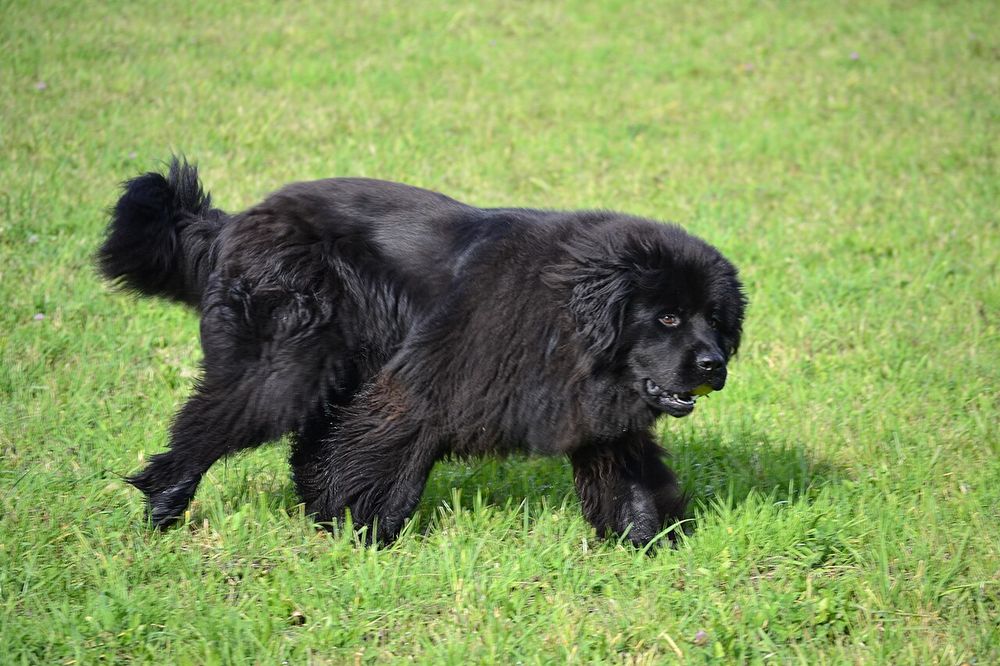
- A water-resistant double coat: a moderately long, straight outer coat over a soft, dense undercoat. Black, brown, or white and black.Fédération Cynologique Internationale
- Energy
- ModerateThe Royal Kennel Club
- Indian heat
- Struggles in heatPDSA
- Flats
- Needs spaceThe Royal Kennel Club
Newfoundland snapshot
| What | The rule | Source |
|---|---|---|
| Size | Giant. The AKC gives up to about 150 pounds (68 kg) and 28 inches for males, 100 to 120 pounds for females. | American Kennel Club |
| Exercise need | Up to 1 hour a day (Royal Kennel Club); the AKC says at least half an hour of moderate exercise daily. | The Royal Kennel Club |
| Grooming | Every day, says The Royal Kennel Club, for a medium-length coat that sheds. | The Royal Kennel Club |
| With people and dogs | The AKC rates it 5 out of 5 for openness to strangers and for getting on with other dogs. | American Kennel Club |
| Heat risk | High for a heavy dog: dogs over 50 kg had greater risk of heat-related illness in a study of 905,543 UK dogs. | Scientific Reports (2020)study |
| Lifespan | Under 10 years (Royal Kennel Club); the AKC gives 9 to 10 years. | The Royal Kennel Club |
Where does the Newfoundland come from?
The FCI standard says the breed grew up on the island of Newfoundland from local dogs and the big black bear dog brought by the Vikings after the year 1100. European fishermen later brought other dogs that reshaped it, but by the time settlement of the island began in 1610 the Newfoundland already had its build and nature: a dog that could stand a harsh climate and the sea, pull heavy loads on land and work as a water and lifeguard dog.
The Royal Kennel Club says it was bred for well-sprung ribs, an oily waterproof coat and webbed feet. It towed fishermen's carts, hauled logs and nets, fetched lost gear from the water and rescued swimmers. The FCI still lists its use as a sledge dog for heavy loads and a water dog, and describes a dog known for its gentleness and serenity.
How did the Newfoundland come to India?
No source we found records when or how the Newfoundland came to India, and it remains an uncommon import here. The Kennel Club of India registers pedigree dogs of recognised breeds through its single-dog and litter forms.
Life in India is shaped by heat. A dog bred for the North Atlantic, with a dense double coat and a weight that can pass 60 kg, sits in two of the groups PDSA lists as most at risk of heatstroke: giant breeds and long-haired dogs. A UK study of 905,543 dogs also found that dogs over 50 kg had higher odds of heat-related illness. In most Indian cities a Newfoundland needs a cool or air-conditioned room through the summer and a plan for power cuts.
What care does a Newfoundland need?
The three things that shape a good day for this breed.
Exercise
Up to 1 hour a day, says The Royal Kennel Club; the AKC asks for at least half an hour of moderate exercise daily. In the hot months keep it to slow walks at dawn and after dark, and let the dog swim or splash only where it is safe and clean. The Royal Kennel Club
Grooming
Every day, says The Royal Kennel Club. Brush through to the undercoat to stop mats, and dry the coat fully to the skin after water. Do not shave it: Texas A&M's veterinary college says a thick coat helps dogs regulate temperature and shaving can make some dogs less heat tolerant. American Kennel Club
Training
The AKC says Newfoundlands respond well to gentle guidance and poorly to harsh corrections, and that daily human contact is essential. Start lead manners early, before the puppy is too heavy to hold. Texas A&M College of Veterinary Medicine (Pet Talk, 16 June 2022)
How much should a Newfoundland eat?
Daily calories for a healthy, neutered adult Newfoundland, worked out from its weight with the formula vets use (70 x weight in kg to the power 0.75, then AAHA's factor for a neutered adult). Divide by the kcal per kg on your food's pack for grams a day, and adjust by body shape.
| Resting need (kcal a day) | Neutered adult (kcal a day) | |
|---|---|---|
| 54 kg AAHA (American Animal Hospital Association) | 1390 | 1950 to 2230 |
| 61 kg | 1530 | 2140 to 2440 |
| 68 kg | 1660 | 2320 to 2650 |
Feed a complete and balanced food made for giant breeds. Merck says large and giant breed dogs can take almost 2 years to become adults, so ask your vet when to switch from puppy food, and ACVS warns that rapid weight gain from excess nutrition can worsen hip dysplasia. Keep a growing Newfoundland lean rather than chubby. Split the food into at least two meals, as ACVS links a single large daily meal and fast eating to bloat in giant, deep-chested dogs, and rest the dog around mealtimes. Keep treats under about 10% of daily calories (WSAVA). Never feed onion or garlic from curries, grapes, raisins or tamarind, chocolate, or anything with xylitol. A dog with cystine stones may need a prescription diet chosen by the vet. Meals a day: 6 to 12 weeks, 4 a day; 3 to 6 months, 3 a day; 6 months to about 2 years, 2 to 3 a day; ask your vet when to move to adult food; adult, 2 a day, never one large meal. Puppies, kittens, working, pregnant and older animals need different amounts: ask your vet, or use Petym's food calculator.
Which illnesses is the Newfoundland prone to, and how are they treated?
The conditions veterinary studies and breed surveys most often report in the Newfoundland. Knowing the early signs means a vet sees it sooner.
See your vet first. This is general information from veterinary sources, not a diagnosis. Only a vet who has examined your pet can say what is wrong and prescribe treatment, and this page never gives a dose. Do not give your pet human medicine. If your pet seems very unwell, go to a 24-hour vet: find one in your city.
Cystinuria and cystine bladder stones
See a vet soonAn inherited kidney defect lets the amino acid cystine pass into the urine, where it forms stones. Merck names the Newfoundland among breeds with a high incidence, and The Royal Kennel Club lists a DNA test for cystinuria as a minimum before breeding. Merck Veterinary Manual
Signs to watch for
- Painful or slow urination
- Blood in the urine
- Passing little or no urine, which can mean a blockage
How a vet treats it
A vet finds cystine crystals on urinalysis and stones on x-rays. Merck says cystine stones can be dissolved with a lower-protein, alkalinising prescription diet together with a cystine-binding medicine, and that stones may need surgery or lithotripsy. A blocked urethra is relieved with a catheter or surgery.
Prevention
Buy from DNA-tested parents. A dog that has had stones usually stays on the vet's diet and urine checks.
Urinary blockage
Emergency: go to a vet nowA stone lodged in the urethra stops urine flowing. Merck's owner guide says urethral obstruction is an emergency and that complete obstruction can kill within about 3 days. Merck Veterinary Manual
Signs to watch for
- Little or no urine passed
- Low mood and loss of appetite
- Vomiting
How a vet treats it
The vet relieves the blockage, pushing the stone back into the bladder with a catheter or removing it surgically, then treats the stones.
Subaortic stenosis
See a vet soonA ring of fibrous tissue below the aortic valve narrows the way out of the heart. Merck names the Newfoundland among the breeds most often affected, and the breed club runs a heart testing scheme. Merck Veterinary Manual
Signs to watch for
- Tiring quickly on walks
- Fainting
- In some dogs, no signs before sudden collapse
How a vet treats it
A vet may hear a murmur and use an ECG, x-rays or ultrasound. Merck says treatment can include medicine to reduce exercise intolerance or fainting, and sometimes surgery, which is costly and risky. Mildly affected dogs often need no treatment.
Prevention
Affected dogs should not be bred from. Ask for the parents' heart test results.
Hip and elbow dysplasia
See a vet soonLoose, poorly formed joints that become arthritic. ACVS says hip dysplasia is most common in large breeds, and The Royal Kennel Club lists hip and elbow scoring before breeding. American College of Veterinary Surgeons
Signs to watch for
- Limping or stiffness after rest
- Difficulty rising or on stairs
- Thinner hind leg muscles
How a vet treats it
Diagnosis is by x-rays and a hands-on joint check. ACVS lists keeping the dog lean, low-impact exercise, physiotherapy, anti-inflammatory pain relief prescribed by the vet with monitoring blood tests, and surgery including hip replacement.
Prevention
Scored parents, a lean puppy and no hard running or jumping while the joints grow.
Bloat (gastric dilatation-volvulus)
Emergency: go to a vet nowThe stomach fills with gas and twists. ACVS says large, giant and deep-chested dogs are at higher risk. American College of Veterinary Surgeons
Signs to watch for
- Retching with nothing coming up
- Restlessness and looking at the belly
- A swollen belly
- Collapse
How a vet treats it
An emergency operation: the vet confirms it on x-ray, stabilises the dog with fluids and oxygen, decompresses the stomach, untwists it and fixes it to the body wall (gastropexy).
Prevention
Smaller meals, slow eating, rest around meals; ask your vet about a preventive gastropexy.
Heatstroke
Emergency: go to a vet nowPDSA lists giant and long-haired dogs among those most at risk, and the Newfoundland is both. PDSA
Signs to watch for
- Heavy panting and drooling
- Vomiting or diarrhoea
- Weakness, wobbling or collapse
How a vet treats it
Cool the dog at once with cool water and a breeze and call the vet. PDSA says vets cool with cold water, fans and, if needed, a fluid drip, and severe cases may need oxygen or medication.
Prevention
A cool room by day, walks only at dawn and after dark, a lean body and daily brushing rather than shaving.
A cold-water rescue dog in a hot country
Everything that makes a Newfoundland good in the North Atlantic makes it work hard in an Indian May.
The Royal Kennel Club says the Newfoundland was developed in north-east Canada and selectively bred for well-sprung ribs, an oily waterproof coat and webbed feet for water work, from hauling fishermen's nets to rescuing swimmers. Today, it says, the breed is popular as a gentle, patient and loyal family companion. The AKC adds that the breed standard calls a sweet temperament the most important single characteristic of the breed.
That heavy, water-resistant coat and a body weight that can pass 60 kg are the two facts a sitter in India must plan around. In a UK study of over 900,000 dogs, dogs weighing over 50 kg and dogs heavier than the average for their breed were at greater risk of heat-related illness. The IMD's colour-coded heat warnings are worth checking each morning in summer.
The good news for a sitter is temperament. The AKC calls Newfoundland puppies outgoing and never timid or aggressive, and says daily human contact is absolutely essential. A Newfie usually takes to a kind new person quickly; what it does not cope with is being left alone for long.
What a Newfoundland needs from its sitter
Company, coolness and a brush. A sociable dog suffers more from loneliness than from strangers.
Because the AKC calls daily human contact essential, a Newfoundland is a poor candidate for long empty days. PDSA's general advice is no more than four hours alone at a time for any dog. Overnight sitting, or a sitter who stays most of the day, suits the breed better than a quick morning drop-in.
At Petym's free meet and greet, show the sitter the AC or coolest room, the brushes, where the towels are kept, and how the dog likes to be handled for grooming. The AKC says Newfoundlands respond well to gentle guidance and poorly to harsh corrections, so share the words and rewards you use.
Many Newfies love water, and a tub of water or a gentle hose-down on the balcony on a hot evening may be a treat. But a wet, dense coat that stays damp against the skin causes its own problems, so whatever gets wet gets dried, right to the skin.
A summer day with a Newfoundland and its sitter
Petym’s working from the official rules, no government publishes a total.
A sample plan for the hot months. Nothing strenuous happens between late morning and sunset.
Dawn
A slow 20 to 30 minute walk, on grass where possible. Turn back at the first heavy panting.
After the walk
Water, a rest in the coolest room, breakfast once breathing has settled, and a towel for the drool.
Late morning
Daily brushing with a slicker and long-toothed comb to clear loose hair and stop mats. American Kennel Club
Midday to 5 pm
Indoors in AC or a cool room. Toilet breaks on shaded ground only; check the road with the back of a hand. The Royal Kennel Club
Evening
A splash or a wet towel on a hot day, then a full dry. A second short walk after dark.
Night
Ears checked, water topped up, and the daily photo update to the owner.
Newfoundland health signs a sitter should report
The AKC and The Royal Kennel Club list the conditions breeders screen for. A sitter notices and calls the vet.
If Heavy panting that will not settle, thick drool, weakness, wobbling or collapse.
Heatstroke: shade, cool water poured over the body, a fan, then the nearest 24-hour vet at once. PDSA
If Tiring quickly on short walks, coughing, fast breathing at rest or fainting. Breeders screen Newfoundland hearts for cardiac disease.
Call the vet the same day; collapse is an emergency. American Kennel Club
If Straining to pass urine, dribbling, or blood in the urine. Cystinuria, which the AKC says can cause stones in the urinary system, is on both clubs' screening lists.
Call the vet the same day; a dog that cannot pass urine needs a vet immediately. The Royal Kennel Club
If Limping, stiffness after rest or trouble on stairs. Hip and elbow dysplasia are screened for in the breed.
Rest, soft ground and a call to the vet. The Royal Kennel Club
If Head shaking, smelly ears or scratching at the ears. The AKC says drop ears should be checked regularly for infection.
Do not poke inside; tell the owner and call the vet. American Kennel Club
If Retching with nothing coming up, restlessness and a swollen belly, typical of bloat in large, deep-chested dogs.
An emergency: the nearest 24-hour vet straight away. American College of Veterinary Surgeons
Newfoundland coat myths in an Indian summer
You may have read
Shaving a Newfie keeps it cool.
Myth
What the sources say
Texas A&M's veterinary college says a thick coat is insulation that helps dogs regulate temperature, and that shaving can make some dogs less tolerant of heat. Daily brushing and a cool room help more. Texas A&M College of Veterinary Medicine (Pet Talk, 16 June 2022)
You may have read
Brushing once a week is enough.
Myth
What the sources say
The Royal Kennel Club puts grooming at every day. The AKC says brushing becomes daily in the twice-yearly shed, and that neutered Newfies may shed year-round. The Royal Kennel Club
You may have read
A water dog can swim off the heat in any pool or lake.
Myth
What the sources say
A tired giant dog can still struggle in water, and dirty floodwater carries disease. Supervised splashing at home is safer than a lake in summer.
You may have read
A friendly dog will be fine alone if it has food and water.
Myth
What the sources say
The AKC says daily human contact is absolutely essential for a Newfoundland. Plan company, not just supplies. American Kennel Club
Feeding and handling a Newfoundland
No source sets a special diet. Measured meals and calm handling keep a heavy dog safe.
Do
- Leave the food, the number of meals, portions and times in writing, and ask the sitter to log each meal.
- Split food into the meals the owner uses; the American College of Veterinary Surgeons lists one large meal a day and fast eating among bloat risk factors. American College of Veterinary Surgeons
- Keep treats under about 10% of daily calories so the dog stays lean. WSAVA
- Use a non-slip mat on marble or tile floors, and help an older dog up steps.
Don’t
- Do not exercise a Newfie straight after a meal, or in the afternoon heat.
- Do not use harsh corrections: the AKC says the breed responds to gentle guidance. American Kennel Club
- Do not share onion, garlic, grapes, raisins, chocolate or xylitol. ASPCA Animal Poison Control
Newfoundland sitter checklist
- The coolest room, AC settings and what to do in a power cut.
- Slicker brush, long-toothed comb and towels, and how often to use each.
- Meal portions, number of meals and times; the dog kept lean. Scientific Reports (2020)study
- Any heart or urinary medicines, given and logged exactly as the vet's label says.
- Ear-cleaning routine if the vet has set one.
- Vaccination card, tick prevention dates and the nearest 24-hour vet on Petym's city list.
- Foods to keep away: onion, garlic, grapes, raisins, chocolate and xylitol. ASPCA Animal Poison Control
Which Petym service suits a Newfoundland?
If You are away overnight or longer
Overnight pet sitting in your home, with AC and company through the day. Overnight sitting
If Your Newfie is relaxed with other dogs and new places
Pet boarding in a sitter's home that has passed Petym's video walk-through, if it can keep a giant dog cool. Home boarding
If Your dog has a heart, urinary or joint plan
Special-needs pet care, with medicines and checks followed and logged. Special-needs care
If You are out during the day only
Doggy day care or a midday visit, so the dog is not alone for long. Doggy day care
Breeds with similar care needs to the Newfoundland
Going away soon? Tell us your dates.
A checked local sitter feeds, walks and keeps your pet company at home, follows your care sheet to the letter and sends a photo every day. Petym is opening city by city: send your dates and we will tell you when a sitter can take them.
- Meet your sitter first, free
- PAN-checked, first-aid trained
- A photo every day
- Pay through Petym, never cash


Questions owners ask
Can a Newfoundland survive in India?
- It can live in India with serious care in summer. It is a heavy dog with a dense, water-resistant coat, and a large UK study found dogs over 50 kg at greater risk of heat-related illness. Plan for air conditioning or a cool room, dawn and night walks, daily brushing and a power-cut plan.
Is a Newfoundland good with a pet sitter?
- Usually very. The AKC rates the breed 5 out of 5 for openness to strangers and for getting on with other dogs, and calls it sweet-tempered and patient. The bigger worry is loneliness: the AKC says daily human contact is absolutely essential.
How long can a Newfoundland be left alone?
- PDSA's general advice is no more than four hours at a time for any dog. Because the AKC calls daily human contact essential for the breed, long empty days are especially hard. Choose overnight sitting or day care for longer absences.
How often should a Newfoundland be brushed?
- The Royal Kennel Club says every day. The AKC advises thorough brushing at least weekly, daily during the twice-yearly shed, and notes that neutered dogs may shed year-round. In India's monsoon, also dry the coat to the skin after every wet walk.
What health problems do Newfoundlands have?
- The AKC says breeders screen for hip and elbow dysplasia, cardiac disease and cystinuria, which can cause urinary stones, and that the drop ears need regular checks for infection. A sitter should report tiring, coughing, straining to urinate or limping to the owner and vet.
How long do Newfoundlands live?
- The AKC gives a life expectancy of 9 to 10 years and The Royal Kennel Club lists under 10 years. Keeping the dog lean, cool and checked by a vet regularly gives it the best chance.
Does a Newfoundland drool a lot?
- Yes. The AKC gives the breed its top drooling score, 5 out of 5. Leave towels by the water bowl and the front door for your sitter, ask them to wipe the jowls after meals, and warn visitors before they wear their good clothes.
Keep reading
- Saint Bernard careAnother heavy-coated giant in Indian heat.
- Samoyed care
- Siberian Husky care
- Is AC safe for dogs?
- Monsoon pet care
- Heatstroke in dogs
- Overnight pet sitting
Services that help
- Overnight pet sittingA sitter sleeps in your home and keeps your pet's routine going.
- Pet boarding in a sitter's homeYour pet stays in a checked sitter's home, not a kennel.
- Special-needs pet carePuppies, seniors and pets on medicine, cared for to your vet's plan.
- Doggy day care in a sitter's homeDaytime care for your dog in a sitter's home while you work.
Free tools for this
Words on this page, explained
Keep exploring
Other dog breeds
- Akita
- Alaskan Malamute
- American Bully
- American Cocker Spaniel
- American Pit Bull Terrier
- Australian Shepherd
- Bakharwal dog
- Basset Hound
- Beagle
- Belgian Malinois
- Bernese Mountain Dog
- Bichon Frise
- Border Collie
- Boston Terrier
- Boxer
- Bull Terrier
- Bulldog
- Bullmastiff
- Cane Corso
- Caucasian Shepherd Dog
- Cavalier King Charles Spaniel
- Chihuahua
- Chippiparai
- Chow Chow
- Cocker Spaniel
- Dachshund
- Dalmatian
- Dobermann
- Dogo Argentino
- English Mastiff
- English Springer Spaniel
- French Bulldog
- Gaddi Kutta (Gaddi dog)
- German Shepherd
- Golden Retriever
- Great Dane
- Greyhound
- Havanese
- Indian pariah dog (Indie)
- Indian Spitz
- Irish Setter
- Jack Russell Terrier
- Kangal
- Kanni
- Kombai
- Labrador Retriever
- Lhasa Apso
- Maltese
- Miniature Pinscher
- Miniature Schnauzer
- Mudhol Hound
- Neapolitan Mastiff
- Papillon
- Pekingese
- Pembroke Welsh Corgi
- Pomeranian
- Poodle
- Pug
- Rajapalayam
- Rampur Greyhound
- Rhodesian Ridgeback
- Rottweiler
- Saint Bernard
- Samoyed
- Shar Pei
- Shiba Inu
- Shih Tzu
- Siberian Husky
- Tibetan Mastiff
- Weimaraner
- West Highland White Terrier
- Whippet
- Yorkshire Terrier
Sources
Each source was opened and read on the date shown. How Petym checks its sources
- Fédération Cynologique Internationale: FCI-Standard No 50: Newfoundland (opens in a new tab)
- American Kennel Club: Newfoundland: dog breed information (opens in a new tab)
- The Royal Kennel Club: Newfoundland: breeds A to Z (opens in a new tab)
- PDSA: Heatstroke in dogs (opens in a new tab)
- The Kennel Club of India: KCI Form C/1: application for registration of a single dog (opens in a new tab)
- Texas A&M College of Veterinary Medicine (Pet Talk, 16 June 2022): Time for a summer cut? Tips for warm weather dog grooming (opens in a new tab)
Show all 22 sourcesShow fewer
- Merck Veterinary Manual: Puppy care (opens in a new tab)
- American College of Veterinary Surgeons: Canine Hip Dysplasia (opens in a new tab)
- American College of Veterinary Surgeons: Gastric dilatation-volvulus (opens in a new tab)
- WSAVA: Frequently asked questions and myths (Global Nutrition Committee) (opens in a new tab)
- Merck Veterinary Manual: Garlic and onion (Allium spp) toxicosis in animals (opens in a new tab)
- Merck Veterinary Manual: Grape, raisin, and tamarind (Vitis spp, Tamarindus spp) toxicosis in dogs (full review September 2024) (opens in a new tab)
- ASPCA Animal Poison Control: People foods to avoid feeding your pets (opens in a new tab)
- Merck Veterinary Manual: Urolithiasis in dogs (full review May 2025, updated February 2026) (opens in a new tab)
- AAHA (American Animal Hospital Association): 2021 AAHA Nutrition and Weight Management Guidelines for Dogs and Cats: energy requirement calculations (Box 1, PDF) (opens in a new tab)
- Merck Veterinary Manual: Nutritional requirements of small animals (full review November 2023, updated September 2024) (opens in a new tab)
- Merck Veterinary Manual: Noninfectious diseases of the urinary system in dogs (dog owners; updated May 2026) (opens in a new tab)
- Merck Veterinary Manual: Congenital and inherited disorders of the cardiovascular system in dogs (dog owners) (opens in a new tab)
- India Meteorological Department: FAQ on heat wave (opens in a new tab)
- PDSA: Separation anxiety in dogs (opens in a new tab)
- The Royal Kennel Club: The danger of hot pavements (opens in a new tab)
- Scientific Reports (2020): Incidence and risk factors for heat-related illness in UK dogs (opens in a new tab)