Lhasa Apso care in India: coat, eyes and a sitter checklist
Updated By PetymFacts checked against official sources on
Quick answer
A Lhasa Apso is a small, low-exercise dog that settles with a sitter it trusts, but it was bred as a watchdog and may be wary at first. A sitter must brush its long coat every day, keep hair out of its eyes, walk it only in the cool hours and keep its short face out of the heat.
The Royal Kennel Club lists the Lhasa as suited to a flat, needing up to 1 hour of exercise a day and grooming every day. It also notes the breed was originally kept by Tibetan monks as companions and watchdogs.
- Meet your sitter first, free
- PAN-checked, first-aid trained
- A photo every day
- Pay through Petym, never cash

- Origin
- TibetFédération Cynologique Internationale
- Adult weight
- 5.4 to 8.2 kg (AKC gives 12 to 18 pounds; the FCI and Royal Kennel Club standards give no weight)American Kennel Club
- Height
- 25 to 28 cm (males, 10 to 11 inches (AKC), females slightly smaller; the FCI standard gives an ideal 25 cm for males)American Kennel Club
- Lifespan
- 12 to 15 yearsAmerican Kennel Club
- Coat
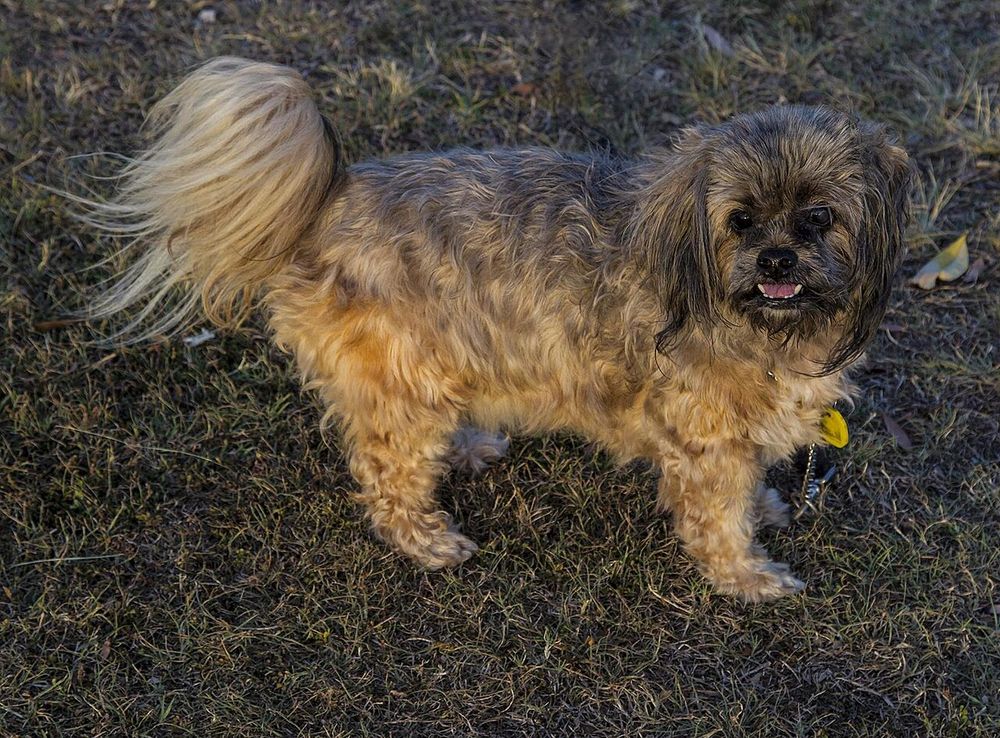
- Long, heavy, straight and hard top coat over a moderate undercoat, with hair falling over the eyes. Grooming every day; the Royal Kennel Club lists it as not shedding.Fédération Cynologique Internationale
- Energy
- ModerateThe Royal Kennel Club
- Indian heat
- Copes with carePDSA
- Flats
- Suits a flatThe Royal Kennel Club
Lhasa Apso snapshot
| What | The rule | Source |
|---|---|---|
| Size | Small. AKC gives a height of 10 to 11 inches for males (females slightly smaller) and a weight of 12 to 18 pounds. | American Kennel Club |
| Exercise need | Up to 1 hour a day, says The Royal Kennel Club, which lists it as suited to a flat. | The Royal Kennel Club |
| Alone-time tolerance | Not scored by kennel clubs. Bred as a companion and watchdog. PDSA's general limit for any dog is 4 hours alone. | The Royal Kennel Club |
| Heat tolerance | A short-faced breed, but in a large UK study the Lhasa had among the lowest odds of heat-related illness, which the authors linked to its small size. | Scientific Reports (2020)study |
| Coat and shedding | Long coat that needs grooming every day; The Royal Kennel Club lists it as not shedding. | The Royal Kennel Club |
| With other dogs | AKC places it in the middle of its scale (3 of 5) for getting on with other dogs. | American Kennel Club |
Where does the Lhasa Apso come from?
The Lhasa Apso comes from Tibet, where it was kept for centuries in palaces and Buddhist monasteries as a companion and watchdog. The Royal Kennel Club says the breed was credited with spiritual powers and called the Talisman Dog, and AKC notes that a Lhasa could not be bought or sold, only given as a gift to someone thought worthy of it. Lhasa is the name of Tibet's sacred city; AKC translates Apso as "longhaired dog".
The FCI standard ties the breed's look to its homeland: a hardy little dog for high altitudes and a severe climate, with a long, hard coat and dense undercoat for insulation and a fall of hair that shields the eyes from wind, dust and glare. It describes the Lhasa as gay and assertive, alert and steady, but somewhat aloof with strangers.
The Royal Kennel Club says the breed did not leave Tibet until the late 19th century, was recognised in Britain in 1908 alongside the Tibetan Terrier as a "Lhasa Terrier", and was separated from it in 1934. The FCI standard dates the first Apsos in Britain to the early 1920s and the first British breed club to 1933. In America, the foundation pair was a gift from the 13th Dalai Lama to the explorer Suydam Cutting, and AKC registered its first Lhasa Apso in 1935.
How did the Lhasa Apso come to India?
The sources we checked do not document how or when the Lhasa Apso first came to India, even though its homeland borders the Indian Himalaya; we found no account from the Kennel Club of India or an Indian breed club. What is documented is that the breed lives in Indian homes today: a study of dogs brought to clinics in Deesa, Surat and Ahmedabad in Gujarat between July 2016 and May 2017 recorded Lhasa Apsos among the dogs examined.
A coat built for the Tibetan plateau is the main thing to plan for in the Indian plains. PDSA lists long-haired dogs among those most at risk of heatstroke and advises walking in the early morning and evening, so a Lhasa's walks belong in the cool hours, with the coat kept brushed through the summer. AKC warns that damp hair mats even when clean, which makes thorough drying after every monsoon walk part of daily care.
What care does a Lhasa Apso need?
The three things that shape a good day for this breed.
Exercise
The Royal Kennel Club gives up to an hour a day and lists a flat as a suitable home. AKC says the Lhasa is good at exercising itself, racing round a flat, and that mental work matters as much as walks: it can do agility and scent work. In Indian summers keep walks to early morning and evening. The Royal Kennel Club
Grooming
Grooming every day, says the Royal Kennel Club. AKC says a long coat needs a bath at least every two weeks with brushing in between, careful rinsing because shampoo left in irritates the skin, and full drying because damp hair mats. A shorter puppy cut still needs regular brushing and baths. American Kennel Club
Training
AKC describes the Lhasa as highly intelligent but willing only on its own terms: it dislikes repetitive drill and turns stubborn if bullied, so keep sessions short, varied and reward-based. The FCI standard notes it is somewhat aloof with strangers, so early, gentle socialisation helps. Fédération Cynologique Internationale
How much should a Lhasa Apso eat?
Daily calories for a healthy, neutered adult Lhasa Apso, worked out from its weight with the formula vets use (70 x weight in kg to the power 0.75, then AAHA's factor for a neutered adult). Divide by the kcal per kg on your food's pack for grams a day, and adjust by body shape.
| Resting need (kcal a day) | Neutered adult (kcal a day) | |
|---|---|---|
| 5.4 kg AAHA (American Animal Hospital Association) | 250 | 350 to 400 |
| 6.8 kg | 290 | 410 to 470 |
| 8.2 kg | 340 | 470 to 540 |
Feed a complete and balanced dog food made for the dog's life stage, as WSAVA advises; a home-cooked diet can work only if it is complete and balanced, which WSAVA says means a recipe formulated by a veterinarian specialised in nutrition and regular vet checks, not ordinary rice and dal. AKC notes that Lhasas use their food very well and that even slight overfeeding can upset digestion, and that a fixed routine, once or twice a day at the same times, suits them. Treats should stay under about 10% of the day's calories (WSAVA). The energy table on this page gives the daily calories; ask your vet to check the amount against your dog's body condition. Keep household food off the plate. ASPCA lists onions and garlic (in most dal, sabzi and gravy), grapes and raisins, chocolate, xylitol in sugar-free sweets and gum, salty snacks and milk among the foods to avoid, and warns that cooked bones can injure or block the gut. Meals a day: puppy, from weaning to about 6 months, 3 to 4 a day; 6 to 12 months, Fewer as it grows, down to 2 a day; adult, 1 or 2 a day, at the same times every day. Puppies, kittens, working, pregnant and older animals need different amounts: ask your vet, or use Petym's food calculator.
Which illnesses is the Lhasa Apso prone to, and how are they treated?
The conditions veterinary studies and breed surveys most often report in the Lhasa Apso. Knowing the early signs means a vet sees it sooner.
See your vet first. This is general information from veterinary sources, not a diagnosis. Only a vet who has examined your pet can say what is wrong and prescribe treatment, and this page never gives a dose. Do not give your pet human medicine. If your pet seems very unwell, go to a 24-hour vet: find one in your city.
Progressive retinal atrophy (PRA4)
Ask at a routine checkAn inherited breakdown of the light-sensing cells of the retina that ends in blindness. A form called PRA4, caused by a gene change found only in Lhasa Apsos among the breeds tested, was identified in 2020 and a DNA test was developed from it. BMC Genetics (2020), Animal Health Trust and University of Cambridgestudy
Signs to watch for
- Sight fading gradually, often over several years
- A cloudy lens (cataract) late in the disease
How a vet treats it
A vet or veterinary eye specialist confirms it with an eye examination, and a DNA test shows whether a dog carries the PRA4 change. Merck states there is no treatment for PRA, so the vet's role is to confirm it and keep checking the eyes.
Prevention
The Royal Kennel Club lists the PRA4 DNA test as minimum good practice before breeding, and recommends eye testing under the BVA/KC/ISDS scheme as well. Ask a breeder for both parents' results.
Cherry eye (prolapsed third eyelid gland)
See a vet soonThe tear gland behind the third eyelid pops out and shows as a red lump in the inner corner of the eye. PDSA lists the Lhasa Apso among the breeds where it is especially common; it is often inherited and usually appears before two years of age. PDSA
Signs to watch for
- A red, swollen lump in the inner corner of one or both eyes
- Rubbing at the eye
- A red, inflamed eye (conjunctivitis)
- Eye discharge
How a vet treats it
For a very small cherry eye that is not bothering the dog, a vet may prescribe anti-inflammatory and lubricating eye drops and watch it. Most dogs need surgery to stitch the gland back into place inside the third eyelid; it can occasionally pop out again and need a second operation. Leaving the gland out raises the risk of dry eye.
Prevention
PDSA advises against breeding from any dog that has had cherry eye, even after surgery.
Dry eye (keratoconjunctivitis sicca)
See a vet soonThe eye makes too few tears, so its surface dries and becomes inflamed. AKC lists dry eye among the conditions to ask a Lhasa breeder about; Merck says in dogs it is often linked to an immune reaction against the tear glands. American Kennel Club
Signs to watch for
- A persistent, thick eye discharge
- Red eyes
- Dull or scarred patches on the clear front of the eye, or sores that are slow to heal
How a vet treats it
A vet measures tear production and checks the cornea. Merck says a vet may prescribe eye medicines to increase tear production, artificial tear solutions and medicine to reduce mucus, sometimes with an antibiotic and corticosteroid combination when there are no corneal sores. Treatment is often lifelong, and surgery is an option when medicine does not work.
Patellar luxation (slipping kneecap)
See a vet soonThe kneecap slips out of its groove when the knee bends. In a study of English primary-care practices, 3.8% of Lhasa Apsos had it, and the breed had about three times the odds of crossbreeds; AKC lists slipping stifles for the breed. Canine Genetics and Epidemiology (2016), RVC VetCompassstudy
Signs to watch for
- Suddenly carrying a back leg for a few steps, a "skip"
- Shaking or stretching the leg before using it again
- Limping that becomes more frequent over time
How a vet treats it
A vet diagnoses it by feeling an unstable kneecap, sometimes with X-rays or a CT scan. ACVS says cases without symptoms are usually monitored, and surgery to realign the kneecap is mostly considered from grade 2 upwards, followed by several weeks of rest.
Prevention
ACVS advises that dogs diagnosed with patellar luxation should not be bred.
How a Lhasa Apso takes to a sitter
Slowly at first, then well. Give it time to decide the sitter is safe.
The Royal Kennel Club notes that the Lhasa was originally kept by Tibetan monks as companions and watchdogs. A watchdog's job is to notice strangers and say so. Many Lhasas bark at a new person, keep their distance, or dislike being picked up by someone they do not know. That is normal, and it is why Petym starts every first booking with a free meet and greet. Let the dog come to the sitter, use treats from an open hand, and avoid reaching over its head.
On time alone, PDSA's general advice is no more than 4 hours at a time, and it lists barking, whining, toileting indoors and trembling among the signs of separation distress. A Lhasa that is calm alone for a morning may still bark at every sound in the society corridor. Tell the sitter what sets your dog off and what settles it.
Heat and a short face: what the evidence says
In the large UK heatstroke study, flat-faced dogs as a group had 2.10 times the odds of heat-related illness of medium-muzzled dogs. Yet the Lhasa Apso, Shih Tzu and Chihuahua had the lowest odds of all the breeds analysed. The authors linked this to their size: dogs under 10 kg lose heat faster. The Lhasa's own result was not statistically significant, so it does not prove the breed is safe in heat.
For an Indian summer the sensible reading is caution. A long coat, a short face and a hot flat during a power cut are a poor mix. Keep the Lhasa in the coolest room through the day, walk it early and late, test the ground with PDSA's 7-second palm test, and stop play before heavy panting starts. The India Meteorological Department's colour-coded heat warnings are worth a look before planning the day.
A Lhasa's daily routine with a sitter
Petym’s working from the official rules, no government publishes a total.
A sample routine for the hot months, built around the daily groom.
Early morning
A 20 minute walk on a harness while it is cool. Let the dog set the pace and sniff.
Breakfast
The measured meal from the owner's plan.
Mid-morning
The daily groom: brush and comb down to the skin, section by section, ten to fifteen minutes. Wipe around the eyes and keep the hair out of them with the clip or tie the owner uses.
Midday to afternoon
Indoors in the coolest room with water. A food toy or chew helps a watchdog relax.
After sunset
A second short walk once the road has cooled, or play indoors on very hot evenings.
Night
Dinner, a last toilet trip and the daily photo update, with a note on eyes, appetite and mood.
Lhasa Apso health signs a sitter should report
Notice early, tell the owner and call the vet. Go to a 24-hour vet in an emergency.
If Bleeding that will not stop from a small cut, a torn nail or the gums, or unexplained bruising. Haemophilia B, an inherited bleeding disorder, is on the breed's genetic welfare list.
Press firmly with a clean cloth and call the vet. Heavy bleeding is an emergency. Science for Animal Welfare (formerly UFAW)
If Bumping into furniture, hesitating on stairs or in dim light. Progressive retinal atrophy, an inherited eye disease that leads to blindness, has been described in the breed.
Keep furniture where it is, tell the owner, and mention it to the vet. BMC Genetics (2020), Animal Health Trust and University of Cambridgestudy
If A red, weepy or squinting eye, or a cloudy patch on the eye.
Call the vet the same day; eye injuries can get worse fast. Use drops only if the vet prescribed them. Canine Genetics and Epidemiology (2017), RVC VetCompassstudy
If Heavy panting, drooling, weakness or collapse on a hot day.
Possible heatstroke: shade, cool water poured over the body away from the face, a breeze and the vet. PDSA
If Mats close to the skin, a smell from under the coat, or scratching at one spot.
Do not cut mats with scissors near the skin. Tell the owner; a groomer or vet can deal with it. Texas A&M College of Veterinary Medicine (Pet Talk, 16 June 2022)
If Fever, low energy or loss of appetite, especially after ticks.
Call the vet the same day. Parasites & Vectors (2011)study
Grooming a Lhasa through the Indian year
| Hot months (March to May) | Monsoon (June to September) | Cooler months (October to February) | |
|---|---|---|---|
| Coat length | A shorter trim by a groomer makes daily care easier | Short enough to dry fully after rain | Any length the owner prefers |
| Brushing | Daily, down to the skin | Daily: damp coats mat within days | Daily |
| Eyes and face | Wipe after walks; hair clipped or tied up | Dry the face after wet walks | Wipe daily |
| Ticks | Part the coat and check daily | Check after every walk | Check after every walk |
Daily grooming from The Royal Kennel Club; Texas A&M's veterinary college notes a full shave is not usually needed unless the coat is matted. The rest is Petym's practical plan.
Feeding and vaccines
Keep the food, bowls and times as at home, and leave enough for the whole stay plus a few days; a sudden change of food can cause diarrhoea. Count treats as part of the day: WSAVA suggests treats stay under about 10% of daily calories. Keep chocolate, grapes, raisins, onion, garlic, xylitol and salty snacks out of reach, as the ASPCA advises.
Keep vaccinations up to date before any stay. A 2025 study of dogs with neurological signs from canine distemper found that young dogs, Shih Tzus and Lhasa Apsos had a significantly higher likelihood of developing those signs. Distemper is covered by the DHPPi vaccine on Indian vaccination cards: check the dates with your vet before you travel, and leave the card for the sitter.
Dos and don'ts with a wary Lhasa
Do
- Sit down and let the dog approach you; offer treats from a flat, open hand.
- Keep to the owner's routine for walks, meals and grooming from day one.
- Groom in short, calm sessions with breaks, and stop if the dog growls or snaps.
- Keep water fresh in a stable bowl in the coolest room. Animal Welfare Board of India
Don’t
- Do not pick the dog up or reach over its head before it knows you.
- Do not punish barking at the door; move the dog to a quiet room before opening it.
- Do not pull at mats with a comb or cut them with scissors close to the skin.
- Do not walk at midday in the hot months or leave the dog in a parked car.
Lhasa Apso sitter checklist
- How the dog greets strangers, and how long it takes to warm up.
- Brush, comb, eye wipes, hair clip, and the grooming routine step by step.
- Any bleeding or eye diagnosis, and medicines or drops exactly as prescribed. The sitter logs each dose.
- Meal amounts, times and the treat allowance.
- The harness, walking times and the coolest room for power cuts.
- The vaccination card, with DHPPi and rabies dates.
- The vet's number, the groomer's number and the nearest 24-hour vet on Petym's city list.
Which Petym service suits a Lhasa Apso?
Best fit
Overnight pet sitting
A wary watchdog stays on home ground with one sitter it has met, and keeps its grooming routine.
Pet boarding
For a relaxed Lhasa, in a sitter's home that has passed Petym's video walk-through. Ask about other dogs at the meet and greet.
Drop-in visits
For a short absence: feeding, a brush, a short walk and company.
Breeds with similar care needs to the Lhasa Apso
Going away soon? Tell us your dates.
A checked local sitter feeds, walks and keeps your pet company at home, follows your care sheet to the letter and sends a photo every day. Petym is opening city by city: send your dates and we will tell you when a sitter can take them.
- Meet your sitter first, free
- PAN-checked, first-aid trained
- A photo every day
- Pay through Petym, never cash


Questions owners ask
Is a Lhasa Apso good with a pet sitter?
- Usually, once it has decided the sitter is safe. Lhasas were kept by Tibetan monks as companions and watchdogs, so many bark at or avoid new people at first. A meet and greet before the first booking, treats from an open hand and an unchanged routine help it settle.
How long can a Lhasa Apso be left alone?
- PDSA's general advice for any dog is no more than 4 hours at a time. Lhasas need little exercise, but they are companion dogs, and a watchdog left alone in a flat may bark at every sound in the corridor. Arrange a sitter or visits for longer absences.
Do Lhasa Apsos struggle in Indian heat?
- They need care. The Lhasa is short-faced, and flat-faced dogs as a group had about twice the odds of heat-related illness in a UK study, although small Lhasas had among the lowest odds there. Walk early and late, keep a cool room ready for power cuts and keep the coat brushed.
Should I shave my Lhasa Apso in summer?
- A shorter trim by a groomer is common and makes daily brushing easier. A full shave is not usually needed unless the coat is matted, according to Texas A&M's veterinary college. Whatever the length, brush down to the skin every day and keep hair out of the eyes.
How often should a Lhasa Apso be brushed?
- Every day, says The Royal Kennel Club. Work section by section down to the skin, especially behind the ears, under the legs and on the belly, where mats start. In the monsoon a damp coat can mat within days, so dry it fully after every wet walk.
What health problems do Lhasa Apsos have?
- Science for Animal Welfare lists haemophilia B, a bleeding disorder, for the breed, and an inherited form of progressive retinal atrophy has been described. A sitter should report bleeding that will not stop, bumping into things, or a red or cloudy eye, and call the vet.
Does my Lhasa need a distemper vaccine before boarding?
- Every dog needs its core vaccines kept up to date, and a 2025 study found Lhasa Apsos had a higher likelihood of neurological signs from distemper. Distemper is covered by the DHPPi vaccine on Indian vaccination cards. Check the dates with your vet before any stay.
Keep reading
- Dog care hub
- Shih Tzu care in IndiaA close cousin with a similar coat.
- Vaccines before boarding
- Questions to ask a pet sitter
- Summer pet care in India
- Overnight pet sitting
Services that help
Free tools for this
Words on this page, explained
Keep exploring
Other dog breeds
- Akita
- Alaskan Malamute
- American Bully
- American Cocker Spaniel
- American Pit Bull Terrier
- Australian Shepherd
- Bakharwal dog
- Basset Hound
- Beagle
- Belgian Malinois
- Bernese Mountain Dog
- Bichon Frise
- Border Collie
- Boston Terrier
- Boxer
- Bull Terrier
- Bulldog
- Bullmastiff
- Cane Corso
- Caucasian Shepherd Dog
- Cavalier King Charles Spaniel
- Chihuahua
- Chippiparai
- Chow Chow
- Cocker Spaniel
- Dachshund
- Dalmatian
- Dobermann
- Dogo Argentino
- English Mastiff
- English Springer Spaniel
- French Bulldog
- Gaddi Kutta (Gaddi dog)
- German Shepherd
- Golden Retriever
- Great Dane
- Greyhound
- Havanese
- Indian pariah dog (Indie)
- Indian Spitz
- Irish Setter
- Jack Russell Terrier
- Kangal
- Kanni
- Kombai
- Labrador Retriever
- Maltese
- Miniature Pinscher
- Miniature Schnauzer
- Mudhol Hound
- Neapolitan Mastiff
- Newfoundland
- Papillon
- Pekingese
- Pembroke Welsh Corgi
- Pomeranian
- Poodle
- Pug
- Rajapalayam
- Rampur Greyhound
- Rhodesian Ridgeback
- Rottweiler
- Saint Bernard
- Samoyed
- Shar Pei
- Shiba Inu
- Shih Tzu
- Siberian Husky
- Tibetan Mastiff
- Weimaraner
- West Highland White Terrier
- Whippet
- Yorkshire Terrier
Sources
Each source was opened and read on the date shown. How Petym checks its sources
- Fédération Cynologique Internationale: FCI-Standard No 227: Lhasa Apso (official valid standard published 8 September 2026) (opens in a new tab)
- American Kennel Club: Lhasa Apso dog breed information (opens in a new tab)
- The Royal Kennel Club: Lhasa Apso: breed information (opens in a new tab)
- PDSA: Heatstroke in dogs (opens in a new tab)
- American Kennel Club: Lhasa Apso history: Tibetan watchdogs (opens in a new tab)
- WSAVA: Frequently asked questions and myths (Global Nutrition Committee) (opens in a new tab)
Show all 28 sourcesShow fewer
- ASPCA Animal Poison Control: People foods to avoid feeding your pets (opens in a new tab)
- VCA Animal Hospitals: Feeding times and frequency for your dog (opens in a new tab)
- Merck Veterinary Manual: Puppy care (opens in a new tab)
- AAHA (American Animal Hospital Association): 2021 AAHA Nutrition and Weight Management Guidelines for Dogs and Cats: energy requirement calculations (Box 1, PDF) (opens in a new tab)
- Merck Veterinary Manual: Nutritional requirements of small animals (full review November 2023, updated September 2024) (opens in a new tab)
- Merck Veterinary Manual: Disorders of the retina, choroid and optic disk (ocular fundus) in dogs (dog owners) (opens in a new tab)
- PDSA: Cherry eye in dogs (April 2026) (opens in a new tab)
- Merck Veterinary Manual: Disorders of the nasal cavity and tear ducts in dogs: dry eye (dog owners; full review June 2018, updated September 2024) (opens in a new tab)
- American College of Veterinary Surgeons: Patellar Luxation (Dislocating Kneecap) in Dogs | ACVS (opens in a new tab)
- Science for Animal Welfare (formerly UFAW): Lhasa Apso: genetic welfare problems (opens in a new tab)
- India Meteorological Department: FAQ on heat wave (opens in a new tab)
- PDSA: Separation anxiety in dogs (opens in a new tab)
- Texas A&M College of Veterinary Medicine (Pet Talk, 16 June 2022): Time for a summer cut? Tips for warm weather dog grooming (opens in a new tab)
- PDSA: Diarrhoea after a change of food (opens in a new tab)
- Animal Welfare Board of India: Request to ensure care and protection of animals from direct heat during extreme hot weather (4 May 2026) (opens in a new tab)
- Veterinary World (2018), Sardarkrushinagar Dantiwada Agricultural University: Epizootiological observations on canine microfilaremia in Gujarat state, India (abstract read) (opens in a new tab)
- BMC Genetics (2020), Animal Health Trust and University of Cambridge: A LINE-1 insertion in the promoter of IMPG2 is associated with progressive retinal atrophy in Lhasa Apso dogs (abstract read) (opens in a new tab)
- Canine Genetics and Epidemiology (2016), RVC VetCompass: The epidemiology of patellar luxation in dogs attending primary-care veterinary practices in England (opens in a new tab)
- Viruses (2025): Neurological manifestation of canine distemper virus: increased risk in young Shih Tzu and Lhasa Apso (abstract read) (opens in a new tab)
- Canine Genetics and Epidemiology (2017), RVC VetCompass: Corneal ulcerative disease in dogs under primary veterinary care in England (abstract read) (opens in a new tab)
- Scientific Reports (2020): Incidence and risk factors for heat-related illness in UK dogs (opens in a new tab)
- Parasites & Vectors (2011): A survey of canine tick-borne diseases in India (opens in a new tab)