Yorkie care with a sitter: the cough, the coat and humid days
Updated By PetymFacts checked against official sources on
Quick answer
A Yorkshire Terrier usually settles with a sitter who keeps its routine, but it needs careful handling. The sitter must walk it on a harness, never a collar, keep greetings calm, brush the long coat daily, limit effort on hot and humid days and call the vet for a honking cough, limping or odd behaviour after meals.
UFAW reports that Yorkshire Terriers make up about 65% of reported cases of tracheal collapse, a weakening of the windpipe that hot, humid weather, excitement and collar pressure can make worse.
- Meet your sitter first, free
- PAN-checked, first-aid trained
- A photo every day
- Pay through Petym, never cash

- Origin
- Yorkshire, EnglandThe Royal Kennel Club (UK)
- Adult weight
- 3.81 to 6.49 kg (Middle half of adult UK pet Yorkies (median 5.06 kg); the FCI standard asks for up to 3.2 kg)Companion Animal Health and Genetics (2025), RVC VetCompassstudy
- Lifespan
- 11.3 to 15.15 yearsCompanion Animal Health and Genetics (2025), RVC VetCompassstudy
- Coat
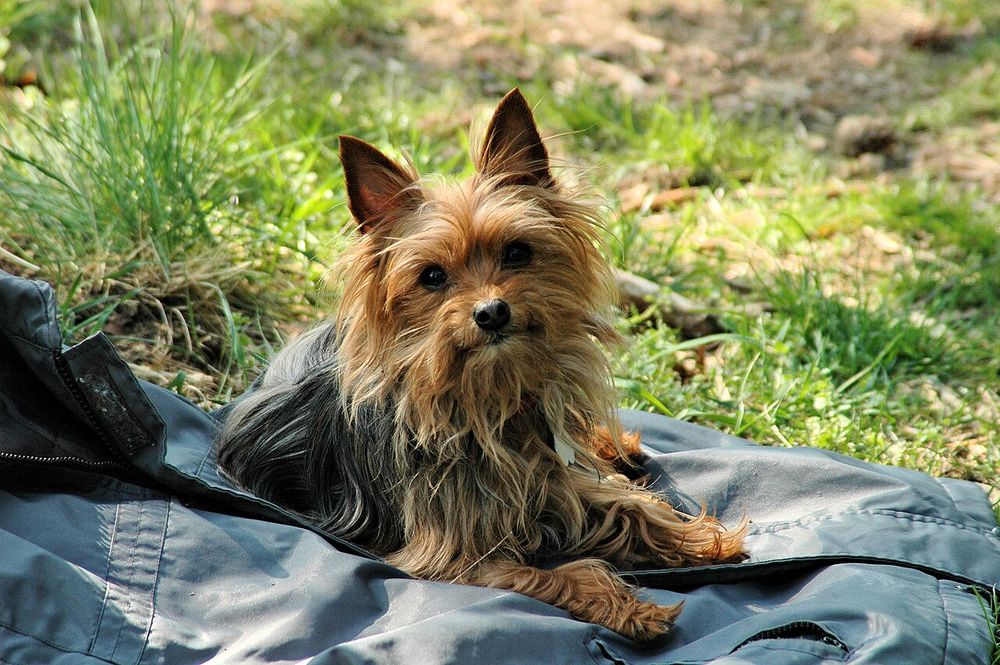
- Long and silky. Puppies are born black and tan and mature to steel blue and tan. The Royal Kennel Club says it does not shed but needs grooming every day.The Royal Kennel Club (UK)
- Energy
- LowThe Royal Kennel Club (UK)
- Indian heat
- Copes with careUFAW Science for Animal Welfare (genetic welfare problems of companion animals)
- Flats
- Suits a flatThe Royal Kennel Club (UK)
Yorkshire Terrier care snapshot
| What | The rule | Source |
|---|---|---|
| Size | Small, suited to a flat or apartment (Royal Kennel Club). | The Royal Kennel Club (UK) |
| Exercise need | Up to 30 minutes a day (Royal Kennel Club). | The Royal Kennel Club (UK) |
| Alone-time tolerance | Not rated by kennel clubs. PDSA advises no more than 4 hours alone for any dog. | PDSA |
| Heat tolerance | Yorkshire Terriers did not have raised odds of heat-related illness compared with Labradors in UK vet records, but heat and humidity worsen tracheal collapse. | Scientific Reports (2020)study |
| Shedding and coat | Long coat that the Royal Kennel Club says does not shed, with grooming every day. | The Royal Kennel Club (UK) |
| Sociability with other dogs | Described in words only: the toy group is described as friendly and loving attention. A Yorkie's size means play with bigger dogs needs supervision. | The Royal Kennel Club (UK) |
Where does the Yorkshire Terrier come from?
The Yorkshire Terrier descends from the old working Black and Tan Terrier, with some Maltese and Skye Terrier blood. The Royal Kennel Club and a 2025 Royal Veterinary College study both trace it to terriers brought from Scotland to Yorkshire by labourers who moved there to work in the mines and cotton mills. It was first used as a ratter.
The FCI standard says the breed was first seen around the 1850s and its name was accepted in 1870. The Royal Kennel Club names a dog called Huddersfield Ben, born in 1865, as its foundation sire. It became popular as a house pet, especially with women, and early shows displayed the dogs on silk cloths or cushions.
How did the Yorkshire Terrier come to India?
No source we found documents when the Yorkshire Terrier first reached India, and we found no Indian breed club or registration figure for it. Imported breeds arrive as personal pets or through breeders: from 25 April 2016 the Directorate General of Foreign Trade barred importing dogs for commercial breeding, and on 6 June 2023 the Madras High Court set that notification aside on a petition by the Kennel Club of India and the Madras Canine Club. The 2025 UK study notes that pet-type Yorkies are often larger than the show standard, so do not worry if yours weighs more than 3.2 kg; ask your vet what is right for its frame.
What care does a Yorkshire Terrier need?
The three things that shape a good day for this breed.
Exercise
Up to 30 minutes a day, says The Royal Kennel Club; PDSA says around 30 to 40 minutes. Use a harness, not a collar, and avoid hot, humid hours, which worsen tracheal collapse. The Royal Kennel Club (UK)
Grooming
Daily grooming (The Royal Kennel Club and PDSA) for the long coat, plus daily tooth brushing: gum disease was the most common problem in UK Yorkies. PDSA
Training
The FCI standard notes the terrier's hunting instinct, whether for a toy indoors or a rodent outside. Short, reward-based sessions suit it; keep play with bigger dogs supervised. UFAW Science for Animal Welfare (genetic welfare problems of companion animals)
How much should a Yorkshire Terrier eat?
Daily calories for a healthy, neutered adult Yorkshire Terrier, worked out from its weight with the formula vets use (70 x weight in kg to the power 0.75, then AAHA's factor for a neutered adult). Divide by the kcal per kg on your food's pack for grams a day, and adjust by body shape.
| Resting need (kcal a day) | Neutered adult (kcal a day) | |
|---|---|---|
| 3.81 kg AAHA (American Animal Hospital Association) | 190 | 270 to 310 |
| 5.2 kg | 240 | 340 to 390 |
| 6.49 kg | 280 | 400 to 460 |
Choose a food labelled complete for your dog's life stage, as WSAVA's guidance advises, and keep treats small: overweight or obesity was recorded in 3.72% of UK Yorkies, and Science for Animal Welfare notes obesity makes tracheal collapse worse. Merck notes that dogs on a regular diet of hard kibble develop fewer dental problems, but daily tooth brushing matters most. Keep onion, garlic, grapes, raisins, tamarind, chocolate, xylitol and cooked bones away; for a dog this size even a small amount matters. Milk can cause diarrhoea. Ask your vet how much to feed; the energy table on this page gives a starting range. Meals a day: 6 to 12 weeks, 4 a day, puppy food; 3 to 6 months, 3 a day, puppy food; 6 to 12 months, 2 a day, puppy food; adult, 1 or 2 a day. Puppies, kittens, working, pregnant and older animals need different amounts: ask your vet, or use Petym's food calculator.
Which illnesses is the Yorkshire Terrier prone to, and how are they treated?
The conditions veterinary studies and breed surveys most often report in the Yorkshire Terrier. Knowing the early signs means a vet sees it sooner.
See your vet first. This is general information from veterinary sources, not a diagnosis. Only a vet who has examined your pet can say what is wrong and prescribe treatment, and this page never gives a dose. Do not give your pet human medicine. If your pet seems very unwell, go to a 24-hour vet: find one in your city.
Gum disease (periodontal disease)
Ask at a routine checkBacterial infection of the tissues holding the teeth. It was recorded in 21.10% of UK Yorkies in 2016, almost twice the rate in dogs overall, and retained puppy teeth were recorded in 3.57%. Companion Animal Health and Genetics (2025), RVC VetCompassstudy
Signs to watch for
- Bad breath
- Red or purple gums that bleed
- Tartar build-up
- Dropping food or chewing on one side
How a vet treats it
A vet checks the bone loss with X-rays of the jaws. Merck says treatment is thorough professional cleaning above and below the gum line under anaesthesia, and extractions are often needed.
Prevention
Daily tooth brushing, which Merck says is the ideal home care, and regular dental checks.
Tracheal collapse
See a vet soonA slowly worsening weakness of the cartilage rings of the windpipe, listed for the Yorkie by Science for Animal Welfare. Heat, humidity, excitement, obesity and collars that press on the throat make it worse. UFAW Science for Animal Welfare (genetic welfare problems of companion animals)
Signs to watch for
- A dry, harsh, honking cough
- Noisy, laboured breathing
- Tiring quickly
- Blue or pale gums or collapse, which is an emergency
How a vet treats it
A vet diagnoses it with X-rays, fluoroscopy or a scope down the windpipe. Treatment includes weight loss, a harness that does not press on the throat, avoiding exercise in hot weather, and medication to suppress coughing, clear mucus and reduce inflammation. Surgery is kept for dogs that cannot be managed otherwise.
Prevention
Keep the dog lean, use a harness, and keep it cool and calm on hot, humid days.
Patellar luxation
See a vet soonThe kneecap slips sideways out of its groove, usually a developmental problem of the whole back leg. Science for Animal Welfare lists it for the Yorkie. UFAW Science for Animal Welfare (genetic welfare problems of companion animals)
Signs to watch for
- Hopping for a few steps with a back leg held up
- Lameness
- Pain in the knee
- A bow-legged stance in severe cases
How a vet treats it
A vet diagnoses it by examining the leg and, in higher grades, with X-rays. Science for Animal Welfare says various surgical procedures correct the deformities, and some dogs need long-term medication for arthritis and pain relief.
Portosystemic shunt
See a vet soonAn abnormal blood vessel that lets blood from the gut bypass the liver, so toxins are not cleared and reach the brain. Science for Animal Welfare lists it for the Yorkie; it is usually present from birth. UFAW Science for Animal Welfare (genetic welfare problems of companion animals)
Signs to watch for
- A puppy that fails to thrive and stays small
- Dullness, trembling, drooling or head-pressing, often worse after meals
- Urinary stones
- Blindness or stupor in severe cases
How a vet treats it
A vet uses a bile acid blood test and an ultrasound scan to find the vessel. Some dogs with mild signs are managed with medication and diet changes; others have surgery to close the shunt slowly, often with a ring placed around the vessel.
Distichiasis
See a vet soonExtra eyelashes growing from the eyelid margin that rub the eye, listed for the Yorkie by Science for Animal Welfare. UFAW Science for Animal Welfare (genetic welfare problems of companion animals)
Signs to watch for
- More blinking or holding the eye half closed
- Watering
- A red eye
- A cloudy, painful cornea in advanced cases
How a vet treats it
A vet examines the lid margins, with magnification if needed. The abnormal hairs are removed under anaesthesia by cryotherapy or electroepilation, sometimes more than once.
How does a Yorkshire Terrier cope when you are away?
Most cope well with a familiar routine and someone at home. What a sitter must manage is the breed's airway, its small size and its coat.
The Royal Kennel Club notes that the Yorkshire Terrier soon became popular as a house pet, and the breed is built for life indoors: small, suited to flats and needing up to 30 minutes of exercise a day. Toy breeds are described as having friendly personalities and loving attention. A Yorkie with a sitter at home, in its own bed and with its own toys, usually carries on as normal.
PDSA's guidance is no more than 4 hours alone at a time for any dog, with a sitter or walker for longer. Barking, whining, trembling or toileting indoors when left can be signs of separation distress, and are worth telling the sitter about before the first day.
The Royal Kennel Club lists no recommended pre-breeding health screening for the breed, which does not mean there is nothing to watch. UFAW's genetic welfare review lists six problems in the breed, from tracheal collapse to a liver blood-vessel defect. A sitter does not need to know them in detail, only what each looks like and when to call.
Which Yorkie health signs should a sitter act on?
The sitter calls the owner and the vet for each of these. Struggling to breathe, blue gums or collapse means the nearest 24-hour vet.
If A dry, harsh, "honking" cough, noisy breathing, or coughing when picked up or when the collar is pulled
These are signs of tracheal collapse. Switch to a harness, calm the dog, move it somewhere cool and call the vet; go now if it struggles to breathe or turns blue. UFAW Science for Animal Welfare (genetic welfare problems of companion animals)
If A hopping gait: a back leg held up for a few steps, then normal walking
This is typical of patellar luxation (a slipping kneecap). Note when it happens and tell the vet. UFAW Science for Animal Welfare (genetic welfare problems of companion animals)
If Dullness, trembling, drooling, head pressing or wobbling that is worse after meals
UFAW lists portosystemic shunt in Yorkies, where signs are often worse after eating. Call the vet the same day; a seizure is an emergency. UFAW Science for Animal Welfare (genetic welfare problems of companion animals)
If Drinking and peeing much more than usual, or weight loss with a good appetite
UFAW lists diabetes mellitus in the breed, and excessive thirst and urination with weight loss are its most common signs. Write down what you see and call the vet. UFAW Science for Animal Welfare (genetic welfare problems of companion animals)
If Watering, squinting or rubbing at the eyes
UFAW lists distichiasis, extra or misplaced eyelashes that rub the eye, in Yorkies; increased blinking is often the first sign. Call the vet the same day. UFAW Science for Animal Welfare (genetic welfare problems of companion animals)
If Limping on a back leg that does not settle
UFAW lists avascular necrosis of the femoral head, a hip problem, in the breed. Rest the dog and call the vet. UFAW Science for Animal Welfare (genetic welfare problems of companion animals)
Why do hot, humid days matter for a Yorkie?
Because UFAW says breathing in dogs with tracheal collapse usually gets worse in hot, humid weather, and Indian summers and monsoons bring many days like that.
UFAW lists excitement, distress, exercise and hot, humid weather as things that make breathing worse in dogs with tracheal collapse, along with obesity, respiratory infections and pressure on the windpipe from a collar or harness. The American College of Veterinary Surgeons adds smoke and other irritants, and recommends a body harness instead of a neck lead. Its owner page also notes that being overweight and living with smokers may increase the risk of signs.
For a sitter that turns into a short list for humid months: walks only in the cooler, drier parts of the day; no pulling on the lead; a cool room with a fan; no smoking, incense or mosquito coils near the dog; calm greetings at the door; and meals measured so the dog stays lean. The monsoon also brings ticks and damp coats, so drying the coat after every wet walk is part of the job.
What does a sitter's day with a Yorkie look like?
Two short harness walks, a daily brush and calm company.
6:30
A short walk on a harness. In summer, test the ground with your palm for 7 seconds first. PDSA
7:30
Breakfast, measured as the owner writes it. Note the dog's behaviour in the hour after eating.
Late morning
Daily brushing right down to the skin, and a check of eyes, ears and paws.
Afternoon
Rest in a cool room; gentle indoor play only. On humid days keep excitement low.
After sunset
A second short walk, then dinner.
Night
Doors and balcony checked, water topped up, and the daily update and photo sent to the owner.
What should a sitter know about feeding a Yorkie?
Measured meals, the owner's times, and a close eye on how the dog is after eating.
Do
- Measure each meal exactly: UFAW and vet surgeons both name obesity as making tracheal collapse worse. UFAW Science for Animal Welfare (genetic welfare problems of companion animals)
- Keep the owner's meal times and number of meals, and log anything left.
- Watch the dog for an hour after meals and note anything unusual, because shunt signs are often worse after eating. UFAW Science for Animal Welfare (genetic welfare problems of companion animals)
- Keep fresh water in a small, stable bowl in every room the dog uses.
Don’t
- Do not share table food; keep chocolate, grapes, raisins, onions and xylitol out of reach. ASPCA Animal Poison Control
- Do not change the food, especially if the owner feeds a vet-prescribed diet.
- Do not give medicines or supplements that are not on the care sheet.
How does Yorkie care change through the Indian year?
Heat, humidity, smoke and crackers each affect the airway.
| Walks | Coat | Airway and other watch-points | |
|---|---|---|---|
| Summer (March to June) India Meteorological Department | Dawn and after dark, short | Daily brushing; ask about a shorter trim | Panting, coughing on warm evenings |
| Monsoon (June to September) UFAW Science for Animal Welfare (genetic welfare problems of companion animals) | Between showers; avoid floodwater | Dry fully after every wet walk | Humid days worsen tracheal collapse; ticks |
| Diwali and wedding season American College of Veterinary Surgeons | Early, before crackers | Normal care | Smoke irritates the airway; keep windows closed in the evening |
| Winter in the north American College of Veterinary Surgeons | Midday walks | Less bathing; dry fully | Smog and heater dryness; ACVS suggests a humidifier when heaters run |
Petym's practical summary from the sources named; heat-wave months follow IMD.
What should a Yorkie's owner leave for the sitter?
Write these down and show the sitter the harness and brushing at the meet and greet, so the first morning runs exactly as it does with you.
- The harness, and a note never to clip the lead to the collar.
- Brushes, combs and the groomer's number.
- Any cough history, medicines and the vet's notes.
- Any special diet and the reason for it.
- A short video of your dog's normal breathing and any usual cough, so the sitter can spot a change.
- Food, amounts, meal times and the vaccination card.
- The regular vet and the nearest 24-hour vet on the city's list.
Which Petym service suits a Yorkshire Terrier?
Most Yorkies do best in their own home with one familiar person.
If You are away overnight or longer
Overnight sitting keeps the routine, the harness rules and the cool room in place. Overnight sitting
If You are out for a working day
Drop-in visits for a short walk, a meal and company. Drop-in visits
If Your Yorkie has tracheal collapse, diabetes or a special diet
Special-needs care, with the vet's plan followed and logged. Special-needs care
Breeds with similar care needs to the Yorkshire Terrier
Going away soon? Tell us your dates.
A checked local sitter feeds, walks and keeps your pet company at home, follows your care sheet to the letter and sends a photo every day. Petym is opening city by city: send your dates and we will tell you when a sitter can take them.
- Meet your sitter first, free
- PAN-checked, first-aid trained
- A photo every day
- Pay through Petym, never cash


Questions owners ask
Why does my Yorkie cough like a goose honking?
- A dry, harsh, honking cough is the classic sign of tracheal collapse, and UFAW says Yorkshire Terriers make up about 65% of reported cases. Excitement, collar pressure, heat and humidity can bring it on. Use a harness, keep the dog calm and see your vet; breathing difficulty is an emergency.
Should a Yorkie wear a collar or a harness?
- A harness for walks. Vet surgeons recommend a body harness instead of a neck lead for dogs with tracheal collapse, and UFAW lists collar pressure among things to avoid. Keep a light ID collar on if your vet agrees, but never clip the lead to it.
How long can a Yorkshire Terrier be left alone?
- PDSA advises no more than 4 hours at a time for any dog. Yorkies are house dogs used to company, so for a full day or a trip, drop-in visits or an overnight sitter keep the routine and keep someone watching for coughing or other changes.
Do Yorkies cope with Indian summers?
- Usually better than flat-faced breeds: Yorkies did not have raised odds of heat-related illness in UK vet records. But UFAW says hot, humid weather worsens tracheal collapse, so walk at dawn and after dark, keep a cool room, and keep excitement low on muggy days.
Does a Yorkie shed?
- The Royal Kennel Club lists the Yorkie coat as long and non-shedding, with grooming every day. A sitter should brush down to the skin daily and dry the coat fully after rain, or mats form quickly and hide ticks and sore skin.
Why does my Yorkie seem odd after eating?
- It could be many things, but UFAW lists portosystemic shunt in Yorkies, a liver blood-flow defect whose signs, such as dullness, trembling, drooling or head pressing, are often worse after meals. Tell your vet, and ask the sitter to log how the dog is after food.
How much exercise does a Yorkie need?
- The Royal Kennel Club gives up to 30 minutes a day. Two short harness walks in the cool hours and gentle play indoors are enough. On hot or humid days, shorten the walks rather than push through, because effort makes breathing harder for dogs with a weak windpipe.
Keep reading
- Caring for a dog while you are away
- Monsoon care for dogs
- Diwali, fireworks and pets
- Overnight pet sitting
- Chihuahua careAnother tiny dog with a cough to know.
- Maltese careA long, non-shedding coat that needs daily care.
Services that help
Free tools for this
Words on this page, explained
Keep exploring
Other dog breeds
- Akita
- Alaskan Malamute
- American Bully
- American Cocker Spaniel
- American Pit Bull Terrier
- Australian Shepherd
- Bakharwal dog
- Basset Hound
- Beagle
- Belgian Malinois
- Bernese Mountain Dog
- Bichon Frise
- Border Collie
- Boston Terrier
- Boxer
- Bull Terrier
- Bulldog
- Bullmastiff
- Cane Corso
- Caucasian Shepherd Dog
- Cavalier King Charles Spaniel
- Chihuahua
- Chippiparai
- Chow Chow
- Cocker Spaniel
- Dachshund
- Dalmatian
- Dobermann
- Dogo Argentino
- English Mastiff
- English Springer Spaniel
- French Bulldog
- Gaddi Kutta (Gaddi dog)
- German Shepherd
- Golden Retriever
- Great Dane
- Greyhound
- Havanese
- Indian pariah dog (Indie)
- Indian Spitz
- Irish Setter
- Jack Russell Terrier
- Kangal
- Kanni
- Kombai
- Labrador Retriever
- Lhasa Apso
- Maltese
- Miniature Pinscher
- Miniature Schnauzer
- Mudhol Hound
- Neapolitan Mastiff
- Newfoundland
- Papillon
- Pekingese
- Pembroke Welsh Corgi
- Pomeranian
- Poodle
- Pug
- Rajapalayam
- Rampur Greyhound
- Rhodesian Ridgeback
- Rottweiler
- Saint Bernard
- Samoyed
- Shar Pei
- Shiba Inu
- Shih Tzu
- Siberian Husky
- Tibetan Mastiff
- Weimaraner
- West Highland White Terrier
- Whippet
Sources
Each source was opened and read on the date shown. How Petym checks its sources
- The Royal Kennel Club (UK): Yorkshire Terrier | Breeds A to Z | The Kennel Club (opens in a new tab)
- UFAW Science for Animal Welfare (genetic welfare problems of companion animals): Yorkshire Terrier: Tracheal Collapse (opens in a new tab)
- Fédération Cynologique Internationale: FCI-Standard No 86: Yorkshire Terrier (6 October 2026) (opens in a new tab)
- Directorate General of Foreign Trade, Ministry of Commerce and Industry: Notification No. 3/2015-2020 (25 April 2016): policy conditions on import of dogs; import of commercial dogs for breeding not permitted (opens in a new tab)
- PDSA: Yorkshire Terrier (opens in a new tab)
- WSAVA Global Nutrition Committee: Guidelines on selecting pet foods (updated 10 March 2021) (opens in a new tab)
Show all 25 sourcesShow fewer
- Merck Veterinary Manual: Dental disorders of dogs (dog owners; full review May 2018, updated October 2025) (opens in a new tab)
- Merck Veterinary Manual: Puppy care (opens in a new tab)
- ASPCA Animal Poison Control: People foods to avoid feeding your pets (opens in a new tab)
- Merck Veterinary Manual: Garlic and onion (Allium spp) toxicosis in animals (opens in a new tab)
- Merck Veterinary Manual: Grape, raisin, and tamarind (Vitis spp, Tamarindus spp) toxicosis in dogs (full review September 2024) (opens in a new tab)
- AAHA (American Animal Hospital Association): 2021 AAHA Nutrition and Weight Management Guidelines for Dogs and Cats: energy requirement calculations (Box 1, PDF) (opens in a new tab)
- Merck Veterinary Manual: Nutritional requirements of small animals (full review November 2023, updated September 2024) (opens in a new tab)
- UFAW Science for Animal Welfare (genetic welfare problems of companion animals): Yorkshire Terrier: Patellar Luxation (opens in a new tab)
- UFAW Science for Animal Welfare (genetic welfare problems of companion animals): Yorkshire Terrier: Portosystemic Shunt (opens in a new tab)
- UFAW Science for Animal Welfare (genetic welfare problems of companion animals): Yorkshire Terrier: Distichiasis (opens in a new tab)
- UFAW Science for Animal Welfare (genetic welfare problems of companion animals): Yorkshire Terrier (conditions listed: avascular necrosis of the femoral head, diabetes mellitus, distichiasis, patellar luxation, portosystemic shunt, tracheal collapse) (opens in a new tab)
- UFAW Science for Animal Welfare (genetic welfare problems of companion animals): Yorkshire Terrier: Diabetes Mellitus (opens in a new tab)
- American College of Veterinary Surgeons: Tracheal Collapse (opens in a new tab)
- PDSA: Heatstroke in dogs (opens in a new tab)
- PDSA: Separation anxiety in dogs (opens in a new tab)
- India Meteorological Department: FAQ on heat wave (opens in a new tab)
- Companion Animal Health and Genetics (2025), RVC VetCompass: Yorkshire Terriers under primary veterinary care in the UK: demography and disorders (opens in a new tab)
- Scientific Reports (2020): Incidence and risk factors for heat-related illness in UK dogs (opens in a new tab)
- SCC Online: Madras High Court sets aside notification banning import of dogs for commercial activities (13 June 2023) (opens in a new tab)