Bullmastiff care in India: heat, bloat and notes for your sitter
Updated By PetymFacts checked against official sources on
Quick answer
A Bullmastiff can stay with a sitter it has met and accepted, if the sitter can handle a very heavy dog. AKC calls it affectionate and docile with family and rates it 5 of 5 protective. The priorities are bloat and heat: dogs of 50 kg and over had the highest heatstroke odds in a UK study.
AKC advises two meals a day for adults and no exercise immediately before or after eating, because of the risk of bloat. A sitter follows that rule every day of the stay.
- Meet your sitter first, free
- PAN-checked, first-aid trained
- A photo every day
- Pay through Petym, never cash

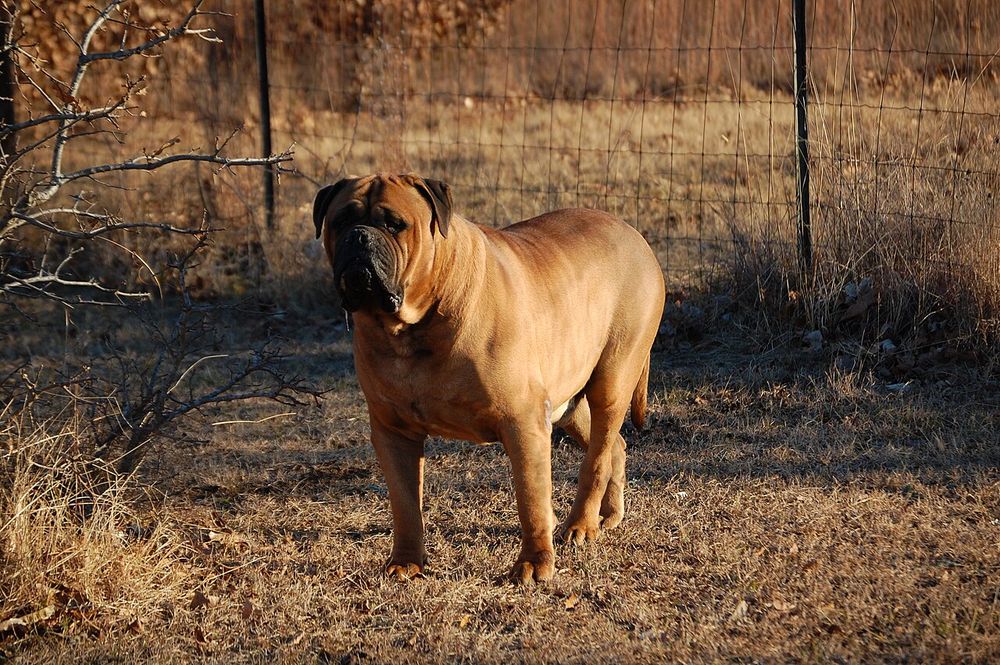
- Origin
- EnglandAmerican Kennel Club
- Adult weight
- 45 to 59 kg (females to males, AKC: males 110 to 130 pounds, females 100 to 120 pounds, converted to kg)American Kennel Club
- Height
- 61 to 69 cm (females to males, AKC: males 25 to 27 inches, females 24 to 26 inches, converted to cm)American Kennel Club
- Lifespan
- 7 to 9 yearsAmerican Kennel Club
- Coat
- Short, with seasonal shedding. Frequent grooming keeps the shedding under control.American Kennel Club
- Energy
- ModerateAmerican Kennel Club
- Indian heat
- Struggles in heatScientific Reports (2020)study
- Flats
- Needs spaceAmerican Kennel Club
Bullmastiff snapshot for a sitter
| What | The rule | Source |
|---|---|---|
| Size | Large, says The Royal Kennel Club. AKC gives 25 to 27 inches and 110 to 130 pounds (about 50 to 59 kg) for males, 24 to 26 inches and 100 to 120 pounds for females. | American Kennel Club |
| Exercise need | More than 2 hours a day, says The Royal Kennel Club. AKC: moderate exercise; a great walking companion, not a running partner. | The Royal Kennel Club |
| Temperament | Powerful, enduring, active and reliable; high-spirited, alert and faithful (FCI standard). | Fédération Cynologique Internationale |
| Guarding and barking | AKC rates protective nature 5 of 5 and barking 1 of 5: a quiet guard. | American Kennel Club |
| Feeding rule | Two meals a day for adults, and no exercise immediately before or after eating, because of bloat risk (AKC). | American Kennel Club |
| Lifespan | AKC gives 7 to 9 years; The Royal Kennel Club says under 10 years. | American Kennel Club |
Where does the Bullmastiff come from?
The Bullmastiff was bred in England from about 1860 as the Gamekeeper's Night Dog. Poachers on the great country estates faced severe penalties if caught, so they were dangerous to confront, and gamekeepers wanted a dog big, fast and brave enough to chase and pin a man in the dark.
AKC says the gamekeepers settled on crossing Mastiffs with Bulldogs, at about 60% Mastiff to 40% Bulldog. The result would work on command and hold an intruder without mauling him. Rivalry between gamekeepers led to competitions, then the show ring: the Kennel Club in England recognised the breed in 1924, and AKC in 1933.
How did the Bullmastiff come to India?
Petym found no official or published source that records when or how the Bullmastiff first came to India, so its arrival is not documented here. Pedigree dogs can be registered with the Kennel Club of India.
The centre's 12 March 2024 list of breeds called ferocious names "Mastiffs (Boerbulls)" without defining it, and does not name the Bullmastiff on its own. The Delhi High Court set that letter aside on 16 April 2024. In Indian summers the breed's size is the main risk: dogs of 50 kg and over had the highest odds of heat-related illness in a large UK study.
What care does a Bullmastiff need?
The three things that shape a good day for this breed.
Exercise
Moderate daily exercise: brisk walks and play in a securely fenced area. AKC says it is a walking companion, not a running partner, and puppies should not be over-exercised while they grow fast. In Indian heat walk only at dawn and after dark. American Kennel Club
Grooming
Regular brushing through the shedding seasons and a bath when needed. Watch the skin for dryness or greasiness, which can come from diet or allergies (AKC). American Kennel Club
Training
Start training and socialisation in puppyhood. AKC says the breed can be strong-willed, so set rules and routines early and keep to them; puppy classes help. American Kennel Club
How much should a Bullmastiff eat?
Daily calories for a healthy, neutered adult Bullmastiff, worked out from its weight with the formula vets use (70 x weight in kg to the power 0.75, then AAHA's factor for a neutered adult). Divide by the kcal per kg on your food's pack for grams a day, and adjust by body shape.
| Resting need (kcal a day) | Neutered adult (kcal a day) | |
|---|---|---|
| 45 kg AAHA (American Animal Hospital Association) | 1220 | 1700 to 1950 |
| 52 kg | 1360 | 1900 to 2170 |
| 59 kg | 1490 | 2090 to 2380 |
AKC says most breeders feed large-breed puppy food, or adult food, so the puppy grows slowly and steadily, and that Bullmastiffs should be kept lean, especially as puppies. Several small meals suit puppies and two meals a day suit adults, so the stomach never has too much to digest at once. Because of bloat, avoid exercise just before and after meals. Large and giant breeds can take almost 2 years to become adults, so ask your vet when to move to adult food. Keep onion, garlic, grapes and raisins, chocolate and xylitol sweets away; ASPCA lists them as harmful. Meals a day: 6 to 12 weeks, 4 a day; 3 to 6 months, 3 a day; 6 to 12 months, 2 a day; adult, 2 a day. Puppies, kittens, working, pregnant and older animals need different amounts: ask your vet, or use Petym's food calculator.
Which illnesses is the Bullmastiff prone to, and how are they treated?
The conditions veterinary studies and breed surveys most often report in the Bullmastiff. Knowing the early signs means a vet sees it sooner.
See your vet first. This is general information from veterinary sources, not a diagnosis. Only a vet who has examined your pet can say what is wrong and prescribe treatment, and this page never gives a dose. Do not give your pet human medicine. If your pet seems very unwell, go to a 24-hour vet: find one in your city.
Bloat (gastric dilatation-volvulus)
Emergency: go to a vet nowThe stomach fills with gas and can twist, cutting off its blood supply. Large, deep-chested dogs are at higher risk, and AKC names it as a risk in Bullmastiffs. American College of Veterinary Surgeons
Signs to watch for
- Retching with nothing coming up
- Restlessness, pacing and drooling
- A swollen, tight belly
- Weakness or collapse
How a vet treats it
This needs a vet straight away. A vet stabilises the dog with fluids and oxygen, lets the gas out of the stomach, and operates to put the stomach back and fix it in place (gastropexy).
Prevention
Two smaller meals a day and no exercise around meals. Ask your vet about a preventive gastropexy, which can be done during spaying or neutering.
Eyelid disorders (entropion and ectropion)
See a vet soonEntropion is an eyelid that rolls in so the lashes rub the eye; ectropion is a lid that droops out. Bullmastiffs had 10.67 times the odds of crossbreds in a UK study, with a typical age at diagnosis of about 2 years. PLOS ONE (2025), Royal Veterinary College VetCompassstudy
Signs to watch for
- A watery or sticky eye
- Squinting
- A red eye or a drooping lower lid
How a vet treats it
A vet may plan medical treatment for the eye first. Many dogs with entropion need surgery to correct the eyelid, such as a Celsus-Hotz procedure, temporary stay stitches or a wedge resection.
Lymphoma
See a vet soonA cancer of the white blood cells. It has a high incidence in Bullmastiffs, and the average age at diagnosis in one study was under 6 years. Veterinary Sciences (2023)study
Signs to watch for
- Fast-growing, painless swellings of the lymph nodes
- Tiredness and weakness
- Poor appetite or weight loss
How a vet treats it
A vet diagnoses it with a needle sample from a swollen lymph node. A vet may advise combination chemotherapy, which puts more than 90% of dogs into remission for a time, and sometimes radiation. It is not usually curable.
Hip dysplasia
Ask at a routine checkA loose hip joint in a growing dog that wears and turns arthritic. It is most common in large breeds, and AKC lists hip and elbow screening for the Bullmastiff. American College of Veterinary Surgeons
Signs to watch for
- Stiffness after rest
- Difficulty rising or jumping
- Limping, or shifting weight onto the front legs
- Muscle loss on the back legs
How a vet treats it
A vet diagnoses it with an examination and X-rays. A vet may advise weight control, controlled exercise, physiotherapy and anti-inflammatory pain relief, and surgery such as a hip replacement for some dogs.
Prevention
Keep the dog lean from puppyhood and buy from screened parents.
Heatstroke
Emergency: go to a vet nowA dangerous rise in body temperature. Dogs of 50 kg and over had the highest odds in a large UK study, and exercise was the main trigger. Scientific Reports (2020)study
Signs to watch for
- Heavy panting that does not settle
- Thick drool, vomiting or diarrhoea
- Wobbling, weakness or collapse
How a vet treats it
Cool the dog with cool water and moving air and go to the vet at once. A vet may cool the dog further, give a fluid drip and oxygen, and test the blood for organ damage.
Prevention
Walk only in the cool hours, keep the dog lean, and give it a cool room all day.
How a Bullmastiff handles a sitter
Gently, once it has accepted the person. It was bred to stop intruders, so the introduction matters.
The Royal Kennel Club says the breed was developed in the 19th century as a guard dog to help gamekeepers deter poachers, and AKC adds that it was bred to track and hold an intruder at bay. Its powerful build, AKC says, hides an affectionate, docile temperament with family. Both things are true for a sitter: a Bullmastiff that knows you is a calm, sweet companion, and one that does not may stand between you and its home.
Use Petym's free meet and greet properly. Walk together first, then hand the lead to the sitter, let the sitter put down a meal, and do a practice arrival at the front door with you inside. AKC says early training and socialisation are critical and that the breed can be quite strong-willed, so tell the sitter the exact commands and routines your dog knows.
AKC rates barking 1 of 5, so a Bullmastiff is unlikely to disturb the neighbours. PDSA's general advice is no more than 4 hours alone at a time for any dog. A big dog left alone for long days in a flat can still be destructive, so plan midday company.
A Bullmastiff's day with a sitter, built around bloat and heat
Petym’s working from the official rules, no government publishes a total.
A sample plan for the hot months, following AKC's feeding advice. Times shift with the season.
Before sunrise
A steady 30 to 40 minute walk on soft ground in shade. Test the road with the back of a hand for seven seconds first. Slow down if breathing gets heavy. The Royal Kennel Club
An hour after the walk
Breakfast, the first of two meals, once the dog has fully cooled and settled. AKC advises no exercise immediately before or after eating. American Kennel Club
After breakfast
Quiet rest in the coolest room. No play, no stairs, no excitement for a good while after the meal.
Midday to late afternoon
Indoors, out of the sun, water in two heavy bowls. Toilet breaks on shaded ground only. Animal Welfare Board of India
After dark
The second walk once the ground has cooled, then a long rest before dinner.
Evening
Dinner, the second meal, then calm time, a wipe of the face and lip folds, and the daily photo update.
Bullmastiff health signs a sitter should report
Notice, write it down, tell the owner, call the vet. The first two are emergencies.
If Restless, pacing, retching with nothing coming up, a swollen or tight belly, drooling, often after a meal. Signs of bloat (GDV), which the American College of Veterinary Surgeons says mainly affects large, deep-chested dogs.
An emergency: go to the nearest 24-hour vet straight away and call the owner on the way. American College of Veterinary Surgeons
If Heavy panting that does not settle in the cool, thick drool, wobbling or collapse. Dogs of 50 kg and over had the highest odds of heat-related illness in a large UK study.
Heatstroke: move the dog somewhere cool, pour cool water over its body, use a fan and go to the vet at once. Scientific Reports (2020)study
If A watery, squinting eye, or an eyelid rolling in or drooping out. Bullmastiffs had 10.67 times the odds of conformational eyelid disorders of crossbreds in a UK study.
Call the vet; rubbing can damage the eye. PLOS ONE (2025), Royal Veterinary College VetCompassstudy
If New lumps or swellings anywhere on the body, tiredness or poor appetite. Lymphoma has a high incidence in Bullmastiffs, with an average age at diagnosis under 6 years in one study.
Not something to wait on: tell the owner and call the vet for a check. Veterinary Sciences (2023)study
If Stiffness after rest, difficulty rising, a limp. AKC lists hip and elbow dysplasia.
Short walks on soft ground, no jumping from cars, and a note for the vet. American Kennel Club
If Tiring quickly, coughing or fainting. AKC lists cardiac disease for the breed.
Call the vet the same day; collapse is an emergency. American Kennel Club
Heat, monsoon and a very heavy dog
In the UK study of heat-related illness, dogs weighing 50 kg or more had 3.42 times the odds of dogs under 10 kg, the highest of any weight group, and dogs at or above their breed's average weight had higher odds again. A male Bullmastiff of AKC's standard weight sits in that top band. Exercise was the main trigger in the study, so in Indian summers the walks move to before sunrise and after dark, and on the India Meteorological Department's heat wave days the evening walk becomes a short toilet break.
A heavy dog also struggles more on stairs, in a lift that is out of order, or in a car without AC. Plan for power cuts: the coolest floor, a battery fan, wet towels to lie on, and water topped up often. The Royal Kennel Club lists a large house and large garden for the breed; in a flat, the dog's space needs to include somewhere cool to stretch out.
In the monsoon, wipe and dry the lip folds and face after drinking and eating, and dry the coat and feet after wet walks. Ticks are common in Indian cities: in a survey of 525 dogs in four Indian cities, ticks were found on 53%. Check the ears, neck, armpits and between the toes after every walk.
Feeding and handling rules for a Bullmastiff
Do
- Feed two measured meals a day for adults, as AKC advises, at the owner's times. American Kennel Club
- Keep the dog lean. AKC says Bullmastiffs should be kept lean, and WSAVA suggests treats stay under about 10% of daily calories. WSAVA
- Use a strong lead and keep the dog close in lifts, corridors and at the society gate.
- Give daily walks. AWBI notes that failing to exercise a dog kept chained or closely confined is cruelty under the PCA Act, 1960. Animal Welfare Board of India
Don’t
- Do not walk, play or excite the dog straight before or after a meal. American Kennel Club
- Do not open the door to strangers with the dog loose in the hall; put it in another room first.
- Do not change the food during the stay; a sudden change can cause diarrhoea. PDSA
- Do not feed chocolate, grapes, raisins, onion, garlic or xylitol. ASPCA Animal Poison Control
Is the Bullmastiff on India's 2024 breed list?
Not by name. The list includes "Mastiffs (Boerbulls)" without saying which mastiffs it means.
The centre's D.O. letter of 12 March 2024, reproduced in Gurugram's municipal order of 23 June 2026, lists breeds an expert committee called ferocious. It names the Boerboel, the Cane Corso, the Fila Brasileiro, the Bandog and "Mastiffs (Boerbulls)", but not the Bullmastiff on its own. Petym found no official text explaining whether "Mastiffs" was meant to include it, so ask your corporation if you live somewhere with a breed rule.
The letter itself was set aside by the Delhi High Court on 16 April 2024, which also recorded that the Karnataka High Court had quashed it on 10 April 2024. Whatever the breed rules where you live, a dog of this size needs a strong lead and a handler who can hold it.
Bullmastiff sitter checklist
- Behaviour notes: visitors at the door, other dogs, food or toy guarding.
- Commands the dog knows, and the words the family uses.
- Meal amounts, the two meal times and the rest rule around meals.
- The cool room and power-cut plan.
- Strong lead, collar or harness, and the walking routes and times.
- Tick prevention product and next due date.
- Bloat and heatstroke signs written on the fridge.
- The vet's number and the nearest 24-hour vet on Petym's city list.
Which Petym service fits a Bullmastiff?
If Your dog guards the home or is wary of strangers
Overnight pet sitting in your home with one sitter it has met. Overnight sitting
If You are out all day on workdays
A dog walker for a midday toilet break and company, keeping the rest rule around meals. Dog walking
If Your dog is older, has joint trouble or a heart condition
Special-needs pet care, with the vet's plan followed and logged. Special-needs care
If Your dog is relaxed with new people and dogs, and it is a cool month
Pet boarding in a sitter's home with space, a cool room and a pet limit. Home boarding
Breeds with similar care needs to the Bullmastiff
Going away soon? Tell us your dates.
A checked local sitter feeds, walks and keeps your pet company at home, follows your care sheet to the letter and sends a photo every day. Petym is opening city by city: send your dates and we will tell you when a sitter can take them.
- Meet your sitter first, free
- PAN-checked, first-aid trained
- A photo every day
- Pay through Petym, never cash


Questions owners ask
Can a Bullmastiff live in Indian heat?
- With real care. In a large UK study, dogs of 50 kg and over had the highest odds of heat-related illness, and overweight dogs had higher odds again. Walk before sunrise and after dark, keep the dog lean, give it a cool room all day and plan for power cuts.
How long do Bullmastiffs live?
- AKC gives a life expectancy of 7 to 9 years, and The Royal Kennel Club says under 10 years. That makes regular vet check-ups and early reporting of lumps, limping or tiredness important for this breed.
How should a sitter feed a Bullmastiff?
- Two measured meals a day for an adult, as AKC advises, with no exercise immediately before or after eating because of the risk of bloat. Keep treats small and the dog lean, and never change the food during a stay.
Is a Bullmastiff aggressive?
- AKC describes an affectionate, docile temperament with family and rates its protective nature 5 of 5. It was bred to guard, so it may be wary of strangers. A meet and greet before the first booking lets the dog accept the sitter calmly.
How long can a Bullmastiff be left alone?
- PDSA's general advice is no more than 4 hours at a time for any dog. Bullmastiffs bark little, but a big, bored dog can be destructive. On long days, arrange a sitter or a midday walk, keeping the rest rule around meals.
Is the Bullmastiff banned in India?
- It is not named on its own in the centre's 12 March 2024 list, which mentions "Mastiffs (Boerbulls)" without defining it. The Delhi High Court set that letter aside in April 2024. Check your city's rules if you live somewhere with a breed order.
Keep reading
Services that help
Free tools for this
Words on this page, explained
Keep exploring
Other dog breeds
- Akita
- Alaskan Malamute
- American Bully
- American Cocker Spaniel
- American Pit Bull Terrier
- Australian Shepherd
- Bakharwal dog
- Basset Hound
- Beagle
- Belgian Malinois
- Bernese Mountain Dog
- Bichon Frise
- Border Collie
- Boston Terrier
- Boxer
- Bull Terrier
- Bulldog
- Cane Corso
- Caucasian Shepherd Dog
- Cavalier King Charles Spaniel
- Chihuahua
- Chippiparai
- Chow Chow
- Cocker Spaniel
- Dachshund
- Dalmatian
- Dobermann
- Dogo Argentino
- English Mastiff
- English Springer Spaniel
- French Bulldog
- Gaddi Kutta (Gaddi dog)
- German Shepherd
- Golden Retriever
- Great Dane
- Greyhound
- Havanese
- Indian pariah dog (Indie)
- Indian Spitz
- Irish Setter
- Jack Russell Terrier
- Kangal
- Kanni
- Kombai
- Labrador Retriever
- Lhasa Apso
- Maltese
- Miniature Pinscher
- Miniature Schnauzer
- Mudhol Hound
- Neapolitan Mastiff
- Newfoundland
- Papillon
- Pekingese
- Pembroke Welsh Corgi
- Pomeranian
- Poodle
- Pug
- Rajapalayam
- Rampur Greyhound
- Rhodesian Ridgeback
- Rottweiler
- Saint Bernard
- Samoyed
- Shar Pei
- Shiba Inu
- Shih Tzu
- Siberian Husky
- Tibetan Mastiff
- Weimaraner
- West Highland White Terrier
- Whippet
- Yorkshire Terrier
Sources
Each source was opened and read on the date shown. How Petym checks its sources
- American Kennel Club: Bullmastiff dog breed information (opens in a new tab)
- The Kennel Club of India: KCI Form C/1: application for registration of a single dog (opens in a new tab)
- Municipal Corporation Gurugram: Office order on registration and control of pet dogs (23 June 2026) (opens in a new tab)
- High Court of Delhi (order downloaded from the court's server, hosted by LiveLaw): Sikander Singh Thakur v. Union of India, W.P.(C) 4374/2024 and connected matters, order of 16 April 2024 (opens in a new tab)
- Merck Veterinary Manual: Puppy care (opens in a new tab)
- ASPCA Animal Poison Control: People foods to avoid feeding your pets (opens in a new tab)
Show all 25 sourcesShow fewer
- American College of Veterinary Surgeons: Gastric dilatation-volvulus (opens in a new tab)
- AAHA (American Animal Hospital Association): 2021 AAHA Nutrition and Weight Management Guidelines for Dogs and Cats: energy requirement calculations (Box 1, PDF) (opens in a new tab)
- Merck Veterinary Manual: Nutritional requirements of small animals (full review November 2023, updated September 2024) (opens in a new tab)
- Merck Veterinary Manual: Malignant lymphoma in dogs (pet owner version) (opens in a new tab)
- American College of Veterinary Surgeons: Canine Hip Dysplasia (opens in a new tab)
- PDSA: Heatstroke in dogs (opens in a new tab)
- The Royal Kennel Club: Bullmastiff: breeds A to Z (opens in a new tab)
- Fédération Cynologique Internationale: FCI standard No. 157: Bullmastiff (8 September 2026) (opens in a new tab)
- India Meteorological Department: FAQ on heat wave (opens in a new tab)
- PDSA: Separation anxiety in dogs (opens in a new tab)
- WSAVA: Frequently asked questions and myths (Global Nutrition Committee) (opens in a new tab)
- PDSA: Diarrhoea after a change of food (opens in a new tab)
- Animal Welfare Board of India: Request to ensure care and protection of animals from direct heat during extreme hot weather (4 May 2026) (opens in a new tab)
- The Royal Kennel Club: The danger of hot pavements (opens in a new tab)
- Animal Welfare Board of India: Circular and guidelines for pet owners (1 June 2020) (opens in a new tab)
- Scientific Reports (2020): Incidence and risk factors for heat-related illness in UK dogs (opens in a new tab)
- PLOS ONE (2025), Royal Veterinary College VetCompass: Conformational eyelid disorders in dogs under primary veterinary care in the UK: epidemiology and clinical management (opens in a new tab)
- Veterinary Sciences (2023): Genomic analysis of lymphoma risk in Bullmastiff dogs (abstract read) (opens in a new tab)
- Parasites & Vectors (2011): A survey of canine tick-borne diseases in India (opens in a new tab)