Labrador care in India: heat, food drive and alone time
Updated By PetymFacts checked against official sources on
Quick answer
Most Labradors cope well with a sitter because they are friendly and food motivated. They struggle with long, empty days: The Royal Kennel Club puts their exercise need at more than 2 hours a day. A sitter must walk them in the cool early morning and evening, measure every meal and keep food out of reach.
Labradors are India's most registered breed in the one city figure we found: 3,939 of 19,756 dogs registered in Ahmedabad, as reported in August 2026. That popularity means many Labs live in flats, so the plan below is written for a flat with a housing society compound, not a farmhouse with a lawn.
- Meet your sitter first, free
- PAN-checked, first-aid trained
- A photo every day
- Pay through Petym, never cash

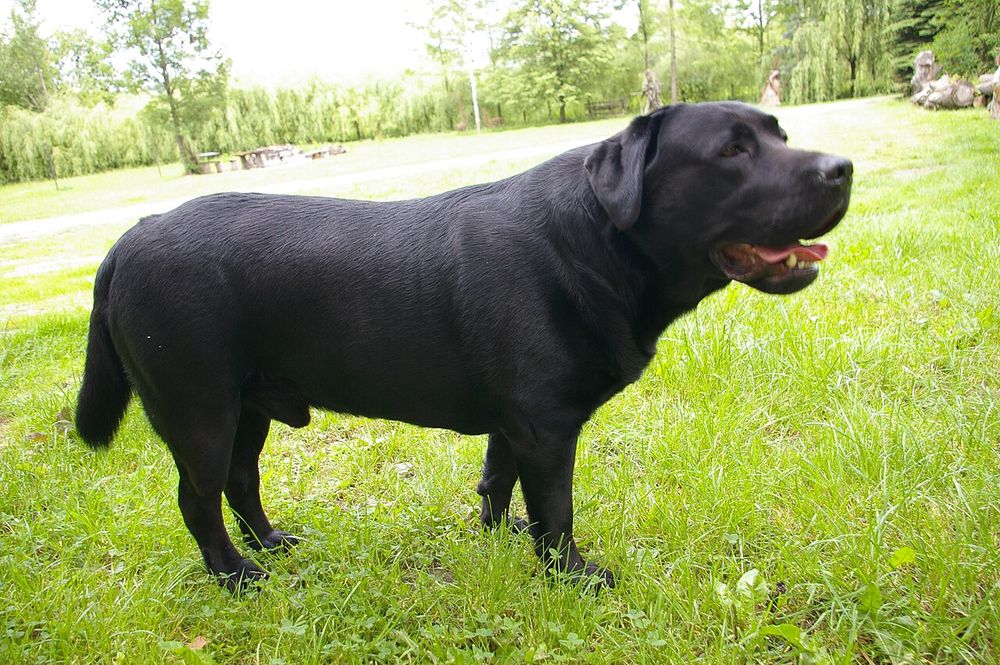
- Origin
- Newfoundland, Canada, developed as a breed in Great BritainThe Royal Kennel Club
- Adult weight
- 25 to 36 kg (AKC: males 65 to 80 lb (about 29 to 36 kg), females 55 to 70 lb (about 25 to 32 kg). The FCI standard gives height only. In a UK VetCompass study, adult males averaged 35.2 kg and females 30.4 kg.)American Kennel Club
- Height
- 54 to 57 cm (FCI ideal height at the withers: males 56 to 57 cm, females 54 to 56 cm.)Fédération Cynologique Internationale
- Lifespan
- 11 to 13 yearsAmerican Kennel Club
- Coat
- Short, dense and without wave or feathering, with a fairly hard feel and a weather-resistant undercoat. Wholly black, yellow (light cream to fox red) or liver/chocolate. AKC says the double coat sheds.Fédération Cynologique Internationale
- Energy
- HighAmerican Kennel Club
- Indian heat
- Copes with carePDSA
- Flats
- A flat, with daily exerciseThe Royal Kennel Club
Labrador snapshot for a sitter
| What | The rule | Source |
|---|---|---|
| Size | Large. AKC gives a height of 22.5 to 24.5 inches for males and 21.5 to 23.5 inches for females. | American Kennel Club |
| Exercise need | More than 2 hours a day, says The Royal Kennel Club. AKC calls the breed exuberant and very energetic. | The Royal Kennel Club |
| Alone-time tolerance | No kennel club scores this. PDSA's general advice is that dogs should not be left alone for more than 4 hours at a time; for longer, arrange a sitter or walker. | PDSA |
| Heat tolerance | The baseline breed in a large UK heatstroke study: most breeds were compared against the Labrador. Dogs at or above their breed's average weight had higher odds of heat-related illness. | Scientific Reports (2020)study |
| Coat and shedding | Short coat that sheds; grooming about once a week. | The Royal Kennel Club |
| With other dogs | AKC rates the breed at the top of its scale (5 of 5) for getting on with other dogs. Every dog is still an individual: introduce new dogs slowly. | American Kennel Club |
Where does the Labrador Retriever come from?
The Labrador's roots are in Newfoundland, on Canada's Atlantic coast, where the Royal Kennel Club says dogs helped fishermen retrieve nets and lines. AKC says the island's mixed working dogs became known as St. John's dogs, after the capital; the larger ones became the Newfoundland and the smaller ones the Labrador. The FCI standard notes the breed's weather-resistant coat and thick otter tail, both suited to a water dog.
Canadian sailors sold St. John's dogs in England, AKC says, and the Earl of Malmesbury, who saw them working at Poole, set up a breeding programme at his Heron Court estate for duck shooting. The Royal Kennel Club credits him with giving the breed its name. The FCI says Colonel Peter Hawker and the Earl introduced it to Britain, where it found early fame in field trials; a dog called Malmesbury Tramp is described as one of the tap roots of the modern Labrador.
Compared with many breeds the Labrador is young. Its first breed club was founded in 1916 and the Yellow Labrador Club in 1925. The FCI standard asks for a good-tempered, adaptable, devoted companion with an excellent nose, a soft mouth and a love of water, with no trace of aggression or undue shyness.
How did the Labrador Retriever come to India?
No source we found records when the first Labradors came to India, so its arrival is not documented. Today it is a common pet: in Ahmedabad's 2026 pet registration drive, Labradors were the largest group, 3,939 of 19,756 registered dogs, ahead of German Shepherds, Shih Tzus and Golden Retrievers.
Labradors also work here. In July 2024, when landslides struck Wayanad in Kerala, the Army sent a canine squad of Belgian Malinois, Labradors and German Shepherds from the Remount Veterinary Corps Centre in Meerut to search for people trapped under the mud.
What care does a Labrador Retriever need?
The three things that shape a good day for this breed.
Exercise
The Royal Kennel Club gives more than two hours a day, and AKC calls the Labrador an exuberant, very energetic breed that may turn hyperactive or destructive without enough exercise. In a flat, that means two long outings in the cool hours plus retrieving games; it loves to swim. The Royal Kennel Club
Grooming
Groom once a week, the Royal Kennel Club says. AKC adds occasional baths, regular nail trims and frequent tooth brushing. Dry the ears after swimming or a monsoon walk, since ear infections are the commonest problem in the breed. American Kennel Club
Training
AKC says early socialisation between 7 weeks and 4 months and puppy classes are vital for such a strong, energetic dog. The FCI describes it as intelligent, keen and biddable, with a strong will to please, so reward-based training works well; use part of the day's food as treats. Fédération Cynologique Internationale
How much should a Labrador Retriever eat?
Daily calories for a healthy, neutered adult Labrador Retriever, worked out from its weight with the formula vets use (70 x weight in kg to the power 0.75, then AAHA's factor for a neutered adult). Divide by the kcal per kg on your food's pack for grams a day, and adjust by body shape.
| Resting need (kcal a day) | Neutered adult (kcal a day) | |
|---|---|---|
| 25 kg AAHA (American Animal Hospital Association) | 780 | 1100 to 1250 |
| 30.5 kg | 910 | 1270 to 1450 |
| 36 kg | 1030 | 1440 to 1650 |
Weight is the Labrador's feeding issue. A Cambridge study found a POMC gene deletion in Labradors linked with higher body weight and greater food motivation, and overweight or obesity was the second most common problem in a UK VetCompass study. AKC advises a high-quality food suited to the dog's age, commercial or home-prepared with your vet's approval, watching calories and treats, and fresh water at all times. The Merck Veterinary Manual warns that excess calcium harms growing large-breed puppies, so add no supplements unless the vet prescribes them. Measure every meal and count treats, roti and leftovers in the day's food. Keep onion, garlic, grapes, chocolate, salty snacks, milk and cooked bones away from a Labrador's ever-hungry mouth, all on ASPCA's list of foods to avoid. As a large, deep-chested dog it can get bloat, and ACVS advises two or three smaller meals a day rather than one large one. Meals a day: 6 to 12 weeks, 4 a day; 3 to 6 months, 3 a day; 6 to 12 months, 2 a day; adult, 2 a day, as smaller meals rather than one large one. Puppies, kittens, working, pregnant and older animals need different amounts: ask your vet, or use Petym's food calculator.
Which illnesses is the Labrador Retriever prone to, and how are they treated?
The conditions veterinary studies and breed surveys most often report in the Labrador Retriever. Knowing the early signs means a vet sees it sooner.
See your vet first. This is general information from veterinary sources, not a diagnosis. Only a vet who has examined your pet can say what is wrong and prescribe treatment, and this page never gives a dose. Do not give your pet human medicine. If your pet seems very unwell, go to a 24-hour vet: find one in your city.
Overweight and obesity
Ask at a routine checkToo much body fat, linked by PDSA with arthritis, diabetes, breathing problems, heatstroke and a shorter life. PDSA names Labradors among breeds more prone to weight gain, and a POMC gene deletion common in the breed raises appetite and body weight. PDSA
Signs to watch for
- Ribs hard to feel under a light touch
- No visible waist from above or the side
- A belly that bulges instead of tucking up
- Fat building up at the base of the tail
How a vet treats it
A vet weighs the dog and scores its body condition, and checks for a medical cause. Treatment is a weight loss plan made for the dog: often a special weight reduction food, measured carefully, fewer treats, more suitable exercise and regular weigh-ins.
Prevention
Weigh the dog regularly, limit treats and adjust food after neutering, which PDSA says can lower calorie needs.
Ear infection (otitis externa)
See a vet soonInflammation of the outer ear canal from bacteria, yeast, mites, allergies or trapped objects. It was the most common disorder in a UK study of Labradors, recorded in 10.4% in a year, and more common in chocolate dogs. Canine Genetics and Epidemiology (2018), RVC VetCompassstudy
Signs to watch for
- Head shaking and scratching at the ear
- A bad smell
- Redness, swelling or discharge
- A painful or itchy ear
How a vet treats it
Merck says a vet examines the canal with an otoscope and checks a swab under a microscope, then cleans and dries the ear. Ear drops that often combine antibiotics, antifungals and anti-inflammatories are the main treatment, with medicine by mouth or injection for severe or long-term cases, and rechecks until it clears.
Prevention
Check the ears regularly, keep them dry after swimming and baths, and clean them only as the vet directs. Merck warns against home remedies such as vinegar mixtures.
Hip and elbow dysplasia and joint disease
See a vet soonAbnormally formed joints that lead to arthritis. The Royal Kennel Club lists hip and elbow scoring among the tests for Labrador breeding stock, and degenerative joint disease was the third most common disorder in the VetCompass study, with musculoskeletal disorders the leading recorded cause of death. The Royal Kennel Club
Signs to watch for
- Lameness that is worse after exercise
- A bunny-hopping gait
- Stiffness on getting up
- Reluctance to climb stairs or jump
How a vet treats it
A vet diagnoses it with an examination and X-rays. Merck lists weight reduction, limiting exercise on hard surfaces, physiotherapy, anti-inflammatory drugs and joint fluid modifiers, and surgery up to a total hip replacement.
Prevention
Choose a puppy whose parents have hip and elbow scores, keep the dog lean, and do not let it grow too fast.
Bloat (gastric dilatation-volvulus, GDV)
Emergency: go to a vet nowThe stomach fills with food and gas and may twist on itself. AKC notes that, like other large, deep-chested dogs, Labradors can develop this life-threatening condition. American Kennel Club
Signs to watch for
- Restlessness and stretching
- Drooling
- A swollen belly
- Retching without bringing anything up
- Later, weakness and collapse
How a vet treats it
ACVS says a vet confirms it with abdominal X-rays, stabilises the dog with IV fluids and oxygen, decompresses the stomach with a tube, and operates to untwist it and attach it to the body wall (gastropexy).
Prevention
ACVS advises two or three smaller meals a day rather than one large one, and a preventive gastropexy for at-risk dogs, often at spay or neuter.
How long can a Labrador be left alone?
Plan for no more than about 4 hours alone at a stretch, and less for a young Lab.
PDSA advises that dogs should not be left alone for more than 4 hours at a time, and that a pet sitter or dog walker should cover longer gaps. A Labrador is a working retriever bred to be with people all day, so a long, quiet day alone in a flat is hard on it. Boredom shows as chewing, raiding bins and barking, and true separation distress shows as howling, drooling, panting, trembling or toileting indoors.
The Animal Welfare Board of India reminds owners that dogs have small bladders and need walks for their physical and mental health, and that keeping a dog in close confinement without exercise can be an offence of cruelty under Section 11(1)(g) of the Prevention of Cruelty to Animals Act, 1960. For a working owner that means a midday break: a sitter's visit or a walk between the morning and evening outings.
If your Lab already shows distress when you leave, tell the sitter at the meet and greet and talk to your vet before the trip. PDSA's advice is to work with a qualified behaviourist rather than punish the dog.
A Labrador's walking day in Indian heat
Petym’s working from the official rules, no government publishes a total.
A sample plan for a sitter in the hot months. Shift the times with the sunrise in your city, and skip the midday walk on very hot days.
Soon after sunrise
The main walk, 45 to 60 minutes, while the road is still cool. Sniffing, retrieving a ball in a shaded patch and a little training count as exercise too.
After the walk
Breakfast, measured from the owner's plan, once the dog has calmed down and its breathing is back to normal.
Late morning to afternoon
Indoors in the coolest room with water in two bowls. A chew or a food puzzle toy from the day's measured food keeps a Lab busy without extra calories.
Midday
A short toilet break only, in shade. Press your palm on the ground for 7 seconds: if it is too hot for your hand, it is too hot for paws (PDSA's test).
After sunset
The second long walk or a run in the society compound once the ground has cooled. Dinner afterwards, again measured.
Before bed
A short toilet walk, fresh water, and the day's notes and photo for the owner.
What changes for a Labrador through the Indian year
| Hot months (March to May) | Monsoon (June to September) | Cooler months (October to February) | |
|---|---|---|---|
| Walks | Early morning and after dark only; shorter, slower walks | Walk between showers; avoid floodwater and stagnant puddles | The best season for long walks and games of fetch |
| Coat and skin | Weekly brush; never shave a Lab | Dry the coat, armpits and paws after every wet walk | Weekly brush; heavier shedding at the change of season is normal |
| Ears | Check after swims or baths | Check daily: damp, warm ears are where trouble starts | Weekly check |
| Watch for | Heavy panting, drooling, slowing down | Ticks after every walk; limping or licking a paw | Weight creeping up during festival sweets season |
Petym's practical plan from the sources on this page. India's seasons differ by city: Chennai and Bengaluru are not Delhi.
Feeding a Labrador while you are away
The hard part is not what to feed but stopping the Lab eating everything else.
Labradors are famously food driven, and there is a reason. A University of Cambridge study found a deletion in the POMC gene in about 12% of the pet Labradors studied, linked with higher body weight and greater food motivation. Overweight or obesity was one of the most common problems recorded in UK Labradors, at 8.8%. So a sitter should feed exactly what the owner's plan says, by measure, not by how hungry the dog looks.
WSAVA's nutrition committee says treats should make up no more than about 10% of a dog's daily calories, and suggests low-calorie choices such as melon, watermelon, apple or carrot for a dog that is always hungry. If your Lab eats home-cooked food such as rice, roti and curd, write down the amounts. If the dog eats a commercial food, leave enough of the same food for the whole stay plus a few days: a sudden change can cause diarrhoea.
Feeding rules to leave for the sitter
Do
- Weigh or measure every meal, using the cup or scoop the owner uses.
- Count treats and chews as part of the day's food; keep them to about a tenth of the daily calories. WSAVA
- Keep bins, the kitchen counter and guests' bags out of reach. Labs steal food.
- Leave water in two bowls, one in the coolest room, and refill it through the day. Animal Welfare Board of India
Don’t
- No chocolate, grapes or raisins, onion or garlic, or anything sweetened with xylitol. ASPCA Animal Poison Control
- No mithai, salty namkeen or leftovers from the table, even during a festival. ASPCA Animal Poison Control
- Do not switch the food during the stay; a change of food can upset the stomach. PDSA
- Do not feed straight before or after hard exercise in the heat; let the dog cool down first.
Labrador health problems a sitter should know
None of these is the sitter's to treat. The sitter's job is to notice early, tell the owner and call the vet.
If Ear infection: head shaking, a bad smell, redness, discharge or scratching at the ear. Otitis externa was the most common problem in UK Labradors, at 10.4%.
Tell the owner the same day and call the vet. Do not put anything in the ear unless the vet has shown how. Canine Genetics and Epidemiology (2018), RVC VetCompassstudy
If Limping, stiffness after rest or a bunny-hopping gait. Science for Animal Welfare lists elbow dysplasia and cranial cruciate ligament rupture among the breed's inherited problems, and hip dysplasia is a disorder of large dogs.
Stop the walk, rest the dog and call the vet. Avoid long runs on hard roads. Science for Animal Welfare (formerly UFAW)
If Heatstroke: heavy panting, drooling, weakness, vomiting or collapse after exercise or in a hot room.
Move the dog to shade, pour cool water over the body away from the face, create a breeze and call the vet straight away. PDSA
If Swollen belly, retching with nothing coming up, restlessness after a big meal. This can be bloat (GDV), which affects large, deep-chested dogs.
This is an emergency: go to the nearest 24-hour vet now. American College of Veterinary Surgeons
If Itchy, red skin or constant licking of paws. Canine atopic dermatitis is on the breed's list of genetic welfare problems.
Note when it started, tell the owner and ask the vet. Science for Animal Welfare (formerly UFAW)
Heat, ticks and the monsoon: India-specific notes
In the UK heatstroke study, exercise caused most cases of heat-related illness, not parked cars, and heavier dogs had higher odds. For a Lab in Delhi, Ahmedabad or Hyderabad in May that means the long walk happens at dawn, and the evening walk waits until the road has cooled. The India Meteorological Department declares a heat wave in the plains when a station's maximum reaches at least 40 °C, and publishes colour-coded warnings at mausam.imd.gov.in: a sitter can check them before planning the day.
Ticks are a year-round problem for Indian dogs. In a survey of 525 dogs in four Indian cities, about half carried at least one tick-borne infection and ticks were found on 53% of the dogs examined. A sitter should run their hands over the Lab after every walk, checking ears, neck, between the toes and under the tail, and remove ticks with tweezers close to the skin, never with bare hands. Tick fever needs a vet.
Labrador sitter checklist
Leave this with the sitter, alongside the pet care sheet.
- Meal amounts written in cups or grams, meal times, and the treat allowance for the day.
- Where the food is stored, and a lock or high shelf for it.
- Walk times and routes, and which parts of the society compound stay shaded.
- Any vet-prescribed medicines, written exactly as the label says, with the times. The sitter logs each one.
- Tick prevention: the product and the date it is next due.
- The vet's number and the nearest 24-hour vet on Petym's city list.
- Known triggers: firecrackers, thunder, other dogs, the doorbell.
- House rules: sofa or no sofa, where the dog sleeps, and the balcony door rule.
Which Petym service suits a Labrador?
For most Labradors, a sitter who stays in your home works best: the routine, the food store and the cool room stay the same.
Best fit
Overnight pet sitting
The sitter stays in your home, keeps the walking times and the measured meals, and sends a daily photo update.
Dog walking
For a working day: a midday walk or toilet break so your Lab is not alone for more than about 4 hours.
Pet boarding
Your Lab stays in a sitter's home that has passed Petym's home video walk-through and has the society's permission to host.
Doggy day care
For a social young Lab with energy to burn on a day you are out.
Breeds with similar care needs to the Labrador Retriever
Going away soon? Tell us your dates.
A checked local sitter feeds, walks and keeps your pet company at home, follows your care sheet to the letter and sends a photo every day. Petym is opening city by city: send your dates and we will tell you when a sitter can take them.
- Meet your sitter first, free
- PAN-checked, first-aid trained
- A photo every day
- Pay through Petym, never cash


Questions owners ask
Can a Labrador live in a flat in India?
- Yes, if it gets enough exercise. The Royal Kennel Club puts a Labrador's need at more than 2 hours a day, so a flat works when someone walks the dog in the cool early morning and evening and adds play and training in between. The society compound, stairs and shaded lanes all help.
How long can I leave my Labrador alone at home?
- PDSA's general advice is no more than 4 hours at a time, with a sitter or walker for longer gaps. Labradors are people dogs bred to work alongside a handler, so long days alone often lead to chewing, bin raiding or barking. Book a midday visit or walk on long working days.
Are Labradors good in Indian summers?
- They cope better than flat-faced or heavily coated breeds, but they still overheat. In a large UK study, exercise caused most heat-related illness and heavier dogs had higher odds. Walk your Lab at dawn and after dark in the hot months, keep it lean, and never leave it in a parked car.
Why is my Labrador always hungry?
- Partly genetics. A Cambridge study found a POMC gene deletion in about 12% of pet Labradors studied, linked with higher weight and stronger food motivation. That is why a sitter should measure every meal, count treats, and keep food and bins out of reach rather than feed a dog that looks hungry.
Should I shave my Labrador in summer?
- No. Texas A&M's veterinary college says a dog's coat works as natural insulation that helps it regulate its temperature, and that fully shaving is not usually needed unless the coat is matted. Brush weekly to remove loose hair, keep the dog in a cool room and walk in the cool hours.
What health problems should my Lab's sitter watch for?
- Ear infections, which were the most common problem in UK Labradors, limping or stiffness from joint problems, itchy skin, weight gain and heatstroke. A swollen belly with retching after a meal can be bloat, an emergency. The sitter's job is to notice, tell you and call the vet.
Do Labradors get along with other dogs in boarding?
- Usually. AKC rates the breed at the top of its scale for getting on with other dogs. A boisterous young Lab can still overwhelm a small or older dog, so a home sitter should introduce dogs slowly and keep a quiet space for each.
Keep reading
- Dog care hubEverything Petym covers for dogs.
- How long can you leave a dog alone?
- Heatstroke in dogsSigns and first steps.
- What to leave for your pet sitter
- Overnight pet sitting
- Golden Retriever careThe Lab's longer-coated cousin.
Services that help
Free tools for this
Words on this page, explained
Keep exploring
Other dog breeds
- Akita
- Alaskan Malamute
- American Bully
- American Cocker Spaniel
- American Pit Bull Terrier
- Australian Shepherd
- Bakharwal dog
- Basset Hound
- Beagle
- Belgian Malinois
- Bernese Mountain Dog
- Bichon Frise
- Border Collie
- Boston Terrier
- Boxer
- Bull Terrier
- Bulldog
- Bullmastiff
- Cane Corso
- Caucasian Shepherd Dog
- Cavalier King Charles Spaniel
- Chihuahua
- Chippiparai
- Chow Chow
- Cocker Spaniel
- Dachshund
- Dalmatian
- Dobermann
- Dogo Argentino
- English Mastiff
- English Springer Spaniel
- French Bulldog
- Gaddi Kutta (Gaddi dog)
- German Shepherd
- Golden Retriever
- Great Dane
- Greyhound
- Havanese
- Indian pariah dog (Indie)
- Indian Spitz
- Irish Setter
- Jack Russell Terrier
- Kangal
- Kanni
- Kombai
- Lhasa Apso
- Maltese
- Miniature Pinscher
- Miniature Schnauzer
- Mudhol Hound
- Neapolitan Mastiff
- Newfoundland
- Papillon
- Pekingese
- Pembroke Welsh Corgi
- Pomeranian
- Poodle
- Pug
- Rajapalayam
- Rampur Greyhound
- Rhodesian Ridgeback
- Rottweiler
- Saint Bernard
- Samoyed
- Shar Pei
- Shiba Inu
- Shih Tzu
- Siberian Husky
- Tibetan Mastiff
- Weimaraner
- West Highland White Terrier
- Whippet
- Yorkshire Terrier
Sources
Each source was opened and read on the date shown. How Petym checks its sources
- The Royal Kennel Club: Retriever (Labrador): breed information (opens in a new tab)
- American Kennel Club: Labrador Retriever dog breed information (opens in a new tab)
- Fédération Cynologique Internationale: FCI-Standard No 122: Labrador Retriever (opens in a new tab)
- PDSA: Heatstroke in dogs (opens in a new tab)
- American Kennel Club: Labrador Retriever history: from Newfoundland's St. John's dog to England (opens in a new tab)
- Merck Veterinary Manual: Nutritional requirements of small animals (full review November 2023, updated September 2024) (opens in a new tab)
Show all 28 sourcesShow fewer
- Merck Veterinary Manual: Puppy care (opens in a new tab)
- ASPCA Animal Poison Control: People foods to avoid feeding your pets (opens in a new tab)
- American College of Veterinary Surgeons: Gastric dilatation-volvulus (opens in a new tab)
- AAHA (American Animal Hospital Association): 2021 AAHA Nutrition and Weight Management Guidelines for Dogs and Cats: energy requirement calculations (Box 1, PDF) (opens in a new tab)
- PDSA: Obesity in dogs (opens in a new tab)
- Merck Veterinary Manual: Ear infections and otitis externa in dogs (opens in a new tab)
- Merck Veterinary Manual: Hip dysplasia (dog owners) (opens in a new tab)
- PDSA: Separation anxiety in dogs (opens in a new tab)
- Animal Welfare Board of India: Circular and guidelines for pet owners (1 June 2020) (opens in a new tab)
- WSAVA: Frequently asked questions and myths (Global Nutrition Committee) (opens in a new tab)
- PDSA: Diarrhoea after a change of food (opens in a new tab)
- India Meteorological Department: FAQ on heat wave (opens in a new tab)
- Merck Veterinary Manual: Ticks of dogs (opens in a new tab)
- Texas A&M College of Veterinary Medicine (Pet Talk, 16 June 2022): Time for a summer cut? Tips for warm weather dog grooming (opens in a new tab)
- Animal Welfare Board of India: Request to ensure care and protection of animals from direct heat during extreme hot weather (4 May 2026) (opens in a new tab)
- Science for Animal Welfare (formerly UFAW): Labrador Retriever: genetic welfare problems (opens in a new tab)
- Canine Genetics and Epidemiology (2018), RVC VetCompass: Labrador retrievers under primary veterinary care in the UK: demography, mortality and disorders (abstract read) (opens in a new tab)
- Cell Metabolism (2016), University of Cambridge: A deletion in the canine POMC gene is associated with weight and appetite in obesity-prone Labrador Retriever dogs (opens in a new tab)
- Scientific Reports (2020): Incidence and risk factors for heat-related illness in UK dogs (opens in a new tab)
- Parasites & Vectors (2011): A survey of canine tick-borne diseases in India (opens in a new tab)
- Telangana Today (IANS): Ahmedabad registers nearly 20,000 pet dogs; Labradors remain the city's most popular breed (5 Aug 2026) (opens in a new tab)
- The Tribune: Army dogs that can sniff out life from under mud to be deployed in Wayanad (30 July 2024) (opens in a new tab)