A sitter's plan for a Border Collie: exercise, brain work and heat
Updated By PetymFacts checked against official sources on
Quick answer
A Border Collie copes with a sitter only if its body and mind are kept busy. The sitter needs to fit more than two hours of activity into the cool hours, add daily training and puzzle games, never give any human medicine, and know what a seizure looks like.
The Royal Kennel Club says the breed's natural activity and intelligence mean it needs to be engaged to lead a fulfilled life. UFAW names the Border Collie among breeds with a particularly high incidence of idiopathic epilepsy.
- Meet your sitter first, free
- PAN-checked, first-aid trained
- A photo every day
- Pay through Petym, never cash

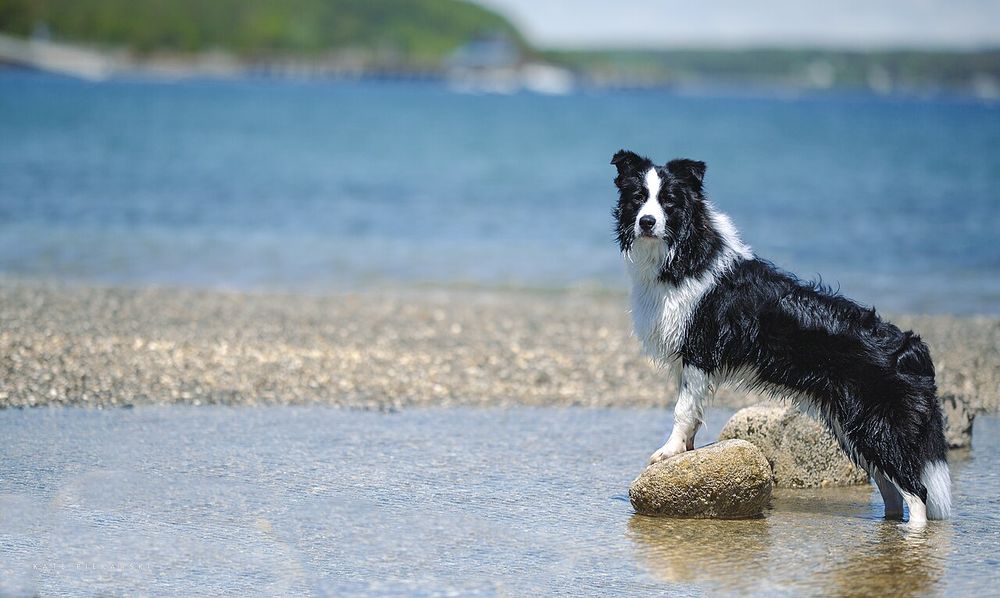
- Origin
- The border country of England, Scotland and WalesThe Royal Kennel Club (UK)
- Adult weight
- 13.6 to 24.9 kg (AKC's 30 to 55 pounds, converted)American Kennel Club
- Height
- 45.7 to 55.9 cm (females to males, AKC: 18 to 21 inches for females and 19 to 22 inches for males, converted; the FCI ideal is 53 cm for males)American Kennel Club
- Lifespan
- 12 to 15 yearsAmerican Kennel Club
- Coat
- A dense, weather-resistant double coat in two types: rough (medium length and feathered) or smooth (shorter and coarser).American Kennel Club
- Energy
- Very highThe Royal Kennel Club (UK)
- Indian heat
- Copes with careScientific Reports (2020)study
- Flats
- Needs spaceThe Royal Kennel Club (UK)
Border Collie care snapshot
| What | The rule | Source |
|---|---|---|
| Size | Medium; the FCI standard gives an ideal height of 53 cm for males, females slightly less. The Royal Kennel Club suits it to a small house. | Fédération Cynologique Internationale |
| Exercise need | More than 2 hours a day (Royal Kennel Club). | The Royal Kennel Club (UK) |
| Alone-time tolerance | Not rated by kennel clubs. PDSA advises no more than 4 hours alone for any dog; the Royal Kennel Club stresses that this breed needs to be engaged. | PDSA |
| Heat tolerance | Border Collies did not have raised odds of heat-related illness compared with Labradors in UK vet records, but exercise caused most heatstroke cases, and collies love to keep going. | Scientific Reports (2020)study |
| Shedding and coat | Moderately long or smooth topcoat with a soft, dense undercoat (FCI); sheds, grooming more than once a week (Royal Kennel Club). | The Royal Kennel Club (UK) |
| Sociability with other dogs | Described in words only: the FCI standard calls the breed keen, alert, responsive and intelligent, neither nervous nor aggressive. Ask the owner how this dog plays with others. | Fédération Cynologique Internationale |
Where does the Border Collie come from?
The Border Collie takes its name from the border regions of England, Scotland and Wales, where it first worked sheep on hill and mountain farms, and The Royal Kennel Club says it still herds sheep and cattle today. AKC traces it to crosses between the heavy herding dogs brought to Britain by the Romans and the smaller, quicker spitz-type herders brought later by the Vikings, which produced a compact, agile dog for rocky highland country.
Collie is a Scottish dialect word for a sheepdog, and the breed was first classified as the Scotch Sheep Dog. AKC says Queen Victoria became an enthusiast in the second half of the 19th century, and Border Collies have dominated sheepdog trials in the British Isles for more than a hundred years. The FCI standard describes a tenacious, hard-working dog of great tractability.
Its speed and intelligence have taken it into obedience, agility and detection work, such as finding explosives and drugs. AKC added it to its Herding Group in 1995.
How did the Border Collie come to India?
How the Border Collie came to India is not documented in the sources we checked. Pedigree dogs are registered on the forms of The Kennel Club of India.
Its needs are the issue in an Indian city. The Royal Kennel Club gives it more than two hours of exercise a day, and IMD's heat-wave season in the plains runs mainly from March to June. Border Collies did not have higher odds of heat-related illness than Labradors in UK vet records, but exercise was the main trigger, and a collie will not stop by itself. Its thick coat also hides ticks, which were found on 53% of dogs in a survey in four Indian cities.
What care does a Border Collie need?
The three things that shape a good day for this breed.
Exercise
More than 2 hours a day, says The Royal Kennel Club, and AKC says a Border Collie that does not work needs vigorous exercise every day, beyond a walk round the block. In Indian heat, run it at dawn and after dark, and give it training and scent games in the hot hours. The Royal Kennel Club (UK)
Grooming
Go over the coat with a pin brush once or twice a week, and every day in the shedding season, to keep it free of mats and dirt. Trim the nails regularly. American Kennel Club
Training
Early socialisation is especially important, with plenty of people and places up to about seven months, says AKC. Lifelong obedience training keeps it happy. It may try to herd children, so AKC suggests a home with older, well-behaved children. India Meteorological Department
How much should a Border Collie eat?
Daily calories for a healthy, neutered adult Border Collie, worked out from its weight with the formula vets use (70 x weight in kg to the power 0.75, then AAHA's factor for a neutered adult). Divide by the kcal per kg on your food's pack for grams a day, and adjust by body shape.
| Resting need (kcal a day) | Neutered adult (kcal a day) | |
|---|---|---|
| 13.6 kg AAHA (American Animal Hospital Association) | 500 | 690 to 790 |
| 19.3 kg | 640 | 900 to 1030 |
| 24.9 kg | 780 | 1090 to 1250 |
Feed a complete and balanced food for the dog's life stage, and use part of the day's food in training and puzzle toys rather than adding treats. Merck advises keeping treats under 10% of the day's calories. Ask your vet whether your dog's amount should change with its workload. Keep onion, garlic, chocolate, grapes, raisins and xylitol out of reach, as ASPCA advises. Never give a human medicine, such as an anti-diarrhoea tablet: Washington State University says dogs with the MDR1 mutation, found in some Border Collies, can become very ill or die from certain common medicines. Meals a day: 6 to 12 weeks, 4 a day; 3 to 6 months, 3 a day; 6 to 12 months, 2 a day; adult, 2 a day. Puppies, kittens, working, pregnant and older animals need different amounts: ask your vet, or use Petym's food calculator.
Which illnesses is the Border Collie prone to, and how are they treated?
The conditions veterinary studies and breed surveys most often report in the Border Collie. Knowing the early signs means a vet sees it sooner.
See your vet first. This is general information from veterinary sources, not a diagnosis. Only a vet who has examined your pet can say what is wrong and prescribe treatment, and this page never gives a dose. Do not give your pet human medicine. If your pet seems very unwell, go to a 24-hour vet: find one in your city.
Idiopathic epilepsy
See a vet soonAn inherited brain disorder that causes repeated seizures with no other cause found. Science for Animal Welfare lists Border Collies among the breeds with a particularly high incidence; first seizures usually come between 1 and 4 years of age. UFAW Science for Animal Welfare (genetic welfare problems of companion animals)
Signs to watch for
- Collapse with stiff legs, then paddling
- Loss of consciousness, drooling, or losing bladder or bowel control
- Twitching or staring spells
- Confusion or hiding after an episode
How a vet treats it
A vet rules out other causes with blood and urine tests and sometimes CT or MRI scans. Treatment is lifelong anti-seizure medicine prescribed by the vet, which controls the seizures in many dogs, though about a third do not respond well. A seizure that does not stop, or several in a row, is an emergency.
Prevention
There is no genetic test. Breeders are advised to study pedigrees and avoid lines with affected dogs.
MDR1 drug sensitivity
Ask at a routine checkA gene mutation that makes some dogs vulnerable to certain medicines. Washington State University says dogs with it can become very ill or die from some common medicines, and lists Border Collies at under 5%. Washington State University, Washington Animal Disease Diagnostic Laboratory
Signs to watch for
- No outward signs: only a test shows whether a dog has it
- Severe illness, including nervous system poisoning, after a problem medicine
How a vet treats it
There is no cure. A vet can test for the mutation and, for a dog that carries it, avoid or adjust medicines in the affected groups, which include some anti-parasite drugs, an anti-diarrhoea drug, some sedatives and some cancer drugs.
Prevention
Test your dog, tell every vet its MDR1 status before any new medicine, and never give a human medicine.
Collie eye anomaly (CEA/CH)
Ask at a routine checkAn inherited fault in the development of the choroid, a layer of tissue under the retina. The Royal Kennel Club lists a DNA test for it in Border Collies. Most affected dogs have the mild form and keep normal sight; the severe form can cause serious loss of vision. The Royal Kennel Club
Signs to watch for
- Usually none in the mild form
- Poor sight in severe cases
How a vet treats it
It is found by an eye examination and can be diagnosed at a young age, because the change is present from early development. The sources we checked describe screening and breeding advice rather than a treatment.
Prevention
A DNA test shows whether a dog is clear, a carrier or affected, so breeders can avoid producing affected puppies.
Patent ductus arteriosus (PDA)
See a vet soonA heart defect present from birth: a blood vessel that should close after birth stays open and overloads the heart. Science for Animal Welfare says it is seen relatively commonly in collies. Science for Animal Welfare (formerly UFAW)
Signs to watch for
- A heart murmur found at the puppy check
- Tiring easily and weight loss
- Coughing or fast breathing
- Restlessness at night
How a vet treats it
A vet who hears the typical continuous murmur confirms it with a heart ultrasound scan. The open vessel can be closed by surgery or with a device placed through a blood vessel; dogs already in heart failure are stabilised with medicine first. Early treatment can cure a young dog.
Prevention
Have every puppy examined by a vet before you buy.
Heatstroke from exercise
Emergency: go to a vet nowA dangerous rise in body temperature. Exercise caused most heatstroke cases in UK vet records, and a Border Collie will keep running long after it should stop. Scientific Reports (2020)study
Signs to watch for
- Heavy panting and fast breathing
- Drooling, vomiting or diarrhoea
- Bright red or pale gums
- Weakness, wobbling or collapse
How a vet treats it
An emergency. Cool the dog with cool water over the body and moving air while you go to the vet. A vet may cool the dog further, give fluids by drip and oxygen, run blood tests and support the organs; severe cases may need days in hospital.
Prevention
Exercise in the cool hours, carry water, and end games before the dog is tired.
How does a Border Collie cope when you are away?
It depends almost entirely on whether the sitter gives it a job.
The FCI breed standard describes the Border Collie as tenacious, hard-working and of great tractability: keen, alert, responsive and intelligent. The Royal Kennel Club puts it in its top exercise band, more than two hours a day, and says the breed's natural activity and intelligence mean it needs to be engaged to lead a fulfilled life. That is the whole brief for a sitter. A walk alone is not enough; a collie needs something to think about every day.
PDSA advises that dogs should not be left alone for more than 4 hours at a time, and suggests a pet sitter or dog walker for longer absences. A collie that is under-used often shows it: barking, pacing, chewing, or games of its own invention around the home. If yours does any of this when bored, tell the sitter so the plan includes more brain work rather than more time in the flat.
In Indian cities the challenge is that the hours when it is safe to run are short for much of the year. IMD's heat-wave season in the plains runs mainly from March to June, and exercise caused about three in four heatstroke cases in UK vet records. A collie will not stop by itself, so the sitter sets the limit.
How should a sitter split a Border Collie's day in Indian heat?
Run early, think in the middle, walk again late.
5:30 to 7:00
The big session: a long walk or a run on shaded paths, with fetch or a game of find-it. Test the ground with your palm for 7 seconds first, and carry water. PDSA
7:30
Breakfast once the dog has cooled down, part of it in a puzzle feeder.
10:00
A 10-minute training session indoors: the commands the dog knows, then one small new trick.
Noon to 4:30
Rest in a cool room with a chew. A short scent game (hide kibble around the room) mid-afternoon. India Meteorological Department
After sunset
The second long walk with sniffing time, once the ground passes the palm test.
Evening
Dinner, a calm grooming session, and the day logged with a photo for the owner.
What brain games can a sitter use with a Border Collie?
Ten minutes of thinking can tire a collie as much as a long walk on a hot day. Use the dog's own food where possible.
- Find-it: hide kibble or treats around a room and let the dog search.
- Puzzle feeders or a rolled towel with food inside, as the owner uses them.
- Short training sessions with positive reinforcement: sit, down, wait, touch, and a new trick.
- Name games: teach the names of two or three toys and ask for each.
- Slow sniff walks where the dog chooses the route, on the evening walk.
- A frozen lick mat or stuffed toy for the hottest hour, if the owner allows it.
- Calm settle practice on a mat, so the dog also learns to switch off.
Which Border Collie health signs should a sitter act on?
Two need special care: seizures and medicines. For any of these, the sitter calls the owner and the vet.
If A seizure: falling over, rigid legs then paddling, chewing, drooling, or losing control of bladder or bowels
UFAW lists idiopathic epilepsy in the breed, usually first seen between 1 and 4 years old. Keep the area around the dog clear, note the time and how long it lasts, and call the vet. A seizure that does not stop, or several in a row, means the nearest 24-hour vet. UFAW Science for Animal Welfare (genetic welfare problems of companion animals)
If Confusion, wobbling or hiding after an episode, or staring and twitching without falling
UFAW describes these as signs after a seizure or of a partial seizure. Log it and tell the vet. UFAW Science for Animal Welfare (genetic welfare problems of companion animals)
If Any temptation to give a human medicine, such as an anti-diarrhoea tablet
Never. Washington State University says dogs with the MDR1 mutation can become very ill or die from some common medicines; it lists Border Collies at under 5% and advises testing. Only give what the vet has prescribed for this dog. Washington State University, Washington Animal Disease Diagnostic Laboratory
If Squinting, cloudy eyes or bumping into things
The Royal Kennel Club lists eye testing, including for collie eye anomaly, for the breed. Call the vet. The Royal Kennel Club (UK)
If Not responding to sounds
The Royal Kennel Club lists BAER hearing tests for the breed. Tell the owner and keep the dog on a lead near roads. The Royal Kennel Club (UK)
If Heavy panting, drooling, wobbling after running
Possible heatstroke: shade, plenty of cool water, moving air, then the vet. PDSA
What do the health tests on a Border Collie's papers mean?
The Royal Kennel Club lists these tests for the breed. A sitter only needs to know what the owner has written about them.
- MDR1
- A gene mutation that makes some medicines dangerous. Washington State University advises testing for at-risk breeds. Washington State University, Washington Animal Disease Diagnostic Laboratory
- CEA/CH
- Collie eye anomaly, an inherited eye condition, with a DNA test listed by the Royal Kennel Club. The Royal Kennel Club (UK)
- TNS and CL
- Trapped neutrophil syndrome and ceroid lipofuscinosis, inherited conditions with DNA tests listed for the breed. The Royal Kennel Club (UK)
- BAER
- The hearing test the Royal Kennel Club lists for Border Collies, including litter screening. The Royal Kennel Club (UK)
What should a sitter know about feeding a Border Collie?
Same food, same amounts, and some of it used for work.
Do
- Measure the day's food as the owner writes it, and use part of it in puzzles and training instead of adding treats.
- Feed after the dog has cooled down from the morning run, not before.
- Carry water on every walk and keep bowls full at home. PDSA
- Log appetite at each meal.
Don’t
- Do not change the food during the stay.
- Do not share table food; keep chocolate, grapes, raisins, onions and xylitol out of reach. ASPCA Animal Poison Control
- Never give a medicine, including over-the-counter ones, that the vet has not prescribed for this dog. Washington State University, Washington Animal Disease Diagnostic Laboratory
- Never skip or change a seizure medicine; give it exactly on time and log every dose.
How does a Border Collie's routine change through the Indian year?
The activity stays high; where and when it happens moves with the weather.
| Exercise | Coat | Watch for | |
|---|---|---|---|
| Summer (March to June) India Meteorological Department | Runs before 7 am; sniff walk after dark; brain games at midday | Brush out the undercoat more often | Overheating from play; the dog will not stop by itself |
| Monsoon (June to September) | Shorter walks between showers; more indoor training | Dry the coat to the skin after rain | Ticks in the thick coat; restlessness from lost walks |
| Diwali and wedding season | Walk early, before crackers; scent games indoors | Normal care | Fear of noise; a frightened collie may bolt |
| Winter | Longer runs are possible again | Normal brushing | Over-exercise after a quiet monsoon |
Petym's practical summary; heat-wave months follow IMD.
Which Petym service suits a Border Collie?
The right fit is whichever one gets the exercise and brain work done every day.
If You work long days in the city
A dog walker for a long dawn walk, ideally with training built in, makes the rest of the day manageable. Dog walking
If You are away overnight or for a week
Overnight sitting, with a sitter who can commit to two long sessions and brain games every day. Overnight sitting
If Your collie is social with other dogs
Doggy day care can help, with shaded or indoor play in summer and a calm space to rest. Doggy day care
If Your collie has epilepsy and takes daily medicine
Special-needs care, with doses given on time and logged. Special-needs care
Breeds with similar care needs to the Border Collie
Going away soon? Tell us your dates.
A checked local sitter feeds, walks and keeps your pet company at home, follows your care sheet to the letter and sends a photo every day. Petym is opening city by city: send your dates and we will tell you when a sitter can take them.
- Meet your sitter first, free
- PAN-checked, first-aid trained
- A photo every day
- Pay through Petym, never cash


Questions owners ask
How much exercise does a Border Collie need?
- The Royal Kennel Club gives more than two hours a day, and says the breed needs to be engaged to lead a fulfilled life. In Indian heat, fit the running into early mornings and after sunset, and fill the hot middle of the day with training and scent games.
Can a Border Collie live in a flat in India?
- It can, if its exercise and brain work are met every day; the Royal Kennel Club suits the breed to a small house. Without that, a collie in a flat often barks, paces or chews. A walker, day care or an active sitter makes flat life work.
How long can a Border Collie be left alone?
- PDSA advises no more than 4 hours at a time for any dog. A Border Collie left longer, especially without a morning run, is likely to find its own work. Plan a walker, drop-in visits or an overnight sitter who will keep it busy.
Can a Border Collie cope with Indian summers?
- Yes, with discipline. Border Collies did not have raised odds of heat-related illness in UK vet records, but exercise triggered most cases, and a collie will keep running. Walk before about 7 am and after dark, test the ground with your palm, and stop at heavy panting.
Is it safe to give a Border Collie human medicines?
- No. Washington State University says dogs with the MDR1 mutation can become very ill or die from some common medicines, and lists Border Collies at under 5%. The only way to know is a test. A sitter should give only what the vet has prescribed for that dog.
What should a sitter do if a Border Collie has a seizure?
- Stay calm, move things it could hit out of the way, note the time and how long it lasts, and call the vet and owner. UFAW lists idiopathic epilepsy in the breed, usually starting between 1 and 4 years. A seizure that will not stop, or repeated seizures, means the nearest 24-hour vet.
Do Border Collies shed a lot?
- They shed, and the Royal Kennel Club advises grooming more than once a week. The FCI standard describes a dense topcoat with a soft, dense undercoat, so brush more often in summer and dry the coat to the skin after monsoon walks.
Keep reading
- Caring for a dog while you are away
- Dog walking
- How long can you leave a dog alone?
- Heatstroke in dogs
- Belgian Malinois careAnother working dog that needs a job.
- German Shepherd careA herding dog with big daily needs.
Services that help
Free tools for this
Words on this page, explained
Keep exploring
Other dog breeds
- Akita
- Alaskan Malamute
- American Bully
- American Cocker Spaniel
- American Pit Bull Terrier
- Australian Shepherd
- Bakharwal dog
- Basset Hound
- Beagle
- Belgian Malinois
- Bernese Mountain Dog
- Bichon Frise
- Boston Terrier
- Boxer
- Bull Terrier
- Bulldog
- Bullmastiff
- Cane Corso
- Caucasian Shepherd Dog
- Cavalier King Charles Spaniel
- Chihuahua
- Chippiparai
- Chow Chow
- Cocker Spaniel
- Dachshund
- Dalmatian
- Dobermann
- Dogo Argentino
- English Mastiff
- English Springer Spaniel
- French Bulldog
- Gaddi Kutta (Gaddi dog)
- German Shepherd
- Golden Retriever
- Great Dane
- Greyhound
- Havanese
- Indian pariah dog (Indie)
- Indian Spitz
- Irish Setter
- Jack Russell Terrier
- Kangal
- Kanni
- Kombai
- Labrador Retriever
- Lhasa Apso
- Maltese
- Miniature Pinscher
- Miniature Schnauzer
- Mudhol Hound
- Neapolitan Mastiff
- Newfoundland
- Papillon
- Pekingese
- Pembroke Welsh Corgi
- Pomeranian
- Poodle
- Pug
- Rajapalayam
- Rampur Greyhound
- Rhodesian Ridgeback
- Rottweiler
- Saint Bernard
- Samoyed
- Shar Pei
- Shiba Inu
- Shih Tzu
- Siberian Husky
- Tibetan Mastiff
- Weimaraner
- West Highland White Terrier
- Whippet
- Yorkshire Terrier
Sources
Each source was opened and read on the date shown. How Petym checks its sources
- The Royal Kennel Club (UK): Border Collie | Breeds A to Z | The Kennel Club (opens in a new tab)
- American Kennel Club: Border Collie dog breed information (opens in a new tab)
- Fédération Cynologique Internationale: FCI-Standard N° 297: Border Collie (opens in a new tab)
- The Kennel Club of India: The Kennel Club of India: contact details and forms (opens in a new tab)
- India Meteorological Department: FAQ on heat wave (opens in a new tab)
- Merck Veterinary Manual: Dog and cat foods (full review November 2023, updated June 2025) (opens in a new tab)
Show all 21 sourcesShow fewer
- Merck Veterinary Manual: Nutrition in disease management in small animals (obesity section) (opens in a new tab)
- ASPCA Animal Poison Control: People foods to avoid feeding your pets (opens in a new tab)
- Washington State University, Washington Animal Disease Diagnostic Laboratory: MDR1 in Dogs (opens in a new tab)
- Merck Veterinary Manual: Puppy care (opens in a new tab)
- VCA Animal Hospitals: Feeding times and frequency for your dog (opens in a new tab)
- AAHA (American Animal Hospital Association): 2021 AAHA Nutrition and Weight Management Guidelines for Dogs and Cats: energy requirement calculations (Box 1, PDF) (opens in a new tab)
- Merck Veterinary Manual: Nutritional requirements of small animals (full review November 2023, updated September 2024) (opens in a new tab)
- UFAW Science for Animal Welfare (genetic welfare problems of companion animals): Border Collie: Idiopathic Epilepsy (opens in a new tab)
- The Royal Kennel Club: DNA test: CEA/CH (collie eye anomaly/choroidal hypoplasia) (opens in a new tab)
- Science for Animal Welfare (formerly UFAW): Border Collie: patent ductus arteriosus (opens in a new tab)
- PDSA: Heatstroke in dogs (opens in a new tab)
- PDSA: Separation anxiety in dogs (opens in a new tab)
- Scientific Reports (2020): Incidence and risk factors for heat-related illness in UK dogs (opens in a new tab)
- Parasites & Vectors (2011): A survey of canine tick-borne diseases in India (opens in a new tab)
- Animals (2020): Dogs don't die just in hot cars: exertional heat-related illness (opens in a new tab)