Boston Terrier care in India: heat, breathing, eyes and notes for your sitter
Updated By PetymFacts checked against official sources on
Quick answer
A Boston Terrier usually loves a sitter on sight: AKC rates it 5 of 5 for affection and openness to strangers. What a sitter must manage is the short face. AKC warns it must not overheat and that its eyes are easily hurt, so walks happen at dawn and after dark, and the eyes are checked daily.
Brachycephalic (short-faced) dogs had about twice the odds of heat-related illness of medium-faced dogs in a large UK study, which is why Indian summers need a plan for this breed.
- Meet your sitter first, free
- PAN-checked, first-aid trained
- A photo every day
- Pay through Petym, never cash

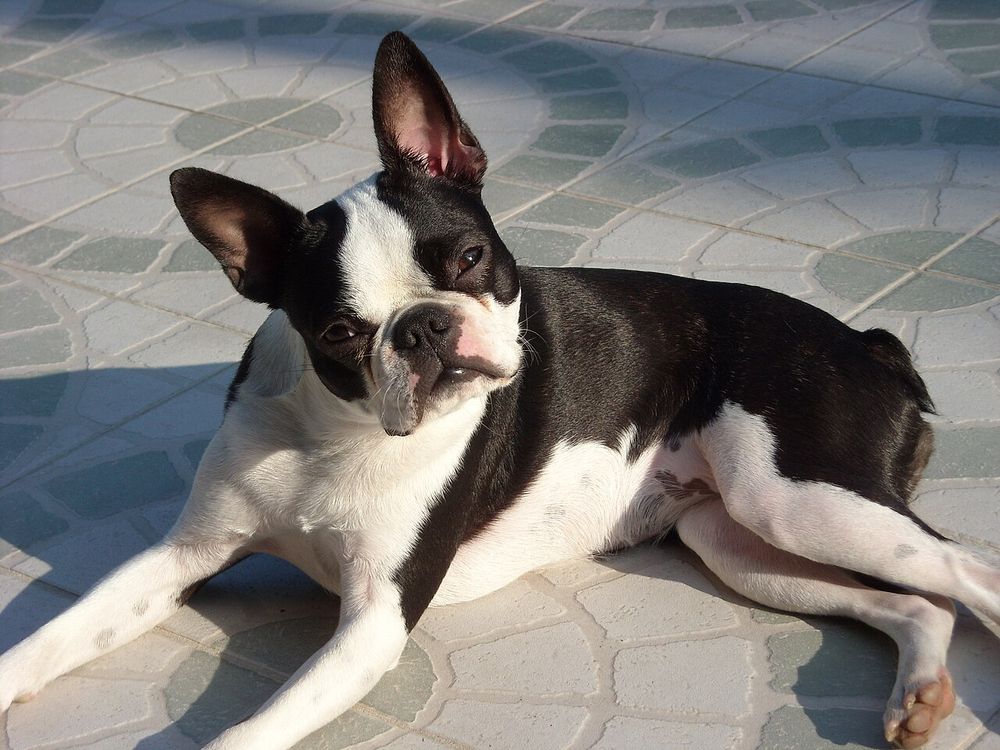
- Origin
- Boston, United StatesAmerican Kennel Club
- Adult weight
- 5.4 to 11.3 kg (AKC's 12 to 25 pounds, converted; the FCI standard shows in three weight classes up to 11.35 kg)American Kennel Club
- Height
- 25.4 to 30.5 cm (AKC's 10 to 12 inches, converted)American Kennel Club
- Lifespan
- 11 to 13 yearsAmerican Kennel Club
- Coat
- Short, smooth, bright and fine, in brindle, seal or black with white markings.Fédération Cynologique Internationale
- Energy
- ModerateThe Royal Kennel Club
- Indian heat
- Struggles in heatAmerican Kennel Club
- Flats
- Suits a flatThe Royal Kennel Club
Boston Terrier snapshot
| What | The rule | Source |
|---|---|---|
| Size | Small. AKC gives 10 to 12 inches and 12 to 25 pounds (about 5 to 11 kg). | American Kennel Club |
| Exercise need | Up to 1 hour a day, says The Royal Kennel Club; AKC says it varies from dog to dog. | The Royal Kennel Club |
| Home | A flat or apartment suits it, says The Royal Kennel Club. | The Royal Kennel Club |
| Heat tolerance | Low. AKC says it is brachycephalic, so care must be taken that it does not overheat in warm weather. | American Kennel Club |
| Temperament | Friendly and lively, with an excellent disposition and high intelligence (FCI standard). AKC rates playfulness 5 of 5 and barking 2 of 5. | Fédération Cynologique Internationale |
| Coat | Short and fine; sheds a little. Brush weekly. | American Kennel Club |
| Lifespan | AKC gives 11 to 13 years; The Royal Kennel Club says over 10 years. | American Kennel Club |
Where does the Boston Terrier come from?
AKC calls the Boston Terrier a native American breed. It says the line began in Liverpool in the late 1860s, when a cross between a Bulldog and the now-extinct white English Terrier produced a tough, muscular dog named Judge. Judge was sold to an American, taken to Boston, and in 1870 bought by Robert C. Hooper. Hooper's Judge became the common ancestor of almost all true Bostons.
Over the next decades, AKC says, breeders turned the bulky fighting dog of Judge's day into a smaller, sweeter companion, first called the Round Head and later named after its home city. The Boston Terrier Club of America was formed in 1891, and AKC registered the first dog of the breed in 1893. Its manners earned it the nickname the American Gentleman, and in 1979 it became the official dog of Massachusetts.
How did the Boston Terrier come to India?
How the Boston Terrier came to India is not documented in the sources we checked. Pedigree dogs are registered on the forms of The Kennel Club of India.
Its short face is what matters in India. AKC says it is brachycephalic, so care must be taken that it does not overheat in warm weather, and in a large UK study brachycephalic dogs had 2.10 times the odds of heat-related illness of medium-faced dogs. A Boston suits a flat, but through an Indian summer it needs a cool room, walks only before sunrise and after dark, and a plan for power cuts.
What care does a Boston Terrier need?
The three things that shape a good day for this breed.
Exercise
Up to an hour a day, says The Royal Kennel Club; AKC says needs vary, from a brisk walk once or twice a day to more play, and that letting it out in a yard does not count. Use a harness, not a collar, and never exercise it in heat or humidity. The Royal Kennel Club
Grooming
Brush weekly with a soft-bristle brush, rubber mitt or hound glove; bathe only occasionally. Trim the nails regularly, and check both eyes every day, as AKC advises, because they are easily hurt. American Kennel Club
Training
Early socialisation and puppy classes, with treats as rewards. AKC says many Bostons are quite sensitive, so gentle corrections followed by warmth and praise work well. Left alone for long periods, it tends to become frustrated. PDSA
How much should a Boston Terrier eat?
Daily calories for a healthy, neutered adult Boston Terrier, worked out from its weight with the formula vets use (70 x weight in kg to the power 0.75, then AAHA's factor for a neutered adult). Divide by the kcal per kg on your food's pack for grams a day, and adjust by body shape.
| Resting need (kcal a day) | Neutered adult (kcal a day) | |
|---|---|---|
| 5.4 kg AAHA (American Animal Hospital Association) | 250 | 350 to 400 |
| 8.4 kg | 350 | 480 to 550 |
| 11.3 kg | 430 | 600 to 690 |
Feed a complete and balanced food for the dog's life stage, and keep the dog lean. PDSA lists overweight dogs among those at higher risk of heatstroke, and Cambridge's BOAS team lists weight loss in the management of affected dogs. Merck advises keeping treats under 10% of the day's calories. Keep onion, garlic, chocolate, grapes, raisins, xylitol and salty snacks out of reach, as ASPCA advises; milk and dairy can cause diarrhoea. Meals a day: 6 to 12 weeks, 4 a day; 3 to 6 months, 3 a day; 6 to 12 months, 2 a day; adult, 2 a day. Puppies, kittens, working, pregnant and older animals need different amounts: ask your vet, or use Petym's food calculator.
Which illnesses is the Boston Terrier prone to, and how are they treated?
The conditions veterinary studies and breed surveys most often report in the Boston Terrier. Knowing the early signs means a vet sees it sooner.
See your vet first. This is general information from veterinary sources, not a diagnosis. Only a vet who has examined your pet can say what is wrong and prescribe treatment, and this page never gives a dose. Do not give your pet human medicine. If your pet seems very unwell, go to a 24-hour vet: find one in your city.
Brachycephalic obstructive airway syndrome (BOAS)
See a vet soonBreathing trouble caused by the short skull: the soft tissues of the nose and throat are squeezed into a smaller space and narrow the airway. In a 2024 UK study of 107 Boston Terriers, 37.5% had no signs on a breathing test, a better result than French Bulldogs or Bulldogs, but narrower nostrils and a shorter face raised the risk. Science for Animal Welfare (formerly UFAW)
Signs to watch for
- Snoring and noisy breathing
- Tiring quickly on walks
- Gagging, regurgitation or reflux
- Pauses in breathing during sleep
- A blue tongue or gums, or collapse: an emergency
How a vet treats it
A vet may grade it with a short exercise test or a breathing test, and look at the throat under anaesthesia. Dogs graded as affected may be managed with weight loss, surgery or both: surgery can widen narrow nostrils and correct an overlong soft palate, and many dogs improve, though the condition is lifelong.
Prevention
Do not buy a puppy with any breathing signs, and check that the parents have none and have not had airway surgery.
Corneal ulcer
See a vet soonA sore on the clear front surface of the eye, usually from an injury. AKC says Bostons' eyes are easily hurt, and brachycephalic dogs had 11.18 times the odds of corneal ulcers of crossbreds in an English study. Merck Veterinary Manual
Signs to watch for
- Squinting or blinking in spasms
- A watering eye
- A painful, swollen eye
How a vet treats it
A vet may stain the eye with a special dye to find the ulcer. Shallow ulcers are treated with antibiotic eye drops, sometimes with drops to ease pain, and usually heal within a week; deep ulcers may need surgery, such as a tissue graft, to strengthen the eye.
Prevention
Check both eyes every day and see a vet the same day for any squinting or redness.
Early-onset hereditary cataract
Ask at a routine checkAn inherited cataract caused by a recessive change in the HSF4 gene; it always affects both eyes in Boston Terriers. Science for Animal Welfare says cataracts and vision loss usually appear between 9 and 15 months of age. Science for Animal Welfare (formerly UFAW)
Signs to watch for
- A cloudy or bluish-grey lens
- Vision getting worse
- Confusion or anxiety
- Knocks and injuries from poor sight
How a vet treats it
A vet or veterinary eye specialist examines the eyes. Treatment is surgery to remove the cataract or lens, which is generally effective. Painful complications such as glaucoma need prompt care.
Prevention
A DNA test on a hair or saliva sample shows whether a dog is clear, a carrier or affected. Buy from parents tested clear.
Hemivertebrae
See a vet soonAbnormally shaped bones in the spine that can destabilise it and press on the spinal cord. Science for Animal Welfare says it seems to follow from breeding for the screw tail, and it is a common problem in the breed. Science for Animal Welfare (formerly UFAW)
Signs to watch for
- Back pain
- Wobbliness in the back legs
- Weakness in the back legs
- Sometimes loss of bladder or bowel control
How a vet treats it
A vet diagnoses it by examination and X-rays, with an MRI scan before any surgery. Mild cases may need no treatment; severe cases may need major spinal surgery.
Slipping kneecap (patellar luxation)
See a vet soonThe kneecap slides out of its groove when the knee bends. ACVS names Boston Terriers among the small breeds mainly affected. American College of Veterinary Surgeons
Signs to watch for
- Skipping, holding a back leg up for a few steps
- Limping that comes and goes
- Limping that becomes constant over time
How a vet treats it
A vet diagnoses it mainly by feeling the knee, sometimes with X-rays. Dogs without signs are usually monitored; when it causes problems, surgery may deepen the groove and realign the kneecap.
Prevention
It is at least partly inherited, so affected dogs should not be bred.
Heatstroke
Emergency: go to a vet nowA dangerous rise in body temperature. Science for Animal Welfare says dogs with BOAS are very prone to heatstroke, and even a walk in humid weather can trigger distress. Science for Animal Welfare (formerly UFAW)
Signs to watch for
- Heavy panting that does not settle
- Drooling, vomiting or diarrhoea
- Bright red or pale gums
- Weakness, wobbling or collapse
How a vet treats it
An emergency. Cool the dog with cool water over the body, away from the nose and mouth, and moving air while you go to the vet. A vet may cool the dog further, give fluids by drip and oxygen, run blood tests and support the organs.
Prevention
Walk only in the cool hours, keep a cool room and a power-cut plan, use a harness, and keep the dog lean.
How a Boston Terrier copes with Indian heat
Not well without help. Its short face makes cooling harder, so heat is the first thing a sitter plans around.
The University of Cambridge's BOAS team says dogs affected by the airway syndrome cannot exchange heat as easily as healthy dogs. AKC says plainly that this is a brachycephalic breed and care must be taken that it does not overheat in warm weather. In the UK study of heat-related illness in dogs, brachycephalic dogs had 2.10 times the odds of medium-faced dogs, and five of the nine breeds with significantly raised odds were short-faced. Exercise was the main trigger, and dogs above their breed's average weight had higher odds again.
The Boston is not the most extreme short-faced breed. A 2024 UK study of 107 Boston Terriers found 37.5% had no signs of brachycephalic obstructive airway syndrome (BOAS) on a respiratory function test, against 10% of French Bulldogs and 15.2% of Bulldogs in an equivalent study. But within the breed, more extreme features, such as narrow nostrils and a shorter face, went with a higher risk. The Royal Kennel Club recognised a BOAS breathing grading test for the breed in August 2026.
In practice: two short walks, before sunrise and after dark; the road tested with the back of a hand for seven seconds first; a cool room with a fan or AC through the day; and a plan for power cuts. On days the India Meteorological Department marks as a heat wave, swap the evening walk for indoor games.
Breathing and eye signs a sitter must act on
In a short-faced breed, breathing trouble and eye injuries can turn serious fast. Call the vet; never wait to see.
If Loud, harsh breathing at rest, gasping, gums or tongue turning blue or grey, or collapse. Cambridge's BOAS team lists noise, breathing effort, a bluish tongue and gums, and collapse among the signs.
An emergency. Keep the dog cool and calm and go to the nearest 24-hour vet straight away. University of Cambridge, Department of Veterinary Medicine
If Heavy panting that does not settle in the cool, drooling, wobbling or vomiting after a walk or in a power cut.
Heatstroke: move the dog somewhere cool, pour cool water over its body, use a fan, and go to the vet at once. PDSA
If A squinting, watering, red or cloudy eye, or the dog rubbing its face. AKC says Bostons' eyes are easily hurt; brachycephalic types had 11.18 times the odds of corneal ulcers of crossbreds in an English study.
Same-day vet visit. Do not put any drops in the eye that the vet did not prescribe. Canine Genetics and Epidemiology (2017), RVC VetCompassstudy
If An eyelid rolling in, with tears and irritation. Boston Terriers had 2.74 times the odds of conformational eyelid disorders of crossbreds in a UK study.
Tell the owner and call the vet; constant rubbing can damage the eye. PLOS ONE (2025), Royal Veterinary College VetCompassstudy
If A cloudy lens or bumping into things. The Royal Kennel Club lists a DNA test for hereditary cataracts, and Science for Animal Welfare lists hereditary cataract for the breed.
Not usually an emergency; tell the owner so the vet can check. Science for Animal Welfare (formerly UFAW)
If Back pain, a hunched back, or wobbliness in the back legs. Science for Animal Welfare lists hemivertebrae, a spinal malformation, for the breed.
Keep the dog quiet and call the vet the same day. Science for Animal Welfare (formerly UFAW)
A summer day for a Boston Terrier with a sitter
Petym’s working from the official rules, no government publishes a total.
A sample plan for April to June in an Indian city.
Before sunrise
A 20 to 25 minute walk on a harness, not a collar, so nothing presses on the throat. Grass and shade over tarmac. Water on every walk.
After the walk
Breakfast once breathing is quiet. A quick look at both eyes in good light.
Mid-morning
Fetch in a cool room, short training games, or a food puzzle toy. AKC says simply letting a Boston out into a yard does not count as exercise. American Kennel Club
Midday to late afternoon
Rest in the coolest room. No outdoor play in the hot hours; toilet breaks on shaded ground only. Animal Welfare Board of India
After dark
The second walk, once the ground has cooled. Keep it shorter on humid nights and stop in shade if breathing gets noisy.
Bedtime
Wipe the face and any skin folds, a tick check, and the daily photo update to the owner.
Company, play and alone time
AKC calls the Boston gentle and people-oriented, rates it 5 of 5 for affection, playfulness and good with young children, and 4 of 5 with other dogs. The FCI standard describes a friendly, lively dog with an excellent disposition. That makes the meet and greet easy, and most Bostons are happy with a sitter in their own home or with boarding in a calm sitter's home.
It does not make long days alone easy. AKC says a Boston left alone for long periods tends to become frustrated and develop undesirable behaviours, and PDSA's general advice for any dog is no more than 4 hours alone at a time. AKC adds that many Bostons are quite sensitive, so gentle corrections followed by warmth and praise work best: a sitter should never shout.
Ticks are common in Indian cities: in a survey of 525 dogs in four Indian cities, ticks were found on 53%. On a short coat they are easy to find, so check the ears, neck, armpits and between the toes after every walk. During Diwali, keep the dog indoors with windows shut and keep it calm.
Daily care rules for a Boston Terrier
Do
- Use a harness for walks, not a collar, so the lead does not press on the throat.
- Keep the dog lean. WSAVA suggests treats stay under about 10% of daily calories, and extra weight raised heat-illness odds in the UK study. WSAVA
- Check both eyes every day in good light, as AKC advises. American Kennel Club
- Keep two water bowls filled in shade and refill them often in hot weather. Animal Welfare Board of India
Don’t
- Do not exercise or play hard in the heat or humidity, even if the dog begs.
- Do not leave the dog in a car, on a sunny balcony, or in a room without airflow during a power cut.
- Do not feed chocolate, grapes, raisins, onion, garlic or xylitol. ASPCA Animal Poison Control
- Do not change the food during the stay; a sudden change can cause diarrhoea. PDSA
Boston Terrier sitter checklist
- Harness and lead, and the walking times the dog is used to.
- The cool room, the AC or cooler, and the power-cut plan.
- What your dog's normal breathing and snoring sound like, so the sitter can tell when it changes.
- Any eye drops, with the vet's label and times, logged at each dose.
- Meal amounts, times and the treat allowance.
- Tick prevention product and next due date.
- Signs of heat stress and breathing trouble written on the fridge.
- The vet's number and the nearest 24-hour vet on Petym's city list.
Which Petym service fits a Boston Terrier?
If It is summer, or your dog is older or a noisy breather
Overnight pet sitting in your home, where the cool room and routine stay the same. Overnight sitting
If Your Boston is young, sociable and it is a cooler month
Pet boarding in a sitter's home with an air-conditioned or cool room, inside the home's pet limit. Home boarding
If You work long days
Doggy day care for company, provided play stays indoors and cool in the hot months. Doggy day care
If Your dog has had airway surgery or takes eye medicines
Special-needs pet care, with the vet's plan followed and logged. Special-needs care
Breeds with similar care needs to the Boston Terrier
Going away soon? Tell us your dates.
A checked local sitter feeds, walks and keeps your pet company at home, follows your care sheet to the letter and sends a photo every day. Petym is opening city by city: send your dates and we will tell you when a sitter can take them.
- Meet your sitter first, free
- PAN-checked, first-aid trained
- A photo every day
- Pay through Petym, never cash


Questions owners ask
Can a Boston Terrier live in Indian heat?
- Yes, with care. AKC says this short-faced breed must not overheat in warm weather, and brachycephalic dogs had about twice the odds of heat-related illness in a large UK study. Walk before sunrise and after dark, use a harness, keep the dog lean and give it a cool room all day.
Do Boston Terriers have breathing problems?
- Some do. In a 2024 UK study, 37.5% of Boston Terriers had no signs of BOAS, far more than French Bulldogs or Bulldogs, but more extreme features such as narrow nostrils raised the risk. Loud breathing at rest, gasping or blue gums need a vet at once.
Why are Boston Terrier eyes a problem?
- AKC says Bostons' eyes are easily hurt and should be checked daily. In an English study, short-faced dogs had 11.18 times the odds of corneal ulcers of crossbreds. A squinting, watering, red or cloudy eye needs a vet the same day.
How long can a Boston Terrier be left alone?
- PDSA's general advice is no more than 4 hours at a time. AKC says a Boston left alone for long periods tends to become frustrated and develop unwanted behaviour. On long days, arrange a sitter, day care or a midday visit.
Are Boston Terriers good with strangers and other dogs?
- Usually very. AKC rates them 5 of 5 for openness to strangers and 4 of 5 with other dogs, and the FCI standard describes a friendly, lively dog. That makes it easy for most Bostons to settle with a new sitter.
How much exercise does a Boston Terrier need?
- Up to an hour a day, says The Royal Kennel Club, though AKC says it varies by dog. In India, split it into short cool-hour walks and indoor play. AKC notes that just letting a Boston into a yard does not count; it wants play with you.
Keep reading
Services that help
Free tools for this
Words on this page, explained
Keep exploring
Other dog breeds
- Akita
- Alaskan Malamute
- American Bully
- American Cocker Spaniel
- American Pit Bull Terrier
- Australian Shepherd
- Bakharwal dog
- Basset Hound
- Beagle
- Belgian Malinois
- Bernese Mountain Dog
- Bichon Frise
- Border Collie
- Boxer
- Bull Terrier
- Bulldog
- Bullmastiff
- Cane Corso
- Caucasian Shepherd Dog
- Cavalier King Charles Spaniel
- Chihuahua
- Chippiparai
- Chow Chow
- Cocker Spaniel
- Dachshund
- Dalmatian
- Dobermann
- Dogo Argentino
- English Mastiff
- English Springer Spaniel
- French Bulldog
- Gaddi Kutta (Gaddi dog)
- German Shepherd
- Golden Retriever
- Great Dane
- Greyhound
- Havanese
- Indian pariah dog (Indie)
- Indian Spitz
- Irish Setter
- Jack Russell Terrier
- Kangal
- Kanni
- Kombai
- Labrador Retriever
- Lhasa Apso
- Maltese
- Miniature Pinscher
- Miniature Schnauzer
- Mudhol Hound
- Neapolitan Mastiff
- Newfoundland
- Papillon
- Pekingese
- Pembroke Welsh Corgi
- Pomeranian
- Poodle
- Pug
- Rajapalayam
- Rampur Greyhound
- Rhodesian Ridgeback
- Rottweiler
- Saint Bernard
- Samoyed
- Shar Pei
- Shiba Inu
- Shih Tzu
- Siberian Husky
- Tibetan Mastiff
- Weimaraner
- West Highland White Terrier
- Whippet
- Yorkshire Terrier
Sources
Each source was opened and read on the date shown. How Petym checks its sources
- American Kennel Club: Boston Terrier dog breed information (opens in a new tab)
- Fédération Cynologique Internationale: FCI standard No. 140: Boston Terrier (28 January 2013) (opens in a new tab)
- The Royal Kennel Club: Boston Terrier: breeds A to Z (opens in a new tab)
- The Kennel Club of India: The Kennel Club of India: contact details and forms (opens in a new tab)
- PDSA: Heatstroke in dogs (opens in a new tab)
- Science for Animal Welfare (formerly UFAW): Boston Terrier: brachycephalic airway obstruction syndrome (BAOS) (opens in a new tab)
Show all 30 sourcesShow fewer
- Merck Veterinary Manual: Dog and cat foods (full review November 2023, updated June 2025) (opens in a new tab)
- University of Cambridge, Department of Veterinary Medicine: BOAS: recognition and diagnosis (opens in a new tab)
- Merck Veterinary Manual: Nutrition in disease management in small animals (obesity section) (opens in a new tab)
- ASPCA Animal Poison Control: People foods to avoid feeding your pets (opens in a new tab)
- Merck Veterinary Manual: Puppy care (opens in a new tab)
- VCA Animal Hospitals: Feeding times and frequency for your dog (opens in a new tab)
- AAHA (American Animal Hospital Association): 2021 AAHA Nutrition and Weight Management Guidelines for Dogs and Cats: energy requirement calculations (Box 1, PDF) (opens in a new tab)
- Merck Veterinary Manual: Nutritional requirements of small animals (full review November 2023, updated September 2024) (opens in a new tab)
- Merck Veterinary Manual: Disorders of the cornea in dogs (dog owners) (opens in a new tab)
- Science for Animal Welfare (formerly UFAW): Boston Terrier: hereditary cataract (opens in a new tab)
- Science for Animal Welfare (formerly UFAW): Boston Terrier: hemivertebrae (opens in a new tab)
- American College of Veterinary Surgeons: Patellar Luxation (Dislocating Kneecap) in Dogs | ACVS (opens in a new tab)
- Science for Animal Welfare (formerly UFAW): Boston Terrier: genetic welfare problems (opens in a new tab)
- The Royal Kennel Club: The danger of hot pavements (opens in a new tab)
- India Meteorological Department: FAQ on heat wave (opens in a new tab)
- PDSA: Separation anxiety in dogs (opens in a new tab)
- WSAVA: Frequently asked questions and myths (Global Nutrition Committee) (opens in a new tab)
- Animal Welfare Board of India: Request to ensure care and protection of animals from direct heat during extreme hot weather (4 May 2026) (opens in a new tab)
- PDSA: Diarrhoea after a change of food (opens in a new tab)
- Scientific Reports (2020): Incidence and risk factors for heat-related illness in UK dogs (opens in a new tab)
- PLOS ONE (2024): BOAS in the Boston Terrier: a healthier screw-tailed breed? (abstract read) (opens in a new tab)
- Canine Genetics and Epidemiology (2017), RVC VetCompass: Corneal ulcerative disease in dogs under primary veterinary care in England (abstract read) (opens in a new tab)
- PLOS ONE (2025), Royal Veterinary College VetCompass: Conformational eyelid disorders in dogs under primary veterinary care in the UK: epidemiology and clinical management (opens in a new tab)
- Parasites & Vectors (2011): A survey of canine tick-borne diseases in India (opens in a new tab)