Shar Pei care in India: skin folds, fever and sitters
Updated By PetymFacts checked against official sources on
Quick answer
A Shar Pei is usually a calm, independent dog, loyal to its family and reserved with strangers, so it settles best with one familiar sitter at home. Daily care is about its body: folds kept clean and dry, eyes and ears checked, walks only in the cool hours, and a watch for sudden fever, a sign of Shar-Pei fever.
The wrinkled skin that defines the breed is linked to skin fold infections, eyelid problems and, through Shar-Pei fever, to kidney disease. Your vet should know the breed well.
- Meet your sitter first, free
- PAN-checked, first-aid trained
- A photo every day
- Pay through Petym, never cash

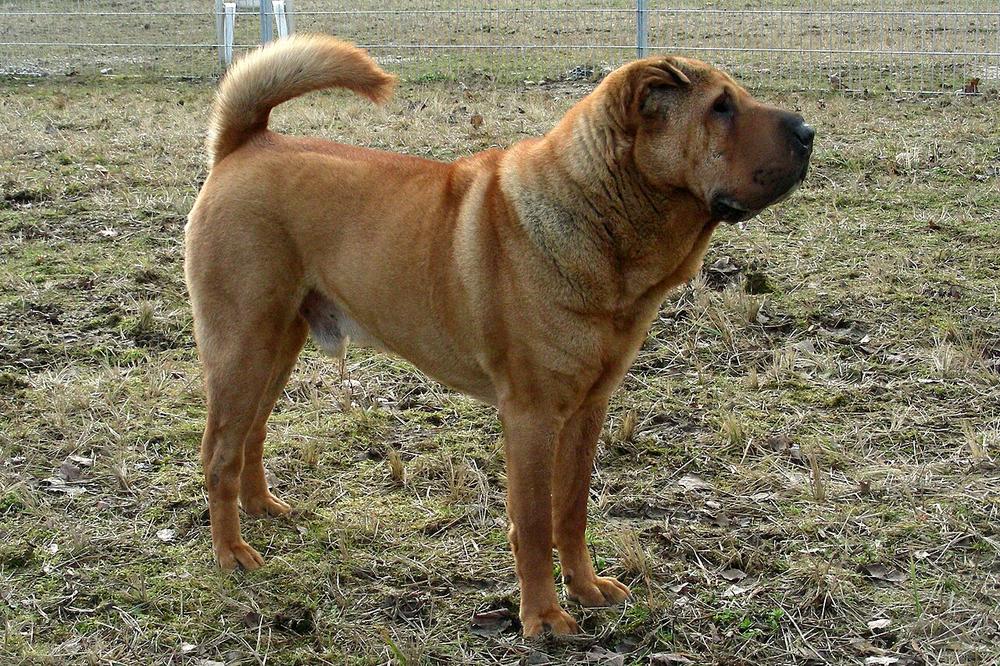
- Origin
- Southern China, probably Dialak in Kwun Tung provinceFédération Cynologique Internationale
- Adult weight
- 20 to 27 kg (AKC: 45 to 60 lb, converted to kg)American Kennel Club
- Height
- 44 to 51 cmFédération Cynologique Internationale
- Lifespan
- 8 to 12 yearsAmerican Kennel Club
- Coat
- Short, harsh and bristly with no undercoat, and never trimmed.Fédération Cynologique Internationale
- Energy
- ModerateThe Royal Kennel Club
- Indian heat
- Copes with careScience for Animal Welfare (formerly UFAW)
- Flats
- Suits a flatAmerican Kennel Club
Shar Pei snapshot for a sitter
| What | The rule | Source |
|---|---|---|
| Size | Medium. The FCI standard gives 44 to 51 cm at the shoulder; AKC gives 45 to 60 pounds. | Fédération Cynologique Internationale |
| Exercise need | Up to 1 hour a day, says The Royal Kennel Club. AKC calls it very adaptable: happy with an active owner or in an apartment with a few short walks. | The Royal Kennel Club |
| Temperament | Calm, independent, loyal and affectionate to his family, says the FCI standard. | Fédération Cynologique Internationale |
| Coat | Short, harsh and bristly with no undercoat, and never trimmed (FCI). AKC says it needs only minimal grooming. | Fédération Cynologique Internationale |
| Heat tolerance | Reduced. The Shar Pei has a short-nosed (brachycephalic) head, and brachycephalic dogs had about twice the odds of heat-related illness in a large UK study. | Scientific Reports (2020)study |
| Life expectancy | 8 to 12 years, says AKC. The Royal Kennel Club gives over 10 years. | American Kennel Club |
Where does the Shar Pei come from?
The Shar Pei comes from the provinces of southern China bordering the South China Sea; the FCI standard names the town of Dialak in Kwun Tung province as its probable home. AKC traces it back more than 2,000 years to the Han Dynasty, and the Royal Kennel Club thinks it shares ancestry with the Chow Chow, from the Han guard dogs. Statues resembling it and old manuscripts mentioning wrinkled dogs survive, says AKC.
It was a peasant's dog that had to do everything: AKC describes farmers using it to hunt, herd and guard livestock against predators and thieves. The Royal Kennel Club says it was also bred to fight, and that the loose wrinkled skin and harsh, bristly coat made it hard for a rival to grip. The FCI standard describes the breed's use as a hunting and watch dog.
The breed nearly disappeared in the 20th century. After the People's Republic of China was founded in 1949, says AKC, dog ownership was discouraged and much of the mainland's dog population destroyed; a few dogs survived in Hong Kong and Taiwan. In 1973 a Hong Kong breeder, Matgo Law, appealed to American dog lovers to save the breed, and AKC recognised the Chinese Shar-Pei in 1992. Modern breeders, the Royal Kennel Club notes, have worked to reduce excessive wrinkle and eye problems.
How did the Shar Pei come to India?
No source we found documents when the Shar Pei first came to India, and we found no Indian registration figures for the breed, so we give none. A Shar Pei imported today comes under the 2016 foreign trade rule that allows dogs into India only as pets with a pet book, for research, or for defence and police use, not for commercial breeding. The Shar Pei was not named in the central government's March 2024 list of breeds, as Gurugram's 2026 order reproduces it.
Two things matter most for a Shar Pei in India. Its short muzzle means some degree of the brachycephalic breathing problem, so Indian summers call for walks only in the cool hours. And its deep folds trap moisture, which is why the humid monsoon months need folds checked and dried every day; skin fold dermatitis is one of the breed's most documented problems.
What care does a Shar Pei need?
The three things that shape a good day for this breed.
Exercise
Up to 1 hour a day, says The Royal Kennel Club. AKC calls the breed very adaptable: happy with an active owner walking daily, or in an apartment with a few short walks, and many enjoy obedience, tracking and agility. The Royal Kennel Club
Grooming
Minimal coat care: AKC suggests a bath about once a month and weekly nail trims and ear cleaning, floating debris out with a vet-recommended ear cleaner rather than cotton swabs. Check and dry the skin folds often. American Kennel Club
Training
Smart and willing but sometimes stubborn, says AKC, which advises early socialisation, puppy classes and teaching with love and consistency. The FCI standard describes a calm, independent dog, loyal and affectionate to its family; AKC adds it is standoffish with strangers. Fédération Cynologique Internationale
How much should a Shar Pei eat?
Daily calories for a healthy, neutered adult Shar Pei, worked out from its weight with the formula vets use (70 x weight in kg to the power 0.75, then AAHA's factor for a neutered adult). Divide by the kcal per kg on your food's pack for grams a day, and adjust by body shape.
| Resting need (kcal a day) | Neutered adult (kcal a day) | |
|---|---|---|
| 20 kg AAHA (American Animal Hospital Association) | 660 | 930 to 1060 |
| 23.5 kg | 750 | 1050 to 1200 |
| 27 kg | 830 | 1160 to 1330 |
AKC says a complete dog food suited to the dog's age gives a Shar Pei all it needs, and notes that some Shar Peis have food and other allergies, so change foods only with your vet's advice. Merck adds that unbalanced homemade diets are the commonest cause of nutritional problems, so a home-cooked diet needs a veterinary nutritionist. AKC advises giving table scraps sparingly if at all, avoiding cooked bones and high-fat foods, so skip the ghee-rich leftovers and festival sweets. Keep onion, garlic, grapes, tamarind, chocolate and salty snacks out of reach, and remember ASPCA's warning that milk and dairy can cause diarrhoea. Meals a day: 6 to 12 weeks, 4 a day; 3 to 6 months, 3 a day; 6 to 12 months, 2 a day; adult, 2 a day. Puppies, kittens, working, pregnant and older animals need different amounts: ask your vet, or use Petym's food calculator.
Which illnesses is the Shar Pei prone to, and how are they treated?
The conditions veterinary studies and breed surveys most often report in the Shar Pei. Knowing the early signs means a vet sees it sooner.
See your vet first. This is general information from veterinary sources, not a diagnosis. Only a vet who has examined your pet can say what is wrong and prescribe treatment, and this page never gives a dose. Do not give your pet human medicine. If your pet seems very unwell, go to a 24-hour vet: find one in your city.
Entropion (inward-rolling eyelids)
See a vet soonThe eyelid edge turns inwards so lashes and hair rub the eye. In a US study Shar Peis were 131 times more likely to have entropion than the average dog, and signs often start soon after a puppy's eyes open. Science for Animal Welfare (formerly UFAW)
Signs to watch for
- Watering eyes or discharge, sometimes with pus
- Eyes held tightly shut or squinting
- Sensitivity to light
- Cloudy or scarred cornea
How a vet treats it
A vet diagnoses it by careful eye examination, sometimes with local anaesthetic drops or stains. Treatment is surgery under anaesthesia to correct the eyelid, sometimes with removal of excess skin; puppies may need temporary procedures first, along with eye medication prescribed by the vet.
Prevention
Choose a puppy with fully open, clear eyes, from parents that have not had entropion or eyelid surgery.
Skin fold dermatitis
See a vet soonIrritation and infection in skin folds that rub together and trap moisture. The Shar Pei's excess skin, extra mucin in the skin and harsh coat all add to the risk. Science for Animal Welfare (formerly UFAW)
Signs to watch for
- An unpleasant smell from the folds
- Discharge matting the coat
- Red, raw or ulcerated skin
- Itching and scratching
How a vet treats it
A vet examines the skin and rules out other causes such as mange or fleas. Long-term medication to control the problem is often needed, and in some cases surgery to remove excess folds.
Prevention
Check and dry folds daily, especially in the monsoon, and buy from parents with no history of skin problems.
Shar-Pei fever and amyloidosis
See a vet soonShar-Pei fever is an inherited inflammatory condition affecting up to 23% of the breed, linked to the same gene change that causes the wrinkled skin. Repeated inflammation is thought to lead to amyloidosis, where abnormal protein builds up, mainly in the kidneys; Shar Peis had about 4.5 times the risk of other dogs. Science for Animal Welfare (formerly UFAW)
Signs to watch for
- Episodes of fever with swollen, painful hocks
- Belly pain, diarrhoea and not eating during episodes
- Later, drinking and urinating more, weight loss, vomiting and lethargy as the kidneys fail
How a vet treats it
Amyloidosis is confirmed from a kidney biopsy. There is no specific treatment to stop or reverse it, so a vet treats fever episodes and the underlying inflammation and gives supportive care for kidney failure. Ask your vet to check kidney function regularly.
Prevention
There is no genetic test. Buy from breeders who avoid breeding from affected dogs and their close relatives.
Ear infection (otitis externa)
See a vet soonInflammation of the ear canal. The Chinese Shar Pei had 3.44 times the odds of crossbreeds in a large UK study. Canine Medicine and Genetics (2021), Royal Veterinary Collegestudy
Signs to watch for
- Head shaking and scratching
- A bad smell or discharge
- Red, swollen or painful ears
How a vet treats it
A vet examines the canal with an otoscope and checks a swab under the microscope. Merck describes cleaning by the vet, often under anaesthesia if painful, and ear drops combining antibiotics, antifungals and anti-inflammatories, continued until rechecks show the infection has cleared.
Prevention
Clean ears weekly only as your vet directs and keep them dry after baths; avoid cotton swabs and home remedies.
Patellar luxation
Ask at a routine checkThe kneecap slips out of its groove. ACVS says it is commonest in small breeds but rising in larger ones, and names the Chinese Shar Pei among them. American College of Veterinary Surgeons
Signs to watch for
- Skipping or carrying a hind leg for a few steps
- Kicking the leg out before walking normally
- Lameness that becomes more frequent over time
How a vet treats it
A vet feels the knee during an orthopaedic examination and may take X-rays. Mild cases without signs are usually monitored; for higher grades, surgery may deepen the groove, move the tibial crest or rebuild the soft tissues, followed by weeks of rest.
Prevention
It is at least partly inherited, so affected dogs should not be bred from.
How does a Shar Pei take to a sitter?
Quietly, and on its own terms. A slow introduction and a familiar home help most.
The Royal Kennel Club says the Shar Pei descends from Chinese dogs used as guards, hunters and fighters, and the FCI standard describes a calm, independent, loyal dog that is affectionate to its family. AKC rates it 4 of 5 for watchdog nature and in the middle of its scale for openness to strangers. In daily life that usually means a dignified, clean, fairly quiet house dog that does not fuss over visitors and may not want to be touched by someone it has just met.
So give the sitter time. A free meet and greet with you present, treats from an open hand, and no reaching over the head or grabbing at the loose skin. AKC adds that Shar Pei are smart and sometimes stubborn, and recommends consistency, so tell the sitter your words and rules and ask them to use the same ones. PDSA's general advice is that dogs should not be left alone for more than 4 hours at a time, which matters even for an independent breed when the house is hot and the power has gone.
Shar Pei health words a sitter should know
Five terms that come up again and again with this breed.
- Skin fold dermatitis
- Irritation and infection where skin folds rub together and trap secretions. Science for Animal Welfare says Shar Pei commonly get it because of their thick, folded skin and bristly hair. Science for Animal Welfare (formerly UFAW)
- Entropion
- An eyelid that rolls inwards so the lashes and fur rub the eye. Common in the breed, and painful; it can start soon after puppies' eyes open. Science for Animal Welfare (formerly UFAW)
- Shar-Pei fever
- Familial Shar-Pei fever: short, repeated bouts of high fever lasting 12 to 48 hours, often with inflamed joints, especially the hocks. PLoS Genetics (2011), Uppsala University and Broad Institutestudy
- Amyloidosis
- Abnormal protein deposits, mainly in the kidneys, that can lead to kidney failure. In Shar Pei it is linked to Shar-Pei fever and often develops before 6 years of age. Science for Animal Welfare (formerly UFAW)
- BAOS
- Brachycephalic airway obstruction syndrome: breathing trouble from a shortened muzzle. The Shar Pei is affected less often and less severely than breeds with more extreme short faces. Science for Animal Welfare (formerly UFAW)
Three figures behind the Shar Pei's care routine
131 times
more likely to have entropion than other dogs, in one large US study cited by Science for Animal Welfare Science for Animal Welfare (formerly UFAW)
5.19 x
the odds of skin fold dermatitis compared with crossbreds in a UK study, which named the breed among eight ultra-predisposed breeds Scientific Reports (2022), Royal Veterinary Collegestudy
2.1 x
the odds of heat-related illness in brachycephalic dogs compared with medium-muzzled dogs in UK vet records Scientific Reports (2020)study
Shar-Pei fever: what a sitter should know
A sudden high temperature in a Shar Pei is a reason to call the vet, not to wait and see.
A 2011 study in PLoS Genetics describes familial Shar-Pei fever as short, recurrent bouts of high fever lasting 12 to 48 hours, with localised inflammation usually involving major joints, especially the hock (the ankle of the back leg). The same study linked the breed's heavy wrinkling, which comes from a substance called hyaluronan in the skin, to a genetic change that also raises the risk of the fever. Science for Animal Welfare adds that dogs with the fever are thought to be more likely to develop amyloidosis, in which protein deposits damage the kidneys.
If your dog has had episodes before, tell the sitter what they looked like, what your vet has advised and which medicines, if any, are already prescribed. Signs a sitter can spot: a dog that is suddenly dull and off its food, feels hot, is reluctant to walk or has a puffy, sore ankle. Never give human fever medicines; call the vet. Over the longer term, Science for Animal Welfare lists drinking and urinating a lot, poor coat, weight loss and lack of appetite as signs of kidney damage from amyloidosis, so a sitter's note about water intake is worth sending.
Shar Pei problems a sitter should report
Spot, note, tell the owner, and call the vet for anything sudden or severe.
If Red, smelly or weeping skin inside the folds, especially on the face, after the monsoon or a bath.
Clean and dry gently as the owner has shown, and tell the owner. The vet may need to treat an infection. Science for Animal Welfare (formerly UFAW)
If Squinting, holding an eye shut, tears running down the face or a cloudy eye.
See the vet promptly. Entropion and other eye disorders, including glaucoma, are known in the breed and can damage sight. American Kennel Club
If Sudden fever, a swollen hock, reluctance to stand or walk.
Call the vet the same day. Do not give any human medicine. PLoS Genetics (2011), Uppsala University and Broad Institutestudy
If Drinking and urinating much more than usual, or weight loss and poor appetite over days.
Tell the owner and book a vet check; these can be signs of kidney disease from amyloidosis. Science for Animal Welfare (formerly UFAW)
If Noisy breathing, snoring that gets worse, or struggling for breath after a short walk.
Stop and cool the dog. Laboured breathing at rest is an emergency. Science for Animal Welfare (formerly UFAW)
If Head shaking or scratching at the small, tight ears.
AKC says clean ears weekly with an ear solution, never cotton buds or hydrogen peroxide. Call the vet if the ear is red or smells. American Kennel Club
Folds, ears and coat: dos and don'ts
Do
- Dry the face folds and any body folds after every wet walk, bath or drink, with a soft cloth. Monsoon humidity keeps folds damp. Science for Animal Welfare (formerly UFAW)
- Float debris out of the ear canal with a vet-approved ear-cleaning solution, as AKC describes. American Kennel Club
- Trim or grind the nails about weekly, or leave it for the groomer after the stay. American Kennel Club
- Bath only about once a month, as AKC suggests, and dry thoroughly. American Kennel Club
Don’t
- Do not push cotton buds into the ears or use hydrogen peroxide. American Kennel Club
- Do not trim the coat: the FCI standard says the bristly coat is never trimmed. Fédération Cynologique Internationale
- Do not feed cooked bones or fatty table scraps. American Kennel Club
- Do not change the food during the stay; AKC notes some Shar Pei have food allergies. American Kennel Club
Heat, humidity and festivals
A short muzzle and a heavy head make Indian summers hard work. In the UK heatstroke study, brachycephalic dogs had 2.10 times the odds of heat-related illness of medium-muzzled dogs, and Science for Animal Welfare notes that dogs affected by BAOS are very prone to heatstroke. Walk at dawn and after sunset, keep the dog indoors with a fan or cooler at midday, carry water, and plan for power cuts: a cool tiled floor, curtains drawn and a battery fan. Stop any walk if the breathing becomes loud.
The monsoon brings the opposite problem: damp folds and ticks. Check folds every evening and part the short coat to look for ticks around the ears, neck and between the toes; ticks were found on more than half of dogs in a survey across four Indian cities. Around Diwali, keep a reserved, watchful Shar Pei indoors in a quiet room, curtains closed, away from crackers and the crowd at the door.
Shar Pei handover list for your sitter
- How the dog likes to be greeted and handled, and anything it will not tolerate, such as touching the face or feet.
- Fold and ear cleaning routine, with the cloths, wipes and ear solution your vet approved.
- Any history of Shar-Pei fever: what the episodes looked like and your vet's written plan.
- Eye drops or medicines, with times and how the dog takes them.
- The food, amounts and any allergies, and a note: no cooked bones or fatty scraps.
- Walk times in the cool hours, and the signs of overheating to stop for.
- Tick prevention product and next due date.
- Your vet's number, ideally one who knows the breed, and the nearest 24-hour vet on Petym's city list.
Which Petym service suits a Shar Pei?
Most Shar Pei are happiest at home with one calm, consistent person.
Often the best fit
Overnight pet sitting
The sitter stays in your home, keeps the dog's territory and routine, and does the daily fold and eye checks.
Special-needs pet care
For a Shar Pei with a history of fever, eye treatment or kidney disease, with every medicine given and logged.
Drop-in visits
Short visits for a relaxed adult on a shorter trip: feeding, a cool-hours walk and checks.
Pet boarding
Only for a sociable Shar Pei that already knows the sitter, after a free meet and greet.
Breeds with similar care needs to the Shar Pei
Going away soon? Tell us your dates.
A checked local sitter feeds, walks and keeps your pet company at home, follows your care sheet to the letter and sends a photo every day. Petym is opening city by city: send your dates and we will tell you when a sitter can take them.
- Meet your sitter first, free
- PAN-checked, first-aid trained
- A photo every day
- Pay through Petym, never cash


Questions owners ask
Is a Shar Pei good with strangers and sitters?
- Usually reserved. The FCI standard describes a calm, independent, loyal dog affectionate to its family, and the breed has a guarding past. Most accept a sitter after a calm meet and greet and a few days of the same routine. Avoid reaching over its head or grabbing the loose skin.
What is Shar-Pei fever?
- Familial Shar-Pei fever is an inherited condition with short, repeated bouts of high fever lasting 12 to 48 hours, often with inflamed joints, especially the hocks. It is linked to the breed's wrinkled skin and to kidney amyloidosis. A Shar Pei with a sudden fever or swollen ankle needs a vet the same day.
How do I clean a Shar Pei's skin folds?
- Gently wipe and dry the folds, especially on the face, with a soft cloth after meals, walks and baths, and keep them dry in the monsoon. Science for Animal Welfare says the breed commonly gets skin fold infections. If folds are red, smelly or weeping, see your vet; do not use strong products.
Can a Shar Pei handle Indian summers?
- With care. The Shar Pei has a short muzzle, and brachycephalic dogs had about twice the odds of heat-related illness in a UK study. Walk only in the early morning and after sunset, keep it indoors with a fan at midday, and stop if breathing becomes noisy. Heatstroke is an emergency.
Why does my Shar Pei squint or have watery eyes?
- Entropion, an eyelid rolling inwards, is common in the breed and makes the lashes rub the eye. AKC also lists glaucoma and other eye disorders. Squinting, tears or a cloudy eye need a vet promptly, as untreated eye problems can permanently affect sight.
How long can a Shar Pei be left alone?
- Shar Pei are fairly independent, but PDSA's general advice is no more than 4 hours alone at a time. In Indian heat, a long day alone in a closed flat during a power cut is risky for a short-nosed dog. Arrange a sitter or drop-in visits on long days.
How long do Shar Pei live?
- AKC gives a life expectancy of 8 to 12 years, and The Royal Kennel Club says over 10 years. Regular vet checks matter, because kidney disease from amyloidosis often develops before 6 years of age and early signs, such as drinking more, are easy to miss.
Keep reading
- Dog care hub
- Heatstroke in dogs
- Monsoon pet care
- Signs your pet needs a vet now
- Special-needs pet care
- Pug careAnother short-nosed breed with skin folds.
- Meet and greet checklist
Services that help
Free tools for this
Words on this page, explained
Keep exploring
Other dog breeds
- Akita
- Alaskan Malamute
- American Bully
- American Cocker Spaniel
- American Pit Bull Terrier
- Australian Shepherd
- Bakharwal dog
- Basset Hound
- Beagle
- Belgian Malinois
- Bernese Mountain Dog
- Bichon Frise
- Border Collie
- Boston Terrier
- Boxer
- Bull Terrier
- Bulldog
- Bullmastiff
- Cane Corso
- Caucasian Shepherd Dog
- Cavalier King Charles Spaniel
- Chihuahua
- Chippiparai
- Chow Chow
- Cocker Spaniel
- Dachshund
- Dalmatian
- Dobermann
- Dogo Argentino
- English Mastiff
- English Springer Spaniel
- French Bulldog
- Gaddi Kutta (Gaddi dog)
- German Shepherd
- Golden Retriever
- Great Dane
- Greyhound
- Havanese
- Indian pariah dog (Indie)
- Indian Spitz
- Irish Setter
- Jack Russell Terrier
- Kangal
- Kanni
- Kombai
- Labrador Retriever
- Lhasa Apso
- Maltese
- Miniature Pinscher
- Miniature Schnauzer
- Mudhol Hound
- Neapolitan Mastiff
- Newfoundland
- Papillon
- Pekingese
- Pembroke Welsh Corgi
- Pomeranian
- Poodle
- Pug
- Rajapalayam
- Rampur Greyhound
- Rhodesian Ridgeback
- Rottweiler
- Saint Bernard
- Samoyed
- Shiba Inu
- Shih Tzu
- Siberian Husky
- Tibetan Mastiff
- Weimaraner
- West Highland White Terrier
- Whippet
- Yorkshire Terrier
Sources
Each source was opened and read on the date shown. How Petym checks its sources
- Fédération Cynologique Internationale: FCI-Standard No 309: Shar Pei (opens in a new tab)
- American Kennel Club: Chinese Shar-Pei dog breed information (opens in a new tab)
- The Royal Kennel Club: Shar Pei: breed information (opens in a new tab)
- Science for Animal Welfare (formerly UFAW): Shar Pei: brachycephalic airway obstruction syndrome (BAOS) (opens in a new tab)
- Directorate General of Foreign Trade, Ministry of Commerce and Industry: Notification No. 3/2015-2020 (25 April 2016): policy conditions on import of dogs; import of commercial dogs for breeding not permitted (opens in a new tab)
- Municipal Corporation Gurugram: Office order on registration and control of pet dogs (23 June 2026) (opens in a new tab)
Show all 24 sourcesShow fewer
- Science for Animal Welfare (formerly UFAW): Shar Pei: skin fold dermatitis (opens in a new tab)
- Merck Veterinary Manual: Puppy care (opens in a new tab)
- Merck Veterinary Manual: Nutritional requirements of small animals (full review November 2023, updated September 2024) (opens in a new tab)
- ASPCA Animal Poison Control: People foods to avoid feeding your pets (opens in a new tab)
- Merck Veterinary Manual: Garlic and onion (Allium spp) toxicosis in animals (opens in a new tab)
- Merck Veterinary Manual: Grape, raisin, and tamarind (Vitis spp, Tamarindus spp) toxicosis in dogs (full review September 2024) (opens in a new tab)
- VCA Animal Hospitals: Feeding times and frequency for your dog (opens in a new tab)
- AAHA (American Animal Hospital Association): 2021 AAHA Nutrition and Weight Management Guidelines for Dogs and Cats: energy requirement calculations (Box 1, PDF) (opens in a new tab)
- Science for Animal Welfare (formerly UFAW): Shar Pei: entropion (opens in a new tab)
- Science for Animal Welfare (formerly UFAW): Shar Pei: amyloidosis (opens in a new tab)
- Merck Veterinary Manual: Ear infections and otitis externa in dogs (opens in a new tab)
- American College of Veterinary Surgeons: Patellar Luxation (Dislocating Kneecap) in Dogs | ACVS (opens in a new tab)
- PDSA: Separation anxiety in dogs (opens in a new tab)
- Scientific Reports (2022), Royal Veterinary College: The epidemiology of skin fold dermatitis in dog breeds in the UK (opens in a new tab)
- PLoS Genetics (2011), Uppsala University and Broad Institute: A novel unstable duplication upstream of HAS2 predisposes to a breed-defining skin phenotype and a periodic fever syndrome in Chinese Shar-Pei dogs (opens in a new tab)
- Canine Medicine and Genetics (2021), Royal Veterinary College: Frequency and predisposing factors for canine otitis externa in the UK (opens in a new tab)
- Scientific Reports (2020): Incidence and risk factors for heat-related illness in UK dogs (opens in a new tab)
- Parasites & Vectors (2011): A survey of canine tick-borne diseases in India (opens in a new tab)