Scottish Fold care in India: joints, heat and sitters
Updated By PetymFacts checked against official sources on
Quick answer
A Scottish Fold can stay home with a sitter visiting twice a day, but its care plan starts with pain. The gene that folds the ears also damages cartilage, and UFAW and Cats Protection say every folded-eared cat is affected to some degree. Set up low steps and a low-sided tray, and brief the sitter on pain signs.
International Cat Care calls continued breeding of these cats unethical, and the GCCF will not register the breed. None of that changes what your own cat needs from you and your sitter now.
- Meet your sitter first, free
- PAN-checked, first-aid trained
- A photo every day
- Pay through Petym, never cash

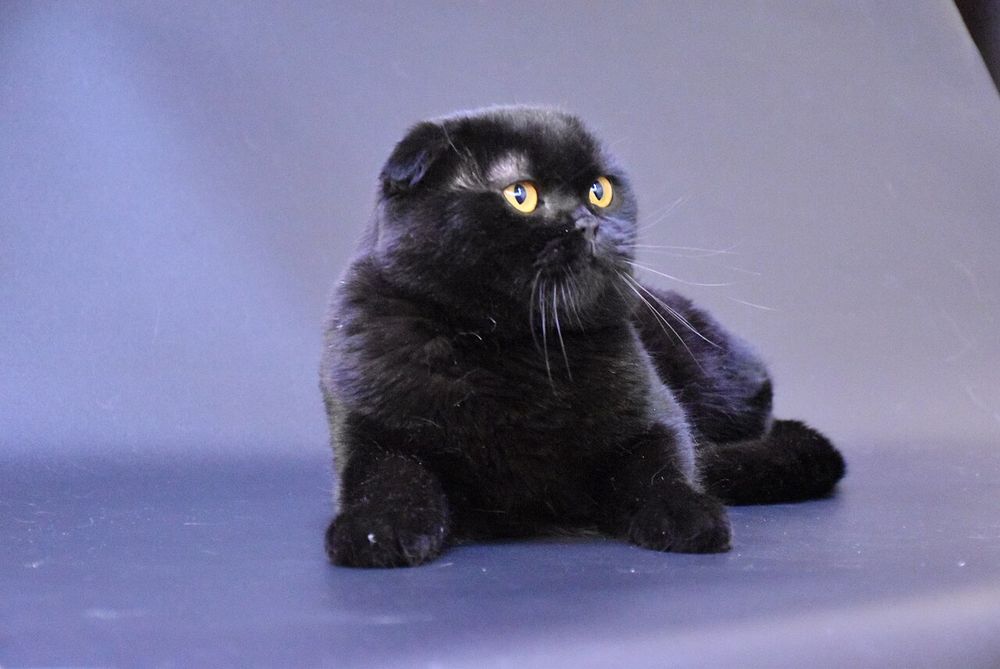
- Origin
- A farm in the Tayside region of ScotlandThe Cat Fanciers' Association
- Adult weight
- 2.7 to 5.9 kg (VCA gives 6 to 13 lb. The CFA standard gives no weight, and GCCF does not recognise the breed.)VCA Animal Hospitals
- Lifespan
- 14 to 16 yearsVCA Animal Hospitals
- Coat
- Shorthair or longhair. CFA says the coat needs only weekly combing, with heavier shedding in spring and autumn; longhaired Folds need more frequent attention to prevent mats.The Cat Fanciers' Association
- Energy
- ModerateThe Cat Fanciers' Association
- Indian heat
- Copes with carePDSA
- Flats
- Suits a flatThe Cat Fanciers' Association
Scottish Fold at a glance
| What | The rule | Source |
|---|---|---|
| Size | Medium, with a round head; CFA says the round look comes from the cap-like fit of the folded ears. | The Cat Fanciers' Association |
| Temperament | A calm homebody; CFA says the breed enjoys but does not crave human company, and is quiet but not placid. | The Cat Fanciers' Association |
| Alone-time tolerance | Settles at home with a sitter visiting at least twice a day; cats in pain or on medicine need more. | Cats Protection |
| Joint disease | Osteochondrodysplasia: UFAW says all folded-eared cats develop it to some extent, and it has no cure. | UFAW (Science for Animal Welfare) |
| Grooming | No special grooming, says CFA; Cats Protection advises checking the folded ears and helping with grooming a stiff cat cannot manage. | Cats Protection |
| Registration | Not recognised by the GCCF: its genetics committee lists the breed as ineligible because of known serious health problems. | Governing Council of the Cat Fancy |
Where does the Scottish Fold come from?
Every Scottish Fold traces back to one cat. CFA says that in 1961 a shepherd named William Ross spotted Susie, a white farm cat with folded ears, in the Tayside region of Scotland. Susie had only one litter, so her daughter Snooks became the foundation queen, bred to a domestic male and then to a British Shorthair. The fold comes from a dominant gene that arose as a spontaneous mutation.
The same gene that folds the ear cartilage damages cartilage and bone across the body. UFAW records that the GCCF recognised the breed a few years after it began but excluded it by 1974 because of crippling deformities of the limbs and tail, and that the Fédération Internationale Féline also bans it. Breeders in the USA kept it going: CFA granted the shorthair championship status in 1978, the longhair in 1992, and accepted straight-eared cats in 2022.
How did the Scottish Fold come to India?
No source we could find records when or how Scottish Folds first reached India; the breed's arrival here is not documented. What anyone buying one in India should know is the welfare record: GCCF lists the breed as ineligible for registration because of known serious health problems, International Cat Care calls breeding it unethical, and Cats Protection recommends choosing a cat without folded ears.
A Fold that already lives with you needs a home built around its joints: low beds or steps, raised bowls, a low-sided litter tray, ramps and rugs on slippery Indian tile and marble floors, as International Cat Care suggests.
What care does a Scottish Fold need?
The three things that shape a good day for this breed.
Exercise
CFA calls the Fold a quiet but not placid homebody that will play fetch. Cats Protection warns that a calm, laid-back manner can be a sign of pain, so offer gentle play and notice if your cat stops jumping or climbing. The Cat Fanciers' Association
Grooming
A weekly comb for the shorthair, more for the longhair. Cats Protection advises checking the folded ears regularly for debris, smell or irritation, and helping a stiff cat that can no longer groom itself well. Cats Protection
Training
CFA says Folds are intelligent and can learn basic tricks, but do not do well left alone for long periods. Reward-based handling from kittenhood helps with the regular vet checks and pain trials the breed needs. The Cat Fanciers' Association
How much should a Scottish Fold eat?
Daily calories for a healthy, neutered adult Scottish Fold, worked out from its weight with the formula vets use (70 x weight in kg to the power 0.75, then AAHA's factor for a neutered adult). Divide by the kcal per kg on your food's pack for grams a day, and adjust by body shape.
| Resting need (kcal a day) | Neutered adult (kcal a day) | |
|---|---|---|
| 2.7 kg AAHA (American Animal Hospital Association) | 150 | 180 to 210 |
| 4.3 kg | 210 | 250 to 290 |
| 5.9 kg | 260 | 320 to 370 |
Feed a complete and balanced cat food for the cat's life stage; Cornell says foods with an AAFCO nutritional guarantee meet that bar. VCA says the breed is prone to being overweight, and extra weight puts more load on joints already affected by the fold gene, so measure portions. Cats Protection suggests asking your vet about a specialist diet or supplements for the joints. Raise the food and water bowls so the cat does not have to bend sore joints, as International Cat Care advises, and keep fresh water out at all times. Milk is not a good treat, Cornell says, because many cats are lactose-intolerant, and onion, garlic, chocolate, grapes and raisins harm pets, according to ASPCA. Meals a day: kitten to 6 months, 3 a day; 6 months to 1 year, 2 a day; adult, from about 1 year, 1 or 2 a day. Puppies, kittens, working, pregnant and older animals need different amounts: ask your vet, or use Petym's food calculator.
Which illnesses is the Scottish Fold prone to, and how are they treated?
The conditions veterinary studies and breed surveys most often report in the Scottish Fold. Knowing the early signs means a vet sees it sooner.
See your vet first. This is general information from veterinary sources, not a diagnosis. Only a vet who has examined your pet can say what is wrong and prescribe treatment, and this page never gives a dose. Do not give your pet human medicine. If your pet seems very unwell, go to a 24-hour vet: find one in your city.
Scottish Fold osteochondrodysplasia
See a vet soonThe mutation that folds the ears also disturbs how cartilage and bone develop, leading to painful arthritis. UFAW says every folded-eared cat develops it to some extent, and changes can show on X-rays from 7 weeks of age. International Cat Care
Signs to watch for
- Stiff walking or an abnormal posture, and not curling up comfortably
- Lameness, swollen ankles or wrists, and reluctance to jump
- A short, thick or inflexible tail
- Accidents outside the litter tray when climbing in hurts
How a vet treats it
A vet diagnoses it from the breed, a physical examination and X-rays, and sometimes CT or MRI. There is no cure. A vet may prescribe long-term pain-relieving medication and chondroprotective treatment; UFAW reports that surgery to fuse affected joints, and in one case radiation therapy, has helped some cats. Long-term painkillers can have side effects, so the vet monitors the cat.
Prevention
International Cat Care says ethical breeding is the only prevention: folded-eared cats should not be bred.
Polycystic kidney disease (PKD)
See a vet soonAn inherited disease in which fluid-filled cysts grow in the kidneys and replace normal tissue. Cats Protection says Scottish Folds are more at risk. Cats Protection
Signs to watch for
- Drinking and urinating more
- Poor appetite and weight loss
- Nausea, vomiting and lethargy
How a vet treats it
Cornell says ultrasound gives the definitive diagnosis. Cysts cannot usefully be drained, so a vet manages it as kidney failure: a combination of diet control, fluid therapy and medications prescribed by the vet.
Prevention
A genetic test identifies carriers, and Cornell says cats carrying the gene must not be bred.
Obesity
Ask at a routine checkBody weight 20% or more above normal. VCA says the Scottish Fold is prone to it, and Cornell says obese cats are about seven times more likely to need care for lameness. VCA Animal Hospitals
Signs to watch for
- Ribs hard or impossible to feel under a layer of fat
- No waist behind the ribs
- A large fat pad on the belly
How a vet treats it
A vet scores body condition, sets an ideal weight and guides the food, the feeding method and a gradual weight-loss plan.
Prevention
Measure meals, count treats and keep up gentle daily play.
What do vets and welfare groups say about Scottish Folds?
They agree on the core fact: the folded ear and the joint disease come from the same gene.
- International Cat Care
- Says the gene change that folds the ears also causes severe abnormalities of the cartilage of bones, leading to painful arthritis. Severity varies from cat to cat; some show no signs at first and others worsen over time. There is no cure, and ICC says it is unethical to continue to breed cats with a mutation known to cause significant, painful disease. International Cat Care
- UFAW (Science for Animal Welfare)
- Says there are no unaffected carriers: all folded-eared cats develop osteochondrodysplasia to some extent. Cats with two copies of the gene are all severely affected; cats with one copy range from mild to severe. It recommends not breeding cats with folded ears. UFAW (Science for Animal Welfare)
- GCCF (UK)
- Lists the Scottish Fold among unrecognised breeds, marked ineligible for known serious health problems (osteochondrodysplasia), and notes a Scottish Straight would need DNA screening to show it does not carry the fold gene. Governing Council of the Cat Fancy
- Cats Protection
- Says all Scottish Fold cats are affected by osteochondrodysplasia, that changes can show on X-rays of kittens as young as seven weeks, that limping can start at four to six months, and that the problem cannot be bred out without losing the folded ear. Cats Protection
- Peer-reviewed genetics
- A 2016 study in Osteoarthritis and Cartilage found a dominant variant in the TRPV4 gene associated with the condition in Scottish Folds, and absent from 648 unaffected cats. Osteoarthritis and Cartilage (2016)study
- CFA (US)
- Registers the breed and says responsible breeders mate fold-eared cats only to straight-eared cats to minimise arthritic and bone conditions. UFAW and Cats Protection report that cats with one copy of the gene are still affected. The Cat Fanciers' Association
How do you tell if a Scottish Fold is in pain?
Cats hide pain well, so a sitter has to look for change rather than wait for a cry.
International Cat Care lists the signs to watch in a Fold: reluctance to move, a stiff walk, limping, or struggling to jump. Pain can also show as hiding, a smaller appetite, accidents outside the litter tray and less grooming. Its general article on arthritis in cats adds resting in stiff positions instead of a relaxed curl, struggling on stairs, and irritability when handled. UFAW adds short, thick limbs, a short stiff tail and swollen wrist and ankle joints in affected cats.
The useful thing an owner can do before a trip is describe the cat on a good day: where it sleeps, whether it jumps onto the bed or uses a step, how it sits, how much it eats. A sitter who knows that baseline can tell you on day three that the cat has stopped using its favourite shelf, which is exactly the kind of change that matters. Ask the sitter to mention any change in the daily photo update, not just at the end of the booking.
Never let a sitter give a human painkiller to a stiff or limping cat. International Cat Care warns that many human drugs are toxic to cats. Only medicines your vet has prescribed, given as your plan says, and logged at the time.
Setting up your home for a Scottish Fold before you travel
Small changes make a stiff cat's day easier, and they keep working while you are away.
- At least one litter tray with a low side, filled with soft, sandy litter, in a place the cat can reach without stairs. International Cat Care
- Steps or a ramp up to the sofa, bed and favourite windowsill, so the cat does not have to jump. International Cat Care
- A cat tree with wide, low platforms, which Cats Protection suggests so a Fold can still reach high places. Cats Protection
- A soft, draught-free bed in a quiet spot, away from the AC's direct airflow. International Cat Care
- Food and water bowls at a height the cat uses comfortably; some stiff cats prefer them raised. International Cat Care
- Every prescribed medicine labelled, with the dose and time written by your vet, and nothing else in reach.
- Your vet's number, the nearest 24-hour vet, and a note of the cat's last check-up and any X-ray findings. Cats Protection
A Scottish Fold sitter's visit, step by step
On arrival
Watch how the cat moves before you touch it: does it get up easily, walk evenly, use its usual step or shelf? Note anything new.
Water and food
Fresh water in every bowl, food as the care sheet says. Note how much was left from last time; eating less can be a pain sign. International Cat Care
Litter
Scoop and check for urine and stool, and for any mess just outside the tray, which can mean the cat found it hard to climb in. International Cat Care
Medicine
Give only what the vet prescribed, at the time on the plan, and log it straight away.
Gentle grooming
A soft brush over the back and hindquarters the cat may not reach, and a look inside the folded ears for wax or smell. Cats Protection
Play
CFA says the breed will readily play fetch. Keep games on the floor: rolling toys rather than leaps for a wand toy held high. The Cat Fanciers' Association
Before leaving
Steps and ramps in place, the room cool, windows secured, and the daily photo update sent with a note on how the cat moved.
When should a Scottish Fold see a vet urgently?
If New limping, refusing to walk or put weight on a leg, or crying when touched or lifted.
Call the vet the same day. Do not give any medicine that is not on the plan. International Cat Care
If Not eating for a day, or eating far less over two visits.
Call the vet: pain can cause it, and a cat that stops eating risks serious liver disease. University of Illinois College of Veterinary Medicine
If Straining in the tray, or going often and passing little or no urine.
Emergency, especially in a male: go to the vet now. Cornell University College of Veterinary Medicine
If Panting, drooling or wobbling on a hot day or during a power cut.
Heatstroke: cool water over the body, a fan, then the vet at once. PDSA
If Head shaking, scratching an ear, smell or discharge from a folded ear.
Tell the owner and call the vet; do not put anything into the ear. Cats Protection
Does a Scottish Fold cope with Indian heat and monsoon?
No source makes a heat claim specific to the breed, and short-haired Folds carry no more coat than many cats. The heat risk is practical: a stiff cat may not move to a cooler room as quickly as a supple one. PDSA lists overweight cats among those most at risk of heatstroke, and extra weight also loads painful joints. Before a summer trip, leave the cat in the coolest room with water in two or three places it can reach without jumping, and agree a power-cut plan with your sitter.
The Animal Welfare Board of India's 2026 heat advisory asks for shade through the day and clean water in stable bowls, and lists heavy panting, drooling and collapse as signs that need a vet. In the monsoon, keep the low-sided tray clean and dry so that, if the cat does go outside it, the sitter can treat that as a possible pain sign, as International Cat Care lists, rather than a dirty-tray problem.
Feeding a Scottish Fold while you are away
Keep the food, the amounts and the times as they are. If your vet has suggested a joint-support diet or supplement, which Cats Protection says is worth asking about, make sure the sitter gives exactly that and nothing extra. A sudden change of food can upset the gut, PDSA notes.
Weight matters more for a cat with sore joints. Ask your sitter to show affection through gentle play and company, not extra treats. Put a small water bowl near the bed as well as in the usual place, so a stiff cat does not have to walk far on a bad day.
Which Petym service suits a Scottish Fold?
If Adult Fold moving well, no medicine, trip of a few days to two weeks
Drop-in visits at least twice a day, with movement noted in each photo update. Drop-in visits
If Fold on daily pain relief or another prescribed medicine
Special-needs care, so every dose is given on time and logged. Special-needs care
If Older Fold, a bad flare recently, or a long summer trip with power cuts
Overnight pet sitting, so someone is home through the night. Overnight sitting
Breeds with similar care needs to the Scottish Fold
Going away soon? Tell us your dates.
A checked local sitter feeds, walks and keeps your pet company at home, follows your care sheet to the letter and sends a photo every day. Petym is opening city by city: send your dates and we will tell you when a sitter can take them.
- Meet your sitter first, free
- PAN-checked, first-aid trained
- A photo every day
- Pay through Petym, never cash

Questions owners ask
Do all Scottish Fold cats have joint problems?
- UFAW and Cats Protection say yes: every folded-eared cat has osteochondrodysplasia to some degree, because the same gene causes both. International Cat Care says severity varies, and some cats show no signs at first. Cats with two copies of the gene are all severely affected. Talk to your vet about checks and pain relief.
Can I leave my Scottish Fold alone while I travel?
- Yes, with a sitter who visits at least twice a day and knows what pain looks like in your cat. Set up a low-sided tray, steps to favourite places and water within easy reach before you leave. A Fold on daily medicine is better with special-needs care or an overnight sitter.
Why won't the GCCF register Scottish Folds?
- The GCCF lists the Scottish Fold as ineligible because of known serious health problems, namely osteochondrodysplasia, the cartilage disease caused by the fold gene. International Cat Care goes further and says it is unethical to keep breeding cats with a mutation known to cause significant, painful disease.
What are the signs of pain in a Scottish Fold?
- International Cat Care lists reluctance to move, a stiff walk, limping and difficulty jumping, plus hiding, eating less, toileting outside the tray and grooming less. Cats hide pain, so a sitter should compare the cat with the owner's description of a normal day and report any change.
Can I give my Scottish Fold a painkiller from home?
- No. International Cat Care warns that many human medicines are toxic to cats. Only give medicines your vet has prescribed for your cat, at the dose and times the vet set. A sitter should never add or change a medicine; if the cat seems in pain, they call you and the vet.
Is a Scottish Straight healthier than a Fold?
- Not automatically. The GCCF says a Scottish Straight would need DNA screening to confirm it does not carry the fold gene. Cats Protection says cats without folded ears bred from Folds can still face arthritis that starts earlier and progresses faster. Ask your vet to check the joints of any cat from Fold lines.
How often should a sitter visit a Scottish Fold?
- At least twice a day, as Cats Protection advises for any cat. Add a third visit in a heatwave, after a recent flare, or when the cat is on medicine with set times. Each visit should include watching how the cat moves, checking food and litter, and gentle grooming.
Keep reading
Services that help
Free tools for this
Words on this page, explained
Keep exploring
Sources
Each source was opened and read on the date shown. How Petym checks its sources
- The Cat Fanciers' Association: Scottish Fold (opens in a new tab)
- VCA Animal Hospitals: Scottish Fold (cat breed profile) (opens in a new tab)
- PDSA: Heatstroke in cats (opens in a new tab)
- UFAW (Science for Animal Welfare): Scottish Fold: osteochondrodysplasia (opens in a new tab)
- Governing Council of the Cat Fancy: Unrecognised breeds (opens in a new tab)
- International Cat Care: Scottish Fold osteochondrodysplasia (first published 18 June 2024, updated 26 September 2025) (opens in a new tab)
Show all 20 sourcesShow fewer
- Cats Protection: Scottish Fold cats (undated) (opens in a new tab)
- Cornell Feline Health Center: Feeding your cat (updated 30 April 2026) (opens in a new tab)
- Cornell Feline Health Center: How often should you feed your cat? (opens in a new tab)
- ASPCA Animal Poison Control: People foods to avoid feeding your pets (opens in a new tab)
- AAHA (American Animal Hospital Association): 2021 AAHA Nutrition and Weight Management Guidelines for Dogs and Cats: energy requirement calculations (Box 1, PDF) (opens in a new tab)
- Merck Veterinary Manual: Nutritional requirements of small animals (full review November 2023, updated September 2024) (opens in a new tab)
- Cornell University College of Veterinary Medicine: Polycystic kidney disease (Cornell Feline Health Center) (opens in a new tab)
- International Cat Care: Arthritis in cats (updated 26 September 2025) (opens in a new tab)
- Cats Protection: Going on holiday without your cat (opens in a new tab)
- Animal Welfare Board of India: Request to ensure care and protection of animals from direct heat during extreme hot weather (4 May 2026) (opens in a new tab)
- Cornell University College of Veterinary Medicine: Feline lower urinary tract disease (Cornell Feline Health Center) (opens in a new tab)
- University of Illinois College of Veterinary Medicine: Hepatic lipidosis: a serious problem when cats stop eating (opens in a new tab)
- PDSA: Diarrhoea after a change of food (opens in a new tab)
- Osteoarthritis and Cartilage (2016): A dominant TRPV4 variant underlies osteochondrodysplasia in Scottish fold cats (abstract read via Europe PMC) (opens in a new tab)