Burmese cat care in India: company, health and sitters
Updated By PetymFacts checked against official sources on
Quick answer
A Burmese can stay at home while you travel, but it needs more company than most cats. GCCF says the breed is very social and dislikes feeling neglected, so plan long sitter visits or someone staying overnight. The coat is easy. The sitter should watch the cat's weight and know three breed signs: weakness, thirst and pawing at the mouth.
Burmese are among the longest-lived cats in a UK veterinary records study, so good care while you are away is care for many years.
- Meet your sitter first, free
- PAN-checked, first-aid trained
- A photo every day
- Pay through Petym, never cash

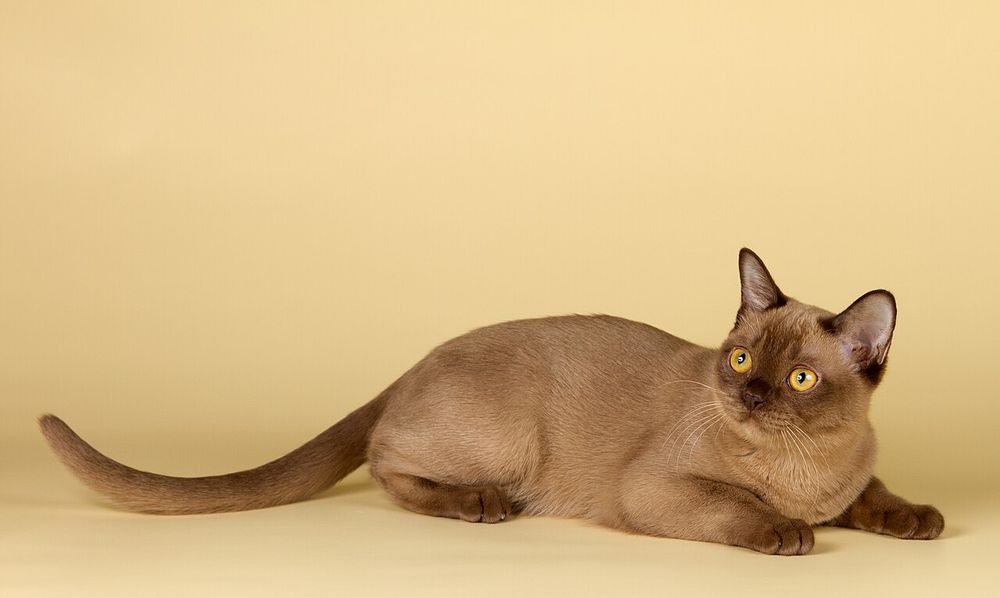
- Origin
- Burma (Myanmar) and South East Asia; the breed was developed in the United StatesGoverning Council of the Cat Fancy
- Adult weight
- 2.7 to 6.4 kg (GCCF: females about 6 to 9 lb (2.7 to 4.1 kg), males about 11 to 14 lb (5 to 6.4 kg). CFA says a mature male may reach or pass 12 lb and is fully grown at about 18 months.)Governing Council of the Cat Fancy
- Lifespan
- 10 to 17 yearsGoverning Council of the Cat Fancy
- Coat
- Very short, fine and close-lying, with a glossy, satin-like finish. CFA says it sheds very little.The Cat Fanciers' Association
- Energy
- HighGoverning Council of the Cat Fancy
- Indian heat
- Copes with carePDSA
- Flats
- A flat, with daily exerciseGoverning Council of the Cat Fancy
Burmese cat at a glance
| What | The rule | Source |
|---|---|---|
| Size | Medium and heavier than it looks. GCCF gives males about 11 to 14 lb and females about 6 to 9 lb. | Governing Council of the Cat Fancy |
| Temperament | Curious, clever and friendly; CFA says Burmese are often called Velcro kitties for how closely they stick to their people. | The Cat Fanciers' Association |
| Activity | Spirited as kittens, calmer as adults, and playful well into old age (CFA). GCCF calls it the extrovert of the cat world. | The Cat Fanciers' Association |
| Alone-time tolerance | Low for a cat. GCCF says the breed needs regular company and does not like to feel neglected. | Governing Council of the Cat Fancy |
| Heat tolerance | No breed-specific source. A short, close coat, but keep weight down: PDSA lists overweight cats among those most at risk of heatstroke. | PDSA |
| Grooming | Low maintenance: a weekly rubber brush and a chamois wipe, says GCCF. | Governing Council of the Cat Fancy |
| Life expectancy | 14.42 years at birth for UK Burmese in a 2024 VetCompass study, the longest of the breeds analysed. | Journal of Feline Medicine and Surgery (2024), Royal Veterinary College VetCompassstudy |
Where does the Burmese cat come from?
GCCF says cats of the Burmese type are native to South East Asia, especially Burma (Myanmar), Thailand and Malaya, and CFA says they occur naturally on the Malay Peninsula. Some were imported into England in the late nineteenth century, but that early line faded out.
The modern breed goes back to one cat. In 1930 Dr Joseph C Thompson, a San Francisco psychiatrist, brought a small walnut-brown female called Wong Mau from Burma to the United States and bred from her. CFA began registering the solid brown cats that bred true in 1936, and the breed reached CFA championship status in 1959.
The Burmese came back to Britain after the Second World War, when Mrs L France imported four cats from the United States in 1949 and 1953. GCCF recognised the breed in 1952, and the Burmese Cat Club was founded in 1954. CFA calls it a relatively healthy natural breed that can live a very long life, and a UK VetCompass study gave Burmese the longest life expectancy at birth of the breeds it analysed, 14.4 years.
How did the Burmese cat come to India?
Burma is India's neighbour, but no source we found records when the pedigree Burmese reached India or how common it is here today. If you buy one, ask for registration papers from a cat fancy and for the DNA test results for hypokalaemia and the head defect that GCCF and UFAW advise breeders to use.
In an Indian summer the short coat helps, but weight does not: PDSA lists obese cats among those most at risk of heatstroke, and GCCF warns against letting an older Burmese gain too much weight. Keep it indoors in a cool room with water in more than one place.
What care does a Burmese cat need?
The three things that shape a good day for this breed.
Exercise
GCCF calls the Burmese the extrovert of the cat world, playful, energetic and acrobatic, and CFA says it stays playful into old age. Plan real play every day: CFA says Burmese readily learn fetch and other games. Governing Council of the Cat Fancy
Grooming
A weekly brush with a rubber brush to lift loose hair, GCCF says, and a wipe with a chamois for shine. CFA says regular bathing is not needed. The Cat Fanciers' Association
Training
CFA describes the breed as clever and quick to learn games. GCCF says it is very social and does not like to feel neglected, so a Burmese left alone for long days needs company planned in. Governing Council of the Cat Fancy
How much should a Burmese cat eat?
Daily calories for a healthy, neutered adult Burmese cat, worked out from its weight with the formula vets use (70 x weight in kg to the power 0.75, then AAHA's factor for a neutered adult). Divide by the kcal per kg on your food's pack for grams a day, and adjust by body shape.
| Resting need (kcal a day) | Neutered adult (kcal a day) | |
|---|---|---|
| 2.7 kg AAHA (American Animal Hospital Association) | 150 | 180 to 210 |
| 4.6 kg | 220 | 260 to 310 |
| 6.4 kg | 280 | 340 to 390 |
Feed a complete and balanced commercial cat food for the cat's life stage, with fresh water always out. The breed's feeding issue is weight: GCCF says the risk of diabetes in Burmese rises with age and body weight, and UFAW names obesity and inactivity as important factors. CFA suggests watching carbohydrate intake as the cat ages; ask your vet what suits your cat. Cornell advises against milk, raw meat and home-made diets unless a vet gives a recipe, and keeps treats to a small part of the day's food. ASPCA lists onions, garlic, chocolate, grapes, salty food and dairy among foods to keep from pets, which rules out most Indian table scraps however hard a Burmese begs. Meals a day: kitten to 6 months, 3 a day; 6 months to 1 year, 2 a day; adult, from about 1 year, 1 or 2 a day. Puppies, kittens, working, pregnant and older animals need different amounts: ask your vet, or use Petym's food calculator.
Which illnesses is the Burmese cat prone to, and how are they treated?
The conditions veterinary studies and breed surveys most often report in the Burmese cat. Knowing the early signs means a vet sees it sooner.
See your vet first. This is general information from veterinary sources, not a diagnosis. Only a vet who has examined your pet can say what is wrong and prescribe treatment, and this page never gives a dose. Do not give your pet human medicine. If your pet seems very unwell, go to a 24-hour vet: find one in your city.
Burmese hypokalaemia (hypokalaemic polymyopathy)
See a vet soonAn inherited low level of potassium in the blood that causes episodes of muscle weakness. A 2012 study found the gene change behind it, and International Cat Care says it is usually first seen in kittens of 2 to 6 months. PLOS ONE (2012), UC Davis and University of Bristol authorsstudy
Signs to watch for
- The head and neck held bent down towards the chest
- Weakness in the neck and legs, a stiff or unsteady walk
- Episodes that come and go, often after exercise, stress or cold
How a vet treats it
A vet diagnoses it with a blood test for potassium. ICC says treatment is usually potassium supplementation, often by drip first and then by mouth as a liquid, powder or tablet if it is needed long term, with repeat blood tests. GCCF says severe cases can be fatal.
Prevention
A DNA test exists; GCCF says buyers should ask for proof the parents were tested.
Diabetes mellitus
See a vet soonThe body cannot make or respond to insulin properly, so sugar builds up in the blood. UFAW says Burmese are affected about four times as often as other cats, about 10% of Burmese over eight have it in Australia, and the average age at diagnosis is around 12. UFAW (Science for Animal Welfare)
Signs to watch for
- Drinking and urinating much more
- Weight loss with a good appetite
- A flat-footed stance on the back legs
- In the severe form: weakness, vomiting and not eating
How a vet treats it
A vet confirms it by finding high glucose in the blood and urine, sometimes with a fructosamine test. Cornell names insulin injections under the skin and a low-carbohydrate diet as the main treatment, with newer oral medicines an option for some cats under a vet's guidance. With early treatment some cats go into remission.
Prevention
Keep a healthy weight and encourage daily play, Cornell says. A cat on insulin that turns weak, wobbly or twitchy may have low blood sugar, which UFAW and Cornell say can be dangerous: call the vet at once.
Feline orofacial pain syndrome (FOPS)
See a vet soonA painful condition of the mouth and face reported mostly in Burmese: in a study of 113 cats, 100 were Burmese. Episodes are often on one side and set off by mouth movements. Journal of Feline Medicine and Surgery (2010), University of Surrey repository recordstudy
Signs to watch for
- Pawing at the mouth
- Exaggerated licking and chewing movements
- An injured, sore tongue
- Episodes linked to teething, mouth disease or a stressful event
How a vet treats it
In the study, 63% of cats had a history of mouth problems, so a vet will examine the mouth and teeth. The study found FOPS can resist ordinary pain relief, and some cats needed anticonvulsant medicines with a pain-relieving effect, prescribed by the vet.
Prevention
Calm, predictable routines may help: one in five cats in the study had episodes linked to an anxiety-causing situation.
Burmese head defect
Ask at a routine checkAn inherited fault in skull and face development before birth, caused by a change in the ALX1 gene. UFAW says it is especially common in contemporary Burmese lines in the United States. Kittens with two copies are affected; cats with one copy can have a shortened face. UFAW (Science for Animal Welfare)
Signs to watch for
- In affected newborn kittens: severe malformation of the jaw, face and skull, obvious from birth
How a vet treats it
UFAW says there is no treatment: affected kittens cannot eat, drink or breathe normally and are put to sleep humanely by a vet.
Prevention
DNA tests identify carriers. Breed only from clear cats and never mate two carriers.
Can a Burmese cat be left alone while you travel?
For short spells, yes. For a trip, it needs a person, not just a full bowl.
Most cat pages say a cat copes well at home with two visits a day. The Burmese stretches that advice. GCCF describes it as playful, energetic and highly intelligent, very social, and a breed that does not like to feel neglected; it says the Burmese is not a good fit for someone who wants a quiet home. CFA adds that Burmese thrive on attention, though they can amuse themselves when they must.
So the question is less about food and litter and more about company. Cats Protection's baseline of a sitter at least twice a day still applies, but for a Burmese, make each visit long enough to include proper play and lap time. On trips longer than a few days, or in a home where the cat is used to someone working from home, overnight sitting suits the breed better than short drop-ins.
Stress matters for health as well as mood here. A study of orofacial pain syndrome, a condition seen mostly in Burmese, linked one in five cats' episodes directly to an anxiety-causing situation. An owner leaving for a week is exactly that kind of situation for a cat this attached.
Burmese health in numbers
14.42 years
Life expectancy at birth for UK Burmese, the longest of the breeds in the 2024 VetCompass life tables (all cats: 11.74). Journal of Feline Medicine and Surgery (2024), Royal Veterinary College VetCompassstudy
4 x
Burmese are affected by diabetes about four times more than other cats, in a study UFAW cites; the risk is seen in UK, Australian and New Zealand Burmese. UFAW (Science for Animal Welfare)
100 of 113
Cats in a study of feline orofacial pain syndrome that were Burmese. Journal of Feline Medicine and Surgery (2010), University of Surrey repository recordstudy
From 2 months
Burmese hypokalaemia usually shows between two and six months of age. PLOS ONE (2012), UC Davis and University of Bristol authorsstudy
Which Burmese health signs should a sitter know?
Three problems are linked to the breed in the sources, plus the ones any cat can have. The sitter's job is to spot them and call; the vet decides.
If Muscle weakness, a cat that walks stiffly or holds its head bent down towards its chest, sometimes coming and going. This is the classic sign of Burmese hypokalaemia, a low blood potassium that runs in the breed.
Call the vet the same day and describe the head position. The study behind the gene test found signs can be set off by stress or exercise, and that affected cats improved with treatment from a vet. PLOS ONE (2012), UC Davis and University of Bristol authorsstudy
If Pawing at the mouth, exaggerated licking or chewing movements, or a sore, injured tongue. These are signs of feline orofacial pain syndrome, reported mostly in Burmese.
Call the vet. Do not try to look inside the mouth by force. Note what happened just before: in the main study, episodes were often linked to mouth problems and to anxiety. Journal of Feline Medicine and Surgery (2010), University of Surrey repository recordstudy
If Drinking and urinating much more, or weight loss with a good appetite, in a middle-aged or older Burmese.
Note it on the log and call the vet. Cornell lists these as the signs owners most often notice in diabetic cats, and UFAW says most affected Burmese are over eight. Cornell University College of Veterinary Medicine
If A cat already on insulin that becomes wobbly, weak, twitchy or very sleepy.
This can be low blood sugar, which UFAW says can quickly affect the brain. Call the vet at once and follow only the plan your vet wrote. UFAW (Science for Animal Welfare)
If Straining in the tray with little or no urine.
A blocked bladder is an emergency, more likely in males. Go to the vet now. Cornell University College of Veterinary Medicine
If Panting, red or pale gums, or weakness on a hot day.
Heatstroke: cool water on the body, a fan, and the vet straight away. PDSA
Weight and diabetes: why a Burmese sitter must not spoil the cat
UFAW's summary of the evidence says Burmese are affected by diabetes about four times as often as other cats, a predisposition seen in UK, Australian and New Zealand Burmese, and that in Australia about 10% of Burmese over eight years old have it. Most affected cats are over eight. Obesity and inactivity are important factors, and neutered males are at higher risk. The predisposition has not been shown clearly in American Burmese, and CFA says research on how it is inherited is not yet conclusive.
GCCF's advice for owners is short: older Burmese should not be allowed to gain too much weight. Cornell says obese cats are up to four times more likely to develop diabetes than cats at a healthy weight, and that keeping a healthy weight with daily play is the most effective prevention.
That makes the sitter's habits important. A Burmese is persuasive, and a sitter who wants to make up for your absence with extra treats is doing the cat no favours. Write down the exact daily food, say no extra treats, and ask the sitter to spend the time on play instead. A wand toy session at each visit uses the breed's energy and keeps the weight down.
Hypokalaemia and mouth pain: what owners should tell the sitter
Burmese hypokalaemia is inherited as a recessive trait, and a 2012 study found the gene change behind it, which is what the DNA test looks for. The study describes episodes of muscle weakness, most often seen as the head and neck bent downwards, usually first appearing at two to six months of age, sometimes later. GCCF strongly recommends DNA testing for it in breeding Burmese and says that in severe cases it can lead to early death. If your cat has been diagnosed, put it at the top of the care sheet with your vet's instructions.
Feline orofacial pain syndrome is a painful condition in which cats paw at the mouth and may injure their tongue. In a study of 113 cases, 100 were Burmese; 63% had a history of mouth problems, at least 16% first showed it while their adult teeth were coming in, and 20% had episodes linked to an anxiety-causing situation. If your Burmese has had it, tell the sitter what an episode looks like and keep visits calm and predictable.
Living with a Burmese: do and don't
Do
- Plan long visits with real play: GCCF says the Burmese enjoys toys and games and needs regular human company. Governing Council of the Cat Fancy
- Give it something to do between visits, such as a food puzzle with part of the day's ration, as the AAFP and ISFM guidelines suggest. AAFP and ISFM (Journal of Feline Medicine and Surgery, 2013)study
- Weigh or body-check an adult Burmese regularly and keep it lean, especially after eight. Governing Council of the Cat Fancy
- Keep the routine predictable while you are away; International Cat Care links routine to lower stress. International Cat Care
Don’t
- Do not use treats as company. Obesity is a major factor in feline diabetes. Cornell University College of Veterinary Medicine
- Do not leave a Burmese on its own with no visits; CFA says it will let you know when something is amiss. The Cat Fanciers' Association
- Do not change the food while you are away. PDSA
- Do not give any human medicine or a dog flea product. International Cat Care
A Burmese day with a visiting sitter
Morning visit
Greet the cat first; a healthy Burmese usually comes to the door. Fresh water, measured breakfast, scoop the tray and note urine volume, which matters for a breed watched for diabetes. Battersea Dogs and Cats Home
Play
Ten minutes or more of chasing and fetching. Watch how the cat moves: any weakness or a dipped head goes on the log. PLOS ONE (2012), UC Davis and University of Bristol authorsstudy
Midday (optional)
Worth adding for a young or very attached Burmese, in a heatwave, or for a cat on medicine.
Evening visit
Dinner as written, tray again, lap time. A rubber brush once a week on a longer trip. Governing Council of the Cat Fancy
Before leaving
Puzzle feeder filled from the day's ration, windows locked, fan or AC set, daily photo update sent.
Burmese care through the Indian year
| What changes | What the sitter does | |
|---|---|---|
| Summer (March to June) PDSA | Heat in a closed flat; a heavy cat is at more risk | Coolest room, curtains drawn, water in several bowls, power-cut plan |
| Monsoon (June to September) | Indoor days, less to do, humid litter | More play, scoop at every visit, keep the litter dry |
| Diwali and wedding season Journal of Feline Medicine and Surgery (2010), University of Surrey repository recordstudy | Noise and visitors; stress can set off episodes in some cats | Windows shut, calm visits, hiding places left open |
| Winter (north India) | Short-coated cat on cold floors | A warm bed off the floor, water that is not icy cold |
Choosing a Burmese kitten in India
- Ask for proof of DNA testing for hypokalaemia (HK), as GCCF advises every buyer to do. Governing Council of the Cat Fancy
- Ask whether the line has been tested for the Burmese head defect, a fatal recessive condition UFAW says is most common in contemporary American lines and can be found with a DNA test. UFAW (Science for Animal Welfare)
- Ask about diabetes and mouth pain in the parents and grandparents.
- Think honestly about your hours. A cat that needs company suits a home where someone is around.
- Register with a vet early and set a weight target together.
Which Petym service suits a Burmese?
If Trip of a week or more, or a cat used to someone home all day
Overnight pet sitting, so the cat has company in the evenings and at night. Overnight sitting
If Healthy adult, short trip
Drop-in visits, at least twice a day, each with proper play time. Drop-in visits
If Diabetic, diagnosed with hypokalaemia or mouth pain, or on medicine
Special-needs care, with every dose and check logged as your vet's plan says. Special-needs care
Breeds with similar care needs to the Burmese cat
Going away soon? Tell us your dates.
A checked local sitter feeds, walks and keeps your pet company at home, follows your care sheet to the letter and sends a photo every day. Petym is opening city by city: send your dates and we will tell you when a sitter can take them.
- Meet your sitter first, free
- PAN-checked, first-aid trained
- A photo every day
- Pay through Petym, never cash

Questions owners ask
Can a Burmese cat be left alone all day?
- For a working day, many adults cope. For a trip, plan more than food. GCCF says the Burmese is very social, needs regular company and does not like to feel neglected. Use long sitter visits with play, at least twice a day, or overnight sitting for longer trips.
Are Burmese cats prone to diabetes?
- In some countries, yes. UFAW cites research finding Burmese affected about four times more than other cats, with most affected cats over eight. Obesity and inactivity add to the risk. Keep your Burmese lean, and call your vet if it drinks or urinates more, or loses weight while eating well.
What is Burmese hypokalaemia?
- An inherited condition with low blood potassium that causes muscle weakness, often seen as the head bent down towards the chest. A 2012 study found the gene responsible and that signs usually start at two to six months of age. A DNA test exists, and GCCF strongly recommends it for breeding cats. Call your vet if you see weakness.
Why does my Burmese paw at its mouth?
- One possibility is feline orofacial pain syndrome, reported mostly in Burmese: 100 of 113 cats in the main study. Episodes were often linked to mouth problems, teething or anxiety. Pawing at the mouth, odd licking or a sore tongue all need your vet, who can look for a cause.
How long do Burmese cats live?
- A 2024 Royal Veterinary College study of UK cats found Burmese had the longest life expectancy of the breeds analysed, at 14.42 years from birth, against 11.74 years for cats overall. Keeping a healthy weight matters: non-ideal body weight was linked to shorter life in the same study.
Do Burmese cats cope with Indian heat?
- There is no breed-specific heat source. The coat is short and close, which helps. Weight is the bigger risk, because PDSA lists overweight cats among those most at risk of heatstroke. Keep a cool room, water in several bowls and a plan for power cuts during summer trips.
Is overnight sitting worth it for a Burmese?
- Often, on longer trips. CFA describes Burmese as Velcro kitties that adore their people, and GCCF says they dislike being neglected. A sitter who stays overnight gives company in the evenings, when many owners are usually home, and someone is there if the cat shows weakness or stops eating.
Keep reading
Services that help
Free tools for this
Words on this page, explained
Keep exploring
Sources
Each source was opened and read on the date shown. How Petym checks its sources
- Governing Council of the Cat Fancy: Burmese (opens in a new tab)
- The Cat Fanciers' Association: Burmese (opens in a new tab)
- PDSA: Heatstroke in cats (opens in a new tab)
- UFAW (Science for Animal Welfare): Burmese: Burmese head defect (opens in a new tab)
- UFAW (Science for Animal Welfare): Burmese: diabetes mellitus (opens in a new tab)
- Cornell Feline Health Center: How often should you feed your cat? (opens in a new tab)
Show all 23 sourcesShow fewer
- Cornell Feline Health Center: Feeding your cat (updated 30 April 2026) (opens in a new tab)
- ASPCA Animal Poison Control: People foods to avoid feeding your pets (opens in a new tab)
- AAHA (American Animal Hospital Association): 2021 AAHA Nutrition and Weight Management Guidelines for Dogs and Cats: energy requirement calculations (Box 1, PDF) (opens in a new tab)
- Merck Veterinary Manual: Nutritional requirements of small animals (full review November 2023, updated September 2024) (opens in a new tab)
- International Cat Care: Hypokalaemia in cats (updated 3 June 2026) (opens in a new tab)
- Cornell University College of Veterinary Medicine: Feline diabetes (Cornell Feline Health Center) (opens in a new tab)
- Cats Protection: Going on holiday without your cat (opens in a new tab)
- Battersea Dogs and Cats Home: Cat litter trays (opens in a new tab)
- Cornell University College of Veterinary Medicine: Feline lower urinary tract disease (Cornell Feline Health Center) (opens in a new tab)
- International Cat Care: Stress in cats (opens in a new tab)
- PDSA: Diarrhoea after a change of food (opens in a new tab)
- International Cat Care: Cats and poisons (opens in a new tab)
- Journal of Feline Medicine and Surgery (2024), Royal Veterinary College VetCompass: Life tables of annual life expectancy and risk factors for mortality in cats in the UK (abstract read via Europe PMC) (opens in a new tab)
- PLOS ONE (2012), UC Davis and University of Bristol authors: First WNK4-hypokalemia animal model identified by genome-wide association in Burmese cats (opens in a new tab)
- Journal of Feline Medicine and Surgery (2010), University of Surrey repository record: Feline orofacial pain syndrome (FOPS): a retrospective study of 113 cases (abstract read) (opens in a new tab)
- Developmental Biology (2016), University of Missouri, UC Davis and others: Aristaless-like homeobox protein 1 (ALX1) variant associated with craniofacial structure and frontonasal dysplasia in Burmese cats (opens in a new tab)
- AAFP and ISFM (Journal of Feline Medicine and Surgery, 2013): Feline environmental needs guidelines (opens in a new tab)