Siamese cat care in India: play, company and time alone
Updated By PetymFacts checked against official sources on
Quick answer
A Siamese can stay at home while you travel, but it needs more than food and a clean tray. CFA calls the breed vocal, affectionate, active and sometimes insistent. Plan sitter visits at least twice a day with real play at each one, and brief the sitter on eye, breathing and liver warning signs.
Its short coat is easy to care for, and no source suggests the Siamese is especially at risk in heat. Summer care for any cat still applies: shade, airflow and water in more than one place.
- Meet your sitter first, free
- PAN-checked, first-aid trained
- A photo every day
- Pay through Petym, never cash

- Origin
- Siam, now ThailandThe Cat Fanciers' Association
- Adult weight
- 2.3 to 3.6 kg (VCA gives 5 to 8 lb. The CFA standard describes a medium-sized, svelte cat and gives no weight; males may be proportionately larger.)VCA Animal Hospitals
- Lifespan
- 12 to 15 yearsVCA Animal Hospitals
- Coat
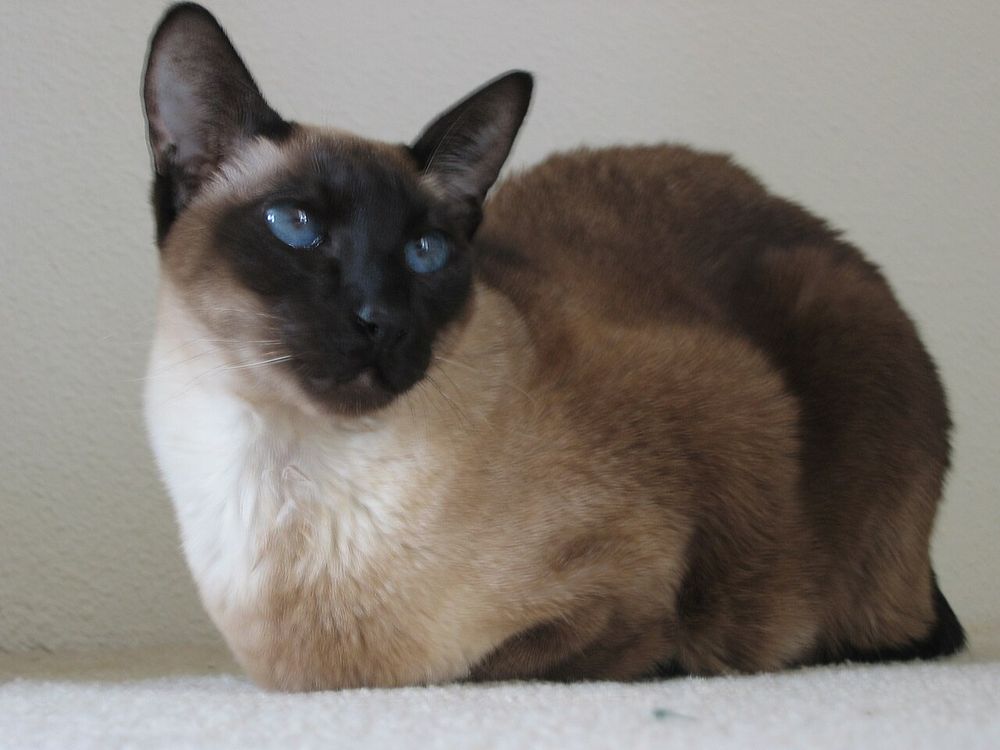
- Fine and short, with darker points on the face, ears, legs and tail in seal, chocolate, blue or lilac. VCA notes the coat darkens with age.The Cat Fanciers' Association
- Energy
- HighVCA Animal Hospitals
- Indian heat
- Copes with carePDSA
- Flats
- A flat, with daily exerciseVCA Animal Hospitals
Siamese cat at a glance
| What | The rule | Source |
|---|---|---|
| Size | Medium-sized, svelte and refined, with long tapering lines; lithe but muscular. | The Cat Fanciers' Association |
| Activity | High. CFA describes the breed as active, vocal and affectionate. | The Cat Fanciers' Association |
| Alone-time tolerance | Copes at home with visits at least twice a day, but a bored Siamese is loud. Each visit should include play. | Cats Protection |
| Heat tolerance | No breed-specific source. It is not among the long-haired or flat-faced cats PDSA lists as most at risk, so general cat heat care applies. | PDSA |
| Grooming | Low. The coat is short, fine and glossy; Siamese do shed, so regular brushing helps. | The Cat Fanciers' Association |
| Sociability | Affectionate and people-focused; CFA says it can be insistent. | The Cat Fanciers' Association |
Where does the Siamese cat come from?
The Siamese comes from Siam, today's Thailand. CFA says the cats were first documented in a historic Thai collection of cat poems from the Ayutthaya period (1350 to 1767), and VCA says they were cherished by the Siamese royal family and high-ranking priests, and given by the royal court as gifts to visiting European dignitaries in the 1800s.
CFA credits early English fanciers of the late 1880s with making the breed famous, as Siamese appeared in the catalogues of the Crystal Palace cat shows. The first Siamese in the United States, named Siam, was given to President Rutherford B. Hayes by the American Consul in Bangkok in 1878. It was one of the first breeds CFA recognised at its founding in 1906. Seal point was the only colour at first; blue point followed in 1934, chocolate in 1952 and lilac in 1955.
The Siamese has shaped many other breeds: VCA names the Balinese, Burmese, Himalayan, Ocicat and Tonkinese among those it helped create. CFA notes that during the 1950s boom, rounder, heavier cats were bred for the pet market, while the show standard kept its long, fine lines.
How did the Siamese cat come to India?
No source we could find records when or how the Siamese first reached India; its arrival is not documented. It is part of India's small pedigree cat scene today: an ETV Bharat news report on a Feline Club of India show in Kolhapur on 1 December 2024, with more than 200 cats from Maharashtra, Goa, Karnataka, Andhra and Kolkata, listed the Siamese among the breeds shown.
Its fine, short coat means it is not among the long-haired or flat-faced cats PDSA lists as most at risk of heatstroke, but a Siamese in an Indian flat still needs a cool room, water in more than one place and a plan for power cuts in summer.
What care does a Siamese cat need?
The three things that shape a good day for this breed.
Exercise
VCA calls the Siamese extremely active and a determined climber that needs sturdy cat trees and shelves, or it will climb curtains and blinds. Daily interactive play matters: VCA says some show anxiety when left home alone by over-grooming. VCA Animal Hospitals
Grooming
Low. CFA says you can groom a Siamese with damp hands, stroking until they are dry, or with a rubber brush; VCA says a quick weekly comb is ample. A pet Siamese rarely needs a bath. The Cat Fanciers' Association
Training
CFA calls the Siamese one of the most communicative cats, with a large range of calls, and very people-focused. VCA says many do best with another cat, ideally another Siamese, for company. VCA Animal Hospitals
How much should a Siamese cat eat?
Daily calories for a healthy, neutered adult Siamese cat, worked out from its weight with the formula vets use (70 x weight in kg to the power 0.75, then AAHA's factor for a neutered adult). Divide by the kcal per kg on your food's pack for grams a day, and adjust by body shape.
| Resting need (kcal a day) | Neutered adult (kcal a day) | |
|---|---|---|
| 2.3 kg AAHA (American Animal Hospital Association) | 130 | 160 to 180 |
| 3 kg | 160 | 190 to 220 |
| 3.6 kg | 180 | 220 to 260 |
Feed a complete and balanced cat food for the cat's life stage; Cornell says foods with an AAFCO nutritional guarantee meet that bar. VCA advises asking your vet about the type and amount of food at each life stage, because obesity risk varies with diet, metabolism, activity and age. Measure portions and count treats. Young Siamese are prone to wool sucking and eating non-food items, VCA says, so keep threads, rubber bands and plastic bags out of reach. Always leave fresh water out, skip milk (Cornell says many cats are lactose-intolerant), and keep onion, garlic, chocolate, grapes and raisins away, as ASPCA advises. Meals a day: kitten to 6 months, 3 a day; 6 months to 1 year, 2 a day; adult, from about 1 year, 1 or 2 a day. Puppies, kittens, working, pregnant and older animals need different amounts: ask your vet, or use Petym's food calculator.
Which illnesses is the Siamese cat prone to, and how are they treated?
The conditions veterinary studies and breed surveys most often report in the Siamese cat. Knowing the early signs means a vet sees it sooner.
See your vet first. This is general information from veterinary sources, not a diagnosis. Only a vet who has examined your pet can say what is wrong and prescribe treatment, and this page never gives a dose. Do not give your pet human medicine. If your pet seems very unwell, go to a 24-hour vet: find one in your city.
Progressive retinal atrophy (PRA)
Ask at a routine checkAn inherited degeneration of the retina that slowly reduces sight and can end in blindness. International Cat Care lists the Siamese among the predisposed breeds, and CFA says the gene can be found with a genetic test. International Cat Care
Signs to watch for
- Worse sight at night first
- Dilated pupils
- Bumping into things or seeming lost
How a vet treats it
A vet examines the eyes and may refer the cat to a veterinary ophthalmologist, with blood tests and blood pressure checks to rule out other causes of blindness. There is no treatment, but PRA is not painful and the vet can advise on changes at home, such as keeping furniture in the same place.
Prevention
Genetic testing of breeding cats; affected cats should not be bred.
Amyloidosis
See a vet soonAbnormally folded proteins (amyloid) build up mainly in the liver and damage it. UFAW says it is more common in Siamese than most breeds, runs in families and usually appears between 1 and 5 years of age. UFAW (Science for Animal Welfare)
Signs to watch for
- Lethargy, weakness and poor appetite
- Drinking and urinating more, vomiting and diarrhoea
- Pale or yellow gums, sore gums and weight loss
- Sudden weakness or collapse from bleeding inside the belly
How a vet treats it
A vet confirms it from a liver biopsy. UFAW says there is no specific treatment: the vet gives symptomatic treatment for chronic liver failure and treats any infection alongside it, though this does not always control the signs.
Prevention
No genetic test exists yet; UFAW advises not breeding from affected cats or close relatives of severely affected cats.
Feline asthma
See a vet soonAn allergic disease of the lower airways that narrows them and fills them with mucus. International Cat Care lists asthma in Siamese and related cats among inherited disorders; Cornell says some studies suggest Siamese are predisposed, though this is not proven. Cornell Feline Health Center
Signs to watch for
- Coughing, hacking or wheezing
- Fast or effortful breathing
- Crouching low with the neck stretched forward during an attack
- Open-mouth breathing
How a vet treats it
A vet uses the history, X-rays or CT, and airway samples from bronchoscopy to diagnose it and rule out lungworm and infection. Cornell says vets usually prescribe corticosteroids to reduce airway inflammation, with or without bronchodilators, in oral, inhaled or injectable forms. It cannot be cured but can be managed for years.
Pica (wool eating)
See a vet soonEating non-food materials such as wool, fabric, rubber or plastic. International Cat Care says it is seen more in Siamese and other Oriental breeds, and swallowed material can block the gut. International Cat Care
Signs to watch for
- Chewing or sucking wool, clothes or soft furnishings
- If something blocks the gut: vomiting, diarrhoea or constipation, tiredness and poor appetite
How a vet treats it
A vet takes a history, examines the cat and may test blood, urine and faeces to rule out medical causes. There is no specific treatment for pica itself; the vet may suggest more frequent meals or a high-fibre food and refer to a qualified behaviourist. A gut blockage needs surgery.
Prevention
Remove objects the cat chews and give more play with moving toys.
How long can a Siamese cat be left alone?
Not for a whole trip without visits. Like any cat, a Siamese needs someone at least twice a day; unlike many cats, it also expects attention when they come.
Cats Protection advises a sitter who can visit at least twice a day, and says very young or old cats, or those with certain health conditions, may need more. The Siamese adds a personality factor. CFA describes the breed as vocal, affectionate and active, and says it can be insistent. A Siamese whose sitter feeds it and leaves in five minutes may spend the evening calling at the door.
International Cat Care lists boredom and confinement indoors among causes of stress in cats, and recommends a predictable daily routine. For a Siamese, the most useful thing you can give your sitter is a list of the games your cat likes and the times it usually plays. Visits at roughly the same times each day help the cat settle into the new pattern.
Two cats can keep each other company, but they do not replace visits: someone still has to check food, water, litter and health every day.
A Siamese visit plan for your sitter
About 30 minutes, with play built in rather than added if there is time.
Greet and look
Find the cat and watch how it moves and breathes. A Siamese that does not come to greet a familiar sitter is worth noting.
Water and food
Fresh water in every bowl, away from the food and the tray. Food exactly as on the care sheet. AAFP and ISFM (Journal of Feline Medicine and Surgery, 2013)study
Litter
Scoop every tray, note urine and stool, and remove soiled litter at least once a day. Battersea Dogs and Cats Home
Play
Ten to fifteen minutes with a wand toy or a ball: let the cat stalk, chase, catch and 'kill' the toy. A food puzzle or a few scattered treats from the daily allowance keep it busy after you leave. AAFP and ISFM (Journal of Feline Medicine and Surgery, 2013)study
Company
Sit with the cat if it wants contact, and let it choose when to stop. Regular, friendly, predictable contact is one of the five needs in the AAFP and ISFM guidelines. AAFP and ISFM (Journal of Feline Medicine and Surgery, 2013)study
Leave it safe
Windows locked or screened, curtains drawn on sunny windows, fan or AC as agreed, and the daily photo update sent.
Which health problems should a Siamese's sitter know about?
International Cat Care, CFA and UFAW name several problems in the breed. A sitter does not diagnose; they report changes and call the vet.
If Bumping into things, reluctance to jump, or seeming lost in dim light. Progressive retinal atrophy, which can cause blindness, occurs in the breed and first worsens night vision.
Keep furniture where it is, leave a light on at night and tell the owner. Report sudden changes in sight to the vet. International Cat Care
If Drinking and urinating more, yellow or pale gums, weight loss, a dull coat, tiredness. These are signs UFAW lists for amyloidosis, which in Siamese mainly affects the liver.
Call the vet. Yellow gums are a reason to go the same day. UFAW (Science for Animal Welfare)
If Coughing, wheezing or breathing with effort. International Cat Care lists asthma in Siamese and related cats among inherited disorders.
Note when it happens and call the vet. Open-mouth breathing in a cat is an emergency. International Cat Care
If Straining in the tray, going often and passing little or no urine.
A blocked bladder is a true emergency, more common in male cats. Go to the vet now. Cornell University College of Veterinary Medicine
If Not eating for a day, or eating far less over two visits.
Call the vet. Cats that go without food for a few days risk hepatic lipidosis. University of Illinois College of Veterinary Medicine
If Panting, red or pale gums, wobbling or collapse on a hot day.
Cool the cat at once with cool, not icy, water and a fan, then call the vet. PDSA
Siamese health in numbers
3.5 years
Average age at diagnosis of amyloidosis in Siamese cats, per UFAW UFAW (Science for Animal Welfare)
6.2 %
Share of 194 Siamese cats diagnosed with amyloidosis in one study cited by UFAW UFAW (Science for Animal Welfare)
4
Classic point colours CFA lists: seal, chocolate, blue and lilac The Cat Fanciers' Association
Are crossed eyes a problem in a Siamese?
International Cat Care lists strabismus, a squint or cross-eyed look, in Siamese cats among inherited disorders, and the OMIA genetic database links the pointed coat gene to inherited strabismus and nystagmus. Many cats with a long-standing squint live normally. What matters to a sitter is change: an eye that suddenly turns, is red, cloudy or kept shut, or a cat that seems not to see, needs a call to the vet.
The pointed pattern itself comes from a variant of the TYR gene, which leaves the fur pigmented only at the extremities and gives the blue eyes. A UC Davis genetics study found the Siamese groups with the random-bred cats of southern Asia, while the Persian groups with western European cats.
Feeding a Siamese while you are away
Write down the food, the amount and the times, and keep them exactly the same. A sudden change of food is a common cause of diarrhoea. If your cat is used to food puzzles or scattered kibble, ask the sitter to keep that up: the AAFP and ISFM environmental needs guidelines recommend feeding and play that let a cat go through as much of its hunting sequence as possible.
Treats used in play should come out of the day's food, not on top of it. Keep human medicines, lilies and dog flea products away from the cat. International Cat Care says paracetamol is highly toxic to cats even in a small dose, and that dog flea products should never be used on cats.
Siamese summer and festival care
A short coat helps, but the basics for every cat still apply.
- Shade and water through the day, in stable bowls that cannot tip over. Animal Welfare Board of India
- The coolest room left open, and a power-cut plan the sitter knows.
- Windows and balcony doors closed or screened: an active, curious cat will try a gap.
- During Diwali and other firecracker nights, a hiding place the cat already likes, with windows shut.
- Never let the cat lick Holi colour off its coat; call the vet if it has.
- Toys put away after play so a string or ribbon is not swallowed when nobody is there.
What should a Siamese's care sheet say?
Most care sheets cover food and litter well and personality badly. For a Siamese, the second half matters. Write down the games your cat likes, the toys it ignores, the places it hides when worried, and the sounds it makes when it wants food compared with when it wants company. A sitter who knows your cat's normal voice is more likely to notice an unusual one.
Add the cat's normal daily pattern: when it eats, when it sleeps, how often it uses the tray and whether it drinks from a bowl or a tap. Include your vet's details, the nearest 24-hour vet, and anything the cat must not be given. Cats Protection lists emergency contacts, vet details, enough litter, food and medication, and daily care instructions as the things to leave a cat sitter.
If your Siamese has a genetic test result for PRA, or a diagnosed condition, say so on the sheet. It helps the vet if the sitter has to call.
Which Petym service suits a Siamese?
Most Siamese
Drop-in visits with play
One to three visits a day in your home for food, water, litter and a real play session, with a photo update every day.
Cats that dislike being alone
Overnight pet sitting
A sitter stays in your home. Suits a Siamese that calls through the night, a senior cat or a cat on medicine.
Diagnosed conditions
Special-needs care
For a Siamese with an eye, liver or breathing condition that needs medicines given and logged.
Breeds with similar care needs to the Siamese cat
Going away soon? Tell us your dates.
A checked local sitter feeds, walks and keeps your pet company at home, follows your care sheet to the letter and sends a photo every day. Petym is opening city by city: send your dates and we will tell you when a sitter can take them.
- Meet your sitter first, free
- PAN-checked, first-aid trained
- A photo every day
- Pay through Petym, never cash

Questions owners ask
Can a Siamese cat be left alone while I go on holiday?
- Only with a sitter visiting at least twice a day, which is the minimum Cats Protection suggests for any cat. A Siamese is active and people-focused, so each visit should include play and company as well as food, water and litter, or the cat may become loud and restless.
Why does my Siamese cat meow so much?
- CFA describes the breed as vocal and sometimes insistent. Calling is how many Siamese ask for attention, food or play. A sudden change in voice, or yowling with straining in the litter tray, is different: that can mean pain or a urinary blockage and needs a vet.
Do Siamese cats cope with Indian heat?
- No source names the Siamese as a heat-risk breed. Its short coat is an advantage over long-haired cats. Every cat still needs shade, airflow and water all day in summer, and a sitter who knows the signs of heatstroke: panting, red or pale gums, weakness and wobbling.
What health problems do Siamese cats have?
- International Cat Care, CFA and UFAW name progressive retinal atrophy, amyloidosis affecting the liver, asthma and a squint among problems seen in the breed. Genetic tests exist for some, such as PRA. A sitter should report changes in sight, breathing, thirst, appetite or gum colour to your vet.
How much grooming does a Siamese need?
- Very little. The coat is short, fine and glossy, though CFA notes Siamese do shed and regular grooming helps. A weekly brush is enough for most. While you are away, a sitter's time is better spent on play and company than on the coat.
How many visits a day does a Siamese need?
- Two at least, morning and evening. A third, midday visit helps a young cat, an older cat, a cat on medicine, or a Siamese that is clearly unsettled by the change. Visits at roughly the same times each day give the cat a routine it can predict.
Is a Siamese happier with a sitter or in a cattery?
- Most cats are less stressed in their own home, according to Cats Protection. A Siamese can also be vocal and unsettled in a strange place. A sitter at home, with play at every visit, usually suits the breed better than a cattery.
Keep reading
- Cats: caring for a cat while you are away
- How long can a cat be left alone?
- Do cats miss their owners?
- Drop-in visits for cats
- Himalayan cat careSiamese colours on a Persian coat.
- Bengal cat careAnother high-energy breed that needs play.
Services that help
Free tools for this
Words on this page, explained
Keep exploring
Sources
Each source was opened and read on the date shown. How Petym checks its sources
- The Cat Fanciers' Association: Siamese (opens in a new tab)
- VCA Animal Hospitals: Siamese (cat breed profile) (opens in a new tab)
- PDSA: Heatstroke in cats (opens in a new tab)
- Cornell Feline Health Center: Feeding your cat (updated 30 April 2026) (opens in a new tab)
- Cornell Feline Health Center: How often should you feed your cat? (opens in a new tab)
- ASPCA Animal Poison Control: People foods to avoid feeding your pets (opens in a new tab)
Show all 25 sourcesShow fewer
- AAHA (American Animal Hospital Association): 2021 AAHA Nutrition and Weight Management Guidelines for Dogs and Cats: energy requirement calculations (Box 1, PDF) (opens in a new tab)
- Merck Veterinary Manual: Nutritional requirements of small animals (full review November 2023, updated September 2024) (opens in a new tab)
- International Cat Care: Progressive retinal atrophy (PRA) in cats (opens in a new tab)
- UFAW (Science for Animal Welfare): Siamese: amyloidosis (opens in a new tab)
- Cornell Feline Health Center: Feline asthma: what you need to know (opens in a new tab)
- International Cat Care: Inherited disorders in cats (opens in a new tab)
- International Cat Care: Pica in cats (updated 26 September 2025) (opens in a new tab)
- Cats Protection: Going on holiday without your cat (opens in a new tab)
- International Cat Care: Stress in cats (opens in a new tab)
- PDSA: Diarrhoea after a change of food (opens in a new tab)
- International Cat Care: Cats and poisons (opens in a new tab)
- University of Illinois College of Veterinary Medicine: Hepatic lipidosis: a serious problem when cats stop eating (opens in a new tab)
- Battersea Dogs and Cats Home: Cat litter trays (opens in a new tab)
- Cornell University College of Veterinary Medicine: Feline lower urinary tract disease (Cornell Feline Health Center) (opens in a new tab)
- Animal Welfare Board of India: Request to ensure care and protection of animals from direct heat during extreme hot weather (4 May 2026) (opens in a new tab)
- OMIA (Online Mendelian Inheritance in Animals), University of Sydney: Coat/skin colour, oculocutaneous albinism type I (OCA1), TYR-related in Felis catus (opens in a new tab)
- Animal Genetics (2013), UC Davis: Variation of cats under domestication: genetic assignment of domestic cats to breeds and worldwide random-bred populations (full text on VIN) (opens in a new tab)
- AAFP and ISFM (Journal of Feline Medicine and Surgery, 2013): Feline environmental needs guidelines (opens in a new tab)
- ETV Bharat: Cat show in Kolhapur draws visitors (news report, 2 December 2024) (opens in a new tab)