British Shorthair care in India: heat, coat and sitters
Updated By PetymFacts checked against official sources on
Quick answer
A British Shorthair is calm and quiet and usually settles well at home with a sitter visiting at least twice a day. Its short, dense coat needs only weekly combing, but it is thick, so keep the cat in a cool room in Indian summers. Brief your sitter on heart disease, kidney disease and, in males, a bleeding disorder.
CFA says the breed is most comfortable with all four feet on the floor, so it is a cat to sit with rather than pick up.
- Meet your sitter first, free
- PAN-checked, first-aid trained
- A photo every day
- Pay through Petym, never cash

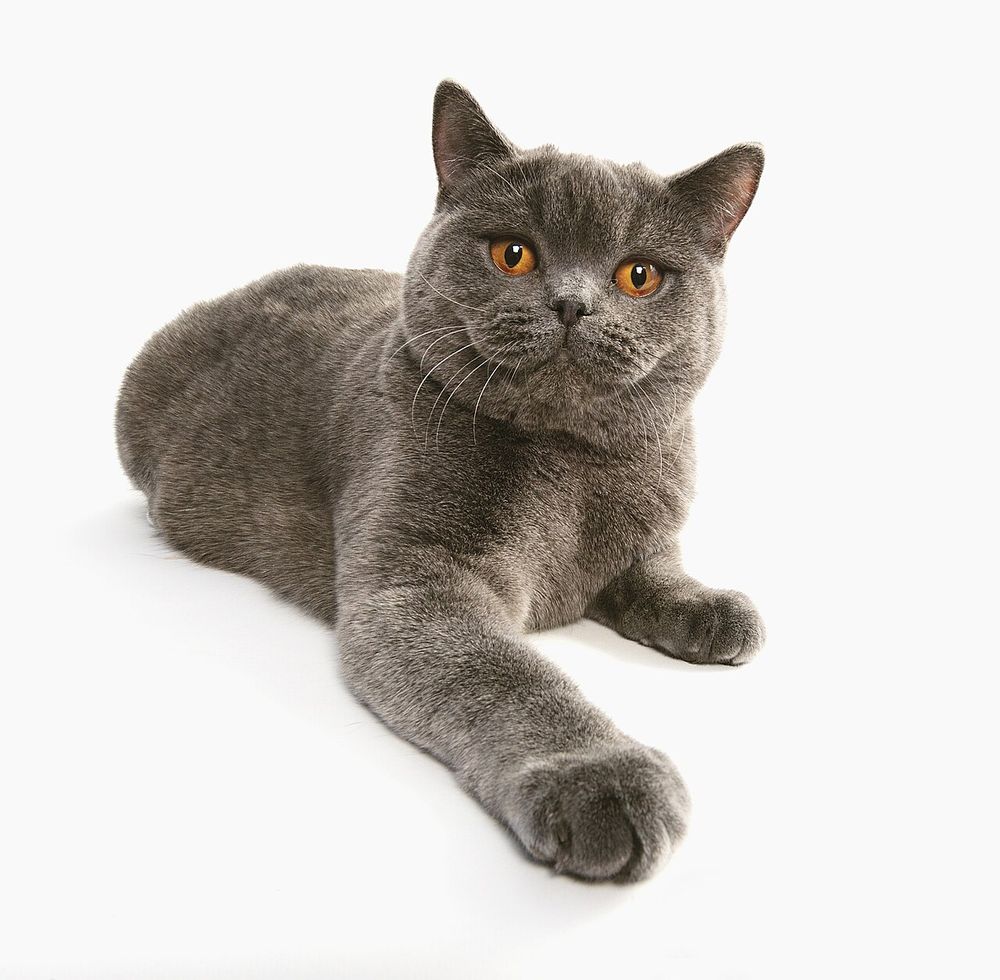
- Origin
- Great BritainThe Cat Fanciers' Association
- Adult weight
- 4.1 to 6.6 kg (The middle half of 1,947 adult British Shorthairs weighed at Australian vet clinics: females about 4.1 to 5.5 kg, males about 5.0 to 6.6 kg. CFA says males may reach about 7.7 kg (17 lb). Neither GCCF nor CFA publishes a weight range.)Frontiers in Veterinary Science (2023)study
- Lifespan
- 12 to 16 yearsFrontiers in Veterinary Science (2023)study
- Coat
- Short, very dense and crisp, with more hairs per square inch than any other breed, CFA says; it should not be woolly or double-coated. Some shedding is normal.The Cat Fanciers' Association
- Energy
- LowThe Cat Fanciers' Association
- Indian heat
- Copes with carePDSA
- Flats
- Suits a flatThe Cat Fanciers' Association
British Shorthair at a glance
| What | The rule | Source |
|---|---|---|
| Size | Medium to large, compact and powerful. CFA says males may reach 17 lb (about 7.7 kg) and full size comes at about three years. | The Cat Fanciers' Association |
| Activity | Calm and quiet; CFA says it is most comfortable keeping all four feet on the floor. | The Cat Fanciers' Association |
| Alone-time tolerance | Settles well at home with a sitter visiting at least twice a day. | Cats Protection |
| Heat tolerance | No breed-specific source. The coat is short but dense, so give it a cool room and water in several places in summer. | Governing Council of the Cat Fancy |
| Grooming | Easy: CFA suggests weekly combing, with occasional claw clipping and ear checks. | The Cat Fanciers' Association |
| Sociability | Enjoys people but may withdraw when the house is loud or busy. | The Cat Fanciers' Association |
Where does the British Shorthair come from?
CFA calls the British Shorthair the modern form of the cats the Romans brought to Britain. The breed first came into the public eye at the cat shows held at London's Crystal Palace at the turn of the twentieth century.
Both world wars cut the breed's numbers sharply. CFA says breeders rebuilt it by crossing in Persians and ordinary domestic cats, and did it well enough that by the 1950s a blue male, Brynbuboo Little Monarch, became the first Grand Champion of any breed in GCCF, the UK's governing cat body.
The first British Shorthairs went to the United States in the early 1900s, registered at first as British Blues. CFA notes the breed matures slowly: it does not reach full size until about three years old.
How did the British Shorthair come to India?
No source we found records when British Shorthairs first came to India. They are part of the Indian cat show scene today: a Feline Club of India show in Kolhapur in December 2024, with more than 200 cats, listed the British Shorthair alongside Persians, Bengals, Maine Coons and the Indian Indy Mau, with cats on show priced from Rs 5,000 to lakhs.
A heavy, dense-coated cat needs a cool room in an Indian summer. PDSA lists obese and long-coated cats among those most at risk of heatstroke, and an Australian study found about 48% of British Shorthairs at vet clinics were overweight, so keeping the weight down matters here as much as the shade, the water bowls and the power-cut plan.
What care does a British Shorthair need?
The three things that shape a good day for this breed.
Exercise
CFA describes the breed as quiet and sedate but interested in its people, often following them from room to room. Short daily play sessions with a wand toy keep a cat this calm moving and help hold its weight. The Cat Fanciers' Association
Grooming
CFA says most owners need only a quick weekly comb or brush, with regular claw clipping and occasional ear cleaning; the dense coat does shed. The Cat Fanciers' Association
Training
CFA says the breed learns daily routines and protests with a gentle paw tap when they change, so a steady routine is the main training tool. The Cat Fanciers' Association
How much should a British Shorthair eat?
Daily calories for a healthy, neutered adult British Shorthair, worked out from its weight with the formula vets use (70 x weight in kg to the power 0.75, then AAHA's factor for a neutered adult). Divide by the kcal per kg on your food's pack for grams a day, and adjust by body shape.
| Resting need (kcal a day) | Neutered adult (kcal a day) | |
|---|---|---|
| 4.1 kg AAHA (American Animal Hospital Association) | 200 | 240 to 280 |
| 5.4 kg | 250 | 300 to 350 |
| 6.6 kg | 290 | 350 to 400 |
Feed a complete and balanced commercial cat food for the cat's life stage, with fresh water always out. Weight is the breed's main feeding issue: in the Australian study about 48% of British Shorthairs were overweight, and Cornell says obesity raises the risk of arthritis and diabetes. Ask your vet for your cat's ideal weight, weigh food rather than guess, and keep treats to a small part of the day's food, as Cornell advises. Cornell advises against milk, as many cats are lactose intolerant, and against raw meat and home-made diets unless a vet gives a recipe for a medical reason. ASPCA lists onions, garlic, chocolate, grapes, salty food and dairy among foods to keep from pets, which rules out most leftovers from an Indian meal. Meals a day: kitten to 6 months, 3 a day; 6 months to 1 year, 2 a day; adult, from about 1 year, 1 or 2 a day. Puppies, kittens, working, pregnant and older animals need different amounts: ask your vet, or use Petym's food calculator.
Which illnesses is the British Shorthair prone to, and how are they treated?
The conditions veterinary studies and breed surveys most often report in the British Shorthair. Knowing the early signs means a vet sees it sooner.
See your vet first. This is general information from veterinary sources, not a diagnosis. Only a vet who has examined your pet can say what is wrong and prescribe treatment, and this page never gives a dose. Do not give your pet human medicine. If your pet seems very unwell, go to a 24-hour vet: find one in your city.
Hypertrophic cardiomyopathy (HCM)
See a vet soonThe walls of the heart thicken and the heart pumps less well. Cornell lists the British Shorthair among the breeds in which HCM is more common, and UFAW says there is no gene test for it in the breed. Cornell University College of Veterinary Medicine
Signs to watch for
- Often none: many cats with heart disease look normal
- Less activity and appetite
- Laboured, fast or open-mouth breathing
- Sudden back-leg pain or paralysis from a clot
- Sudden collapse
How a vet treats it
A vet diagnoses HCM with an ultrasound scan of the heart (echocardiography), after ruling out high blood pressure and an overactive thyroid. UFAW says treatment usually means regular medication by mouth; Cornell says it aims to control heart rate, relieve congestion in the lungs and prevent clots.
Prevention
UFAW says ultrasound screening is the way to find affected cats that should not be bred from, and recommends yearly heart scans for breeding cats.
Haemophilia B (a clotting disorder)
See a vet soonAn inherited shortage of clotting factor IX means the blood cannot clot properly. UFAW says it is reported to be inherited in British Shorthairs, though it is rare in cats overall. UFAW (Science for Animal Welfare)
Signs to watch for
- Bleeding that goes on after an injury, surgery or gum disease
- Small spots of bleeding under the skin
- Weakness and pale gums
- Blood in vomit or stools
How a vet treats it
A vet suspects it from abnormal bleeding and confirms it with blood tests of clotting time and factor IX. UFAW says there is no cure; a vet can give antifibrinolytic drugs to control bleeding, and a blood transfusion if anaemia is severe.
Prevention
There is no gene test for it in cats, UFAW says, so breeders should not breed from affected cats. Tell any vet before surgery or a dental that your cat is a British Shorthair.
Polycystic kidney disease (PKD)
See a vet soonFluid-filled cysts present from birth grow in the kidneys over time. Cornell says it occurs mostly in Persians and occasionally in a few other breeds, including Himalayans and British Shorthairs. Cornell University College of Veterinary Medicine
Signs to watch for
- Drinking and urinating more
- Poorer appetite and weight loss
- Nausea and vomiting
- Lethargy
How a vet treats it
Cornell says ultrasound is the only way to a definite diagnosis; a gene test shows a cat carries the gene but not how badly it is affected. There is no cure: vets manage it as kidney failure, with diet control, fluid therapy and medicines the vet prescribes.
Prevention
Cats that carry the gene should not be bred, Cornell says; ask a breeder for test results.
Overweight and obesity
Ask at a routine checkAbout 48% of British Shorthairs seen at Australian vet clinics were overweight, and 7% of adults obese, in a study of 1,947 cats. Cornell calls obesity, a body weight 20% or more above normal, the most common nutrition problem in cats. Frontiers in Veterinary Science (2023)study
Signs to watch for
- A weight 20% or more above the cat's normal weight, which is how Cornell defines obesity
- Weight that keeps creeping up between vet visits
How a vet treats it
A vet scores the body condition, sets an ideal weight and plans the food to reach it. Cornell says obese cats are up to four times more likely to develop diabetes, so the vet may also check for it and for arthritis.
Prevention
Measured meals rather than a bowl left full, few treats, and daily play. Cornell says free feeding dry food can lead some cats to overeat.
How does a British Shorthair handle time alone?
Well, as long as the routine is steady and the sitter does not crowd it.
CFA describes the British Shorthair as calm and quiet, a cat that enjoys people but may withdraw during loud activity. That makes it an easier breed to leave than a vocal, demanding one. It also means a sitter has to work a little to read it: a cat that keeps to itself by nature can hide illness in plain sight.
Cats Protection suggests a sitter who visits at least twice a day, with more visits for very young, old or unwell cats. Keep the times regular. International Cat Care says a predictable daily routine reduces stress, and lists hiding and resting more among the quieter signs of long-term stress.
Two practical things help. First, tell the sitter where your cat goes when it wants to be left alone, so they can check without pulling it out. Second, describe how your cat greets a familiar visitor, so the sitter can tell normal reserve from a cat that feels unwell.
Handling a British Shorthair: do and don't
Do
- Sit on the floor and let the cat come to you; let it decide when contact starts and stops. AAFP and ISFM (Journal of Feline Medicine and Surgery, 2013)study
- Offer play with a wand toy at every visit, even a short session. AAFP and ISFM (Journal of Feline Medicine and Surgery, 2013)study
- Keep the house quiet during visits; CFA says the breed may withdraw during loud activity. The Cat Fanciers' Association
- Comb once a week on a longer trip, and check the claws and ears. The Cat Fanciers' Association
Don’t
- Do not pick the cat up to cuddle it. CFA says it is happiest with all four feet on the floor. The Cat Fanciers' Association
- Do not let it get into fights or climb somewhere it could fall from: in a cat with haemophilia B, injuries bleed. UFAW (Science for Animal Welfare)
- Do not give any human medicine or dog flea product. International Cat Care
- Do not change the food, even if the cat seems bored with it. PDSA
Which health problems should a British Shorthair's sitter know?
Three inherited conditions are named for the breed in the sources. A sitter's job is to notice and call; the vet decides.
If Fast or open-mouth breathing, lethargy, sudden back-leg pain or paralysis. Cornell lists the British Shorthair among breeds in which HCM is more common.
Emergency: go to the vet now. UFAW notes there is no gene test for HCM in British Shorthairs, and many cats have early heart disease without their owners knowing. Cornell University College of Veterinary Medicine
If A cut, scratch or tooth problem that keeps bleeding, or bleeding gums. Haemophilia B means the blood cannot clot properly; it usually shows after injury or surgery, and males are more commonly affected.
Apply gentle pressure with a clean cloth and call the vet straight away. Tell them the cat is a British Shorthair. UFAW (Science for Animal Welfare)
If Drinking and urinating more, eating less, weight loss, vomiting, lethargy. Cornell names British Shorthairs among breeds occasionally affected by polycystic kidney disease.
Note it down, tell the owner and call the vet. Cornell University College of Veterinary Medicine
If Straining in the tray with little or no urine, especially in a male.
A true emergency that can be fatal within a day or two. Go to the vet now. Cornell University College of Veterinary Medicine
If Not eating for a day, or much less over two visits.
Call the vet. Cats that stop eating for a few days risk hepatic lipidosis, and overweight cats more so. University of Illinois College of Veterinary Medicine
If Panting, red or pale gums, weakness or wobbling on a hot day.
Heatstroke: cool water over the body, a fan, and the vet at once. PDSA
What if my British Shorthair has haemophilia B?
UFAW describes haemophilia B as a sex-linked condition in which the blood cannot clot properly. It is more common in males and usually shows after an injury, trauma or surgery. Its care advice is practical: prevent fights and falls, and keep up good dental care so the gums do not bleed.
For a sitter, that means a few extra rules. Keep the cat away from other animals it might fight with, close off high shelves or balconies it could fall from, and never try to trim claws or clean teeth unless you have shown them how. Any bleeding that does not stop with gentle pressure is a reason to go to the vet. If your vet has diagnosed the condition, put that at the top of the care sheet and ask the vet what the sitter should do in an emergency.
Does a British Shorthair feel the Indian heat?
No source makes a heat claim specific to the breed. The GCCF standard describes the coat as short, dense and crisp, and the body as compact and powerful. Dense fur on a solid cat is something to plan for in an Indian summer, even though it is not a long coat. PDSA lists overweight cats among those most at risk of heatstroke, and the breed's sturdy build makes extra weight easy to miss.
Before you travel between March and June, leave the coolest room open with the curtains drawn, a cool floor, and water in more than one bowl. The Animal Welfare Board of India's 2026 advisory asks for shade throughout the day and clean water in stable bowls, and lists excessive panting, lethargy, drooling, a rapid heartbeat and collapse as heat-stress signs that need a vet. Tell your sitter what to do in a power cut.
A British Shorthair visit plan
Arrive quietly
Let the cat hear you come in. Look for it in its usual spots without pulling it out; note how it is breathing.
Water and food
Fresh water in each bowl, kept away from food and the tray. Food as on the care sheet, logged. AAFP and ISFM (Journal of Feline Medicine and Surgery, 2013)study
Litter
Scoop each tray, note urine and stool, remove soiled litter at least once a day. Battersea Dogs and Cats Home
Floor time
Sit with the cat and offer a wand toy. A few minutes of chasing is plenty for many British Shorthairs.
Weekly
A comb through the coat, and a look at claws and ears, as CFA suggests. The Cat Fanciers' Association
Leave
Curtains, fan or AC as agreed, windows locked, daily photo update sent.
Feeding a British Shorthair while you are away
Keep the food, amounts and times exactly as they are; a sudden change of food is a common cause of diarrhoea. Leave enough food for the trip and a few days extra.
A calm cat that moves little and has a sitter who wants to be liked is a recipe for weight gain. Overweight cats are at higher risk of heatstroke and of liver disease if they stop eating. Ask your sitter to show affection with play and company, not treats. A food puzzle filled with part of the day's ration gives the cat something to do between visits, which the AAFP and ISFM guidelines support.
British Shorthair care through the year
| Watch for | What the sitter does | |
|---|---|---|
| Summer PDSA | A dense coat on a heavy cat in heat | Cool room, curtains drawn, extra water, power-cut plan |
| Monsoon | Damp, humid flat; tray smells more | Scoop at every visit, keep the litter dry, ventilate the room |
| Diwali and weddings The Cat Fanciers' Association | Noise; the breed may withdraw during loud activity | Windows shut, hiding places open, quiet visits |
| All year | Hidden illness in a reserved cat | Log appetite, litter and greeting at every visit |
Leave this for your British Shorthair's sitter
- Vet and 24-hour vet details, written down. Cats Protection
- Any heart scan, kidney test or blood-clotting result your vet has on record.
- Enough food, litter and medicine for the trip and a few days more. Cats Protection
- Where your cat hides and how it greets familiar people.
- The comb, the coolest room and the power-cut plan.
Which Petym service suits a British Shorthair?
If Healthy adult, trip of a few days to two weeks
Drop-in visits, at least twice a day. Drop-in visits
If Diagnosed heart, kidney or bleeding condition, or on medicine
Special-needs care, with every dose and check logged. Special-needs care
If Senior cat, a long trip, or a hot summer with power cuts
Overnight pet sitting, so someone is home at night. Overnight sitting
Breeds with similar care needs to the British Shorthair
Going away soon? Tell us your dates.
A checked local sitter feeds, walks and keeps your pet company at home, follows your care sheet to the letter and sends a photo every day. Petym is opening city by city: send your dates and we will tell you when a sitter can take them.
- Meet your sitter first, free
- PAN-checked, first-aid trained
- A photo every day
- Pay through Petym, never cash

Questions owners ask
Can a British Shorthair be left alone while I travel?
- Yes, with a sitter visiting at least twice a day. CFA describes the breed as calm and quiet, which helps it settle. Because it is reserved, the sitter should log appetite, litter and how the cat greets them at every visit, so a change shows up early.
Do British Shorthairs like being picked up?
- Many do not. CFA says the breed is most comfortable keeping all four feet on the floor. A sitter should sit with the cat, offer play and let it choose contact, rather than lift it for cuddles. This also avoids falls, which matter in a cat with a bleeding disorder.
What health problems do British Shorthairs have?
- The sources name hypertrophic cardiomyopathy (HCM), polycystic kidney disease and haemophilia B, a clotting disorder more common in males. UFAW says there is no gene test for HCM in the breed, so heart scans are used. A sitter should report breathing changes, bleeding or changes in thirst to your vet.
Can a British Shorthair cope with Indian summers?
- Indoors with shade, airflow and water, yes. No source names it as a heat-risk breed, but its coat is dense and its build heavy, and PDSA lists overweight cats among those most at risk of heatstroke. Keep it in the coolest room and plan for power cuts.
How often should I groom a British Shorthair?
- Weekly combing is enough for most, according to CFA, with occasional claw clipping and ear checks. On a trip longer than a week, ask your sitter to comb once and check the claws. The breed's coat is short and dense, and easy to keep tidy.
How many sitter visits does a British Shorthair need?
- At least two a day, morning and evening, as Cats Protection suggests for any cat. Add a midday visit in a heatwave or for an older cat, and choose overnight sitting for a cat with a diagnosed condition on a long trip.
Keep reading
- Cats: caring for a cat while you are away
- Ragdoll careAnother calm breed with a heart risk.
- Persian cat careThe breed most affected by PKD.
- How long can a cat be left alone?
- Drop-in visits for cats
- Diwali fireworks and pets
Services that help
Free tools for this
Words on this page, explained
Keep exploring
Sources
Each source was opened and read on the date shown. How Petym checks its sources
- The Cat Fanciers' Association: British Shorthair (opens in a new tab)
- PDSA: Heatstroke in cats (opens in a new tab)
- Cornell Feline Health Center: How often should you feed your cat? (opens in a new tab)
- Cornell Feline Health Center: Feeding your cat (updated 30 April 2026) (opens in a new tab)
- ASPCA Animal Poison Control: People foods to avoid feeding your pets (opens in a new tab)
- AAHA (American Animal Hospital Association): 2021 AAHA Nutrition and Weight Management Guidelines for Dogs and Cats: energy requirement calculations (Box 1, PDF) (opens in a new tab)
Show all 24 sourcesShow fewer
- Merck Veterinary Manual: Nutritional requirements of small animals (full review November 2023, updated September 2024) (opens in a new tab)
- Cornell University College of Veterinary Medicine: Hypertrophic cardiomyopathy (Cornell Feline Health Center) (opens in a new tab)
- UFAW (Science for Animal Welfare): British Shorthair: hypertrophic cardiomyopathy (opens in a new tab)
- UFAW (Science for Animal Welfare): British Shorthair: haemophilia B (opens in a new tab)
- Cornell University College of Veterinary Medicine: Polycystic kidney disease (Cornell Feline Health Center) (opens in a new tab)
- Cornell University College of Veterinary Medicine: Feline diabetes (Cornell Feline Health Center) (opens in a new tab)
- Governing Council of the Cat Fancy: British Shorthair: standard of points (opens in a new tab)
- Animal Welfare Board of India: Request to ensure care and protection of animals from direct heat during extreme hot weather (4 May 2026) (opens in a new tab)
- Cats Protection: Going on holiday without your cat (opens in a new tab)
- International Cat Care: Stress in cats (opens in a new tab)
- PDSA: Diarrhoea after a change of food (opens in a new tab)
- University of Illinois College of Veterinary Medicine: Hepatic lipidosis: a serious problem when cats stop eating (opens in a new tab)
- International Cat Care: Cats and poisons (opens in a new tab)
- Cornell University College of Veterinary Medicine: Feline lower urinary tract disease (Cornell Feline Health Center) (opens in a new tab)
- Battersea Dogs and Cats Home: Cat litter trays (opens in a new tab)
- Frontiers in Veterinary Science (2023): Bodyweight and body condition scores of Australian British shorthaired cats, 2008 to 2017 (Murphy, Stevenson and Mansfield) (opens in a new tab)
- AAFP and ISFM (Journal of Feline Medicine and Surgery, 2013): Feline environmental needs guidelines (opens in a new tab)
- ETV Bharat: Cat show in Kolhapur draws visitors (news report, 2 December 2024) (opens in a new tab)