Siberian cat care in India: coat, heat and allergies
Updated By PetymFacts checked against official sources on
Quick answer
A Siberian is a large, easygoing cat with a dense coat built for Russian winters. In India it can live well indoors, but it needs a cool room in summer, combing several times a week and a sitter who visits at least twice a day while you travel. Long-haired cats are among those most at risk of heatstroke.
Siberians are often sold as hypoallergenic. The research does not support that: every cat studied so far produces the main cat allergen, Fel d 1, and the Siberian studies are small.
- Meet your sitter first, free
- PAN-checked, first-aid trained
- A photo every day
- Pay through Petym, never cash

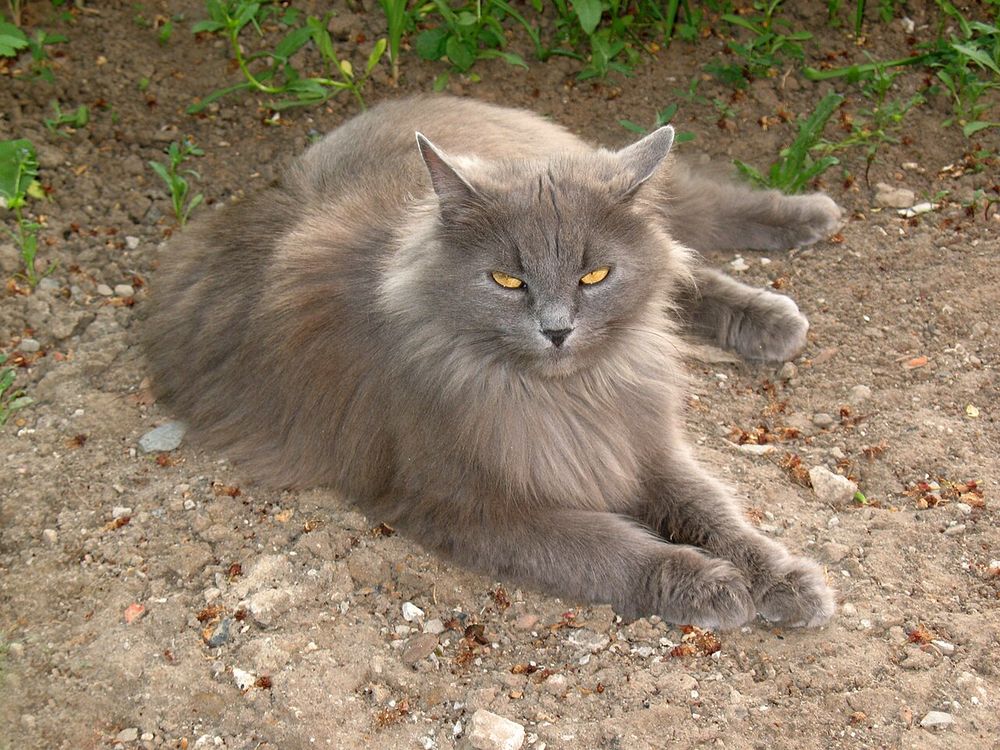
- Origin
- Siberia, RussiaGoverning Council of the Cat Fancy
- Adult weight
- 3.6 to 8.2 kg (CFA: mature males 12 to 18 lb, females 8 to 12 lb. GCCF quotes heavier figures, 13 to 26 lb.)The Cat Fanciers' Association
- Lifespan
- 12 to 15 yearsGoverning Council of the Cat Fancy
- Coat
- A dense, weatherproof semi-long coat with a substantial ruff: a soft, fine undercoat under a coarser topcoat. CFA calls it a triple coat, thicker in the colder months and shorter and less dense in summer.Governing Council of the Cat Fancy
- Energy
- HighGoverning Council of the Cat Fancy
- Indian heat
- Struggles in heatPDSA
- Flats
- A flat, with daily exerciseGoverning Council of the Cat Fancy
Siberian cat at a glance
| What | The rule | Source |
|---|---|---|
| Size | Large and powerful. CFA gives 12 to 18 lb (about 5.4 to 8.2 kg) for mature males and 8 to 12 lb for females; GCCF quotes heavier figures. | The Cat Fanciers' Association |
| Growth | Slow to mature: CFA says most reach full size by three years, and GCCF says full development takes four to five. | Governing Council of the Cat Fancy |
| Temperament | Sociable, curious and easygoing; GCCF calls it loyal, patient and gentle with children and other animals, including dogs. | Governing Council of the Cat Fancy |
| Heat tolerance | Low to moderate. PDSA lists long-haired cats among those most at risk of heatstroke. | PDSA |
| Grooming | High: GCCF advises combing a few times a week with a steel comb, and daily brushing in the heavy shedding seasons. | Governing Council of the Cat Fancy |
| Lifespan | GCCF says 12 to 15 years or more. | Governing Council of the Cat Fancy |
Where does the Siberian cat come from?
The Siberian is a natural, landrace cat from Siberia and the national cat of Russia, also called the Siberian Forest Cat or Moscow Longhair. GCCF says it lived much like a feral cat, earning its place as a rodent catcher on farms while also kept as a loyal family pet, and appears often in Russian fairy tales. CFA dates its recorded history in Russia to around the year 1000.
Harrison Weir mentioned the Siberian in his 1889 book Our Cats and All About Them, and GCCF says it appeared at early cat shows. It stayed largely a Russian cat until the end of the Cold War, when exports began: the first breeding cats reached the United States in 1990, imported by Elizabeth Terrell. CFA accepted the breed for registration in 2000. It arrived officially in the UK in 2002 and is now among the GCCF's ten most registered breeds.
How did the Siberian cat come to India?
No source we could find records when or how the first Siberians reached India; the breed's arrival here is not documented. It does show up in India's pedigree cat scene: an ETV Bharat news report on a Feline Club of India show in Kolhapur on 1 December 2024 listed the Siberian among the breeds shown.
This is a coat made for a Russian winter, and PDSA lists long-haired cats among those most at risk of heatstroke. CFA notes the coat is shorter and less dense in summer, but in an Indian city a Siberian still needs the coolest room, shade, several water bowls and a plan for power cuts from March to June.
What care does a Siberian cat need?
The three things that shape a good day for this breed.
Exercise
GCCF calls Siberians energetic, playful and fascinated by water, and says they can be taught to walk on a lead, which helps where there is no secure outdoor space. Tall cat trees and daily play suit a strong jumper. Governing Council of the Cat Fancy
Grooming
GCCF advises combing thoroughly with a steel comb a few times a week, and daily during the spring and autumn sheds. CFA says to feel the underside, tail and britches several times a week for mats and tease them apart gently. The Cat Fanciers' Association
Training
CFA calls the Siberian intelligent, sociable and easygoing; GCCF says it is quick to learn, mixes well with other animals including dogs, and some play fetch. GCCF also notes the breed reaches reproductive maturity early, so ask your vet about neutering in good time. Governing Council of the Cat Fancy
How much should a Siberian cat eat?
Daily calories for a healthy, neutered adult Siberian cat, worked out from its weight with the formula vets use (70 x weight in kg to the power 0.75, then AAHA's factor for a neutered adult). Divide by the kcal per kg on your food's pack for grams a day, and adjust by body shape.
| Resting need (kcal a day) | Neutered adult (kcal a day) | |
|---|---|---|
| 3.6 kg AAHA (American Animal Hospital Association) | 180 | 220 to 260 |
| 5.9 kg | 260 | 320 to 370 |
| 8.2 kg | 340 | 410 to 470 |
Feed a complete and balanced cat food for the cat's life stage; Cornell says foods with an AAFCO nutritional guarantee meet that bar. Siberians are slow to mature, CFA says, most reaching full size by three years, so ask your vet when to move from kitten to adult food. Weigh portions and count treats: Cornell calls obesity the most common nutrition problem in cats, and PDSA lists obese cats among those most at risk of heatstroke. Keep fresh water out in more than one place in summer. Milk is not a good treat because many cats are lactose-intolerant, Cornell says, and onion, garlic, chocolate, grapes and raisins harm pets, according to ASPCA. Meals a day: kitten to 6 months, 3 a day; 6 months to 1 year, 2 a day; adult, from about 1 year, 1 or 2 a day. Puppies, kittens, working, pregnant and older animals need different amounts: ask your vet, or use Petym's food calculator.
Which illnesses is the Siberian cat prone to, and how are they treated?
The conditions veterinary studies and breed surveys most often report in the Siberian cat. Knowing the early signs means a vet sees it sooner.
See your vet first. This is general information from veterinary sources, not a diagnosis. Only a vet who has examined your pet can say what is wrong and prescribe treatment, and this page never gives a dose. Do not give your pet human medicine. If your pet seems very unwell, go to a 24-hour vet: find one in your city.
Hypertrophic cardiomyopathy (HCM)
See a vet soonThe muscular walls of the heart thicken and it pumps less well. Cornell names the Siberian among the breeds in which HCM is more common, GCCF says cases have been recorded in the breed, and CFA says breeders test for it. Cornell University College of Veterinary Medicine
Signs to watch for
- Often none at first
- Laboured, rapid or open-mouth breathing and lethargy
- Sudden pain or paralysis in the back legs from a blood clot
How a vet treats it
A vet diagnoses it with echocardiography (a heart ultrasound), after ruling out other causes of a thick heart wall, and may add chest X-rays and an ECG. There is no cure; the vet's treatment aims to control the heart rate, relieve fluid on the lungs and prevent blood clots.
Prevention
Choose a kitten from a breeder who screens breeding cats, as CFA describes.
Polycystic kidney disease (PKD)
See a vet soonAn inherited disease in which cysts grow in the kidneys and gradually replace normal tissue. CFA lists it among the hereditary conditions Siberian breeders test for. The Cat Fanciers' Association
Signs to watch for
- Drinking and urinating more
- Poor appetite and weight loss
- Nausea, vomiting and lethargy
How a vet treats it
Cornell says ultrasound gives the definitive diagnosis. The vet manages it as kidney failure, with a combination of diet control, fluid therapy and prescribed medications.
Prevention
Cats that carry the gene should not be bred, so ask the breeder for test results.
Heatstroke
Emergency: go to a vet nowBody temperature rises above about 40 °C. PDSA lists long-haired cats among those most at risk because they find it harder to cool down, which makes an Indian summer the Siberian's main seasonal danger. PDSA
Signs to watch for
- Panting and fast breathing
- Bright red, dark red or very pale gums
- Vomiting or diarrhoea
- Weakness and confusion
How a vet treats it
PDSA says start cooling the cat at once and contact your vet. The vet cools the cat with water, fans, ice packs and possibly a fluid drip, may use oxygen, anaesthesia and other medications in severe cases, and may run blood and urine tests for kidney and clotting damage.
Prevention
A cool room, shade, several water bowls and a power-cut plan through the hot months.
Can a Siberian cat live in India's heat?
Yes, indoors with a plan. GCCF describes a natural cat from Siberia, the national cat of Russia, now living through Indian summers.
GCCF describes the coat as a very dense, soft, fine undercoat covered by a coarser top coat, and CFA calls it a triple coat. CFA adds that the coat is noticeably thicker in the colder months and shorter and less dense in summer. That seasonal thinning helps, but even a summer Siberian carries far more fur than an Indian street cat. PDSA lists long-haired cats among those most at risk of heatstroke, and says it usually follows a cat being shut in a hot space.
In an Indian flat, the hot space is a closed room on a May afternoon with the AC off in a power cut. Before you travel between March and June, leave the coolest room open, draw the curtains on sunny windows, put water in more than one bowl and give the cat a tiled floor. The Animal Welfare Board of India's 2026 heat advisory asks for shade and clean water through the day and lists panting, drooling, lethargy and collapse as signs that need a vet.
The monsoon brings a coat job more than a heat one. In the humidity of Mumbai or Kochi, ask the sitter to keep the coat dry and follow CFA's advice: check the underside, the tail and the britches, the long hair on the back legs, several times a week for mats.
Should I shave my Siberian for summer?
No source says shaving a Siberian keeps it cooler. What the breed bodies recommend is regular combing: GCCF says the thick fur will mat without it and advises daily brushing in the heavy shedding seasons. If your cat is badly matted, a groomer or your vet should deal with it, and a sitter should never cut mats out with scissors.
Ask your vet before any full clip. A tidy trim under the tail can help keep the rear end clean in the rains, and that is a smaller job than a shave.
Are Siberian cats hypoallergenic?
Not in any proven way. Here is what the studies we read actually report.
You may have read
Siberians do not make the allergen that causes cat allergy.
Myth
What the sources say
A 2026 review in Clinical and Translational Allergy says some breeds, such as Siberians, are believed to produce lower levels of Fel d 1, but that all cats studied so far produce this allergen. Clinical and Translational Allergy (2026)study
You may have read
Science has shown Siberians are safe for people with allergies.
Myth
What the sources say
The main Siberian study, in Veterinary Sciences in 2017, looked at the Fel d 1 genes of four cats and measured saliva allergen in three. It found gene variants that could affect the allergen and asked for more research to see whether they reduce it. Veterinary Sciences (2017)study
You may have read
The breed standard promises a low-allergy cat.
Myth
What the sources say
Neither the CFA nor the GCCF breed page makes any allergy claim. The idea comes mainly from breeders' statements, as the 2017 study itself notes. The Cat Fanciers' Association
You may have read
A sitter with a cat allergy will be fine with a Siberian.
Myth
What the sources say
Do not assume so. Because every cat studied produces Fel d 1, a sitter or family member with a cat allergy should be honest about it at the meet and greet, and ask their own doctor. Clinical and Translational Allergy (2026)study
What is a Siberian like with a sitter?
CFA describes the Siberian as sociable, curious and easygoing, not overactive or intrusive, but fond of investigating cupboards. GCCF calls it energetic and intelligent, loyal to its people, quick to learn, with dog-like traits. Most Siberians will meet a sitter, accept a comb and follow them around. That makes visits easier than with a timid cat, and it makes a Siberian that hides or ignores the sitter worth noticing.
Cats Protection suggests a sitter visit at least twice a day for any cat left at home. With a Siberian, part of each visit is coat work, so allow time for it. Childproof catches on cupboards that hold cleaning products or medicines are worth fitting before a long trip: a curious cat has a long day alone to explore.
GCCF notes that Siberians reach reproductive maturity earlier than most breeds and advises neutering kittens promptly. An unneutered young Siberian left with a sitter may call, spray or try to get out.
In the breed's own words
Word for word
90% placid and 10% mischief.
Plan for both halves: calm company at each visit, and cupboards and balcony doors closed for the other ten per cent.
Which health problems should a Siberian's sitter know about?
Breed sources name a heart condition and a kidney condition that breeders test for. A sitter notices and calls; the vet decides.
If Fast or open-mouth breathing, lethargy, sudden pain or weakness in the back legs. GCCF says cases of hypertrophic cardiomyopathy have been recorded in the breed, and CFA says breeders test for it.
Emergency: go to the vet now, and tell them the cat is a Siberian. Cornell University College of Veterinary Medicine
If Drinking and urinating more, eating less, weight loss, vomiting. CFA lists polycystic kidney disease among the conditions Siberian breeders test for.
Note it down, tell the owner and call the vet. Cornell University College of Veterinary Medicine
If Panting, drooling, bright red or pale gums, wobbling on a hot day.
Heatstroke: move the cat somewhere cool, wet the body with cool water away from the face, use a fan, and call the vet at once. PDSA
If Tight mats near the skin, sore skin under the coat, or a soiled rear end.
Do not cut. Tell the owner, and ask a groomer or the vet to deal with it. Check soiled areas daily in the monsoon. The Cat Fanciers' Association
If Repeated retching or hairballs, or a cat that stops eating.
Call the vet. A cat that stops eating for a few days risks a serious liver disease. University of Illinois College of Veterinary Medicine
If Straining in the tray with little or no urine.
A possible blocked bladder, an emergency. Go to the vet now. Cornell University College of Veterinary Medicine
A Siberian visit plan
On arrival
Check the room temperature and find the cat. Note how it is breathing and whether it greets you as usual.
Bowls
Fresh water in each bowl, more in summer. Food as written, logged, away from the litter tray. AAFP and ISFM (Journal of Feline Medicine and Surgery, 2013)study
Litter
Scoop each tray and look for any change in urine or stool. Remove soiled litter at least daily. Battersea Dogs and Cats Home
Coat check
Run a steel comb through the underside, tail and back legs, where CFA says mats form. A short session, stopping before the cat objects. The Cat Fanciers' Association
Play
A few minutes with a wand toy or a game the cat already knows; GCCF says Siberians learn quickly. Governing Council of the Cat Fancy
Leaving
Curtains drawn, fan or AC as agreed, cupboards shut, daily photo update sent.
Siberian care through the Indian year
| Main concern | What the sitter does | |
|---|---|---|
| Summer (March to June) PDSA | Heatstroke risk in a long-haired cat | Coolest room, extra water, a cool floor, a power-cut plan, check the cat first at every visit |
| Monsoon (June to September) The Cat Fanciers' Association | Damp undercoat, mats, a soiled rear end | Comb the underside and back legs, keep the coat dry, check under the tail |
| Spring and autumn shedding Governing Council of the Cat Fancy | Heavy coat loss and swallowed hair | Daily brushing, as GCCF advises in shedding seasons |
| Diwali and Holi | Noise, and colour powder caught in a thick coat | Windows shut, hiding places open; call the vet if the cat has licked colour off its fur |
Feeding a Siberian while you travel
Leave the same food, measured out as you normally serve it, with enough for the trip and a few spare days. PDSA says a sudden change of diet is a common cause of diarrhoea, and diarrhoea in a long-coated cat quickly soils the fur under the tail.
Siberians are big, slow-growing cats, and a young one may still be filling out at three or four years. Write down your vet's advice on the cat's weight and what it eats, so a sitter does not add extra food because the cat looks large or asks loudly. Overweight cats are at greater risk of heatstroke, according to PDSA. Water matters more than food in an Indian summer: bowls in two or three rooms, refreshed at every visit.
Leave this for your Siberian's sitter
- Your vet and the nearest 24-hour vet, written down. Cats Protection
- The steel comb you use, and the spots your cat does not like being combed.
- Any heart scan or kidney test results, and medicines with the vet's written plan.
- The coolest room, the AC or fan settings, and what to do in a power cut.
- Which cupboards and balcony doors must stay shut.
- Whether anyone visiting has a cat allergy, so it is raised at the meet and greet.
Which Petym service suits a Siberian?
If Healthy adult, trip of a few days to two weeks, outside peak summer
Drop-in visits at least twice a day, with a coat check at each. Drop-in visits
If A hot month with power cuts, or a long trip
Overnight pet sitting, so someone is home through the hottest nights. Overnight sitting
If Diagnosed heart or kidney disease, or daily medicine
Special-needs care, with each dose and check logged. Special-needs care
Breeds with similar care needs to the Siberian cat
Going away soon? Tell us your dates.
A checked local sitter feeds, walks and keeps your pet company at home, follows your care sheet to the letter and sends a photo every day. Petym is opening city by city: send your dates and we will tell you when a sitter can take them.
- Meet your sitter first, free
- PAN-checked, first-aid trained
- A photo every day
- Pay through Petym, never cash

Questions owners ask
Can a Siberian cat survive in India's heat?
- Yes, as an indoor cat with a cool room, shade, water in several places and a power-cut plan. PDSA lists long-haired cats among those most at risk of heatstroke. CFA says the coat thins in summer, but a Siberian still needs more help in an Indian May than a short-haired cat.
Is a Siberian cat hypoallergenic?
- Not in any proven way. A 2026 review in Clinical and Translational Allergy says Siberians are believed to produce less Fel d 1, the main cat allergen, but that all cats studied so far produce it. The one Siberian gene study looked at only four cats. Ask your doctor before relying on the claim.
Can I leave my Siberian alone while I travel?
- With a sitter visiting at least twice a day, as Cats Protection suggests for any cat, yes. Each visit should include water, food, the tray, a short comb of the underside and back legs, and a check that the cat is cool and breathing normally.
How often should a Siberian be groomed?
- GCCF advises combing a few times a week with a steel comb, and daily brushing in the heavy shedding seasons. CFA says some Siberians need weekly sessions while others go weeks without, but the underside, tail and back legs should be checked for mats several times a week.
What health problems do Siberian cats have?
- GCCF calls the breed generally healthy but says cases of hypertrophic cardiomyopathy have been recorded. CFA lists HCM and polycystic kidney disease among conditions breeders test for. A sitter should treat fast breathing or back-leg weakness as an emergency and report changes in thirst.
How big does a Siberian cat get?
- CFA gives 12 to 18 lb for mature males and 8 to 12 lb for females, and GCCF quotes heavier ranges. Siberians grow slowly: CFA says most reach full size by three years and GCCF says full development takes four to five years.
Should a Siberian go to a cattery or stay home?
- Usually home. Cats Protection says cats are less stressed in their own surroundings, and at home a sitter can keep the cat in its coolest room and comb it in a space it knows. A cattery can suit a long trip if staff will groom it and keep it cool.
Keep reading
- Cats: caring for a cat while you are away
- Maine Coon careAnother large, long-coated forest-type cat.
- Persian cat careLong coats in Indian heat.
- Can a Persian cat live without AC?
- Summer pet care in India
- Monsoon pet care
- Drop-in visits for cats
Services that help
Free tools for this
Words on this page, explained
Keep exploring
Sources
Each source was opened and read on the date shown. How Petym checks its sources
- Governing Council of the Cat Fancy: Siberian (opens in a new tab)
- The Cat Fanciers' Association: Siberian (opens in a new tab)
- PDSA: Heatstroke in cats (opens in a new tab)
- Cornell Feline Health Center: Feeding your cat (updated 30 April 2026) (opens in a new tab)
- Cornell Feline Health Center: How often should you feed your cat? (opens in a new tab)
- ASPCA Animal Poison Control: People foods to avoid feeding your pets (opens in a new tab)
Show all 20 sourcesShow fewer
- AAHA (American Animal Hospital Association): 2021 AAHA Nutrition and Weight Management Guidelines for Dogs and Cats: energy requirement calculations (Box 1, PDF) (opens in a new tab)
- Merck Veterinary Manual: Nutritional requirements of small animals (full review November 2023, updated September 2024) (opens in a new tab)
- Cornell University College of Veterinary Medicine: Hypertrophic cardiomyopathy (Cornell Feline Health Center) (opens in a new tab)
- Cornell University College of Veterinary Medicine: Polycystic kidney disease (Cornell Feline Health Center) (opens in a new tab)
- Animal Welfare Board of India: Request to ensure care and protection of animals from direct heat during extreme hot weather (4 May 2026) (opens in a new tab)
- Cornell University College of Veterinary Medicine: Feline lower urinary tract disease (Cornell Feline Health Center) (opens in a new tab)
- Cats Protection: Going on holiday without your cat (opens in a new tab)
- Battersea Dogs and Cats Home: Cat litter trays (opens in a new tab)
- PDSA: Diarrhoea after a change of food (opens in a new tab)
- University of Illinois College of Veterinary Medicine: Hepatic lipidosis: a serious problem when cats stop eating (opens in a new tab)
- Veterinary Sciences (2017): Polymorphism analysis of Ch1 and Ch2 genes in the Siberian cat (opens in a new tab)
- Clinical and Translational Allergy (2026): Allergy to cats: current perspectives and therapeutic options (opens in a new tab)
- AAFP and ISFM (Journal of Feline Medicine and Surgery, 2013): Feline environmental needs guidelines (opens in a new tab)
- ETV Bharat: Cat show in Kolhapur draws visitors (news report, 2 December 2024) (opens in a new tab)