Norwegian Forest Cat care in India: coat, heat and sitters
Updated By PetymFacts checked against official sources on
Quick answer
A healthy adult Norwegian Forest Cat can stay home while you travel if a sitter visits at least twice a day. Its thick, water-resistant double coat was made for Scandinavian winters, so in India it needs the coolest room, water in several places and extra combing when it moults. Give it height to climb indoors.
GCCF calls the breed robust and healthy, and lists an inherited glycogen storage disease that a DNA test can screen for. CFA adds heart disease. A sitter should know the signs and call your vet early.
- Meet your sitter first, free
- PAN-checked, first-aid trained
- A photo every day
- Pay through Petym, never cash

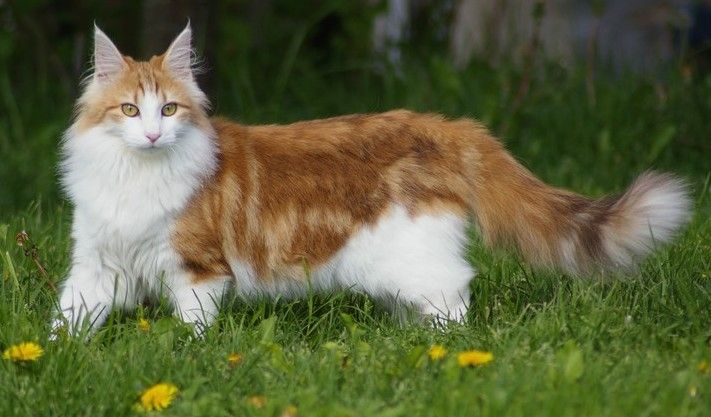
- Origin
- NorwayGoverning Council of the Cat Fancy
- Adult weight
- 4.1 to 7.3 kg (CFA gives 9 to 12 lb for females and 12 to 16 lb for males, reached only at full growth, which can take up to five years)The Cat Fanciers' Association
- Lifespan
- 14 to 16 yearsGoverning Council of the Cat Fancy
- Coat
- Semi-long, with a dense woolly undercoat under a smooth, water-repellent overcoat. Thicker in winter, and it moults heavily in spring.Governing Council of the Cat Fancy
- Energy
- ModerateThe Cat Fanciers' Association
- Indian heat
- Struggles in heatPDSA
- Flats
- A flat, with daily exerciseThe Cat Fanciers' Association
Norwegian Forest Cat at a glance
| What | The rule | Source |
|---|---|---|
| Size | Large and sturdy. CFA gives 12 to 16 lb (about 5.4 to 7.3 kg) for males and 9 to 12 lb (about 4 to 5.4 kg) for females. | The Cat Fanciers' Association |
| Growth | Slow to mature: GCCF says it is not fully grown until about 4 to 5 years of age. | Governing Council of the Cat Fancy |
| Coat | A dense woolly undercoat under a smooth, water-repellent overcoat, with a ruff and knickerbockers in full coat. | Governing Council of the Cat Fancy |
| Heat tolerance | Low to moderate. PDSA lists long-haired cats among those most at risk of heatstroke, and this coat was built for cold, wet weather. | PDSA |
| Grooming | Weekly combing most of the year, more during the moult. CFA says the coat tangles less than many longhairs. | The Cat Fanciers' Association |
| Alone-time tolerance | Independent but not aloof. CFA says it may seek company if left alone too long; plan at least two visits a day. | The Cat Fanciers' Association |
| Lifespan | GCCF gives 14 to 16 years. | Governing Council of the Cat Fancy |
Where does the Norwegian Forest Cat come from?
The Norwegian Forest Cat, or Norsk Skogkatt, is a natural breed from Norway. CFA says its exact origins are not clear, and Norse myth makes it the favourite cat of the goddess Freya. Viking explorers may have kept these cats on their ships to control rodents, and GCCF says they are thought to have reached the east coast of North America with Leif Erickson in the late 900s. The thick, water-repellent coat suited the cold, wet Scandinavian climate.
Over the centuries the breed was nearly lost through crossing with free-roaming shorthairs. A Norwegian breed club formed in the mid 1970s and began a breeding programme from carefully chosen cats, and King Olaf V named it the official cat of Norway. The first breeding pair reached the United States in 1979, CFA gave the breed championship status in 1993, and GCCF gave it preliminary recognition in the UK in 1989.
How did the Norwegian Forest Cat come to India?
No source we found records when the Norwegian Forest Cat first reached India, and it does not appear in the breed lists of the Indian cat show reports we read. Its cold-climate coat is the main thing an Indian owner has to plan for: PDSA lists long-haired cats among those most at risk of heatstroke. An Indian Norwegian Forest Cat lives indoors, with a cool room, shade and water through April to June, and extra combing during the spring moult to clear the dead undercoat.
What care does a Norwegian Forest Cat need?
The three things that shape a good day for this breed.
Exercise
Moderate, with bursts of energy. CFA says the breed loves high places, so give it a tall cat tree; GCCF says it enjoys interactive games and climbs readily. Play twice a day in a flat. The Cat Fanciers' Association
Grooming
Weekly most of the year with a stainless steel comb; CFA says the coat tangles less than many longhairs. GCCF says the spring moult needs extra attention so dead coat does not knot. Governing Council of the Cat Fancy
Training
GCCF says the breed enjoys interactive games, so use play and toys as rewards. Ask the breeder before bathing: CFA says the water-repellent coat takes a long time to wet and to dry. The Cat Fanciers' Association
How much should a Norwegian Forest Cat eat?
Daily calories for a healthy, neutered adult Norwegian Forest Cat, worked out from its weight with the formula vets use (70 x weight in kg to the power 0.75, then AAHA's factor for a neutered adult). Divide by the kcal per kg on your food's pack for grams a day, and adjust by body shape.
| Resting need (kcal a day) | Neutered adult (kcal a day) | |
|---|---|---|
| 4.1 kg AAHA (American Animal Hospital Association) | 200 | 240 to 280 |
| 5.7 kg | 260 | 310 to 360 |
| 7.3 kg | 310 | 370 to 440 |
Feed a complete and balanced food that names the cat's life stage. The breed is slow to mature, reaching full growth only at about four to five years, so ask your vet when to move from kitten to adult food. GCCF notes anecdotal evidence that the breed may be prone to urinary problems and says care should be taken with diet; Cornell says cats that drink less are more at risk, so keep fresh water in more than one place and ask your vet whether some wet food suits your cat. Keep treats under 10 to 15% of the day's calories, as Cornell advises. Avoid Indian kitchen foods: ASPCA says cats are more susceptible than dogs to onion, garlic and chives, and milk and dairy can upset digestion. Cornell does not recommend raw meat for cats. Amounts come from the energy table above. Meals a day: kitten to 6 months, 3 a day; 6 to 12 months, 2 a day; adult, from about 1 year, 1 to 2 a day. Puppies, kittens, working, pregnant and older animals need different amounts: ask your vet, or use Petym's food calculator.
Which illnesses is the Norwegian Forest Cat prone to, and how are they treated?
The conditions veterinary studies and breed surveys most often report in the Norwegian Forest Cat. Knowing the early signs means a vet sees it sooner.
See your vet first. This is general information from veterinary sources, not a diagnosis. Only a vet who has examined your pet can say what is wrong and prescribe treatment, and this page never gives a dose. Do not give your pet human medicine. If your pet seems very unwell, go to a 24-hour vet: find one in your city.
Hypertrophic cardiomyopathy (HCM)
See a vet soonA thickening of the heart muscle, the most common heart disease in cats. Cornell lists the Norwegian Forest Cat among predisposed breeds, and CFA says it has occurred in the breed. Cornell University College of Veterinary Medicine
Signs to watch for
- Often none until late
- Fast or laboured breathing, or breathing with the mouth open
- Lethargy
- Sudden pain or paralysis in the back legs from a clot
How a vet treats it
A vet diagnoses HCM with a heart ultrasound scan, after ruling out high blood pressure and an overactive thyroid. There is no cure: Cornell says treatment aims to control heart rate, relieve congestion in the lungs and prevent clots, with medicines given by mouth or injection.
Prevention
CFA says breeders now routinely test for it. Ask the breeder for the parents' heart screening results.
Urinary tract disease (FLUTD) and blocked bladder
Emergency: go to a vet nowProblems of the bladder and urethra. GCCF notes anecdotal evidence that the breed may be prone to feline urinary syndrome; Cornell says overweight, inactive indoor cats that drink less, and males, are more at risk. Governing Council of the Cat Fancy
Signs to watch for
- Straining or crying while passing urine
- Frequent trips with little urine
- Blood in the urine
- Urinating outside the tray
How a vet treats it
A vet examines the cat and tests the urine, sometimes with X-rays or ultrasound. Cornell says a blocked urethra is usually treated with a urinary catheter and fluids into a vein, antibiotics only for a bacterial infection, special diets for some bladder stones, and surgery as a last resort.
Prevention
Clean water at all times, a steady diet, a healthy weight and a calm home.
Glycogen storage disease type IV
Ask at a routine checkAn inherited disorder of the breed. GCCF says affected kittens are stillborn or die shortly after birth. Governing Council of the Cat Fancy
Signs to watch for
- Stillborn kittens or kittens that die soon after birth in a litter
How a vet treats it
Neither GCCF nor CFA describes a treatment. The answer is in breeding: CFA says breeders routinely test for it and are removing carrier cats from breeding.
Prevention
Buy from a breeder who tests the parents.
Hairballs
See a vet soonSwallowed hair that collects in the stomach. Cornell says long-haired cats may be at higher risk, and CFA says this breed drops its winter coat each spring. Cornell University College of Veterinary Medicine
Signs to watch for
- Retching or coughing up hairballs
- Repeated retching with nothing produced
- Not eating for more than a day or two, or lethargy
How a vet treats it
A vet uses an examination, blood tests and X-rays, sometimes ultrasound. Cornell says most cases need a few days of supportive care and a laxative the vet gives; a hairball that blocks the intestine needs surgery.
Prevention
Regular combing, daily in the moult. Cornell warns never to give a laxative without a vet's approval.
Heatstroke
Emergency: go to a vet nowPDSA lists long-haired cats among those most at risk, and this breed's dense woolly undercoat was built for Scandinavian winters, not Indian summers. PDSA
Signs to watch for
- Panting and fast breathing
- Red or pale gums
- Vomiting or diarrhoea
- Weakness, wobbling or collapse
How a vet treats it
PDSA says to start cooling the cat at once and contact the vet. A vet cools the cat with water and fans, may give a fluid drip, oxygen or medication, and checks blood and urine for kidney damage.
Prevention
A cool room, shade and water at all times, a healthy weight and no travel in the heat.
Can a Norwegian Forest Cat live in Indian heat?
Indoors, with planning, yes. The coat that kept its ancestors dry in Norwegian forests is the main thing working against it in Delhi in May.
CFA describes a thick double coat with a water-resistant outer layer, built to handle cold, wet weather, and says the coat looks fullest in winter when the undercoat is most developed. GCCF accepts a shorter coat in summer. In other words, the breed sheds towards a lighter coat as the weather warms, and in most of India that lighter coat is what your cat will carry for much of the year. It is still a long, dense coat on a large body.
PDSA names long-haired and overweight cats among those most at risk of heatstroke, and gives a cat's normal temperature as about 38.1 to 39.2 °C. The Animal Welfare Board of India's May 2026 heat advisory asks owners to provide shade through the day and clean water in stable bowls, and lists heavy panting, drooling, lethargy, a racing heartbeat and collapse as heat-stress signs that need a vet.
Choose the room that stays coolest through the afternoon in a top-floor or west-facing flat, and close it to direct sun before you leave. Put at least three water bowls in different places. A Wegie likes high places, so the coolest spot for a person may not be where the cat rests: check whether it sleeps on top of a cupboard, where hot air collects, and offer a lower, shaded perch instead. If the flat depends on an air conditioner, write a power-cut plan for the sitter: the inverter switch, which window to open safely, and when to call you.
Norwegian Forest Cat numbers a sitter should know
Breed facts from the Cat Fanciers' Association and the Governing Council of the Cat Fancy.
16 lb
Upper end of the CFA weight range for males, about 7.3 kg The Cat Fanciers' Association
5 years
Age by which GCCF says the breed is fully grown Governing Council of the Cat Fancy
16 years
Upper end of the lifespan GCCF gives Governing Council of the Cat Fancy
2 visits
Minimum daily sitter visits Cats Protection suggests for a cat left at home Cats Protection
How much grooming does a Wegie need in Indian weather?
Less than a Persian, more than a shorthair. The moult is when it matters most.
GCCF describes the breed as fairly low maintenance and lists weekly grooming, with extra attention in spring when the cat moults, to clear dead undercoat before it knots. CFA says the coat is less prone to tangles than many long-haired breeds, and suggests regular combing with a stainless-steel comb. Write on the care sheet when your cat usually moults heavily, so a sitter on a trip at that time knows to comb more.
Loose undercoat swallowed during self-grooming comes back up as hairballs. Cornell's Feline Health Center says a hairball every week or two is not uncommon and generally harmless, but repeated retching with nothing produced, or a cat that stops eating, is a reason to call the vet. A sitter who combs for five minutes at each visit during the moult removes a great deal of that hair before the cat swallows it.
Do not ask a sitter to bathe the cat. CFA notes that the coat takes a long time to get wet and even longer to dry, which in a humid monsoon flat means a damp cat for hours. Mats behind the ears, under the arms and in the knickerbockers on the back legs are the usual trouble spots; a groomer or vet should deal with a tight mat, not scissors.
What does a Norwegian Forest Cat need while you are away?
Leave this list with your sitter, alongside the care sheet.
- Your vet's number and the nearest 24-hour vet, written on the care sheet. Cats Protection
- A stainless-steel comb, and a note of the spots that tangle first on your cat. The Cat Fanciers' Association
- A tall cat tree or shelf route, so the cat climbs where you want and not onto the kitchen cabinets. The Cat Fanciers' Association
- Window screens that fit snugly in every window the cat can reach; childproof grilles alone are not enough for a cat. ASPCA
- Water bowls in at least three places, away from the litter tray and from food. AAFP and ISFM (Journal of Feline Medicine and Surgery, 2013)study
- Any heart scan result or GSD IV DNA test certificate your breeder or vet gave you.
- The coolest room, and what to do if the power goes off on a hot afternoon.
- Enough food and litter for the trip plus a few days more, and a rule that nothing new is introduced. Cats Protection
Which health problems should a Norwegian Forest Cat's sitter watch for?
A sitter notices and calls; the vet decides. These are the conditions breed bodies and vet schools link to the breed, plus the everyday cat emergencies.
If Fast breathing at rest, breathing with the mouth open, sudden weakness or a dragging back leg. CFA says hypertrophic cardiomyopathy has occurred in the breed.
Emergency: go to the vet now. Many cats with early heart disease show nothing until a crisis. Cornell University College of Veterinary Medicine
If Straining in the tray, frequent trips with little urine, or crying while passing urine. GCCF notes anecdotal evidence that the breed may be prone to feline urinary syndrome.
A blocked bladder, more common in males, can kill within a day or two. Go to the vet the same hour. Cornell University College of Veterinary Medicine
If Panting, drooling, red or very pale gums, wobbling or collapse on a hot day.
Heatstroke: move the cat somewhere cool, wet the coat with cool (not icy) water away from the face, use a fan, and call the vet at once. PDSA
If Retching often with no hairball produced, a swollen belly, or vomiting with no appetite.
Call the vet. Occasional hairballs are normal; repeated unproductive retching is not. Cornell University College of Veterinary Medicine
If The cat has eaten little or nothing for a day, or over two visits in a row.
Call the vet. Cats that stop eating for a few days risk hepatic lipidosis, and a large, heavy cat is at more risk. University of Illinois College of Veterinary Medicine
What is GSD IV, and does it matter for an adult cat?
GCCF lists glycogen storage disease type IV as an inherited, autosomal recessive disorder of the Norwegian Forest Cat. Affected kittens are stillborn or die shortly after birth, and a DNA test is available. CFA says breeders now routinely test for this and for heart disease, and are working to remove carrier cats from breeding programmes.
For an owner leaving an adult cat with a sitter, GSD IV is mostly a breeding question, not a daily care one. It matters in two ways. If you are buying a kitten in India, ask the breeder for the parents' DNA test results and do not accept a verbal assurance. If you have the certificates, keep a copy with the care sheet so any vet the sitter takes the cat to can see them. Heart disease is the condition that can appear in an adult that seemed well, which is why the warning signs above put breathing first.
Myths about Norwegian Forest Cats in India
You may have read
A cat bred for snow cannot be kept in India at all.
Myth
What the sources say
It can, indoors and with planning. GCCF accepts a shorter summer coat, and the risk is managed with a cool room, water and combing. The risk is real, though: PDSA lists long-haired cats among those most at risk of heatstroke. PDSA
You may have read
Shaving the coat keeps a Wegie cool.
Myth
What the sources say
GCCF describes a water-repellent overcoat over a woolly undercoat that is shed in the spring moult, and the help it advises then is extra grooming, not clipping. Ask your vet before any clipping. Governing Council of the Cat Fancy
You may have read
A big, independent cat does not mind being left alone for days.
Myth
What the sources say
CFA says the breed is not clingy but may seek company if left alone too long. Cats Protection advises a sitter who visits at least twice a day for any cat. The Cat Fanciers' Association
You may have read
A kitten that looks fully grown at one year has stopped growing.
Myth
What the sources say
GCCF says the breed is not fully grown until about 4 to 5 years of age, so its food needs can still be changing. Ask your vet before you change the diet. Governing Council of the Cat Fancy
Climbing, play and a flat in a housing society
CFA says Wegies have a fondness for high places and need tall scratching posts or cat trees, or they will claim the top of a kitchen cabinet. They are moderately active with random bursts of energy, and enjoy chasing, hiding and pouncing on toys. In a two-bedroom flat, a floor-to-ceiling cat tree near a window and a cleared high shelf give that energy somewhere to go.
The AAFP and ISFM environmental needs guidelines describe what every indoor cat needs: a safe place, separate food, water, litter and resting spots, chances for play that mimic hunting, steady human contact on the cat's terms, and respect for its sense of smell. For a sitter, the play part is easy to skip on a busy day. Ask for ten minutes with a wand toy at each visit, ending with a catch, rather than a quick refill and goodbye.
Balconies are the risk in Indian high-rises. The ASPCA says most cats in high-rise falls fall accidentally from windows and terraces, often while focused on a bird, and that childproof window guards will not stop a cat. A heavy climber is no exception. Keep the balcony door shut unless it is fully netted, and tell the sitter which windows can open.
Feeding a Norwegian Forest Cat while you travel
Keep the food, the amounts and the times exactly as they are, and write them on the care sheet. PDSA warns that a sudden change of food is a common cause of diarrhoea, and diarrhoea in a long-coated cat soon soils the trousers on the back legs, which then needs washing and drying in humid weather.
GCCF suggests that diet should be considered because of the breed's possible tendency to urinary problems. That is a conversation for your vet, not for a sitter. What a sitter can do is make drinking easy: fresh water at every visit, bowls in several rooms and, if your cat eats wet food, keeping that routine. Ask the sitter not to add treats to make up for your absence; a large, slow-growing cat gains weight quietly.
Which Petym service suits a Norwegian Forest Cat?
A change of home is stressful for most cats, and a Wegie's climbing set-up is hard to recreate elsewhere, so care at home usually comes first.
Most adult Wegies
Drop-in visits
A sitter comes one to three times a day for water, food, litter, play and a comb, with a photo update every day. Suits healthy adults on trips of a few days to two weeks.
Heatwaves and long trips
Overnight pet sitting
A sitter stays in your home through hot nights and power cuts. Suits older cats, a summer trip in a flat that relies on AC, or a cat that seeks company.
Diagnosed heart or urinary condition
Special-needs care
For a cat on medicine or a special diet after a heart or bladder diagnosis, with every dose and meal logged as your plan says.
Breeds with similar care needs to the Norwegian Forest Cat
Going away soon? Tell us your dates.
A checked local sitter feeds, walks and keeps your pet company at home, follows your care sheet to the letter and sends a photo every day. Petym is opening city by city: send your dates and we will tell you when a sitter can take them.
- Meet your sitter first, free
- PAN-checked, first-aid trained
- A photo every day
- Pay through Petym, never cash

Questions owners ask
Can a Norwegian Forest Cat survive Indian summers?
- Yes, if it lives indoors in a cool room with water in several places and someone to comb out its moulting undercoat. Its double coat was built for cold, wet weather, and PDSA lists long-haired cats among those most at risk of heatstroke, so plan for heat and power cuts before every summer trip.
How long can I leave a Norwegian Forest Cat alone?
- Not more than a day without someone checking. Cats Protection advises a sitter who visits at least twice a day for any cat left at home. CFA says the breed is independent but may seek company when left alone too long, so longer visits with play suit it better than a quick refill.
How often should a Norwegian Forest Cat be groomed?
- GCCF lists weekly grooming for most of the year, with extra combing during the spring moult to remove dead undercoat before it knots. CFA suggests a stainless-steel comb. On a trip during the moult, ask your sitter to comb for a few minutes at each visit.
What health problems do Norwegian Forest Cats have?
- GCCF calls the breed generally robust, lists glycogen storage disease type IV, an inherited condition that kills kittens and has a DNA test, and mentions anecdotal urinary problems. CFA says hypertrophic cardiomyopathy has occurred in the breed. Ask your breeder for test results and your vet about heart checks.
Should I shave my Norwegian Forest Cat for the heat?
- Ask your vet before any clipping. The overcoat sheds water and the undercoat moults naturally, and the usual help in hot weather is combing out loose undercoat, a cool room and plenty of water. Tight mats should be removed by a groomer or vet.
Is a Norwegian Forest Cat good for a flat in India?
- It can be, with vertical space. CFA says the breed loves high places and needs tall cat trees or it will claim the tops of cabinets. Fully net any balcony and fit snug window screens: the ASPCA warns that childproof window guards do not stop cats from falling.
Does a Norwegian Forest Cat need a sitter or a cattery?
- Usually a sitter at home. A cat's own home is less stressful, and a Wegie's cat tree, perches and cool room are hard to recreate in a cattery pen. For a long summer trip or an older cat, overnight sitting means someone is there in a heatwave or power cut.
Keep reading
- Cats: caring for a cat while you are away
- Maine Coon careAnother large, long-coated climber with a heart risk.
- Siberian cat careAnother long-coated cat from a cold country.
- How often should a sitter visit a cat?
- Summer pet care in India
- Cat-proofing a balcony
- Drop-in visits for cats
Services that help
Free tools for this
Words on this page, explained
Keep exploring
Sources
Each source was opened and read on the date shown. How Petym checks its sources
- Governing Council of the Cat Fancy: Norwegian Forest Cat (opens in a new tab)
- The Cat Fanciers' Association: Norwegian Forest Cat (opens in a new tab)
- PDSA: Heatstroke in cats (opens in a new tab)
- Cornell University College of Veterinary Medicine: Feline lower urinary tract disease (Cornell Feline Health Center) (opens in a new tab)
- Cornell Feline Health Center: How often should you feed your cat? (opens in a new tab)
- Cornell Feline Health Center: Feeding your cat (updated 30 April 2026) (opens in a new tab)
Show all 19 sourcesShow fewer
- ASPCA Animal Poison Control: People foods to avoid feeding your pets (opens in a new tab)
- AAHA (American Animal Hospital Association): 2021 AAHA Nutrition and Weight Management Guidelines for Dogs and Cats: energy requirement calculations (Box 1, PDF) (opens in a new tab)
- Merck Veterinary Manual: Nutritional requirements of small animals (full review November 2023, updated September 2024) (opens in a new tab)
- Cornell University College of Veterinary Medicine: Hypertrophic cardiomyopathy (Cornell Feline Health Center) (opens in a new tab)
- International Cat Care: Feline lower urinary tract disease (updated 28 November 2025) (opens in a new tab)
- Cornell University College of Veterinary Medicine: The danger of hairballs (Cornell Feline Health Center) (opens in a new tab)
- Animal Welfare Board of India: Request to ensure care and protection of animals from direct heat during extreme hot weather (4 May 2026) (opens in a new tab)
- Cats Protection: Going on holiday without your cat (opens in a new tab)
- University of Illinois College of Veterinary Medicine: Hepatic lipidosis: a serious problem when cats stop eating (opens in a new tab)
- ASPCA: High-rise syndrome: lifesaving tips for cat parents (6 July 2023) (opens in a new tab)
- PDSA: Diarrhoea after a change of food (opens in a new tab)
- AAFP and ISFM (Journal of Feline Medicine and Surgery, 2013): Feline environmental needs guidelines (opens in a new tab)
- ETV Bharat: Cat show in Kolhapur draws visitors (news report, 2 December 2024) (opens in a new tab)