Birman cat care in India: coat, company and sitters
Updated By PetymFacts checked against official sources on
Quick answer
A Birman can stay home while you travel if a sitter visits at least twice a day and gives it real company. CFA says Birmans are very social and do not do well alone for long periods. The long, silky coat has no undercoat, so weekly combing is usually enough. Heart disease is the main breed concern.
GCCF names hypertrophic cardiomyopathy as the most serious threat to the breed, so a sitter should know what laboured breathing and sudden back-leg weakness look like.
- Meet your sitter first, free
- PAN-checked, first-aid trained
- A photo every day
- Pay through Petym, never cash

- Origin
- Burma (now Myanmar) by legend; the breed was established in France from cats sent there around 1919Governing Council of the Cat Fancy
- Adult weight
- 2.7 to 6.8 kg (adult; GCCF gives females 6 to 10 lb (about 2.7 to 4.5 kg) and males 10 to 15 lb (about 4.5 to 6.8 kg))Governing Council of the Cat Fancy
- Lifespan
- 12 to 16 yearsGoverning Council of the Cat Fancy
- Coat
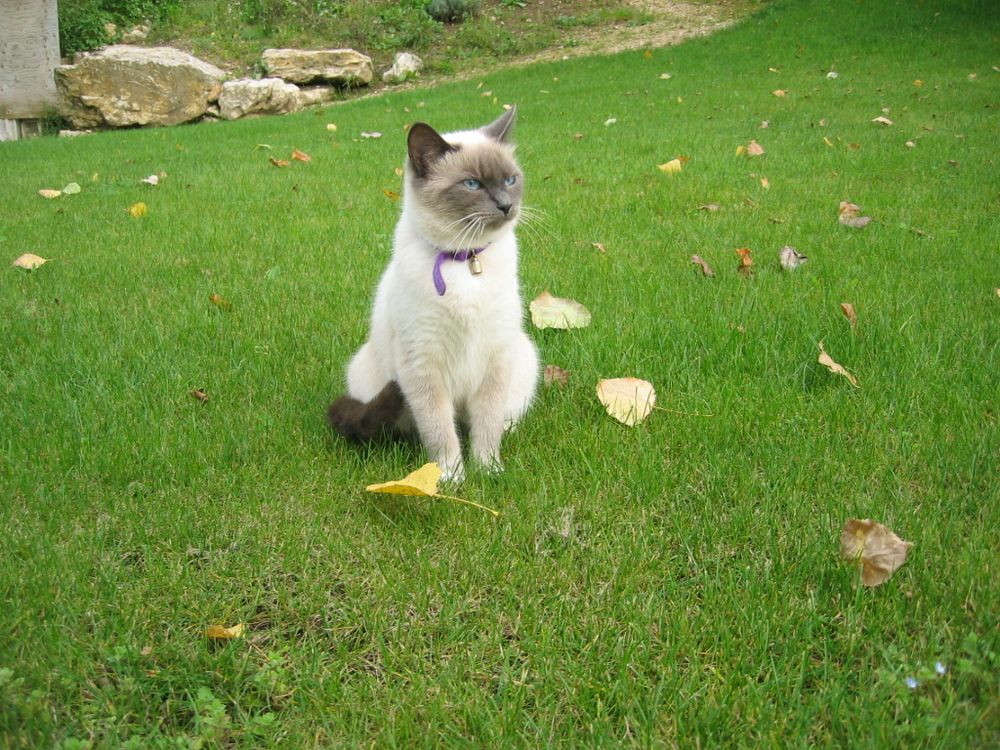
- Semi-long and silky, pale on the body and darker on the face, legs and tail; GCCF says it does not mat easily.Governing Council of the Cat Fancy
- Energy
- ModerateThe Cat Fanciers' Association
- Indian heat
- Copes with carePDSA
- Flats
- Suits a flatThe Cat Fanciers' Association
Birman at a glance
| What | The rule | Source |
|---|---|---|
| Size | Medium to large, long and stocky with substantial bone. GCCF gives males 10 to 15 lb and females 6 to 10 lb. | Governing Council of the Cat Fancy |
| Temperament | Sweet, affectionate, patient and even-tempered, says CFA; GCCF says Birmans often follow their owners from room to room. | The Cat Fanciers' Association |
| Activity | Moderately active and keen to help with whatever you are doing (CFA); less inclined to hunt than many cats (GCCF). | The Cat Fanciers' Association |
| Alone-time tolerance | Low to moderate. CFA says Birmans do not do well alone for long periods. | The Cat Fanciers' Association |
| Heat tolerance | No breed-specific source. A long coat, but without an undercoat; PDSA lists long-haired cats among those most at risk of heatstroke. | PDSA |
| Grooming | Moderate: weekly combing, more in the spring moult (GCCF). No undercoat to tangle, says CFA. | Governing Council of the Cat Fancy |
| Life expectancy | 14.39 years at birth for UK Birmans in a 2024 VetCompass study, among the longest of the breeds analysed. | Journal of Feline Medicine and Surgery (2024), Royal Veterinary College VetCompassstudy |
Where does the Birman come from?
The Birman is also called the Sacred Cat of Burma, and its name comes from Birmanie, the French word for Burma. GCCF tells the legend of the Temple of Lao-Tsun, built by the Khmer people, as the story of how the cat got its markings; CFA says many folk tales describe this and that the true history is uncertain.
What is known, CFA says, is that a breeding pair was shipped from Burma to France in about 1919, the female arriving pregnant. GCCF says the breed was recognised in France in 1925, and that after the Second World War only a single pair survived in Europe, so breeders outcrossed to restore it. In the early 1960s Elsie Fisher helped bring the first Birmans to Britain, and GCCF recognised the breed in 1966. CFA says it reached the United States in 1959 and was accepted for CFA registration in 1967.
How did the Birman come to India?
Although the breed's legend is set in Burma, India's neighbour, no source we could find documents when or how the Birman came to India, or how many live here; its arrival is not documented. Birmans in India are kept as indoor pedigree pets.
The coat matters most in an Indian summer. PDSA lists long-haired cats among those most likely to overheat, so a Birman needs a cool room, shade and water in more than one place, and a plan for power cuts. Its semi-long coat does not mat easily, but check under the tail in the humid monsoon months.
What care does a Birman need?
The three things that shape a good day for this breed.
Exercise
CFA calls Birmans moderately active but very helpful cats that like to join in. Daily play and company suit them better than long hours alone. The Cat Fanciers' Association
Grooming
GCCF advises combing weekly to remove stray hair and spread skin oils, and more often in the spring moult. CFA says Birmans shed less than most long-haired cats. Governing Council of the Cat Fancy
Training
A gentle, people-oriented cat; short sessions of play and reward work, and early handling makes combing and vet visits easier. The Cat Fanciers' Association
How much should a Birman eat?
Daily calories for a healthy, neutered adult Birman, worked out from its weight with the formula vets use (70 x weight in kg to the power 0.75, then AAHA's factor for a neutered adult). Divide by the kcal per kg on your food's pack for grams a day, and adjust by body shape.
| Resting need (kcal a day) | Neutered adult (kcal a day) | |
|---|---|---|
| 2.7 kg AAHA (American Animal Hospital Association) | 150 | 180 to 210 |
| 4.8 kg | 230 | 270 to 320 |
| 6.8 kg | 290 | 350 to 410 |
Feed a commercial cat food with a complete and balanced statement on the label, keep fresh water out at all times and keep treats under 10 to 15 per cent of daily calories, as Cornell's Feline Health Center advises. Cornell calls obesity the most common nutrition problem in cats, and PDSA notes that overweight cats struggle to stay cool, which matters for a long-haired cat in Indian heat. Wet food, at least 75 per cent water, helps a cat drink enough. Keep Indian kitchen food out of the bowl. ASPCA warns that onion and garlic damage red blood cells and that cats are more susceptible, so no dal, curry or tadka; Cornell does not recommend milk, since many cats are lactose intolerant; and ASPCA lists chocolate, grapes, raisins and raw dough among foods to keep from pets. Ask your vet before any home-cooked or special diet. Meals a day: kitten to 6 months, 3 a day; 6 months to 1 year, 2 a day; adult, from about 1 year, 1 or 2 a day; senior, 10 years and over, as for an adult, unless your vet advises otherwise. Puppies, kittens, working, pregnant and older animals need different amounts: ask your vet, or use Petym's food calculator.
Which illnesses is the Birman prone to, and how are they treated?
The conditions veterinary studies and breed surveys most often report in the Birman. Knowing the early signs means a vet sees it sooner.
See your vet first. This is general information from veterinary sources, not a diagnosis. Only a vet who has examined your pet can say what is wrong and prescribe treatment, and this page never gives a dose. Do not give your pet human medicine. If your pet seems very unwell, go to a 24-hour vet: find one in your city.
Hypertrophic cardiomyopathy (HCM)
See a vet soonGCCF calls HCM the most severe threat to the Birman: the most common heart disease in cats, thought to be inherited as a dominant trait in the breed, progressive, and able to cause heart failure and sudden death. Governing Council of the Cat Fancy
Signs to watch for
- Often none: Cornell says many cats with HCM do not appear ill
- Laboured, rapid or open-mouth breathing
- Lethargy
- Sudden pain or paralysis in the back legs from a blood clot
How a vet treats it
Cornell says HCM is diagnosed by echocardiography, an ultrasound scan of the heart, after high blood pressure and an overactive thyroid are ruled out. A vet may prescribe medicines to control the heart rate, relieve fluid on the lungs and help prevent clots, by mouth or by injection in serious cases. No therapy has been shown to cure it.
Prevention
GCCF says breeders screen to avoid breeding from affected cats, and CFA says HCM testing has been instrumental; ask to see the parents' heart scan results.
Chronic kidney disease, and the Birman's kidney blood values
Ask at a routine checkA study of 50 healthy Birmans found higher creatinine and SDMA, the usual kidney blood markers, than in other breeds, with creatinine above the general cut-off in 40 per cent. A healthy Birman can therefore look as if it has kidney disease on a standard test, and the authors suggest SDMA may be the better marker in this breed. Journal of Feline Medicine and Surgery (2017)study
Signs to watch for
- Often none early on
- Drinking and urinating more
- Weight loss and less appetite
- Tiredness and pale gums
How a vet treats it
Cornell says vets diagnose kidney disease with blood tests (BUN, creatinine and SDMA) and urine tests, ideally repeated, plus blood pressure and imaging. Treatment can include a prescription kidney diet, fluids under the skin, and medicines for blood pressure, anaemia and nausea.
Prevention
Tell your vet your cat is a Birman when blood results come back, and keep a baseline set of kidney values from a healthy check.
Heatstroke
Emergency: go to a vet nowPDSA lists long-haired cats among those most likely to overheat, because they find it harder to cool down. A Birman in a closed, hot flat during an Indian summer or a power cut is at risk. PDSA
Signs to watch for
- Panting and fast breathing
- Red or pale gums
- Wobbling or collapse
- Vomiting, diarrhoea or confusion
How a vet treats it
Move the cat somewhere cool, start cooling it with cool (not icy) water and a fan, and call the vet as soon as possible, as PDSA advises. The vet continues cooling and may give a fluid drip; in severe cases PDSA says vets may use anaesthesia, oxygen and other medicines, with blood and urine tests for kidney or clotting damage.
Prevention
Shade and water at all times, a cool room, a healthy weight, and never leave a cat in a car.
How does a Birman cope when you go away?
It copes best when the house still has people in it. Food and litter are the easy part.
Breeders and cat registries describe the Birman in nearly the same words: a gentle, people-focused cat. GCCF says Birmans adore being around people and get on with children, other cats and dogs, which is why the breed is popular with families and older owners. CFA calls them patient, tolerant and intelligent, and is direct about one thing that matters for travel: they are very social and do not do well alone for long periods.
For a weekend, a sitter visiting at least twice a day, which Cats Protection suggests for any cat, is the floor. Build company into each visit: sit down, talk, play, let the cat follow you about. For a longer trip, or a Birman that lives with someone home most of the day, think about a midday visit as well, or a sitter who stays overnight.
A second cat can help some Birmans, since GCCF says they generally get on with other cats. That is a decision to make well before a trip, not the week before, and introductions need time.
In CFA's words
Word for word
They are very social cats who do not do well alone for long periods of time.
Read that as a planning note. Choose visits long enough for company, not just for chores, and say on the care sheet how your Birman likes to spend time with people.
Does a long-haired Birman suffer in Indian heat?
Less than you might expect from the coat, but plan for summer anyway.
The Birman's coat is long and silky, but CFA says there is no undercoat, and GCCF says the coat does not mat easily. That makes it lighter than a Persian's or a Maine Coon's. Still, PDSA counts long-haired cats among those most at risk of heatstroke, along with overweight, young and old cats, and no source tests the Birman in heat. Treat it as a long-haired cat in an Indian summer.
Between March and June, leave the coolest room open with the curtains drawn, water in at least two bowls and a tiled floor to lie on. The Animal Welfare Board of India's May 2026 advisory asks for shade through the day and clean water, and lists heavy panting, drooling, lethargy and collapse as heat-stress signs that need a vet. Tell your sitter what happens in a power cut and which room to use.
Do not shave a Birman for summer without asking your vet. A coat with no undercoat is already one of the easier long coats to keep cool by combing out loose hair, and a hygiene trim from a groomer is a gentler option.
Birman myths and what the sources say
You may have read
All long-haired cats mat badly in the monsoon.
Myth
What the sources say
The Birman's coat has no undercoat to tangle, says CFA, and weekly combing usually keeps it tidy. Comb more during the spring moult, as GCCF advises. The Cat Fanciers' Association
You may have read
A quiet cat does not mind being alone.
Myth
What the sources say
Birmans are fairly quiet, with soft voices, but CFA says they do not do well alone for long periods. Quiet is not the same as independent. The Cat Fanciers' Association
You may have read
Birmans have the same kidney problem as Persians.
Myth
What the sources say
GCCF says Birmans have a very low risk of polycystic kidney disease. Heart disease is the condition it names as the most serious for the breed. Governing Council of the Cat Fancy
You may have read
A talkative Birman is unhappy.
Myth
What the sources say
GCCF notes that a Birman's talking can increase when owners answer it. A chatty cat may simply have learned that talking works. Governing Council of the Cat Fancy
Which Birman health problems should a sitter know?
The sitter's role is to notice and call. These are the problems the sources link to the breed, and the ones any cat can have.
If Rapid or laboured breathing, open-mouth breathing, or a cat that is suddenly flat and quiet. GCCF names hypertrophic cardiomyopathy (HCM) as the most serious threat to the breed.
Emergency: go to the vet now. Cornell says many cats with HCM do not look ill until heart failure or a clot occurs. Governing Council of the Cat Fancy
If Sudden pain, crying or dragging of one or both back legs.
This can be a blood clot from heart disease. Go to the nearest 24-hour vet straight away and call the owner on the way. Cornell University College of Veterinary Medicine
If Straining in the tray, many trips with little urine, or blood in the urine.
A blocked bladder is an emergency, especially in males. Go to the vet now. Cornell University College of Veterinary Medicine
If Panting, very red or pale gums, or stumbling on a hot day.
Heatstroke: cool water on the body away from the face, a fan, and the vet at once. PDSA
If Hiding, eating far less than usual, or not eating for a day.
Call the vet. Cats that stop eating for a few days risk a serious liver disease. University of Illinois College of Veterinary Medicine
Heart disease in Birmans: what owners can do before a trip
GCCF describes HCM in Birmans as progressive, thought to be inherited as an autosomal dominant trait, and able to lead to heart failure and sudden death. CFA says breeders today screen for conditions such as HCM, which it credits with helping keep the breed healthy. Cornell's Feline Health Center adds the uncomfortable part: many cats with HCM show no outward signs.
Before a long trip, especially with an older Birman, ask your vet whether a heart check makes sense, and tell them you will be away. If your cat already has a heart diagnosis, give the sitter a written plan from the vet: the medicines, how to give them, the resting breathing rate your vet wants recorded, and the number to call. A cat with known heart disease is a strong case for overnight sitting or special-needs care rather than two short visits.
Grooming a Birman through the Indian year
| Coat and comfort | What the sitter does | |
|---|---|---|
| Spring moult (February to April) Governing Council of the Cat Fancy | Winter coat sheds; more loose hair | Comb at every visit, a few minutes at a time, as GCCF advises for the moult |
| Summer (April to June) PDSA | Long coat in heat; long-haired cats are at higher risk | Coolest room, extra water, comb out loose hair, check the cat first at each visit |
| Monsoon (June to September) | Damp, humid air; coat slower to dry | Keep the cat indoors and dry; check under the tail and between the back legs for soiling |
| Festival season | Noise and visitors | Windows shut, hiding places open, visits kept calm |
| Winter (north India) The Cat Fanciers' Association | Cold floors at night | A warm bed off the floor; weekly combing is enough |
Feeding a Birman while you are away
Keep the food, the portions and the times exactly as they are, written on the care sheet. A sudden change of food is a common cause of diarrhoea, and loose stools in a long-coated cat mean a soiled coat. Leave the trip's food with a few days spare.
The 2024 VetCompass life tables found that cats whose weight strayed from the usual for their breed and sex had shorter lives. A Birman that follows its sitter from room to room is easy to overfeed. Ask the sitter to give attention, not extra food, and to note on the log how much was eaten at each visit. Keep lilies out of the house and never let anyone give a cat a human painkiller: International Cat Care lists both as dangerous.
What to leave for your Birman's sitter
- Your vet's details and the nearest 24-hour vet, on paper and on the fridge. Cats Protection
- Any heart scan result or diagnosis, and your vet's written plan if your cat has one. Cornell University College of Veterinary Medicine
- A wide-toothed comb and a note of where your cat likes and dislikes being combed.
- Litter, enough for the trip; one tray per cat plus one, away from food and water. Battersea Dogs and Cats Home
- How your Birman likes company: lap, play, or following you about, and its favourite toy.
- The coolest room, the AC or fan settings, and the power-cut plan.
Which Petym service suits a Birman?
Short trips
Drop-in visits
Two or three visits a day with time for play and lap time, plus food, water, litter, combing and a daily photo update.
Longer trips
Overnight pet sitting
A sitter stays in your home, so a sociable cat has company in the evenings and through the night. Suits trips of over a week and older Birmans.
Heart disease or medicine
Special-needs care
For a Birman with a heart diagnosis or other condition, with medicines and checks logged as your vet wrote them.
Breeds with similar care needs to the Birman
Going away soon? Tell us your dates.
A checked local sitter feeds, walks and keeps your pet company at home, follows your care sheet to the letter and sends a photo every day. Petym is opening city by city: send your dates and we will tell you when a sitter can take them.
- Meet your sitter first, free
- PAN-checked, first-aid trained
- A photo every day
- Pay through Petym, never cash

Questions owners ask
Can a Birman be left alone while I travel?
- Only with visits, and preferably long ones. CFA says Birmans are very social and do not do well alone for long periods. A sitter should come at least twice a day, as Cats Protection advises, with time for company and play. For longer trips, overnight sitting suits the breed better.
Do Birmans need a lot of grooming in India?
- Less than most long-haired cats. CFA says the coat has no undercoat to tangle or mat, and weekly combing is usually enough. GCCF suggests combing more often in the spring moult. In the monsoon, keep the cat dry and check under the tail for soiling.
Can a Birman cope with Indian summers?
- Indoors with a cool room, yes. No source tests the breed in heat, but PDSA lists long-haired cats among those most at risk of heatstroke. Keep curtains drawn, water in more than one bowl, a cool floor, and a plan for power cuts while you are away.
What health problems do Birmans have?
- GCCF names hypertrophic cardiomyopathy, a heart disease, as the most serious threat to the breed, and says Birmans have a very low risk of polycystic kidney disease. Many cats with HCM look well until a crisis, says Cornell. Laboured breathing or sudden back-leg weakness means a vet straight away.
How long do Birmans live?
- A 2024 Royal Veterinary College study of UK cats found Birmans had a life expectancy at birth of 14.39 years, close to the Burmese and among the longest of the breeds analysed. GCCF lists 12 to 16 years. A healthy weight helps: weight away from the norm was linked to shorter lives.
Are Birmans good with children and other pets?
- GCCF says they generally get on with other cats and dogs and suit families, and CFA calls them patient, even-tempered and tolerant. A sitter should still let the cat choose when to be handled, especially by children who do not live with it.
Keep reading
- Cats: caring for a cat while you are away
- Ragdoll careAnother gentle colourpoint cat with a heart risk.
- Burmese cat careAnother long-lived, people-focused breed.
- How often should a sitter visit a cat?
- Cat sitter vs cattery
- Monsoon pet care
- Drop-in visits for cats
Services that help
Free tools for this
Words on this page, explained
Keep exploring
Sources
Each source was opened and read on the date shown. How Petym checks its sources
- Governing Council of the Cat Fancy: Birman (opens in a new tab)
- The Cat Fanciers' Association: Birman (opens in a new tab)
- PDSA: Heatstroke in cats (opens in a new tab)
- Cornell Feline Health Center: Feeding your cat (updated 30 April 2026) (opens in a new tab)
- Cornell Feline Health Center: How often should you feed your cat? (opens in a new tab)
- ASPCA Animal Poison Control: People foods to avoid feeding your pets (opens in a new tab)
Show all 19 sourcesShow fewer
- AAHA (American Animal Hospital Association): 2021 AAHA Nutrition and Weight Management Guidelines for Dogs and Cats: energy requirement calculations (Box 1, PDF) (opens in a new tab)
- Merck Veterinary Manual: Nutritional requirements of small animals (full review November 2023, updated September 2024) (opens in a new tab)
- Cornell University College of Veterinary Medicine: Hypertrophic cardiomyopathy (Cornell Feline Health Center) (opens in a new tab)
- Cornell Feline Health Center: Chronic Kidney Disease (opens in a new tab)
- Animal Welfare Board of India: Request to ensure care and protection of animals from direct heat during extreme hot weather (4 May 2026) (opens in a new tab)
- Cats Protection: Going on holiday without your cat (opens in a new tab)
- Battersea Dogs and Cats Home: Cat litter trays (opens in a new tab)
- Cornell University College of Veterinary Medicine: Feline lower urinary tract disease (Cornell Feline Health Center) (opens in a new tab)
- University of Illinois College of Veterinary Medicine: Hepatic lipidosis: a serious problem when cats stop eating (opens in a new tab)
- PDSA: Diarrhoea after a change of food (opens in a new tab)
- International Cat Care: Cats and poisons (opens in a new tab)
- Journal of Feline Medicine and Surgery (2017): Serum symmetric dimethylarginine and creatinine in Birman cats compared with cats of other breeds (Paltrinieri and others) (opens in a new tab)
- Journal of Feline Medicine and Surgery (2024), Royal Veterinary College VetCompass: Life tables of annual life expectancy and risk factors for mortality in cats in the UK (abstract read via Europe PMC) (opens in a new tab)