Indian cat care: the Indie cat while you are away
Updated By PetymFacts checked against official sources on
Quick answer
The Indian cat, often called the Indie cat or desi billi, is not a pedigree breed. It is India's own random-bred domestic cat, and genetic research treats India's cats as one of the world's distinct cat populations. While you travel, it needs what any cat needs: a sitter at least twice a day, up-to-date vaccines and a cool room.
Many Indie cats were adopted from the street, so the most useful things to tell a sitter are its vaccine history, whether it goes outdoors, and how it reacts to strangers.
- Meet your sitter first, free
- PAN-checked, first-aid trained
- A photo every day
- Pay through Petym, never cash

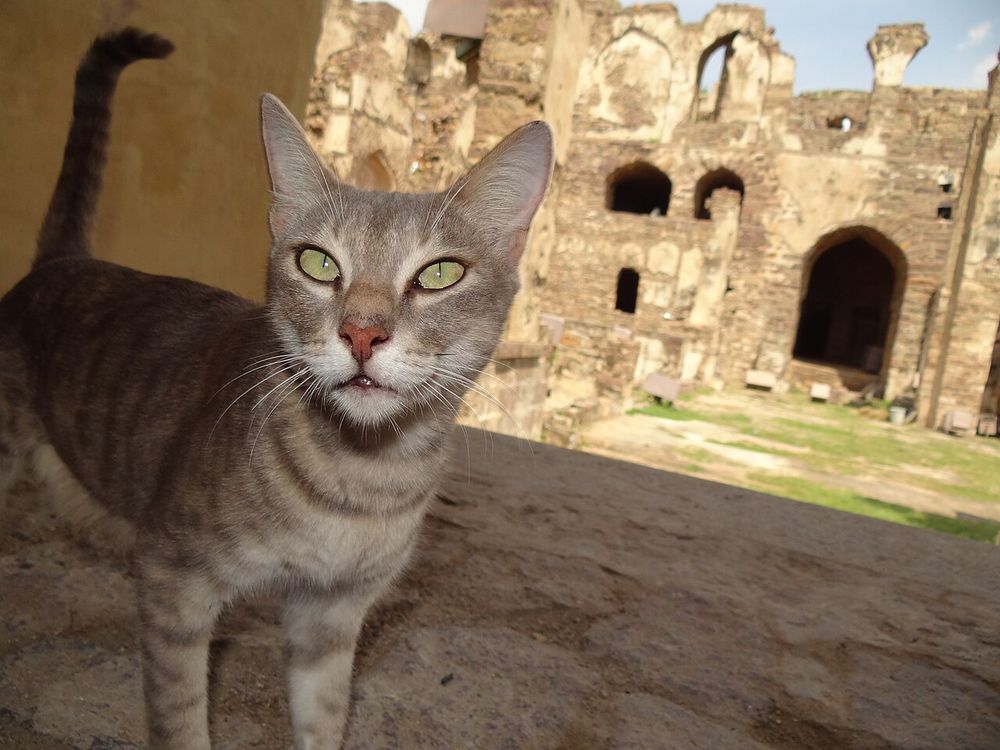
- Indian breed
- Developed in India
- Origin
- India (a native random-bred cat population, not a registered breed)Animal Genetics (2013), UC Davisstudy
- Adult weight
- 3.4 to 4.3 kg (No study gives an Indian cat's weight. Closest published figure: mean ideal-condition weights of non-pedigree cats in Germany, females 3.4 kg and males 4.3 kg)British Journal of Nutrition (2011), Ludwig-Maximilians-Universität Münchenstudy
- Coat
- No standard: coat length, colour and pattern vary from cat to cat, and Indian vets usually record local cats as non-descript rather than by breed.Indian Journal of Veterinary Surgery (2026), MAFSUstudy
- Indian heat
- Copes with carePDSA
- Flats
- Suits a flatAAFP and ISFM (Journal of Feline Medicine and Surgery, 2013)study
Indian cat at a glance
| What | The rule | Source |
|---|---|---|
| Size | No breed standard exists, so there is no official size. Indian vets usually record local cats as non-descript rather than by breed. | Indian Journal of Veterinary Surgery (2026), MAFSUstudy |
| Activity | Varies with the individual cat; no source describes a typical activity level. Every cat needs play and hunting-style games. | AAFP and ISFM (Journal of Feline Medicine and Surgery, 2013)study |
| Alone-time tolerance | As for any cat: stays at home with visits at least twice a day. | Cats Protection |
| Heat tolerance | Not studied. Most Indie cats are short-haired, but no source shows they handle heat better than other cats. | PDSA |
| Grooming | Usually low for a short coat. Fleas are a common problem in cats; scratching more than usual is often the only sign. | International Cat Care |
| Sociability | Varies. A cat adopted as an adult from the street may be wary of strangers; a cat raised indoors from kittenhood often is not. | Not stated |
Where does the Indian cat come from?
The Indian cat is not a breed but one of the world's native cat populations. A UC Davis genetics study grouped random-bred cats worldwide into eight broad populations: Europe, the Mediterranean, Egypt, Iraq and Iran, the Arabian Sea, India, Southeast Asia and East Asia. It describes random-bred cats as the original populations from which pedigree breeds were developed, not as mixes of breeds.
Cats are one of the more recent domestic animals. The same paper dates the earliest known taming of a cat to a Neolithic burial on Cyprus, 9,500 to 9,200 years ago, and notes that until recently people selected cats very little, because they simply did their job of controlling vermin. Cats spread between countries with people, on purpose and by accident.
India's cats sit within that wider Asian story. In the study, Asian breeds such as the Birman, Burmese and Siamese grouped with southern Asian random-bred cats, and the Sokoke was assigned to the India and Arabian Sea region. No registry has a standard for an Indian cat, so there is no official size, colour or temperament.
How did the Indian cat come to India?
Indian cats live both in homes and on the street, and many pet cats are adopted from the street. The Animal Welfare Board of India's 2021 circular says the country has more than 35 million stray animals, mostly dogs and cats, and that civic bodies do not routinely vaccinate, deworm or sterilise stray cats as they do dogs; it asked for birth control and immunisation to be extended to cats. A rescued cat may arrive with no vaccine history, so its first vet visit matters.
Local cats are also the bulk of Indian cat medicine. A 2026 study of 356 cats with eye problems at a Maharashtra veterinary university hospital found non-descript cats made up 61.24% of the cats seen. In the cat fancy, a 2024 news report on a Feline Club of India show in Kolhapur named an "Indy Mau" as the one Indian breed on show; we found no registry standard for it.
What care does a Indian cat need?
The three things that shape a good day for this breed.
Exercise
Every cat needs daily chances to play and hunt: the AAFP and ISFM guidelines ask for toys, play with people and feeding that makes the cat work for its food, with toys rotated to prevent boredom. An indoor Indie cat in a flat needs this as much as any pedigree cat. AAFP and ISFM (Journal of Feline Medicine and Surgery, 2013)study
Grooming
Usually light for a short coat: a weekly comb doubles as a flea check. International Cat Care says scratching more than usual is often the only sign of fleas, and combing over white paper shows flea dirt. International Cat Care
Training
Cats respond to positive, consistent and predictable handling. A cat adopted as an adult from the street may need time and a safe hiding place before it trusts new people. AAFP and ISFM (Journal of Feline Medicine and Surgery, 2013)study
How much should a Indian cat eat?
Daily calories for a healthy, neutered adult Indian cat, worked out from its weight with the formula vets use (70 x weight in kg to the power 0.75, then AAHA's factor for a neutered adult). Divide by the kcal per kg on your food's pack for grams a day, and adjust by body shape.
| Resting need (kcal a day) | Neutered adult (kcal a day) | |
|---|---|---|
| 3.4 kg AAHA (American Animal Hospital Association) | 180 | 210 to 250 |
| 3.9 kg | 190 | 230 to 270 |
| 4.3 kg | 210 | 250 to 290 |
Move a rescued cat onto a complete and balanced cat food rather than household leftovers. Leftover rice, roti and dal are not a complete diet for a cat, and onion and garlic, common in Indian cooking, damage a cat's red blood cells. Milk and curd often cause diarrhoea because most cats lack enough lactase, and Cornell advises against raw meat and fish canned for people. Keep fresh water out at all times, apart from food and the litter tray. Cornell names obesity the most common nutrition-related problem in cats and suggests treats stay within 10 to 15 percent of daily calories; International Cat Care notes that a neutered cat needs less food. The energy table above gives a starting point, which your vet can adjust to your cat's real weight. Meals a day: kitten to 6 months, 3 a day; 6 months to 1 year, 2 a day; adult, from about 1 year, 1 or 2 a day; senior, 10 years and over, As for an adult, unless your vet says otherwise. Puppies, kittens, working, pregnant and older animals need different amounts: ask your vet, or use Petym's food calculator.
Which illnesses is the Indian cat prone to, and how are they treated?
The conditions veterinary studies and breed surveys most often report in the Indian cat. Knowing the early signs means a vet sees it sooner.
See your vet first. This is general information from veterinary sources, not a diagnosis. Only a vet who has examined your pet can say what is wrong and prescribe treatment, and this page never gives a dose. Do not give your pet human medicine. If your pet seems very unwell, go to a 24-hour vet: find one in your city.
Cat flu (upper respiratory infection)
See a vet soonMore than 90% of cat flu is caused by feline herpesvirus, calicivirus or both. Most cats that recover become carriers, and stress can bring the illness back. A Maharashtra study found herpes-related eye infections more common among non-descript cats. International Cat Care
Signs to watch for
- Sneezing
- Discharge from the nose and eyes
- Red or squinting eyes
- Mouth ulcers
- Lethargy, fever and poor appetite
How a vet treats it
A vet diagnoses it from the signs, sometimes with a swab. Treatment keeps the cat comfortable: antibiotics for secondary infection, pain relief, eye drops where needed, antiviral medicine in severe cases, and a drip or tube feeding for a cat that will not eat or drink.
Prevention
Vaccination against feline herpesvirus and calicivirus greatly reduces the risk and usually prevents severe disease.
Feline panleukopenia (feline parvovirus)
Emergency: go to a vet nowA severe, often fatal virus, most dangerous to unvaccinated kittens and common where many cats are unvaccinated, such as street colonies. The virus can survive in the environment for years. International Cat Care
Signs to watch for
- Vomiting
- Diarrhoea, sometimes with blood
- High temperature
- Lethargy and loss of appetite
- Sudden death in kittens
How a vet treats it
A vet diagnoses it from the signs, vaccine history and blood and faecal tests. Cats are nursed intensively in isolation with fluid therapy by drip, and may receive broad-spectrum antibiotics, anti-nausea drugs and tube feeding.
Prevention
Vaccination. Keep kittens indoors and away from other cats until at least a week after their first course of vaccines.
Fleas and flea allergy
See a vet soonFleas are common in cats, especially ones that have lived outdoors. Some cats become allergic to flea bites, fleas spread tapeworm, and in young kittens heavy flea burdens can cause anaemia and death. International Cat Care
Signs to watch for
- Scratching more than usual
- Flea dirt in the coat
- Skin disease or hair loss
- A weak, pale kitten
How a vet treats it
A vet advises a flea treatment licensed for cats, treats every pet in the home and recommends treating the house as well, since flea eggs and pupae live there. Never use a dog flea product on a cat: some contain permethrin, which can kill cats.
Prevention
Routine flea prevention from your vet, even when the cat shows few signs.
Lower urinary tract disease and blockage (FLUTD)
Emergency: go to a vet nowA group of bladder and urethra problems. International Cat Care lists middle-aged, neutered, overweight, inactive and indoor cats, and cats on dry food, as at higher risk, with stress a major factor. International Cat Care
Signs to watch for
- Going to the tray often and passing little urine
- Straining or crying in the tray
- Blood in the urine
- Urinating outside the tray
How a vet treats it
A vet investigates with urine tests, x-rays, ultrasound and blood tests. Treatment always includes raising water intake, often with wet food or a special diet; bladder stones may need surgery. A cat straining and passing little or no urine needs to be seen at once.
Prevention
Plenty of water, some wet food, a healthy weight and a calm, predictable home.
Obesity
Ask at a routine checkA street cat that moves into a flat, is neutered and is fed freely can gain weight fast. International Cat Care says neutered cats need less food and links obesity to diabetes, urinary disease and arthritis. International Cat Care
Signs to watch for
- Ribs hard to feel
- No visible waist
- A hanging belly
How a vet treats it
A vet checks the cat's health, then sets a gradual weight-loss plan of measured meals, often a special diet, fewer treats and more play, with regular weigh-ins. Sudden food restriction is dangerous for cats and can cause liver disease.
Prevention
Measured meals, puzzle feeders and daily play.
Is the Indian cat a breed?
No. It is a domestic cat population, not a registered breed, and no cat registry has a standard for it.
A UC Davis genetics study of cats around the world grouped random-bred cats into eight broad populations, and India was one of them, alongside Europe, the Mediterranean, Egypt, Iraq and Iran, the Arabian Sea, Southeast Asia and East Asia. The same study says random-bred cats are the original populations from which pedigree breeds were developed. It also found that Asian breeds such as the Siamese group genetically with southern Asian cats.
That is what is known. Much of what is said online about Indie cats is not backed by research: that they are healthier than pedigree cats, that they do not get sick in the heat, or that they have a fixed size, colour or temperament. We could not find a reliable source for any of these, so this page does not repeat them. A healthy Indie cat is simply a healthy cat, and the care rules that apply to any cat apply to it.
Names vary by region and household: Indie cat, desi cat, billi or desi billi in Hindi. None of these is a registry name.
What should a sitter know about an adopted Indie cat?
History matters more than breed. Many Indie cats started life on the street or in a colony, and that shapes their health and behaviour.
The Animal Welfare Board of India's 2021 circular on stray cats says India has more than 35 million stray animals, mostly dogs and cats, and that civic bodies do not routinely vaccinate stray cats against rabies, deworm or sterilise them as they do dogs. The Board asked for its birth control and immunisation programme to be extended to stray cats. A cat that has come from the street may have arrived with no vaccine history at all, which is why its vaccination card matters.
Cat flu is the other street legacy. International Cat Care says most cats that recover from feline herpesvirus or calicivirus become carriers, showing no sign of illness but shedding virus, and that stress can bring it back. A week of change while you are away is a kind of stress. A sitter should know the signs: sneezing, discharge from the nose and eyes, red eyes, lethargy and a reduced appetite.
A 2026 study of 356 cats with eye problems at a Maharashtra veterinary university hospital found non-descript cats made up 61.24% of the cats seen, with herpes-related eye infections more common among them. That is a share of cases, not a risk rate, but it shows eye infections are a real part of local cat medicine.
Indian cat vaccines and health: the sitter's version
- Core vaccines (Tricat on many Indian cards)
- WSAVA lists the vaccine against feline panleukopenia, feline herpesvirus and feline calicivirus as core for every pet cat worldwide. Indian cards often show it under a combined name. Your vet decides the schedule. WSAVA
- Feline panleukopenia
- Feline parvovirus causes vomiting, diarrhoea that may contain blood, fever and loss of appetite, and can be fatal, especially in unvaccinated kittens. The virus can survive for years in the environment. International Cat Care
- Cat flu
- Sneezing, nose and eye discharge, red eyes, lethargy and fever. Vaccination dramatically reduces the risk and usually prevents severe disease. International Cat Care
- Rabies vaccine
- Civic bodies do not routinely give it to stray cats, according to the Animal Welfare Board of India, so an adopted cat's card is the only record. Animal Welfare Board of India
- Ticks and fleas
- Fleas are common in cats, and a cat that goes outdoors can pick up ticks. Never use a dog flea or tick product on a cat: some contain permethrin or related compounds that can kill cats. International Cat Care
When should a sitter call the vet for an Indie cat?
If Sneezing, runny eyes or nose, red eyes, not eating.
Cat flu signs. Call the vet, keep the cat warm and quiet, and wash hands before touching any other cat. International Cat Care
If Vomiting and diarrhoea, especially with blood, in a young or unvaccinated cat.
Go to the vet the same day: panleukopenia can be fatal. Keep the cat away from other cats. International Cat Care
If Straining in the tray, going often, little or no urine.
A true emergency, more common in male cats. Go to the vet now. Cornell University College of Veterinary Medicine
If Not eating for a day, or much less over two visits.
Call the vet. Cats that go without food for a few days risk hepatic lipidosis. University of Illinois College of Veterinary Medicine
If Panting, red or pale gums, wobbling or collapse on a hot day.
Heatstroke: cool water over the body, away from the face, a fan, and the vet at once. PDSA
If A cat that goes outdoors has not come home for a visit.
Tell the owner straight away and check the usual hiding spots and the building. Leave food and water out and keep a window or door arrangement agreed in advance.
Indoor or outdoor while you are away?
Decide before you go. It changes what a sitter can and cannot do.
If Your cat lives indoors only
Keep it that way. Ask the sitter to check windows, balcony mesh and doors at every visit, and to open the door slowly. Drop-in visits
If Your cat goes in and out during the day
Think about keeping it in for the trip, with extra trays, so a sitter can see it at every visit. Talk to your vet if the change will stress it. Drop-in visits
If Your cat is older, unwell or on medicine
Keep it indoors and consider overnight sitting, so someone is there through the night. Overnight sitting
A visit plan for an Indie cat
Arrive
Open the door slowly, in case the cat is waiting to slip out. Find the cat and see how it moves and breathes.
Water and food
Fresh water in each bowl, kept apart from the food and the tray; food exactly as on the care sheet. AAFP and ISFM (Journal of Feline Medicine and Surgery, 2013)study
Litter
Scoop every tray and note urine and stool. Remove soiled litter at least daily; one tray per cat plus one in a multi-cat home. Battersea Dogs and Cats Home
Health look
Eyes and nose clear? Any sneezing, scratching or ticks? Note anything new.
Play
Ten minutes with a wand toy or a ball of paper, letting the cat chase and pounce. AAFP and ISFM (Journal of Feline Medicine and Surgery, 2013)study
Leave
Windows checked, curtains drawn on sunny windows, fan as agreed, daily photo update sent.
Feeding and summer notes
Keep the food, amounts and times the same as at home; a sudden change of food is a common cause of diarrhoea. Indian homes often feed cats from the family kitchen: rice, curd, fish or chicken. Whatever your cat eats, write it down exactly, including how it is cooked, so the sitter makes it the same way. Nothing with onion or garlic: ASPCA Animal Poison Control says these can damage red blood cells, and cats are more susceptible than dogs. No human medicines, ever: International Cat Care says paracetamol is highly toxic to cats even in a small dose.
Indie cats are usually short-haired, but no source shows they cope with heat better than any other cat. In summer leave the coolest room open, curtains drawn, and water in more than one place. The Animal Welfare Board of India's 2026 advisory asks for shade throughout the day and clean water in stable bowls, and lists excessive panting, lethargy, drooling, a rapid heartbeat and collapse as signs needing immediate veterinary help.
Your Indie cat's sitter checklist
- The vaccination card, or a photo of it, and the date of the next booster. International Cat Care
- Vet and 24-hour vet details. Cats Protection
- Enough food, litter and medicine for the trip and a few days more. Cats Protection
- Whether the cat goes outdoors, and your plan if it does not come home.
- How the cat reacts to strangers, and where it hides.
- Any community cats it meets at the window or door, and whether they should be fed.
Which Petym service suits an Indian cat?
Most Indie cats
Drop-in visits
One to three visits a day in your home for food, water, litter, play and a health look, with a photo update every day.
Older or unwell cats
Overnight pet sitting
A sitter stays in your home through the night. Suits senior cats and long trips.
Medicines or recovery
Special-needs care
For a cat recovering from cat flu or on regular medicine, with each dose logged.
Breeds with similar care needs to the Indian cat
Going away soon? Tell us your dates.
A checked local sitter feeds, walks and keeps your pet company at home, follows your care sheet to the letter and sends a photo every day. Petym is opening city by city: send your dates and we will tell you when a sitter can take them.
- Meet your sitter first, free
- PAN-checked, first-aid trained
- A photo every day
- Pay through Petym, never cash

Questions owners ask
Is the Indian cat a recognised breed?
- No. The Indie cat, desi cat or billi is India's random-bred domestic cat, not a registered breed, and no cat registry has a standard for it. A UC Davis genetics study does treat India's random-bred cats as one of eight distinct cat populations worldwide.
Are Indian cats healthier than pedigree cats?
- We found no reliable source that says so. What is known is that many Indie cats come from the street, where, according to the Animal Welfare Board of India, stray cats are not routinely vaccinated or dewormed by civic bodies. Vaccines and regular vet checks matter as much for an Indie cat as for any pedigree.
Can an Indian cat be left alone while I travel?
- With a sitter visiting at least twice a day, yes, which is what Cats Protection suggests for any cat. Each visit should cover food, water, litter, play and a quick health look. Decide in advance whether a cat that usually goes outdoors will stay in while you are away.
Do Indie cats handle Indian heat better?
- Nobody has studied it. Most are short-haired, which helps compared with Persians, but no source shows Indian cats are protected from heatstroke. Keep a cool room, curtains drawn and water in more than one place, and tell your sitter the signs: panting, red or pale gums and wobbling.
What vaccines does an Indian cat need?
- WSAVA lists vaccines against feline panleukopenia and the two main cat flu viruses as core for every pet cat; Indian cards often list them under one combined name. Rabies vaccination is also given in India. Your vet decides the schedule. An adopted cat with no record should see a vet before you travel.
My adopted Indie cat sneezes when stressed. Should I worry?
- Tell your vet and your sitter. International Cat Care says most cats that recover from cat flu viruses become carriers and can shed virus again at times of stress, such as when their owner is away. Sneezing with runny eyes, poor appetite or lethargy needs a vet.
Keep reading
- Cats: caring for a cat while you are away
- Cat vaccination schedule
- How long can a cat be left alone?
- Drop-in visits for cats
- Indian pariah dog careIndia's own dog, and how it handles time alone.
- Siamese cat careA breed with southern Asian roots.
Services that help
Free tools for this
Words on this page, explained
Keep exploring
Sources
Each source was opened and read on the date shown. How Petym checks its sources
- PDSA: Heatstroke in cats (opens in a new tab)
- Animal Welfare Board of India: Circular No. 3-3/2021-2022/PCA (3 June 2021): guidelines for birth control and immunization of stray cats (opens in a new tab)
- International Cat Care: Fleas and flea control in cats (opens in a new tab)
- Cornell Feline Health Center: How often should you feed your cat? (opens in a new tab)
- Cornell Feline Health Center: Feeding your cat (updated 30 April 2026) (opens in a new tab)
- ASPCA Animal Poison Control: People foods to avoid feeding your pets (opens in a new tab)
Show all 25 sourcesShow fewer
- International Cat Care: Obesity in cats (first published 21 March 2025, updated 26 September 2025) (opens in a new tab)
- AAHA (American Animal Hospital Association): 2021 AAHA Nutrition and Weight Management Guidelines for Dogs and Cats: energy requirement calculations (Box 1, PDF) (opens in a new tab)
- Merck Veterinary Manual: Nutritional requirements of small animals (full review November 2023, updated September 2024) (opens in a new tab)
- International Cat Care: Cat flu (upper respiratory infection) (opens in a new tab)
- International Cat Care: Feline infectious enteritis (feline parvovirus / panleukopenia virus) (opens in a new tab)
- International Cat Care: Feline lower urinary tract disease (updated 28 November 2025) (opens in a new tab)
- International Cat Care: Cats and poisons (opens in a new tab)
- Cats Protection: Going on holiday without your cat (opens in a new tab)
- Animal Welfare Board of India: Request to ensure care and protection of animals from direct heat during extreme hot weather (4 May 2026) (opens in a new tab)
- PDSA: Diarrhoea after a change of food (opens in a new tab)
- University of Illinois College of Veterinary Medicine: Hepatic lipidosis: a serious problem when cats stop eating (opens in a new tab)
- WSAVA: Core and non-core vaccines for pet cats (opens in a new tab)
- Cornell University College of Veterinary Medicine: Feline lower urinary tract disease (Cornell Feline Health Center) (opens in a new tab)
- Battersea Dogs and Cats Home: Cat litter trays (opens in a new tab)
- Animal Genetics (2013), UC Davis: Variation of cats under domestication: genetic assignment of domestic cats to breeds and worldwide random-bred populations (full text on VIN) (opens in a new tab)
- British Journal of Nutrition (2011), Ludwig-Maximilians-Universität München: A pilot study of the body weight of pure-bred client-owned adult cats (Kienzle and Moik) (opens in a new tab)
- Indian Journal of Veterinary Surgery (2026), MAFSU: Incidence of ocular affections in cats: a study of 356 cases (opens in a new tab)
- AAFP and ISFM (Journal of Feline Medicine and Surgery, 2013): Feline environmental needs guidelines (opens in a new tab)
- ETV Bharat: Cat show in Kolhapur draws visitors (news report, 2 December 2024) (opens in a new tab)