Maine Coon care in India: heat, heart health and sitters
Updated By PetymFacts checked against official sources on
Quick answer
A Maine Coon can stay at home while you travel if a sitter visits at least twice a day. It is the largest pedigree cat, with a long, thick coat, so Indian summers call for a cool room and plenty of water. Your sitter must also know the signs of HCM, a heart disease common in the breed.
The breed is friendly and easy-going but active, so play belongs in every visit. Comb it two or three times a week, more when it sheds.
- Meet your sitter first, free
- PAN-checked, first-aid trained
- A photo every day
- Pay through Petym, never cash

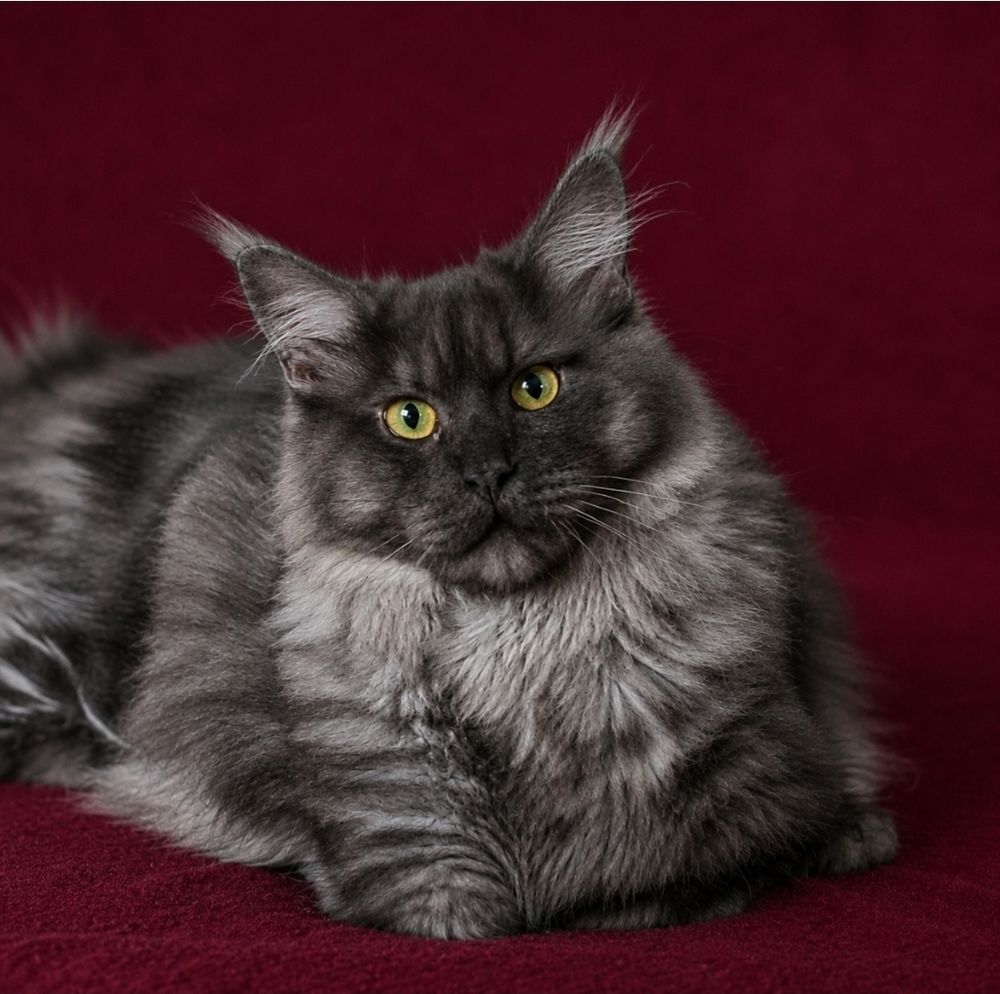
- Origin
- Maine, United StatesGoverning Council of the Cat Fancy
- Adult weight
- 4.5 to 9.1 kg (GCCF: 10 to 20 lb, males the heavier end; full size can take up to four years)Governing Council of the Cat Fancy
- Lifespan
- 10 to 15 yearsGoverning Council of the Cat Fancy
- Coat
- Heavy and shaggy: a soft undercoat under a glossy top coat, short on the head and shoulders and longer on the back, flanks, belly, breeches and tail, with a frontal ruff.Governing Council of the Cat Fancy
- Energy
- HighGoverning Council of the Cat Fancy
- Indian heat
- Copes with carePDSA
- Flats
- A flat, with daily exerciseGoverning Council of the Cat Fancy
Maine Coon at a glance
| What | The rule | Source |
|---|---|---|
| Size | Large. CFA calls it the largest of all pedigreed cats; GCCF gives 10 to 20 lb (about 4.5 to 9 kg), and it can take three to four years to reach full size. | Governing Council of the Cat Fancy |
| Activity | Gentle and easy-going yet active, according to CFA. | The Cat Fanciers' Association |
| Alone-time tolerance | Fairly independent, per CFA, but still needs a sitter at least twice a day. | Cats Protection |
| Heat tolerance | Low to moderate. Long-haired cats are among those PDSA lists as most at risk of heatstroke, and the coat is long and thick. | PDSA |
| Grooming | Comb two or three times a week, and more when it sheds; the coat mats if neglected. | The Cat Fanciers' Association |
| Sociability | Sweet-natured, playful and friendly; GCCF calls it a gentle giant. | Governing Council of the Cat Fancy |
Where does the Maine Coon come from?
The Maine Coon is a natural breed from New England. CFA traces its roots to the short-haired ship cats that arrived with early settlers, with a documented history going back to the 1850s, and GCCF says Maine Coons were shown at New England agricultural shows in the 1860s, before the first US cat shows. CFA describes its heritage as a working cat.
At the first US cat show in 1895, a brown tabby Maine Coon named Cosey won Best Cat. The breed then fell out of fashion: GCCF says CFA even declared it extinct in 1959, but rural breeders kept it going. It regained ground in the 1960s and 1970s, CFA granted championship status in 1976, and the state of Maine has named it its official cat.
Genetically, a UC Davis study grouped the Maine Coon with Western European random-bred cats, the same regional group as the Persian and the Norwegian Forest Cat.
How did the Maine Coon come to India?
When the first Maine Coons came to India is not documented in any source we could find. The breed is now part of the Indian cat fancy: a December 2024 cat show in Kolhapur, organised by the Feline Club of India's Kolhapur branch, listed Maine Coons among more than nine breeds and over 200 cats.
A long-coated cat from New England needs planning in an Indian summer. PDSA lists long-haired cats among those most at risk of heatstroke, and the Animal Welfare Board of India's 2026 heat advisory asks owners to provide shade through the day and clean water in bowls that cannot tip. A cool room, extra water bowls and regular combing out of the shed undercoat help most Maine Coons through the hot months.
What care does a Maine Coon need?
The three things that shape a good day for this breed.
Exercise
GCCF calls the breed high energy, needing plenty of room to play and work off its hunting instinct, and recommends toys and a sturdy climbing frame. In a flat, plan daily play sessions and give it height to climb. Governing Council of the Cat Fancy
Grooming
CFA's breeders suggest combing two or three times a week, five to ten minutes at a time, to limit shedding, hairballs and mats, with more in the spring moult. Check the large ears regularly; most Maine Coons need no routine bath. The Cat Fanciers' Association
Training
Sociable and intelligent, a Maine Coon responds well to positive, consistent and predictable handling. Use its love of play and food games to teach it to come, to accept the carrier and to be combed. AAFP and ISFM (Journal of Feline Medicine and Surgery, 2013)study
How much should a Maine Coon eat?
Daily calories for a healthy, neutered adult Maine Coon, worked out from its weight with the formula vets use (70 x weight in kg to the power 0.75, then AAHA's factor for a neutered adult). Divide by the kcal per kg on your food's pack for grams a day, and adjust by body shape.
| Resting need (kcal a day) | Neutered adult (kcal a day) | |
|---|---|---|
| 4.5 kg AAHA (American Animal Hospital Association) | 220 | 260 to 300 |
| 6.8 kg | 290 | 350 to 410 |
| 9.1 kg | 370 | 440 to 510 |
Feed a complete and balanced cat food, wet, dry or both, with fresh water always out. GCCF says Maine Coons can tend to become overweight, so measure meals rather than leaving food out all day, and keep treats within the 10 to 15 percent of daily calories Cornell suggests. Extra weight also puts more strain on the hips of a breed prone to hip dysplasia. The breed grows slowly, taking up to three or four years to reach full size, so ask your vet when to move from kitten to adult food. Avoid onion, garlic, milk and curd: ASPCA lists onion and garlic as damaging to red blood cells, and most cats lack enough lactase to digest milk. The energy table above gives the daily calories for the breed's weight range. Meals a day: kitten to 6 months, 3 a day; 6 months to 1 year, 2 a day; adult, from about 1 year, 1 or 2 a day; senior, 10 years and over, As for an adult, unless your vet says otherwise. Puppies, kittens, working, pregnant and older animals need different amounts: ask your vet, or use Petym's food calculator.
Which illnesses is the Maine Coon prone to, and how are they treated?
The conditions veterinary studies and breed surveys most often report in the Maine Coon. Knowing the early signs means a vet sees it sooner.
See your vet first. This is general information from veterinary sources, not a diagnosis. Only a vet who has examined your pet can say what is wrong and prescribe treatment, and this page never gives a dose. Do not give your pet human medicine. If your pet seems very unwell, go to a 24-hour vet: find one in your city.
Hypertrophic cardiomyopathy (HCM)
See a vet soonA thickening of the heart muscle that can lead to heart failure. UFAW reports that around 34% of Maine Coons in the UK carry the MYBPC3 gene variant that causes it, and Cornell names the Maine Coon among the breeds where it is more common. UFAW (Science for Animal Welfare)
Signs to watch for
- Often none at all until late
- Reduced activity and appetite
- Fast, laboured or open-mouthed breathing
- Sudden pain or paralysis in the back legs from a blood clot
- Fainting or collapse
How a vet treats it
A vet diagnoses HCM by echocardiography (a heart ultrasound), after ruling out high blood pressure and an overactive thyroid; chest x-rays and an ECG may help. Medication can manage it, given by mouth to stable cats or by injection in serious cases, and usually reverses the signs of heart failure without curing the disease.
Prevention
Choose a kitten whose parents were gene tested and heart scanned; cats with HCM or the variant should not be bred.
Hip dysplasia
See a vet soonAn abnormal hip joint that leads to arthritis. Cornell says it is more common in the Maine Coon, and GCCF notes there is no simple gene test, so breeding cats are x-rayed instead. Cornell University College of Veterinary Medicine
Signs to watch for
- Limping or difficulty walking
- Avoiding jumping and play
- Pain when the hip is touched
- Licking or chewing at the hip area
How a vet treats it
A vet confirms it with an x-ray of the hips. Care includes keeping the cat at a healthy weight, exercise to strengthen the hip muscles and anti-inflammatory medicine the vet prescribes; severe cases may need surgery, such as a hip replacement or removal of the head of the thigh bone.
Prevention
Buy from breeders who x-ray their cats' hips, and keep your cat lean.
Obesity
Ask at a routine checkGCCF says Maine Coons can tend to become overweight. International Cat Care links obesity to diabetes, urinary tract disease, arthritis and liver disease. Governing Council of the Cat Fancy
Signs to watch for
- Ribs hard to feel under a layer of fat
- No visible waist
- A hanging belly
- Less play and less grooming
How a vet treats it
A vet checks the cat's health first, then sets a weight-loss plan of measured portions, often a special diet, fewer treats and more activity, with regular weigh-ins. Loss should be gradual: International Cat Care warns that sudden food restriction can cause a dangerous liver disease.
Prevention
Meal feeding rather than free feeding, few treats, daily play and regular weighing.
Lower urinary tract disease and blockage (FLUTD)
Emergency: go to a vet nowA group of bladder and urethra problems. International Cat Care lists overweight, inactive, indoor cats and cats on dry diets as at higher risk, and stress as a major factor. International Cat Care
Signs to watch for
- Going to the tray often, passing little urine
- Straining or crying in the tray
- Blood in the urine
- Urinating outside the tray
How a vet treats it
A vet investigates with urine tests, x-rays, ultrasound and blood tests. Treatment always includes raising water intake, often with wet food or a special diet; bladder stones may need surgery. A cat straining and passing little or no urine may be blocked.
Prevention
Plenty of water, some wet food, a healthy weight and a calm home.
Heatstroke
Emergency: go to a vet nowLong-haired cats are among those PDSA lists as most at risk of heatstroke, and the Maine Coon's coat is long and heavy. PDSA
Signs to watch for
- Panting and fast breathing
- Very red or very pale gums
- Vomiting or diarrhoea
- Weakness, wobbling or collapse
How a vet treats it
Start cooling at once with cool, not icy, water and a fan, and go to the nearest vet. Vets cool the cat with water, fans and ice packs and may give a fluid drip; severe cases may need oxygen, other medicines and a hospital stay.
Prevention
Shade and water at all times, a cool room in summer, a healthy weight and the shed undercoat combed out.
Can a Maine Coon cope with Indian summers?
Indoors and with planning, yes. A long, thick coat is a lot to carry in an Indian May.
PDSA lists long-haired and overweight cats among those most at risk of heatstroke. The Maine Coon's long, thick coat and large body mean it has more to cool than a small short-haired cat. A cat's normal temperature is about 38.1 to 39.2 °C, and above 40 °C is a risk.
In Delhi, Jaipur or Nagpur, plan the summer before you book the trip. The cat should have a cool room with the curtains drawn, a tiled or stone floor to lie on, and water in more than one place. The Animal Welfare Board of India's 2026 heat advisory asks for shade throughout the day and clean water in stable bowls that cannot be knocked over, and says to get immediate veterinary help for excessive panting, lethargy, drooling, a rapid heartbeat or collapse.
Tell your sitter what to do if the power goes: which room stays coolest, where the inverter is, and whether the cat can be moved there. A cat that is panting is not just warm: panting and fast breathing are the first heatstroke signs PDSA lists, so start cooling and call the vet.
Humid coastal cities bring a different problem. A thick coat that stays damp can mat and smell. Ask your sitter to check the coat, especially the belly and back legs, through the monsoon.
What is HCM, and why must a sitter know about it?
Hypertrophic cardiomyopathy is a thickening of the heart muscle. Cornell names the Maine Coon among the breeds in which it is more common.
UFAW reports that around 34% of Maine Coons in the UK carry the mutant gene (a change in MYBPC3 known as A31P) that causes HCM. A gene test shows whether a cat carries the variant, not whether it has heart disease, and a heart ultrasound is used to look at the heart itself.
The hard part for a sitter is that many affected cats show no signs at all. UFAW notes cats sometimes show no illness before they die suddenly, and Cornell says cats with HCM are at risk of sudden death. When signs do appear, they include fast breathing, breathing with the mouth open, lethargy, and sudden pain or paralysis in the back legs from a blood clot. These are emergencies.
If your Maine Coon has been scanned or tested, tell the sitter the result. If it is on heart medicine, the plan must say exactly when it is given, and the sitter logs every dose as it happens.
What should make a sitter call the vet?
If Fast breathing at rest, or breathing with the mouth open.
Emergency: keep the cat calm and cool and go to the vet now. These are HCM signs, and breathing difficulty needs immediate attention. Cornell University College of Veterinary Medicine
If Sudden crying in pain, dragging or not using the back legs.
Emergency: a clot from heart disease can cause this. Go to the nearest 24-hour vet and call the owner on the way. Cornell University College of Veterinary Medicine
If Panting, red or very pale gums, weakness or wobbling on a hot day.
Heatstroke: cool room, cool (not icy) water over the body away from the face, a fan, and call the vet at once. PDSA
If Straining in the tray and passing little or no urine.
A blocked bladder is a true emergency, more common in males. Go to the vet now. Cornell University College of Veterinary Medicine
If Not eating for a day, or eating much less over two visits.
Call the vet. Cats that go without food for a few days risk hepatic lipidosis; overweight cats more so. University of Illinois College of Veterinary Medicine
If Stiffness, reluctance to jump, or a change in how the cat walks.
Note it and tell the owner and the vet. GCCF lists hip dysplasia in the breed, and International Cat Care lists spinal muscular atrophy in Maine Coons. Governing Council of the Cat Fancy
A Maine Coon visit plan
Two visits a day at least, about 30 minutes each, a little longer when the coat needs combing.
On arrival
Check the room temperature and find the cat. Watch it breathe for a few seconds while it rests: note anything faster or harder than usual.
Water
Fresh water in every bowl, in more than one room, away from the food and the tray. A big cat in summer drinks from several places. AAFP and ISFM (Journal of Feline Medicine and Surgery, 2013)study
Food
The same food, amount and times as the care sheet says, logged at each meal. PDSA
Litter
Scoop every tray and note urine and stool. Use a tray large enough for a big cat, the one the owner already uses. Battersea Dogs and Cats Home
Play
A wand toy or a ball for ten minutes or so. CFA describes the Maine Coon as easy-going yet active. The Cat Fanciers' Association
Comb (every other day)
A wide-toothed comb through the ruff, belly and back legs, where mats form first. More often in shedding season. Governing Council of the Cat Fancy
Before leaving
Curtains, fan or AC as agreed, windows locked, and the daily photo update sent.
Maine Coon through the Indian year
| What changes | What the sitter does | |
|---|---|---|
| Summer PDSA | Heat on a long, thick coat and a big body | Coolest room, extra water bowls, check breathing at rest, power-cut plan |
| Monsoon | Damp, matted coat; humidity | Comb more often, keep the belly and back legs clean and dry |
| Shedding season Governing Council of the Cat Fancy | Heavier shedding, which GCCF notes in spring | Comb more often so loose undercoat does not mat |
| Diwali | Firecracker noise | Windows shut, hiding places open, calm company at visits |
Feeding a Maine Coon while you travel
Do not change anything. A sudden change of food is a common cause of diarrhoea, and a long-coated cat with diarrhoea soon has a soiled coat. Leave enough of the usual food for the whole trip and a few days more, with the amounts written down.
A big cat is not necessarily a hungry one. Overweight cats are at greater risk of heatstroke and of liver disease if they stop eating, so a sitter should not add extra treats. If you use food puzzles or scatter feeding, the AAFP and ISFM guidelines support it: they recommend feeding and play that let a cat express its hunting behaviour.
Maine Coons are slow to mature, taking three to four years to reach full size, so a young adult may still be on a different food from an older cat in the same home. Label each cat's food and bowl.
Leave this with your Maine Coon's sitter
- Your vet and the nearest 24-hour vet, with addresses and phone numbers. Cats Protection
- Any heart scan or gene test result, and any medicine with times written down.
- Enough food, litter and medicine for the trip, plus a few days extra. Cats Protection
- The comb you use and where the cat likes being combed.
- Which room stays coolest, and what to do in a power cut.
- Your cat's normal breathing rate at rest, if your vet has shown you how to count it.
- A note that no dog flea product is ever used on the cat. International Cat Care
Which Petym service suits a Maine Coon?
If Healthy adult, trip of a few days to two weeks
Drop-in visits at least twice a day, with play and combing built in. Drop-in visits
If Diagnosed with HCM, on heart medicine, or a senior cat
Special-needs care, with medicines and checks logged as your plan says. Special-needs care
If Summer trip to a hot city, or you want someone home overnight
Overnight pet sitting, so someone is there through the hottest hours and any power cut. Overnight sitting
Breeds with similar care needs to the Maine Coon
Going away soon? Tell us your dates.
A checked local sitter feeds, walks and keeps your pet company at home, follows your care sheet to the letter and sends a photo every day. Petym is opening city by city: send your dates and we will tell you when a sitter can take them.
- Meet your sitter first, free
- PAN-checked, first-aid trained
- A photo every day
- Pay through Petym, never cash

Questions owners ask
Can a Maine Coon live in India's heat?
- Yes, indoors, with a cool room, shade and water in several places. PDSA lists long-haired cats among those most at risk of heatstroke, and the Maine Coon has a long, thick coat and a large body. Plan for power cuts and make sure your sitter knows the signs of heatstroke.
What is HCM in Maine Coons?
- Hypertrophic cardiomyopathy is a thickening of the heart muscle. UFAW reports that around 34% of UK Maine Coons carry the gene variant that causes it. Many cats show no signs, but fast or open-mouth breathing, lethargy and sudden back-leg paralysis are emergencies. Ask your vet about screening.
How often should a sitter visit a Maine Coon?
- At least twice a day, the minimum Cats Protection suggests for a cat left at home. Each visit should cover food, water, litter, play and a look at how the cat is breathing. A heatwave, an older cat or a cat on heart medicine is a reason to add a third visit or choose overnight sitting.
How much grooming does a Maine Coon need?
- CFA suggests combing two or three times a week, with occasional baths. GCCF notes the coat mats if neglected and sheds more heavily in spring. While you are away, ask your sitter to comb every other visit, focusing on the ruff, belly and back legs.
Should I shave my Maine Coon in summer?
- Ask your vet or an experienced cat groomer before doing anything. Regular combing that removes loose undercoat helps the coat stay light. Mats close to the skin are for a groomer or a vet, never scissors at home, and a sitter should not cut or trim the coat.
Is a Maine Coon too big for a flat?
- Not by itself. Many Maine Coons live in flats. What it needs is room to climb and play, a large litter tray, scratching posts that do not tip over and daily play. CFA calls the breed easy-going yet active, so a bored Maine Coon is the thing to avoid.
How long does a Maine Coon take to grow up?
- Longer than most cats. CFA says the breed can take up to three years to reach full growth, and GCCF says up to four. A young Maine Coon can still be very playful and need more activity at visits than an adult of another breed.
Keep reading
- Cats: caring for a cat while you are away
- Ragdoll careAnother large breed with an HCM gene.
- Persian cat careLong coats and Indian heat.
- How often should a sitter visit a cat?
- Drop-in visits for cats
- Summer pet care in India
Services that help
Free tools for this
Words on this page, explained
Keep exploring
Sources
Each source was opened and read on the date shown. How Petym checks its sources
- Governing Council of the Cat Fancy: Maine Coon (opens in a new tab)
- PDSA: Heatstroke in cats (opens in a new tab)
- The Cat Fanciers' Association: Maine Coon cat (opens in a new tab)
- Animal Welfare Board of India: Request to ensure care and protection of animals from direct heat during extreme hot weather (4 May 2026) (opens in a new tab)
- Cornell Feline Health Center: How often should you feed your cat? (opens in a new tab)
- Cornell Feline Health Center: Feeding your cat (updated 30 April 2026) (opens in a new tab)
Show all 24 sourcesShow fewer
- ASPCA Animal Poison Control: People foods to avoid feeding your pets (opens in a new tab)
- Cornell University College of Veterinary Medicine: Hip dysplasia (Cornell Feline Health Center) (opens in a new tab)
- AAHA (American Animal Hospital Association): 2021 AAHA Nutrition and Weight Management Guidelines for Dogs and Cats: energy requirement calculations (Box 1, PDF) (opens in a new tab)
- Merck Veterinary Manual: Nutritional requirements of small animals (full review November 2023, updated September 2024) (opens in a new tab)
- UFAW (Science for Animal Welfare): Maine Coon: hypertrophic cardiomyopathy (opens in a new tab)
- Cornell University College of Veterinary Medicine: Hypertrophic cardiomyopathy (Cornell Feline Health Center) (opens in a new tab)
- International Cat Care: Obesity in cats (first published 21 March 2025, updated 26 September 2025) (opens in a new tab)
- International Cat Care: Feline lower urinary tract disease (updated 28 November 2025) (opens in a new tab)
- International Cat Care: Inherited disorders in cats (opens in a new tab)
- Cats Protection: Going on holiday without your cat (opens in a new tab)
- PDSA: Diarrhoea after a change of food (opens in a new tab)
- University of Illinois College of Veterinary Medicine: Hepatic lipidosis: a serious problem when cats stop eating (opens in a new tab)
- International Cat Care: Cats and poisons (opens in a new tab)
- Cornell University College of Veterinary Medicine: Feline lower urinary tract disease (Cornell Feline Health Center) (opens in a new tab)
- Battersea Dogs and Cats Home: Cat litter trays (opens in a new tab)
- Animal Genetics (2013), UC Davis: Variation of cats under domestication: genetic assignment of domestic cats to breeds and worldwide random-bred populations (full text on VIN) (opens in a new tab)
- AAFP and ISFM (Journal of Feline Medicine and Surgery, 2013): Feline environmental needs guidelines (opens in a new tab)
- ETV Bharat: Cat show in Kolhapur draws visitors (news report, 2 December 2024) (opens in a new tab)