Ragdoll cat care in India: heat, heart and time alone
Updated By PetymFacts checked against official sources on
Quick answer
A Ragdoll is one of the calmer breeds to leave with a sitter: CFA calls it docile, placid and affectionate. It still needs visits at least twice a day, combing once or twice a week, and a cool room in Indian summers. Your sitter should know the signs of HCM, a heart disease common in the breed.
The famous floppiness when picked up is mostly a story: GCCF calls it pure hype. Treat a Ragdoll like any cat when handling it.
- Meet your sitter first, free
- PAN-checked, first-aid trained
- A photo every day
- Pay through Petym, never cash

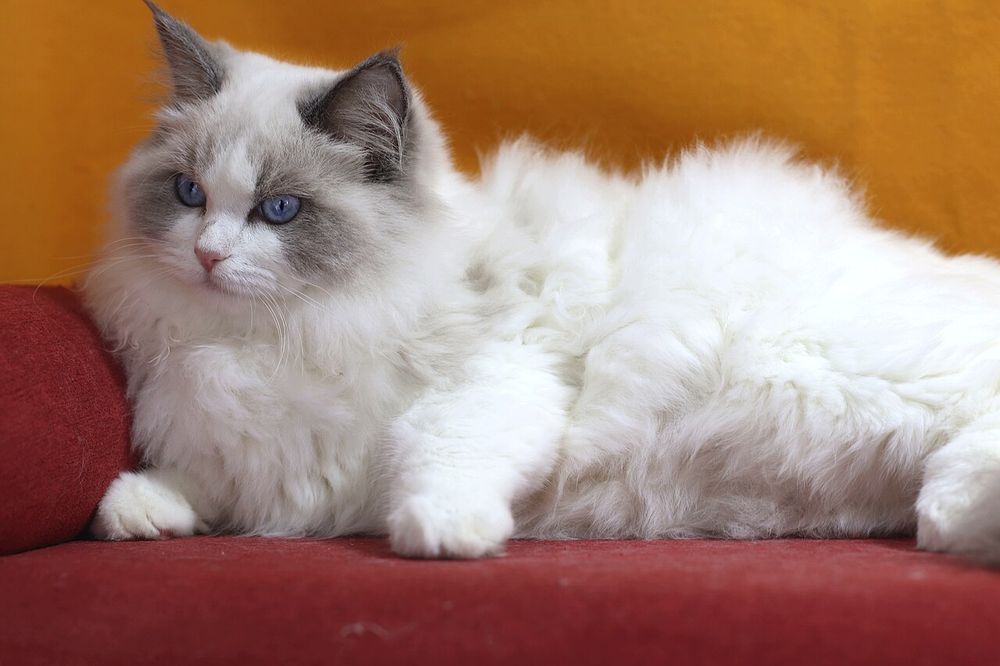
- Origin
- Riverside, California, United StatesThe Cat Fanciers' Association
- Adult weight
- 3.6 to 9.1 kg (GCCF gives 8 to 15 lb for females and 12 to 20 lb for neutered males; the RVC's UK study found a median adult weight of 4.46 kg)Governing Council of the Cat Fancy
- Lifespan
- 12 to 17 yearsGoverning Council of the Cat Fancy
- Coat
- Semi-long, silky and dense, made mostly of guard hairs with little undercoat. It mats if neglected, so comb weekly and more in the moult.The Cat Fanciers' Association
- Energy
- ModerateThe Cat Fanciers' Association
- Indian heat
- Copes with carePDSA
- Flats
- Suits a flatThe Cat Fanciers' Association
Ragdoll at a glance
| What | The rule | Source |
|---|---|---|
| Size | Large. GCCF gives males often over 6 kg and females 4 to 6 kg; CFA says full size comes at about four years. | Governing Council of the Cat Fancy |
| Activity | Moderate. CFA says Ragdolls enjoy play but do not demand it. | The Cat Fanciers' Association |
| Alone-time tolerance | Settles well at home with a sitter visiting at least twice a day. | Cats Protection |
| Heat tolerance | Moderate. The coat is semi-long with little undercoat, but long-haired cats are among those most at risk of heatstroke. | PDSA |
| Grooming | Comb once or twice a week with a steel comb; more while moulting, as the coat mats if neglected. | The Cat Fanciers' Association |
| Sociability | Docile, placid and affectionate, with an easy, laid-back temperament. | Governing Council of the Cat Fancy |
Where does the Ragdoll come from?
The Ragdoll was developed in the 1960s by Ann Baker, a breeder in Riverside, California. GCCF says the first registered Ragdolls were born in 1965 to cats descended from Josephine, a white domestic longhair female. The breed's name reflects its placid nature and its habit of going limp when picked up.
The breed reached the UK in 1981, and GCCF recognised it nine years later. CFA accepted it for registration in 1993 and gave it championship status in 2000. It has grown fast in popularity: the RVC found it was the second most common pure breed under UK primary veterinary care in 2019, rising from 0.70% of cats born in 2005 to 3.72% in 2019.
How did the Ragdoll come to India?
No source we found records when the Ragdoll first reached India, and it does not appear in the breed lists of the Indian cat show reports we read. Ragdolls in India are kept as indoor cats. The breed's coat has little undercoat, per CFA, but PDSA lists long-haired and obese cats among those most at risk of heatstroke, so an Indian Ragdoll needs a cool room, shade and water through the summer and a watch on its weight.
What care does a Ragdoll need?
The three things that shape a good day for this breed.
Exercise
Moderate. CFA says Ragdolls enjoy play sessions but do not insist on them, and GCCF says exercise through play is essential to keep them fit. Two short play sessions a day suit a flat. The Cat Fanciers' Association
Grooming
Weekly. CFA advises combing once or twice a week with a steel comb; GCCF warns the coat mats if left, and needs more attention during the moult. Governing Council of the Cat Fancy
Training
GCCF calls Ragdolls docile and placid. Start grooming and carrier practice while the cat is young, and use play to keep a laid-back cat moving. The Cat Fanciers' Association
How much should a Ragdoll eat?
Daily calories for a healthy, neutered adult Ragdoll, worked out from its weight with the formula vets use (70 x weight in kg to the power 0.75, then AAHA's factor for a neutered adult). Divide by the kcal per kg on your food's pack for grams a day, and adjust by body shape.
| Resting need (kcal a day) | Neutered adult (kcal a day) | |
|---|---|---|
| 3.6 kg AAHA (American Animal Hospital Association) | 180 | 220 to 260 |
| 6.4 kg | 280 | 340 to 390 |
| 9.1 kg | 370 | 440 to 510 |
CFA says Ragdolls are known for their love of food and may be at risk of obesity, and the RVC's UK study recorded obesity in 6.91% of Ragdolls, more often in males. Feed measured meals of a complete and balanced food that names the cat's life stage rather than leaving a full bowl down; Cornell says free feeding dry food can lead some cats to overeat. Keep treats under 10 to 15% of the day's calories, and keep fresh water available at all times. Avoid Indian kitchen foods: ASPCA says cats are more susceptible than dogs to onion, garlic and chives, and milk and dairy can cause diarrhoea. Cornell does not recommend raw meat for cats. Amounts come from the energy table above. Meals a day: kitten to 6 months, 3 a day; 6 to 12 months, 2 a day; adult, from about 1 year, 1 to 2 a day. Puppies, kittens, working, pregnant and older animals need different amounts: ask your vet, or use Petym's food calculator.
Which illnesses is the Ragdoll prone to, and how are they treated?
The conditions veterinary studies and breed surveys most often report in the Ragdoll. Knowing the early signs means a vet sees it sooner.
See your vet first. This is general information from veterinary sources, not a diagnosis. Only a vet who has examined your pet can say what is wrong and prescribe treatment, and this page never gives a dose. Do not give your pet human medicine. If your pet seems very unwell, go to a 24-hour vet: find one in your city.
Hypertrophic cardiomyopathy (HCM)
See a vet soonA thickening of the heart muscle, the most common heart disease in cats. UFAW says about 30% of UK Ragdolls carry the Ragdoll HCM gene; cats with two copies often develop heart failure and clots before two years of age. UFAW (Science for Animal Welfare)
Signs to watch for
- Often none until late
- Fast or laboured breathing, open-mouth breathing or coughing
- Tiredness and a poor appetite
- Sudden painful paralysis of the back legs from a clot
How a vet treats it
A vet diagnoses HCM with a heart ultrasound scan, sometimes with chest X-rays and an ECG. There is no cure: Cornell says treatment aims to control heart rate, relieve congestion in the lungs and prevent clots, with medicines given by mouth or injection; UFAW says this usually means regular tablets.
Prevention
Buy a kitten whose parents have tested negative for the Ragdoll HCM gene. GCCF has required the test for breeding Ragdolls since February 2016.
Obesity
Ask at a routine checkCFA says Ragdolls love food and may be at risk of obesity; the RVC found it in 6.91% of UK Ragdolls, more often in males. Cornell says overweight cats are four and a half times more likely to develop diabetes. The Cat Fanciers' Association
Signs to watch for
- Body weight 20% or more above the cat's normal weight, which is how Cornell defines obesity
- A vet's body condition check showing too much fat
How a vet treats it
Cornell advises asking your vet to set the cat's ideal weight; the vet then plans the daily calories and meals to reach it.
Prevention
Measured meals rather than free feeding, few treats, and daily play.
Dental and gum disease
Ask at a routine checkPeriodontal disease was the most common disorder in the RVC's study of UK Ragdolls, at 8.84%, and dental problems made up the largest disorder group, at 14.52%. Veterinary Ireland Journal (September 2026), by Dan G. O'Neill, RVC VetCompassstudy
Signs to watch for
- Bad breath
- Red or bleeding gums
- Drooling or pawing at the mouth
- Eating less
How a vet treats it
A vet examines the mouth, sometimes under sedation, with dental X-rays. International Cat Care names a scale and polish under general anaesthetic, removal of badly diseased teeth, and pain relief and antibiotics where needed.
Prevention
Regular tooth brushing and a vet check of the teeth at least once a year.
Kidney disease
See a vet soonKidney disorders were the most common recorded cause of death in UK Ragdolls, at 21.18% of deaths with a known cause, as they are in cats generally. Veterinary Ireland Journal (September 2026), by Dan G. O'Neill, RVC VetCompassstudy
Signs to watch for
- Drinking and urinating more
- Poor appetite and weight loss
- Lethargy and an unkempt coat
How a vet treats it
A vet diagnoses it with blood tests and urine tests and stages it. Cornell says treatment starts with a kidney diet and keeping the cat well hydrated, sometimes with fluids under the skin, plus medicines for high blood pressure or anaemia where the vet finds them.
Prevention
Regular check-ups with blood and urine tests as the cat ages; Cornell says early diagnosis improves the outlook.
How well does a Ragdoll cope when you are away?
Better than many breeds, if the routine stays the same. A calm cat is not a cat that needs less checking.
CFA describes the Ragdoll as docile, placid and affectionate, and moderately active: it enjoys play but does not need it. GCCF calls the temperament easy and laid-back. Those are good traits for a cat that will spend most of the day alone between a sitter's visits.
The risk with a quiet cat is that problems are quiet too. A Ragdoll that is unwell may simply lie still, which a sitter could read as the cat being its usual relaxed self. International Cat Care lists resting more, or seeming to sleep, among signs of long-term stress in cats. A good care sheet tells the sitter how your cat normally behaves when someone arrives, so they can tell calm from flat.
Cats Protection advises a sitter who visits at least twice a day, and says young, old or unwell cats may need more. Keep visits at about the same times each day; a predictable routine reduces stress in cats.
Does a Ragdoll really go limp when held?
You may have read
Every Ragdoll goes limp like a rag doll when you pick it up.
Myth
What the sources say
The breed's founder said the foundation cat did, but CFA says this is not typical of today's Ragdolls, and GCCF calls the floppiness pure hype. Hold a Ragdoll as you would any cat: supported under the chest and back legs. Governing Council of the Cat Fancy
You may have read
A big, calm cat does not need play.
Myth
What the sources say
CFA says Ragdolls enjoy play even if they do not demand it. The AAFP and ISFM guidelines list opportunities for play and hunting behaviour as one of every cat's five environmental needs. AAFP and ISFM (Journal of Feline Medicine and Surgery, 2013)study
You may have read
A semi-long coat looks after itself.
Myth
What the sources say
GCCF says the Ragdoll coat mats if neglected and needs extra grooming when moulting. Governing Council of the Cat Fancy
You may have read
A negative gene test means the cat cannot get heart disease.
Myth
What the sources say
UFAW says Ragdolls with a negative HCM test result may still develop HCM. UFAW (Science for Animal Welfare)
What should a Ragdoll's sitter know about HCM?
Hypertrophic cardiomyopathy, a thickening of the heart muscle, is the main inherited health risk named for the breed.
UFAW reports that about 30% of Ragdolls in the UK carry a variant in the MYBPC3 gene at codon 820 linked to HCM; in the USA, 28% carried it and 8% had two copies. Cats with two copies developed heart failure and blood clots before two years of age. GCCF has required the DNA test for Ragdolls registered for breeding since 24 February 2016.
Cornell's Feline Health Center names the Ragdoll among breeds in which HCM is more common, and says many affected cats show no signs, while some are at risk of sudden death. If your cat has had a heart scan or a gene test, put the result on the care sheet.
When should a sitter call the vet for a Ragdoll?
If Breathing fast at rest, coughing, or breathing with the mouth open.
Emergency: keep the cat calm and go to the vet now. UFAW lists breathing difficulty and coughing among HCM signs in Ragdolls. UFAW (Science for Animal Welfare)
If Sudden paralysis or pain in the back legs, or fainting.
Emergency: a clot from heart disease can do this. Go to the nearest 24-hour vet and call the owner. UFAW (Science for Animal Welfare)
If Lying still and not interested in food or the sitter, when the cat is usually sociable.
Check for other signs and call the vet. Not eating for a day is reason enough: cats that stop eating risk hepatic lipidosis. University of Illinois College of Veterinary Medicine
If Panting, red or pale gums, wobbling on a hot day.
Heatstroke: cool the cat with cool, not icy, water and a fan, and call the vet at once. PDSA
If Straining in the tray and passing little or no urine.
A true emergency, more common in male cats. Go to the vet now. Cornell University College of Veterinary Medicine
If A bleeding wound, or a vet saying a transfusion may be needed.
Tell the vet the cat is a Ragdoll: GCCF notes a sub-blood group (B3) in the breed, which matters for transfusions. Governing Council of the Cat Fancy
How can a sitter tell a calm Ragdoll from an unwell one?
By comparing with what is normal for your cat, which is why the care sheet matters. International Cat Care describes sudden stress as a tense, crouched posture and rapid breathing, and long-term stress as quieter signs such as resting more or seeming to sleep, and hiding. A Ragdoll that usually comes to the door and now stays under the bed for two visits running is telling the sitter something.
Ask your sitter to note three things at every visit: how the cat greeted them, how much it ate since the last visit, and what was in the litter tray. Three small notes a visit, logged as they happen, make a pattern that is easy to read. If two of the three change at once, the sitter calls you, and if the cat is breathing fast or will not eat, they call the vet as well.
A Ragdoll visit, step by step
Arrive
Find the cat and watch it breathe while resting. Note how it greets you compared with the last visit.
Water and food
Fresh water in more than one bowl, away from the food and the tray. Food as on the care sheet. AAFP and ISFM (Journal of Feline Medicine and Surgery, 2013)study
Litter
Scoop every tray, note urine and stool, remove soiled litter at least daily. Battersea Dogs and Cats Home
Play
Ten minutes with a wand toy, letting the cat chase and catch. Stop when it loses interest. The Cat Fanciers' Association
Comb
Twice a week, or more when it is moulting: a steel comb through the coat, checking behind the ears and under the legs. The Cat Fanciers' Association
Leave
Curtains drawn on sunny windows, fan or AC as agreed, windows locked, daily photo update sent.
Keeping a Ragdoll cool in an Indian summer
CFA describes the Ragdoll coat as semi-long, mostly guard hairs with little undercoat. That is lighter than a Persian's or a Maine Coon's coat, but PDSA still lists long-haired and overweight cats among those most at risk of heatstroke. A large cat in a closed, sunny flat in May is at risk whatever its coat.
Leave the coolest room open, with curtains drawn and a cool floor to lie on, and water in more than one place. The Animal Welfare Board of India's 2026 heat advisory asks for shade throughout the day, water topped up in stable bowls, and immediate veterinary help for excessive panting, lethargy, drooling, a rapid heartbeat or collapse. Tell your sitter what to do in a power cut.
In the monsoon, the silky coat can mat faster when damp. A quick comb at visits through the rains saves a groomer's visit later.
Feeding notes for a Ragdoll
Same food, same bowl, same amounts, same times. A sudden change of food is a common cause of diarrhoea. Leave enough for the trip and a few days more.
A placid, large cat can put on weight easily if a sitter shows affection with treats. Overweight cats are at higher risk of heatstroke and of liver disease if they stop eating, so ask your sitter to give attention, not extra food. A food puzzle with part of the day's ration gives a calm cat something to do between visits.
Your Ragdoll sitter's checklist
- Vet and 24-hour vet details, plus any heart scan or gene test result. Cats Protection
- How your cat normally greets visitors and how active it usually is.
- Enough food, litter and medicine for the trip and a few days more. Cats Protection
- The steel comb, and where the coat mats first.
- The coolest room and the power-cut plan.
- No dog flea products and no human medicines, ever. International Cat Care
Which Petym service suits a Ragdoll?
Most Ragdolls
Drop-in visits
One to three visits a day for food, water, litter, play and combing, with a photo update every day.
HCM or medicines
Special-needs care
For a Ragdoll with a diagnosed heart condition or on regular medicine, with each dose logged.
Long or summer trips
Overnight pet sitting
A sitter stays in your home through the night and the hottest hours.
Breeds with similar care needs to the Ragdoll
Going away soon? Tell us your dates.
A checked local sitter feeds, walks and keeps your pet company at home, follows your care sheet to the letter and sends a photo every day. Petym is opening city by city: send your dates and we will tell you when a sitter can take them.
- Meet your sitter first, free
- PAN-checked, first-aid trained
- A photo every day
- Pay through Petym, never cash

Questions owners ask
Can a Ragdoll be left alone while I travel?
- With a sitter visiting at least twice a day, yes. CFA describes the Ragdoll as docile and placid, which helps it settle. But a quiet cat can hide illness, so the sitter needs to know how your cat normally behaves and should check breathing, appetite and the litter tray at every visit.
Do Ragdolls get heart disease?
- They can. UFAW reports that about 30% of UK Ragdolls carry a gene variant linked to hypertrophic cardiomyopathy, and Cornell names the Ragdoll among breeds in which HCM is more common. Breathing difficulty, coughing or sudden back-leg paralysis are emergencies. Ask your vet about screening.
Do Ragdolls really go floppy when picked up?
- Not usually. CFA says the trait described by the breed's founder is not typical of today's Ragdolls, and GCCF calls the floppiness pure hype. A sitter should pick up and hold a Ragdoll as they would any cat, with support under the chest and back legs.
How much grooming does a Ragdoll need?
- CFA suggests combing once or twice a week with a steel comb. GCCF says the medium-length, silky coat mats if neglected and needs extra grooming when moulting. A sitter can comb at two visits a week on a longer trip.
Is a Ragdoll suited to India's climate?
- It can live well indoors in India with shade, airflow and water. Its semi-long coat has little undercoat, per CFA, which helps, but PDSA lists long-haired and overweight cats among those most at risk of heatstroke. Plan summer cooling and power cuts before you travel.
How often should a sitter visit a Ragdoll?
- Twice a day at least, as Cats Protection suggests for any cat. Add a midday visit in a heatwave, for an older cat or for a cat on medicine. Choose overnight sitting for a cat with a heart condition on a long trip.
Keep reading
- Cats: caring for a cat while you are away
- Maine Coon careThe other large breed with an HCM gene.
- British Shorthair careAnother calm, quiet breed.
- How long can a cat be left alone?
- Drop-in visits for cats
- Cat sitter or cattery?
Services that help
Free tools for this
Words on this page, explained
Keep exploring
Sources
Each source was opened and read on the date shown. How Petym checks its sources
- The Cat Fanciers' Association: Ragdoll (opens in a new tab)
- Governing Council of the Cat Fancy: Ragdoll (opens in a new tab)
- PDSA: Heatstroke in cats (opens in a new tab)
- Cornell Feline Health Center: How often should you feed your cat? (opens in a new tab)
- Cornell Feline Health Center: Feeding your cat (updated 30 April 2026) (opens in a new tab)
- ASPCA Animal Poison Control: People foods to avoid feeding your pets (opens in a new tab)
Show all 23 sourcesShow fewer
- AAHA (American Animal Hospital Association): 2021 AAHA Nutrition and Weight Management Guidelines for Dogs and Cats: energy requirement calculations (Box 1, PDF) (opens in a new tab)
- Merck Veterinary Manual: Nutritional requirements of small animals (full review November 2023, updated September 2024) (opens in a new tab)
- UFAW (Science for Animal Welfare): Ragdoll: hypertrophic cardiomyopathy (opens in a new tab)
- Cornell University College of Veterinary Medicine: Hypertrophic cardiomyopathy (Cornell Feline Health Center) (opens in a new tab)
- International Cat Care: Dental disease in cats (updated 26 September 2025) (opens in a new tab)
- Cornell Feline Health Center: Chronic Kidney Disease (opens in a new tab)
- Animal Welfare Board of India: Request to ensure care and protection of animals from direct heat during extreme hot weather (4 May 2026) (opens in a new tab)
- Cats Protection: Going on holiday without your cat (opens in a new tab)
- International Cat Care: Stress in cats (opens in a new tab)
- PDSA: Diarrhoea after a change of food (opens in a new tab)
- University of Illinois College of Veterinary Medicine: Hepatic lipidosis: a serious problem when cats stop eating (opens in a new tab)
- International Cat Care: Cats and poisons (opens in a new tab)
- Cornell University College of Veterinary Medicine: Feline lower urinary tract disease (Cornell Feline Health Center) (opens in a new tab)
- Battersea Dogs and Cats Home: Cat litter trays (opens in a new tab)
- Veterinary Ireland Journal (September 2026), by Dan G. O'Neill, RVC VetCompass: Ragdoll cats: what veterinary professionals need to know (summary of O'Neill and others, Companion Animal Health and Genetics, 2025) (opens in a new tab)
- AAFP and ISFM (Journal of Feline Medicine and Surgery, 2013): Feline environmental needs guidelines (opens in a new tab)
- ETV Bharat: Cat show in Kolhapur draws visitors (news report, 2 December 2024) (opens in a new tab)