German Shepherd with a sitter: exercise, heat and alone time
Updated By PetymFacts checked against official sources on
Quick answer
A German Shepherd copes with a sitter once it trusts them, so the meet and greet matters more than for most breeds. It needs more than 2 hours of exercise a day, says The Royal Kennel Club, plus work for its brain. In India that exercise belongs in the cool early morning and evening, never at midday.
German Shepherds, still often called Alsatians in India, were the second most registered breed in Ahmedabad's figures reported in August 2026, with 1,527 dogs. Many live in flats and gated societies, where a bored, under-exercised Shepherd barks, paces and guards the door.
- Meet your sitter first, free
- PAN-checked, first-aid trained
- A photo every day
- Pay through Petym, never cash

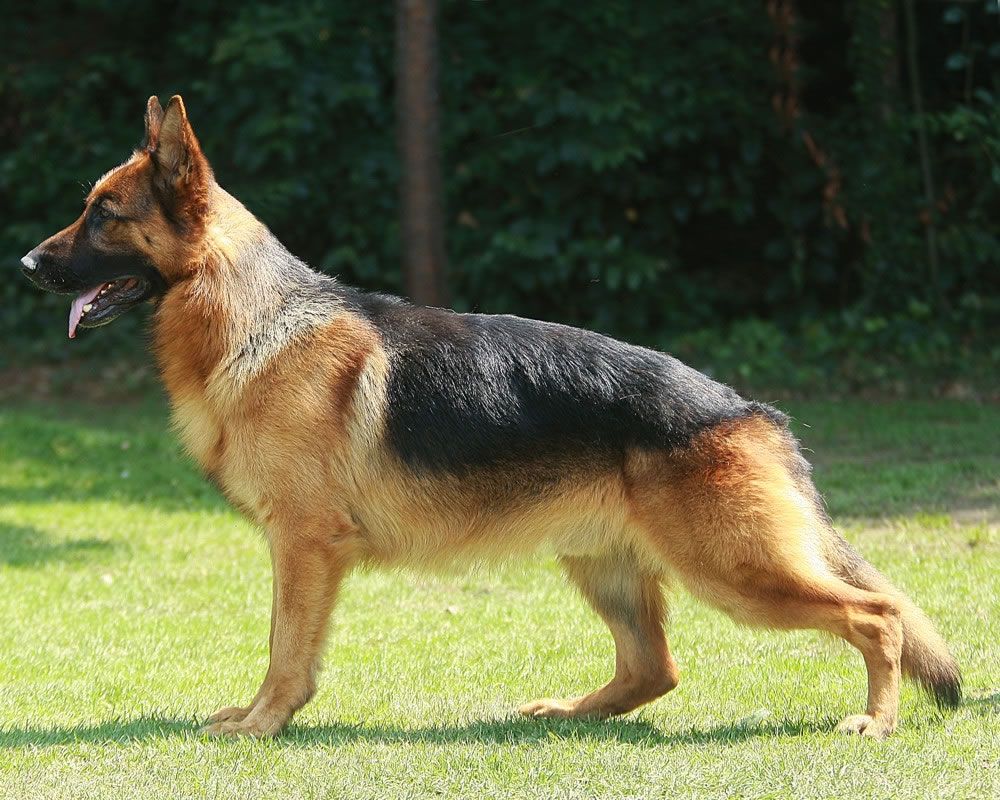
- Origin
- GermanyFédération Cynologique Internationale
- Adult weight
- 22 to 40 kg (FCI standard: 22 to 32 kg for females, 30 to 40 kg for males)Fédération Cynologique Internationale
- Height
- 55 to 65 cm (FCI standard: 55 to 60 cm for females, 60 to 65 cm for males)Fédération Cynologique Internationale
- Lifespan
- 12 to 14 yearsAmerican Kennel Club
- Coat
- A double coat with undercoat, in two varieties: a dense, harsh, close-fitting double coat and a long double coat. Short hair on the head and legs, longer on the neck.Fédération Cynologique Internationale
- Energy
- Very highThe Royal Kennel Club
- Indian heat
- Copes with careScientific Reports (2020)study
- Flats
- Needs spaceThe Royal Kennel Club
German Shepherd snapshot
| What | The rule | Source |
|---|---|---|
| Size | Large. The FCI standard gives 60 to 65 cm at the withers for males and 55 to 60 cm for females. | Fédération Cynologique Internationale |
| Exercise need | More than 2 hours a day (The Royal Kennel Club). AKC calls it a very active, athletic breed that needs lots of exercise for body and mind. | The Royal Kennel Club |
| Alone-time tolerance | Not scored by kennel clubs. A dog bred to work closely with a handler; PDSA's general limit is 4 hours alone at a time. | PDSA |
| Heat tolerance | No higher odds of heat-related illness than the Labrador in a large UK study, but every weight band over 10 kg had higher odds than small dogs. | Scientific Reports (2020)study |
| Coat and shedding | Short or long coat, both shed; groom more than once a week. | The Royal Kennel Club |
| With other dogs | AKC places it in the middle of its scale (3 of 5) for getting on with other dogs: introductions need care. | American Kennel Club |
Where does the German Shepherd come from?
The German Shepherd comes from the herding dogs of Germany, which until the late 19th century varied in type from district to district. AKC's history credits a cavalry officer, Captain Max von Stephanitz, with setting out to create the ideal German herder by crossing strains from northern and central Germany. The FCI standard records that methodical breeding began in 1899, when the breed society, the Verein für Deutsche Schäferhunde (SV), was founded in Frankfurt on 20 September, with the aim of a working dog inclined to high achievement.
As herding declined, von Stephanitz promoted the breed as a police and service dog, and AKC says it is now the preferred dog of police and military units around the world. The Royal Kennel Club adds that the breed gained wider recognition after the First World War and has worked as a guide dog, tracking dog and obedience dog.
Anti-German feeling around the world wars hurt the breed's image, and in Britain from the First World War it was called the Alsatian, a name AKC says many British owners still prefer. In the United States it became popular in the early 1900s, helped by the film dogs Rin Tin Tin and Strongheart.
How did the German Shepherd come to India?
Petym found no Indian source that records when the German Shepherd first came to India, so its arrival is not documented. It is now one of the most common pedigree dogs in Indian cities. In a news report of August 2026 on Ahmedabad Municipal Corporation's pet registrations, German Shepherds, listed as Alsatians, were the second most registered breed with 1,527 dogs, after 3,939 Labradors.
It is also a working dog here. A 2023 Tribune (PTI) report said almost all police dogs in India, including German Shepherds, Labradors, Belgian Malinois and Cocker Spaniels, are of foreign breeds, and that the central armed police forces were trialling Indian breeds such as the Mudhol Hound alongside them.
What care does a German Shepherd need?
The three things that shape a good day for this breed.
Exercise
The Royal Kennel Club gives more than 2 hours a day, and AKC warns that an under-exercised Shepherd becomes frustrated and develops unwanted behaviour. Puppies start with short daily walks; tracking, agility and herding work the mind as well. In Indian summers, walk at dawn and after dark. The Royal Kennel Club
Grooming
AKC says brush every few days, more often in the heavy moults once or twice a year, bathe only occasionally and trim the nails monthly if they do not wear down. The Royal Kennel Club says groom more than once a week. American Kennel Club
Training
AKC calls it highly intelligent and closely bonded to its family, and says early socialisation, puppy classes and continued, consistent reward-based training give a well-mannered adult. It should live in the house with its people. The Royal Kennel Club
How much should a German Shepherd eat?
Daily calories for a healthy, neutered adult German Shepherd, worked out from its weight with the formula vets use (70 x weight in kg to the power 0.75, then AAHA's factor for a neutered adult). Divide by the kcal per kg on your food's pack for grams a day, and adjust by body shape.
| Resting need (kcal a day) | Neutered adult (kcal a day) | |
|---|---|---|
| 22 kg AAHA (American Animal Hospital Association) | 710 | 1000 to 1140 |
| 31 kg | 920 | 1290 to 1470 |
| 40 kg | 1110 | 1560 to 1780 |
AKC advises a good quality food suited to the dog's age, with table scraps sparingly if at all, no cooked bones or fatty food, and no need for vitamin or mineral supplements on a complete food; WSAVA agrees that a complete and balanced commercial food needs no supplements, and that treats should stay under about 10% of the day's calories. WSAVA also says any starting amount can be up to 50% off for an individual dog, so weigh and adjust: the energy table on this page is a starting point. German Shepherds can get bloat (GDV), a twisted stomach, and the American College of Veterinary Surgeons links one large meal a day with higher risk and advises 2 to 3 smaller meals for dogs at risk. Merck notes large breeds can take almost 2 years to become adult, so ask your vet when to move from puppy to adult food. Keep onion, garlic, grapes, chocolate and xylitol away from the dog. Meals a day: 6 to 12 weeks, 4 a day; 3 to 6 months, 3 a day; 6 to 12 months, 2 a day; adult, 2 to 3 smaller meals a day, not one large one. Puppies, kittens, working, pregnant and older animals need different amounts: ask your vet, or use Petym's food calculator.
Which illnesses is the German Shepherd prone to, and how are they treated?
The conditions veterinary studies and breed surveys most often report in the German Shepherd. Knowing the early signs means a vet sees it sooner.
See your vet first. This is general information from veterinary sources, not a diagnosis. Only a vet who has examined your pet can say what is wrong and prescribe treatment, and this page never gives a dose. Do not give your pet human medicine. If your pet seems very unwell, go to a 24-hour vet: find one in your city.
Hip and elbow dysplasia
Ask at a routine checkLoose hip or elbow joints in a growing dog that wear into arthritis. Science for Animal Welfare calls hip dysplasia common in large dogs including German Shepherds, and the Royal Kennel Club recommends hip and elbow testing before breeding. Science for Animal Welfare (formerly UFAW)
Signs to watch for
- Lameness or pain, especially after hard exercise
- Stiffness after rest and difficulty getting up
- A swaying or bunny-hopping hind gait
- Reluctance to jump, climb steps or walk
How a vet treats it
A vet examines the hips and takes X-rays, usually under sedation in older dogs. Merck lists weight reduction, limiting exercise on hard surfaces, physical therapy and anti-inflammatory drugs, and surgery ranging up to total hip replacement for some dogs.
Prevention
Buy from parents with hip and elbow scores (Science for Animal Welfare gives a breed median hip score of 11), avoid fast weight gain in puppyhood and keep adults lean.
Bloat (gastric dilatation-volvulus, GDV)
Emergency: go to a vet nowThe stomach fills with gas and food and can twist on itself. AKC says German Shepherds can get it, and ACVS links it with deep chests, large breeds and one large meal a day. American Kennel Club
Signs to watch for
- Restlessness and drooling
- Retching without bringing anything up
- A swollen, tight belly
- Weakness or collapse
How a vet treats it
This is an emergency. A vet stabilises the dog with intravenous fluids and oxygen, releases gas with a stomach tube, then operates to untwist the stomach and fix it to the body wall (gastropexy). ACVS says early surgery gives the better outcome.
Prevention
Feed 2 to 3 smaller meals a day. Ask your vet about a preventive gastropexy, which can be done at the time of spaying or neutering.
Exocrine pancreatic insufficiency (EPI)
See a vet soonThe pancreas stops making enough digestive enzymes, usually because its enzyme cells waste away. Science for Animal Welfare says German Shepherds make up about two thirds of such cases. Science for Animal Welfare (formerly UFAW)
Signs to watch for
- Ravenous hunger with weight loss
- Large amounts of loose, sometimes foul-smelling faeces
- Wind and gurgling belly
- A poor, greasy coat
How a vet treats it
A vet confirms it with a blood test (serum TLI). Treatment is lifelong: pancreatic enzyme supplements given with food, regular vitamin B12 injections, sometimes a diet change, and antibiotics if bacteria overgrow in the gut. The outlook with treatment is generally good.
Degenerative myelopathy
See a vet soonA slow, painless disease of the spinal cord linked to a gene variant (SOD1), usually first seen at around 8 to 9 years. The Royal Kennel Club lists a DNA test for it in the breed. Science for Animal Welfare (formerly UFAW)
Signs to watch for
- A swaying hind gait
- Difficulty getting up
- Worn hind nails or hind feet crossing
- Later, hind leg weakness and loss of bladder or bowel control
How a vet treats it
A vet reaches a working diagnosis by ruling out other causes, often with X-rays, blood tests and MRI; it is often mistaken for hip disease. There is no cure. Science for Animal Welfare says physiotherapy can keep some dogs mobile for longer, and some use a hind-limb cart.
Prevention
Ask the breeder for DNA test results of both parents.
Anal furunculosis
See a vet soonA long-term inflammatory disease of the skin around the anus, with ulcers and draining tracts. Science for Animal Welfare says about 84% of reported cases are German Shepherds, most often middle-aged, unneutered males. Science for Animal Welfare (formerly UFAW)
Signs to watch for
- Licking or soreness under the tail
- Red, ulcerated or weeping skin around the anus
- Pain or straining when passing faeces
- A bad smell or discharge
How a vet treats it
A vet diagnoses it by examining the area and may run a food trial to rule out food allergy. Science for Animal Welfare says long-term immune-suppressing medicine (it names ciclosporin, and tacrolimus) is the most successful treatment; surgery is used in some cases. Many dogs have flare-ups for life.
Ear infections (otitis externa)
See a vet soonInflammation of the ear canal. It was the most common diagnosis in German Shepherds in UK vet records, ahead of osteoarthritis, diarrhoea and overweight. Canine Genetics and Epidemiology (2017), RVC VetCompassstudy
Signs to watch for
- Head shaking or scratching
- A smell or discharge from the ear
- Red, swollen or sore ear
How a vet treats it
A vet looks into the canal with an otoscope and tests a swab, cleans the ear and usually prescribes ear drops combining antibiotics, antifungals and anti-inflammatories, with oral medicine for severe cases. Merck says treating every underlying cause, such as allergy, stops it coming back.
Prevention
Check the ears weekly and keep them dry after baths and in the monsoon.
How a German Shepherd handles you being away
Trust first, then routine. A Shepherd that knows the sitter and keeps its walks usually settles.
The FCI breed standard describes a well-balanced, self-assured, attentive dog, willing to please, with the instincts of a guard and herding dog. In practice that means a Shepherd watches strangers closely and may guard the door, the gate or its people. A sitter who meets the dog first, with the owner present, is starting from a much better place than one who walks in with a key.
Petym builds that in: every first booking starts with a free meet and greet. For a Shepherd, use it to walk together, let the dog sniff the sitter's hands and bag, and show the sitter how you hand over the leash, feed and give commands. If your dog has ever growled at or bitten a visitor, say so plainly. In a UK study of German Shepherds, aggression was recorded in 4.76% of dogs and was more common in males, so this is a real conversation for many owners, not a rare one.
On time alone, PDSA's general advice is no more than 4 hours at a stretch. A Shepherd left alone too long in a flat often barks at every sound in the corridor and lift lobby, which also strains things with neighbours and the society.
A two-walk day that tires a Shepherd in Indian heat
Petym’s working from the official rules, no government publishes a total.
A sample plan for a sitter in the hot months. It adds up to more than 2 hours of activity without any walking in the midday sun.
Soon after sunrise
The long walk: 60 minutes at the dog's pace, on soil or grass where possible, with water carried. Heel work and sits at each corner count as training.
After the walk
Breakfast, measured as the owner wrote it, once the dog has cooled down and stopped panting.
Mid-morning, indoors
Fifteen minutes of nose work: hide pieces of the day's food around one room and ask the dog to find them.
Midday to afternoon
Rest in the coolest room with two water bowls. Toilet break only, on shaded ground.
Late afternoon, indoors
Ten to fifteen minutes of training games: commands the owner uses, a tug toy with a clear 'drop'.
After sunset
The second long walk, 45 to 60 minutes, once the road has cooled. Then dinner, a brush, and the photo update to the owner.
Handling a guarding breed in a flat or society
Do
- Keep the dog on a leash in the society's common areas and lifts, and take the stairs if the lift is crowded.
- Let the dog see who is at the door from a calm spot behind a gate or closed room before you open it.
- Use the owner's exact commands and hand signals; a Shepherd notices when the words change.
- Give the dog work every day: training, nose work or a food toy. AKC stresses exercise for mental as well as physical well-being. American Kennel Club
Don’t
- Do not let delivery staff, cleaners or guests walk in unannounced while the dog is loose.
- Do not push greetings with other dogs on walks. Introduce slowly, on a loose leash, or cross the road.
- Do not punish barking or growling: it is the dog's warning. Move away and tell the owner.
- Do not keep the dog chained or shut in for long periods. AWBI points out that neglecting to exercise a dog kept chained or closely confined is cruelty under Section 11(1)(g) of the Prevention of Cruelty to Animals Act, 1960. Animal Welfare Board of India
Feeding notes for a German Shepherd
Keep the same food, the same bowls and the same times as at home, and leave enough for the whole trip plus a few days. Stomach upsets are common in the breed: diarrhoea was recorded in 5.24% of UK German Shepherds, and a sudden change of food is one cause of diarrhoea in any dog. Science for Animal Welfare also lists exocrine pancreatic insufficiency among the breed's inherited problems, a condition that affects digestion; if your dog has a diagnosis and a special diet, write it down in full.
Large dogs are at higher risk of bloat (GDV). The American College of Veterinary Surgeons lists eating one large meal a day and eating very fast among the risk factors, so split the day's food into the meals the owner uses and keep things calm around feeding. Overweight or obesity was recorded in 5.18% of UK Shepherds, so count treats: WSAVA suggests keeping them under about 10% of daily calories.
German Shepherd health problems a sitter should recognise
Notice, record, tell the owner and call the vet. A sitter does not diagnose or treat.
If Restless, trying to vomit with nothing coming up, a swollen or tight belly, drooling. Signs of bloat (GDV), which affects large, deep-chested dogs.
An emergency: go straight to the nearest 24-hour vet and call the owner on the way. American College of Veterinary Surgeons
If Limping, stiffness after rest, a bunny-hopping gait, or trouble rising. Hip dysplasia, elbow dysplasia and degenerative lumbosacral stenosis are on the breed's list.
Rest the dog, keep walks short and on soft ground, and call the vet. Science for Animal Welfare (formerly UFAW)
If Weak, wobbly or dragging back legs, or scuffed back toenails. Degenerative myelopathy is listed for the breed.
Tell the owner and the vet; do not force the dog on long walks. Science for Animal Welfare (formerly UFAW)
If A seizure: stiffening, paddling legs, drooling, loss of awareness. Idiopathic epilepsy is on the breed's list.
Keep hands away from the mouth, move furniture away, time it, and call the vet. Follow any plan the owner's vet has written. Science for Animal Welfare (formerly UFAW)
If Head shaking, a smell from the ears, redness or discharge. Otitis externa was the most common problem in UK Shepherds, at 7.89%.
Call the vet. Do not put anything in the ear unless shown how. Canine Genetics and Epidemiology (2017), RVC VetCompassstudy
If Heavy panting that does not settle, thick drool, weakness or collapse after a walk.
Treat as heatstroke: shade, cool water poured over the body, a breeze, and call the vet. PDSA
Heat, coat and ticks: notes for Indian cities
A German Shepherd's dense coat sheds through the year and heavily at the change of season. Brush more than once a week, as The Royal Kennel Club advises, and do not shave it: Texas A&M's veterinary college says a thick coat acts as natural insulation and that shaving can make some dogs less tolerant of heat. In the UK heatstroke study, exercise caused most cases and heavier dogs were at higher risk, so a big Shepherd's long walk must be done before the sun is high. Check the India Meteorological Department's colour-coded heat warnings on hot days.
Ticks hide in a Shepherd's coat around the ears, neck, armpits and between the toes. In a survey of 525 dogs in four Indian cities, about half carried at least one tick-borne infection. Check after every walk, remove ticks with tweezers close to the skin, and tell the owner. Fever, low energy or pale gums need a vet: tick fever can be serious.
German Shepherd sitter checklist
- The commands and hand signals the dog knows, written down, and the release word for toys.
- Who the dog is wary of: men in helmets, delivery staff, children, other dogs, and how it shows it.
- The leash, harness or collar to use, and whether a muzzle is part of the vet visit routine.
- Meal amounts and times, the number of meals per day and the treat allowance.
- Any medicines and diets exactly as the vet prescribed them. The sitter logs each dose.
- Tick prevention due date, and the brush the dog likes.
- The society's pet rules: lift use, leash areas, walking times.
- The vet's number and the nearest 24-hour vet on Petym's city list.
Which Petym service fits a German Shepherd?
If Your Shepherd guards the home or is wary of strangers
Overnight pet sitting in your home, after a meet and greet. The dog stays on its own territory with one trusted person. Overnight sitting
If You are out at work all day
Dog walking at midday, so the dog gets a break and a walk on long days. Dog walking
If Your Shepherd is relaxed with new people and dogs
Pet boarding in a vetted sitter's home with a set pet limit. Home boarding
If Your dog has a medical condition or is recovering from surgery
Special-needs pet care, with the vet's plan followed and logged. Special-needs care
Breeds with similar care needs to the German Shepherd
Going away soon? Tell us your dates.
A checked local sitter feeds, walks and keeps your pet company at home, follows your care sheet to the letter and sends a photo every day. Petym is opening city by city: send your dates and we will tell you when a sitter can take them.
- Meet your sitter first, free
- PAN-checked, first-aid trained
- A photo every day
- Pay through Petym, never cash


Questions owners ask
How long can a German Shepherd be left alone?
- PDSA's general advice is no more than 4 hours at a time for any dog. A German Shepherd is a working breed that bonds closely with its people and needs more than 2 hours of exercise a day, so on long days arrange a midday walk or a sitter rather than leaving it alone.
Can a German Shepherd live in a flat in India?
- It can, if it gets enough exercise and mental work. The Royal Kennel Club suggests more than 2 hours a day. In a flat that means two long walks in the cool hours, training and nose work at home, and calm handling in lifts and common areas of the society.
Is a German Shepherd safe with a pet sitter?
- Most are, once they know the sitter. That is why Petym starts every first booking with a free meet and greet. Tell the sitter honestly about any guarding, growling or past bites, and agree how doors, deliveries and other dogs will be handled while you are away.
Can German Shepherds handle Indian summers?
- With care. In a large UK study, German Shepherds did not have higher odds of heat-related illness than Labradors, but heavier dogs and exercise were big risk factors. Walk at dawn and after sunset, keep the dog lean, brush out the loose undercoat and never shave it.
What health problems should a German Shepherd's sitter know?
- Science for Animal Welfare lists hip and elbow dysplasia, degenerative myelopathy, epilepsy and exocrine pancreatic insufficiency among the breed's genetic problems. Ear infections were the most common issue in UK Shepherds. A swollen belly with retching can be bloat, an emergency that needs a 24-hour vet.
Is an Alsatian the same as a German Shepherd?
- Yes. Alsatian is the older British name for the German Shepherd Dog, and many Indian owners and vets still use it. Science for Animal Welfare lists the breed as German Shepherd Dog (Alsatian).
Should I use boarding or a home sitter for my German Shepherd?
- If your Shepherd guards its home or is wary of strangers and other dogs, a sitter in your own home is usually the calmer choice. A dog that is relaxed with new people and dogs may do well in a vetted sitter's home with a pet limit.
Keep reading
- Dog care hub
- Meet and greet checklistWhat to ask and show at the first meeting.
- How long can you leave a dog alone?
- Dog walking
- Rottweiler care
- Belgian Malinois care
Services that help
Free tools for this
Words on this page, explained
Keep exploring
Other dog breeds
- Akita
- Alaskan Malamute
- American Bully
- American Cocker Spaniel
- American Pit Bull Terrier
- Australian Shepherd
- Bakharwal dog
- Basset Hound
- Beagle
- Belgian Malinois
- Bernese Mountain Dog
- Bichon Frise
- Border Collie
- Boston Terrier
- Boxer
- Bull Terrier
- Bulldog
- Bullmastiff
- Cane Corso
- Caucasian Shepherd Dog
- Cavalier King Charles Spaniel
- Chihuahua
- Chippiparai
- Chow Chow
- Cocker Spaniel
- Dachshund
- Dalmatian
- Dobermann
- Dogo Argentino
- English Mastiff
- English Springer Spaniel
- French Bulldog
- Gaddi Kutta (Gaddi dog)
- Golden Retriever
- Great Dane
- Greyhound
- Havanese
- Indian pariah dog (Indie)
- Indian Spitz
- Irish Setter
- Jack Russell Terrier
- Kangal
- Kanni
- Kombai
- Labrador Retriever
- Lhasa Apso
- Maltese
- Miniature Pinscher
- Miniature Schnauzer
- Mudhol Hound
- Neapolitan Mastiff
- Newfoundland
- Papillon
- Pekingese
- Pembroke Welsh Corgi
- Pomeranian
- Poodle
- Pug
- Rajapalayam
- Rampur Greyhound
- Rhodesian Ridgeback
- Rottweiler
- Saint Bernard
- Samoyed
- Shar Pei
- Shiba Inu
- Shih Tzu
- Siberian Husky
- Tibetan Mastiff
- Weimaraner
- West Highland White Terrier
- Whippet
- Yorkshire Terrier
Sources
Each source was opened and read on the date shown. How Petym checks its sources
- Fédération Cynologique Internationale: FCI-Standard No 166: German Shepherd Dog (opens in a new tab)
- American Kennel Club: German Shepherd Dog breed information (opens in a new tab)
- The Royal Kennel Club: German Shepherd Dog: breed information (opens in a new tab)
- WSAVA: Frequently asked questions and myths (Global Nutrition Committee) (opens in a new tab)
- American College of Veterinary Surgeons: Gastric dilatation-volvulus (opens in a new tab)
- Merck Veterinary Manual: Puppy care (opens in a new tab)
Show all 28 sourcesShow fewer
- ASPCA Animal Poison Control: People foods to avoid feeding your pets (opens in a new tab)
- AAHA (American Animal Hospital Association): 2021 AAHA Nutrition and Weight Management Guidelines for Dogs and Cats: energy requirement calculations (Box 1, PDF) (opens in a new tab)
- Merck Veterinary Manual: Nutritional requirements of small animals (full review November 2023, updated September 2024) (opens in a new tab)
- Science for Animal Welfare (formerly UFAW): German Shepherd Dog (Alsatian): hip dysplasia (opens in a new tab)
- Merck Veterinary Manual: Hip dysplasia (dog owners) (opens in a new tab)
- Science for Animal Welfare (formerly UFAW): German Shepherd Dog (Alsatian): exocrine pancreatic insufficiency (opens in a new tab)
- Science for Animal Welfare (formerly UFAW): German Shepherd Dog (Alsatian): degenerative myelopathy (opens in a new tab)
- Science for Animal Welfare (formerly UFAW): German Shepherd Dog (Alsatian): anal furunculosis (opens in a new tab)
- Merck Veterinary Manual: Ear infections and otitis externa in dogs (opens in a new tab)
- Science for Animal Welfare (formerly UFAW): German Shepherd Dog (Alsatian): genetic welfare problems (opens in a new tab)
- PDSA: Separation anxiety in dogs (opens in a new tab)
- Animal Welfare Board of India: Circular and guidelines for pet owners (1 June 2020) (opens in a new tab)
- PDSA: Diarrhoea after a change of food (opens in a new tab)
- Texas A&M College of Veterinary Medicine (Pet Talk, 16 June 2022): Time for a summer cut? Tips for warm weather dog grooming (opens in a new tab)
- India Meteorological Department: FAQ on heat wave (opens in a new tab)
- Merck Veterinary Manual: Ticks of dogs (opens in a new tab)
- PDSA: Heatstroke in dogs (opens in a new tab)
- Scientific Reports (2020): Incidence and risk factors for heat-related illness in UK dogs (opens in a new tab)
- Canine Genetics and Epidemiology (2017), RVC VetCompass: Demography and disorders of German Shepherd Dogs under primary veterinary care in the UK (abstract read) (opens in a new tab)
- Parasites & Vectors (2011): A survey of canine tick-borne diseases in India (opens in a new tab)
- Telangana Today (IANS): Ahmedabad registers nearly 20,000 pet dogs; Labradors remain the city's most popular breed (5 Aug 2026) (opens in a new tab)
- The Tribune (PTI): Forget foreign breeds, Indian canines to help CAPFs take a bite out of crime (24 October 2023) (opens in a new tab)