Cocker Spaniel care in India: ears, coat and alone time
Updated By PetymFacts checked against official sources on
Quick answer
A Cocker Spaniel usually enjoys a sitter: it is a sociable family gundog that gets on well with other dogs. What a sitter must know is the maintenance. The coat needs daily grooming, the long ears need checking and drying, especially in the monsoon, and meals need measuring, because gum disease, ear infections and obesity top the breed's health list.
These facts are for the English Cocker Spaniel, the Cocker most Indian families own. AKC lists the American Cocker Spaniel as a separate breed.
- Meet your sitter first, free
- PAN-checked, first-aid trained
- A photo every day
- Pay through Petym, never cash

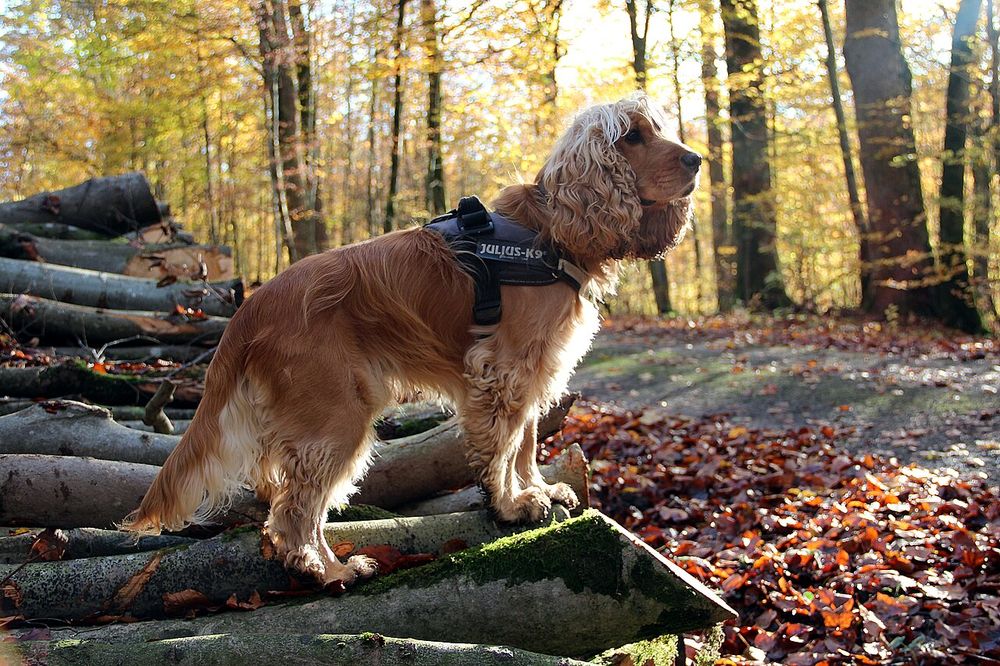
- Origin
- Great BritainFédération Cynologique Internationale
- Adult weight
- 13 to 14.5 kg (approximate weight in the FCI standard for the English Cocker Spaniel)Fédération Cynologique Internationale
- Height
- 38 to 41 cm (females 38 to 39 cm, males 39 to 41 cm, FCI standard)Fédération Cynologique Internationale
- Coat
- Flat and silky, never wiry or curly, with feathering on the legs and body. Solid colours, parti-colours, tricolours and roans (FCI standard).Fédération Cynologique Internationale
- Energy
- ModerateThe Royal Kennel Club
- Indian heat
- Copes with careScientific Reports (2020)study
- Flats
- A flat, with daily exerciseThe Royal Kennel Club
Cocker Spaniel snapshot
| What | The rule | Source |
|---|---|---|
| Size | Small, says The Royal Kennel Club. AKC gives a height of 16 to 17 inches for males and 15 to 16 inches for females. | American Kennel Club |
| Exercise need | Up to 1 hour a day, says The Royal Kennel Club. Many working-bred Cockers want more. | The Royal Kennel Club |
| Alone-time tolerance | Not scored by kennel clubs. The Royal Kennel Club describes gundogs as good companions and ideal all-round family dogs. PDSA's general limit is 4 hours alone. | The Royal Kennel Club |
| Heat tolerance | No higher odds of heat-related illness than the Labrador in a large UK study. Exercise and extra weight were the main risks for all dogs. | Scientific Reports (2020)study |
| Coat and shedding | Medium-length coat that sheds and needs grooming every day. | The Royal Kennel Club |
| With other dogs | AKC rates the English Cocker at the top of its scale (5 of 5) for getting on with other dogs. | American Kennel Club |
Where does the Cocker Spaniel come from?
The Cocker Spaniel began as the cocking spaniel, named for flushing woodcock for the gun. The Royal Kennel Club explains that all spaniels were once known together as land spaniels and bred together, then sorted by size and colour, with a Cocker having to weigh under 25 lb. Breeders picked dogs for their working ability and for the ground they worked.
The FCI standard says Cockers were recognised as a breed separate from Field and Springer Spaniels soon after The Kennel Club was formed in 1873; The Royal Kennel Club dates recognition as a separate variety to 1893. Black dogs led early shows, and a Welsh Springer outcross helped establish the parti-colours. Nicknamed the merry cocker for its wagging tail, it was at its most popular in the early 1900s.
Today there are two types: dogs bred for work and dogs bred for show, the show Cocker being sturdier and heavier than its working cousin.
How did the Cocker Spaniel come to India?
No source we found records when or how the Cocker Spaniel came to India. In a large UK study it did not have higher heat-illness odds than the Labrador, but exercise and extra weight raised the risk for every dog, so Indian summers still mean walks in the cool hours and a lean dog.
The monsoon is hard on its long ears. Outer ear infection was recorded in about one in ten UK English Cockers, and ticks were found on 53% of 525 dogs in a survey across four Indian cities, so dry the ears and check them, and the feathered feet, after every walk.
What care does a Cocker Spaniel need?
The three things that shape a good day for this breed.
Exercise
Up to an hour a day, says The Royal Kennel Club. In Indian summers keep walks and games to the cool hours, since exercise caused most heat illness in the UK study. The Royal Kennel Club
Grooming
Daily brushing for the medium-length coat that sheds, says The Royal Kennel Club, with regular ear checks as Merck advises. Texas A&M says trimming can make a long coat easier to manage if a professional does it, and a full shave is not usually needed unless the coat is matted. Texas A&M College of Veterinary Medicine (Pet Talk, 16 June 2022)
Training
The Royal Kennel Club calls gundogs good companions and all-round family dogs. Short, reward-based sessions with retrieving and scent games use the flushing work it was bred for. Merck Veterinary Manual
How much should a Cocker Spaniel eat?
Daily calories for a healthy, neutered adult Cocker Spaniel, worked out from its weight with the formula vets use (70 x weight in kg to the power 0.75, then AAHA's factor for a neutered adult). Divide by the kcal per kg on your food's pack for grams a day, and adjust by body shape.
| Resting need (kcal a day) | Neutered adult (kcal a day) | |
|---|---|---|
| 13 kg AAHA (American Animal Hospital Association) | 480 | 670 to 770 |
| 13.8 kg | 500 | 700 to 800 |
| 14.5 kg | 520 | 730 to 830 |
Obesity was recorded in nearly 10% of UK English Cockers, so measure every meal, count treats, and keep treats to no more than about 10% of the day's calories, as WSAVA advises. Feed a complete and balanced food made for the dog's life stage, and ask your vet to score its body condition at each visit. Keep onion and garlic (in most curries and dal), grapes and raisins, chocolate, coffee and chai, xylitol, salty snacks and cooked bones away from it. Science for Animal Welfare lists pancreatitis for the breed, so avoid fatty leftovers and fried food too. Meals a day: 6 to 12 weeks, 4 a day; 3 to 6 months, 3 a day; 6 to 12 months, 2 a day; adult, 1 or 2 a day; VCA suggests at least 2. Puppies, kittens, working, pregnant and older animals need different amounts: ask your vet, or use Petym's food calculator.
Which illnesses is the Cocker Spaniel prone to, and how are they treated?
The conditions veterinary studies and breed surveys most often report in the Cocker Spaniel. Knowing the early signs means a vet sees it sooner.
See your vet first. This is general information from veterinary sources, not a diagnosis. Only a vet who has examined your pet can say what is wrong and prescribe treatment, and this page never gives a dose. Do not give your pet human medicine. If your pet seems very unwell, go to a 24-hour vet: find one in your city.
Gum disease (periodontal disease)
Ask at a routine checkThe most common diagnosis in UK English Cockers, recorded in about 21%. It is a bacterial infection of the tissues that hold the teeth, and the damage to bone cannot be reversed. Canine Medicine and Genetics (2023), RVC VetCompassstudy
Signs to watch for
- Bad breath
- Red or purple, swollen gums that bleed easily
- Loose teeth or dropping food
How a vet treats it
A vet treats it with a thorough professional cleaning above and below the gum line under anaesthesia, and teeth that have lost their support often need extraction.
Prevention
Daily tooth brushing; Merck says gum disease will not develop around clean teeth, and human toothpaste should not be used.
Ear infection (otitis externa and media)
See a vet soonRecorded in about 10% of UK English Cockers. Science for Animal Welfare says the breed's droopy ears, dense hair in the canal and extra wax glands trap moisture, and skin allergy is the most common underlying cause. Canine Medicine and Genetics (2023), RVC VetCompassstudy
Signs to watch for
- Head shaking and rubbing the ear on the floor or furniture
- Waxy, pus-like or bloody discharge and a bad smell
- Pain or snapping when the ear is touched
- A head tilt in some dogs
How a vet treats it
A vet examines the canal with an otoscope, takes samples and cleans the ear. Ear drops often combine antibiotics, antifungals and anti-inflammatories, and severe infections may need antibiotics by mouth or injection. Long-standing cases may need ear surgery, such as total ear canal ablation.
Prevention
Check and dry the ears, especially in the monsoon, and clean them only as your vet shows you. Merck advises against home remedies and cotton buds.
Obesity
Ask at a routine checkRecorded in nearly 10% of UK English Cockers. Cornell's Riney Canine Health Center says obesity affects nearly every organ, worsens arthritis and often shortens life. Canine Medicine and Genetics (2023), RVC VetCompassstudy
Signs to watch for
- Ribs hard to feel
- No visible waist
- Slowing down on walks
How a vet treats it
A vet scores body condition on a 1 to 9 scale, sets a target weight and builds a plan, often with a weight-control food, measured meals and weigh-ins every two weeks. Do not just cut the usual food without your vet's advice.
Prevention
Measured meals, few treats and regular weighing.
Anal sac impaction
See a vet soonBlocked or infected scent glands on each side of the anus, recorded in about 8% of UK English Cockers. Merck says small breeds are predisposed. Canine Medicine and Genetics (2023), RVC VetCompassstudy
Signs to watch for
- Scooting the bottom along the floor
- Licking or biting under the tail
- Straining or pain when passing stools
- A swelling or open wound beside the anus
How a vet treats it
A vet can usually empty blocked sacs by hand, and may prescribe antibiotics if they are infected or recommend extra fibre in the diet. If the problem keeps coming back, a vet may suggest surgery to remove the sacs.
Immune-mediated haemolytic anaemia (IMHA)
See a vet soonThe immune system destroys the dog's own red blood cells. Science for Animal Welfare says Cocker Spaniels are predisposed, and around 40 to 60% of dogs die from the disease. Science for Animal Welfare (formerly UFAW)
Signs to watch for
- Tiredness and loss of appetite
- Yellow colour in the gums, mouth or eyes
- Dark or red urine
- Fast heartbeat or difficult breathing
How a vet treats it
A vet diagnoses it with blood tests, including a Coombs test, and by ruling out other causes. Treatment is with corticosteroids and other drugs that suppress the immune system, and blood transfusions; some dogs have further episodes.
How a Cocker Spaniel copes when you are away
Usually well, if it has company and its routine. Long days alone are the problem.
The Royal Kennel Club describes gundogs as good companions with a temperament that makes them ideal all-round family dogs, and AKC rates the English Cocker at the top of its scale for getting on with other dogs. That makes a Cocker one of the easier breeds to hand to a sitter, a sitter's home or day care. The flip side is that a Cocker bred to work alongside people does not enjoy long, empty days. PDSA advises no more than 4 hours alone at a time for any dog.
Be open with your sitter about behaviour. In a UK study of 10,313 English Cocker Spaniels, aggression was recorded in 4.01%, more often in males than females and more often in solid-coloured dogs (7.00%) than bi-coloured ones (3.66%). Most Cockers are friendly, but if yours guards food, toys or its bed, or dislikes being handled for grooming, the sitter needs to know before the first day.
The most common problems in 10,313 UK Cockers
From a 2023 Royal Veterinary College VetCompass study. The top three are things a sitter can help prevent or spot early.
20.97 %
had periodontal (gum) disease, the most common diagnosis Canine Medicine and Genetics (2023), RVC VetCompassstudy
10.09 %
had an outer ear infection (otitis externa) Canine Medicine and Genetics (2023), RVC VetCompassstudy
9.88 %
had obesity Canine Medicine and Genetics (2023), RVC VetCompassstudy
8.07 %
had anal sac impaction Canine Medicine and Genetics (2023), RVC VetCompassstudy
11.44 years
median age at death Canine Medicine and Genetics (2023), RVC VetCompassstudy
Ears and coat through the Indian year
| Hot months (March to May) | Monsoon (June to September) | Cooler months (October to February) | |
|---|---|---|---|
| Ears | Check daily; dry after baths | Check and dry after every wet walk; damp ears are where trouble starts | Check a few times a week |
| Coat | Daily brush; a tidy trim helps, never a full shave | Daily brush; dry the feathering to the skin | Daily brush |
| Paws | Check pads for hot-road redness | Dry between the toes; trim hair the owner trims | Check for grass seeds after walks |
| Walks | Early morning and after sunset | Between showers, away from floodwater | Longer walks and games |
Petym's practical plan from the sources on this page. Merck's Veterinary Manual advises keeping ear canals dry and avoiding water in the ears at bath time.
Cocker Spaniel health signs a sitter should report
Notice, note, tell the owner and call the vet. A 24-hour vet for anything sudden or severe.
If Head shaking, scratching at an ear, a smell, redness, swelling or discharge. Otitis externa and media are on the breed's genetic welfare list.
Keep the ear dry and call the vet. Clean ears only as the vet has shown; never push anything into the canal. Merck Veterinary Manual
If Vomiting, a painful or hunched belly, or not eating, especially after a fatty meal. Pancreatitis is on the breed's list.
Call the vet the same day; repeated vomiting needs a vet now. Science for Animal Welfare (formerly UFAW)
If Pale gums, sudden weakness or collapse, or unusual bruising. The breed's list includes immune-mediated haemolytic anaemia and immune-mediated thrombocytopenia, which affect the blood.
An emergency: go to the nearest 24-hour vet. Science for Animal Welfare (formerly UFAW)
If A watery, squinting or red eye, or rubbing at the face. Distichiasis, extra lashes that rub the eye, is listed; spaniel types had 3.13 times the odds of corneal ulcers in an English study.
Call the vet the same day. No drops unless prescribed. Canine Genetics and Epidemiology (2017), RVC VetCompassstudy
If Bad breath, red gums, dropping food or chewing on one side.
Note it for the owner and the vet; keep up any tooth-brushing routine. Canine Medicine and Genetics (2023), RVC VetCompassstudy
If Scooting or licking under the tail, or a lump near the bottom.
Tell the owner. Anal sac problems are common in the breed, and anal sac adenocarcinoma is on its list, so lumps need a vet check. Science for Animal Welfare (formerly UFAW)
A Cocker's day with a sitter
Petym’s working from the official rules, no government publishes a total.
A sample plan for the hot months.
Soon after sunrise
A 30 to 40 minute walk on a harness, with time to sniff and a few retrieves in shade. Working-bred Cockers may want a longer outing.
Back home
Check ears and paws, towel off any damp, then breakfast from the owner's plan.
Mid-morning
The daily brush: ears, chest, legs and belly feathering, where mats start. Ten minutes.
Midday to afternoon
Indoors in the coolest room. A food toy with part of the day's food; a toilet break on shaded ground.
After sunset
The second walk, 20 to 30 minutes, once the ground passes PDSA's 7-second palm test.
Night
Dinner, tooth brushing if the owner does it, and the daily photo update.
Feeding rules for a Cocker's sitter
Do
- Measure every meal. Obesity affected nearly one in ten UK Cockers. Canine Medicine and Genetics (2023), RVC VetCompassstudy
- Keep treats under about 10% of daily calories, with low-calorie choices like apple, carrot or watermelon. WSAVA
- Keep the same food and times as at home for the whole stay. PDSA
- Use a narrow, deep bowl if the owner does, so the ears stay out of the food and water.
Don’t
- No fatty leftovers, ghee-rich food or fried snacks: pancreatitis is on the breed's list. Science for Animal Welfare (formerly UFAW)
- No chocolate, grapes, raisins, onion, garlic or xylitol. ASPCA Animal Poison Control
- No sharing of festival sweets or salty namkeen. ASPCA Animal Poison Control
- Do not leave food bowls or bins where a food-loving spaniel can reach them.
Heat, monsoon and ticks: India notes for a Cocker
English Cockers did not have higher odds of heat-related illness than Labradors in the large UK study, but exercise caused most cases and dogs at or above their breed's average weight had higher odds. A Cocker that will happily chase a ball until it drops needs a sitter who stops the game early. Walk at dawn and after dark in the hot months, keep a cool room through the day, and do not shave the coat: Texas A&M's veterinary college says a coat works as insulation and a full shave is not usually needed unless it is matted.
The monsoon is ear season. Long, heavy ears and damp air are a poor mix, so dry the ears and the feathering after every wet walk. The same feathering hides ticks: in a survey of 525 dogs in four Indian cities, ticks were found on 53% and about half carried a tick-borne infection. Part the coat after walks and remove ticks with tweezers close to the skin.
Cocker Spaniel sitter checklist
- Ear routine: how often to check, how to dry, and any ear drops exactly as the vet prescribed. The sitter logs each dose.
- Brush, comb and the daily grooming routine, with the dog's tender spots.
- Meal amounts, times, the treat allowance and the no-fatty-food rule.
- Tooth-brushing routine and the dog toothpaste, if used.
- Anything the dog guards, and how it feels about being handled.
- Tick prevention product and next due date.
- The vet's number and the nearest 24-hour vet on Petym's city list.
Which Petym service suits a Cocker Spaniel?
A sociable Cocker does well with company, whether at day care, a sitter's home or with a sitter at home.
Workdays
Doggy day care
Company and play on days you are out, for a Cocker that gets on with other dogs.
Trips
Pet boarding
A sitter's home that has passed Petym's video walk-through, inside its pet limit, with daily photo updates.
Overnight pet sitting
The sitter stays in your home. Best for an older Cocker or one on ear or eye medicines.
Dog walking
A midday walk to break up a long day alone.
Breeds with similar care needs to the Cocker Spaniel
Going away soon? Tell us your dates.
A checked local sitter feeds, walks and keeps your pet company at home, follows your care sheet to the letter and sends a photo every day. Petym is opening city by city: send your dates and we will tell you when a sitter can take them.
- Meet your sitter first, free
- PAN-checked, first-aid trained
- A photo every day
- Pay through Petym, never cash


Questions owners ask
How long can a Cocker Spaniel be left alone?
- PDSA's general advice for any dog is no more than 4 hours at a time. Cockers are sociable family gundogs that enjoy company and get on well with other dogs, so on long days day care, a walker or a sitter usually suits them better than an empty flat.
Why do Cocker Spaniels get so many ear infections?
- Outer ear infection was recorded in 10.09% of UK English Cockers, and otitis externa and media are on the breed's genetic welfare list. Merck notes that the shape of the ear can make some dogs more prone. Keep ears dry, especially in the monsoon, and call the vet at the first head shaking or smell.
How often should a Cocker Spaniel be groomed?
- Every day, according to The Royal Kennel Club. Brush the ears, chest, legs and belly feathering, where mats start, and dry the coat fully after wet walks. A tidy trim by a groomer helps in the hot months, but a full shave is not usually needed unless the coat is matted.
Can a Cocker Spaniel handle Indian summers?
- With care. English Cockers did not have higher heatstroke odds than Labradors in a large UK study, but exercise and extra weight were the main risks. Walk early and late in the hot months, stop ball games before heavy panting, keep the dog lean and give it a cool room through the day.
What should a Cocker Spaniel not eat?
- No chocolate, grapes, raisins, onion, garlic or xylitol, which the ASPCA lists as harmful to pets. Avoid fatty leftovers and fried snacks too: pancreatitis is on the breed's genetic welfare list, and obesity affected nearly one in ten UK Cockers. Measure meals and count treats.
Are Cocker Spaniels good at day care or boarding?
- Usually. AKC rates the English Cocker at the top of its scale for getting on with other dogs, which suits day care and a sitter's home. An older Cocker or one on ear or eye medicines may be happier with a sitter at home.
Is an English Cocker the same as an American Cocker?
- No. They are separate breeds. The English Cocker Spaniel, listed by The Royal Kennel Club as Spaniel (Cocker), is the one most common in India and the one this page describes. AKC lists the American Cocker Spaniel separately; the care principles here apply to both.
Keep reading
- Dog care hub
- Monsoon care for dogsEars, paws and leptospirosis.
- Doggy day care
- Beagle care
- Golden Retriever care
- What to leave for your pet sitter
Services that help
Free tools for this
Words on this page, explained
Keep exploring
Other dog breeds
- Akita
- Alaskan Malamute
- American Bully
- American Cocker Spaniel
- American Pit Bull Terrier
- Australian Shepherd
- Bakharwal dog
- Basset Hound
- Beagle
- Belgian Malinois
- Bernese Mountain Dog
- Bichon Frise
- Border Collie
- Boston Terrier
- Boxer
- Bull Terrier
- Bulldog
- Bullmastiff
- Cane Corso
- Caucasian Shepherd Dog
- Cavalier King Charles Spaniel
- Chihuahua
- Chippiparai
- Chow Chow
- Dachshund
- Dalmatian
- Dobermann
- Dogo Argentino
- English Mastiff
- English Springer Spaniel
- French Bulldog
- Gaddi Kutta (Gaddi dog)
- German Shepherd
- Golden Retriever
- Great Dane
- Greyhound
- Havanese
- Indian pariah dog (Indie)
- Indian Spitz
- Irish Setter
- Jack Russell Terrier
- Kangal
- Kanni
- Kombai
- Labrador Retriever
- Lhasa Apso
- Maltese
- Miniature Pinscher
- Miniature Schnauzer
- Mudhol Hound
- Neapolitan Mastiff
- Newfoundland
- Papillon
- Pekingese
- Pembroke Welsh Corgi
- Pomeranian
- Poodle
- Pug
- Rajapalayam
- Rampur Greyhound
- Rhodesian Ridgeback
- Rottweiler
- Saint Bernard
- Samoyed
- Shar Pei
- Shiba Inu
- Shih Tzu
- Siberian Husky
- Tibetan Mastiff
- Weimaraner
- West Highland White Terrier
- Whippet
- Yorkshire Terrier
Sources
Each source was opened and read on the date shown. How Petym checks its sources
- Fédération Cynologique Internationale: FCI standard No. 5: English Cocker Spaniel (opens in a new tab)
- The Royal Kennel Club: Spaniel (Cocker): breed information (opens in a new tab)
- Texas A&M College of Veterinary Medicine (Pet Talk, 16 June 2022): Time for a summer cut? Tips for warm weather dog grooming (opens in a new tab)
- Merck Veterinary Manual: Ear infections and otitis externa in dogs (opens in a new tab)
- WSAVA: Frequently asked questions and myths (Global Nutrition Committee) (opens in a new tab)
- ASPCA Animal Poison Control: People foods to avoid feeding your pets (opens in a new tab)
Show all 24 sourcesShow fewer
- Science for Animal Welfare (formerly UFAW): Cocker Spaniel: genetic welfare problems (opens in a new tab)
- Merck Veterinary Manual: Puppy care (opens in a new tab)
- VCA Animal Hospitals: Feeding times and frequency for your dog (opens in a new tab)
- AAHA (American Animal Hospital Association): 2021 AAHA Nutrition and Weight Management Guidelines for Dogs and Cats: energy requirement calculations (Box 1, PDF) (opens in a new tab)
- Merck Veterinary Manual: Nutritional requirements of small animals (full review November 2023, updated September 2024) (opens in a new tab)
- Merck Veterinary Manual: Dental disorders of dogs (dog owners; full review May 2018, updated October 2025) (opens in a new tab)
- Science for Animal Welfare (formerly UFAW): Cocker Spaniel: otitis externa and media (opens in a new tab)
- Cornell University Riney Canine Health Center: Obesity and our dogs' health (August 2023) (opens in a new tab)
- Merck Veterinary Manual: Disorders of the rectum and anus in dogs (dog owners): anal sac disease (opens in a new tab)
- Science for Animal Welfare (formerly UFAW): Cocker Spaniel: primary immune-mediated haemolytic anaemia (opens in a new tab)
- American Kennel Club: English Cocker Spaniel dog breed information (opens in a new tab)
- PDSA: Separation anxiety in dogs (opens in a new tab)
- PDSA: Diarrhoea after a change of food (opens in a new tab)
- Merck Veterinary Manual: Ticks of dogs (opens in a new tab)
- Scientific Reports (2020): Incidence and risk factors for heat-related illness in UK dogs (opens in a new tab)
- Canine Medicine and Genetics (2023), RVC VetCompass: Demography and disorders of English Cocker Spaniels under primary veterinary care in the UK (abstract read) (opens in a new tab)
- Parasites & Vectors (2011): A survey of canine tick-borne diseases in India (opens in a new tab)
- Canine Genetics and Epidemiology (2017), RVC VetCompass: Corneal ulcerative disease in dogs under primary veterinary care in England (abstract read) (opens in a new tab)