Chow Chow in India: heat risk, coat care and notes for your sitter
Updated By PetymFacts checked against official sources on
Quick answer
Heat is the first thing a Chow Chow's sitter must manage. In a UK study of heat-related illness, the Chow Chow had 16.61 times the odds of the Labrador, the highest of any breed, and AKC says it does not tolerate heat or humidity well. Walk only in the cool hours and keep it in a cool room.
The FCI standard calls it a quiet dog and a good guard, independent, loyal yet aloof, and AKC rates it 2 of 5 for openness to strangers. Trust with a new sitter takes time and a proper meet and greet.
- Meet your sitter first, free
- PAN-checked, first-aid trained
- A photo every day
- Pay through Petym, never cash

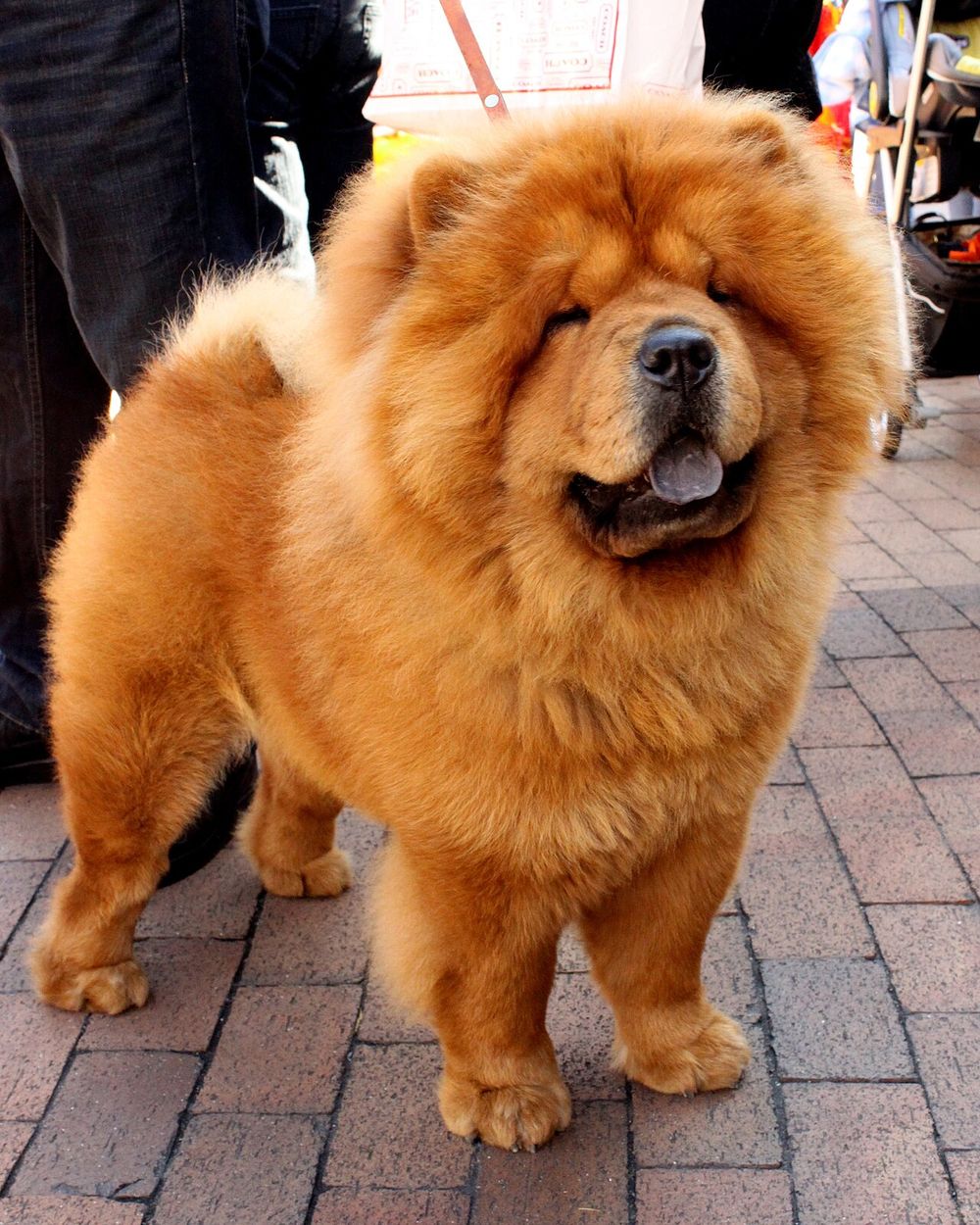
- Origin
- China (standard held by Great Britain)Fédération Cynologique Internationale
- Adult weight
- 20.4 to 31.8 kg (AKC gives 45 to 70 pounds, converted to kg)American Kennel Club
- Height
- 46 to 56 cm (females 46 to 51 cm, males 48 to 56 cm at the withers, FCI standard)Fédération Cynologique Internationale
- Lifespan
- 8 to 12 yearsAmerican Kennel Club
- Coat
- Rough (profuse, stand-off outer coat over a soft woolly undercoat, with a thick mane) or smooth (short, dense and plush). Whole-coloured black, red, blue, fawn, cream or white (FCI standard).Fédération Cynologique Internationale
- Energy
- ModerateThe Royal Kennel Club
- Indian heat
- Struggles in heatScientific Reports (2020)study
- Flats
- Needs spaceThe Royal Kennel Club
Chow Chow snapshot for a sitter
| What | The rule | Source |
|---|---|---|
| Size | Medium, says The Royal Kennel Club. AKC gives 17 to 20 inches and 45 to 70 pounds (about 20 to 32 kg). | American Kennel Club |
| Heat tolerance | Very low. Highest odds of heat-related illness of any breed in a UK study: 16.61 times the Labrador's. | Scientific Reports (2020)study |
| Exercise need | Up to 1 hour a day, says The Royal Kennel Club. AKC suggests a moderate walk four or more times a day, never in the hot part of the day. | American Kennel Club |
| Temperament | Quiet dog, good guard; independent, loyal, yet aloof (FCI standard). AKC rates barking 1 of 5 and protectiveness 5 of 5. | Fédération Cynologique Internationale |
| Grooming | Every day, says The Royal Kennel Club; AKC says thorough brushing at least twice a week and a monthly bath. | The Royal Kennel Club |
| With other dogs | AKC rates it 2 of 5. | American Kennel Club |
| Lifespan | AKC gives 8 to 12 years; The Royal Kennel Club says under 10 years. | American Kennel Club |
Where does the Chow Chow come from?
The Chow Chow comes from China, where it has been known for more than 2,000 years. The Royal Kennel Club traces it to the Han Dynasty, when it was called the Han Dog and kept as a guard. It was also used for hunting, and in early China it was raised for food, with its hide and coat used to trim clothing. The FCI standard describes it as related to Nordic spitz dogs, with something of the mastiff.
The FCI standard says China's closed-door policy meant Chows did not begin to appear in other countries until around 1800, though some reached England in the late 18th century. The Royal Kennel Club says traders of the East India Company brought two dogs to Britain around 1780, London Zoo imported dogs known as Black Mouthed Chinese in 1828, and Queen Victoria owned one, which raised public interest. The Kennel Club recognised the breed in 1894. Its marks are a blue-black tongue, a lion-like mane and a stiff, deliberate walk.
How did the Chow Chow come to India?
No source we found records when or how the Chow Chow came to India. What the sources do make clear is that Indian heat is the breed's biggest risk here. In a large UK study the Chow Chow had 16.61 times the heat-illness odds of the Labrador, the highest of any breed, and AKC says it does not tolerate heat or humidity well.
A Chow in an Indian city needs an air-conditioned or cooled room through the summer, a power-cut plan, and walks only before sunrise and after dark. Do not shave the double coat to cool it: the Canadian Kennel Club says shaving a double-coated dog will not help it cool off. Regular brushing that clears dead undercoat helps more.
What care does a Chow Chow need?
The three things that shape a good day for this breed.
Exercise
Up to an hour a day, says The Royal Kennel Club; AKC suggests a moderate walk four or more times a day, never in the hot part of the day, with little rough or high-impact play. The Royal Kennel Club
Grooming
Daily brushing, says The Royal Kennel Club; AKC says thorough brushing at least twice a week and a monthly bath. In the monsoon dry the coat fully so the skin under it does not stay damp. American Kennel Club
Training
The FCI standard calls the Chow independent, loyal and aloof, and a good guard. AKC rates it 2 of 5 with other dogs, so early socialisation with people and dogs, and calm, consistent handling, matter. Fédération Cynologique Internationale
How much should a Chow Chow eat?
Daily calories for a healthy, neutered adult Chow Chow, worked out from its weight with the formula vets use (70 x weight in kg to the power 0.75, then AAHA's factor for a neutered adult). Divide by the kcal per kg on your food's pack for grams a day, and adjust by body shape.
| Resting need (kcal a day) | Neutered adult (kcal a day) | |
|---|---|---|
| 20.4 kg AAHA (American Animal Hospital Association) | 670 | 940 to 1080 |
| 26.1 kg | 810 | 1130 to 1290 |
| 31.8 kg | 940 | 1310 to 1500 |
Feed a complete and balanced food made for the dog's life stage, measured, and keep treats to no more than about 10% of the day's calories, as WSAVA advises. AKC says dog treats can cause allergy and digestive trouble in Chows and advises against table scraps, cooked bones and fatty food. Keep onion and garlic (in most curries and dal), grapes and raisins, chocolate, coffee and chai, xylitol and salty namkeen away from the dog. Extra weight raised heat-illness risk in the UK study, which matters more for a Chow than for almost any other breed. Meals a day: 6 to 12 weeks, 4 a day; 3 to 6 months, 3 a day; 6 to 12 months, 2 a day; adult, 1 or 2 a day; VCA suggests at least 2. Puppies, kittens, working, pregnant and older animals need different amounts: ask your vet, or use Petym's food calculator.
Which illnesses is the Chow Chow prone to, and how are they treated?
The conditions veterinary studies and breed surveys most often report in the Chow Chow. Knowing the early signs means a vet sees it sooner.
See your vet first. This is general information from veterinary sources, not a diagnosis. Only a vet who has examined your pet can say what is wrong and prescribe treatment, and this page never gives a dose. Do not give your pet human medicine. If your pet seems very unwell, go to a 24-hour vet: find one in your city.
Heatstroke
Emergency: go to a vet nowDangerous overheating, most often during exercise. In a large UK study the Chow Chow had 16.61 times the heat-illness odds of the Labrador, the highest of any breed. Scientific Reports (2020)study
Signs to watch for
- Heavy panting and fast or noisy breathing
- Drooling, vomiting or diarrhoea
- Weakness, wobbling or collapse
- Confusion or seizures
How a vet treats it
Start cooling at once with cool water and moving air, then go to the vet. A vet cools the dog, may give a fluid drip, oxygen and medicines, and runs blood tests to check the organs; some dogs stay in hospital for several days.
Prevention
Walks only in the cool hours, a cooled room by day, shade and water always, a healthy weight, and never a parked car.
Entropion (inward-rolling eyelids)
See a vet soonThe eyelids turn inwards so lashes and hair rub the eye. In UK vet records Chow Chows had 53 times the odds of crossbreds and about 9% were affected each year; in Chows it is usually caused by a narrow eye opening. PLOS ONE (2025), Royal Veterinary College VetCompassstudy
Signs to watch for
- Watering or discharge from the eye
- Squinting or holding the eye shut
- Red eyes or sensitivity to light
- Puppies that blink a lot or do not fully open their eyes
How a vet treats it
A vet examines the eyes, sometimes with a local anaesthetic drop to tell true entropion from spasm caused by pain. Surgery under anaesthesia corrects the eyelid, and severe cases may need more than one operation. Any ulcer on the eye is treated by the vet as well.
Prevention
The breed standard asks for eyes free from entropion. Check a puppy's eyes before buying, and avoid a puppy whose parent has had it.
Hip dysplasia
Ask at a routine checkThe hip joint develops abnormally, becomes loose and later arthritic. AKC lists hip and elbow dysplasia for the breed, and The Royal Kennel Club strongly recommends hip and elbow testing before breeding. American Kennel Club
Signs to watch for
- Lameness that is worse after exercise
- A bunny-hopping gait
- Stiffness after rest, trouble on stairs
How a vet treats it
A vet diagnoses it with X-rays. Mild cases are managed with weight reduction, less exercise on hard surfaces, physiotherapy and anti-inflammatory pain relief prescribed by the vet; some dogs need surgery, up to a total hip replacement.
Prevention
Buy from parents that have been hip and elbow scored, and keep the dog lean.
Stomach cancer (gastric carcinoma)
See a vet soonA North American study found Chow Chows had the highest odds of gastric carcinoma of any breed, 14 times that of other dogs. Affected dogs were 5 to 15 years old, about 10 on average. The Canadian Veterinary Journal (2020)study
Signs to watch for
- Vomiting that keeps coming back
- Loss of appetite
- Diarrhoea
- Black, tarry stools
How a vet treats it
A vet may use an abdominal ultrasound, an endoscope or surgery to take a biopsy. The outlook is usually poor; in the study a few dogs treated with surgery, with or without chemotherapy, lived for one to three years.
Prevention
No prevention is known. Take repeated vomiting in an older Chow to the vet promptly.
Can a Chow Chow cope with Indian heat?
Only with strict care. No breed in the big UK heat study was at higher risk.
The Royal Veterinary College's study of heat-related illness in dogs under UK primary care compared breeds with the Labrador Retriever. Nine breeds had significantly higher odds; the Chow Chow topped the list at 16.61 times, ahead of the Bulldog and French Bulldog. AKC agrees from the breed side: it tells owners to avoid exercise during hot periods of the day because the breed does not tolerate high heat or humidity well. The study also found exercise caused most cases and that dogs above their breed's average weight had higher odds.
In India that turns into a routine with no exceptions. Several short, slow walks before sunrise and after dark, as AKC's four-or-more short walks suggest, instead of one long one. A cool room with AC or a cooler from mid-morning to evening. Water in two heavy bowls. A plan for power cuts. On heat wave days, as the India Meteorological Department marks them, the walks shrink to toilet breaks on shaded grass.
Do not shave the coat for summer. AKC describes a profuse double coat in both rough and smooth Chows, and the Canadian Kennel Club says shaving a double-coated dog will not help it cool off. Regular brushing that clears the dead undercoat is what helps.
Chow Chow health signs a sitter should report
Heat signs first. For everything else, notice, record, tell the owner and call the vet.
If Heavy panting that does not settle in the cool, drooling, wobbling, vomiting or collapse.
Heatstroke is an emergency. Move the dog somewhere cool, pour cool water over its body, use a fan, and go to the vet at once. PDSA
If Squinting, watering eyes, rubbing the face, or lashes turned in against the eye. The Chow Chow had 60.05 times the odds of conformational eyelid disorders of crossbreds in a UK study, mostly entropion.
Call the vet; constant rubbing can damage the eye. Do not use drops the vet did not prescribe. PLOS ONE (2025), Royal Veterinary College VetCompassstudy
If Vomiting that keeps coming back, loss of appetite, diarrhoea or black, tarry stools. A US study found an increased risk of gastric carcinoma, a stomach cancer, in the breed.
Call the vet promptly and tell the owner; do not wait for it to settle. The Canadian Veterinary Journal (2020)study
If Stiffness after rest, a limp, trouble on stairs. AKC lists hip and elbow dysplasia.
Shorter, slower walks on soft ground and a note for the vet. American Kennel Club
If Scratching, red skin or a smell under the coat. AKC advises checking the skin regularly for irritation or signs of allergy.
Part the coat, look closely, and tell the owner; the vet decides on treatment. American Kennel Club
If Ticks or fleas found while brushing. AKC says to deal with any parasite issue immediately.
Remove ticks close to the skin with tweezers and tell the owner. American Kennel Club
How a Chow Chow takes to a sitter
Slowly, and on its own terms. Pushing for affection makes it worse.
The FCI standard sums up the temperament in five words: independent, loyal, yet aloof. AKC rates the Chow 2 of 5 for openness to strangers and 5 of 5 for protective nature. Many Chows are devoted to their family and simply uninterested in everyone else. A sitter who leans in for a hug at the door is likely to be refused.
Use Petym's free meet and greet to let the dog decide. The sitter sits, ignores the dog, and lets it come and sniff. A walk together, then the lead handed over, then a meal put down by the sitter while you are home. Ask for the same sitter on later bookings: familiarity matters with this breed.
AKC rates barking 1 of 5, so a Chow rarely bothers the neighbours. It rates the breed 2 of 5 with other dogs, so a home with no other dogs is usually the calmer choice. PDSA's general advice is no more than 4 hours alone at a time for any dog.
Chow Chow coat care through the Indian year
Petym’s working from the official rules, no government publishes a total.
How brushing and bathing change with the seasons, as Petym suggests it from AKC's grooming advice.
| Brushing | Bathing and drying | Watch for | |
|---|---|---|---|
| Summer (April to June) American Kennel Club | Daily, to clear dead undercoat | Monthly bath, dried fully with a cool dryer | Heat signs, hot spots under the mane |
| Monsoon (June to September) American Kennel Club | Daily, right to the skin | Towel and cool-dry after every wet walk | Damp skin, smell, ticks |
| Post-monsoon | At least twice a week | Monthly bath | Seasonal shed, mats behind the ears |
| Winter in the north American Kennel Club | At least twice a week | Bath on a warm day, dried fully | Mats on the puppy coat and around the head |
AKC says thorough brushing at least twice a week, eye and ear care at each grooming, and a cool air dryer after a bath. The Royal Kennel Club lists grooming every day.
Feeding and daily rules for a Chow's sitter
Do
- Feed the owner's food at the owner's times, measured. AKC says dog treats can create allergy and digestive issues, so use the owner's treats only. American Kennel Club
- Keep treats small: WSAVA suggests under about 10% of daily calories. WSAVA
- Keep play gentle: AKC advises minimal rough play or high-impact exercise. American Kennel Club
- Keep the coolest room ready all day, with water topped up. Animal Welfare Board of India
Don’t
- Do not give table scraps, cooked bones or fatty food, as AKC advises. American Kennel Club
- Do not feed chocolate, grapes, raisins, onion, garlic or xylitol. ASPCA Animal Poison Control
- Do not change the food during the stay; a sudden change can cause diarrhoea. PDSA
- Do not walk the dog between late morning and late afternoon in summer, even briefly on hot tarmac.
Chow Chow sitter checklist
- The cool room, AC or cooler, and what to do in a power cut.
- Walking times: short and frequent, cool hours only.
- Heatstroke signs written on the fridge, with the 24-hour vet's number.
- Brushes, comb, the cool dryer, and how the dog likes to be groomed.
- Any eye drops or skin treatments, with the vet's label, logged at each use.
- Meal amounts, times and the owner's own treats.
- How the dog reacts to visitors and other dogs.
- Tick prevention product and next due date.
Which Petym service suits a Chow Chow?
A cool home and a familiar person matter most.
Often the best fit
Overnight pet sitting
One sitter stays in your home, so the dog keeps its cool room, its routine and its territory.
Dog walking
Short walks before sunrise and after dark by a walker the dog knows.
Drop-in visits
For a short trip with an adult Chow that is happy alone: feeding, a cool-hour toilet break and a check.
Special-needs pet care
For an older Chow or one with eye, joint or skin treatment.
Breeds with similar care needs to the Chow Chow
Going away soon? Tell us your dates.
A checked local sitter feeds, walks and keeps your pet company at home, follows your care sheet to the letter and sends a photo every day. Petym is opening city by city: send your dates and we will tell you when a sitter can take them.
- Meet your sitter first, free
- PAN-checked, first-aid trained
- A photo every day
- Pay through Petym, never cash


Questions owners ask
Can a Chow Chow live in India?
- Yes, but with strict heat care. In a UK study the Chow Chow had the highest odds of heat-related illness of any breed, and AKC says it does not tolerate high heat or humidity well. Walk only before sunrise and after dark, keep it in a cool room, and never shave its coat.
Should I shave my Chow Chow in summer?
- No. Chows have a profuse double coat, and the Canadian Kennel Club says shaving a double-coated dog will not help it cool off. Brush thoroughly to clear dead undercoat, keep the dog indoors in the cool, and walk only in the cool hours.
Is a Chow Chow good with strangers?
- Usually not keen. The FCI standard calls it independent, loyal yet aloof, and AKC rates it 2 of 5 for openness to strangers and 5 of 5 for protectiveness. A meet and greet where the sitter lets the dog approach first works best.
How much exercise does a Chow Chow need?
- Moderate. The Royal Kennel Club says up to an hour a day, and AKC suggests a moderate walk four or more times a day, with minimal rough play. In India, keep every walk to the cool hours.
What health problems do Chow Chows have?
- Heatstroke is the most urgent risk in India. A UK study found Chows had very high odds of eyelid disorders such as entropion, AKC lists hip and elbow dysplasia and eye disease, and a US study found a raised risk of stomach cancer. Talk to your vet about your dog.
How long can a Chow Chow be left alone?
- PDSA's general advice is no more than 4 hours at a time for any dog. Chows are quiet and independent, but in summer the bigger risk is heat during a power cut. On long days, arrange a sitter or visits so someone checks the cool room.
Keep reading
- Heatstroke in dogs
- Summer pet care in India
- Should you shave a double-coated dog?
- Keeping a dog cool in a power cut
- Samoyed care
- Bulldog careSecond-highest heat odds in the same study.
- Overnight pet sitting
Services that help
Free tools for this
Words on this page, explained
Keep exploring
Other dog breeds
- Akita
- Alaskan Malamute
- American Bully
- American Cocker Spaniel
- American Pit Bull Terrier
- Australian Shepherd
- Bakharwal dog
- Basset Hound
- Beagle
- Belgian Malinois
- Bernese Mountain Dog
- Bichon Frise
- Border Collie
- Boston Terrier
- Boxer
- Bull Terrier
- Bulldog
- Bullmastiff
- Cane Corso
- Caucasian Shepherd Dog
- Cavalier King Charles Spaniel
- Chihuahua
- Chippiparai
- Cocker Spaniel
- Dachshund
- Dalmatian
- Dobermann
- Dogo Argentino
- English Mastiff
- English Springer Spaniel
- French Bulldog
- Gaddi Kutta (Gaddi dog)
- German Shepherd
- Golden Retriever
- Great Dane
- Greyhound
- Havanese
- Indian pariah dog (Indie)
- Indian Spitz
- Irish Setter
- Jack Russell Terrier
- Kangal
- Kanni
- Kombai
- Labrador Retriever
- Lhasa Apso
- Maltese
- Miniature Pinscher
- Miniature Schnauzer
- Mudhol Hound
- Neapolitan Mastiff
- Newfoundland
- Papillon
- Pekingese
- Pembroke Welsh Corgi
- Pomeranian
- Poodle
- Pug
- Rajapalayam
- Rampur Greyhound
- Rhodesian Ridgeback
- Rottweiler
- Saint Bernard
- Samoyed
- Shar Pei
- Shiba Inu
- Shih Tzu
- Siberian Husky
- Tibetan Mastiff
- Weimaraner
- West Highland White Terrier
- Whippet
- Yorkshire Terrier
Sources
Each source was opened and read on the date shown. How Petym checks its sources
- Fédération Cynologique Internationale: FCI standard No. 205: Chow Chow (8 September 2026) (opens in a new tab)
- American Kennel Club: Chow Chow dog breed information (opens in a new tab)
- The Royal Kennel Club: Chow Chow: breeds A to Z (opens in a new tab)
- Canadian Kennel Club (The Dish, June 2018): To shave or not to shave, that is the question! (opens in a new tab)
- WSAVA: Frequently asked questions and myths (Global Nutrition Committee) (opens in a new tab)
- ASPCA Animal Poison Control: People foods to avoid feeding your pets (opens in a new tab)
Show all 21 sourcesShow fewer
- Merck Veterinary Manual: Puppy care (opens in a new tab)
- VCA Animal Hospitals: Feeding times and frequency for your dog (opens in a new tab)
- AAHA (American Animal Hospital Association): 2021 AAHA Nutrition and Weight Management Guidelines for Dogs and Cats: energy requirement calculations (Box 1, PDF) (opens in a new tab)
- Merck Veterinary Manual: Nutritional requirements of small animals (full review November 2023, updated September 2024) (opens in a new tab)
- PDSA: Heatstroke in dogs (opens in a new tab)
- Science for Animal Welfare (formerly UFAW): Chow Chow: entropion (opens in a new tab)
- Merck Veterinary Manual: Hip dysplasia (dog owners) (opens in a new tab)
- Science for Animal Welfare (formerly UFAW): Chow Chow: genetic welfare problems (opens in a new tab)
- India Meteorological Department: FAQ on heat wave (opens in a new tab)
- PDSA: Separation anxiety in dogs (opens in a new tab)
- PDSA: Diarrhoea after a change of food (opens in a new tab)
- Animal Welfare Board of India: Request to ensure care and protection of animals from direct heat during extreme hot weather (4 May 2026) (opens in a new tab)
- Scientific Reports (2020): Incidence and risk factors for heat-related illness in UK dogs (opens in a new tab)
- PLOS ONE (2025), Royal Veterinary College VetCompass: Conformational eyelid disorders in dogs under primary veterinary care in the UK: epidemiology and clinical management (opens in a new tab)
- The Canadian Veterinary Journal (2020): Risk and characteristics of gastric carcinoma in the chow chow dog (abstract read) (opens in a new tab)