Kangal dog care in India: rules, space and your sitter
Updated By PetymFacts checked against official sources on
Quick answer
A Kangal is a giant Turkish flock guardian that The Royal Kennel Club says needs over two hours of exercise a day. With a sitter, it needs someone it already trusts, secure fencing, walks in the cool hours and no visitors, because the FCI says it is wary of strangers when on duty.
The Kangal is on the Centre's March 2024 list of breeds called ferocious. Two High Courts struck that circular down, but some cities still regulate listed breeds.
- Meet your sitter first, free
- PAN-checked, first-aid trained
- A photo every day
- Pay through Petym, never cash

- Origin
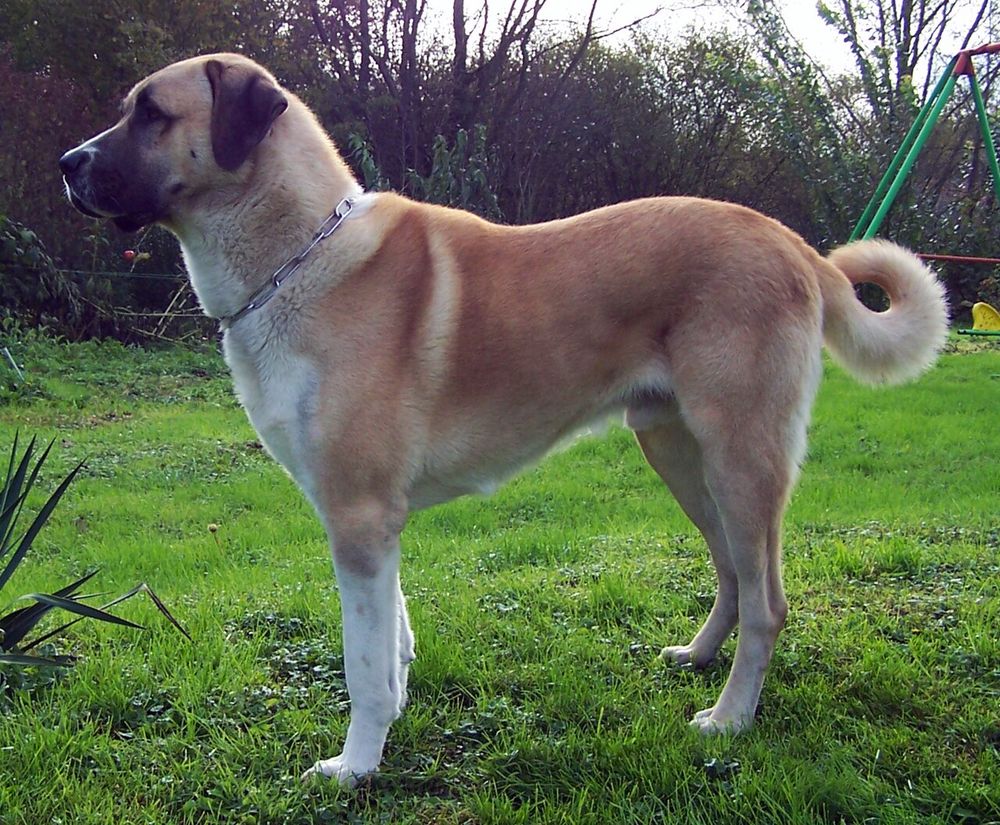
- Eastern Turkey, around the town of Kangal in Sivas provinceFédération Cynologique Internationale
- Adult weight
- 40 to 60 kg (FCI standard: males 48 to 60 kg, females 40 to 50 kg.)Fédération Cynologique Internationale
- Height
- 65 to 78 cm (FCI standard at the withers: males 72 to 78 cm, females 65 to 73 cm, each with 2 cm of tolerance.)Fédération Cynologique Internationale
- Coat
- Hair 3 to 7 cm long: a thick, harsh guard coat over a dense undercoat, longer on the neck, shoulders and thighs. One colour from fawn to wolf sable, always with a black mask. The Royal Kennel Club says it sheds.Fédération Cynologique Internationale
- Energy
- HighThe Royal Kennel Club
- Indian heat
- Copes with careScientific Reports (2020)study
- Flats
- Needs spaceThe Royal Kennel Club
Kangal snapshot
| What | The rule | Source |
|---|---|---|
| Size | Giant. The FCI standard gives 72 to 78 cm and 48 to 60 kg for males, 65 to 73 cm and 40 to 50 kg for females. | Fédération Cynologique Internationale |
| Exercise need | More than 2 hours a day, and best in the country with a large garden, says The Royal Kennel Club. | The Royal Kennel Club |
| Temperament | Steady and bold without aggression, independent, intelligent; loyal and affectionate to owners but wary of strangers when on duty (FCI). | Fédération Cynologique Internationale |
| Heat and cold | The FCI standard calls it capable of enduring extremes of heat and cold. That describes a working flock dog, not a flat in a Delhi May. | Fédération Cynologique Internationale |
| Coat | Hair 3 to 7 cm long, harsh, with a dense undercoat; fawn to wolf sable with a black mask (FCI). Groom more than once a week (Royal Kennel Club). | Fédération Cynologique Internationale |
| India's 2024 list | Named as "Kangal" on the 12 March 2024 central letter, as reproduced by Gurugram in 2026. | Municipal Corporation Gurugram |
Where does the Kangal come from?
The Kangal is a livestock guardian from the steppes of Eastern Turkey, kept to protect sheep, and the FCI standard calls it Turkey's highly praised national dog. The standard is frank that the exact history of livestock guarding dogs is rarely known. It suggests that Turkic peoples migrating from Central Asia, who lived by nomadic herding, brought strong flock dogs with them.
What made the Kangal so uniform, the FCI says, was likely the isolated population of Eastern Turkey and the sheep it guarded, the Akkaraman, which shares its black mask on a dun coat. The name comes from the town of Kangal near Sivas, where very uniform dogs drew attention. The standard describes an active, hard-working dog able to endure extremes of heat and cold, steady and bold without aggression, loyal to its owners and wary of strangers when on duty.
In the UK the Kangal was until recently counted as an Anatolian Shepherd Dog. The Royal Kennel Club now recognises it as the Turkish Kangal Dog, a strong flock guard adapted to outdoor life in all weathers.
How did the Kangal come to India?
No source we found records when or how the first Kangals came to India, so its arrival is not documented. What is on record is its legal position. The Kangal is named in the Department of Animal Husbandry and Dairying's letter of 12 March 2024 listing breeds called ferocious, which Gurugram's municipal order of 23 June 2026 reprints. AWBI's public notice of 19 March 2024 said local bodies had been directed not to issue licences for the listed breeds.
The Delhi High Court set the circular aside on 16 April 2024, recording the government's statement that stakeholders would be heard before any final notification. Cities can still make their own rules: in Gurugram, owners of listed breeds must register the dog and use a leash, chain lead and muzzle outside private premises. Ask your corporation before you bring a Kangal home.
What care does a Kangal need?
The three things that shape a good day for this breed.
Exercise
The Royal Kennel Club gives more than two hours of exercise a day and lists the Kangal as a country dog for a large house with a large garden. In an Indian summer, move that exercise to dawn and after dark, and test the pavement with the back of your hand first. The Royal Kennel Club
Grooming
Groom more than once a week, the Royal Kennel Club says. The FCI notes the coat length can vary with the weather, so expect heavier shedding as the undercoat changes. Fédération Cynologique Internationale
Training
The FCI describes the Kangal as naturally independent, very intelligent and tractable, and wary of strangers when on duty. Early, calm socialisation with visitors, and a sitter the dog has already met, matter more than with most breeds. The Royal Kennel Club
How much should a Kangal eat?
Daily calories for a healthy, neutered adult Kangal, worked out from its weight with the formula vets use (70 x weight in kg to the power 0.75, then AAHA's factor for a neutered adult). Divide by the kcal per kg on your food's pack for grams a day, and adjust by body shape.
| Resting need (kcal a day) | Neutered adult (kcal a day) | |
|---|---|---|
| 40 kg AAHA (American Animal Hospital Association) | 1110 | 1560 to 1780 |
| 50 kg | 1320 | 1840 to 2110 |
| 60 kg | 1510 | 2110 to 2410 |
Feed a complete and balanced dog food suited to the dog's age. The Merck Veterinary Manual says nutrition problems arise most often with unbalanced home-made diets, and that excess calcium is a particular problem for growing large and giant breed puppies, so do not add calcium or bone meal unless your vet prescribes it. Giant breeds can take almost 2 years to become adults, so ask your vet when to move from puppy to adult food. The Kangal is large and deep-chested, the build the American College of Veterinary Surgeons links with bloat (GDV). ACVS advises two or three smaller meals a day rather than one large one. From the Indian kitchen, keep onion, garlic, grapes, chocolate, salty food and cooked bones away from the bowl, all on ASPCA's list of foods to avoid. Meals a day: 6 to 12 weeks, 4 a day; 3 to 6 months, 3 a day; 6 to 12 months, 2 a day; adult, 2 or 3 smaller meals a day, never one large meal. Puppies, kittens, working, pregnant and older animals need different amounts: ask your vet, or use Petym's food calculator.
Which illnesses is the Kangal prone to, and how are they treated?
The conditions veterinary studies and breed surveys most often report in the Kangal. Knowing the early signs means a vet sees it sooner.
See your vet first. This is general information from veterinary sources, not a diagnosis. Only a vet who has examined your pet can say what is wrong and prescribe treatment, and this page never gives a dose. Do not give your pet human medicine. If your pet seems very unwell, go to a 24-hour vet: find one in your city.
Bloat (gastric dilatation-volvulus, GDV)
Emergency: go to a vet nowThe stomach fills with food and gas and may twist on itself, cutting off blood flow. ACVS lists large and giant, deep-chested dogs as at risk, and the FCI standard gives the Kangal a deep chest reaching the elbows. American College of Veterinary Surgeons
Signs to watch for
- Restlessness and stretching
- Drooling
- A swollen belly
- Retching without bringing anything up
- Later, weakness and collapse
How a vet treats it
A vet confirms it with abdominal X-rays and checks the heart and blood. The dog is stabilised with IV fluids and oxygen, the stomach is decompressed with a tube, and surgery untwists the stomach and attaches it to the body wall (gastropexy).
Prevention
ACVS recommends a preventive gastropexy for at-risk breeds, often done at spay or neuter, and two or three smaller meals a day instead of one large meal.
Heatstroke
Emergency: go to a vet nowBody temperature rises faster than the dog can lose heat. A large UK study found dogs over 50 kg, and dogs heavier than their breed average, at greater risk; a male Kangal can weigh up to 60 kg, whatever the standard says about enduring heat. Scientific Reports (2020)study
Signs to watch for
- Heavy panting and fast breathing
- Drooling or vomiting
- Bright red or very pale gums
- Weakness, wobbling or collapse
- Confusion or seizures
How a vet treats it
PDSA says start cooling at once with cool water over the body and moving air, then go to the vet, who cools the dog further, gives fluids by drip, runs blood and urine tests and may give oxygen and medicine to protect the organs.
Prevention
Walk only in the cool hours, give shade and water all day, and keep the dog at a healthy weight.
Hip dysplasia
See a vet soonAn abnormally formed, loose hip joint that leads to arthritis. The Merck Veterinary Manual describes it as a condition of large dogs, influenced by growth rate, exercise, nutrition and heredity. Merck Veterinary Manual
Signs to watch for
- Lameness that is worse after exercise
- A bunny-hopping gait
- Stiffness and a reduced range of movement
- Pain when the hip is moved
How a vet treats it
A vet diagnoses it with an examination and X-rays. Treatment may include weight reduction, limiting exercise on hard surfaces, physiotherapy, anti-inflammatory drugs and joint fluid modifiers, or surgery up to a total hip replacement.
Prevention
Merck advises that at-risk dogs be evaluated before breeding. Ask the breeder about the parents' hip results, and do not let a puppy grow too fast.
Tick fever (ehrlichiosis)
See a vet soonA blood infection with Ehrlichia canis, spread mainly by the brown dog tick. A survey of dogs in four Indian cities found ticks on more than half of them. Merck Veterinary Manual
Signs to watch for
- Fever and dullness
- Loss of appetite
- Nosebleeds or bruising
- Pale gums
How a vet treats it
Merck says vets diagnose it with blood tests such as serology and PCR, and treat it with a course of antibiotics, with supportive care and sometimes a blood or platelet transfusion for bleeding.
Prevention
Tick control as your vet advises, and a daily tick check through the coat, especially in the monsoon.
What is the legal position of the Kangal in India?
Listed by the Centre in March 2024; the list itself was struck down in Karnataka and Delhi within weeks.
Gurugram's municipal order of 23 June 2026 reprints the breeds named in the Department of Animal Husbandry and Dairying's D.O. letter of 12 March 2024, and the Kangal is among them, with the Akbash Dog, Tornjak and Sarplaninac and other livestock guardians. AWBI's public notice a week later clarified that the letter was the Ministry's and that local bodies had been directed not to issue licences for these breeds.
The courts moved quickly. The Karnataka High Court quashed the circular on 10 April 2024. On 16 April the Delhi High Court set it aside, recording the government's statement that stakeholders would be heard and directing that written objections be invited before any final notification. Petym found no fresh national notification up to 21 October 2026.
Cities can still make their own rules. In Gurugram, owners of listed breeds must register the dog with the corporation and use a leash, chain lead and muzzle whenever it is outside private premises. Rules elsewhere differ, so ask your corporation, and see Petym's page on banned dog breeds in India.
A working guardian in a city home
The Royal Kennel Club describes a flock guard that lives outside in all weathers. Most Indian homes are nothing like that.
The Royal Kennel Club says the Kangal is used as a flock guard and lives a nomadic lifestyle, outside in all weathers, and lists it as a country dog for a large house with a large garden. The FCI standard calls it an active, hard-working breed originally used to guard sheep. A Kangal in a city flat or a small house needs a real outlet: long walks, a secure space to patrol, and things to watch.
AWBI's guidance for pet owners notes that keeping a dog chained or closely confined without exercise can amount to cruelty under the Prevention of Cruelty to Animals Act. For a dog that needs more than two hours of exercise a day, a sitter's plan has to include that exercise, even in summer, moved into the cool hours.
Because the FCI says the Kangal is wary of strangers when on duty, and a home is the duty it knows best, the sitter must be someone it has already accepted. Start with Petym's free meet and greet, add more visits if you can, and be open about how the dog behaves at the gate.
Two hours of exercise without the midday sun
Petym’s working from the official rules, no government publishes a total.
A sample summer day that meets The Royal Kennel Club's exercise figure in the cool hours.
5:30 to 6:30 am
The long walk, about an hour, on a strong leash and quiet routes. Test the surface with the back of a hand first. The Royal Kennel Club
After the walk
Water, rest in shade or a cool room, then breakfast once the dog is calm.
Morning
Patrol time in a secure, shaded garden or terrace if you have one; otherwise a puzzle feeder indoors.
Midday to 5 pm
Indoors or in deep shade with water. No exercise in the hottest hours. Animal Welfare Board of India
After sunset
The second long walk, about an hour, once the road has cooled.
Night
Doors and gates checked, the dog in its usual sleeping spot, and the daily photo update to the owner.
Handling a Kangal: the sitter's rules
Do
- Follow your city's rules for listed breeds; in Gurugram, a leash, chain lead and muzzle outside the home. Municipal Corporation Gurugram
- Check that gates and fences are secure every day; a guardian may try to patrol beyond them.
- Keep the dog lean: higher bodyweight for the breed raised the risk of heat-related illness in a large UK study. Scientific Reports (2020)study
- Brush more than once a week, and more when the undercoat sheds. The Royal Kennel Club
Don’t
- Do not open the main door or gate with the dog loose, or bring visitors into its space.
- Do not leave it chained all day as a substitute for exercise. Animal Welfare Board of India
- Do not use harsh punishment; if the dog growls, step back and call the owner.
- Do not feed onion, garlic, grapes, raisins, chocolate or xylitol. ASPCA Animal Poison Control
When a Kangal's sitter should get help
The Royal Kennel Club gives no breed-specific health tests beyond prioritising genetic diversity. These are the urgent situations for a giant working dog.
If Heavy panting that will not settle, drooling, staggering or collapse, even in a breed said to endure heat.
Heatstroke: cool water over the body, a fan, and the nearest 24-hour vet straight away. Dogs over 50 kg were at greater risk in a large UK study. Scientific Reports (2020)study
If Retching with nothing coming up, restlessness and a swollen belly.
Possible bloat, which mainly affects large, deep-chested dogs: go to the vet immediately. American College of Veterinary Surgeons
If Limping, stiffness or trouble rising.
Rest on soft ground and call the vet.
If Fever or dullness after ticks found in the coat.
Call the vet the same day; check ears, neck, armpits and toes after walks. Merck Veterinary Manual
If The dog gets out, or a person or animal is hurt.
Call the owner and society security at once, keep people away, secure the dog when safe, and get medical help for anyone injured.
Kangal sitter checklist
- Behaviour history with visitors, other dogs and livestock, including any bites.
- Registration papers, muzzle and chain lead if your city requires them. Municipal Corporation Gurugram
- Gate, fence and door checks, and where the dog goes when a door opens.
- Exercise plan: two long walks in the cool hours, and the routes.
- Food, portions and times.
- Vaccination card and tick prevention dates.
- Your vet's number and a 24-hour vet that will see a giant dog.
Which Petym service fits a Kangal?
For a guardian named on a regulated list, one familiar sitter at home is almost always the right choice.
Best fit
Overnight pet sitting
One experienced sitter the dog has accepted, living in your home, with no visitors and no other dogs.
Daily exercise
Dog walking
Two long walks in the cool hours by a walker the dog knows, following local rules.
On medicines
Special-needs pet care
For an older or recovering dog, with the vet's plan followed and logged.
Breeds with similar care needs to the Kangal
Going away soon? Tell us your dates.
A checked local sitter feeds, walks and keeps your pet company at home, follows your care sheet to the letter and sends a photo every day. Petym is opening city by city: send your dates and we will tell you when a sitter can take them.
- Meet your sitter first, free
- PAN-checked, first-aid trained
- A photo every day
- Pay through Petym, never cash


Questions owners ask
Is the Kangal banned in India?
- Not clearly. The Kangal is on the Centre's 12 March 2024 list of ferocious breeds, but the Karnataka High Court quashed the circular on 10 April 2024 and the Delhi High Court set it aside on 16 April 2024. Petym found no fresh notification by 21 October 2026. Some cities regulate listed breeds.
Can a Kangal live in a flat?
- It is a poor fit. The Royal Kennel Club lists the Kangal as a country dog for a large house with a large garden, needing more than two hours of exercise a day. In a flat it needs two long walks every day in the cool hours and a lot of mental work.
Is a Kangal aggressive?
- The FCI standard describes it as steady and bold without aggression, loyal and affectionate to owners, but wary of strangers when on duty. A new sitter in its home is a stranger, so introduce them slowly and keep visitors away during the stay.
Does a Kangal cope with Indian heat?
- The FCI standard says it can endure extremes of heat and cold as a working flock dog. Even so, it is a giant dog, and a large UK study found dogs over 50 kg at greater risk of heat-related illness. Exercise only at dawn and after dark in summer, with shade and water.
How big is a Kangal?
- The FCI standard gives 72 to 78 cm at the withers and 48 to 60 kg for males, and 65 to 73 cm and 40 to 50 kg for females, with 2 cm of tolerance in height.
Is the Kangal the same as the Anatolian Shepherd?
- The Royal Kennel Club says the Kangal was only recently recognised in the UK and was previously included as an Anatolian Shepherd Dog, but its own standard gives more specific details, such as the dark mask. The FCI publishes a separate standard for the Kangal Shepherd Dog.
How long can a Kangal be left alone?
- PDSA's general advice is no more than four hours at a time for any dog. A guardian bored and alone may bark, dig or try to get out, so plan a sitter or walker for long days.
Keep reading
- Banned dog breeds in India
- Caucasian Shepherd Dog careAnother livestock guardian on the 2024 list.
- Gaddi dog careIndia's own Himalayan flock guardian.
- Animal cruelty law in India
- Dog walking rules in public places
- Meet and greet checklist
- Overnight pet sitting
Services that help
Free tools for this
Words on this page, explained
Keep exploring
Other dog breeds
- Akita
- Alaskan Malamute
- American Bully
- American Cocker Spaniel
- American Pit Bull Terrier
- Australian Shepherd
- Bakharwal dog
- Basset Hound
- Beagle
- Belgian Malinois
- Bernese Mountain Dog
- Bichon Frise
- Border Collie
- Boston Terrier
- Boxer
- Bull Terrier
- Bulldog
- Bullmastiff
- Cane Corso
- Caucasian Shepherd Dog
- Cavalier King Charles Spaniel
- Chihuahua
- Chippiparai
- Chow Chow
- Cocker Spaniel
- Dachshund
- Dalmatian
- Dobermann
- Dogo Argentino
- English Mastiff
- English Springer Spaniel
- French Bulldog
- Gaddi Kutta (Gaddi dog)
- German Shepherd
- Golden Retriever
- Great Dane
- Greyhound
- Havanese
- Indian pariah dog (Indie)
- Indian Spitz
- Irish Setter
- Jack Russell Terrier
- Kanni
- Kombai
- Labrador Retriever
- Lhasa Apso
- Maltese
- Miniature Pinscher
- Miniature Schnauzer
- Mudhol Hound
- Neapolitan Mastiff
- Newfoundland
- Papillon
- Pekingese
- Pembroke Welsh Corgi
- Pomeranian
- Poodle
- Pug
- Rajapalayam
- Rampur Greyhound
- Rhodesian Ridgeback
- Rottweiler
- Saint Bernard
- Samoyed
- Shar Pei
- Shiba Inu
- Shih Tzu
- Siberian Husky
- Tibetan Mastiff
- Weimaraner
- West Highland White Terrier
- Whippet
- Yorkshire Terrier
Sources
Each source was opened and read on the date shown. How Petym checks its sources
- Fédération Cynologique Internationale: FCI standard No. 331: Kangal Shepherd Dog (opens in a new tab)
- The Royal Kennel Club: Turkish Kangal Dog: breeds A to Z (opens in a new tab)
- Municipal Corporation Gurugram: Office order on registration and control of pet dogs (23 June 2026) (opens in a new tab)
- Animal Welfare Board of India: Public notice on news reports of a ban on dog breeds (19 March 2024) (opens in a new tab)
- High Court of Delhi (order downloaded from the court's server, hosted by LiveLaw): Sikander Singh Thakur v. Union of India, W.P.(C) 4374/2024 and connected matters, order of 16 April 2024 (opens in a new tab)
- The Royal Kennel Club: The danger of hot pavements (opens in a new tab)
Show all 20 sourcesShow fewer
- Merck Veterinary Manual: Nutritional requirements of small animals (full review November 2023, updated September 2024) (opens in a new tab)
- Merck Veterinary Manual: Puppy care (opens in a new tab)
- American College of Veterinary Surgeons: Gastric dilatation-volvulus (opens in a new tab)
- ASPCA Animal Poison Control: People foods to avoid feeding your pets (opens in a new tab)
- AAHA (American Animal Hospital Association): 2021 AAHA Nutrition and Weight Management Guidelines for Dogs and Cats: energy requirement calculations (Box 1, PDF) (opens in a new tab)
- PDSA: Heatstroke in dogs (opens in a new tab)
- Merck Veterinary Manual: Hip dysplasia (dog owners) (opens in a new tab)
- Merck Veterinary Manual: Ehrlichiosis in dogs (opens in a new tab)
- Animal Welfare Board of India: Circular and guidelines for pet owners (1 June 2020) (opens in a new tab)
- Animal Welfare Board of India: Request to ensure care and protection of animals from direct heat during extreme hot weather (4 May 2026) (opens in a new tab)
- Merck Veterinary Manual: Ticks of dogs (opens in a new tab)
- PDSA: Separation anxiety in dogs (opens in a new tab)
- Scientific Reports (2020): Incidence and risk factors for heat-related illness in UK dogs (opens in a new tab)
- Parasites & Vectors (2011): A survey of canine tick-borne diseases in India (opens in a new tab)