Saint Bernard in India: heat risk, bloat and notes for your sitter
Updated By PetymFacts checked against official sources on
Quick answer
A Saint Bernard can be left with a sitter, but in much of India the heat is the main risk. The sitter needs a cool room that stays cool through power cuts, short walks only at dawn and after dark, split meals with rest afterwards because of bloat, and the nearest 24-hour vet that can handle a giant dog.
Giant dogs are among those PDSA lists as most at risk of heatstroke, and UK vet records show dogs of 50 kg or more had about 3.4 times the odds of heat-related illness of dogs under 10 kg.
- Meet your sitter first, free
- PAN-checked, first-aid trained
- A photo every day
- Pay through Petym, never cash

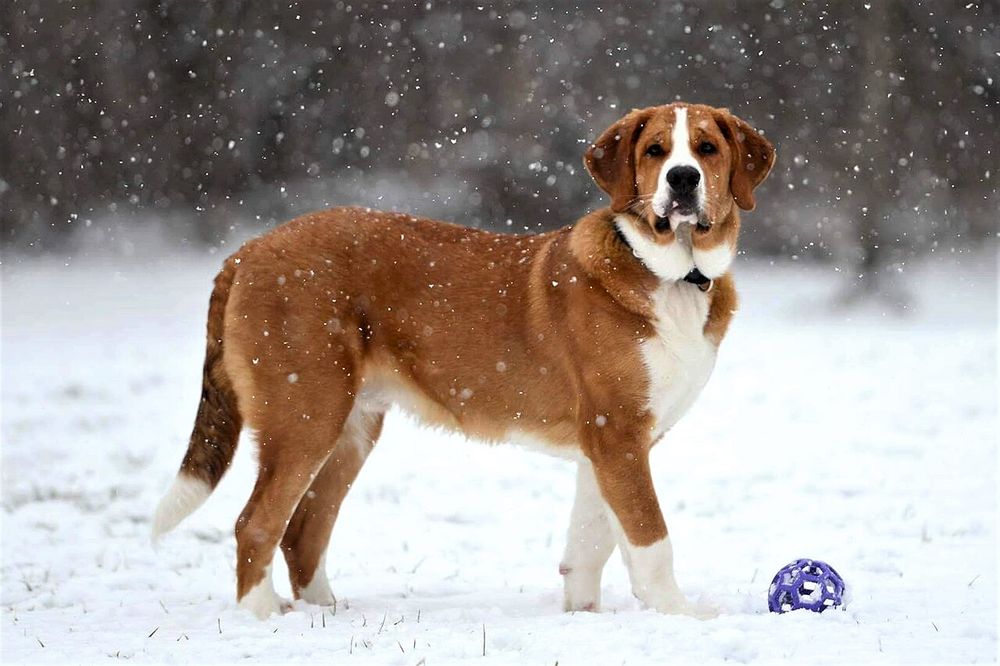
- Origin
- The Great St Bernard Pass, Swiss AlpsThe Royal Kennel Club (UK)
- Adult weight
- 54 to 82 kg (AKC: males 140 to 180 lb, females 120 to 140 lb, converted to kg)American Kennel Club
- Height
- 66 to 76 cm (AKC: males 28 to 30 inches, females 26 to 28 inches, converted to cm)American Kennel Club
- Lifespan
- 8 to 10 yearsAmerican Kennel Club
- Coat
- Comes in a short-haired and a long-haired variety; both shed, heavily twice a year.American Kennel Club
- Energy
- ModerateAmerican Kennel Club
- Indian heat
- Struggles in heatPDSA
- Flats
- Needs spaceThe Royal Kennel Club (UK)
Saint Bernard care snapshot
| What | The rule | Source |
|---|---|---|
| Size | Extra large, suited to a large house with a large garden (Royal Kennel Club). | The Royal Kennel Club (UK) |
| Exercise need | Up to 1 hour a day in the Royal Kennel Club's breed information: less than many owners expect for a dog this size. | The Royal Kennel Club (UK) |
| Alone-time tolerance | Not rated by kennel clubs. PDSA advises no more than 4 hours alone for any dog; in summer a Saint alone also needs cooling that will not fail. | PDSA |
| Heat tolerance | Low. PDSA lists giant breeds among the dogs most at risk of heatstroke, and dogs of 50 kg or more had higher odds in UK vet records. | PDSA |
| Shedding and coat | Sheds; the Royal Kennel Club advises grooming more than once a week. Lifespan under 10 years. | The Royal Kennel Club (UK) |
| Sociability with other dogs | Described in words only: the AKC calls Saints famously watchful, patient and careful with children. Ask the owner how this dog is with other dogs. | American Kennel Club |
Where does the Saint Bernard come from?
The Saint Bernard is the national dog of Switzerland and takes its name from a monk, Bernard of Menthon, who founded a hospice for travellers on the dangerous Alpine pass between Switzerland and Italy. AKC dates the hospice to 1050, the Royal Kennel Club to the 10th century. AKC thinks the dogs descend from heavy Molosser dogs brought to Switzerland by Roman armies, crossed with local farm dogs used for guarding, herding and drafting.
The monks first kept the dogs as guards, then found their sense of smell and path-finding could locate travellers lost in snowstorms and avalanches. AKC estimates they saved over 2,000 lives across three centuries of rescue work. The famous brandy cask is a myth: the Royal Kennel Club traces it to paintings by the Victorian artist Edwin Landseer.
All Saints were short-haired until about 1830, when the monks crossed in longer-haired dogs after hard winters, and the Royal Kennel Club thinks the Newfoundland and Bloodhound may have contributed. The breed was still called the Alpine Mastiff well into the 19th century and took the name St Bernard in 1888.
How did the Saint Bernard come to India?
No source we found documents when the Saint Bernard first came to India, and we found no Indian registration or population figures for the breed, so we do not give any. What is clear is the rule for bringing one in now: since 2016 India allows dogs to be imported only as pets with a pet book, for research, or for defence and police use, not for commercial breeding.
The Saint Bernard was not named in the central government's March 2024 list of breeds, as Gurugram's 2026 order reproduces it. Its real challenge in India is the climate: a giant, heavy dog bred for Alpine snow. AKC says a Saint can handle hot weather only with a cool place to rest and plenty of water, and that going from air conditioning into high heat can cause serious distress, so in the plains it needs a cool room, a plan for power cuts and walks only in the coolest hours.
What care does a Saint Bernard need?
The three things that shape a good day for this breed.
Exercise
Less than its size suggests: up to 1 hour a day, says The Royal Kennel Club, and AKC says one long walk or a half-hour play session a day is enough. Keep exercise gentle, cool and away from meal times. The Royal Kennel Club (UK)
Grooming
Brush weekly with a slicker brush or metal comb, and daily during the twice-yearly shed, says AKC. Trim nails regularly. American Kennel Club
Training
AKC calls early socialisation and puppy classes absolutely required for a dog this big, so it learns not to jump up, knock over children or steal food. Saints are kind and eager to please, but can develop unwanted behaviour if often left alone for long periods. The Royal Kennel Club (UK)
How much should a Saint Bernard eat?
Daily calories for a healthy, neutered adult Saint Bernard, worked out from its weight with the formula vets use (70 x weight in kg to the power 0.75, then AAHA's factor for a neutered adult). Divide by the kcal per kg on your food's pack for grams a day, and adjust by body shape.
| Resting need (kcal a day) | Neutered adult (kcal a day) | |
|---|---|---|
| 54 kg AAHA (American Animal Hospital Association) | 1390 | 1950 to 2230 |
| 68 kg | 1660 | 2320 to 2650 |
| 82 kg | 1910 | 2670 to 3050 |
AKC advises a complete dog food, ideally one formulated for large breeds, or a home-prepared diet only with your vet's supervision; Merck notes that unbalanced homemade diets are the commonest cause of nutritional problems. Giant-breed puppies can take almost 2 years to become adults, says Merck, so ask your vet when to switch from puppy food. AKC warns that Saints tend to put on weight, and ACVS says keeping large dogs slim is the most effective long-term protection for their hips. Bloat is the feeding risk to plan around. ACVS names the Saint Bernard among breeds commonly affected and recommends two to three smaller meals a day instead of one large meal; AKC adds that avoiding vigorous exercise around meals may help. Keep onion, garlic, grapes, tamarind, chocolate and salty snacks away, and do not hand out sweets or leftovers at family functions. Meals a day: 6 to 12 weeks, 4 a day; 3 to 6 months, 3 a day; 6 months to adulthood (up to about 2 years), 2 to 3 a day; adult, 2 to 3 smaller meals a day. Puppies, kittens, working, pregnant and older animals need different amounts: ask your vet, or use Petym's food calculator.
Which illnesses is the Saint Bernard prone to, and how are they treated?
The conditions veterinary studies and breed surveys most often report in the Saint Bernard. Knowing the early signs means a vet sees it sooner.
See your vet first. This is general information from veterinary sources, not a diagnosis. Only a vet who has examined your pet can say what is wrong and prescribe treatment, and this page never gives a dose. Do not give your pet human medicine. If your pet seems very unwell, go to a 24-hour vet: find one in your city.
Bloat (gastric dilatation-volvulus)
Emergency: go to a vet nowThe stomach fills with gas and food and can twist, cutting off its blood supply. ACVS names the St Bernard among the large, deep-chested breeds commonly affected, and the risk rises with one large meal a day and with affected relatives. American College of Veterinary Surgeons
Signs to watch for
- Restlessness, stretching and drooling
- Retching without bringing anything up
- A swollen, tight belly
- Panting, weakness or collapse
How a vet treats it
This needs a vet at once. The vet confirms it with abdominal X-rays, stabilises the dog with intravenous fluids and oxygen, releases the gas with a stomach tube or needle, then operates to untwist the stomach and stitch it to the body wall (gastropexy).
Prevention
Feed two to three smaller meals a day. Many surgeons recommend a preventive gastropexy for at-risk breeds, which can often be done at the time of spaying or neutering.
Hip dysplasia
Ask at a routine checkAn unstable hip joint that wears and becomes arthritic. AKC names it among conditions seen in the breed, and ACVS says it is most common in large dogs, made worse by rapid growth and weight gain. American Kennel Club
Signs to watch for
- Reluctance to get up, jump or climb
- Weight shifted onto the front legs
- Hind-leg muscle loss
- Hip pain, though many dogs show few signs
How a vet treats it
A vet diagnoses it with specially positioned hip X-rays and by feeling the joint under light sedation. ACVS names weight control, lead walks, anti-inflammatory drugs prescribed by the vet, omega-3 fatty acids and physical therapy, and surgery such as pelvic osteotomy in young dogs or total hip replacement in adults.
Prevention
Feed measured amounts to avoid rapid growth in puppyhood and keep the dog slim for life.
Heatstroke
Emergency: go to a vet nowA dangerous rise in body temperature. PDSA lists giant-breed and thick-coated dogs among those most at risk, and in UK vet records dogs of 50 kg or more had higher odds of heat-related illness. PDSA
Signs to watch for
- Heavy panting and fast or difficult breathing
- Drooling, vomiting or diarrhoea
- Pale or bright red gums, weakness or collapse
- Confusion or seizures in severe cases
How a vet treats it
Start cooling with cool water and a breeze and go straight to a vet. PDSA says vets cool the dog, may give an intravenous fluid drip, oxygen and medication, and run blood and urine tests for organ damage; some dogs stay in hospital for days.
Prevention
Walk only in the early morning or late evening, keep shade and water available, keep the dog lean, and never leave it in a car.
How does a Saint Bernard cope when you are away?
Calmly, as a rule: a Saint needs less exercise than its size suggests, but much more care with temperature.
The Royal Kennel Club gives the Saint Bernard up to an hour of exercise a day, the same as many small breeds. So the challenge for a sitter is not tiring the dog out. It is keeping a very large, heavily built dog cool, fed safely and comfortable on its joints while its family is away.
PDSA advises that dogs should not be left alone for more than 4 hours at a time. For a Saint in an Indian summer, the length of time alone matters less than what happens in it: a fan that stops in a power cut, a closed room that heats up in the afternoon, or a bowl knocked over at noon can turn a quiet day into an emergency. Overnight sitting or regular drop-in visits mean someone is there when the power fails.
Can a Saint Bernard live in the Indian climate?
It can in a home that is built around keeping it cool, and it needs that plan more in the north and the Deccan than in milder hill towns.
A Royal Veterinary College study of more than 900,000 UK dogs found that dogs weighing 50 kg or more had 3.42 times the odds of heat-related illness compared with dogs under 10 kg. Dogs heavier than their breed average had higher odds again, so keeping a Saint lean is part of heat care. Exercise caused about three in four cases in a follow-up study, which is why walks, not the sofa, are where most heat danger lies.
IMD's heat-wave season in the plains runs mainly from March to June, and a heat wave there starts once the day's highest temperature reaches at least 40 °C. PDSA's practical steps for heat apply with extra force: walk in the early morning or evening, test the ground with your palm for 7 seconds, carry water, make sure there is shade, and consider clipping a heavy coat and brushing it regularly. Ask your vet or groomer how short to go: clipping is a choice for the owner and their vet, not something a sitter decides.
How does heat risk differ by Indian city?
IMD names some states as heat-wave prone. That decides how strict a Saint's summer plan must be.
| IMD heat-wave status | What it means for a Saint | |
|---|---|---|
| Delhi, Gurgaon (Haryana), Ahmedabad (Gujarat) India Meteorological Department | Named in IMD's list of heat-wave-prone areas | AC or a reliably cool room from March to June; dawn and night walks only |
| Hyderabad (Telangana), Kolkata (West Bengal) India Meteorological Department | Named in IMD's list of heat-wave-prone areas | The same strict summer plan |
| Mumbai and Pune (Maharashtra) India Meteorological Department | "Parts of Maharashtra" listed; on the coast a heat wave needs 37 °C and 4.5 °C above normal | Still plan cool rooms and short walks through the hot months |
| Bengaluru (Karnataka), Chennai (Tamil Nadu) India Meteorological Department | Only parts of Karnataka listed; Tamil Nadu "sometimes" | A lighter plan may do in Bengaluru; Chennai still needs a cool room |
Heat-wave status from IMD's heat-wave FAQ. Any dog can overheat in any city; this is about how strict the plan needs to be.
What does a sitter's summer day with a Saint Bernard look like?
Short, slow walks at the edges of the day; long, cool rest in the middle.
5:30 to 6:30
A slow walk on grass or shaded paths after the palm test. Turn back at the first heavy panting. PDSA
7:30
The first of the owner's split meals, then rest. No play for the next hour or so.
9:00 to 5:30
Indoors in the coolest room. Check the fan or AC, the inverter and the water bowl every couple of hours.
Afternoon
Brush the coat, wipe drool from the lips and chest, and look over the skin.
After sunset
A second slow walk once the ground has cooled, then the evening meal after a rest.
Night
Water topped up, the bed on a cool floor, the day logged with a photo for the owner.
Which Saint Bernard health problems should a sitter know?
Heat and bloat are emergencies; joint pain is a call to the vet. The sitter calls the owner in every case.
If Retching with nothing coming up, a swollen or tight belly, drooling more than usual
Possible bloat (gastric dilatation-volvulus). Vet surgeons name St Bernards among commonly affected breeds. Go to the nearest 24-hour vet at once. American College of Veterinary Surgeons
If Heavy panting, drooling, wobbling or collapse in the heat
Possible heatstroke. Move to shade, pour plenty of cool water over the body, use moving air and get to a vet. PDSA
If Limping, stiffness on rising, or shifting weight onto the front legs
Vet surgeons describe these as signs of hip dysplasia, which is most common in large dogs. Rest and call the vet. American College of Veterinary Surgeons
If Red, damp or smelly skin under the coat after rain
Dry the coat thoroughly and tell the vet; do not apply creams the owner has not left.
If Squinting, watering or red eyes
The Royal Kennel Club lists eye screening for the breed. Call the vet the same day. The Royal Kennel Club (UK)
How should a sitter feed a Saint Bernard?
Split meals, slow eating, rest after food, and a lean dog.
Do
- Feed two or three smaller meals a day as the owner has written them, not one big meal. American College of Veterinary Surgeons
- Limit activity after meals, as Cornell's canine health centre advises for bloat-prone dogs. Cornell Riney Canine Health Center
- Measure every meal: vet surgeons say keeping a dog lean is the most effective long-term way to keep hips comfortable. American College of Veterinary Surgeons
- Keep two big water bowls in different cool spots, in case one is spilt.
Don’t
- Do not change the food, even for a few days.
- Do not let the dog bolt a meal straight after coming in hot from a walk.
- Do not share roti, rice with ghee or sweets from the table; extra weight loads joints and adds to heat risk.
- Do not give medicines or supplements that are not on the care sheet.
What should a Saint Bernard's sitter set up before day one?
The cooling plan is the heart of the care sheet.
- The coolest room, and how to keep it cool: AC settings, fans, curtains drawn against afternoon sun.
- The power-cut plan: inverter or generator, which fan runs on it, and the owner's electrician or society office number.
- Feeding plan: food, amounts, number of meals, rest after meals.
- Grooming tools and how often to brush, and the groomer's number.
- The nearest 24-hour vet that can lift and treat a giant dog, and transport that will carry one.
- The vaccination card (DHPPi and rabies dates) and tick prevention dates.
- Notes on joints or past bloat, and whether the dog has had a gastropexy.
Which Petym service suits a Saint Bernard?
Care in your own home, where the cooling and feeding set-up already exist, is usually simplest.
Usually the right fit
Overnight pet sitting
The sitter lives in your home, keeps the cool room running through the day and night, and is there after every meal.
Drop-in visits
For a short absence in cooler months: meals, water, a slow walk and a check on the cooling.
Special-needs care
For an older Saint with joint problems or on daily medicines, following the vet's plan.
Breeds with similar care needs to the Saint Bernard
Going away soon? Tell us your dates.
A checked local sitter feeds, walks and keeps your pet company at home, follows your care sheet to the letter and sends a photo every day. Petym is opening city by city: send your dates and we will tell you when a sitter can take them.
- Meet your sitter first, free
- PAN-checked, first-aid trained
- A photo every day
- Pay through Petym, never cash


Questions owners ask
Can a Saint Bernard survive an Indian summer?
- Yes, but only with a deliberate plan. PDSA lists giant breeds among the dogs most at risk of heatstroke. A Saint in Delhi, Ahmedabad or Hyderabad needs a reliably cool room from March to June, walks only at dawn and after dark, and a backup for power cuts.
Should I shave my Saint Bernard for the summer?
- Ask your vet or groomer. PDSA suggests considering clipping a heavy coat and brushing it regularly as part of hot-weather care, but how short to go is a decision for the owner with professional advice, not for the sitter. Regular brushing helps either way.
How much exercise does a Saint Bernard need?
- The Royal Kennel Club gives up to an hour a day. In Indian heat that should be two short, slow walks in the cool hours. Dogs heavier than their breed average and dogs doing exercise had higher heatstroke risk in UK studies, so less and slower is safer in summer.
What are the warning signs of bloat in a Saint Bernard?
- Retching with nothing coming up, a swollen or tight belly and drooling. The American College of Veterinary Surgeons names St Bernards among the breeds commonly affected and calls bloat life-threatening. A sitter goes straight to the nearest 24-hour vet and calls the owner on the way.
How long can a Saint Bernard be left alone?
- PDSA advises no more than 4 hours for any dog. In summer the bigger worry is the room getting hot or the power failing while nobody is home, so drop-in visits or an overnight sitter are safer than a long day alone.
How long do Saint Bernards live?
- The Royal Kennel Club gives the breed's lifespan as under 10 years. Keeping a Saint lean, cool and calm after meals, and seeing the vet early for limping or breathing changes, are the parts of care a sitter can help with.
Is a Saint Bernard good with children and other dogs?
- The AKC describes Saints as famously watchful, patient and careful with children. Every dog differs with other dogs, and a dog this size can knock over a small dog in play, so introductions should be slow and supervised.
Keep reading
- Caring for a dog while you are away
- Summer pet care in India
- Heatstroke in dogs
- Overnight pet sitting
- Great Dane careThe other giant: bloat and heat.
- Siberian Husky careAnother cold-climate dog in Indian heat.
Services that help
Free tools for this
Words on this page, explained
Keep exploring
Other dog breeds
- Akita
- Alaskan Malamute
- American Bully
- American Cocker Spaniel
- American Pit Bull Terrier
- Australian Shepherd
- Bakharwal dog
- Basset Hound
- Beagle
- Belgian Malinois
- Bernese Mountain Dog
- Bichon Frise
- Border Collie
- Boston Terrier
- Boxer
- Bull Terrier
- Bulldog
- Bullmastiff
- Cane Corso
- Caucasian Shepherd Dog
- Cavalier King Charles Spaniel
- Chihuahua
- Chippiparai
- Chow Chow
- Cocker Spaniel
- Dachshund
- Dalmatian
- Dobermann
- Dogo Argentino
- English Mastiff
- English Springer Spaniel
- French Bulldog
- Gaddi Kutta (Gaddi dog)
- German Shepherd
- Golden Retriever
- Great Dane
- Greyhound
- Havanese
- Indian pariah dog (Indie)
- Indian Spitz
- Irish Setter
- Jack Russell Terrier
- Kangal
- Kanni
- Kombai
- Labrador Retriever
- Lhasa Apso
- Maltese
- Miniature Pinscher
- Miniature Schnauzer
- Mudhol Hound
- Neapolitan Mastiff
- Newfoundland
- Papillon
- Pekingese
- Pembroke Welsh Corgi
- Pomeranian
- Poodle
- Pug
- Rajapalayam
- Rampur Greyhound
- Rhodesian Ridgeback
- Rottweiler
- Samoyed
- Shar Pei
- Shiba Inu
- Shih Tzu
- Siberian Husky
- Tibetan Mastiff
- Weimaraner
- West Highland White Terrier
- Whippet
- Yorkshire Terrier
Sources
Each source was opened and read on the date shown. How Petym checks its sources
- The Royal Kennel Club (UK): St. Bernard | Breeds A to Z | The Kennel Club (opens in a new tab)
- American Kennel Club: Saint Bernard Dog Breed Information (breed page introduction) (opens in a new tab)
- PDSA: Heatstroke in dogs (opens in a new tab)
- Directorate General of Foreign Trade, Ministry of Commerce and Industry: Notification No. 3/2015-2020 (25 April 2016): policy conditions on import of dogs; import of commercial dogs for breeding not permitted (opens in a new tab)
- Municipal Corporation Gurugram: Office order on registration and control of pet dogs (23 June 2026) (opens in a new tab)
- Merck Veterinary Manual: Puppy care (opens in a new tab)
Show all 19 sourcesShow fewer
- Merck Veterinary Manual: Nutritional requirements of small animals (full review November 2023, updated September 2024) (opens in a new tab)
- American College of Veterinary Surgeons: Gastric dilatation-volvulus (opens in a new tab)
- American College of Veterinary Surgeons: Canine Hip Dysplasia (opens in a new tab)
- ASPCA Animal Poison Control: People foods to avoid feeding your pets (opens in a new tab)
- Merck Veterinary Manual: Garlic and onion (Allium spp) toxicosis in animals (opens in a new tab)
- Merck Veterinary Manual: Grape, raisin, and tamarind (Vitis spp, Tamarindus spp) toxicosis in dogs (full review September 2024) (opens in a new tab)
- AAHA (American Animal Hospital Association): 2021 AAHA Nutrition and Weight Management Guidelines for Dogs and Cats: energy requirement calculations (Box 1, PDF) (opens in a new tab)
- PDSA: Separation anxiety in dogs (opens in a new tab)
- India Meteorological Department: FAQ on heat wave (opens in a new tab)
- American College of Veterinary Surgeons: Gastric Dilatation-Volvulus (opens in a new tab)
- Cornell Riney Canine Health Center: Gastric dilatation volvulus (GDV) or "bloat" (opens in a new tab)
- Scientific Reports (2020): Incidence and risk factors for heat-related illness in UK dogs (opens in a new tab)
- Animals (2020): Dogs don't die just in hot cars: exertional heat-related illness (opens in a new tab)