Samoyed care in India: summer heat, coat and time alone
Updated By PetymFacts checked against official sources on
Quick answer
A Samoyed is an Arctic sledge dog with a thick double coat, and an Indian summer is hard on it. While you travel, it needs a cool indoor space, walks only in the coolest hours, daily brushing, and company: PDSA says never leave a Samoyed alone for more than four hours. Overnight sitting in your home suits most Samoyeds.
Do not shave the coat for summer. The Canadian Kennel Club says shaving a double-coated dog will not help it cool off.
- Meet your sitter first, free
- PAN-checked, first-aid trained
- A photo every day
- Pay through Petym, never cash

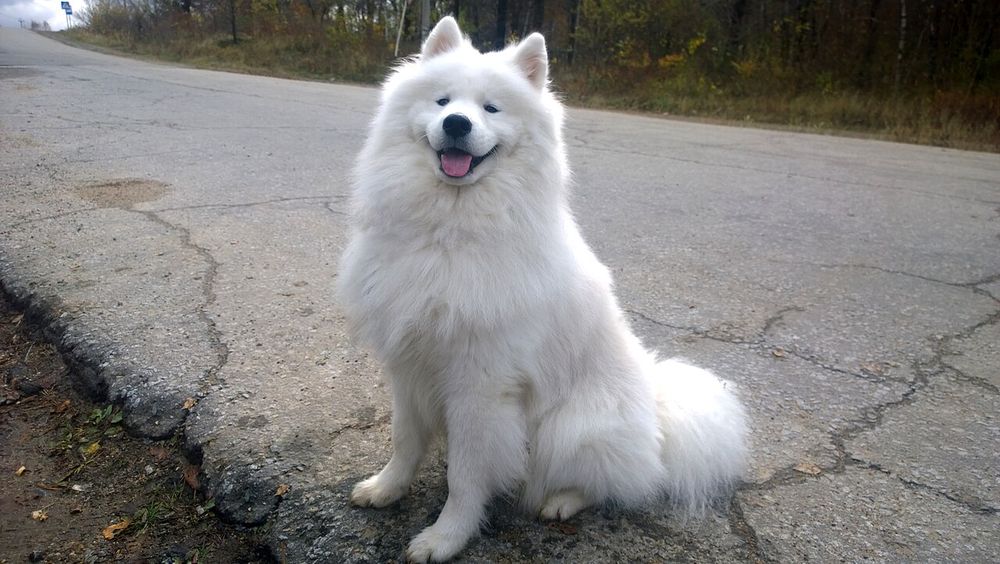
- Origin
- Northern Russia and SiberiaFédération Cynologique Internationale
- Adult weight
- 16 to 29.5 kg (AKC: males 45 to 65 lb, females 35 to 50 lb, converted to kg)American Kennel Club
- Height
- 50 to 60 cm (FCI standard: ideal 57 cm for males and 53 cm for females, each within 3 cm)Fédération Cynologique Internationale
- Lifespan
- 12 to 14 yearsAmerican Kennel Club
- Coat
- A profuse white double coat: a harsh, longer outer coat over a soft, thick, woolly undercoat. Sheds a lot all year and more in the seasonal moult.American Kennel Club
- Energy
- HighThe Royal Kennel Club
- Indian heat
- Struggles in heatPDSA
- Flats
- Needs spaceThe Royal Kennel Club
Samoyed at a glance
| What | The rule | Source |
|---|---|---|
| Size | Medium: the FCI standard gives an ideal height of 57 cm for males and 53 cm for females, each within 3 cm. | Fédération Cynologique Internationale |
| Exercise | High: more than two hours a day, according to the Kennel Club. | The Royal Kennel Club |
| Alone-time tolerance | Low: PDSA says never leave a Samoyed alone for more than four hours, as it can become stressed and anxious. | PDSA |
| Heat tolerance | Low. Bred for Arctic Siberia, with a dense polar double coat; no study has measured Samoyeds in heat. | Fédération Cynologique Internationale |
| Coat and shedding | Double coat that sheds often; the Kennel Club says it needs grooming every day. | The Royal Kennel Club |
| Sociability | Friendly, open, alert and lively; very social, never shy or aggressive, and no use as a guard dog. | Fédération Cynologique Internationale |
Where does the Samoyed come from?
The Samoyed is named after the Samoyed peoples of northern Russia and Siberia, nomadic reindeer herders who bred their dogs for hard work in some of the coldest places people live. The FCI standard says the dogs in the south of the region were particoloured reindeer herders, while those in the north were pure white hunting and sledge dogs. They lived so close to their owners that they slept inside the shelters and served as heaters.
AKC describes how the dogs hauled sledges, guarded camps and hunted, then moved and protected reindeer herds once the people shifted from hunting reindeer to herding them. The Royal Kennel Club adds that the double coat insulated them and their flat, hairy feet stopped snow balling between the pads.
The British zoologist Ernest Kilburn Scott spent three months among the Samoyed tribes in 1889 and brought dogs back to England; these and dogs brought home by polar explorers founded the western breed, and the first standard was written in England in 1909. Queen Alexandra was a keen supporter, the first Samoyed was registered by AKC in 1906, and Samoyeds pulled sledges for Roald Amundsen's expedition that reached the South Pole in 1911.
How did the Samoyed come to India?
No source we found documents when Samoyeds first came to India, and we found no Indian registration figures for the breed. Any Samoyed brought in today comes under the 2016 foreign trade rule that allows dogs to be imported only as pets with a pet book, for research, or for defence and police use, not for commercial breeding. The Samoyed was not named in the central government's March 2024 list of breeds, as Gurugram's 2026 order reproduces it.
The honest point for an Indian owner is the climate gap. This is a dog bred for Arctic Siberia with a dense polar coat, and PDSA lists thick-coated dogs among those most at risk of heatstroke. The danger for Arctic breeds is real here: in April 2026 The Week reported more than 30 Siberian Huskies abandoned on the outskirts of Hyderabad in searing heat, one of which died. A Samoyed in the plains needs a reliably cool room, power-cut cover and exercise only at dawn and after dark.
What care does a Samoyed need?
The three things that shape a good day for this breed.
Exercise
The Royal Kennel Club suggests more than 2 hours a day. AKC says Samoyeds love long walks on a lead and play in a safely fenced space, but have a strong urge to roam and may travel for miles if loose. In Indian heat, move most of it to the cool hours and indoor games. The Royal Kennel Club
Grooming
Daily brushing, says The Royal Kennel Club; AKC suggests a slicker brush or metal comb for tangles and trimming nails every three to four weeks. Do not shave the coat: the Canadian Kennel Club explains a double coat helps insulate against heat as well as cold. American Kennel Club
Training
AKC calls Samoyeds smart, social and mischievous dogs that need a firm but loving hand, and says one left alone in a yard becomes miserable and destructive. PDSA says never leave a Samoyed alone for more than four hours. Canadian Kennel Club (The Dish, June 2018)
How much should a Samoyed eat?
Daily calories for a healthy, neutered adult Samoyed, worked out from its weight with the formula vets use (70 x weight in kg to the power 0.75, then AAHA's factor for a neutered adult). Divide by the kcal per kg on your food's pack for grams a day, and adjust by body shape.
| Resting need (kcal a day) | Neutered adult (kcal a day) | |
|---|---|---|
| 16 kg AAHA (American Animal Hospital Association) | 560 | 780 to 900 |
| 22.8 kg | 730 | 1020 to 1170 |
| 29.5 kg | 890 | 1240 to 1420 |
AKC advises a complete dog food suited to the dog's age, or a home-prepared diet only under your vet's supervision; Merck notes unbalanced homemade diets are the commonest cause of nutritional problems, so a rice and chicken diet needs formulating by a veterinary nutritionist. AKC warns some Samoyeds tend to put on weight, so measure meals and count treats. Samoyeds are strongly predisposed to diabetes, so keeping them lean and on regular meals matters: Science for Animal Welfare notes that diet, including regular portions, plays a major role in managing it. Keep mithai, onion, garlic, grapes, tamarind, chocolate and salty snacks away, and remember ASPCA's note that milk and dairy can cause diarrhoea. Meals a day: 6 to 12 weeks, 4 a day; 3 to 6 months, 3 a day; 6 to 12 months, 2 a day; adult, 2 a day. Puppies, kittens, working, pregnant and older animals need different amounts: ask your vet, or use Petym's food calculator.
Which illnesses is the Samoyed prone to, and how are they treated?
The conditions veterinary studies and breed surveys most often report in the Samoyed. Knowing the early signs means a vet sees it sooner.
See your vet first. This is general information from veterinary sources, not a diagnosis. Only a vet who has examined your pet can say what is wrong and prescribe treatment, and this page never gives a dose. Do not give your pet human medicine. If your pet seems very unwell, go to a 24-hour vet: find one in your city.
Diabetes mellitus
See a vet soonA hormonal disorder in which blood sugar stays high, usually because the pancreas makes too little insulin. In UK clinical data Samoyeds made up 3% of diabetic dogs against 0.09% of all dogs, an odds ratio of about 36. Science for Animal Welfare (formerly UFAW)
Signs to watch for
- Drinking and urinating much more
- Weight loss despite a bigger appetite
- Lethargy
- Cloudy eyes or poor vision from cataracts
How a vet treats it
A vet diagnoses it from glucose and ketones in the urine and persistently high blood glucose, with fructosamine tests to track control. Most dogs need daily insulin injections for life, regular meals and often a high-fibre food prescribed by the vet. Science for Animal Welfare warns that diabetic ketoacidosis is life-threatening if early signs are missed, so call the vet if a diabetic dog seems unwell.
Prevention
There is no genetic test. Keep the dog lean, and buy from breeders who do not breed from affected dogs or their relatives.
Hip dysplasia
Ask at a routine checkAn unstable hip joint that wears and becomes arthritic. AKC lists it among the breed's health issues and says responsible breeders test for it; ACVS names heredity as the biggest risk factor. American Kennel Club
Signs to watch for
- Reluctance to rise, jump or climb
- Weight shifted onto the front legs
- Hind-leg muscle loss
- Hip pain, though some dogs show no signs
How a vet treats it
A vet uses specially positioned hip X-rays and feels the joint under light sedation. ACVS names weight control, lead walks, anti-inflammatory drugs prescribed by the vet, omega-3 fatty acids, physical therapy, and surgery such as pelvic osteotomy, femoral head ostectomy or total hip replacement.
Prevention
Choose a puppy from hip-tested parents, avoid overfeeding during growth and keep the adult dog slim.
Samoyed hereditary glomerulopathy (inherited kidney disease)
See a vet soonAn inherited kidney disease passed on the X chromosome. In the line studied, 60% of males developed severe kidney disease that progressed to kidney failure before 15 months of age, while carrier females were less badly affected. Merck also names the Samoyed among breeds prone to inherited kidney disease. Journal of Laboratory and Clinical Medicine (1986)study
Signs to watch for
- Protein in the urine on a vet's urine test
- Signs of kidney failure in a young male, often before 15 months of age
- Swollen legs, fluid in the belly or shortness of breath (the nephrotic syndrome)
How a vet treats it
A vet checks the urine for protein and blood tests for kidney function, sometimes with ultrasound or a kidney biopsy. Merck says existing kidney damage rarely reverses, so treatment slows it: a special kidney diet, medications to limit protein loss, and in later stages intravenous fluids, all prescribed and monitored by the vet.
Prevention
Ask the breeder about kidney disease in the line; affected lines should not be bred from.
Heatstroke
Emergency: go to a vet nowA dangerous rise in body temperature. PDSA lists thick-coated dogs among those most at risk, and the Samoyed carries a dense polar double coat built for Arctic Siberia. PDSA
Signs to watch for
- Heavy panting and fast breathing
- Drooling, vomiting or diarrhoea
- Pale or bright red gums, wobbliness or collapse
How a vet treats it
Start cooling with cool water over the body and a breeze, and go to a vet at once. PDSA says vets cool the dog and may give an intravenous fluid drip, oxygen and medication, then test blood and urine for organ damage.
Prevention
Exercise only in the coolest hours, keep a cool room and water ready, brush out the undercoat rather than shaving, and never leave the dog in a car.
Can a Samoyed live in India's heat?
It can survive with constant care, but an Indian summer is far from what the breed was built for. Be honest with yourself and your sitter about the risk.
The Kennel Club describes the Samoyed as a versatile worker suited to the Arctic regions of Siberia, and the FCI standard as a sledge and companion dog with a profuse, thick, dense polar coat: a short, soft, dense undercoat under a longer, harsher outer coat. That coat keeps heat in. In Delhi, Ahmedabad or Hyderabad in May, the air can stay hot well into the night.
No study has looked at Samoyeds and heatstroke directly. The best evidence is a large UK study of heat-related illness, which found the Chow Chow, another very thick-coated breed, had the highest risk of any breed, and said coat type is potentially an important risk factor. It added that other double-coated breeds may also be at higher risk, but the study did not have enough dogs to show it. The Samoyed was not in its results.
If your Samoyed relies on an air-conditioned room through the hot months, power cuts become the main danger when you are away. Your sitter needs to know where the inverter is, which room stays coolest without AC, and what to do if the dog starts to pant heavily: cool it with plenty of cool water and moving air and go to the vet.
Should I shave my Samoyed for summer?
You may have read
Shaving a Samoyed keeps it cool in Indian summers.
Myth
What the sources say
The Canadian Kennel Club says shaving a double-coated dog will not help cool it off, and is not recommended unless medically necessary. A regularly brushed double coat acts as a thermal regulator. Canadian Kennel Club (The Dish, June 2018)
You may have read
A shaved coat grows back the same.
Myth
What the sources say
After shaving, the undercoat grows first, and the dense regrowth can trap heat. Shaving also exposes the skin to sunburn. Canadian Kennel Club (The Dish, June 2018)
You may have read
A Samoyed only needs brushing in spring.
Myth
What the sources say
The Kennel Club says the breed needs grooming every day, and PDSA says it sheds very often. Loose undercoat left in a humid monsoon can mat and hold damp. The Royal Kennel Club
You may have read
A friendly Samoyed will guard the house while you are away.
Myth
What the sources say
The FCI standard says the breed is very social and cannot be used as a guard dog. It needs company, not a job. Fédération Cynologique Internationale
A Samoyed walking plan in Indian heat
The Kennel Club says more than two hours of exercise a day. In an Indian summer, that has to be reshaped: short walks in the coolest hours and the rest as indoor work.
Dawn (before about 7 am in summer)
The main walk, kept shorter on hot days. Grass and shade over tarmac. Test the ground with the back of a hand for seven seconds first. The Royal Kennel Club
After the walk
Fresh water, a rest in the coolest room, and a quick check that the dog has stopped panting within a few minutes.
Daytime
Indoors in the cool. Brushing, sniffing games, a food puzzle with part of the meal, and calm training. No outdoor exercise between late morning and late afternoon in summer. Animal Welfare Board of India
After dark
The second walk, once the ground has cooled. Carry water. Stop and rest in shade if the dog lags or pants hard. The Royal Kennel Club
Night
A last short toilet break. Check the AC, the inverter and water bowls before bed.
Winter in north India
Cooler days allow longer walks, closer to the two hours the Kennel Club suggests, still avoiding the warmest part of the day.
When should a sitter get help for a Samoyed?
A sitter does not diagnose. These are the changes to act on, linked to what the sources say about the breed.
If Heavy panting that does not settle in the cool, drooling, wobbling, vomiting, a fast heartbeat or collapse.
Heatstroke is an emergency. Move the dog somewhere cool, pour plenty of cool water over its body, use a fan, and go to the vet at once. Animal Welfare Board of India
If Drinking and urinating much more than usual, with a bigger appetite and weight loss.
Tell the owner and call the vet. These are signs of diabetes, and Samoyeds had the highest odds of diabetes of any breed in a large UK register. Merck Veterinary Manual
If A young male Samoyed that is drinking more, losing weight or seems unwell. Hereditary glomerulopathy is an inherited kidney disease in the breed.
Call the vet. In the original research, 60% of affected males developed kidney failure before 15 months of age. Journal of Laboratory and Clinical Medicine (1986)study
If Stiffness, a swaying walk or reluctance to get up. The Kennel Club runs hip and elbow schemes for the breed, and PDSA lists hip dysplasia.
Note it and tell the owner and vet. Shorten walks until the dog has been seen. PDSA
If Cloudy, red or painful eyes, or bumping into things at night. The Kennel Club lists a DNA test for X-linked progressive retinal atrophy.
Call the vet. A sudden painful eye needs a vet the same day. The Royal Kennel Club
If Howling, chewing or toileting indoors when left. PDSA says a Samoyed can become stressed and anxious if left more than four hours.
Do not scold. Tell the owner and shorten the time the dog is alone. PDSA
Heat and Samoyeds: a news report from India
From news reports, not yet an official source.
News report, not a study. It is about Siberian Huskies, another thick-coated sledge breed, and shows the risk is real in Indian summers.
30 April 2026
The Week reported that more than 30 Siberian Huskies were abandoned on the outskirts of Hyderabad in searing heat, exposed to high temperatures for long periods without enough water or shelter. One dog died, and officials suspected heat stress contributed. The Week (30 April 2026)news report
Grooming a Samoyed while you are away
Every day, the Kennel Club says. A week without brushing in a humid city leaves loose undercoat packed against the skin, which holds heat and damp. Ask your sitter to brush once a day, a section at a time, with the brush and comb you use, and to check for mats behind the ears, under the legs and around the tail.
Tick checks belong in the same session. A dense white coat hides ticks well. After every walk in the monsoon, the sitter should part the coat on the neck, ears, armpits and between the toes. Keep the dog's tick prevention up to date before you go, and leave the date of the last dose on the care sheet.
Bathing is for the owner or a groomer, not the sitter. A double coat that is not dried right through can stay damp next to the skin.
Feeding a Samoyed while you travel
Keep the food, amounts and times the same, and leave enough for the trip and a few days more; a sudden change of food is a common cause of diarrhoea. A dog that is exercising less in summer may need less food, but that is a decision for you and your vet, not the sitter.
Samoyeds are more prone to diabetes, according to a large UK register, so a steady weight matters. Ask your sitter to log meals and to note any change in appetite or thirst. Keep foods toxic to dogs out of reach: ASPCA Animal Poison Control warns that grapes and raisins can lead to kidney damage, xylitol can cause low blood sugar and liver damage, and onion and garlic can damage red blood cells.
Samoyed sitter checklist
- Vet and nearest 24-hour vet details, the vaccination card (DHPPi, rabies) and tick prevention dates.
- Where the inverter is, which room stays coolest, and what to do if the power fails.
- Walk times for the season, the route, and where shade and grass are.
- The brush and comb, and a note to brush every day. The Royal Kennel Club
- Food, amounts and times, and the treat allowance.
- A rule: no shaving or trimming the coat. Canadian Kennel Club (The Dish, June 2018)
- How the dog behaves when anxious, and how long it can be left alone. PDSA
Which Petym service suits a Samoyed?
A dog that should not be alone more than four hours, in a home that must stay cool, needs someone there most of the time.
Most Samoyeds
Overnight pet sitting
A sitter stays in your home with its AC and cool rooms, walks the dog at dawn and after dark, and brushes it daily.
Workdays
Dog walking
Early and late walks on days you work long hours, so the dog is not alone for long stretches.
Long days
Doggy day care
A day with company in a sitter's home, if it has a cool space and the dog copes with the change.
Winter trips
Pet boarding
A stay in a checked sitter's home. Ask how it keeps a thick-coated dog cool before booking in summer.
Breeds with similar care needs to the Samoyed
Going away soon? Tell us your dates.
A checked local sitter feeds, walks and keeps your pet company at home, follows your care sheet to the letter and sends a photo every day. Petym is opening city by city: send your dates and we will tell you when a sitter can take them.
- Meet your sitter first, free
- PAN-checked, first-aid trained
- A photo every day
- Pay through Petym, never cash


Questions owners ask
Can a Samoyed survive in India?
- It can live in India, but an Indian summer is a real risk for a dog bred for Arctic Siberia with a dense double coat. It needs a cool indoor space through the hot months, which for many dogs means an air-conditioned room, walks only in the coolest hours, and a plan for power cuts.
Should I shave my Samoyed in summer?
- No. The Canadian Kennel Club says shaving a double-coated dog does not help it cool off and is not recommended unless medically necessary. The undercoat grows back first and can trap heat, and shaved skin can burn. Daily brushing to remove loose undercoat helps far more.
How long can a Samoyed be left alone?
- PDSA says never leave a Samoyed alone for more than four hours, as it can become stressed and anxious, and the breed is likely to be vocal when unhappy. For trips, choose overnight sitting; for workdays, a walker or day care.
How much exercise does a Samoyed need in India?
- The Kennel Club says more than two hours a day. In summer, split it into a dawn walk and a walk after dark, kept shorter on hot days, and make up the rest with indoor sniffing games, training and brushing. Never exercise a Samoyed in the midday heat.
What health problems do Samoyeds have?
- The sources name hereditary kidney disease (X-linked hereditary nephritis), diabetes, hip dysplasia and eye problems including X-linked progressive retinal atrophy. Samoyeds had the highest odds of diabetes of any breed in a UK register. A sitter should report increased thirst, weight loss or stiffness to your vet.
Is a Samoyed a good guard dog?
- No. The FCI standard describes the breed as friendly, open, very social and never shy or aggressive, and says it cannot be used as a guard dog. While you are away, it needs company and routine rather than a role watching the house.
Which Petym service suits a Samoyed?
- Usually overnight pet sitting, because the dog stays in its own cool home and has company most of the day and night. Pet boarding can work in winter, or in summer only if the sitter's home has a cool room and a power backup plan, which you can ask about at the free meet and greet.
Keep reading
Services that help
- Overnight pet sittingA sitter sleeps in your home and keeps your pet's routine going.
- Dog walking30 or 60 minute one-to-one walks, your dog only, at your dog's times.
- Doggy day care in a sitter's homeDaytime care for your dog in a sitter's home while you work.
- Pet boarding in a sitter's homeYour pet stays in a checked sitter's home, not a kennel.
Free tools for this
Words on this page, explained
Keep exploring
Other dog breeds
- Akita
- Alaskan Malamute
- American Bully
- American Cocker Spaniel
- American Pit Bull Terrier
- Australian Shepherd
- Bakharwal dog
- Basset Hound
- Beagle
- Belgian Malinois
- Bernese Mountain Dog
- Bichon Frise
- Border Collie
- Boston Terrier
- Boxer
- Bull Terrier
- Bulldog
- Bullmastiff
- Cane Corso
- Caucasian Shepherd Dog
- Cavalier King Charles Spaniel
- Chihuahua
- Chippiparai
- Chow Chow
- Cocker Spaniel
- Dachshund
- Dalmatian
- Dobermann
- Dogo Argentino
- English Mastiff
- English Springer Spaniel
- French Bulldog
- Gaddi Kutta (Gaddi dog)
- German Shepherd
- Golden Retriever
- Great Dane
- Greyhound
- Havanese
- Indian pariah dog (Indie)
- Indian Spitz
- Irish Setter
- Jack Russell Terrier
- Kangal
- Kanni
- Kombai
- Labrador Retriever
- Lhasa Apso
- Maltese
- Miniature Pinscher
- Miniature Schnauzer
- Mudhol Hound
- Neapolitan Mastiff
- Newfoundland
- Papillon
- Pekingese
- Pembroke Welsh Corgi
- Pomeranian
- Poodle
- Pug
- Rajapalayam
- Rampur Greyhound
- Rhodesian Ridgeback
- Rottweiler
- Saint Bernard
- Shar Pei
- Shiba Inu
- Shih Tzu
- Siberian Husky
- Tibetan Mastiff
- Weimaraner
- West Highland White Terrier
- Whippet
- Yorkshire Terrier
Sources
Each source was opened and read on the date shown. How Petym checks its sources
- Fédération Cynologique Internationale: FCI standard No. 212: Samoiedskaïa Sabaka (Samoyed) (4 September 2019) (opens in a new tab)
- American Kennel Club: Samoyed dog breed information (opens in a new tab)
- The Royal Kennel Club: Samoyed: breeds A to Z (opens in a new tab)
- PDSA: Heatstroke in dogs (opens in a new tab)
- Directorate General of Foreign Trade, Ministry of Commerce and Industry: Notification No. 3/2015-2020 (25 April 2016): policy conditions on import of dogs; import of commercial dogs for breeding not permitted (opens in a new tab)
- Municipal Corporation Gurugram: Office order on registration and control of pet dogs (23 June 2026) (opens in a new tab)
Show all 27 sourcesShow fewer
- Canadian Kennel Club (The Dish, June 2018): To shave or not to shave, that is the question! (opens in a new tab)
- PDSA: Samoyed (opens in a new tab)
- Merck Veterinary Manual: Puppy care (opens in a new tab)
- Merck Veterinary Manual: Nutritional requirements of small animals (full review November 2023, updated September 2024) (opens in a new tab)
- Science for Animal Welfare (formerly UFAW): Samoyed: diabetes mellitus (opens in a new tab)
- ASPCA Animal Poison Control: People foods to avoid feeding your pets (opens in a new tab)
- Merck Veterinary Manual: Garlic and onion (Allium spp) toxicosis in animals (opens in a new tab)
- Merck Veterinary Manual: Grape, raisin, and tamarind (Vitis spp, Tamarindus spp) toxicosis in dogs (full review September 2024) (opens in a new tab)
- VCA Animal Hospitals: Feeding times and frequency for your dog (opens in a new tab)
- AAHA (American Animal Hospital Association): 2021 AAHA Nutrition and Weight Management Guidelines for Dogs and Cats: energy requirement calculations (Box 1, PDF) (opens in a new tab)
- American College of Veterinary Surgeons: Canine Hip Dysplasia (opens in a new tab)
- Merck Veterinary Manual: Noninfectious diseases of the urinary system in dogs (opens in a new tab)
- Merck Veterinary Manual: Disorders of the pancreas in dogs (dog owners) (opens in a new tab)
- The Royal Kennel Club: The danger of hot pavements (opens in a new tab)
- Animal Welfare Board of India: Request to ensure care and protection of animals from direct heat during extreme hot weather (4 May 2026) (opens in a new tab)
- PDSA: Separation anxiety in dogs (opens in a new tab)
- PDSA: Diarrhoea after a change of food (opens in a new tab)
- Companion Animal Health and Genetics (2025), Royal Veterinary College: Epidemiology and clinical management of 1072 dogs with diabetes mellitus in a UK diabetes register (opens in a new tab)
- Journal of Laboratory and Clinical Medicine (1986): Mode of inheritance of Samoyed hereditary glomerulopathy (abstract read) (opens in a new tab)
- Scientific Reports (2020): Incidence and risk factors for heat-related illness in UK dogs (opens in a new tab)
- The Week (30 April 2026): Over 30 Siberian Husky dogs abandoned on Hyderabad outskirts amidst searing heat, one dead (opens in a new tab)