Chihuahua care while you travel: a checklist for your sitter
Updated By PetymFacts checked against official sources on
Quick answer
A Chihuahua usually copes well with a sitter at home if it is handled safely. The sitter must know where the dog is before closing doors or sitting down, carry it with both hands, keep balconies and gaps closed, stick to the owner's measured meals and call the vet for a honking cough, limping or a sore mouth.
Injury caused about one in seven Chihuahua deaths in a Royal Veterinary College study of UK dogs, and dental disease was the most common health problem recorded, in about one in five dogs.
- Meet your sitter first, free
- PAN-checked, first-aid trained
- A photo every day
- Pay through Petym, never cash

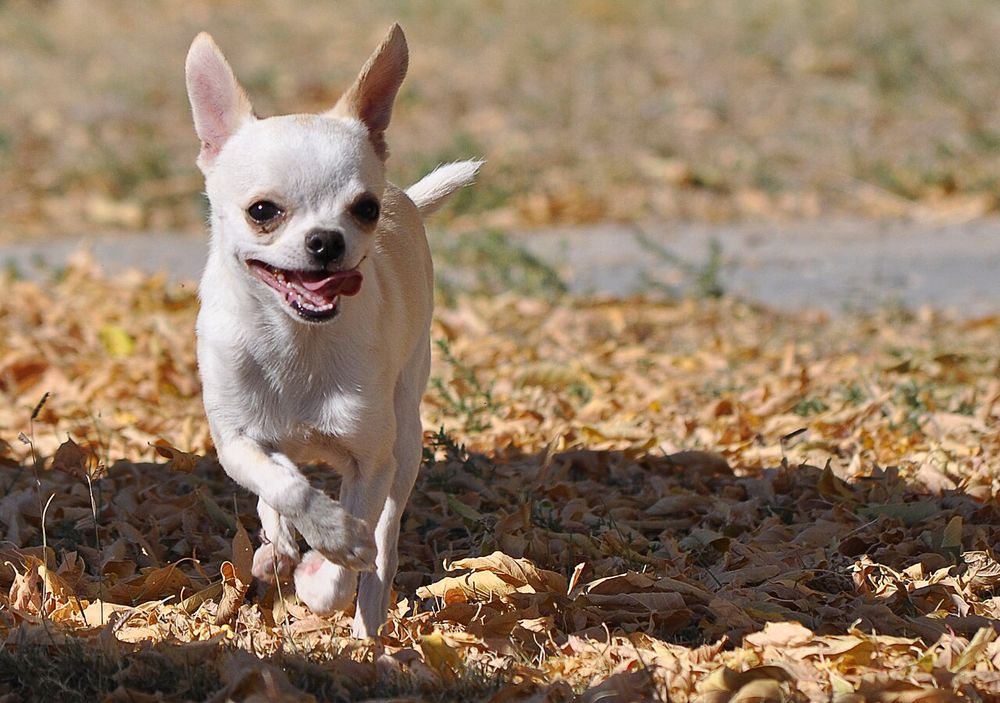
- Origin
- MexicoFédération Cynologique Internationale
- Adult weight
- 1 to 3 kg (FCI standard, ideal 1.5 to 2.5 kg; pet Chihuahuas in a UK study had a median of 3.4 kg)Fédération Cynologique Internationale
- Coat
- Two varieties: smooth, short and glossy, or long, fine and silky with feathering. Any colour except merle (FCI standard).Fédération Cynologique Internationale
- Energy
- LowThe Royal Kennel Club (UK)
- Indian heat
- Copes with careScientific Reports (2020)study
- Flats
- Suits a flatThe Royal Kennel Club (UK)
Chihuahua care snapshot
| What | The rule | Source |
|---|---|---|
| Size | Small, suited to a flat or apartment, in the Royal Kennel Club's breed information. A VetCompass study calls it the world's smallest dog breed. | The Royal Kennel Club (UK) |
| Exercise need | Up to 30 minutes a day (Royal Kennel Club). | The Royal Kennel Club (UK) |
| Alone-time tolerance | Not rated by kennel clubs. PDSA advises no more than 4 hours alone for any dog. | PDSA |
| Heat tolerance | Chihuahuas did not have raised odds of heat-related illness compared with Labradors in UK vet records, but any dog can overheat; walks still belong in the cool hours. | Scientific Reports (2020)study |
| Shedding and coat | Smooth coat: short, sheds, grooming once a week (Royal Kennel Club). A long-coat variety also exists and needs more brushing. | The Royal Kennel Club (UK) |
| Sociability with other dogs | Described in words only: bold, saucy, outgoing and confident. Its size means play with bigger dogs needs close supervision. | The Royal Kennel Club (UK) |
Where does the Chihuahua come from?
The Chihuahua is regarded as the smallest pedigree dog in the world and takes its name from the Mexican state of Chihuahua. The FCI standard says these dogs are thought to have lived wild and been tamed by local people in the time of the Toltec civilisation, and that carvings of a small dog called the Techichi, found on buildings in Tula, look very like today's Chihuahua.
The breed became fashionable in Mexico in the late 1800s, then spread to America, where film-star owners helped make it a craze. It comes in smooth and long coat varieties that differ only in coat, and the FCI keeps it as a companion dog.
How did the Chihuahua come to India?
No source we found records when or how the Chihuahua came to India. In a large UK study it did not have higher heat-illness odds than the Labrador, but any dog can overheat, so walks still belong in the cool hours.
Its size is the bigger everyday risk. Traumatic injury caused 13.8% of deaths in a UK study of Chihuahuas, so balconies, stairs, doors and bigger dogs, including community dogs on the street, need watching.
What care does a Chihuahua need?
The three things that shape a good day for this breed.
Exercise
Up to 30 minutes a day, says The Royal Kennel Club, on a harness rather than a collar because vet surgeons list the Chihuahua among breeds affected by tracheal collapse. The Royal Kennel Club (UK)
Grooming
Once a week for the smooth coat, says The Royal Kennel Club; the long coat needs more brushing. Daily tooth brushing matters most, as dental disease was the most common problem in UK Chihuahuas. American College of Veterinary Surgeons
Training
The Royal Kennel Club describes a huge personality in a tiny frame. Aggression was recorded in 4.2% of UK Chihuahuas, so early, gentle socialisation with people and other dogs, and calm handling, are worth the time. BMC Veterinary Research (2020), Royal Veterinary College VetCompassstudy
How much should a Chihuahua eat?
Daily calories for a healthy, neutered adult Chihuahua, worked out from its weight with the formula vets use (70 x weight in kg to the power 0.75, then AAHA's factor for a neutered adult). Divide by the kcal per kg on your food's pack for grams a day, and adjust by body shape.
| Resting need (kcal a day) | Neutered adult (kcal a day) | |
|---|---|---|
| 1 kg AAHA (American Animal Hospital Association) | 70 | 100 to 110 |
| 2 kg | 120 | 160 to 190 |
| 3 kg | 160 | 220 to 260 |
Feed a complete and balanced food made for the dog's life stage, and keep treats to no more than about 10% of the day's calories, as WSAVA advises. Obesity was recorded in 5.9% of UK Chihuahuas, and pet Chihuahuas were often heavier than the breed standard, so weigh or level-measure every meal; for a dog this small a few extra bites matter. VCA notes that dogs which eat only small amounts at a time may need more frequent meals. Keep onion and garlic, grapes and raisins, chocolate, coffee and chai, xylitol and salty snacks out of reach; ASPCA says dairy can also cause diarrhoea. Meals a day: 6 to 12 weeks, 4 a day; 3 to 6 months, 3 a day; 6 to 12 months, 2 a day; adult, 1 or 2 a day; VCA suggests at least 2. Puppies, kittens, working, pregnant and older animals need different amounts: ask your vet, or use Petym's food calculator.
Which illnesses is the Chihuahua prone to, and how are they treated?
The conditions veterinary studies and breed surveys most often report in the Chihuahua. Knowing the early signs means a vet sees it sooner.
See your vet first. This is general information from veterinary sources, not a diagnosis. Only a vet who has examined your pet can say what is wrong and prescribe treatment, and this page never gives a dose. Do not give your pet human medicine. If your pet seems very unwell, go to a 24-hour vet: find one in your city.
Dental disease and retained baby teeth
Ask at a routine checkPeriodontal disease was the most common single problem in UK Chihuahuas (13.5%), and 5.7% had retained baby teeth. Merck notes small breeds usually have more gum disease than large ones. BMC Veterinary Research (2020), Royal Veterinary College VetCompassstudy
Signs to watch for
- Bad breath
- Red or purple gums that bleed easily
- Baby teeth still in place beside the adult teeth
- Dropping food or chewing on one side
How a vet treats it
A vet treats gum disease with a thorough professional cleaning above and below the gum line under anaesthesia, and loose or damaged teeth often need extraction. Merck says retained baby teeth should be removed by a vet as soon as they are noticed.
Prevention
Daily tooth brushing; Merck says not to use human toothpaste.
Slipping kneecap (patellar luxation)
Ask at a routine checkThe kneecap slips out of its groove. Vet surgeons list the Chihuahua among the small breeds it mainly affects, and it was recorded in 4% of UK Chihuahuas. American College of Veterinary Surgeons
Signs to watch for
- Skipping or holding up a back leg for a few steps
- Lameness that becomes more frequent
- Bow-legged back legs in severe cases
How a vet treats it
A vet diagnoses it by feeling the knee and may take X-rays. Mild cases are often monitored; for more severe grades a vet surgeon may operate to realign the kneecap, followed by several weeks of rest.
Prevention
Affected dogs should not be bred from.
Tracheal collapse
See a vet soonThe cartilage rings of the windpipe weaken and flatten, a lifelong condition that gets worse with time. Chihuahuas are among the small breeds most affected, and overweight dogs and dogs in homes with smokers may be at higher risk. American College of Veterinary Surgeons
Signs to watch for
- A harsh, dry cough like a goose honk
- Coughing when picked up or when the collar is pulled
- Tiring easily
- Turning blue or fainting when excited
How a vet treats it
A vet may use X-rays, a moving X-ray called fluoroscopy, or a camera into the airway. Many dogs are managed with weight loss and medicines a vet prescribes to calm the airway and the cough, with antibiotics for infections; some need surgery or a stent placed in the windpipe.
Prevention
Use a body harness instead of a collar, keep the dog lean and keep it away from smoke.
Hydrocephalus
See a vet soonToo much fluid inside or around the brain, which raises pressure and can damage it. Science for Animal Welfare says Chihuahuas are predisposed, possibly because of their small size. UFAW Science for Animal Welfare (genetic welfare problems of companion animals)
Signs to watch for
- A puppy smaller than its littermates and slower to learn
- A domed head
- Circling or pressing the head against a wall
- Seizures or blindness
How a vet treats it
A vet confirms it with an ultrasound, MRI or CT scan. A vet may prescribe medicine to reduce the fluid and brain swelling, and some dogs need surgery to place a shunt that drains the fluid.
Prevention
Affected dogs and their close relatives should not be bred from. A soft spot on the skull alone does not mean a dog has hydrocephalus.
Obesity
Ask at a routine checkRecorded in 5.9% of UK Chihuahuas. Cornell's Riney Canine Health Center says obesity affects nearly every organ and often shortens life. BMC Veterinary Research (2020), Royal Veterinary College VetCompassstudy
Signs to watch for
- Ribs hard to feel under the fat
- No visible waist from above
- Tiring quickly on walks
How a vet treats it
A vet scores body condition on a 1 to 9 scale, sets a target weight and builds a weight-loss plan, often with a weight-control food, measured meals and weigh-ins every two weeks. Do not simply cut a normal food without your vet's advice.
Prevention
Measure every meal, count treats and weigh the dog regularly.
How does a Chihuahua cope when you are away?
Most do fine with a calm sitter who keeps their routine. The main risks are physical: falls, doors, feet and bigger dogs.
The Royal Kennel Club describes the Chihuahua as bold and saucy, outgoing and confident. Some are wary of new people at first, which is why a meet and greet before the first booking matters for this breed in particular: the dog meets the sitter while you are still in the room.
A Royal Veterinary College VetCompass study of more than 11,000 UK Chihuahuas found that traumatic injury caused 13.8% of deaths, behind heart disease and lower respiratory disease. For a sitter that changes the priorities. A dog this small can be hurt by a door closing, a foot in the dark, a fall from a sofa or a bed, or a rough greeting from a large dog in the society compound. Most of a Chihuahua sitter's checklist is about the home, not the walk.
On time alone, PDSA advises no more than 4 hours at a time for any dog, with a sitter or walker for longer absences. A Chihuahua that shakes, barks or soils when left may be anxious rather than cold or naughty, and that is worth telling the sitter before the trip.
What does UK research say about Chihuahua health?
Figures from the VetCompass study of Chihuahuas under primary vet care in 2016.
19 %
Chihuahuas with dental disease, the most common group of disorders recorded BMC Veterinary Research (2020), Royal Veterinary College VetCompassstudy
13.8 %
Deaths caused by traumatic injury BMC Veterinary Research (2020), Royal Veterinary College VetCompassstudy
4 %
Chihuahuas recorded with patellar luxation (a slipping kneecap) BMC Veterinary Research (2020), Royal Veterinary College VetCompassstudy
8.2 years
Median age at death in this young, growing UK population; females outlived males BMC Veterinary Research (2020), Royal Veterinary College VetCompassstudy
How should a sitter make the home safe for a Chihuahua?
Small changes, done on the first day, prevent the injuries that hurt this breed most.
- Know where the dog is before closing any door, sitting down or reclining a chair.
- Carry the dog with two hands, one under the chest and one under the back end; never by the front legs.
- Use a ramp or lift the dog on and off sofas and beds if the owner does.
- Close balcony doors and check railings and gaps; a Chihuahua fits through spaces a cat would.
- Keep the front door shut before opening the gate or lift; small dogs slip out unseen.
- Keep larger dogs in the building at a distance until the owner says introductions are fine.
- Keep floor-level clutter, cables and anything chewable out of reach, and the toilet lid down.
- Wear slippers indoors and switch on a light at night before walking through the house.
Which Chihuahua health problems should a sitter know?
For each of these the sitter calls the owner and the vet. Difficulty breathing or collapse means the nearest 24-hour vet.
If A dry, honking cough, especially when excited, picked up or pulling on the lead
Vet surgeons list Chihuahuas among the small breeds most affected by tracheal collapse. Switch to a harness, keep the dog calm and call the vet; go now if it struggles to breathe or turns blue. American College of Veterinary Surgeons
If Holding a back leg up for a few steps, then walking normally
This "skip" is the typical sign of patellar luxation, a slipping kneecap. Note when it happens and tell the vet. American College of Veterinary Surgeons
If Bad breath, dropping food, chewing on one side or pawing at the mouth
Dental disease was the most common problem in UK Chihuahuas. Book the vet; do not try to remove anything from the mouth. BMC Veterinary Research (2020), Royal Veterinary College VetCompassstudy
If Head pressing against a wall, circling, seizures or sudden blindness
UFAW lists hydrocephalus in the breed, and these are among its signs. Go to the vet the same day; a seizure that does not stop is an emergency. UFAW Science for Animal Welfare (genetic welfare problems of companion animals)
If Any fall, being stepped on, or a knock from a bigger dog, even if it seems fine
Small dogs can be badly hurt by small accidents. Watch for limping, crying, pale gums or lethargy and call the vet.
If Panting hard, drooling or wobbling on a hot day
Possible heatstroke: shade, cool water over the body, a fan, then the vet. PDSA
What does a sitter's day with a Chihuahua look like?
Short walks, regular small meals as the owner sets them, and a lot of company.
6:30
A short walk on a harness in the cool morning air, after testing the ground with your palm for 7 seconds in summer. PDSA
7:30
Breakfast, measured as the owner writes it, then a calm cuddle or rest.
Midday
Indoor play in a cool room. If the owner feeds a midday meal, give it on time.
Afternoon
Toilet break on the balcony or terrace mat if the dog uses one; a dental chew or tooth brushing only if the owner does it.
After sunset
A second short walk, then dinner.
Night
The dog in its own bed or crate, doors checked, and the day's update and photo sent to the owner.
What should a sitter know about feeding a Chihuahua?
Tiny portions mean tiny mistakes count. Measure everything.
Do
- Weigh or level-measure each meal exactly as written; obesity was recorded in about 6% of UK Chihuahuas. BMC Veterinary Research (2020), Royal Veterinary College VetCompassstudy
- Keep to the owner's meal times and number of meals; do not skip one because the dog seems uninterested, tell the owner instead.
- Keep up the owner's dental routine, whether that is brushing or a vet-approved chew.
- Keep a small, stable bowl of fresh water within easy reach in every room the dog uses.
Don’t
- Do not share table food: one biscuit or a piece of roti is a lot of food for a dog this small.
- Do not change the food during the stay.
- Do not leave chocolate, grapes, raisins, onions or sugar-free gum anywhere a small dog can reach; ASPCA Animal Poison Control lists all of them as foods to keep from pets. ASPCA Animal Poison Control
- Do not give any medicine or supplement that is not on the care sheet.
What do people get wrong about Chihuahuas?
A small dog is not a low-maintenance dog.
You may have read
Small dogs do not need walks.
Myth
What the sources say
The Royal Kennel Club still gives up to 30 minutes of exercise a day, and walks are also how a Chihuahua meets the world calmly. The Royal Kennel Club (UK)
You may have read
A soft spot on the skull always means something is wrong.
Myth
What the sources say
UFAW notes that open fontanelles can be seen in Chihuahuas with no other signs of hydrocephalus. Ask the owner whether their dog has one so the sitter handles the head gently. UFAW Science for Animal Welfare (genetic welfare problems of companion animals)
You may have read
A collar is fine because the dog is too small to pull.
Myth
What the sources say
Vet surgeons advise a body harness instead of a neck lead for dogs with tracheal collapse, which affects Chihuahuas among other small breeds. American College of Veterinary Surgeons
Which Petym service suits a Chihuahua?
Staying in its own home with one familiar sitter suits most Chihuahuas best.
Usually the right fit
Overnight pet sitting
One sitter, your home, no new dogs: the safest set-up for a tiny dog that bonds closely with its person.
Drop-in visits
For a working day or a short trip: meals on time, a short walk and company.
Pet boarding
Only in a sitter's home with no large dogs and a pet limit that keeps it calm; Petym checks each hosting home by video before listing.
Breeds with similar care needs to the Chihuahua
Going away soon? Tell us your dates.
A checked local sitter feeds, walks and keeps your pet company at home, follows your care sheet to the letter and sends a photo every day. Petym is opening city by city: send your dates and we will tell you when a sitter can take them.
- Meet your sitter first, free
- PAN-checked, first-aid trained
- A photo every day
- Pay through Petym, never cash


Questions owners ask
How long can a Chihuahua be left alone?
- PDSA advises no more than 4 hours at a time for any dog. A small dog used to constant company may find a long day alone hard, which can mean barking, shaking or soiling. Drop-in visits or an overnight sitter keep the routine going and keep the dog company.
Is a Chihuahua safe with a pet sitter?
- Yes, if the sitter handles it as a very small dog. Traumatic injury caused about one in seven Chihuahua deaths in a UK vet study. A good sitter checks where the dog is before closing doors or sitting, carries it with two hands and keeps balconies and gates shut.
Why does my Chihuahua cough like a goose?
- A dry, honking cough is the typical sign of tracheal collapse, which vet surgeons list in Chihuahuas and other small breeds. It often comes on with excitement or collar pressure. Use a harness, keep the dog calm and see your vet; breathing difficulty is an emergency.
Why does my Chihuahua skip with one back leg?
- Holding a back leg up for a few steps and then walking normally is the usual sign of patellar luxation, a kneecap that slips out of place. It was recorded in about 4% of UK Chihuahuas. Tell your vet, who will check the knee.
Do Chihuahuas have bad teeth?
- Dental disease was the most common problem in a VetCompass study of UK Chihuahuas, at about 19% of dogs. Ask your vet about a dental routine, and leave the brush or chew you use with the sitter so it continues while you are away.
Can a Chihuahua cope with the Indian summer?
- Usually better than flat-faced breeds: Chihuahuas did not show raised odds of heat-related illness in UK vet records. They still need water, shade, walks in the cool hours and a cool room, because any dog can overheat in an Indian heat wave.
Should my Chihuahua go to boarding with other dogs?
- Care in your own home is usually safer for a dog this small. If you choose boarding, pick a sitter's home without large dogs, with a pet limit, and meet the sitter first so your Chihuahua knows them before the stay.
Keep reading
- Caring for a dog while you are away
- How long can you leave a dog alone?
- Foods toxic to dogs
- Overnight pet sitting
- Pomeranian careAnother toy breed with a slipping-knee risk.
- Yorkshire Terrier careTiny, with a cough to know.
Services that help
Free tools for this
Words on this page, explained
Keep exploring
Other dog breeds
- Akita
- Alaskan Malamute
- American Bully
- American Cocker Spaniel
- American Pit Bull Terrier
- Australian Shepherd
- Bakharwal dog
- Basset Hound
- Beagle
- Belgian Malinois
- Bernese Mountain Dog
- Bichon Frise
- Border Collie
- Boston Terrier
- Boxer
- Bull Terrier
- Bulldog
- Bullmastiff
- Cane Corso
- Caucasian Shepherd Dog
- Cavalier King Charles Spaniel
- Chippiparai
- Chow Chow
- Cocker Spaniel
- Dachshund
- Dalmatian
- Dobermann
- Dogo Argentino
- English Mastiff
- English Springer Spaniel
- French Bulldog
- Gaddi Kutta (Gaddi dog)
- German Shepherd
- Golden Retriever
- Great Dane
- Greyhound
- Havanese
- Indian pariah dog (Indie)
- Indian Spitz
- Irish Setter
- Jack Russell Terrier
- Kangal
- Kanni
- Kombai
- Labrador Retriever
- Lhasa Apso
- Maltese
- Miniature Pinscher
- Miniature Schnauzer
- Mudhol Hound
- Neapolitan Mastiff
- Newfoundland
- Papillon
- Pekingese
- Pembroke Welsh Corgi
- Pomeranian
- Poodle
- Pug
- Rajapalayam
- Rampur Greyhound
- Rhodesian Ridgeback
- Rottweiler
- Saint Bernard
- Samoyed
- Shar Pei
- Shiba Inu
- Shih Tzu
- Siberian Husky
- Tibetan Mastiff
- Weimaraner
- West Highland White Terrier
- Whippet
- Yorkshire Terrier
Sources
Each source was opened and read on the date shown. How Petym checks its sources
- Fédération Cynologique Internationale: FCI standard No. 218: Chihuahueño (Chihuahua) (opens in a new tab)
- The Royal Kennel Club (UK): Chihuahua (Smooth Coat) | Breeds A to Z | The Kennel Club (opens in a new tab)
- PDSA: Heatstroke in dogs (opens in a new tab)
- American College of Veterinary Surgeons: Tracheal Collapse (opens in a new tab)
- Merck Veterinary Manual: Dental disorders of dogs (dog owners; full review May 2018, updated October 2025) (opens in a new tab)
- WSAVA: Frequently asked questions and myths (Global Nutrition Committee) (opens in a new tab)
Show all 17 sourcesShow fewer
- VCA Animal Hospitals: Feeding times and frequency for your dog (opens in a new tab)
- ASPCA Animal Poison Control: People foods to avoid feeding your pets (opens in a new tab)
- Merck Veterinary Manual: Puppy care (opens in a new tab)
- AAHA (American Animal Hospital Association): 2021 AAHA Nutrition and Weight Management Guidelines for Dogs and Cats: energy requirement calculations (Box 1, PDF) (opens in a new tab)
- Merck Veterinary Manual: Nutritional requirements of small animals (full review November 2023, updated September 2024) (opens in a new tab)
- American College of Veterinary Surgeons: Patellar Luxation (Dislocating Kneecap) in Dogs | ACVS (opens in a new tab)
- UFAW Science for Animal Welfare (genetic welfare problems of companion animals): Chihuahua: Hydrocephalus (opens in a new tab)
- Cornell University Riney Canine Health Center: Obesity and our dogs' health (August 2023) (opens in a new tab)
- PDSA: Separation anxiety in dogs (opens in a new tab)
- Scientific Reports (2020): Incidence and risk factors for heat-related illness in UK dogs (opens in a new tab)
- BMC Veterinary Research (2020), Royal Veterinary College VetCompass: Demography and commonly recorded clinical conditions of Chihuahuas under primary veterinary care in the UK in 2016 (opens in a new tab)