Boxer care in India: heat, exercise and alone time
Updated By PetymFacts checked against official sources on
Quick answer
A Boxer copes with a sitter when its energy has somewhere to go. It needs more than two hours of activity a day, but its shorter muzzle makes Indian heat risky, so a sitter must exercise it at dawn and after dark, keep afternoons cool and calm, and call the vet for any fainting or collapse.
The Royal Veterinary College's VetCompass study describes the Boxer as moderately brachycephalic. In a large UK heatstroke study it trended towards higher odds than the Labrador, and flat-faced dogs as a group had about twice the odds.
- Meet your sitter first, free
- PAN-checked, first-aid trained
- A photo every day
- Pay through Petym, never cash

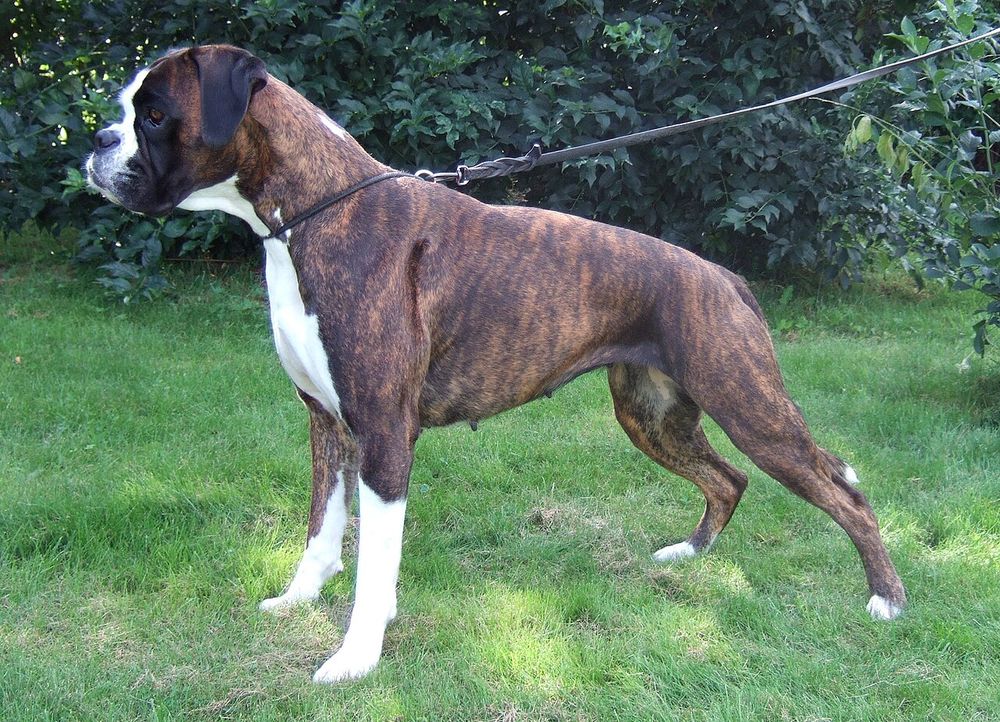
- Origin
- GermanyAmerican Kennel Club
- Adult weight
- 23 to 36 kg (females to males, AKC: males 65 to 80 pounds, females about 15 pounds less, converted to kg)American Kennel Club
- Height
- 55 to 64 cm (females to males, AKC: 21.5 to 25 inches, converted to cm)American Kennel Club
- Lifespan
- 10 to 12 yearsAmerican Kennel Club
- Coat
- Short, shiny and tight to the body. A brush once or twice a week is enough.American Kennel Club
- Energy
- HighThe Royal Kennel Club (UK)
- Indian heat
- Copes with careScientific Reports (2020)study
- Flats
- Needs spaceThe Royal Kennel Club (UK)
Boxer care snapshot
| What | The rule | Source |
|---|---|---|
| Size | Large, and suited to a large house with a large garden, in the Royal Kennel Club's breed information. | The Royal Kennel Club (UK) |
| Exercise need | More than 2 hours a day (Royal Kennel Club). | The Royal Kennel Club (UK) |
| Alone-time tolerance | Not rated by kennel clubs. The Royal Kennel Club calls the breed family-orientated; PDSA advises no more than 4 hours alone for any dog. | PDSA |
| Heat tolerance | Lower than a long-nosed dog: VetCompass calls the Boxer moderately brachycephalic, and flat-faced dogs had about twice the odds of heat-related illness in UK vet records. | Canine Medicine and Genetics (2023), Royal Veterinary College VetCompass (abstract read via Europe PMC)study |
| Shedding and coat | Short coat, sheds, grooming once a week (Royal Kennel Club). | The Royal Kennel Club (UK) |
| Sociability with other dogs | Described in words only: lively, strong and family-orientated. Introductions to other dogs should be slow; ask the owner about this dog. | The Royal Kennel Club (UK) |
Where does the Boxer come from?
The Boxer as we know it was developed in Germany in the late 1800s. AKC says German fanciers bred it down from a larger, heavier hunting dog called the Bullenbeisser, or bull biter, which noblemen used to catch and hold bear, bison and wild boar on their estates.
When the great estates were broken up in the 1800s, the Bullenbeisser lost its job. Crosses to a smaller mastiff-type dog from England produced a sleeker, more elegant dog by the end of the century. The English name is said to come from the way the breed spars with its front paws, like a boxer.
Boxers have since worked as cattle dogs, police dogs, war dogs in both world wars, guard dogs and guide dogs for the blind. AKC registered its first Boxer in 1904, and the breed has long been among the most popular in the United States.
How did the Boxer come to India?
Petym found no official or published source that records when or how the Boxer first came to India, so its arrival is not documented here. Today Boxers are kept as family and guard dogs in Indian cities, and pedigree dogs can be registered with the Kennel Club of India.
The Boxer is not on the centre's 12 March 2024 list of breeds called ferocious, as reproduced in Gurugram's 2026 order. What matters most for a Boxer in India is the climate: VetCompass researchers class it as moderately brachycephalic, and flat-faced dogs as a group had about twice the odds of heat-related illness in UK vet records.
What care does a Boxer need?
The three things that shape a good day for this breed.
Exercise
More than 2 hours of activity a day, says The Royal Kennel Club, always on a lead or in a fenced area. In Indian summers do most of it at dawn and after dark, and fill hot afternoons with training and sniffing games. The Royal Kennel Club (UK)
Grooming
A rubber curry brush or hound glove once or twice a week, an occasional bath, nails trimmed about once a month, and teeth brushed often, daily if possible (AKC). Check the ears weekly. American Kennel Club
Training
Early socialisation and puppy classes channel the Boxer's energy. AKC says Boxers are highly intelligent but bore easily with repetition, so keep sessions short and varied. Some are not tolerant of other dogs of the same sex. PDSA
How much should a Boxer eat?
Daily calories for a healthy, neutered adult Boxer, worked out from its weight with the formula vets use (70 x weight in kg to the power 0.75, then AAHA's factor for a neutered adult). Divide by the kcal per kg on your food's pack for grams a day, and adjust by body shape.
| Resting need (kcal a day) | Neutered adult (kcal a day) | |
|---|---|---|
| 23 kg AAHA (American Animal Hospital Association) | 740 | 1030 to 1180 |
| 29.5 kg | 890 | 1240 to 1420 |
| 36 kg | 1030 | 1440 to 1650 |
AKC advises a good-quality dog food suited to the dog's age, commercial or home-prepared with your vet's approval. Some Boxers gain weight easily, so watch treats and keep the dog lean, and keep clean water out all the time. Keep onion, garlic, grapes and raisins, chocolate, chai and coffee, very salty food and xylitol sweets away from the dog; ASPCA lists them all as harmful. The Boxer is deep-chested, so split the day's food into two or more meals and keep hard exercise away from mealtimes to lower the risk of bloat. Meals a day: 6 to 12 weeks, 4 a day; 3 to 6 months, 3 a day; 6 to 12 months, 2 a day; adult, 2 a day, as vets advise for deep-chested breeds. Puppies, kittens, working, pregnant and older animals need different amounts: ask your vet, or use Petym's food calculator.
Which illnesses is the Boxer prone to, and how are they treated?
The conditions veterinary studies and breed surveys most often report in the Boxer. Knowing the early signs means a vet sees it sooner.
See your vet first. This is general information from veterinary sources, not a diagnosis. Only a vet who has examined your pet can say what is wrong and prescribe treatment, and this page never gives a dose. Do not give your pet human medicine. If your pet seems very unwell, go to a 24-hour vet: find one in your city.
Arrhythmogenic right ventricular cardiomyopathy (ARVC)
See a vet soonA heart muscle disease of Boxers that causes irregular heartbeats. It is thought to be inherited, and a DNA test and yearly Holter screening are listed for the breed. UFAW Science for Animal Welfare (genetic welfare problems of companion animals)
Signs to watch for
- Fainting or sudden collapse
- Tiring quickly during exercise
- Coughing or laboured breathing
- A swollen belly from fluid
How a vet treats it
A vet diagnoses it with an ECG, heart ultrasound and especially a 24-hour Holter recording. A vet may prescribe anti-arrhythmic medicine, which may reduce fainting, and treat heart failure if it develops.
Prevention
Breed only from dogs that test clear on the DNA test and Holter screening.
Outer ear infection (otitis externa)
See a vet soonThe most common disorder recorded in UK Boxers, at about 7% of dogs. Most ear infections start from an underlying problem such as a skin allergy. Canine Medicine and Genetics (2023), Royal Veterinary College VetCompass (abstract read via Europe PMC)study
Signs to watch for
- Head shaking and ear scratching
- Redness, swelling or a smelly discharge
- A head tilt or loss of balance in deeper infections
How a vet treats it
A vet may examine a sample of the discharge, then prescribe medicated ear drops containing antibiotics, antifungals and anti-inflammatories, sometimes with pain relief or antibiotic tablets, and treat any allergy behind it.
Prevention
Check the ears regularly and dry them after baths and rain walks. Never push cotton buds into the ear.
Corneal ulcer
See a vet soonA sore on the clear front surface of the eye. It was recorded in 5% of Boxers in the VetCompass study, and some ulcers in older dogs are slow to heal and come back. Canine Medicine and Genetics (2023), Royal Veterinary College VetCompass (abstract read via Europe PMC)study
Signs to watch for
- Squinting or holding the eye shut
- A watering eye
- A cloudy or white area on the eye
How a vet treats it
A vet may use a dye in the eye to find the ulcer, then prescribe antibiotic eye drops and drops for pain. Slow-healing ulcers may need the loose tissue removed, or eye surgery.
Mast cell tumour
See a vet soonA skin cancer that ranges from mild to aggressive. Boxers have a genetic tendency to it and had the highest breed prevalence in UK VetCompass data. Science for Animal Welfare (formerly UFAW)
Signs to watch for
- A new lump on or under the skin
- A lump that swells, itches or changes size
- Poor appetite or vomiting in some dogs
How a vet treats it
A vet cannot tell a mast cell tumour by looking, so they take a needle sample. A vet may advise surgery to remove it, sometimes with radiotherapy, and chemotherapy or targeted cancer drugs for higher-grade tumours.
Prevention
Show any new lump to your vet early.
Heatstroke
Emergency: go to a vet nowA dangerous rise in body temperature. The Boxer's shorter muzzle and high energy put it at extra risk in Indian heat, and exercise was the trigger in most UK cases. PDSA
Signs to watch for
- Heavy panting or noisy breathing
- Drooling, vomiting or diarrhoea
- Wobbling, weakness or collapse
How a vet treats it
Cool the dog with cool water and moving air and go to the vet at once. A vet may cool the dog further, give a fluid drip and oxygen, and run blood tests to check the organs.
Prevention
Walk at dawn and after dark, carry water, and stop play at the first heavy panting.
Bloat (gastric dilatation-volvulus)
Emergency: go to a vet nowThe stomach fills with gas and can twist. Large, deep-chested dogs are at higher risk, and one large meal a day and fast eating add to it. American College of Veterinary Surgeons
Signs to watch for
- Retching with nothing coming up
- Restlessness and drooling
- A swollen, tight belly
- Weakness or collapse
How a vet treats it
This needs a vet straight away. A vet stabilises the dog with fluids and oxygen, lets the gas out of the stomach, and operates to put the stomach back and fix it in place (gastropexy).
Prevention
Feed two or three smaller meals a day. Ask your vet about a preventive gastropexy, which can be done during spaying or neutering.
How does a Boxer cope when you are away?
A Boxer with a full day of exercise and company settles well; a bored one does not.
The Royal Kennel Club describes the Boxer as lively, strong and family-orientated, and much loved as a family companion for its intelligence and character. That combination is why a Boxer notices when the family leaves. It wants people around and it wants to move, and a sitter has to supply both without walking it in the heat of the day.
PDSA's guidance is that no dog should be left alone for more than 4 hours at a time, and that a pet sitter or dog walker should cover longer absences. Signs that a Boxer is struggling alone include barking, whining or howling, destructive chewing, and toileting in the house. A large, strong dog that is anxious can damage doors and furniture, so tell the sitter honestly how yours behaves when left.
The fix for a Boxer is rarely less time alone on its own. It is a tired, settled dog before the sitter steps out: a proper walk at dawn, a training session or a sniffing game indoors, and a chew or food puzzle when the door closes.
How do the monsoon and festival season change a Boxer's week?
Rain cuts walks short and crackers wind dogs up, so the sitter swaps distance for brain work.
In the monsoon a Boxer may get two short walks between showers instead of one long one. Flooded lanes carry the risk of leptospirosis, so a sitter should steer around standing water and dry the paws and ears after each walk; ears matter because outer ear inflammation was the most common problem recorded in UK Boxers. Ticks are worst around the rains in several Indian studies, so the daily tick check moves up the list.
Around Diwali, walk early before the crackers start, keep the evening walk short and close to home, and have a quiet inner room ready with the dog's bed and a chew. A strong, frightened Boxer can slip a loose collar, so the harness should be snug and the ID tag on. Make up for the lost walking with indoor training games, sniff mats and short sessions of the commands your Boxer already knows.
What do the studies say about Boxers?
Three numbers a sitter can use, each from a kennel club or a peer-reviewed UK study.
More than 2 hours
Daily exercise the Royal Kennel Club gives for the breed The Royal Kennel Club (UK)
2.1 times
Odds of heat-related illness for flat-faced dogs as a group, against medium-nosed dogs, in UK vet records Scientific Reports (2020)study
10.46 years
Median age at death of 346 Boxers in the VetCompass study Canine Medicine and Genetics (2023), Royal Veterinary College VetCompass (abstract read via Europe PMC)study
7.15 %
Boxers with otitis externa (outer ear inflammation), the most common disorder recorded in that study Canine Medicine and Genetics (2023), Royal Veterinary College VetCompass (abstract read via Europe PMC)study
When should a sitter exercise a Boxer in Indian heat?
Front-load the day. The big walk happens before the sun is up properly, the second one after dark.
5:45 to 7:00
The main walk and play: brisk walking, fetch in a shaded park, sniffing. Test the road with your palm for 7 seconds first. PDSA
7:30
Breakfast after a cool-down, at the owner's time and amount. Fresh water before and after.
10:00 to 4:30
Indoors in the coolest room. Brain work instead of running: a short training session, a scatter feed of part of the meal, a chew.
4:30 to 6:00
A short toilet break only in summer. In heat-wave months (March to June in most of the plains) skip the afternoon walk. India Meteorological Department
After sunset
The second proper walk once the pavement passes the palm test, then dinner.
Night
A last toilet trip, water topped up, and the day logged with a photo for the owner.
Which Boxer health problems should a sitter know?
A Boxer's heart and breathing come first. For anything on this list the sitter calls the vet; for fainting or collapse they go straight to the nearest 24-hour vet.
If Fainting, a sudden collapse that recovers, or weakness during play
UFAW lists fainting (syncope) and sudden death among the signs of arrhythmogenic right ventricular cardiomyopathy (ARVC) in Boxers. Stop exercise and get to a vet the same day; a normal ECG at the clinic does not rule it out. UFAW Science for Animal Welfare (genetic welfare problems of companion animals)
If Noisy breathing, heavy panting, drooling or wobbling in the heat
Possible heatstroke. Move to shade, pour plenty of cool water over the body, use a fan and call the vet on the way. PDSA
If Head shaking, scratching an ear, smell or discharge from the ear
Otitis externa was the most common disorder in UK Boxers. Do not put anything in the ear; book the vet. Canine Medicine and Genetics (2023), Royal Veterinary College VetCompass (abstract read via Europe PMC)study
If A squinting or watering eye
Corneal ulceration was recorded in 5% of Boxers in the VetCompass study. Eye problems can worsen quickly: call the vet that day. Canine Medicine and Genetics (2023), Royal Veterinary College VetCompass (abstract read via Europe PMC)study
If A swollen belly with retching that brings nothing up after a meal
Treat as bloat until a vet says otherwise; it is an emergency in deep-chested dogs. American College of Veterinary Surgeons
If Limping or stiffness getting up
The Royal Kennel Club lists hip and elbow screening for the breed. Rest the dog and mention it to the vet. The Royal Kennel Club (UK)
What do people get wrong about Boxers in the heat?
The Boxer's muzzle is longer than a Pug's, and that leads to some risky assumptions.
You may have read
A Boxer is not a flat-faced breed, so heat is not a special risk.
Myth
What the sources say
VetCompass researchers describe the Boxer as moderately brachycephalic, and in UK heatstroke data the Boxer trended towards higher odds than the Labrador. Scientific Reports (2020)study
You may have read
Exercise is safe if the dog keeps wanting to play.
Myth
What the sources say
Exercise was the trigger in about three in four heatstroke cases in UK records. A keen Boxer will not stop by itself. Animals (2020)study
You may have read
A big, strong dog can skip water on a short walk.
Myth
What the sources say
PDSA advises taking water on walks, making sure the dog can reach shade, and skipping exercise on hot days for dogs that are unfit, overweight or have breathing difficulties. PDSA
How should a sitter feed a Boxer?
Exactly as the owner writes it, with a quiet hour around meals.
Do
- Split food into the meals the owner uses; vet surgeons list one large meal a day as a bloat risk factor. American College of Veterinary Surgeons
- Keep heavy exercise away from mealtimes; Cornell's canine health centre advises limiting activity after meals. Cornell Riney Canine Health Center
- Keep a large bowl of fresh water filled all day, and carry water on walks. PDSA
- Use some of the day's food as training rewards on hot afternoons.
Don’t
- Do not switch food or add new chews during the stay.
- Do not let the dog gulp a full bowl straight after a hard walk; let it cool down first.
- Do not give any medicine or supplement the owner has not written down.
What should a Boxer's sitter check every day?
A two-minute round each morning and evening, logged for the owner.
- Breathing at rest: quiet and steady, not noisy or fast.
- Ears: no smell, redness or head shaking.
- Eyes: open, clear, no squinting.
- Appetite, water drunk and stools, against what the owner says is normal.
- Paws and pads after walks on hot or wet roads.
- Ticks along the ears, neck, armpits and between the toes, especially in the monsoon.
- Doors, gates and balcony: a Boxer that jumps up can open lever handles.
Which Petym service suits a Boxer?
It depends on how long you are away and how your Boxer handles new places.
If You are away overnight or for a week
Overnight sitting in your home keeps the dog in its own cool room with company, and the sitter runs the dawn and night walks. Overnight sitting
If You work long days in the city
A dog walker for the early or late walk, with a drop-in at midday for company and water. Dog walking
If Your Boxer is young, social and used to other dogs
Doggy day care can use up energy, as long as play is indoors or shaded in summer. Doggy day care
If Your Boxer has a heart condition on medicines
Choose special-needs care with a sitter who will follow the vet's plan and log every dose. Special-needs care
Breeds with similar care needs to the Boxer
Going away soon? Tell us your dates.
A checked local sitter feeds, walks and keeps your pet company at home, follows your care sheet to the letter and sends a photo every day. Petym is opening city by city: send your dates and we will tell you when a sitter can take them.
- Meet your sitter first, free
- PAN-checked, first-aid trained
- A photo every day
- Pay through Petym, never cash


Questions owners ask
Can Boxers live in Indian heat?
- Yes, with care. VetCompass researchers class the Boxer as moderately brachycephalic, and flat-faced dogs had about twice the odds of heat-related illness in UK vet records. Walk at dawn and after dark, keep afternoons indoors and cool, and stop play at the first heavy panting.
How much exercise does a Boxer need when the owner is away?
- The Royal Kennel Club gives more than 2 hours a day. In an Indian summer a sitter should fit most of it into the early morning and after sunset, and fill the hot hours with training, sniffing games and chews instead of running.
How long can a Boxer be left alone?
- PDSA advises no more than 4 hours at a time for any dog. Boxers are family-orientated and energetic, so a long day alone often ends in barking or chewing. A walker, drop-in visits or an overnight sitter keeps the routine going.
Why would a Boxer faint?
- There are several possible causes, and one a Boxer sitter must know is ARVC, a heart muscle disease UFAW lists in the breed, with fainting and sudden death among its signs. Any faint or collapse needs a vet the same day, even if the dog seems fine afterwards.
Do Boxers get ear infections?
- Ear problems are common. Otitis externa, inflammation of the outer ear, was the most recorded disorder in a VetCompass study of UK Boxers, at about 7% of dogs. A sitter should watch for head shaking, scratching and smell, and call the vet rather than clean deep inside the ear.
Should a Boxer eat before or after a walk?
- After a cool-down, and never straight before hard exercise. Cornell's canine health centre advises limiting activity after meals and feeding two or more meals a day to lower bloat risk in deep-chested dogs. Keep to the owner's meal times.
Is a Boxer good with other dogs at day care?
- It depends on the dog. The Royal Kennel Club describes the breed as lively and strong, so play can be boisterous. Ask the owner how this Boxer behaves with other dogs, start with a short trial, and keep summer play in the shade.
Keep reading
- Caring for a dog while you are away
- Heatstroke in dogs
- Summer pet care in India
- Separation anxiety in dogs
- Overnight pet sitting
- French Bulldog careA shorter muzzle and a bigger heat risk.
- Great Dane careAnother deep-chested dog with bloat to watch.
Services that help
Free tools for this
Words on this page, explained
Keep exploring
Other dog breeds
- Akita
- Alaskan Malamute
- American Bully
- American Cocker Spaniel
- American Pit Bull Terrier
- Australian Shepherd
- Bakharwal dog
- Basset Hound
- Beagle
- Belgian Malinois
- Bernese Mountain Dog
- Bichon Frise
- Border Collie
- Boston Terrier
- Bull Terrier
- Bulldog
- Bullmastiff
- Cane Corso
- Caucasian Shepherd Dog
- Cavalier King Charles Spaniel
- Chihuahua
- Chippiparai
- Chow Chow
- Cocker Spaniel
- Dachshund
- Dalmatian
- Dobermann
- Dogo Argentino
- English Mastiff
- English Springer Spaniel
- French Bulldog
- Gaddi Kutta (Gaddi dog)
- German Shepherd
- Golden Retriever
- Great Dane
- Greyhound
- Havanese
- Indian pariah dog (Indie)
- Indian Spitz
- Irish Setter
- Jack Russell Terrier
- Kangal
- Kanni
- Kombai
- Labrador Retriever
- Lhasa Apso
- Maltese
- Miniature Pinscher
- Miniature Schnauzer
- Mudhol Hound
- Neapolitan Mastiff
- Newfoundland
- Papillon
- Pekingese
- Pembroke Welsh Corgi
- Pomeranian
- Poodle
- Pug
- Rajapalayam
- Rampur Greyhound
- Rhodesian Ridgeback
- Rottweiler
- Saint Bernard
- Samoyed
- Shar Pei
- Shiba Inu
- Shih Tzu
- Siberian Husky
- Tibetan Mastiff
- Weimaraner
- West Highland White Terrier
- Whippet
- Yorkshire Terrier
Sources
Each source was opened and read on the date shown. How Petym checks its sources
- American Kennel Club: Boxer: dog breed information (opens in a new tab)
- The Royal Kennel Club (UK): Boxer | Breeds A to Z | The Kennel Club (opens in a new tab)
- The Kennel Club of India: KCI Form C/1: application for registration of a single dog (opens in a new tab)
- Municipal Corporation Gurugram: Office order on registration and control of pet dogs (23 June 2026) (opens in a new tab)
- PDSA: Heatstroke in dogs (opens in a new tab)
- ASPCA Animal Poison Control: People foods to avoid feeding your pets (opens in a new tab)
Show all 26 sourcesShow fewer
- Merck Veterinary Manual: Puppy care (opens in a new tab)
- VCA Animal Hospitals: Feeding times and frequency for your dog (opens in a new tab)
- American College of Veterinary Surgeons: Gastric dilatation-volvulus (opens in a new tab)
- AAHA (American Animal Hospital Association): 2021 AAHA Nutrition and Weight Management Guidelines for Dogs and Cats: energy requirement calculations (Box 1, PDF) (opens in a new tab)
- Merck Veterinary Manual: Nutritional requirements of small animals (full review November 2023, updated September 2024) (opens in a new tab)
- UFAW Science for Animal Welfare (genetic welfare problems of companion animals): Boxer: Arrhythmogenic Right Ventricular Cardiomyopathy (opens in a new tab)
- PDSA: Ear infections in dogs (February 2020) (opens in a new tab)
- Merck Veterinary Manual: Disorders of the cornea in dogs (pet owner version) (opens in a new tab)
- Science for Animal Welfare (formerly UFAW): Boxer: mast cell tumour (opens in a new tab)
- Science for Animal Welfare (formerly UFAW): Boxer: genetic welfare problems (aortic stenosis, ARVC, mast cell tumour) (opens in a new tab)
- PDSA: Separation anxiety in dogs (opens in a new tab)
- American College of Veterinary Surgeons: Gastric Dilatation-Volvulus (opens in a new tab)
- Cornell Riney Canine Health Center: Gastric dilatation volvulus (GDV) or "bloat" (opens in a new tab)
- India Meteorological Department: FAQ on heat wave (opens in a new tab)
- Ministry of Health and Family Welfare: Pre-monsoon leptospirosis advisory (23 June 2026) (opens in a new tab)
- Scientific Reports (2020): Incidence and risk factors for heat-related illness in UK dogs (opens in a new tab)
- Canine Medicine and Genetics (2023), Royal Veterinary College VetCompass (abstract read via Europe PMC): Demography, common disorders and mortality of Boxer dogs under primary veterinary care in the UK (opens in a new tab)
- Animals (2020): Dogs don't die just in hot cars: exertional heat-related illness (opens in a new tab)
- Journal of Veterinary Parasitology (2016), Madras Veterinary College: Prevalence of Rhipicephalus sanguineus on dogs in Chennai (opens in a new tab)
- Veterinary World (2013): Prevalence of tick infestation in dogs in and around Bhubaneswar (abstract read) (opens in a new tab)