Pomeranian care in India: coat, heat and alone time
Updated By PetymFacts checked against official sources on
Quick answer
A Pomeranian is easy for a sitter to host: it is tiny and needs up to 30 minutes of exercise a day. But its legs are fragile: Science for Animal Welfare says jumping or falling from a height is the commonest cause of the breed's forearm fractures. Brush the coat, never shave it, and walk only in cool hours.
Pomeranians were the fifth most registered breed in Ahmedabad's figures reported in August 2026, with 1,138 dogs, so many Indian families and sitters know the breed well.
- Meet your sitter first, free
- PAN-checked, first-aid trained
- A photo every day
- Pay through Petym, never cash

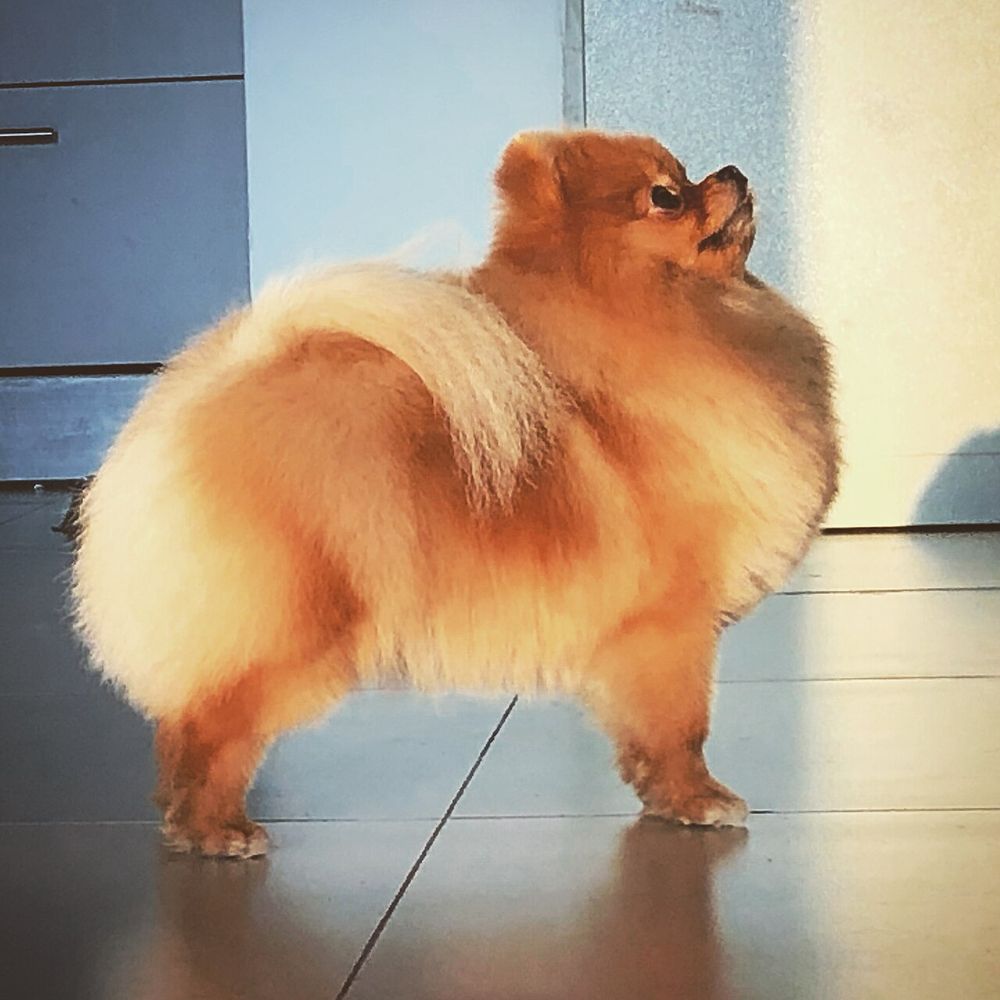
- Origin
- Germany (the smallest of the German Spitz family)Fédération Cynologique Internationale
- Adult weight
- 1.4 to 3.2 kg (AKC gives 3 to 7 pounds. The FCI standard asks only for a weight that suits the dog's size.)American Kennel Club
- Height
- 18 to 24 cm (FCI: 21 cm at the withers, give or take 3 cm. AKC gives 6 to 7 inches.)Fédération Cynologique Internationale
- Lifespan
- 12 to 16 yearsAmerican Kennel Club
- Coat
- Double coat: a long, straight, stand-off outer coat over a short, thick, cotton-wool-like undercoat, with a thick mane round the neck and shoulders.Fédération Cynologique Internationale
- Energy
- LowThe Royal Kennel Club
- Indian heat
- Copes with careScientific Reports (2020)study
- Flats
- Suits a flatThe Royal Kennel Club
Pomeranian snapshot
| What | The rule | Source |
|---|---|---|
| Size | Toy. AKC gives a height of 6 to 7 inches and a weight of 3 to 7 pounds. | American Kennel Club |
| Exercise need | Up to 30 minutes a day, says The Royal Kennel Club, which lists it as suited to a flat. | The Royal Kennel Club |
| Alone-time tolerance | Not scored by kennel clubs. AKC rates the breed high on its barking scale (4 of 5). PDSA's general limit for any dog is 4 hours alone. | American Kennel Club |
| Heat tolerance | No clear answer: in a large UK study the Pomeranian's odds of heat-related illness were 2.12 times the Labrador's, but the result was not statistically significant. | Scientific Reports (2020)study |
| Coat and shedding | Medium-length coat that sheds; groom more than once a week. The Royal Kennel Club calls it the smallest spitz. | The Royal Kennel Club |
| With other dogs | AKC places it in the middle of its scale (3 of 5) for getting on with other dogs. Size matters: protect it from rough play with big dogs. | American Kennel Club |
Where does the Pomeranian come from?
The Pomeranian is the toy member of the German Spitz family. The FCI standard, which Germany holds, traces the German Spitz back to the Stone Age "peat dogs" and the later lake-dwelling spitz of Central Europe, and calls it the oldest dog breed in Central Europe. In German-speaking countries the smallest size is the Zwergspitz, or Toy Spitz; elsewhere it is known as the Pomeranian.
The Royal Kennel Club calls it the smallest of the spitz breeds, developed from the German Spitz. It reached Britain in 1870 and became fashionable after Queen Victoria kept the breed and her dogs were shown in London, helped by its small, dainty looks and outgoing nature. The FCI describes it as attentive, lively and very attached to its owner, easy to train, and an ideal watchdog for a house or flat.
How did the Pomeranian come to India?
No source we found records when the Pomeranian first came to India, so its arrival is not documented. What is documented is that it is one of the commonest breeds in Indian cities today: when the Ahmedabad Municipal Corporation counted 19,756 registered pet dogs in August 2026, Pomeranians were the fifth most registered breed, with 1,138 dogs.
Its small size suits Indian flats, and The Royal Kennel Club rates it as suited to a flat with up to 30 minutes of exercise a day. The thick double coat and Indian summers are the main thing to plan for. In a large UK study the Pomeranian's odds of heat-related illness were about twice the Labrador's, though that result was not statistically certain, so walk it in the cool hours.
What care does a Pomeranian need?
The three things that shape a good day for this breed.
Exercise
Up to 30 minutes a day, says The Royal Kennel Club, in short walks and indoor play. In the hot months walk before sunrise and after dark, and test the pavement with your palm first. The Royal Kennel Club
Grooming
Brush more than once a week, right down to the undercoat (Royal Kennel Club). PDSA suggests regular brushing for heavy coats in hot weather; ask your vet or groomer before clipping a double coat. PDSA
Training
The FCI standard calls the Pomeranian very teachable and easy to train. Pick it up gently and stop jumps from sofas and arms: toy breeds break forelegs from small falls. Fédération Cynologique Internationale
How much should a Pomeranian eat?
Daily calories for a healthy, neutered adult Pomeranian, worked out from its weight with the formula vets use (70 x weight in kg to the power 0.75, then AAHA's factor for a neutered adult). Divide by the kcal per kg on your food's pack for grams a day, and adjust by body shape.
| Resting need (kcal a day) | Neutered adult (kcal a day) | |
|---|---|---|
| 1.4 kg AAHA (American Animal Hospital Association) | 90 | 130 to 140 |
| 2.3 kg | 130 | 180 to 210 |
| 3.2 kg | 170 | 230 to 270 |
Feed a complete and balanced dog food made for small breeds, or a home-cooked diet only if a vet nutritionist has formulated it: the Merck Veterinary Manual says nutrition problems come mostly from unbalanced home-made diets. A Pomeranian weighs only a few kilos, so a few extra biscuits or a share of roti is a large part of its day. Use the energy table below as a starting point and adjust with your vet using body condition, not the bag. Keep Indian kitchen foods that harm dogs out of reach: onion and garlic (in dal, curry and many snacks), grapes and raisins (in sweets and kheer), tamarind, chocolate, salty namkeen, anything sweetened with xylitol, and milk or chai, which upset many dogs' stomachs. VCA advises against leaving food out all day, which leads to weight gain. Meals a day: 6 to 12 weeks, 4 a day; 3 to 6 months, 3 a day; 6 to 12 months, 2 a day; adult, 2 a day. Puppies, kittens, working, pregnant and older animals need different amounts: ask your vet, or use Petym's food calculator.
Which illnesses is the Pomeranian prone to, and how are they treated?
The conditions veterinary studies and breed surveys most often report in the Pomeranian. Knowing the early signs means a vet sees it sooner.
See your vet first. This is general information from veterinary sources, not a diagnosis. Only a vet who has examined your pet can say what is wrong and prescribe treatment, and this page never gives a dose. Do not give your pet human medicine. If your pet seems very unwell, go to a 24-hour vet: find one in your city.
Slipping kneecap (patellar luxation)
See a vet soonThe kneecap slides out of its groove. In a study of English vet records, 6.5% of Pomeranians had it, the highest of any breed, with 6.5 times the odds of a crossbred dog. Canine Genetics and Epidemiology (2016), RVC VetCompassstudy
Signs to watch for
- Skipping on a back leg for a few steps, then walking normally
- Holding a back leg up or kicking it out
- Lameness that becomes more frequent
- Bow-legged back legs in a growing puppy
How a vet treats it
ACVS says a vet diagnoses it by feeling the kneecap move during an orthopaedic exam, with X-rays. Mild cases without signs are usually monitored; a vet may recommend surgery for higher grades, such as deepening the groove or realigning the bone the kneecap tendon attaches to.
Prevention
ACVS says affected dogs should not be bred. Keep your Pom lean.
Collapsing windpipe (tracheal collapse)
See a vet soonThe rings of the windpipe weaken and flatten. ACVS names Pomeranians among the small breeds most often affected, usually in middle age or later. American College of Veterinary Surgeons
Signs to watch for
- A harsh, dry, honking cough
- Coughing when picked up or when the collar is pulled
- Tiring easily on walks
- Turning blue or fainting when excited
How a vet treats it
A vet may use chest X-rays, fluoroscopy or endoscopy to see the airway. ACVS says medical management, which may include weight loss, medicines to reduce airway spasm and inflammation, sedation for coughing and antibiotics for infection, helps many dogs; some need rings or a stent placed by a surgeon.
Prevention
There is no known prevention, but ACVS says keeping weight down, avoiding smoke and using a body harness instead of a neck lead help.
Broken forelegs (radius and ulna fractures)
See a vet soonToy breeds such as the Pomeranian have thin forearm bones with little soft tissue and a poor blood supply, so a jump from a sofa or out of your arms can break them, and they heal slowly. Science for Animal Welfare (formerly UFAW)
Signs to watch for
- Sudden lameness on a front leg after a fall or jump
- Pain when the leg is touched
- Swelling or a bent look to the leg
How a vet treats it
A vet confirms the fracture on X-rays. Science for Animal Welfare says casts and splints often fail in toy breeds, so vets usually fix these fractures with surgery that holds the bones rigidly; a fracture that does not heal may need more surgery.
Prevention
Lift your Pom from the floor rather than letting it leap, and use ramps or steps for beds and sofas.
Heatstroke
Emergency: go to a vet nowPDSA lists thick-coated and long-haired dogs among those at higher risk. A Pomeranian's double coat holds heat in an Indian summer. PDSA
Signs to watch for
- Heavy panting and fast breathing
- Drooling, vomiting or diarrhoea
- Very red or very pale gums
- Weakness, confusion or collapse
How a vet treats it
PDSA calls it an emergency: cool the dog with cool, not icy, water and a breeze, then go straight to the vet, who cools the dog further and may give a fluid drip, oxygen and medicines to protect the organs.
Prevention
Walk only in the cool hours, give shade and water all day, and never leave a dog in a parked car.
How does a Pomeranian cope when you are away?
Usually well with a gentle sitter. The risks are falls, bigger dogs and noise.
A Pom's small size makes it easy to care for in a flat, and The Royal Kennel Club puts its exercise need at up to 30 minutes a day. The same small size makes it fragile. Science for Animal Welfare says all toy breeds, including the Pomeranian, are vulnerable to fractures of the lower forearm bones, that the commonest cause appears to be jumping or falling from a height, and that falls from an owner's arms are among the typical causes. These fractures can heal poorly, and the pain can last from days to months.
Poms are alert and many are vocal: AKC rates the breed high on its barking scale. PDSA lists barking, whining and howling among the signs of separation distress, and advises no more than 4 hours alone for any dog. In a housing society, a Pom yapping at every footstep in the corridor can become the neighbours' problem quickly, so plan company: a sitter at home, a sitter's home, or visits on long days.
Handling a tiny dog safely: rules for the sitter
Most Pom injuries a sitter can prevent happen at sofa height.
Do
- Lift with one hand under the chest and the other under the back end, and crouch down to put the dog on the floor.
- Use a ramp, a step, or simply lift the dog on and off sofas and beds, as the owner does at home.
- Use a harness, not a neck collar, on walks.
- Keep the dog away from rough play with big dogs at the park or in the society compound.
Don’t
- Do not let the dog jump off a sofa, bed or car seat. Science for Animal Welfare says jumping or falling from a height is the commonest cause of forearm fractures in toy breeds. Science for Animal Welfare (formerly UFAW)
- Do not let children carry the dog around or hold it standing up.
- Do not leave the balcony door open; a small dog fits through railings.
- Do not leave the dog loose near the main door when deliveries arrive.
Pomeranian health signs to report
The sitter notices, tells the owner and calls the vet. Go to a 24-hour vet for anything sudden or severe.
If Holding a front leg up, crying when it is touched, or a swollen forearm after a jump or a fall.
Keep the dog still, carry it supported in a box or bag, and go to the vet the same day. Do not try to straighten the leg. Science for Animal Welfare (formerly UFAW)
If Skipping or hopping for a few steps on a back leg, then walking normally. A sign of a slipping kneecap: Pomeranians had 6.5 times the odds of patellar luxation in an English study.
Note how often it happens and tell the owner so the vet can check it. Canine Genetics and Epidemiology (2016), RVC VetCompassstudy
If Heavy panting, drooling, weakness or collapse on a warm day or after play.
Possible heatstroke: shade, cool water poured gently over the body away from the face, a breeze, then the vet at once. PDSA
If Ate something it should not have: chocolate, grapes, raisins, a xylitol gum.
Call the vet straight away. In a dog this small, a small amount matters. ASPCA Animal Poison Control
If Fever, low energy or loss of appetite in a dog that has had ticks.
Call the vet the same day. Tick-borne infections are common in Indian dogs. Parasites & Vectors (2011)study
A Pomeranian's day with a sitter
Petym’s working from the official rules, no government publishes a total.
A sample plan for the hot months. Short walks, lots of company, a daily brush.
Early morning
A 15 minute walk on a harness while the ground is cool. Carry the dog across hot or busy stretches.
Breakfast
The measured meal from the owner's plan. Tiny dogs eat tiny portions, so measure carefully.
Mid-morning
Five to ten minutes of brushing, down to the skin, behind the ears, under the legs and the trousers.
Midday to afternoon
Indoors in the coolest room, with water, a bed on the floor and toys. Lift the dog on and off furniture.
Evening
A second short walk after sunset, or play indoors if it is still hot.
Night
Dinner, a final toilet trip and the daily photo update to the owner.
Pomeranian coat care through the Indian year
| Hot months (March to May) | Monsoon (June to September) | Cooler months (October to February) | |
|---|---|---|---|
| Brushing | Several times a week to clear loose coat | Daily, as damp coats mat fast | More than once a week |
| Trimming | Tidy only; never a full shave | Keep paws and the area under the tail tidy and dry | Tidy only |
| After walks | Check paws for hot-road redness | Towel and dry the coat to the skin | Quick tick check |
| Ticks | Part the coat and check daily | Check after every walk | Check after every walk |
Grooming frequency from The Royal Kennel Club; the no-shave advice from Texas A&M's veterinary college. The rest is Petym's practical plan.
Feeding a toy dog while you are away
In a dog that weighs 3 to 7 pounds, a few extra biscuits are a big share of the day's food. Measure every meal with the owner's spoon or cup, and count treats: WSAVA's nutrition committee suggests treats stay under about 10% of daily calories. Keep the same food as at home for the whole stay, since a sudden change of food can cause diarrhoea, and leave a few days' extra in case the trip runs long.
Keep human food out of reach. The ASPCA lists chocolate, grapes and raisins, onion and garlic, xylitol and salty snacks among foods that harm pets, and festival sweets in a low bowl are an easy target for a small dog. If your Pom is a fussy eater, tell the sitter what it usually refuses and when a missed meal should worry them.
Heat, coat and noise: India notes for a Pom
The UK heatstroke study did not give a clear answer for Pomeranians, but it found that dogs under 10 kg generally had lower odds than bigger dogs and that exercise was the main trigger. A Pom's fluffy coat still holds heat. Do not shave it: Texas A&M's veterinary college says a thick coat works as natural insulation and that shaving can make some dogs less tolerant of heat. Brush out loose coat instead, keep the dog in a cool room through the day, and walk early and late.
Ticks hide in a Pom's coat: part the hair with your fingers after every walk, checking ears, neck, armpits and between the toes, and use tweezers close to the skin. During Diwali, keep the dog in a closed inner room with the windows shut and some background sound; a small, frightened dog can slip out of a harness or through railings.
Pomeranian sitter checklist
- The no-jumping rule for sofas and beds, and where the ramp or step is.
- Harness and leash, and the balcony and door rules.
- Meal amounts in spoons or grams, times and the treat allowance.
- Brush, comb and the grooming routine.
- Barking triggers and what calms the dog.
- Tick prevention product and next due date.
- The vet's number and the nearest 24-hour vet on Petym's city list.
Which Petym service suits a Pomeranian?
A Pom is easy to host and usually prefers company to an empty flat.
Often the best fit
Pet boarding
Your Pom stays in a sitter's home that has passed Petym's video walk-through, inside its pet limit. Ask about big dogs in the home at the meet and greet.
Overnight pet sitting
The sitter stays in your home. Best for an older Pom, or one that barks or frets in new places.
Drop-in visits
For a short absence: feeding, a short walk, a brush and company.
Breeds with similar care needs to the Pomeranian
Going away soon? Tell us your dates.
A checked local sitter feeds, walks and keeps your pet company at home, follows your care sheet to the letter and sends a photo every day. Petym is opening city by city: send your dates and we will tell you when a sitter can take them.
- Meet your sitter first, free
- PAN-checked, first-aid trained
- A photo every day
- Pay through Petym, never cash


Questions owners ask
How long can a Pomeranian be left alone?
- PDSA's general advice for any dog is no more than 4 hours at a time. Pomeranians are alert, often vocal companions, and AKC rates the breed high for barking, so long spells alone in a flat often mean barking the neighbours hear. Plan a sitter, a sitter's home or visits for longer absences.
Should I shave my Pomeranian in summer?
- No. Texas A&M's veterinary college says a thick coat works as natural insulation that helps a dog regulate its temperature, and that shaving can make some dogs less tolerant of heat and change how the coat grows back. Brush often and tidy the paws and rear instead.
Why do Pomeranians break their legs so easily?
- Science for Animal Welfare says toy breeds, including the Pomeranian, are vulnerable to fractures of the lower forearm bones, which are weak for their body size. The commonest cause appears to be jumping or falling from a height, including from an owner's arms. Lift the dog on and off furniture.
How much exercise does a Pomeranian need?
- Up to 30 minutes a day, according to The Royal Kennel Club. In Indian heat that means two short walks in the early morning and after sunset, on a harness, plus play indoors. Carry the dog across hot or crowded stretches rather than letting it walk on hot roads.
Do Pomeranians suffer in Indian heat?
- They can. A large UK study found Pomeranians had 2.12 times a Labrador's odds of heat-related illness, though that result was not statistically significant, and small dogs generally had lower odds. Keep a Pom in a cool room through the day, brush out loose coat and walk only in the cool hours.
What is a slipping kneecap in a Pomeranian?
- Patellar luxation, where the kneecap slips out of place, often shows as a few hopping steps on a back leg. Pomeranians had 6.5 times the odds of it in an English vet-practice study. A sitter should note how often it happens and tell the owner, who can ask the vet.
Is a sitter's home safe for a Pomeranian?
- It can be, if the home suits a toy dog: no rough play with big dogs, a closed balcony, and someone who lifts the dog on and off furniture. Petym's free meet and greet is the time to ask about the other pets in the home and the pet limit.
Keep reading
Services that help
Free tools for this
Words on this page, explained
Keep exploring
Other dog breeds
- Akita
- Alaskan Malamute
- American Bully
- American Cocker Spaniel
- American Pit Bull Terrier
- Australian Shepherd
- Bakharwal dog
- Basset Hound
- Beagle
- Belgian Malinois
- Bernese Mountain Dog
- Bichon Frise
- Border Collie
- Boston Terrier
- Boxer
- Bull Terrier
- Bulldog
- Bullmastiff
- Cane Corso
- Caucasian Shepherd Dog
- Cavalier King Charles Spaniel
- Chihuahua
- Chippiparai
- Chow Chow
- Cocker Spaniel
- Dachshund
- Dalmatian
- Dobermann
- Dogo Argentino
- English Mastiff
- English Springer Spaniel
- French Bulldog
- Gaddi Kutta (Gaddi dog)
- German Shepherd
- Golden Retriever
- Great Dane
- Greyhound
- Havanese
- Indian pariah dog (Indie)
- Indian Spitz
- Irish Setter
- Jack Russell Terrier
- Kangal
- Kanni
- Kombai
- Labrador Retriever
- Lhasa Apso
- Maltese
- Miniature Pinscher
- Miniature Schnauzer
- Mudhol Hound
- Neapolitan Mastiff
- Newfoundland
- Papillon
- Pekingese
- Pembroke Welsh Corgi
- Poodle
- Pug
- Rajapalayam
- Rampur Greyhound
- Rhodesian Ridgeback
- Rottweiler
- Saint Bernard
- Samoyed
- Shar Pei
- Shiba Inu
- Shih Tzu
- Siberian Husky
- Tibetan Mastiff
- Weimaraner
- West Highland White Terrier
- Whippet
- Yorkshire Terrier
Sources
Each source was opened and read on the date shown. How Petym checks its sources
- Fédération Cynologique Internationale: FCI standard No. 97: German Spitz, including Toy Spitz/Pomeranian (20 September 2024, PDF) (opens in a new tab)
- American Kennel Club: Pomeranian dog breed information (opens in a new tab)
- The Royal Kennel Club: Pomeranian: breed information (opens in a new tab)
- PDSA: Heatstroke in dogs (opens in a new tab)
- Science for Animal Welfare (formerly UFAW): Pomeranian: distal fractures of the radius and ulna (opens in a new tab)
- Merck Veterinary Manual: Nutritional requirements of small animals (full review November 2023, updated September 2024) (opens in a new tab)
Show all 23 sourcesShow fewer
- Merck Veterinary Manual: Puppy care (opens in a new tab)
- VCA Animal Hospitals: Feeding times and frequency for your dog (opens in a new tab)
- ASPCA Animal Poison Control: People foods to avoid feeding your pets (opens in a new tab)
- Merck Veterinary Manual: Grape, raisin, and tamarind (Vitis spp, Tamarindus spp) toxicosis in dogs (full review September 2024) (opens in a new tab)
- AAHA (American Animal Hospital Association): 2021 AAHA Nutrition and Weight Management Guidelines for Dogs and Cats: energy requirement calculations (Box 1, PDF) (opens in a new tab)
- American College of Veterinary Surgeons: Patellar Luxation (Dislocating Kneecap) in Dogs | ACVS (opens in a new tab)
- American College of Veterinary Surgeons: Tracheal Collapse (opens in a new tab)
- Science for Animal Welfare (formerly UFAW): Pomeranian: genetic welfare problems (opens in a new tab)
- PDSA: Separation anxiety in dogs (opens in a new tab)
- Texas A&M College of Veterinary Medicine (Pet Talk, 16 June 2022): Time for a summer cut? Tips for warm weather dog grooming (opens in a new tab)
- WSAVA: Frequently asked questions and myths (Global Nutrition Committee) (opens in a new tab)
- PDSA: Diarrhoea after a change of food (opens in a new tab)
- Merck Veterinary Manual: Ticks of dogs (opens in a new tab)
- Scientific Reports (2020): Incidence and risk factors for heat-related illness in UK dogs (opens in a new tab)
- Canine Genetics and Epidemiology (2016), RVC VetCompass: The epidemiology of patellar luxation in dogs attending primary-care veterinary practices in England (opens in a new tab)
- Parasites & Vectors (2011): A survey of canine tick-borne diseases in India (opens in a new tab)
- Telangana Today (IANS): Ahmedabad registers nearly 20,000 pet dogs; Labradors remain the city's most popular breed (5 Aug 2026) (opens in a new tab)