English Mastiff care in India: heat, drool and notes for your sitter
Updated By PetymFacts checked against official sources on
Quick answer
An English Mastiff copes well with a sitter who can physically manage a dog heavier than many adults. The AKC calls it docile and dignified but a formidable protector, and warns that Mastiffs tend to lie down on walks when tired or overheated. Keep walks short and cool, meals measured, and the 24-hour vet's number ready for bloat.
Heavy dogs face higher heat risk: in a large UK study, dogs over 50 kg were at greater risk of heat-related illness.
- Meet your sitter first, free
- PAN-checked, first-aid trained
- A photo every day
- Pay through Petym, never cash

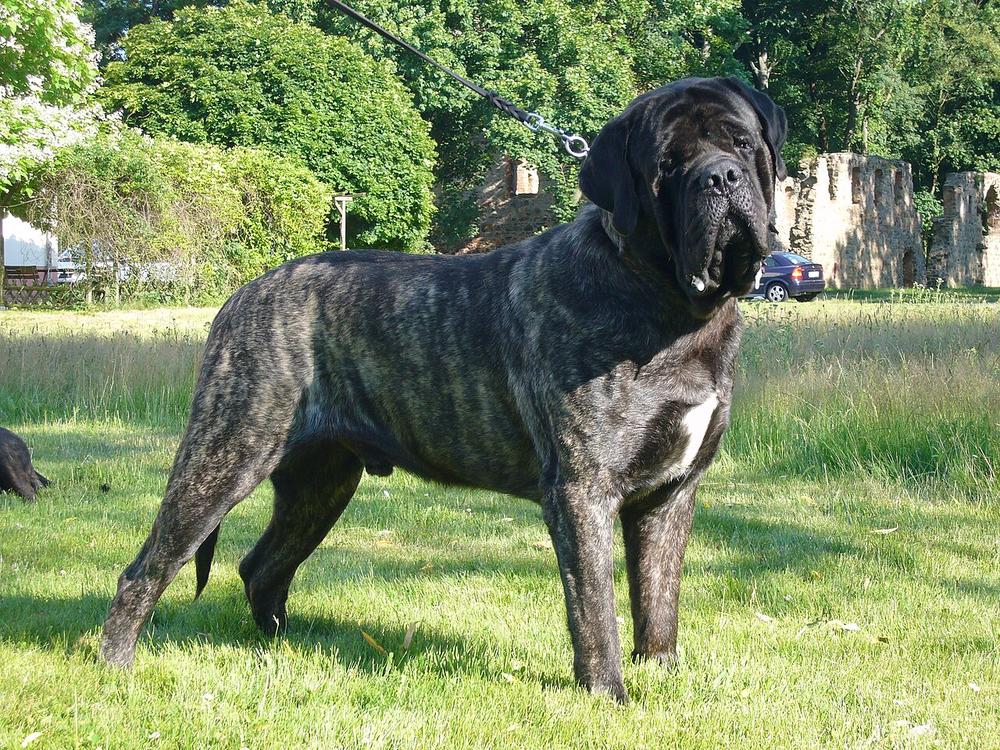
- Origin
- Great BritainFédération Cynologique Internationale
- Adult weight
- 54 to 104 kg (adult, from the AKC's 160 to 230 lb for males and 120 to 170 lb for females; the FCI and Royal Kennel Club give no weight)American Kennel Club
- Lifespan
- 6 to 10 yearsAmerican Kennel Club
- Coat
- Short and close-lying, coarse over the neck and shoulders; apricot, fawn or brindle with a black mask. It sheds heavily once or twice a year, and Mastiffs drool.Fédération Cynologique Internationale
- Energy
- LowAmerican Kennel Club
- Indian heat
- Struggles in heatScientific Reports (2020)study
- Flats
- A flat, with daily exerciseAmerican Kennel Club
English Mastiff snapshot
| What | The rule | Source |
|---|---|---|
| Size | Giant. The AKC gives at least 30 inches at the shoulder and 160 to 230 pounds (about 73 to 104 kg) for males, 120 to 170 pounds for females. | American Kennel Club |
| Exercise need | Up to 1 hour a day, says The Royal Kennel Club. The AKC suggests daily walks of a mile or two for adults. | The Royal Kennel Club |
| Temperament | Docile, dignified and good-natured, protective of family, with a natural wariness of strangers (AKC). | American Kennel Club |
| Coat and drool | Short coat, groom once a week (Royal Kennel Club). The AKC rates drooling 4 out of 5. | The Royal Kennel Club |
| Lifespan | Under 10 years (Royal Kennel Club); the AKC gives 6 to 10 years. | The Royal Kennel Club |
| Heat risk | Dogs over 50 kg were at greater risk of heat-related illness in a UK study of 905,543 dogs; every adult Mastiff is in that band. | Scientific Reports (2020)study |
Where does the English Mastiff come from?
The FCI standard, which gives Great Britain as the country of origin, says mastiff-type dogs have been in Britain for many hundreds of years and were known for courage and guarding well before the Battle of Agincourt in the early 15th century. It records that the invading Romans found a mastiff type already in Britain and took some back to fight in the arenas of Rome.
The Royal Kennel Club says these dogs were valued for their size, strength and courage and used for guarding, gamekeeping, wolf hunting and baiting. The ban on fighting pits in 1835 threatened the breed's future, and after the Second World War numbers fell so low that North American bred dogs were needed to revive it. The FCI likewise says imported stock rebuilt the breed in Britain after the war.
The AKC, which recognised the breed in 1885, describes a massive, heavy-boned dog of courage and great strength, docile and dignified but a formidable protector of its family. The FCI lists its use today as a watch and security dog.
How did the English Mastiff come to India?
No source we could find records when the English Mastiff first came to India. Its legal position here is unclear rather than banned. The Department of Animal Husbandry and Dairying's letter of 12 March 2024, as reproduced in Municipal Corporation Gurugram's order of 23 June 2026, lists "Mastiffs (Boerbulls)" without naming the English Mastiff. The Delhi High Court set that circular aside on 16 April 2024, recording that the Karnataka High Court had quashed it on 10 April 2024.
For daily life in India the bigger questions are heat and size. In a large UK study, dogs over 50 kg were at greater risk of heat-related illness, and every adult Mastiff is in that band, so summer life is indoors in a cool room with walks at dawn and after dark.
What care does a English Mastiff need?
The three things that shape a good day for this breed.
Exercise
The AKC says Mastiffs have comparatively low exercise needs and can live happily in an apartment, with free play and daily walks of a mile or two for adults; The Royal Kennel Club gives up to an hour a day. Do not let a growing puppy run up and down stairs or over-exercise. American Kennel Club
Grooming
A quick brush every few days, more often with a toothed comb during the heavy shed once or twice a year. Clean the ears and the deep wrinkles around the head and muzzle, keep the nails short, and keep a cloth for drool (AKC). The Royal Kennel Club
Training
The AKC calls obedience training and early socialisation musts. Mastiffs learn quickly and want to please but bore of repetition, so use praise and rewards in several short sessions: raising your voice can easily hurt their feelings. American Kennel Club
How much should a English Mastiff eat?
Daily calories for a healthy, neutered adult English Mastiff, worked out from its weight with the formula vets use (70 x weight in kg to the power 0.75, then AAHA's factor for a neutered adult). Divide by the kcal per kg on your food's pack for grams a day, and adjust by body shape.
| Resting need (kcal a day) | Neutered adult (kcal a day) | |
|---|---|---|
| 54 kg AAHA (American Animal Hospital Association) | 1390 | 1950 to 2230 |
| 79 kg | 1850 | 2600 to 2970 |
| 104 kg | 2280 | 3190 to 3650 |
The AKC says proper nutrition is critical for a rapidly growing giant breed through puppyhood and up to two years of age, with slow, steady growth; a diet that is too rich in calories or has the wrong calcium and phosphorus balance makes Mastiff puppies prone to skeletal disorders. Ask your vet to choose a complete and balanced large or giant breed puppy food, and ask the vet before adding any supplement. Feed scheduled meals rather than leaving food out, which the AKC says helps avoid excessive weight gain, and split the day's food into two or three meals because ACVS lists giant, deep-chested dogs fed one large meal as at risk of bloat. From the Indian kitchen, keep onion, garlic, grapes, chocolate, chai and coffee away from the dog. Meals a day: puppy to 12 weeks, 4 a day; 3 to 6 months, 3 a day; 6 months to 2 years, 2 to 3 a day, on a growth plan from your vet; adult, 2 to 3 a day, not one large meal. Puppies, kittens, working, pregnant and older animals need different amounts: ask your vet, or use Petym's food calculator.
Which illnesses is the English Mastiff prone to, and how are they treated?
The conditions veterinary studies and breed surveys most often report in the English Mastiff. Knowing the early signs means a vet sees it sooner.
See your vet first. This is general information from veterinary sources, not a diagnosis. Only a vet who has examined your pet can say what is wrong and prescribe treatment, and this page never gives a dose. Do not give your pet human medicine. If your pet seems very unwell, go to a 24-hour vet: find one in your city.
Bloat (gastric dilatation-volvulus)
Emergency: go to a vet nowThe stomach suddenly fills with gas and often twists. The AKC warns that Mastiffs can get it, and ACVS lists large and giant, deep-chested dogs as at risk. American College of Veterinary Surgeons
Signs to watch for
- Restlessness and pacing
- Retching without bringing anything up
- More drooling than usual and a swollen, tight belly
- Weakness or collapse
How a vet treats it
An emergency. Vets stabilise the dog with intravenous fluids and oxygen, release the gas with a stomach tube, then operate to untwist the stomach and stitch it to the body wall (gastropexy).
Prevention
Two or three smaller meals a day. ACVS says many surgeons recommend a preventive gastropexy for at-risk breeds, which can be done during spay or neuter surgery.
Hip and elbow dysplasia
See a vet soonAbnormal development of the hip or elbow joints, leading to arthritis. The AKC lists hip and elbow dysplasia for the Mastiff and links fast growth on the wrong diet to skeletal disorders. Merck Veterinary Manual
Signs to watch for
- Lameness that is worse after exercise
- A bunny-hopping gait or stiffness on rising
- Reluctance to climb stairs or get into a car
How a vet treats it
A vet diagnoses it on x-rays. The Merck Veterinary Manual lists weight control, less exercise on hard surfaces, physical therapy and anti-inflammatory drugs prescribed by the vet, and surgery up to total hip replacement for some dogs.
Prevention
Parents screened for hips and elbows, slow controlled growth on a giant breed puppy diet, a lean adult and no stairs or jumping for a growing puppy.
Cystinuria and cystine bladder stones
Emergency: go to a vet nowAn inherited kidney defect lets too much cystine into the urine, where it forms stones. The Merck Veterinary Manual names Mastiffs among affected breeds, and most cystine stones come from young, unneutered males; the AKC notes it in intact males. Merck Veterinary Manual
Signs to watch for
- Straining to pee or passing only small amounts
- Blood in the urine
- A male dog unable to pass urine at all
How a vet treats it
A vet uses urine tests and x-rays or ultrasound. Merck describes dissolving cystine stones with a prescription low-protein, alkalinising diet and a cystine-binding medicine, and recommends neutering affected males because some cases depend on male hormones. A dog that cannot pee needs a vet at once.
Prevention
Stones often come back, so the vet plans long-term diet and urine checks.
Heatstroke
Emergency: go to a vet nowPDSA lists giant breeds among the dogs most at risk, and a UK study found dogs over 50 kg at greater risk of heat-related illness. The AKC notes that Mastiffs tend to lie down on walks when tired or overheated. PDSA
Signs to watch for
- Heavy panting and fast breathing
- Drooling, bright red or very pale gums
- Lying down and refusing to move, weakness or collapse
How a vet treats it
Move the dog into shade, pour cool water over the body and go to a vet at once. PDSA says vets cool the dog, may give a fluid drip, oxygen and medicines to protect the organs, and run blood tests.
Prevention
Walks only at dawn and after dark in summer, a cool room through the day and a lean body weight.
Elbow hygromas
Ask at a routine checkThe AKC says fluid-filled cushions over the elbows are common in Mastiffs that lie on hard surfaces, and calls them harmless natural cushions. American Kennel Club
Signs to watch for
- A soft, painless swelling over the point of the elbow
How a vet treats it
The AKC advises not letting the vet drain them. Show any swelling to your vet so they can confirm what it is.
Prevention
A thick, soft bed instead of a hard floor.
How an English Mastiff takes to a sitter
Usually calmly, once introduced. The real question is whether the sitter can handle the size.
The AKC describes Mastiffs as patient, loyal companions and guardians who take best to gentle training, protective of family and naturally wary of strangers. It rates them 5 out of 5 for affection with family and for protective nature, and 3 out of 5 for openness to strangers. That suggests a dog that will watch a new sitter closely at first and relax once it sees you trust them.
Petym's free meet and greet is the place to test the practical side. Can the sitter hold the dog on the leash if it decides to stop, sit down or pull towards a cat? Can they help it into a car or up a step if it is old or stiff? Will they be firm but quiet: the AKC says raising your voice can easily hurt a Mastiff's feelings. Let the sitter feed one meal and walk a short loop with you beside them.
PDSA's general advice is that no dog should be alone for more than 4 hours at a time. A bored giant can still chew a door frame, and a deep bark at the door carries through a whole housing society.
The English Mastiff by the numbers
Kennel club figures that shape a sitter's day.
30 inches
minimum shoulder height for a male (AKC); females 27.5 inches American Kennel Club
230 lb
upper end of the AKC's weight range for males, about 104 kg American Kennel Club
1 hour
daily exercise, at most, in The Royal Kennel Club's guide The Royal Kennel Club
4 of 5
the AKC's drooling score: keep a towel by the water bowl American Kennel Club
A hot-season day for an English Mastiff
Petym’s working from the official rules, no government publishes a total.
A sample plan a sitter can follow from March to June. A Mastiff should never be pushed in the heat.
Just after sunrise
A slow 20 to 30 minute walk on soil or grass. The AKC's rule of thumb: do not walk a Mastiff farther than you can carry it back.
After the walk
Water, a rest on a cool floor, then breakfast once breathing is calm. Wipe the jowls.
Mid-morning
Gentle training or a chew in the coolest room.
Midday to 5 pm
Indoors with a fan or AC. Toilet breaks only on shaded ground; test the road with the back of a hand. The Royal Kennel Club
After dark
The second short walk once the road has cooled, then dinner and a quiet evening.
Before bed
A last toilet break, water topped up, and the daily photo update to the owner.
English Mastiff health signs a sitter must not ignore
Some are emergencies. A sitter notices, calls the owner and goes to the vet; a sitter never diagnoses.
If Restless pacing, retching with nothing coming up, drooling more than usual, and a swollen, tight belly, often after a meal. The AKC warns that Mastiffs can get bloat, where the stomach swells and often twists.
An emergency: go to the nearest 24-hour vet immediately and call the owner on the way. American Kennel Club
If Collapse, heavy panting that will not settle, or the dog lying down and refusing to move on a warm walk.
Stop, get it into shade, pour cool water over its body and call the vet. Heatstroke can follow fast in a heavy dog. PDSA
If Limping, stiffness after rest or trouble rising. The Royal Kennel Club asks Mastiff breeders to screen hips and elbows for dysplasia.
Soft bedding, short walks on soft ground, and a call to the vet. The Royal Kennel Club
If Straining or dribbling urine, or blood in it, especially in an unneutered male. The AKC says cystinuria can cause kidney stones in intact males.
Call the vet the same day; a dog that cannot pass urine needs a vet at once. American Kennel Club
If Soft, fluid swellings on the elbows. The AKC says these hygromas, harmless cushions that protect the elbows on hard surfaces, are common.
Tell the owner and give thicker bedding; do not squeeze them. The AKC advises against having them drained. American Kennel Club
If A lump, a limp that comes and goes, or a swollen leg. The AKC lists bone cancer among the breed's possible problems.
Report it to the owner and the vet rather than waiting. American Kennel Club
Handling a Mastiff in a flat and society
Do
- Use a strong collar or harness and a short leash in lifts and lobbies, and wait for an empty lift.
- Split food into the meals the owner uses. The American College of Veterinary Surgeons lists one large meal a day and fast eating among bloat risk factors. American College of Veterinary Surgeons
- Keep the dog lean and treats under about 10% of daily calories. WSAVA
- Give a thick bed or mattress to cushion the elbows; the AKC notes hygromas, fluid cushions over the elbows of dogs lying on hard surfaces, are common. American Kennel Club
Don’t
- Do not let a Mastiff puppy run up and down stairs or jump from heights; the AKC warns against overtaxing growing joints. American Kennel Club
- Do not exercise hard just before or after a meal.
- Do not shout: the AKC says Mastiffs respond to praise and gentle handling. American Kennel Club
- Do not feed onion, garlic, grapes, raisins, chocolate or xylitol. ASPCA Animal Poison Control
Is the English Mastiff on India's 2024 list of dangerous breeds?
The list has an entry for "Mastiffs (Boerbulls)". Whether that covers the English Mastiff is not spelled out.
The Department of Animal Husbandry and Dairying's letter of 12 March 2024 to all states listed breeds that an expert committee called ferocious and dangerous for human life. Municipal Corporation Gurugram's order of 23 June 2026 reproduces the list, and its only mastiff entry reads "Mastiffs (Boerbulls)". It does not name the English Mastiff, so a local body could read it either way.
The Delhi High Court set the 2024 circular aside on 16 April 2024 after the government agreed to consult stakeholders, and its order records that the Karnataka High Court had quashed it on 10 April 2024. Petym found no fresh national notification by 21 October 2026. Gurugram's order still requires listed breeds to be registered and walked on a leash, chain lead and muzzle. Check with your own corporation, and see Petym's page on banned dog breeds in India.
English Mastiff sitter checklist
- The dog's weight, and whether the sitter can lift or steady it if it stumbles.
- Bloat signs, the nearest 24-hour vet, and how to get a giant dog into a vehicle in an emergency. American College of Veterinary Surgeons
- Number of meals, portions, times and the treat allowance.
- Towels for drool, and the brush the owner uses.
- Any joint or urinary medicines, logged at each dose exactly as the vet's label says.
- Society rules, lift etiquette and the safest walking times.
- Vaccination card and tick prevention dates.
Which Petym service fits an English Mastiff?
If Your Mastiff is protective at home or wary of strangers
Overnight pet sitting in your home, with one sitter it has met and no visiting dogs. Overnight sitting
If You work long days
Dog walking in the cool hours, short and slow, with a walker who can manage the size. Dog walking
If Your dog is old, stiff or on a joint plan
Special-needs pet care, with the vet's plan followed and logged. Special-needs care
Breeds with similar care needs to the English Mastiff
Going away soon? Tell us your dates.
A checked local sitter feeds, walks and keeps your pet company at home, follows your care sheet to the letter and sends a photo every day. Petym is opening city by city: send your dates and we will tell you when a sitter can take them.
- Meet your sitter first, free
- PAN-checked, first-aid trained
- A photo every day
- Pay through Petym, never cash


Questions owners ask
Can an English Mastiff live in a flat in India?
- The AKC says Mastiffs have comparatively low exercise needs and can live happily in an apartment, with daily walks and free play. In India, add a cool room for summer, a lift that fits the dog, a thick bed for its elbows, and neighbours who will not mind a deep bark.
How does an English Mastiff handle Indian heat?
- Carefully. In a large UK study, dogs over 50 kg were at greater risk of heat-related illness, and the AKC says Mastiffs often lie down on walks when tired or overheated. Walk only at dawn and after dark in summer, keep the dog lean and indoors through the day.
What is bloat, and why does it matter for a Mastiff?
- Bloat is when the stomach fills with gas and can twist, cutting off blood supply. The AKC says Mastiffs can get it, and the American College of Veterinary Surgeons says it needs a vet immediately. Signs include retching with nothing coming up, restlessness and a swollen belly.
How long do English Mastiffs live?
- The Royal Kennel Club lists a lifespan of under 10 years and the AKC gives 6 to 10 years. That makes regular vet check-ups, a healthy weight and early reporting of limps, lumps or breathing changes especially important.
How long can an English Mastiff be left alone?
- PDSA's general advice is no more than four hours at a time for any dog. A Mastiff is a calm house dog but very attached to its family, so on longer days arrange a walker or a sitter rather than a full day alone.
Is the English Mastiff banned in India?
- Petym found no national ban in force on 21 October 2026. The March 2024 central letter listed "Mastiffs (Boerbulls)" without naming the English Mastiff, and two High Courts struck it down in April 2024. Some local bodies regulate listed breeds, so check your corporation's rules.
Do English Mastiffs drool a lot?
- Yes. The AKC rates the breed 4 out of 5 for drooling and says most owners keep cloths at hand. Leave towels near the water bowl and the door for your sitter, and ask them to wipe the jowls and the skin folds around the face regularly.
Keep reading
Services that help
Free tools for this
Words on this page, explained
Keep exploring
Other dog breeds
- Akita
- Alaskan Malamute
- American Bully
- American Cocker Spaniel
- American Pit Bull Terrier
- Australian Shepherd
- Bakharwal dog
- Basset Hound
- Beagle
- Belgian Malinois
- Bernese Mountain Dog
- Bichon Frise
- Border Collie
- Boston Terrier
- Boxer
- Bull Terrier
- Bulldog
- Bullmastiff
- Cane Corso
- Caucasian Shepherd Dog
- Cavalier King Charles Spaniel
- Chihuahua
- Chippiparai
- Chow Chow
- Cocker Spaniel
- Dachshund
- Dalmatian
- Dobermann
- Dogo Argentino
- English Springer Spaniel
- French Bulldog
- Gaddi Kutta (Gaddi dog)
- German Shepherd
- Golden Retriever
- Great Dane
- Greyhound
- Havanese
- Indian pariah dog (Indie)
- Indian Spitz
- Irish Setter
- Jack Russell Terrier
- Kangal
- Kanni
- Kombai
- Labrador Retriever
- Lhasa Apso
- Maltese
- Miniature Pinscher
- Miniature Schnauzer
- Mudhol Hound
- Neapolitan Mastiff
- Newfoundland
- Papillon
- Pekingese
- Pembroke Welsh Corgi
- Pomeranian
- Poodle
- Pug
- Rajapalayam
- Rampur Greyhound
- Rhodesian Ridgeback
- Rottweiler
- Saint Bernard
- Samoyed
- Shar Pei
- Shiba Inu
- Shih Tzu
- Siberian Husky
- Tibetan Mastiff
- Weimaraner
- West Highland White Terrier
- Whippet
- Yorkshire Terrier
Sources
Each source was opened and read on the date shown. How Petym checks its sources
- Fédération Cynologique Internationale: FCI standard No. 264: Mastiff (brief historical summary, coat) (opens in a new tab)
- American Kennel Club: Mastiff: dog breed information (opens in a new tab)
- The Royal Kennel Club: Mastiff: breeds A to Z (opens in a new tab)
- Municipal Corporation Gurugram: Office order on registration and control of pet dogs (23 June 2026) (opens in a new tab)
- High Court of Delhi (order downloaded from the court's server, hosted by LiveLaw): Sikander Singh Thakur v. Union of India, W.P.(C) 4374/2024 and connected matters, order of 16 April 2024 (opens in a new tab)
- WSAVA Global Nutrition Committee: Guidelines on selecting pet foods (updated 10 March 2021) (opens in a new tab)
Show all 18 sourcesShow fewer
- American College of Veterinary Surgeons: Gastric dilatation-volvulus (opens in a new tab)
- ASPCA Animal Poison Control: People foods to avoid feeding your pets (opens in a new tab)
- Merck Veterinary Manual: Puppy care (opens in a new tab)
- AAHA (American Animal Hospital Association): 2021 AAHA Nutrition and Weight Management Guidelines for Dogs and Cats: energy requirement calculations (Box 1, PDF) (opens in a new tab)
- Merck Veterinary Manual: Nutritional requirements of small animals (full review November 2023, updated September 2024) (opens in a new tab)
- Merck Veterinary Manual: Hip dysplasia (dog owners) (opens in a new tab)
- Merck Veterinary Manual: Urolithiasis in dogs (cystine and urate stones) (opens in a new tab)
- PDSA: Heatstroke in dogs (opens in a new tab)
- PDSA: Separation anxiety in dogs (opens in a new tab)
- The Royal Kennel Club: The danger of hot pavements (opens in a new tab)
- WSAVA: Frequently asked questions and myths (Global Nutrition Committee) (opens in a new tab)
- Scientific Reports (2020): Incidence and risk factors for heat-related illness in UK dogs (opens in a new tab)