Poodle care while you are away: toy, miniature and standard
Updated By PetymFacts checked against official sources on
Quick answer
Poodles of all three sizes usually cope well with a sitter who keeps their routine, gives them something to think about and keeps up daily grooming. The sitter must brush the coat daily, walk in the cool hours, and call the vet for vomiting, weakness or collapse, which in a stressed Poodle can mean more than an upset stomach.
The Royal Kennel Club gives all three Poodles up to an hour of exercise and daily grooming, and lists none as shedding. UFAW notes that Addison's disease, listed in the Standard Poodle, can worsen when a dog is stressed, for example by kennelling.
- Meet your sitter first, free
- PAN-checked, first-aid trained
- A photo every day
- Pay through Petym, never cash

- Origin
- Western Europe: the FCI standard gives France, The Royal Kennel Club says GermanyFédération Cynologique Internationale
- Adult weight
- 1.8 to 31.8 kg (Across all three sizes, from AKC: Toy 4 to 6 pounds, Miniature 10 to 15 pounds, Standard 40 to 50 pounds (females) and 60 to 70 pounds (males). Use your own dog's size row.)American Kennel Club
- Height
- 23 to 62 cm (FCI: Toy over 24 cm (with 1 cm tolerance) to 28 cm, Miniature 28 to 35 cm, Medium 35 to 45 cm, Standard 45 to 60 cm (with 2 cm tolerance).)Fédération Cynologique Internationale
- Lifespan
- 10 to 18 yearsAmerican Kennel Club
- Coat
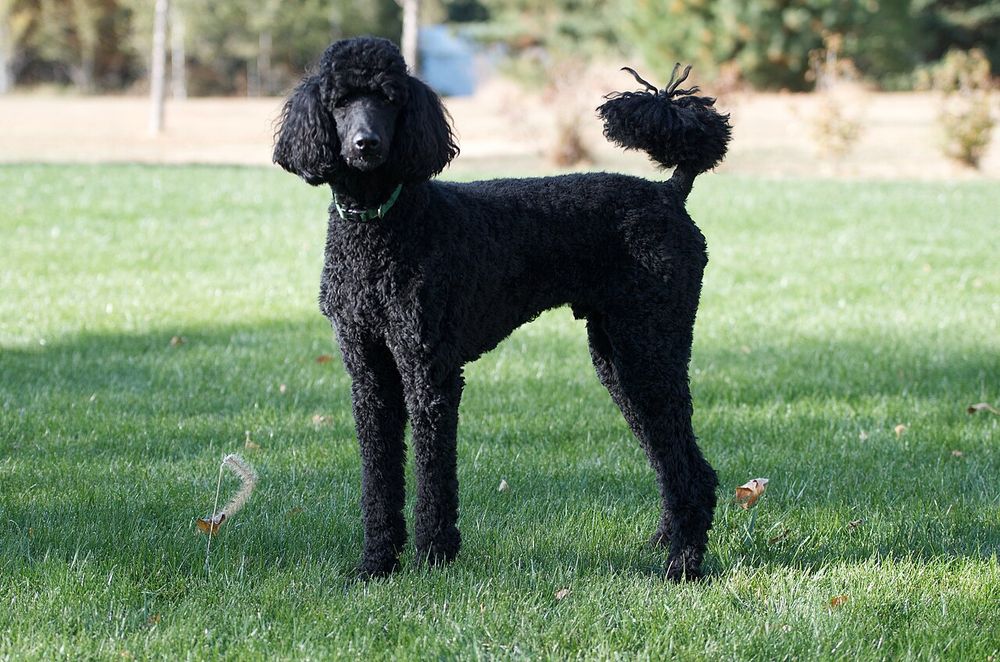
- A frizzy coat that is either curly or corded. The Royal Kennel Club lists it as non-shedding and needing grooming every day.Fédération Cynologique Internationale
- Energy
- ModerateThe Royal Kennel Club (UK)
- Indian heat
- Copes with carePDSA
- Flats
- A flat, with daily exerciseThe Royal Kennel Club (UK)
Poodle care snapshot
| What | The rule | Source |
|---|---|---|
| Size | Toy: small, suited to a flat. Miniature: small to medium, a small house. Standard: medium, a large house (Royal Kennel Club). | The Royal Kennel Club (UK) |
| Exercise need | Up to 1 hour a day for all three sizes (Royal Kennel Club). | The Royal Kennel Club (UK) |
| Alone-time tolerance | Not rated by kennel clubs. PDSA advises no more than 4 hours alone for any dog. | PDSA |
| Heat tolerance | Described in words only: not a flat-faced breed. Thick coats need regular brushing in heat, and PDSA suggests considering clipping a heavy coat. | PDSA |
| Shedding and coat | Medium-length coat that the Royal Kennel Club lists as non-shedding for all three sizes, with grooming every day. | The Royal Kennel Club (UK) |
| Sociability with other dogs | Described in words only: a "glamorous, intelligent breed descended from European duck hunters". Ask the owner how this dog behaves with others. | The Royal Kennel Club (UK) |
Where does the Poodle come from?
The Poodle began as a water dog for wildfowlers. The FCI standard, held by France, says the French name "caniche" comes from "cane", a female duck, that the dog descends from the Barbet, and that the two were gradually separated after 1743. The Royal Kennel Club places its origin in Germany, where it was a water retriever for duck hunters, and says the famous trim was practical: the hindquarters were clipped to help it swim, with hair left on the joints and tail tip for warmth.
It became a companion dog, the FCI says, for its friendly, joyful and loyal character and the choice of sizes and colours. The FCI recognises four sizes (Toy, Miniature, Medium and Standard); The Royal Kennel Club and AKC recognise three (Toy, Miniature and Standard) under one breed standard. The FCI describes a dog renowned for its loyalty and its capacity to learn and be trained.
How did the Poodle come to India?
No source we found records how or when the Poodle came to India, so its arrival is not documented, and we found no Indian registration count for the breed. In India its size matters most: The Royal Kennel Club rates the Toy as suited to a flat, the Miniature to a small house and the Standard to a large house, with up to an hour of exercise a day for all three.
The thick, curly coat needs daily care in humid monsoon weather and heat. PDSA lists thick-coated dogs among those at higher risk of heatstroke and suggests regular brushing or clipping for heavy coats; talk to your vet or groomer about a summer trim.
What care does a Poodle need?
The three things that shape a good day for this breed.
Exercise
Up to 1 hour a day for all three sizes (Royal Kennel Club). Walk early and late in summer, and add retrieving or scent games indoors on hot days. The Royal Kennel Club (UK)
Grooming
Daily brushing to stop mats forming at the skin, and a regular clip; The Royal Kennel Club lists grooming every day. PDSA suggests clipping heavy coats in hot weather. The Royal Kennel Club (UK)
Training
The FCI standard describes a loyal dog that learns readily and is easily trained. Short, regular sessions with rewards keep a clever Poodle busy and out of mischief. PDSA
How much should a Poodle eat?
Daily calories for a healthy, neutered adult Poodle, worked out from its weight with the formula vets use (70 x weight in kg to the power 0.75, then AAHA's factor for a neutered adult). Divide by the kcal per kg on your food's pack for grams a day, and adjust by body shape.
| Resting need (kcal a day) | Neutered adult (kcal a day) | |
|---|---|---|
| 1.8 kg AAHA (American Animal Hospital Association) | 110 | 150 to 170 |
| 16.8 kg | 580 | 810 to 930 |
| 31.8 kg | 940 | 1310 to 1500 |
Feed a complete and balanced food sized for your Poodle, or a home-cooked diet only if a vet nutritionist has formulated it: the Merck Veterinary Manual says most nutrition problems come from unbalanced home-made diets. A Toy and a Standard differ more than tenfold in weight, so read your own dog's row of the energy table and adjust with your vet by body condition. Do not add calcium to a complete puppy food: Merck notes excess calcium harms growing large dogs. Keep weight steady: Science for Animal Welfare notes overweight dogs are more prone to diabetes, which Toy and Miniature Poodles get more often than most breeds. Keep onion, garlic, grapes and raisins, tamarind, chocolate, salty namkeen, xylitol and milk or chai out of the bowl, and do not leave food out all day. Meals a day: 6 to 12 weeks, 4 a day; 3 to 6 months, 3 a day; 6 to 12 months, 2 a day; adult, 2 a day. Puppies, kittens, working, pregnant and older animals need different amounts: ask your vet, or use Petym's food calculator.
Which illnesses is the Poodle prone to, and how are they treated?
The conditions veterinary studies and breed surveys most often report in the Poodle. Knowing the early signs means a vet sees it sooner.
See your vet first. This is general information from veterinary sources, not a diagnosis. Only a vet who has examined your pet can say what is wrong and prescribe treatment, and this page never gives a dose. Do not give your pet human medicine. If your pet seems very unwell, go to a 24-hour vet: find one in your city.
Addison's disease (hypoadrenocorticism)
See a vet soonThe adrenal glands make too little of the hormones cortisol and aldosterone. It is strongly inherited in Standard Poodles: in one survey 8.6% were affected. UFAW Science for Animal Welfare (genetic welfare problems of companion animals)
Signs to watch for
- Tiredness and weakness that come and go
- Poor appetite, vomiting or diarrhoea
- Weight loss
- Signs that flare with stress, such as illness or a kennel stay
How a vet treats it
Science for Animal Welfare says a vet confirms it with an ACTH stimulation blood test. Affected dogs need lifelong hormone supplementation with regular blood tests. A sudden collapse (an Addisonian crisis) is an emergency treated in hospital with fluids and corticosteroids.
Prevention
No screening scheme exists; breeding from lines with few affected relatives lowers the risk.
Diabetes mellitus
See a vet soonThe body cannot control blood sugar, usually because it makes too little insulin. Toy and Miniature Poodles are consistently over-represented among diabetic dogs. Science for Animal Welfare (formerly UFAW)
Signs to watch for
- Drinking and urinating much more
- Weight loss despite a big appetite
- Tiredness
- Cloudy eyes from cataracts over time
How a vet treats it
A vet diagnoses it from glucose in the urine and persistently high blood glucose, sometimes with a fructosamine test. Management usually means a regular diet, often high in fibre, and many dogs need insulin injections for life. Vomiting and dehydration in a diabetic dog can mean ketoacidosis, an emergency.
Prevention
Keep your Poodle at a healthy weight; overweight dogs are more prone.
Hereditary cataract
Ask at a routine checkThe lens of the eye clouds over. In one North American study 10.2% of Toy Poodles and 7% of Standard Poodles had cataracts, and Miniature and Toy Poodles had the highest risk among small breeds. Science for Animal Welfare (formerly UFAW)
Signs to watch for
- A cloudy or bluish-grey look to the eye
- Bumping into things or seeming unsure in dim light
- Anxiety in new places
How a vet treats it
A vet, often a veterinary ophthalmologist, confirms it on an eye examination. Science for Animal Welfare says surgery to remove the cataract works in most cases, weighed against its risks.
Prevention
There is no gene test; avoid breeding from affected dogs or those with affected relatives.
Slipping kneecap (patellar luxation)
See a vet soonThe kneecap slips out of its groove. ACVS names Miniature Poodles among the small breeds predisposed. American College of Veterinary Surgeons
Signs to watch for
- Skipping on a back leg for a few steps
- Kicking a back leg out before walking on
- Lameness that becomes more frequent
How a vet treats it
A vet feels for an unstable kneecap and takes X-rays. ACVS says mild cases without signs are usually watched; higher grades may need surgery to deepen the groove or realign the bone.
Prevention
ACVS says affected dogs should not be bred.
Collapsing windpipe (tracheal collapse)
See a vet soonThe windpipe flattens as its rings weaken. ACVS lists Poodles among the small breeds most commonly affected. American College of Veterinary Surgeons
Signs to watch for
- A harsh, dry cough
- Coughing when the collar is pulled
- Wheezing and tiring easily
- Turning blue or fainting when excited
How a vet treats it
A vet may confirm it with X-rays, fluoroscopy or endoscopy. ACVS says many dogs do well with medical management, including weight loss and medicines to reduce airway spasm and inflammation; some need surgery to place rings or a stent.
Prevention
Keep weight down, avoid smoke and use a harness rather than a collar.
How does a Poodle cope when you are away?
Usually well, if the sitter keeps its mind busy and its routine steady.
The Royal Kennel Club describes the Poodle as a glamorous, intelligent breed descended from European duck hunters. Intelligent dogs get bored, and a bored Poodle may bark, chew or follow the sitter from room to room. Short training sessions with the commands the dog already knows, a sniffing game or a food puzzle with part of the meal use that brain, and are easy to fit into the cool hours indoors in an Indian summer.
PDSA's guidance is that dogs should not be left alone for more than 4 hours at a time, and that a sitter or dog walker can cover longer absences. Barking, whining, toileting indoors or destructive chewing when left can be signs of separation distress, and PDSA notes that managing it takes time. Tell the sitter how your Poodle reacts when you leave, so they can plan.
The third part of the job is the coat. All three Poodles need daily grooming, and a stay of a week without brushing can leave mats that need a groomer to remove.
How do toy, miniature and standard Poodles differ for a sitter?
The same breed in three sizes, with different homes and slightly different health lists.
| Royal Kennel Club size and home | Health tests listed for breeders | Sitter watch-points | |
|---|---|---|---|
| Toy Poodle The Royal Kennel Club (UK) | Small; flat or apartment | PRA DNA test; eye and hip schemes | Gentle handling; honking cough; thirst; eyes |
| Miniature Poodle The Royal Kennel Club (UK) | Small to medium; small house | OC and PRA DNA tests; eye and hip schemes | Skipping back leg; ears; eyes |
| Standard Poodle The Royal Kennel Club (UK) | Medium; large house | Two PRA tests, von Willebrand disease test; eye and hip schemes | Vomiting, weakness or collapse after stress |
Size, home and tests from the Royal Kennel Club pages for each Poodle; watch-points from the UFAW and ACVS pages cited below.
Which Poodle health signs should a sitter act on?
The sitter calls the owner and the vet for each of these. Collapse or struggling to breathe means the nearest 24-hour vet.
If Vomiting, not eating, weakness or lethargy that comes and goes, especially in the first days of a stay
UFAW lists hypoadrenocorticism (Addison's disease) in Standard Poodles and says signs can be worse when the dog is stressed. Call the vet the same day. UFAW Science for Animal Welfare (genetic welfare problems of companion animals)
If Sudden collapse with weakness, vomiting, diarrhoea or a cold body
UFAW describes the Addisonian crisis as an emergency that is fatal without treatment. Go to the nearest 24-hour vet now. UFAW Science for Animal Welfare (genetic welfare problems of companion animals)
If A dry, honking cough in a Toy or Miniature, worse with excitement or a pulled collar
Vet surgeons list Poodles among the small dogs affected by tracheal collapse. Use a harness and call the vet. American College of Veterinary Surgeons
If Holding a back leg up for a few steps, then walking normally
The typical skip of patellar luxation, which vet surgeons list in miniature Poodles. Tell the vet. American College of Veterinary Surgeons
If Drinking and peeing far more than usual
UFAW lists diabetes and hyperadrenocorticism in Toy Poodles, and excessive thirst and urination are the main signs of diabetes. Note how much the dog drinks and call the vet. UFAW Science for Animal Welfare (genetic welfare problems of companion animals)
If Head shaking, scratching an ear, smell or discharge
UFAW lists otitis externa in Miniature Poodles. Do not clean deep inside the ear; book the vet. UFAW Science for Animal Welfare (genetic welfare problems of companion animals)
If Squinting, watering, cloudy eyes or bumping into things
UFAW lists distichiasis and hereditary cataract in the smaller Poodles, and the Royal Kennel Club lists eye testing for all three. Call the vet. UFAW Science for Animal Welfare (genetic welfare problems of companion animals)
What does a sitter's summer day with a Poodle look like?
Walks at the cool ends of the day, brain work in the hot middle, and a brush every day.
6:00 to 7:00
The main walk, after the palm test on the ground: if you cannot keep your palm there for 7 seconds, it is too hot. PDSA
7:30
Breakfast at the owner's time, with part of it kept back for training.
Late morning
Daily brushing down to the skin, plus a check of ears, eyes and paws.
Noon to 5:00
Indoors in a cool room: two short training sessions and a food puzzle. In heat-wave months (March to June in most of the plains) keep it calm. India Meteorological Department
After sunset
A second walk once the ground has cooled, then dinner.
Night
Doors checked, water topped up and the day logged, with a photo for the owner.
What do people get wrong about Poodle coats?
A coat that does not shed still needs a lot of care.
You may have read
Non-shedding means low maintenance.
Myth
What the sources say
The Royal Kennel Club lists all three Poodles as non-shedding and as needing grooming every day. The Royal Kennel Club (UK)
You may have read
A thick coat should always be shaved for an Indian summer.
Myth
What the sources say
PDSA suggests considering clipping a heavy coat and brushing it regularly in hot weather. How short to go is for the owner and groomer to decide; the sitter keeps up the brushing. PDSA
You may have read
A Toy Poodle hardly needs walking.
Myth
What the sources say
The Royal Kennel Club gives up to an hour of exercise a day for the Toy, the same as for the Miniature and Standard. The Royal Kennel Club (UK)
What should a sitter know about feeding a Poodle?
The owner's food and amounts, the owner's times, and training treats taken from the day's food.
Do
- Measure each meal exactly, especially for a Toy, where a little extra makes a big difference.
- Set aside part of the daily food for training games instead of adding treats.
- Log appetite at every meal; a Poodle that stops eating during a stay should be reported to the owner and vet. UFAW Science for Animal Welfare (genetic welfare problems of companion animals)
- Keep fresh water available in the rooms the dog uses, and note if the dog drinks much more than usual.
Don’t
- Do not change the food during the stay.
- Do not share table food; keep chocolate, grapes, raisins, onions and xylitol out of reach. ASPCA Animal Poison Control
- Never skip or change a prescribed medicine, including hormone tablets for Addison's disease; follow the vet's written plan exactly.
What should a Poodle's owner leave for the sitter?
Write these down before the meet and greet.
- Which size your Poodle is and anything the vet has said about its health.
- Any medicines, with the vet's written instructions, and what to do if a dose is missed.
- The slicker brush and comb, and a short demonstration of your grooming routine.
- The groomer's number and the next appointment, if it falls during the stay.
- The harness for Toys and Miniatures, and the dog's favourite games and commands.
- Food, amounts, meal times and the vaccination card.
- The regular vet and the nearest 24-hour vet on the city's list.
Which Petym service suits a Poodle?
Staying home with a sitter keeps stress low, which matters for a breed with stress-linked illness.
Usually the right fit
Overnight pet sitting
Your Poodle stays in its own home and routine, with daily grooming and someone to keep it busy.
Dog walking
For working days with a Standard Poodle that needs its hour: a dawn or evening walk with some training.
Drop-in visits
For a short absence: a walk, a meal, a brush and a game.
Special-needs care
For a Poodle on daily medicines, such as for Addison's disease or diabetes, with every dose logged.
Breeds with similar care needs to the Poodle
Going away soon? Tell us your dates.
A checked local sitter feeds, walks and keeps your pet company at home, follows your care sheet to the letter and sends a photo every day. Petym is opening city by city: send your dates and we will tell you when a sitter can take them.
- Meet your sitter first, free
- PAN-checked, first-aid trained
- A photo every day
- Pay through Petym, never cash


Questions owners ask
How long can a Poodle be left alone?
- PDSA advises no more than 4 hours at a time for any dog. Poodles are intelligent and can get bored, so a long day alone may mean barking or chewing. Drop-in visits, a walker or an overnight sitter keep the routine going and give the dog something to do.
Do Poodles shed?
- The Royal Kennel Club lists all three sizes as non-shedding, but they need grooming every day. A sitter should brush down to the skin daily and dry the coat fully after rain or a bath, or mats form and hide the skin.
Can a Poodle cope with Indian heat?
- Yes, with sensible care. Poodles are not flat-faced, and PDSA suggests considering clipping a heavy coat and brushing it regularly in hot weather. Walk at dawn and after dark, test the ground with your palm, and keep the dog in a cool room in the afternoon.
Why might a Poodle get ill during a stay away?
- Stress can play a part. UFAW says signs of Addison's disease, listed in Standard Poodles, may be worse when a dog is stressed, for example by kennelling. Vomiting, not eating or weakness during a stay are reasons to call the vet, and collapse is an emergency.
How much exercise does a Poodle need?
- The Royal Kennel Club gives up to an hour a day for Toy, Miniature and Standard Poodles. In Indian heat, fit walks into the early morning and after sunset, and use short training sessions and puzzle feeders indoors in the hot hours.
Is a Toy Poodle different to care for than a Standard?
- Yes in size and home: the Royal Kennel Club suits the Toy to a flat and the Standard to a large house. Toys need gentle handling and a harness, and vet surgeons list Poodles among small dogs prone to tracheal collapse. Standards need more space and steady exercise.
Should my Poodle go to boarding or stay home with a sitter?
- Many do well at home, where the routine, the grooming set-up and the smells stay the same. For a Poodle with Addison's disease or another stress-linked condition, staying home with an overnight sitter keeps change to a minimum. Discuss it with your vet if your dog is on medicines.
Keep reading
- Caring for a dog while you are away
- Separation anxiety in dogs
- Senior pets and medicines
- Overnight pet sitting
- Maltese careAnother low-shedding coat that needs daily work.
- Cocker Spaniel careAnother clever, coated companion.
Services that help
Free tools for this
Words on this page, explained
Keep exploring
Other dog breeds
- Akita
- Alaskan Malamute
- American Bully
- American Cocker Spaniel
- American Pit Bull Terrier
- Australian Shepherd
- Bakharwal dog
- Basset Hound
- Beagle
- Belgian Malinois
- Bernese Mountain Dog
- Bichon Frise
- Border Collie
- Boston Terrier
- Boxer
- Bull Terrier
- Bulldog
- Bullmastiff
- Cane Corso
- Caucasian Shepherd Dog
- Cavalier King Charles Spaniel
- Chihuahua
- Chippiparai
- Chow Chow
- Cocker Spaniel
- Dachshund
- Dalmatian
- Dobermann
- Dogo Argentino
- English Mastiff
- English Springer Spaniel
- French Bulldog
- Gaddi Kutta (Gaddi dog)
- German Shepherd
- Golden Retriever
- Great Dane
- Greyhound
- Havanese
- Indian pariah dog (Indie)
- Indian Spitz
- Irish Setter
- Jack Russell Terrier
- Kangal
- Kanni
- Kombai
- Labrador Retriever
- Lhasa Apso
- Maltese
- Miniature Pinscher
- Miniature Schnauzer
- Mudhol Hound
- Neapolitan Mastiff
- Newfoundland
- Papillon
- Pekingese
- Pembroke Welsh Corgi
- Pomeranian
- Pug
- Rajapalayam
- Rampur Greyhound
- Rhodesian Ridgeback
- Rottweiler
- Saint Bernard
- Samoyed
- Shar Pei
- Shiba Inu
- Shih Tzu
- Siberian Husky
- Tibetan Mastiff
- Weimaraner
- West Highland White Terrier
- Whippet
- Yorkshire Terrier
Sources
Each source was opened and read on the date shown. How Petym checks its sources
- Fédération Cynologique Internationale: FCI standard No. 172: Poodle (5 April 2024, PDF) (opens in a new tab)
- American Kennel Club: Poodle (Standard): dog breed information (opens in a new tab)
- American Kennel Club: Poodle (Toy): dog breed information (opens in a new tab)
- The Royal Kennel Club (UK): Poodle (Standard) | Breeds A to Z | The Kennel Club (opens in a new tab)
- PDSA: Heatstroke in dogs (opens in a new tab)
- The Royal Kennel Club (UK): Poodle (Toy) | Breeds A to Z | The Kennel Club (opens in a new tab)
Show all 23 sourcesShow fewer
- The Royal Kennel Club (UK): Poodle (Miniature) | Breeds A to Z | The Kennel Club (opens in a new tab)
- Merck Veterinary Manual: Nutritional requirements of small animals (full review November 2023, updated September 2024) (opens in a new tab)
- Merck Veterinary Manual: Puppy care (opens in a new tab)
- VCA Animal Hospitals: Feeding times and frequency for your dog (opens in a new tab)
- Science for Animal Welfare (formerly UFAW): Toy Poodle: diabetes mellitus (opens in a new tab)
- ASPCA Animal Poison Control: People foods to avoid feeding your pets (opens in a new tab)
- Merck Veterinary Manual: Grape, raisin, and tamarind (Vitis spp, Tamarindus spp) toxicosis in dogs (full review September 2024) (opens in a new tab)
- AAHA (American Animal Hospital Association): 2021 AAHA Nutrition and Weight Management Guidelines for Dogs and Cats: energy requirement calculations (Box 1, PDF) (opens in a new tab)
- UFAW Science for Animal Welfare (genetic welfare problems of companion animals): Standard Poodle: Hypoadrenocorticism (opens in a new tab)
- Science for Animal Welfare (formerly UFAW): Toy Poodle: hereditary cataract (opens in a new tab)
- American College of Veterinary Surgeons: Patellar Luxation (Dislocating Kneecap) in Dogs | ACVS (opens in a new tab)
- American College of Veterinary Surgeons: Tracheal Collapse (opens in a new tab)
- UFAW Science for Animal Welfare (genetic welfare problems of companion animals): Toy Poodle (conditions listed: diabetes mellitus, distichiasis, hereditary cataract, hyperadrenocorticism) (opens in a new tab)
- UFAW Science for Animal Welfare (genetic welfare problems of companion animals): Miniature Poodle (conditions listed: distichiasis, hyperadrenocorticism, otitis externa) (opens in a new tab)
- UFAW Science for Animal Welfare (genetic welfare problems of companion animals): Yorkshire Terrier: Diabetes Mellitus (opens in a new tab)
- PDSA: Separation anxiety in dogs (opens in a new tab)
- India Meteorological Department: FAQ on heat wave (opens in a new tab)