American Cocker Spaniel care in India: coat, ears and leaving it with a sitter
Updated By PetymFacts checked against official sources on
Quick answer
An American Cocker Spaniel usually takes well to a kind sitter: The Royal Kennel Club calls it cheerful and people-orientated, a breed that thrives on companionship. What a sitter must know is the upkeep. The long coat needs combing every day, the ears must be dried after every bath or wet walk, and a sudden painful eye is an emergency.
This is a different breed from the English Cocker most Indian families know. AKC gave the two separate breed status in 1945.
- Meet your sitter first, free
- PAN-checked, first-aid trained
- A photo every day
- Pay through Petym, never cash

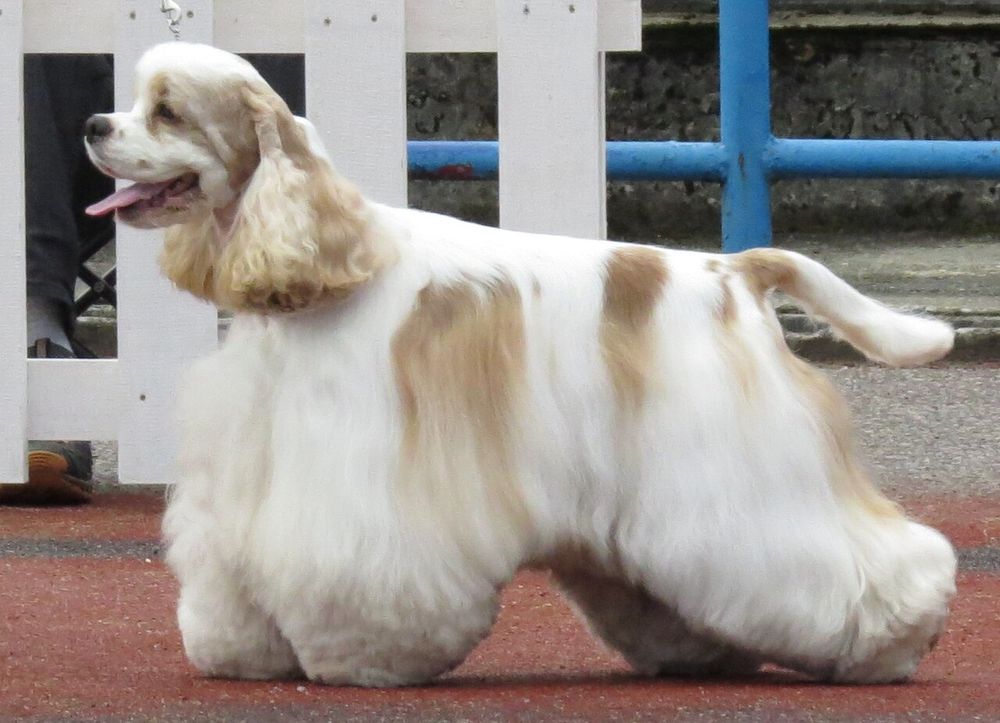
- Origin
- United States, from English Cocker Spaniel stockFédération Cynologique Internationale
- Adult weight
- 9.1 to 13.6 kg (Females to males, AKC: 20 to 25 lb for females, 25 to 30 lb for males, converted. The Royal Kennel Club gives a typical 9 to 13 kg.)American Kennel Club
- Height
- 34.3 to 39.4 cm (Females to males: the standard's ideal is 14 inches for females and 15 inches for males, half an inch either way, converted)Fédération Cynologique Internationale
- Lifespan
- 10 to 14 yearsAmerican Kennel Club
- Coat
- Short and fine on the head; medium length on the body with enough undercoat for protection; well feathered on the ears, chest, belly and legs. Silky, flat or slightly wavy. Black, any solid colour other than black, or parti-colour.Fédération Cynologique Internationale
- Energy
- ModerateAmerican Kennel Club
- Indian heat
- Copes with careScientific Reports (2020)study
- Flats
- A flat, with daily exerciseAmerican Kennel Club
American Cocker Spaniel snapshot
| What | The rule | Source |
|---|---|---|
| Size | Small, says The Royal Kennel Club. AKC gives 14.5 to 15.5 inches for males and 13.5 to 14.5 for females, at 20 to 30 pounds. | American Kennel Club |
| Exercise need | The Royal Kennel Club says more than 2 hours a day. AKC says the breed needs good muscle tone but not a lot of exercise to burn off energy. Plan for two good walks plus play. | The Royal Kennel Club |
| Alone-time tolerance | Low. The Royal Kennel Club describes a people-orientated breed that thrives on companionship. PDSA's general limit is 4 hours alone. | The Royal Kennel Club |
| Coat and grooming | Long, silky coat that sheds and needs brushing every day plus regular professional grooming (The Royal Kennel Club). | The Royal Kennel Club |
| Temperament | "Equable in temperament with no suggestion of timidity", says the FCI standard. AKC scores it 5 of 5 with young children and other dogs. | Fédération Cynologique Internationale |
| Lifespan | AKC gives 10 to 14 years and says the breed has good longevity. | American Kennel Club |
Where does the American Cocker Spaniel come from?
Spaniels are an old type of dog, AKC says, probably from Spain, used to help bird hunters since before the rifle. By the 19th century, when breed standards, dog shows and field trials took hold in England, the spaniels were split into breeds. The Cocker was named for its skill on woodcock, and was smaller than the English Springer Spaniel but larger than the English Toy Spaniel.
In America the Cocker grew into two types. The Royal Kennel Club traces both back to the same roots, including the famous black dog Obo, but says that by the 1920s American breeders were choosing different traits: a more domed head, a shorter muzzle and a more profuse coat. AKC says the English and Canadian kennel clubs registered the two as separate breeds from 1940 and AKC followed in 1946. In the United States the American type is simply the Cocker Spaniel.
A black Cocker named Brucie won Westminster's supreme award in 1940 and again in 1941, and the Cocker was AKC's most popular breed of the 1950s, the decade of Disney's Lady and the Tramp. The FCI now lists the United States as its country of origin and its use as a flushing dog and companion.
How did the American Cocker Spaniel come to India?
No source Petym found records when or how the American Cocker Spaniel came to India, so its arrival is not documented. Many Indian owners say "Cocker" for both this breed and the English Cocker, so check your dog's papers.
What is clear is how the breed's build meets Indian weather. Its long, feathered coat and long, hanging ears hold damp in the monsoon: in a large UK study, dogs with pendulous ears had 1.76 times the odds of ear infection. Ticks hide easily in a long coat, and they were found on 53% of dogs in a survey of four Indian cities.
What care does a American Cocker Spaniel need?
The three things that shape a good day for this breed.
Exercise
AKC says it is a sporting breed that needs good muscle tone but not a lot of exercise to burn off energy; walks with its people and retrieving a ball suit it. The Royal Kennel Club lists more than 2 hours a day. In summer, walk at dawn and after dark. American Kennel Club
Grooming
The Royal Kennel Club says daily brushing plus regular professional grooming. AKC says comb right down to the skin with a metal comb, pick snarls apart rather than pulling, rinse shampoo out thoroughly and dry with a dryer on a not-too-hot setting. Learn from your vet how to clean and dry the ear canals, especially after a bath. The Royal Kennel Club
Training
AKC calls it a people-pleasing breed, sensitive to a disapproving tone, so harsh correction is neither needed nor productive. Food, play and praise motivate it. Early socialisation and puppy classes are recommended. American Kennel Club
How much should a American Cocker Spaniel eat?
Daily calories for a healthy, neutered adult American Cocker Spaniel, worked out from its weight with the formula vets use (70 x weight in kg to the power 0.75, then AAHA's factor for a neutered adult). Divide by the kcal per kg on your food's pack for grams a day, and adjust by body shape.
| Resting need (kcal a day) | Neutered adult (kcal a day) | |
|---|---|---|
| 9.1 kg AAHA (American Animal Hospital Association) | 370 | 510 to 590 |
| 11.4 kg | 430 | 610 to 690 |
| 13.6 kg | 500 | 690 to 790 |
AKC says choose a quality food with your vet and give it a fair trial, watch for individual sensitivities, and be careful not to overfeed: groomers and vets often see overweight Cockers. Pick a complete and balanced diet and keep treats under about 10% of daily calories, as WSAVA suggests. Merck notes that some American Cocker Spaniels develop heart failure from a lack of the amino acid taurine, so tell your vet about the diet if your dog tires easily or coughs. From the Indian kitchen, no onion, garlic, grapes, raisins, chocolate, salty snacks or xylitol, as ASPCA warns, and go easy on milk and dairy, which often upset digestion. Meals a day: 6 to 12 weeks, 4 a day; 3 to 6 months, 3 a day; 6 to 12 months, 2 a day; adult, 1 or 2 a day; VCA suggests at least two. Puppies, kittens, working, pregnant and older animals need different amounts: ask your vet, or use Petym's food calculator.
Which illnesses is the American Cocker Spaniel prone to, and how are they treated?
The conditions veterinary studies and breed surveys most often report in the American Cocker Spaniel. Knowing the early signs means a vet sees it sooner.
See your vet first. This is general information from veterinary sources, not a diagnosis. Only a vet who has examined your pet can say what is wrong and prescribe treatment, and this page never gives a dose. Do not give your pet human medicine. If your pet seems very unwell, go to a 24-hour vet: find one in your city.
Glaucoma
Emergency: go to a vet nowA rise in pressure inside the eye that damages vision. A University of California, Davis study says the American Cocker Spaniel is among the breeds most often seen with primary angle closure glaucoma, the sudden, painful form. Scientific Reports (2022), University of California, Davisstudy
Signs to watch for
- A red, painful eye
- A cloudy or bluish cornea
- A large pupil that barely moves
- Squinting, or a change in behaviour from pain
How a vet treats it
A vet measures the eye pressure with a tonometer. Merck says the pressure must be lowered quickly with medicines that draw fluid out of the eye or reduce fluid production, often with surgery and long-term management; a blind, painful eye may need to be removed.
Prevention
Merck advises regular eye pressure checks for high-risk breeds.
Outer ear infection (otitis externa)
See a vet soonInflammation of the ear canal, often with bacteria or yeast. Long, hanging ears raise the odds: in a large UK study dogs with pendulous ears had 1.76 times the odds of dogs with upright ears. Canine Medicine and Genetics (2021), Royal Veterinary Collegestudy
Signs to watch for
- Head shaking or scratching an ear
- A bad smell or discharge
- Red, swollen or painful ears
How a vet treats it
A vet looks into the canal with an otoscope and checks a sample under the microscope. Merck says the ear is cleaned and dried, then treated with ear drops that usually combine antibiotics, antifungals and anti-inflammatories, sometimes with tablets or injections, for as long as the vet advises.
Prevention
Check the ears often, keep them dry after baths and rain, and clean them only as your vet shows you. Merck warns against home remedies such as vinegar mixtures.
Slipping kneecap (patellar luxation)
Ask at a routine checkThe kneecap slips out of its groove when the knee bends. AKC lists the patellas among the tests breeders run for this breed. American Kennel Club
Signs to watch for
- Skipping, or holding a back leg up for a few steps
- Limping that becomes more frequent
How a vet treats it
A vet feels for an unstable kneecap and may take x-rays. ACVS says dogs without signs are usually monitored, and surgery to deepen the groove, move the bony attachment or tighten the tissues is usually considered for grade 2 and above.
Prevention
Choose a puppy from parents tested for patellas and hips; affected dogs should not be bred.
Hip dysplasia
See a vet soonAn abnormal development of the hip joint that leads to arthritis. AKC names hip dysplasia among the breed's health issues and hips among breeders' tests. American Kennel Club
Signs to watch for
- Lameness that gets worse after exercise
- A bunny-hopping gait
- Stiffness after rest
How a vet treats it
A vet diagnoses it with x-rays. Merck lists weight reduction, physical therapy, anti-inflammatory drugs prescribed by the vet and, for some dogs, surgery such as total hip replacement.
Prevention
Keep the dog lean, and choose a puppy from hip-tested parents.
Heart failure from taurine deficiency
See a vet soonMerck names American Cocker Spaniels among the breeds that can develop dilated cardiomyopathy, a weakening of the heart muscle, from a lack of the amino acid taurine. Merck Veterinary Manual
Signs to watch for
- Tiring easily or fainting
- Coughing or hard breathing
- A swollen belly
How a vet treats it
A vet listens to the heart and uses x-rays, an ECG and echocardiography. Blood tests can confirm low taurine. Merck says taurine supplementation prescribed by the vet can work dramatically, alongside diuretics and medicines that help the heart contract.
American or English Cocker: which one do you have?
Many Indian owners say "Cocker" for both. The care is similar, but the coat, size and history differ.
The Royal Kennel Club says both breeds trace back to the same English roots, but by the 1920s American breeders were selecting more domed heads, shorter muzzles and a more profuse coat. AKC gave them separate breed status in 1945, and calls the American breed simply the Cocker Spaniel, while The Royal Kennel Club calls it the Spaniel (American Cocker). If your dog's papers say "Cocker Spaniel" from an American registry, it is this breed; if your dog came from a UK or Indian line with a longer muzzle, it may be the English Cocker.
Tell your sitter which one you have, because a few care points change: the American's coat is heavier and needs more daily work, and its eyes deserve extra attention.
| What | The rule | Source |
|---|---|---|
| Height (AKC) | American: 13.5 to 15.5 inches. English: 15 to 17 inches. | American Kennel Club |
| Coat | American: long and profuse, groomed every day (The Royal Kennel Club). English: a feathered coat; see the English Cocker page for its routine. | The Royal Kennel Club |
| Exercise (The Royal Kennel Club) | American: more than 2 hours a day. English: up to 1 hour a day. | The Royal Kennel Club |
| Bred mainly as | American: largely a show and companion dog. English: a gundog and family companion, with working-bred lines. | The Royal Kennel Club |
What The Royal Kennel Club says about its temperament
Word for word
This is a cheerful, people orientated breed that thrives on companionship.
The same page says the breed is gentle, eager to please and relatively easy to train with consistent, reward-based methods, but can be sensitive to harsh handling. AKC agrees: harsh correction is neither needed nor productive, and Cockers are easily motivated by food, play and praise. For a sitter, that means a calm voice, the owner's usual words, and never shouting. It also means company: a dog bred as a companion is not built for an empty flat all day. PDSA's general advice is no more than 4 hours alone, and it lists barking, whining, toileting indoors and trembling among the signs of distress.
A full comb-through, step by step
AKC's grooming advice for this breed, turned into a sitter's routine for humid Indian weather. Ten to fifteen minutes a day keeps mats away.
The right tools
A metal comb with fine and medium teeth, then a gentle slicker brush. AKC says the comb is the key tool. American Kennel Club
Comb to the skin
Work section by section until you can see through to the skin everywhere, lifting out loose hair as you go. American Kennel Club
Tease, never pull
Pick a snarl apart from the tips of the hair inwards, then comb through. AKC warns not to pull through a knot. American Kennel Club
Gently on the ears
The skin at the edge of the ear flap is thin and can be pierced by rough combing, AKC says. Go slowly here. American Kennel Club
Look at the skin
Check for red, inflamed spots, ticks and damp patches under the ears and in the armpits. AKC says mats can start skin problems underneath. American Kennel Club
Dry after any wetting
After rain or a bath, rinse well, then dry with a blow-dryer on a not-too-hot setting, as AKC advises, and dry the ear canals the way the vet showed. American Kennel Club
American Cocker health signs a sitter should act on
Most are for the owner and vet to manage. One, a sudden painful eye, cannot wait.
If A sudden red, painful or cloudy eye, squinting, or the dog pawing at one eye. The American Cocker is among the breeds most often seen with primary angle closure glaucoma, a blinding eye emergency.
Go to the vet the same day, ideally within hours, and call the owner on the way. Do not wait to see if it clears. Scientific Reports (2022), University of California, Davisstudy
If Head shaking, scratching an ear, a bad smell or discharge. Dogs with long, hanging ears had 1.76 times the odds of ear infections in a large UK study.
Call the vet. Keep the ears dry, and clean them only as the vet has shown the owner. Canine Medicine and Genetics (2021), Royal Veterinary Collegestudy
If Red, greasy, smelly or flaky skin, often under mats or in skin folds after humid weather.
Tell the owner and call the vet. AKC says thorough grooming helps prevent the mats that start skin problems. American Kennel Club
If A dog that is gaining weight on the same food. AKC says groomers and vets often see overweight Cockers.
Stick to measured meals and the treat allowance; tell the owner. American Kennel Club
If Limping, skipping on a back leg, or stiffness after rest. AKC lists hips and kneecaps among the breed's health tests.
Note it and tell the owner; call the vet if it persists or the dog is in pain. American College of Veterinary Surgeons
If Heavy panting, drooling or collapse after a walk on a hot day.
Shade, cool water poured over the body, a breeze, then call the vet. PDSA
Indian weather and the American Cocker's coat
A long, profuse coat is the American Cocker's big challenge in India. In the hot months, walk in the early morning and after sunset, and test the pavement with the back of your hand for seven seconds before setting off, as The Royal Kennel Club advises. Many owners keep a pet American Cocker in a shorter trim; the FCI standard's trimming rules are written for the show ring. A Texas A&M vet says fully shaving a dog is not usually necessary unless the coat is matted, so a practical trim is a better aim than a shave to the skin.
The monsoon brings the real work. Wet feathering on the ears, chest, belly and legs tangles quickly and stays damp in humid air, which is when ear and skin trouble begins. Ticks also hide easily in a long coat: in a survey of 525 dogs in four Indian cities, ticks were found on 53%, and about half of the dogs carried at least one tick-borne infection. Comb through and check every day, and keep up the tick prevention your vet chose.
Feeding is simpler. AKC suggests choosing a good food with your vet and keeping to it; it notes chicken and rice based foods are a common starting point. During a stay, keep the same food, measure every meal and keep treats under about 10% of the day's calories, as WSAVA suggests.
American Cocker sitter checklist
- Which Cocker it is (American or English), and how the groomer keeps the coat.
- Comb, slicker brush, dog shampoo, dryer setting and towels.
- Ear routine after baths and wet walks, exactly as your vet advised.
- Any eye drops, and a clear note: a sudden painful or cloudy eye means the vet today.
- Meal amounts, times and the treat allowance; foods it must never have.
- Walk times for summer and monsoon, and the hot-pavement rule.
- Tick prevention product and next due date.
- Your vet's number and the nearest 24-hour vet on Petym's city list.
Which Petym service suits an American Cocker?
A companion breed with a high-upkeep coat does best with someone around and a steady routine.
Often the best fit
Overnight pet sitting
A sitter stays in your home, keeps the grooming and ear routine going, and the dog has company day and night.
Pet boarding
Your Cocker stays in a sitter's home with people around, inside the home's pet limit, after a free meet and greet.
Doggy day care
Company and play on workdays for a dog that dislikes being alone.
Dog walking
A cool-hours walk to break up a long day.
Breeds with similar care needs to the American Cocker Spaniel
Going away soon? Tell us your dates.
A checked local sitter feeds, walks and keeps your pet company at home, follows your care sheet to the letter and sends a photo every day. Petym is opening city by city: send your dates and we will tell you when a sitter can take them.
- Meet your sitter first, free
- PAN-checked, first-aid trained
- A photo every day
- Pay through Petym, never cash


Questions owners ask
What is the difference between an American and an English Cocker Spaniel?
- They share English roots but have been separate breeds since AKC split them in 1945. The Royal Kennel Club says American breeders selected a more domed head, shorter muzzle and more profuse coat. The American is a little smaller, by AKC's heights, and mainly a show and companion dog.
Is an American Cocker Spaniel good in an Indian flat?
- Yes, if it gets enough company, walks and grooming. AKC scores its adaptability at 4 of 5 and says it is not a breed that needs a lot of exercise to burn off energy, though The Royal Kennel Club lists over 2 hours a day. Daily walks in the cool hours and play at home suit most.
How long can an American Cocker be left alone?
- Not long. The Royal Kennel Club describes a people-orientated breed that thrives on companionship, and PDSA's general advice is no more than 4 hours alone for any dog. For trips, a sitter in your home or a sitter's home with people around usually suits it best.
How do I stop my American Cocker's coat matting in the monsoon?
- Comb it every day to the skin with a metal comb, as AKC advises, and dry it fully after every wet walk or bath. Pay attention to the ears, armpits, chest and belly. Many owners keep a shorter pet trim through the monsoon to make this easier.
Why are American Cocker Spaniels prone to ear infections?
- Long, hanging ears trap warmth and moisture. A large UK study found dogs with pendulous ears had 1.76 times the odds of ear infections compared with erect-eared dogs. AKC advises learning from your vet how to clean and dry the ear canals, especially after a bath.
What eye problem should American Cocker owners know about?
- Glaucoma. A University of California, Davis study notes the American Cocker is among the breeds most often seen with primary angle closure glaucoma, a blinding emergency. A sudden red, painful or cloudy eye needs a vet the same day. Make sure your sitter knows this.
Should I shave my American Cocker for summer?
- A full shave is not usually needed unless the coat is matted, a Texas A&M vet says. A shorter, practical pet trim is common and easier to keep clean in Indian heat and humidity. Ask your groomer, and keep enough coat to protect the skin.
Keep reading
Services that help
Free tools for this
Words on this page, explained
Keep exploring
Other dog breeds
- Akita
- Alaskan Malamute
- American Bully
- American Pit Bull Terrier
- Australian Shepherd
- Bakharwal dog
- Basset Hound
- Beagle
- Belgian Malinois
- Bernese Mountain Dog
- Bichon Frise
- Border Collie
- Boston Terrier
- Boxer
- Bull Terrier
- Bulldog
- Bullmastiff
- Cane Corso
- Caucasian Shepherd Dog
- Cavalier King Charles Spaniel
- Chihuahua
- Chippiparai
- Chow Chow
- Cocker Spaniel
- Dachshund
- Dalmatian
- Dobermann
- Dogo Argentino
- English Mastiff
- English Springer Spaniel
- French Bulldog
- Gaddi Kutta (Gaddi dog)
- German Shepherd
- Golden Retriever
- Great Dane
- Greyhound
- Havanese
- Indian pariah dog (Indie)
- Indian Spitz
- Irish Setter
- Jack Russell Terrier
- Kangal
- Kanni
- Kombai
- Labrador Retriever
- Lhasa Apso
- Maltese
- Miniature Pinscher
- Miniature Schnauzer
- Mudhol Hound
- Neapolitan Mastiff
- Newfoundland
- Papillon
- Pekingese
- Pembroke Welsh Corgi
- Pomeranian
- Poodle
- Pug
- Rajapalayam
- Rampur Greyhound
- Rhodesian Ridgeback
- Rottweiler
- Saint Bernard
- Samoyed
- Shar Pei
- Shiba Inu
- Shih Tzu
- Siberian Husky
- Tibetan Mastiff
- Weimaraner
- West Highland White Terrier
- Whippet
- Yorkshire Terrier
Sources
Each source was opened and read on the date shown. How Petym checks its sources
- Fédération Cynologique Internationale: FCI-Standard No 167: American Cocker Spaniel (opens in a new tab)
- American Kennel Club: Cocker Spaniel (the American Cocker) dog breed information (opens in a new tab)
- The Royal Kennel Club: Spaniel (American Cocker): breed information (opens in a new tab)
- WSAVA: Frequently asked questions and myths (Global Nutrition Committee) (opens in a new tab)
- Merck Veterinary Manual: Acquired heart and blood vessel disorders in dogs: dilated cardiomyopathy (pet owner version) (opens in a new tab)
- ASPCA Animal Poison Control: People foods to avoid feeding your pets (opens in a new tab)
Show all 24 sourcesShow fewer
- Merck Veterinary Manual: Puppy care (opens in a new tab)
- VCA Animal Hospitals: Feeding times and frequency for your dog (opens in a new tab)
- AAHA (American Animal Hospital Association): 2021 AAHA Nutrition and Weight Management Guidelines for Dogs and Cats: energy requirement calculations (Box 1, PDF) (opens in a new tab)
- Merck Veterinary Manual: Nutritional requirements of small animals (full review November 2023, updated September 2024) (opens in a new tab)
- Merck Veterinary Manual: Glaucoma in dogs (pet owner version) (opens in a new tab)
- Merck Veterinary Manual: Ear infections and otitis externa in dogs (opens in a new tab)
- American College of Veterinary Surgeons: Patellar Luxation (Dislocating Kneecap) in Dogs | ACVS (opens in a new tab)
- Merck Veterinary Manual: Hip dysplasia (dog owners) (opens in a new tab)
- American Kennel Club: English Cocker Spaniel dog breed information (opens in a new tab)
- The Royal Kennel Club: Spaniel (Cocker): breed information (opens in a new tab)
- PDSA: Separation anxiety in dogs (opens in a new tab)
- PDSA: Heatstroke in dogs (opens in a new tab)
- The Royal Kennel Club: The danger of hot pavements (opens in a new tab)
- Texas A&M College of Veterinary Medicine (Pet Talk, 16 June 2022): Time for a summer cut? Tips for warm weather dog grooming (opens in a new tab)
- Scientific Reports (2020): Incidence and risk factors for heat-related illness in UK dogs (opens in a new tab)
- Canine Medicine and Genetics (2021), Royal Veterinary College: Frequency and predisposing factors for canine otitis externa in the UK (opens in a new tab)
- Parasites & Vectors (2011): A survey of canine tick-borne diseases in India (opens in a new tab)
- Scientific Reports (2022), University of California, Davis: Ocular morphologic traits in the American Cocker Spaniel may confer primary angle closure glaucoma susceptibility (abstract read) (opens in a new tab)