Dutch rabbit care in India: a gentle breed in a hot climate
Updated By PetymFacts checked against official sources on
Quick answer
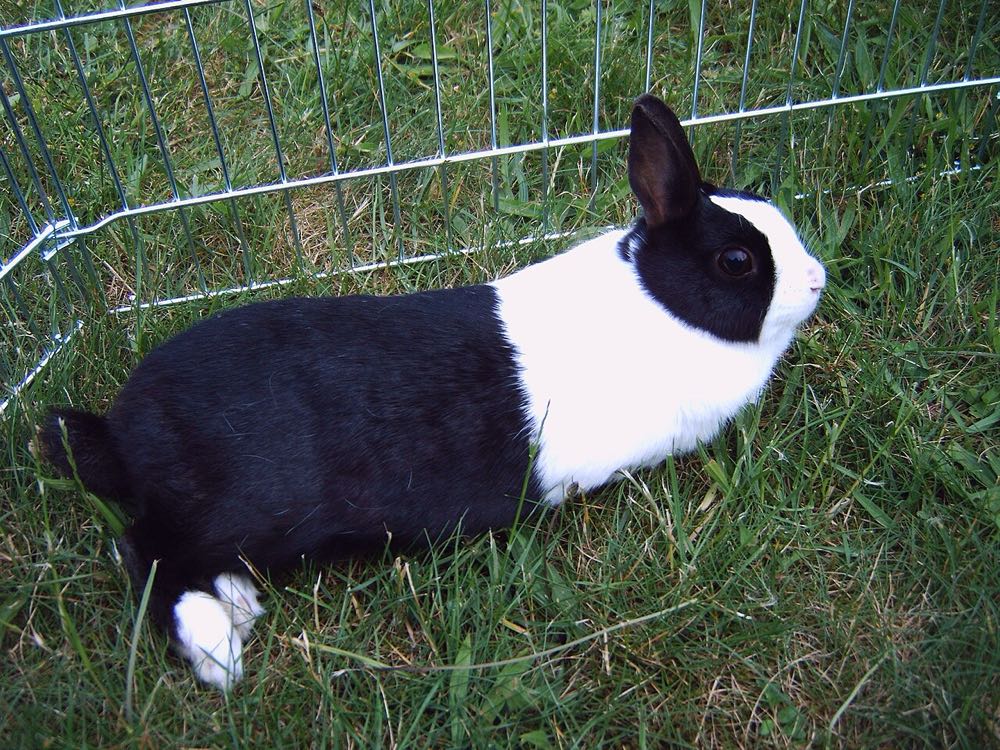
The Dutch rabbit is a small to medium breed, about 2 to 2.5 kg, with a white blaze on the face and a white saddle around the shoulders. PDSA calls it gentle and easy-going, and PetMD says it learns tricks. Its health watch points are teeth, from a longer lower jaw, and uterine cancer in unspayed does.
PetMD advises bringing a Dutch rabbit indoors once it is hotter than about 27 °C, which describes most Indian afternoons for much of the year. Plan a cool room and at least daily visits while you are away.

- Origin
- Developed in England from the Belgian Petit BrabançonPetMD (reviewed by Laurie Hess, DVM, DABVP)
- Adult weight
- 1.6 to 2.5 kg (PetMD gives 3.5 to 5.5 lb; PDSA's adult average is 2 to 2.5 kg)PetMD (reviewed by Laurie Hess, DVM, DABVP)
- Lifespan
- 5 to 10 yearsPetMD (reviewed by Laurie Hess, DVM, DABVP)
- Coat
- Short fur with a white blaze on the face and chest, and a white saddle over the shoulders against a coloured body. Brush once or twice a week.PetMD (reviewed by Laurie Hess, DVM, DABVP)
- Energy
- ModeratePetMD (reviewed by Laurie Hess, DVM, DABVP)
- Indian heat
- Struggles in heatPetMD (reviewed by Laurie Hess, DVM, DABVP)
- Flats
- Suits a flatRSPCA
Dutch rabbit at a glance
| What | The rule | Source |
|---|---|---|
| Size | Small to medium: PDSA gives an adult average of 2 to 2.5 kg; PetMD 3.5 to 5.5 lb. | PDSA |
| Markings | A white blaze on the face and chest and white markings over the shoulders; the name comes from the pattern, not the country. | PetMD (reviewed by Laurie Hess, DVM, DABVP) |
| Temperament | Gentle and easy-going (PDSA); smart, friendly and patient, but may be shy at first (PetMD). | PDSA |
| Lifespan | PDSA gives 6 to 9 years; PetMD 5 to 10. | PDSA |
| Heat | PetMD advises bringing a Dutch rabbit indoors above 80 °F, about 27 °C. | PetMD (reviewed by Laurie Hess, DVM, DABVP) |
| Teeth | A slightly longer lower jaw can cause misaligned teeth, PetMD says; hay and chew toys matter. | PetMD (reviewed by Laurie Hess, DVM, DABVP) |
| Does | Unspayed females are at risk of uterine cancer; PetMD recommends spaying after 5 to 6 months of age. | PetMD (reviewed by Laurie Hess, DVM, DABVP) |
Where does the Dutch rabbit come from?
The Dutch takes its name from its colour pattern, not its country. PetMD says it descends from the Petit Brabançon, a rabbit bred in Belgium since the 1400s, which was brought to England in the 1830s and developed there into the Dutch rabbit. It is also called the Hollander or Brabander.
The breed reached the United States in the early 1900s, and the American Rabbit Breeders Association recognised it in 1910. PetMD counts it among the ten most popular pet rabbit breeds worldwide.
Like the New Zealand White, the Dutch has a long history in research: the Canadian Council on Animal Care lists it among the breeds most commonly used in laboratories, and classes it as a small breed, under 2 kg. Merck notes that small breeds such as the Dutch reach sexual maturity at 3.5 to 4 months.
How did the Dutch rabbit come to India?
No source we found records when the Dutch rabbit came to India or how many are kept here. India's published rabbit research covers farm breeds for meat and wool, such as the New Zealand White, Soviet Chinchilla and the Soviet giant breeds, and does not mention the Dutch.
In Indian homes it lives as a pet, best indoors: PetMD's advice to bring a Dutch rabbit inside above about 27 °C rules out a balcony hutch for most of the year.
What care does a Dutch rabbit need?
The three things that shape a good day for this breed.
Exercise
Several hours a day of supervised time outside the enclosure, PetMD says, in a rabbit-proofed room. The RSPCA asks for an exercise area of at least 3 m by 2 m by 1 m for rabbits. PetMD (reviewed by Laurie Hess, DVM, DABVP)
Grooming
Brush once or twice a week, more often in the spring and autumn sheds; nails every one to two months. Spot-clean with a damp cloth rather than bathing. PDSA suggests weekly grooming. PDSA
Training
PetMD says Dutch rabbits can learn tricks, play fetch and use a litter box. Let a shy rabbit approach you first, and lift only with one hand under the chest and one under the hind legs. PDSA
What should a Dutch rabbit eat?
PetMD's advice for the Dutch: hay available at all times and making up most of the diet, timothy for most adults and alfalfa for young rabbits and nursing does; leafy greens every day, with high-calcium greens fed sparingly; carrots limited because of their carbohydrate; fruit as an occasional treat; a measured amount of fortified pellets; and water always, in a bottle and a bowl until the rabbit shows a preference.
PDSA's frequency guide fits a rabbit of this size: greens twice a day and nuggets once a day for a rabbit under 3.5 kg. PetMD links the breed's dental risk to its jaw shape, so plenty of hay and chew toys matter more than usual.
Meals a day: young rabbit, unlimited hay (alfalfa while growing, PetMD says), with greens and pellets as your vet advises; adult, unlimited hay; greens twice a day; nuggets once a day; older rabbit, as your vet advises.
Which illnesses is the Dutch rabbit prone to, and how are they treated?
The conditions veterinary studies and breed surveys most often report in the Dutch rabbit. Knowing the early signs means a vet sees it sooner.
See your vet first. This is general information from veterinary sources, not a diagnosis. Only a vet who has examined your pet can say what is wrong and prescribe treatment, and this page never gives a dose. Do not give your pet human medicine. If your pet seems very unwell, go to a 24-hour vet: find one in your city.
Uterine cancer in unspayed does
See a vet soonPetMD lists uterine cancer as a risk for unspayed Dutch does. Merck calls uterine adenocarcinoma the most common tumour in rabbits, reaching 60% in unspayed does over 3 years old. PetMD (reviewed by Laurie Hess, DVM, DABVP)
Signs to watch for
- Often nothing an owner can see early on
- Masses a vet can feel in the belly
- Swollen, cystic mammary glands, which Merck says may occur alongside
How a vet treats it
Merck says the cancer often spreads to the liver and lungs, so the vet decides on tests and treatment. PDSA says spaying removes the risk of uterine cancer.
Prevention
Spaying: PetMD recommends it after 5 to 6 months of age for the Dutch.
Dental misalignment
See a vet soonPetMD says the Dutch rabbit's slightly longer lower jaw can cause misaligned teeth. PDSA names dental disease as the main health concern for the breed. PetMD (reviewed by Laurie Hess, DVM, DABVP)
Signs to watch for
- Drooling or a wet chin
- Dropping food or leaving hay
- Weepy eyes
- Smaller droppings, weight loss
How a vet treats it
PDSA says a vet trims overgrown teeth and spurs under anaesthetic, may remove damaged teeth, and gives pain relief and, for abscesses, antibiotics. Never trim teeth at home.
Prevention
Unlimited hay and chew toys, a weekly look at the front teeth and a yearly vet dental check.
Gut stasis and hairballs
Emergency: go to a vet nowPetMD lists GI stasis and hairballs among the problems that need prompt veterinary attention in the breed. Merck links hair build-up to low fibre and says daily combing helps prevent it. PetMD (reviewed by Laurie Hess, DVM, DABVP)
Signs to watch for
- Eating less or nothing
- Small, few or no droppings
- A hunched, quiet rabbit
How a vet treats it
A vet the same day. Merck describes fluids, pain management, hay or other roughage, and medicine to stimulate the gut once the rabbit is stable; surgery only if medical treatment fails.
Prevention
Hay making up most of the diet, extra brushing in a moult and no sudden food changes.
Skin mites and E. cuniculi
See a vet soonPetMD lists Cheyletiella skin mites and E. cuniculi for the breed. PDSA says E. cuniculi is shed in urine and can damage the brain, nerves and kidneys. PetMD (reviewed by Laurie Hess, DVM, DABVP)
Signs to watch for
- Flaky dandruff and itching (mites)
- Head tilt, weak back legs, wetting (E. cuniculi)
How a vet treats it
A vet confirms the cause and prescribes an anti-parasitic treatment; for E. cuniculi, PDSA says vets often treat on the signs with a daily course and supportive care.
Prevention
Clean housing, no shared bowls between groups, and new rabbits kept apart for a month.
Is a Dutch rabbit a good first rabbit?
Often, yes. It is small enough to manage, calm by reputation and quick to learn a routine, which also makes it easier for a sitter.
PDSA describes the Dutch as gentle and easy-going. PetMD calls the breed smart, friendly and patient, able to learn tricks, play fetch and use a litter box, and counts it among the ten most popular pet rabbit breeds worldwide. It also says Dutch rabbits may be shy at first, so let the rabbit come to you, and supervise children.
A predictable rabbit is a gift to a sitter. If your Dutch already comes when it hears the hay bag or uses one litter tray, write that on the care sheet: a rabbit that suddenly stops doing something it always does is the earliest sign something is wrong. PDSA's general advice still applies: rabbits are not really suitable for small children, dislike being picked up and can break their backs if dropped.
How hot is too hot for a Dutch rabbit in India?
PetMD's line for the breed is about 27 °C; Merck's ideal range for rabbits is 15.5 to 21 °C. Indian summers pass both by a wide margin.
PetMD advises bringing a Dutch rabbit indoors if the temperature rises above 80 °F, about 27 °C, or falls below freezing. The India Meteorological Department declares a heat wave in the plains only at 40 °C, far above that line, and in coastal cities humidity adds to the load: Merck's rule of thumb is that the Fahrenheit temperature plus the humidity percentage should stay under 150. A Dutch rabbit in India is an indoor rabbit, in the coolest room.
The Rabbit Welfare Association's measures keep that room within reach: curtains closed, a marble surface to lie on, frozen water bottles wrapped in a towel with a battery fan aimed at them, and plenty of cool water with no ice. PDSA's signs of heatstroke are red, hot ears, fast breathing, weakness and collapse; a sitter who sees any of them cools the rabbit gradually and calls the vet at once.
Monsoon months bring the RSPCA's flystrike warning: in warm weather it can develop within hours, so the rear end is checked at least twice a day. On a Dutch rabbit the white hindquarters show staining clearly, which helps.
Should you take your Dutch rabbit along, use a sitter or board it?
For most trips, keep the rabbit at home. Work through the branches below.
If A healthy, bonded pair, a trip of one to three days, mild weather
Drop-in visits once or twice a day for food, water, litter and a check of eating and droppings. Drop-in visits RSPCA
If Any trip in April to June, or a heatwave forecast
Two visits a day at least, or a sitter staying in the home who can keep the cooling going through a power cut. Overnight sitting PDSA
If A week or longer away
Overnight sitting in your home; the RSPCA says rabbits are better not taken on holiday because travel is too stressful. Overnight sitting RSPCA (England and Wales)
If A doe recovering from spaying, or a rabbit on dental treatment
Special-needs care, with the vet's discharge notes followed and logged. Special-needs care PDSA
If The rabbit must leave home
Send it with its companion, its own hay, food and some used, unsoiled bedding; compare home boarding with a sitter first. Drop-in visits or overnight sitting? RSPCA (England and Wales)
Why do Dutch rabbits need their teeth watched?
PetMD says the Dutch rabbit's slightly longer lower jaw can cause misaligned teeth, which is why hay and chew toys are important. Rabbit teeth grow throughout life, and PDSA says dental problems are common, usually caused by a diet too low in fibre, and that rabbits hide pain so disease often goes unnoticed until it is severe.
The signs a sitter can spot are a wet chin or drooling, dropping food, eating less hay, weepy eyes and smaller droppings. PDSA says to contact a vet straight away about any tooth problem, never to trim teeth at home, and that a full examination usually needs an anaesthetic. A weekly look at the front teeth by the owner, and a vet check at least once a year, catches most problems early.
A sitter's visit to a Dutch rabbit
Arrive
Check the room temperature and the fan before anything else. Is the rabbit up and alert, in its usual spot?
Eating
Look at the hay pile, the greens bowl and the droppings since the last visit. A rabbit that has stopped eating needs a vet now. PDSA
Food
Fresh hay, the owner's measured nuggets and washed greens from the owner's list. PDSA
Water
A clean bottle and a bowl, both filled, so you can see which the rabbit is using. PetMD (reviewed by Laurie Hess, DVM, DABVP)
Check
Chin dry, eyes clear, rear end clean; twice daily in warm weather. RSPCA
Play
A few minutes of the rabbit's usual game or trick, on its terms. Note if it will not join in.
Leave
Frozen bottle swapped, curtains drawn, pen latched, daily photo update sent to the owner.
Feeding a Dutch rabbit while you travel
PetMD's guide for the breed: hay available at all times and making up most of the diet, timothy for adults and alfalfa for young rabbits and nursing does; leafy greens daily, high-calcium greens fed sparingly; carrots limited because of their carbohydrate; fruit only as a treat once or twice a week; and fortified pellets in a measured amount. PDSA adds that greens are fed twice a day and nuggets once a day for a rabbit under 3.5 kg.
Leave the same hay and nuggets for the whole trip, the scoop you use and a list of greens your rabbit already eats. PDSA says diet changes should be made over two to four weeks, so no new foods while you are away.
Breeds with similar care needs to the Dutch rabbit
Going away soon? Plan your pet’s care first.
Petym's bookings open for dogs and cats first. For every other pet, the free going-away checklist covers food, water, heat and what to leave written down before you travel.

Questions owners ask
Are Dutch rabbits good pets?
- For many homes, yes. PDSA describes the breed as gentle and easy-going, and PetMD calls it smart, friendly and patient, able to learn tricks and use a litter box. Like all rabbits, they need a companion, plenty of space, hay all day and a vet who treats rabbits.
Is the Dutch rabbit from the Netherlands?
- Not from the Netherlands, despite the name, which refers to its colour pattern. PetMD says it descends from the Petit Brabançon, bred in Belgium since the 1400s, which was taken to England in the 1830s and developed there. ARBA recognised it in 1910.
How big does a Dutch rabbit get?
- PDSA gives an average adult weight of 2 to 2.5 kg, and PetMD 3.5 to 5.5 lb. It is a small to medium, compact rabbit. Small does not mean it needs less space: rabbits need room to run, hop and stand up.
Can a Dutch rabbit live outside in India?
- Not safely for most of the year. PetMD advises bringing a Dutch rabbit indoors once the temperature passes about 27 °C, and Merck's ideal range for rabbits is 15.5 to 21 °C. An indoor room with shade, a cool tile and a fan is the safer home.
Should I spay my female Dutch rabbit?
- Ask your vet. PetMD says unspayed Dutch does are at risk of uterine cancer and recommends spaying after 5 to 6 months of age, and PDSA says spaying removes the risk of ovarian and uterine cancer.
How long do Dutch rabbits live?
- PDSA gives 6 to 9 years and PetMD 5 to 10. A high-hay diet, spaying or neutering, a companion, a cool home and regular dental checks all help.
How often should a sitter visit a Dutch rabbit?
- At least once a day for a healthy pair in mild weather, and twice a day in warm or humid weather because of flystrike and heat. For a week away or a heatwave, a sitter staying in the home sees the rabbits many times a day.
Keep reading
Services that help
Free tools for this
Words on this page, explained
Keep exploring
Sources
Each source was opened and read on the date shown. How Petym checks its sources
- PetMD (reviewed by Laurie Hess, DVM, DABVP): Dutch rabbit (updated 20 October 2023) (opens in a new tab)
- RSPCA: Rabbits: care and welfare (opens in a new tab)
- Canadian Council on Animal Care: Guide to the care and use of experimental animals, volume 2: XVI. Rabbits (opens in a new tab)
- Merck Veterinary Manual: Management of rabbits (full review July 2021, updated April 2025) (opens in a new tab)
- Kerala Agricultural University, Centre for e-Learning: Rabbit breeds (opens in a new tab)
- PDSA: Dutch rabbit breed information (opens in a new tab)
Show all 18 sourcesShow fewer
- PDSA: How to hold a rabbit safely (opens in a new tab)
- PDSA: Feeding your rabbits (opens in a new tab)
- Merck Veterinary Manual: Noninfectious diseases of rabbits (full review July 2021, updated September 2024) (opens in a new tab)
- PDSA: Rabbit neutering: a guide to castration and spaying (opens in a new tab)
- PDSA: Dental problems in rabbits (opens in a new tab)
- PDSA: Reduced appetite in a rabbit (opens in a new tab)
- PDSA: E. cuniculi in rabbits (opens in a new tab)
- PDSA: Heatstroke in rabbits (opens in a new tab)
- RSPCA: Flystrike (opens in a new tab)
- RSPCA (England and Wales): Taking your pet on holiday (opens in a new tab)
- Rabbit Welfare Association and Fund: Keep your rabbits cool (leaflet, 2026) (opens in a new tab)
- India Meteorological Department: FAQ on heat wave (opens in a new tab)