Flemish Giant care in India: space, feet and heat
Updated By PetymFacts checked against official sources on
Quick answer
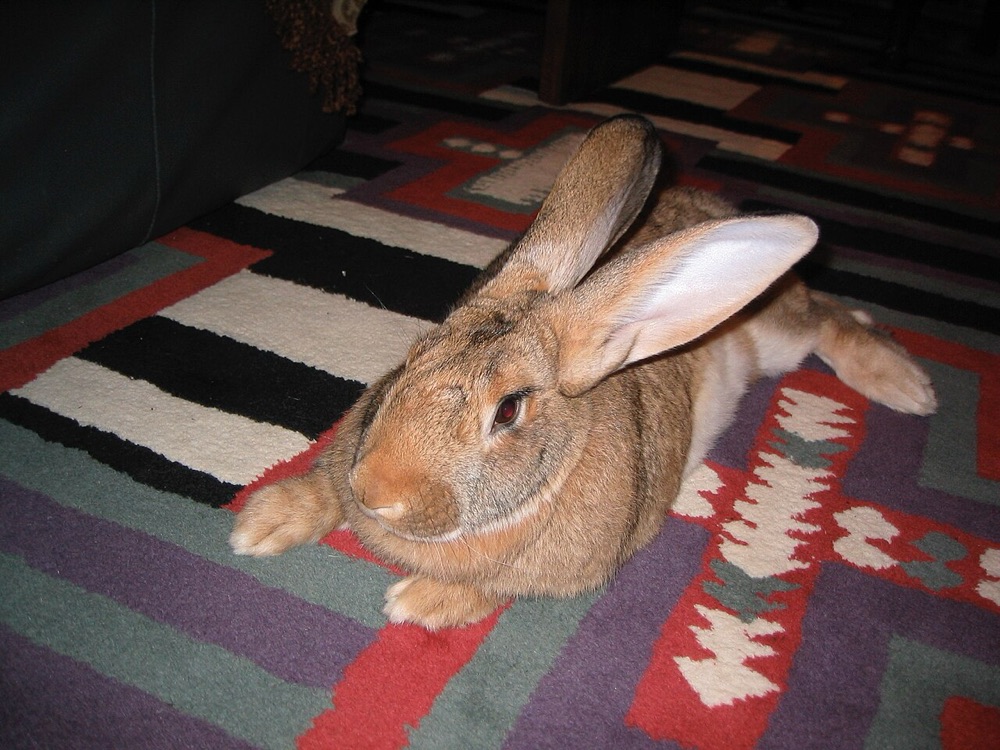
The Flemish Giant is the largest common rabbit breed: PDSA puts the adult average at 6 to 7 kg, and ARBA sets no maximum. It is calm and gentle, but its size changes the care: far more floor space than a cage, soft flooring because heavy rabbits get sore hocks, careful lifting and a watch on weight.
In India it needs a cool room in summer and a sitter who can see it many times a day in a heatwave. For trips of more than a couple of days, a sitter staying in the home suits this breed best.

- Origin
- Flanders, BelgiumAmerican Rabbit Breeders Association
- Adult weight
- 6 to 9.1 kg (PDSA's adult average is 6 to 7 kg; PetMD gives 15 to 20 lb (6.8 to 9.1 kg); ARBA sets no maximum)PDSA
- Lifespan
- 5 to 10 yearsPDSA
- Coat
- Short, smooth and glossy with a dense undercoat; weekly grooming, more in a moult. Long, upright ears.PDSA
- Indian heat
- Struggles in heatMerck Veterinary Manual
- Flats
- Needs spacePetMD (reviewed by Laurie Hess, DVM, DABVP)
Flemish Giant at a glance
| What | The rule | Source |
|---|---|---|
| Size | Very large: PDSA gives an adult average of 6 to 7 kg; PetMD 15 to 20 lb (about 6.8 to 9.1 kg), up to 2.5 to 4 feet long stretched out. ARBA sets no maximum weight. | PDSA |
| Temperament | Nicknamed the gentle giant for its docile personality, ARBA says; PetMD calls it patient, calm and tolerant. | American Rabbit Breeders Association |
| Lifespan | PDSA gives 5 to 8 years; PetMD 8 to 10. | PDSA |
| Feet | Heavy breeds such as the Flemish Giant are susceptible to sore hocks, Merck says. | Merck Veterinary Manual |
| Enclosure | PetMD suggests at least about 90 cm wide, 90 cm tall and 3 m long per rabbit, doubled for each extra rabbit, plus supervised time out. | PetMD (reviewed by Laurie Hess, DVM, DABVP) |
| Grooming | Short, dense coat; weekly grooming, PDSA says. Spot-clean, never bathe. | PDSA |
| Heat tolerance | Low, like all rabbits: Merck's ideal range is 15.5 to 21 °C. | Merck Veterinary Manual |
Where does the Flemish Giant come from?
ARBA says the Flemish Giant is believed to have come from Flanders in Belgium, with breeding records going back as far as the 16th century. PetMD adds that it was further developed in Belgium around 1860 and was first valued as a meat and fur animal.
Flemish Giants were exported to America in the early 1890s, ARBA says, to increase the size of meat rabbits during the rabbit boom of that time; PetMD records imports from both England and Belgium and ARBA recognition in 1910.
Today the breed is kept far more as a companion than for meat. ARBA calls it a calm, gentle breed, nicknamed the gentle giant for its docile personality, and sets no maximum weight, noting that many reach over 20 lb.
How did the Flemish Giant come to India?
No source we found records the Flemish Giant itself coming to India. The large rabbits documented in Indian farming are different breeds: Kerala Agricultural University lists the Grey Giant and White Giant, both from the former Soviet Union, alongside the New Zealand White and Soviet Chinchilla, and a Kerala study compared the Grey Giant with those breeds in the humid tropics.
Flemish Giants kept as pets in India live mostly indoors. Their size makes two Indian problems harder: finding enough floor space in a flat, and keeping a large body cool through April to June without a long power cut undoing the plan.
What care does a Flemish Giant need?
The three things that shape a good day for this breed.
Exercise
Calm but still needs room: PetMD suggests an enclosure of at least about 90 cm by 90 cm by 3 m per rabbit plus plenty of supervised time out, and daily exercise also helps prevent sore hocks. PetMD (reviewed by Laurie Hess, DVM, DABVP)
Grooming
PDSA advises weekly grooming of the short, dense coat. PetMD adds regular brushing to cut swallowed hair, nails every four to six weeks, weekly ear checks and spot-cleaning instead of bathing. PDSA
Training
Litter training keeps the large floor area dry. Keep lifting to a minimum: PDSA says young children should not lift rabbits, especially larger breeds, and to support the chest and hind legs. PDSA
What should a Flemish Giant eat?
PDSA's rabbit diet is about 85% hay or grass, unlimited, at least a bundle the size of the rabbit every day, with greens twice a day and, for a rabbit over 3.5 kg, nuggets twice a day. PetMD says each rabbit should eat roughly its body size in hay daily, so a giant gets through a lot; keep a dry stock that will last the whole monsoon month.
PetMD warns the breed is prone to weight gain and that pellets and treats should be limited. Extra weight adds to the pressure on the feet, so ask your vet to score body condition at each visit and set the nugget measure. Treats from the Indian kitchen, such as bread, biscuits, rice or sweets, have no place in the diet.
Meals a day: every age, hay and water available all day; adult (over 3.5 kg), greens twice a day, nuggets twice a day; growing or older rabbit, as your vet advises.
Which illnesses is the Flemish Giant prone to, and how are they treated?
The conditions veterinary studies and breed surveys most often report in the Flemish Giant. Knowing the early signs means a vet sees it sooner.
See your vet first. This is general information from veterinary sources, not a diagnosis. Only a vet who has examined your pet can say what is wrong and prescribe treatment, and this page never gives a dose. Do not give your pet human medicine. If your pet seems very unwell, go to a 24-hour vet: find one in your city.
Sore hocks (ulcerative pododermatitis)
See a vet soonUlcers on the underside of the back feet. Merck names heavy breeds such as the Flemish Giant as susceptible, and PetMD lists large and giant breeds as higher risk because of the pressure on their feet. Merck Veterinary Manual
Signs to watch for
- Weight shifted onto the front feet
- Bald, red or swollen patches under the back feet
- Reluctance to hop
- Eating less or grinding teeth from pain
How a vet treats it
A vet examines the feet and gait and may take X-rays in severe cases to check for bone infection. Merck and PetMD describe removing the cause, soft clean bedding, antibiotics, topical treatment, pain relief, dressings and weight management, with surgery for severe cases.
Prevention
A solid, cushioned floor, daily cleaning, a healthy weight, daily exercise and a large enclosure.
Gut stasis
Emergency: go to a vet nowThe gut slows or stops. PetMD lists GI stasis for the breed, Merck names obesity and lack of exercise among the factors behind it, and PDSA says it can be fatal if not treated quickly. PDSA
Signs to watch for
- Eating less or nothing
- Small, few or no droppings
- Hunched posture, teeth grinding
How a vet treats it
A vet the same day. Merck describes fluids, pain management, hay or other roughage and, once the rabbit is stable, medicine to stimulate the gut, while the vet looks for the cause.
Prevention
Unlimited hay, daily exercise, a healthy weight and no sudden diet changes.
Uterine cancer in unspayed does
See a vet soonMerck calls uterine adenocarcinoma the most common tumour of rabbits, with an incidence that can reach 60% in unspayed does over 3 years old. Merck Veterinary Manual
Signs to watch for
- Often nothing an owner can see early on
- Masses a vet can feel in the belly
- Swollen, cystic mammary glands, which Merck says may occur alongside
How a vet treats it
Merck says the masses can be felt on examination and that the cancer often spreads to the liver and lungs, so the vet decides on tests and treatment. PDSA says spaying removes the risk of uterine cancer.
Prevention
Spaying: PDSA says giant breed does may need to wait until about eight months, later than smaller breeds.
Dental disease
See a vet soonPDSA names dental disease, linked to diet, as the main health concern for the Flemish Giant, as for all rabbits. PDSA
Signs to watch for
- Drooling, wet chin
- Dropping food
- Weepy eyes
- Fewer droppings
How a vet treats it
PDSA says a vet trims overgrown teeth under anaesthetic, removes damaged teeth if needed, and gives pain relief and antibiotics for abscesses.
Prevention
Unlimited hay and a vet dental check at least once a year.
Can a Flemish Giant live in an Indian flat?
Yes, as a house rabbit with a room or a large pen of its own. Not in a pet-shop cage, and not on a bare tiled floor.
PetMD suggests an enclosure at least 36 inches wide, 36 inches tall and 120 inches long for one Flemish Giant, which is roughly 90 cm by 90 cm by 3 m, doubled for each extra rabbit, with plenty of supervised time outside it. The RSPCA's general minimum for rabbits is 3 m by 2 m by 1 m. In a 2BHK that usually means a gated corner of a room or a rabbit-proofed spare room, with wires, plants and anything chewable out of reach.
Height matters as well as floor area: a giant rabbit needs to stand up on its back legs without its ears touching the roof. A balcony is not a home for one in India: it overheats in summer, floods in the monsoon and is loud at Diwali.
PDSA notes that rabbits are social and should live with a compatible companion, such as a neutered male with a neutered female, and that keeping a pair roughly doubles the cost. Two giants need double the space. Before bringing one home, check what your housing society allows; Petym's guide to pets in housing societies sets out the AWBI guidelines.
Why do heavy rabbits get sore hocks?
Weight. Every hop and every hour of sitting presses the thin skin under the back feet against the floor.
The Merck Veterinary Manual names heavy breeds such as the Flemish Giant and Checkered Giant as susceptible to ulcerative pododermatitis. PetMD's 2026 article by a vet lists large and giant breeds as higher risk because they put more pressure on their feet, alongside hard floors such as concrete or hardwood, obesity, wet bedding and lack of exercise. PetMD's Flemish Giant page recommends a solid, cushioned floor, such as fleece over a yoga mat, rather than wire or carpet, and a clean cage.
Advanced sore hocks can lead to abscesses, bone infection and permanent lameness, and PetMD says the condition often cannot be fully reversed. For a sitter, that means changing wet bedding at every visit, keeping the soft flooring in place and noting any change in how the rabbit sits or moves.
How should a sitter lift a Flemish Giant?
Rarely, and close to the floor. PDSA says rabbits dislike being picked up and that young children should not lift rabbits, especially larger breeds. A frightened 7 kg rabbit kicking out can hurt itself and the person holding it, and PDSA warns that rabbits' backs are fragile and can break if they are dropped.
For daily care a sitter should not need to lift at all: hay, water, greens and litter can all be done at floor level. If the rabbit must go to the vet, PDSA's method still applies: one hand under the chest, one under the hind legs, held close to the body, and a squat to put it down. A giant needs a large, sturdy carrier, kept by the door and shown to the sitter at the meet and greet.
Flemish Giant facts in numbers
6 to 7 kg
PDSA's average adult weight PDSA
1,910
The year ARBA recognised the breed, PetMD says PetMD (reviewed by Laurie Hess, DVM, DABVP)
8 months
When PDSA says giant breed does may be spayed, later than smaller breeds PDSA
15.5 to 21 °C
Merck's ideal temperature range for rabbits Merck Veterinary Manual
How does a Flemish Giant cope with Indian heat?
As badly as any rabbit, and a big one is harder to move to safety. Plan the cooling for the room, not the rabbit.
Merck gives 15.5 to 21 °C at 40 to 60% humidity as the ideal range for rabbits, and says rabbits under heat stress stretch out and breathe rapidly. PDSA's heatstroke signs include red, hot ears, fast breathing, weakness and collapse. The India Meteorological Department declares a heat wave in the plains at 40 °C.
Cool the whole space a giant uses: curtains shut, several marble or ceramic tiles across the floor, more than one frozen bottle wrapped in a towel and a fan aimed at the bottles, as the Rabbit Welfare Association advises. Tiles are for lying on, not the whole floor, because the feet need cushioning. Leave the sitter clear instructions for the inverter and a back-up plan for a long power cut, such as a cooler room the rabbit already knows.
Feeding a Flemish Giant while you travel
Big rabbit, same diet, more of it, and measured. PDSA's rabbit diet is about 85% hay or grass, unlimited, with at least a bundle the size of the rabbit each day, fresh greens twice daily, and nuggets twice a day for a rabbit over 3.5 kg rather than once. PetMD adds that each rabbit should eat roughly its own body size in hay daily.
PetMD warns that Flemish Giants are prone to weight gain, so pellets and treats should be limited. Extra weight adds to the pressure on the feet. Leave a clear written measure for the nuggets, enough hay for the whole trip stored somewhere dry, and a list of greens the rabbit already eats. A giant rabbit gets through a lot of hay: ask the sitter to top it up at every visit rather than once a day.
Flemish Giant warning signs for a sitter
If Not eating, no droppings, sitting hunched.
Call a rabbit vet now: gut stasis can be fatal if not treated quickly. PDSA
If Weight shifted onto the front feet, reluctance to hop, a red or bald patch under a back foot.
Photograph it, log it and call the vet the same day. Merck Veterinary Manual
If Fast breathing, red and hot ears, lying stretched out on a hot day.
Heat stress: cool the room and the rabbit gradually and phone the vet. PDSA
If Urine staining or droppings stuck to the rear end.
Check twice a day in warm weather and call the vet if you see eggs or maggots. RSPCA
If Head tilt, weak back legs.
Call the vet; PDSA lists these among signs of E. cuniculi. PDSA
Which Petym service suits a Flemish Giant?
A giant rabbit is hard to move and goes through hay quickly, so care at home with plenty of contact works best.
Most trips
Overnight pet sitting
A sitter living in your home tops up hay through the day, keeps the floor dry and is there through a hot night or a power cut.
Short trips, mild weather
Drop-in visits
Two visits a day for a healthy pair on a trip of a day or two, with a check of eating, droppings, feet and rear end and a daily photo update.
Older or unwell rabbits
Special-needs care
For a giant with sore hocks, a dental problem or a recent operation, with the vet's medicines given and logged.
Going away soon? Plan your pet’s care first.
Petym's bookings open for dogs and cats first. For every other pet, the free going-away checklist covers food, water, heat and what to leave written down before you travel.

Questions owners ask
How big does a Flemish Giant rabbit get?
- PDSA gives an average adult weight of 6 to 7 kg and PetMD 15 to 20 lb, about 6.8 to 9.1 kg, with a body of 2.5 to 4 feet when stretched out. ARBA sets no maximum weight and says many reach over 20 lb.
Is a Flemish Giant a good pet for an Indian flat?
- It can be, if it has a room or a large pen of its own, soft flooring and a cool space in summer. PetMD suggests an enclosure of at least about 90 cm by 90 cm by 3 m per rabbit. Check your housing society's rules and plan for the heat first.
Are Flemish Giants friendly?
- ARBA calls the breed calm and gentle, nicknamed the gentle giant for its docile personality, and PetMD describes it as patient and tolerant. It still dislikes being picked up, and PDSA says young children should not lift rabbits, especially larger breeds.
Why do Flemish Giants get sore feet?
- Their weight presses the thin skin under the back feet against the floor. Merck names heavy breeds such as the Flemish Giant as susceptible to sore hocks. Soft, clean, dry flooring, a healthy weight and daily exercise help prevent them; hard tiles and wire floors make them worse.
How much should a Flemish Giant eat?
- Hay should be unlimited and make up most of the diet, with greens twice a day. PDSA advises nuggets twice a day for rabbits over 3.5 kg, in a measured amount your vet agrees. PetMD warns the breed gains weight easily, so limit pellets and treats.
When should a female Flemish Giant be spayed?
- PDSA says females are usually spayed from about five months, but giant breeds mature more slowly and may need to wait until about eight months. Spaying removes the risk of uterine cancer, which Merck calls the most common tumour in rabbits. Ask your vet about timing.
How long do Flemish Giant rabbits live?
- PDSA gives an average of 5 to 8 years and PetMD 8 to 10. A healthy weight, soft flooring, a cool home, a companion and regular vet checks help a giant rabbit live well for as long as possible.
Keep reading
- Rabbits: caring for a rabbit while you are away
- New Zealand White rabbit careA large meat and laboratory breed that also gets heavy with age.
- Mini Rex careA small breed with the same sore hock risk.
- Pets in housing societies
- Rabbit care guide for India
- Summer pet care in India
- Drop-in visits or overnight sitting
Services that help
Free tools for this
Words on this page, explained
Keep exploring
Sources
Each source was opened and read on the date shown. How Petym checks its sources
- American Rabbit Breeders Association: Flemish Giant (opens in a new tab)
- PDSA: Flemish Giant rabbit breed information (opens in a new tab)
- PetMD (reviewed by Laurie Hess, DVM, DABVP): Flemish Giant rabbit (updated 12 July 2023) (opens in a new tab)
- Merck Veterinary Manual: Noninfectious diseases of rabbits (full review July 2021, updated September 2024) (opens in a new tab)
- Kerala Agricultural University, Centre for e-Learning: Rabbit breeds (opens in a new tab)
- PDSA: How to hold a rabbit safely (opens in a new tab)
Show all 17 sourcesShow fewer
- PDSA: Feeding your rabbits (opens in a new tab)
- PetMD (Melissa Witherell, DVM): Pododermatitis in rabbits (26 February 2026) (opens in a new tab)
- PDSA: Reduced appetite in a rabbit (opens in a new tab)
- PDSA: Rabbit neutering: a guide to castration and spaying (opens in a new tab)
- PDSA: Dental problems in rabbits (opens in a new tab)
- PDSA: Heatstroke in rabbits (opens in a new tab)
- RSPCA: Rabbits: care and welfare (opens in a new tab)
- RSPCA: Flystrike (opens in a new tab)
- Rabbit Welfare Association and Fund: Keep your rabbits cool (leaflet, 2026) (opens in a new tab)
- India Meteorological Department: FAQ on heat wave (opens in a new tab)
- Marykutty T and Nandakumar P, World Rabbit Science 8(2) (2000): Factors influencing litter traits and body weight up to 12 weeks among temperate rabbit breeds in humid tropics (abstract read) (opens in a new tab)