Oscar fish care in India: a big cichlid and time away
Updated By PetymFacts checked against official sources on
Quick answer
The oscar is a South American cichlid species that can reach 40 cm and eats other fish. Its size makes heavy waste, so the filter matters more than any meal. While you travel, a sitter should visit daily, feed one measured portion, check the filter and heater, and look at the gills. Oscars die below about 12 °C.
Never feed live feeder fish or let anyone drop in extra food.
- Origin
- South America: the Orinoco and Amazon basins, French Guiana and the Paraguay and Parana drainagesUS Geological Survey, Nonindigenous Aquatic Species
- Adult length
- 40 cm (USGS gives a size of 40 cm)US Geological Survey, Nonindigenous Aquatic Species
- Coat
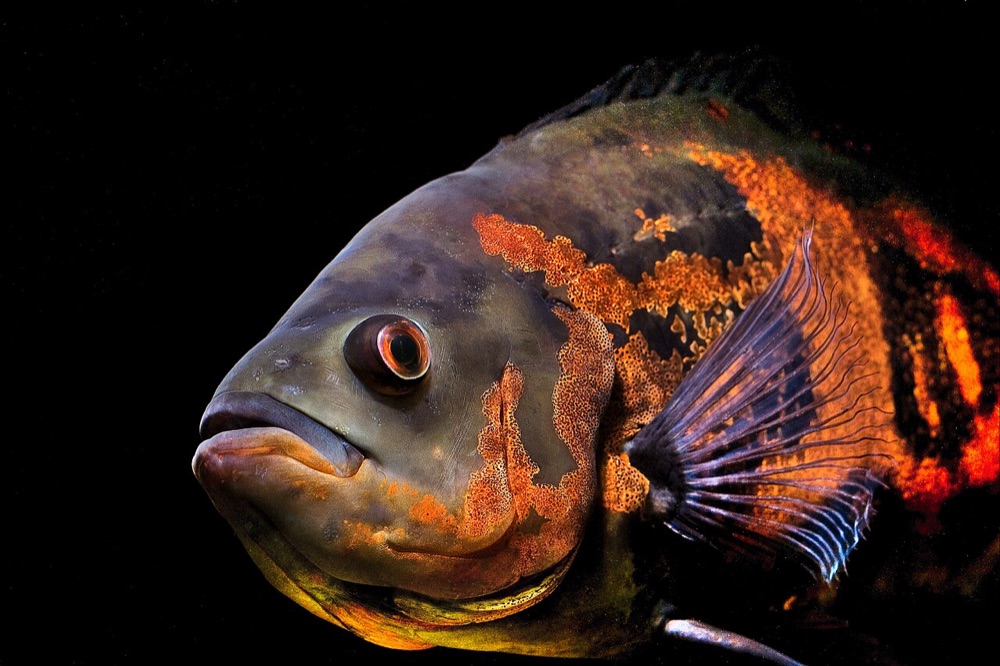
- Fins and colour: a heavy, oval body with dark grey to olive colour and orange or red patches, and an eye-spot ringed in orange near the tail. Bred forms include red, tiger and albino oscars.
- Energy
- Moderate
- Indian heat
- Copes wellUS Geological Survey, Nonindigenous Aquatic Species
- Flats
- Needs spaceUS Geological Survey, Nonindigenous Aquatic Species
Oscar at a glance
| What | The rule | Source |
|---|---|---|
| What it is | Astronotus ocellatus, a cichlid from the Orinoco and Amazon basins, French Guiana and the Paraguay and Parana drainages. | US Geological Survey, Nonindigenous Aquatic Species |
| Size | Up to about 40 cm. | US Geological Survey, Nonindigenous Aquatic Species |
| Diet in the wild | Eats fish and invertebrates. | US Geological Survey, Nonindigenous Aquatic Species |
| Cold limit | The lower lethal temperature is 12 °C. | US Geological Survey, Nonindigenous Aquatic Species |
| Low oxygen | Extremely tolerant, and gulps from the surface layer when oxygen is short. | US Geological Survey, Nonindigenous Aquatic Species |
| In India | Every oscar in a sample from shops in northern and eastern India carried a gill fluke new to the country. | Zootaxa (2023)study |
Where does the Oscar fish come from?
The oscar, Astronotus ocellatus, is a wild cichlid species, also sold as the velvet, marble or red oscar. The US Geological Survey gives its native range as South America, including the Orinoco and Amazon basins, French Guiana and the northern Paraguay and Parana drainages, and notes that the genus needs review: the fish in the aquarium trade may turn out to be another Astronotus species.
Oscars spread around the world through fish farms and the aquarium trade. The USGS records that the first oscars in Florida waters came from deliberate stocking by an aquarium fish farm in the late 1950s, and that oscars were released in Hawaii in 1952 for angling. It describes the species as a predator of fish and invertebrates, extremely tolerant of low oxygen, with a lower lethal temperature of 12 °C.
How did the Oscar fish come to India?
No source we found records when oscars first reached India. What the sources show is that they are sold in Indian aquarium shops, and that they have brought a parasite with them. A 2023 study in Zootaxa examined 12 adult oscars bought from aquarium shops in northern and eastern India and found every one infected with Gussevia asota, a gill fluke not reported in India before. The authors called for stronger quarantine of imported ornamental fish.
A national market study of ornamental fish from 2019 to 2022, covering Delhi, Mumbai, Kolkata, Kochi and Chennai, again found Gussevia asota on oscars, and notes that imported ornamental fish must be quarantined for 15 days and must not be released.
What care does a Oscar fish need?
The three things that shape a good day for this breed.
Exercise
Tank and swimming space: a fish that reaches 40 cm needs a very large tank on a strong, level stand, with room to turn and swim. This is not a fish for a small flat tank. US Geological Survey, Nonindigenous Aquatic Species
Grooming
Water care: a filter sized for heavy waste, regular partial water changes in treated water at the same temperature, and tests for ammonia and nitrite. Keep a heater in north India: oscars die below 12 °C. RSPCA Australia Knowledgebase
Training
Handling and feeding routine: feed measured pellets at set times and net the fish only when needed; Merck notes that handling and crowding can set off gut parasite outbreaks in cichlids. Merck Veterinary Manual
What should a Oscar fish eat?
In the wild the oscar eats fish and invertebrates. In a tank, a pellet made for large cichlids is the safer base: the Merck Veterinary Manual says commercial dried foods are a good choice and warns that live foods, including live fish, can bring in parasites or disease. Merck also links Streptococcus infection in cichlids to infected live food.
The RSPCA advises feeding only what fish eat in two to five minutes and says underfeeding is better than overfeeding. For a big fish that makes a lot of waste, leftovers foul the water quickly, so net them out.
Meals a day: young oscar, 2 to 3 small meals a day; adult, 2 to 3 small meals a day.
Which illnesses is the Oscar fish prone to, and how are they treated?
The conditions veterinary studies and breed surveys most often report in the Oscar fish. Knowing the early signs means a vet sees it sooner.
See your vet first. This is general information from veterinary sources, not a diagnosis. Only a vet who has examined your pet can say what is wrong and prescribe treatment, and this page never gives a dose. Do not give your pet human medicine. If your pet seems very unwell, go to a 24-hour vet: find one in your city.
Gill flukes (Gussevia asota)
See a vet soonA monogenean flatworm on the gills. A 2023 study found it in all 12 adult oscars sampled from shops in northern and eastern India and described it as pathogenic. Zootaxa (2023)study
Signs to watch for
- Fast, shallow breathing
- Pale or swollen gills
- Rubbing against objects
How a vet treats it
An aquatic or exotics vet identifies the fluke from a gill sample under the microscope and chooses a treatment for the tank. Merck describes these signs for gill flukes in general.
Prevention
Quarantine new fish, as the study's authors urge for imported ornamental fish.
Intestinal parasites (Spironucleus and Hexamita)
See a vet soonProtozoan parasites that Merck says attack the intestines of cichlids and other aquarium fish; crowding, shipping and handling can trigger an outbreak. Merck Veterinary Manual
Signs to watch for
- White, stringy droppings
- Weight loss
- Lethargy and loss of appetite
How a vet treats it
A vet identifies the parasite from a droppings or tissue sample and decides on treatment.
Prevention
Avoid crowding and handle the fish as little as possible.
Streptococcus infection
See a vet soonA rare bacterial infection Merck has found in some cichlids, which can come from the environment or infected live food. Merck Veterinary Manual
Signs to watch for
- Spinning or spiralling in the water
- Other signs of nerve disease
How a vet treats it
Merck says laboratory testing is needed for effective treatment, so a vet takes samples before choosing an antibiotic or other treatment.
Prevention
Avoid live feeder fish.
Poor water from heavy waste
Ask at a routine checkA large fish produces a lot of waste. Merck says excess ammonia is very harmful to fish, and in old tanks a sudden pH drop can kill the filter bacteria. Merck Veterinary Manual
Signs to watch for
- Loss of appetite
- Lethargy
- Cloudy or smelly water
How a vet treats it
The cause is fixed through the water: tests and partial water changes, sometimes daily, as Merck describes. A fish vet can test the water and examine the fish.
Prevention
A filter sized for the adult fish, measured meals and regular water tests.
How much space does an oscar need in an Indian flat?
More than most flats expect. Plan the tank for a 40 cm adult, not the palm-sized fish in the shop.
The US Geological Survey gives the oscar a size of 40 cm. A fish that size needs a very large tank, a strong stand and a filter sized for heavy waste. The Merck Veterinary Manual says the floor and stand under a tank must be strong, level and stable, which matters in an older building or on an upper floor. If you live in a housing society, check its rules before a large tank goes in.
Oscars are hardy in one way: the USGS calls them extremely tolerant of low oxygen. That can hide a problem. The water may be full of ammonia while the fish still looks calm, and Merck says excess ammonia is very harmful to fish. The sitter's job is to keep the filter running and never add food the owner did not leave.
What does an oscar need through the Indian year?
| Main risk | What the sitter does | |
|---|---|---|
| Summer (March to June) Merck Veterinary Manual | Warm water, heavy waste, less oxygen | Thermometer photo daily, air stone on, no extra food |
| Monsoon (June to September) Riverside Public Utilities, City of Riverside (California) | Power cuts stopping a big filter | Battery air pump in, no feeding until power returns |
| Winter (north India) US Geological Survey, Nonindigenous Aquatic Species | Cold nights in an unheated room; oscars die below 12 °C | Check the heater light and temperature at every visit; call if it falls |
| All year Zootaxa (2023)study | New fish bringing parasites | No new fish or feeder fish added while the owner is away |
What does a sitter do on an oscar visit?
Look
Watch the oscar breathe. Note fast gill movement, pale gills or rubbing against decor. Merck Veterinary Manual
Filter
Outflow strong and steady, as the owner showed; nothing blocked.
Temperature
Read and photograph the thermometer; check the heater light. US Geological Survey, Nonindigenous Aquatic Species
Feed
One measured portion of the owner's pellets, however eager the fish looks. RSPCA (England and Wales)
Clean up
Net out any uneaten food so it does not rot. RSPCA (England and Wales)
Leave
Lid firmly on, battery pump ready, visit logged.
Which oscar problems should a sitter report?
If Fast, shallow breathing, pale or swollen gills, or the fish rubbing against objects.
Merck lists these as signs of gill flukes such as Dactylogyrus, and a fluke called Gussevia asota was found in every oscar sampled from Indian shops. Call the owner. Zootaxa (2023)study
If White, stringy droppings with weight loss or a fish that stops eating.
Merck links these signs to gut parasites in cichlids. Report it; do not add medicines. Merck Veterinary Manual
If The oscar spinning or swimming in spirals.
Merck lists this as a sign of Streptococcus infection in cichlids. A vet needs lab tests. Call the owner now. Merck Veterinary Manual
If Cloudy, smelly water or a stopped filter.
Do not feed. Call the owner; a partial water change with treated water at the same temperature may be needed. RSPCA Australia Knowledgebase
If Water below the owner's range on a cold night.
Check the heater is on and plugged in, and call the owner. The USGS gives 12 °C as the oscar's lower lethal limit. US Geological Survey, Nonindigenous Aquatic Species
Should an oscar be fed live fish?
The USGS describes the oscar as a predator of fish and invertebrates, so many owners are tempted to buy cheap feeder fish. The Merck Veterinary Manual warns that live foods can bring parasites or disease into a tank, and Merck notes Streptococcus in cichlids can come from infected live food. Pellets made for large cichlids are the safer base.
For a trip, this is simple: no live food at all. Measure each day's pellets into a labelled box and tell the sitter not to add food however eager the fish looks at the glass.
Which Petym service suits an oscar?
If An established, well filtered tank and a trip of up to two weeks
Daily drop-in visits for one measured meal and checks on the filter and heater. Drop-in visits
If Winter in north India or long power cuts
Overnight pet sitting, so someone can run the battery pump and watch the temperature at night. Overnight sitting
If An oscar on treatment for flukes or gut parasites
Special-needs care, with the vet's plan followed and logged. Special-needs care
Breeds with similar care needs to the Oscar fish
Going away soon? Plan your pet’s care first.
Petym's bookings open for dogs and cats first. For every other pet, the free going-away checklist covers food, water, heat and what to leave written down before you travel.


Questions owners ask
How big does an oscar fish get?
- The US Geological Survey gives a size of 40 cm. Oscars are sold small, so plan a very large tank and a strong stand from the start rather than upgrading later.
Can an oscar live in a small tank in a flat?
- Not for long. A fish that reaches 40 cm makes heavy waste, and Merck says excess ammonia is very harmful to fish. A small tank fouls quickly, especially in a warm Indian flat where water holds less oxygen.
Do oscar fish need a heater in India?
- In north Indian winters, yes. The US Geological Survey gives 12 °C as the oscar's lower lethal temperature, so an unheated tank in a cold north Indian room needs watching. Keep the water steady and check it daily.
Should I feed my oscar live fish?
- It is safer not to. The Merck Veterinary Manual warns that live foods can carry parasites or disease, and notes Streptococcus in cichlids can come from infected live food. Use pellets for large cichlids as the main food.
Why is my oscar breathing fast and rubbing on rocks?
- Merck lists fast, shallow breathing, pale swollen gills and rubbing as signs of gill flukes such as Dactylogyrus. A 2023 study found the fluke Gussevia asota in every oscar it sampled from shops in northern and eastern India. Ask a fish vet to confirm and treat.
How long can an oscar go without food while I travel?
- Most aquarium fish can go several days without eating, city utility advice says, and the RSPCA says underfeeding is safer than overfeeding. For an oscar the filter is the risk, so plan a daily visit to check it and feed one measured portion.
Keep reading
- Fish sitting while you're awayFeeding, power cuts and heat for any tank.
- Aquarium fish care in India
- Freshwater angelfish care in IndiaA smaller South American cichlid.
- Koi care in IndiaAnother large fish that needs space.
- Pets in housing societies
- Winter pet care in north India
- Drop-in visits or overnight sitting
Services that help
Free tools for this
Words on this page, explained
Keep exploring
Sources
Each source was opened and read on the date shown. How Petym checks its sources
- US Geological Survey, Nonindigenous Aquatic Species: Oscar (Astronotus ocellatus): species profile (revised 18 April 2013) (opens in a new tab)
- RSPCA Australia Knowledgebase: Why is water quality important when setting up a fish aquarium? (opens in a new tab)
- Merck Veterinary Manual: Disorders and diseases of fish (pet owner version, last updated April 2026) (opens in a new tab)
- Merck Veterinary Manual: Providing a home for fish (pet owner version, last updated April 2026) (opens in a new tab)
- RSPCA (England and Wales): Fish diet (opens in a new tab)
- Riverside Public Utilities, City of Riverside (California): Tips for pets during outages: tips for aquariums (opens in a new tab)
- Zootaxa (2023): First report of pathogenic Gussevia asota from oscar Astronotus ocellatus in India (abstract read) (opens in a new tab)
- Parasite (2025): Monogeneans on exotic Indian freshwater fish. 7. Results of a national study on ornamental fishes from 2019 to 2022 (Tripathi and others) (opens in a new tab)